Wisconsin Baiting and Feeding Bans
It's incredibly frustrating, isn't it? You spend months preparing for hunting season, scouting your land or public access, only to find out the rules around baiting and feeding have changed, or worse, your favorite hunting spot is suddenly under a new ban. Navigating Wisconsin's baiting and feeding regulations can feel like trying to hit a moving target in a fog, especially with the constant changes related to Chronic Wasting Disease. This comprehensive guide is here to cut through that confusion, explain the 'why' behind the rules, and help you understand exactly what you can and cannot do to stay legal and ethical in the woods.
Understanding the Foundation of Wisconsin's Baiting and Feeding Regulations
Let's start by getting to the root of the matter: why do these bans exist in the first place? It’s not just to make things harder for hunters; there’s a serious underlying concern for the health of our deer herd and, by extension, the future of hunting in our state.
The 'Why' Behind the Bans: CWD and Disease Management
Chronic Wasting Disease (CWD) is the elephant in the room when we talk about baiting and feeding bans in Wisconsin. For those unfamiliar, CWD is a fatal neurological disease that affects deer, elk, and moose. It's caused by abnormal proteins called prions, which can spread directly from animal to animal or indirectly through environmental contamination (like contaminated soil or feed). The disease can incubate for a long time before symptoms appear, making it particularly insidious. Affected animals may appear emaciated, exhibit abnormal behavior, drool excessively, or show a lack of coordination. There is currently no vaccine or cure, and it is always fatal.
The real kicker here is how CWD spreads, and this is where baiting and feeding become such a critical issue. When deer congregate around a bait pile or feeding station, they're essentially creating a hot zone for disease transmission. They’re sharing saliva, urine, and feces, and potentially shedding prions directly onto the food source or the surrounding ground. Even if one deer appears healthy, it could be an asymptomatic carrier, unknowingly spreading the disease to dozens of others who visit that same spot. It’s like putting a bunch of kids with colds in a tiny room and telling them to share snacks – the germs are going to spread rapidly. The Wisconsin Department of Natural Resources (DNR) monitors CWD detections rigorously, understanding that concentrations of deer at artificial feed sites dramatically increase the risk of transmission. This isn't just a hypothetical concern; studies have consistently shown that high deer densities and sustained congregation around feed sources accelerate CWD spread within a population. It’s a bitter pill for many hunters to swallow, as baiting has been a long-standing tradition for some, but the science is clear on this front. The alternative, allowing unchecked spread, could devastate our deer herd and hunting opportunities for generations to come.
Differentiating Between Baiting and Feeding
Before we dive deeper, it’s crucial to understand that the Wisconsin DNR makes a distinction between "baiting" and "feeding," even though both are often restricted due to CWD concerns. While the effect on deer congregation can be similar, the intent and context are slightly different.
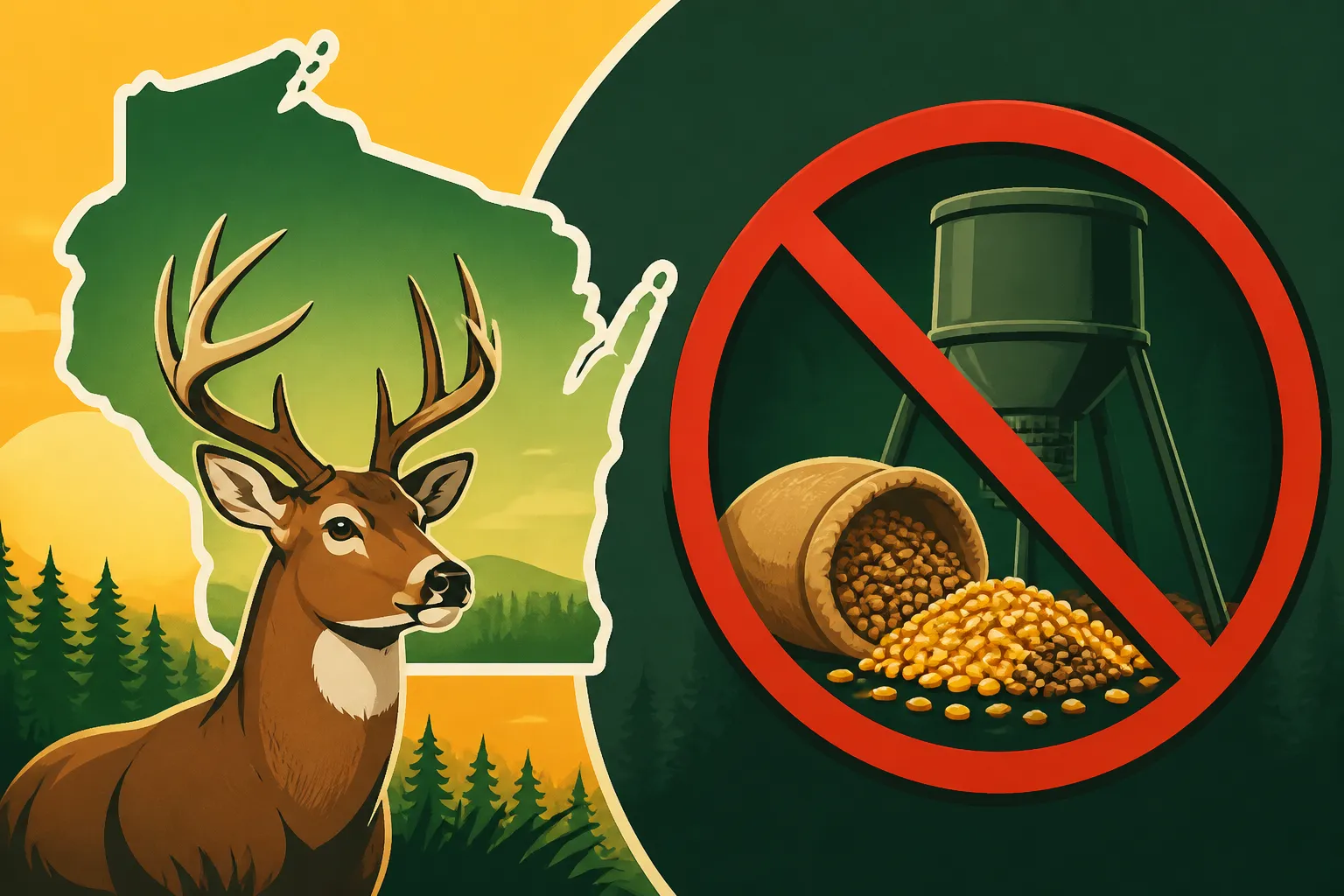
Baiting, in Wisconsin hunting regulations, refers specifically to placing, depositing, or distributing any material, liquid, or substance that is used to attract wild animals for the purpose of hunting. This includes common items like corn, apples, carrots, potatoes, commercial deer blocks, mineral blocks, or even salt blocks. The key here is the intent – if you put it out with the purpose of attracting deer (or other game animals) to make them easier to locate, observe, or harvest during a hunting season, that’s baiting. It doesn't matter if you're actually sitting there with a bow or gun; if the bait is present during the open season in an area where hunting is occurring, it's considered baiting. Even if you place it out weeks before the season, if it's still present and actively attracting deer when the season opens, you could be in violation. The goal of the baiting ban is to prevent the unnatural congregation of deer, reducing nose-to-nose contact and the environmental contamination that facilitates CWD transmission. This rule applies year-round in CWD-affected areas, even outside of hunting seasons, to prevent animals from habituating to these congregation points.
Feeding, on the other hand, typically refers to placing food for consumption by wild animals, often outside the context of direct hunting activity. While this might sound innocuous, especially for those who enjoy watching deer in their backyard, it carries the same CWD risks as baiting by concentrating animals. For deer, "feeding" is broadly prohibited in CWD-affected counties, even if you have no intention of hunting them. This includes placing out corn, pellets, apples, or any other food for deer, elk, or other wild animals (excluding certain exceptions like bird feeders, which we’ll discuss later). The idea is that any artificial food source that draws deer together, whether for hunting or just observation, poses a disease risk. This is why the rules around Wisconsin Deer Feeding Rules Outside Season are just as stringent in CWD zones. It's a tough pill to swallow for wildlife enthusiasts, but the science supports that reducing these congregation points is vital for herd health. Bear baiting has separate rules and is generally allowed in northern Wisconsin zones but is also subject to specific regulations on type and amount, and is entirely prohibited in CWD-affected counties.
The distinction might seem subtle, but understanding the legal definition for each is vital to staying on the right side of the law.
How Baiting and Feeding Bans Are Triggered in Wisconsin
The regulations aren't arbitrary; they're directly tied to the discovery and spread of Chronic Wasting Disease. It's a reactive, but necessary, measure to try and contain a persistent problem.
The Proximity Rule: 10-Mile Radius and Two-Year Bans
The primary trigger for a baiting and feeding ban in Wisconsin is the detection of a CWD-positive wild or farm-raised deer. Once a CWD-positive deer is confirmed, the DNR implements an immediate ban. This isn't just a simple line on a map; it involves a specific geographic radius. The core of the ban is established within a 10-mile radius of where that CWD-positive deer was found. Think of it like dropping a pebble in a pond – the ripples spread out, and the regulations follow suit.
Specifically, the county where the CWD-positive deer was detected, or any county where a portion of it falls within that 10-mile radius, is initially subjected to a three-year baiting and feeding ban. This is the starting point. What often catches hunters off guard, and understandably creates a lot of frustration, is the rule for adjacent counties. If any part of a neighboring county falls within that initial 10-mile radius, even if the actual detection was across the county line, that adjacent county (or the affected portion of it) is then subject to a two-year baiting and feeding ban. This means you might be hunting in a county where CWD hasn't directly been found within its borders, but because a deer turned up positive just a few miles away in a neighboring county, your hunting ground is now under a ban. It feels unfair, certainly, but the logic is to create a wider buffer zone to mitigate spread.
The DNR's reasoning is that deer move. A CWD-positive deer found in one township could easily have traveled from an adjacent township or even a neighboring county. The 10-mile radius acts as a reasonable buffer to encompass the likely travel range of deer from the affected area, aiming to prevent the further concentration of animals in those high-risk zones. The process for How Wisconsin Baiting Bans Are Triggered is designed to be swift and comprehensive, reflecting the serious threat CWD poses to the herd. Hunters in these areas often feel the brunt of these regulations, sometimes seeing their hunting traditions curtailed due to circumstances outside their immediate control, but it's all part of a larger, ongoing effort to manage this difficult disease.
County-Wide and Partial County Bans
It's important to understand that these 10-mile radius triggers often translate into broader county-wide or significant partial-county bans. If even a small corner of a county falls within that CWD 10-mile radius, the entire county can be placed under a baiting and feeding ban. This is a common point of contention and confusion for hunters. You might have land on the far side of a large county, many miles from the actual CWD detection, but because the county line was touched by the 10-mile circle, your entire county is now subject to the rules.
The DNR’s rationale for this broad application is administrative simplicity and effective communication. Trying to enforce a precise 10-mile radius that cuts across property lines and varied terrain can be incredibly complex for wardens and confusing for hunters. Making it county-wide, or at least clearly defined by larger geographic features, simplifies compliance and enforcement. While it might seem overly restrictive for those far from the detection site, it ensures a clear message for all hunters within that administrative boundary. The initial three-year ban for the "detection" county and the two-year ban for "adjacent" counties are just the starting points. These bans are not necessarily lifted automatically after those periods. If new CWD-positive detections occur within or near the banned area, or if the prevalence rate of CWD remains high, the ban can be extended indefinitely. This leads to a patchwork of bans across the state, with some counties having been under restrictions for many years. To understand the current landscape, it's crucial to know Which Wisconsin Counties Ban Baiting and to check the DNR's official maps regularly.
Local County Deer Advisory Councils (CDACs) play a role in this process as well. While the CWD science dictates the initial ban triggers, CDACs provide local input to the DNR on deer management decisions, including those related to CWD and baiting/feeding. Hunters and landowners can attend these public meetings and voice their concerns or suggestions, contributing to the dialogue about how these bans impact their communities and hunting traditions. It’s a mechanism for local communities to engage with the state-level management, though the CWD threat often overrides local preferences when it comes to baiting and feeding.
What Exactly is Prohibited: Legal Definitions and Exceptions
Understanding the official definitions of "bait" and "feed" is crucial because misinterpretation can lead to unintended violations. It's not always as simple as it sounds.
Defining "Bait" and "Feed" in Legal Terms
Let's get down to the nitty-gritty of what the DNR considers "bait" and "feed" in a legal context within these ban areas. The rules are quite comprehensive to prevent loopholes.
Bait is defined as any material, liquid, or substance that is placed, deposited, scattered, or distributed to attract wild animals for hunting purposes. This is a broad definition and includes:
- Agricultural products: Corn (shelled, on the cob, silage), oats, wheat, rye, soybeans, peas, sunflower seeds, and any other grain. Apples, potatoes, carrots, sugar beets, and any other fruit or vegetable.
- Manufactured products: Pellets, blocks (mineral blocks, salt blocks, protein blocks, deer blocks), or other processed feeds designed to attract deer.
- Natural attractants: Acorns, nuts, or other natural food items if they are collected and then placed in a location. The key here is that they are not naturally occurring in that spot.
- Liquid attractants: Any liquid substance used to attract deer, often marketed as "deer attractant" or "deer lure."
The critical element for baiting, as mentioned earlier, is the intent to attract animals for hunting. However, in CWD-affected areas, the presence of these items is often enough to constitute a violation, regardless of specific hunting intent, because the rule applies year-round to mitigate disease spread. So, even if you’re putting out a mineral block in June, if your county is under a ban, it’s a no-go. The DNR's approach aims to minimize any artificial congregation points.
Feeding, while often overlapping with baiting in terms of prohibited items, generally refers to providing food for wild animals (especially deer) for non-hunting purposes, such as observation or general wildlife support. In CWD-affected counties, this is largely prohibited for the same reasons as baiting: it concentrates deer, increasing disease transmission risk. So, if you live in a banned county, you cannot put out apples for the deer that visit your backyard, nor can you spread corn for them to eat. This rule applies to any wild animal susceptible to CWD, primarily deer and elk, but also includes placing food for other species if it would also attract deer. The prohibition extends to any type of food, whether it's commercial deer feed, garden scraps, or bags of corn. This is a big change for many residents who enjoyed these activities for decades.
It's a tough adjustment for folks, especially those who loved putting out food to observe deer or felt they were helping deer through harsh winters. However, the prevailing scientific consensus points to these practices exacerbating CWD, which ultimately harms the herd more than it helps in the long run.
Exceptions and Exemptions: When is it Allowed?
While the rules can feel very restrictive, there are some important exceptions and exemptions that allow certain activities to continue without violating baiting and feeding bans. These are usually in place to avoid interfering with normal agricultural practices or to allow for other, non-harmful wildlife interactions.
-
Agricultural Practices: This is probably the largest and most significant exemption. Farmers can continue to plant, grow, and harvest crops, even if deer feed on them. This means:
- Standing crops: Fields of corn, soybeans, alfalfa, winter wheat, etc., are perfectly legal. Deer will naturally feed on these, and that's understood.
- Harvested crops: After harvest, leftover grain or plant material in a field is also legal. You don't have to clean your fields completely.
- Food plots: Planting crops specifically for wildlife food (e.g., clover plots, brassicas, winter rye) is considered an agricultural practice and is legal even in banned counties. This is a huge distinction and one that many hunters leverage as a legal alternative. Instead of buying a bag of corn, you can plant a plot of corn or soybeans, or a mix specifically designed to provide forage. This is why you'll often see hunters turn to strategies like Food Plots Instead of Bait when bans are in effect. It's about providing natural, dispersed food sources rather than concentrated piles.
- Feeding livestock: Hay bales, silage, or grain placed for domestic livestock (cows, horses, sheep) is obviously legal. The expectation is that this feed is contained or primarily consumed by the livestock, though incidental deer consumption might occur.
-
Incidental Feeding (Bird and Small Mammal Feeders): This is where it gets a little nuanced. Bird feeders are generally allowed, provided they are designed and maintained to minimize access by deer. This means they should ideally be placed high enough (at least 5 feet off the ground) so deer can't easily reach the contents, and spills should be cleaned up regularly. If your bird feeder is constantly attracting deer, and they’re habitually feeding on spills, you could still be in violation. The intent is to feed birds, not deer. Squirrel feeders are also generally permitted, but again, if they're attracting deer, you might have an issue. It's a common-sense rule: if you’re genuinely feeding small animals, and deer are just occasionally sampling spilled seeds, that’s one thing. If deer are routinely emptying your feeder or eating large amounts of spillage, then it crosses the line. The Wisconsin DNR provides guidelines on this, emphasizing elevated feeders and careful management to prevent deer access.
-
Scientific Research and Rehabilitation: Certain authorized individuals or organizations, such as licensed wildlife rehabilitators or DNR-approved researchers, may be granted permits to bait or feed wild animals for specific scientific or rehabilitation purposes. These are highly specific exemptions and not applicable to the general public.
-
Hunting Bear with Bait (in non-banned counties): In counties not under a CWD baiting ban, baiting for bear hunting is allowed, but it's subject to very strict regulations on the type, amount, and placement of bait, as well as specific start and end dates. This is a separate set of rules from deer baiting.
It's critical to note that simply knowing about these exceptions isn't enough; you need to understand the nuances and ensure your practices truly align with the spirit of the law, which is to minimize unnatural congregation of deer. When in doubt, it's always best to err on the side of caution or consult the latest DNR regulations.
Navigating Current Wisconsin Baiting and Feeding Bans
The dynamic nature of CWD detections means that ban maps can shift. Staying informed is your best defense against inadvertently breaking the rules.
Checking Your County's Status
This is probably the most critical piece of advice anyone can give you: Always, always check the official Wisconsin DNR website for the most current baiting and feeding ban maps. Regulations can change quickly based on new CWD detections. What was open last year might be closed this year, and vice versa (though lifting bans is far less common than imposing them). Just because your buddy said his county was clear doesn't mean your specific hunting area is.
The DNR's website typically features an interactive map where you can zoom in on specific counties or even townships to see the exact boundaries of current bans. They usually color-code areas to indicate whether baiting and feeding are prohibited, or if it's currently allowed. This is the authoritative source, so bookmark it! Many hunters find the DNR's "Go Wild" system or the Scouting With the Wisconsin Hunt Wild App incredibly helpful for this. Apps like GoHunt also integrate these ban maps, overlaying them onto topographic maps or aerial photos of your hunting area, which can be a game-changer. Imagine pulling up a map on your phone or tablet, seeing your intended stand location, and having a clear visual indicator if it falls within a banned zone. This takes a lot of the guesswork out of it, especially if you're hunting near county lines or in areas with complex ban boundaries.
Remember, a verbal assurance from a friend or even a local sign on a hunting store isn't a substitute for checking the official source. Penalties for violating these bans can be significant, so investing a few minutes to verify your area's status before you head into the woods is time well spent. The complex rules around How Many Wisconsin Counties Have CWD and the resulting bans require vigilance from every hunter.
Understanding Ban Duration and Renewal
It’s not just if your county is under a ban, but for how long that ban is expected to last. This can be a source of constant frustration and uncertainty for hunters, making long-term planning difficult.
As discussed, when a CWD-positive deer is detected, the county of detection and any county with a portion falling within the 10-mile radius initially faces a three-year baiting and feeding ban. For adjacent counties where a portion falls within that 10-mile radius, a two-year ban is initially imposed. But here's the kicker: these are just minimums. The DNR's policy states that bans are automatically renewed if new CWD-positive detections occur within the existing ban zone during that period, or if the prevalence of the disease remains at a certain level.
This means a three-year ban can easily become a six-year, nine-year, or even indefinite ban if CWD continues to be detected in the area. For example, some counties in Wisconsin, particularly in the southwestern Driftless Area where CWD was first discovered, have been under continuous baiting and feeding bans for well over a decade, with no signs of them being lifted soon due to ongoing detections and high prevalence rates. This reality can be incredibly disheartening for hunters who want to enjoy traditional baiting practices. It forces a fundamental shift in hunting strategy for many.
The DNR's approach to lifting a ban is cautious. They would generally require a sustained period without new detections and a significant reduction in prevalence before considering removing a ban. This is a reflection of the disease's persistence in the environment and the long incubation period in deer. Therefore, when you check the ban map, don't just look at whether your county is red (banned); understand that if it is, it's likely to remain that way for the foreseeable future unless there's a significant change in the CWD landscape. This is a harsh reality for hunters who just want clear, stable rules to follow.
Alternatives to Baiting and Feeding for Attracting Deer
The bans have forced many Wisconsin hunters to adapt, and honestly, that's often a good thing for developing stronger hunting skills and connecting more deeply with the land. It pushes us to become better naturalists and strategists.
Habitat Improvement and Food Plots
If you have access to private land, or if you're working with a landowner, habitat improvement and the strategic placement of food plots can be incredibly effective and, crucially, completely legal alternatives to baiting. This isn't just about putting food in front of deer; it's about making your property (or the property you hunt) a healthier, more attractive place for deer year-round.
- Food Plots: As mentioned in the exceptions, planting food plots is perfectly legal. These differ from bait piles because they provide a larger, more dispersed food source that mimics natural foraging. They don't create the same concentrated "kill zone" that a small bait pile does, and while deer will congregate, it's typically over a larger area and for longer periods of sustained feeding, rather than a quick grab from a pile. Popular food plot choices in Wisconsin include:
- Clovers: Perennial clovers (like ladino or medium red) offer high protein, are relatively easy to establish, and provide forage for much of the spring, summer, and fall.
- Brassicas: Turnips, radishes, and rape provide excellent late-season forage as they become sweeter after a hard frost. They're a magnet for deer in late fall and early winter.
- Winter Grains: Winter wheat, rye, and oats are quick to establish and provide attractive forage during the early and late hunting seasons.
- Annual legumes: Soybeans and peas offer high-protein forage in summer and fall.
The real trick with food plots is understanding soil health, proper planting times, and maintenance. A healthy food plot takes effort, but the rewards are significant in terms of deer attraction and overall herd health. This is a much more sustainable and beneficial approach than simply dumping a bag of corn. Many hunters are now focused on What Replaced Bait Piles for Wisconsin Hunters, and food plots are often at the top of that list.
- Timber Stand Improvement (TSI): Beyond food plots, enhancing the natural habitat is key. This could involve selective timber cutting to promote new growth that deer browse, or creating more diverse forest structures. Thinning out older, less productive trees can allow sunlight to reach the forest floor, stimulating the growth of forbs, shrubs, and young saplings that are excellent deer browse.
- Water Sources: If your hunting area lacks reliable water, creating or enhancing a small pond or natural seep can be a huge draw, especially in drier periods.
- Thermal and Security Cover: Deer need places to bed down and feel safe. Creating thick bedding areas by planting conifers, allowing brushy areas to grow, or hinge-cutting trees to create dense tangles provides crucial cover. A property with good food, water, and cover will naturally attract and hold deer.
Strategic Scouting and Stand Placement
This is where the true art of deer hunting comes into play when baiting is not an option. Instead of relying on a deer coming to a specific spot for food, you're relying on your ability to predict their movements and intercept them. This often leads to a more fulfilling and challenging hunting experience.
- Obsessive Scouting: Before and during the season, you need to become a master detective. Look for rubs (where bucks scrape trees), scrapes (where deer deposit scent), well-used trails, fresh tracks, and bedding areas. Understanding why deer are using certain areas – whether it’s for feeding, bedding, or traveling between the two – is paramount. Tools like the GoHunt app or other mapping software allow you to mark these observations, analyze terrain features, and identify key travel corridors.
- Understanding Natural Funnels and Pinch Points: Deer, like most animals, take the path of least resistance. Look for natural funnels where topography or vegetation constricts their movement – a narrow strip of woods between two open fields, a saddle on a ridge, or a thicket bordering a swamp. These are prime spots for stand placement because they naturally concentrate deer movement. Think about Hunting a Funnel Between Two Swamps or utilizing river bends and creek crossings.
- Reading Topography: Wisconsin's varied terrain, from the rolling hills of the Driftless Area to the vast Northern Forest, dictates how deer move. In hilly country, deer often travel along ridge tops, benches (flat areas along a slope), or low-lying creek bottoms to avoid steep climbs. Understanding how wind and thermals interact with this topography is also critical. A ridge point that offers a view into a valley, as described in Reading a Ridge Point for Deer Movement, can be an excellent location to intercept a cruising buck.
- Bedding Areas: Finding where deer bed down and understanding their entry and exit routes to and from these areas is gold. Bedding often occurs in dense cover that offers both protection and a good vantage point for the deer. Setting up on the downwind side of a bedding area, along an exit trail, can be highly effective during specific times of the day, particularly in the late morning or early afternoon as deer get up to stretch or feed lightly.
- Food Source Identification: Without bait, you need to identify natural food sources. This means knowing what's in season. Are acorns dropping? Are apples ripe in an old orchard? Is there a standing cornfield nearby? Deer will always go where the food is, and identifying these fluctuating natural sources is a key skill. Hunters often face challenges Hunting After an Acorn Failure, which requires even more reliance on other natural food sources.
Calling and Scent Strategies
Once you've done your scouting and have a good stand location, legal calling and scent strategies can give you that extra edge without violating any baiting rules. These methods rely on mimicking deer communication and their natural olfactory senses.
- Vocalizations (Calls):
- Grunt Calls: A grunt tube can imitate a buck's grunt, signaling interest or dominance. During the pre-rut and rut, a well-timed grunt can draw a curious buck in for a closer look. They're especially effective in mature timber where visibility is limited, as detailed in Grunt Calls in Mature Timber.
- Doe Bleats: A doe bleat, particularly a fawn bleat, can attract maternal does or curious bucks hoping to find a doe in estrus.
- Rattling: Mimicking the sound of two bucks fighting by clashing antlers (real or synthetic) can be incredibly effective during the rut. It appeals to a buck's curiosity or territorial instincts. The volume of your rattling can depend on the cover – in thick cedar swamps, you might use quieter rattles, but in more open hardwoods or coulees, you can go a bit louder. For more on this, check out Rattling and Grunting in Wisconsin.
- Scent Strategies:
- Deer Urines/Gland Scents: While some hunters are cautious about using natural deer urines due to CWD concerns (prions could potentially be present in urine, though the risk is considered low), synthetic scents are a perfectly safe and legal alternative. Estrous doe urine can be highly effective during the rut. Scents can be applied to wicks, scent bombs, or drippers hung near your stand or along a mock scrape.
- Mock Scrapes: Creating a mock scrape by clearing a patch of ground under an overhanging branch (a "licking branch") and adding a dominant buck or estrous doe scent can be a powerful attractant. Deer are highly scent-oriented, and a mock scrape taps into their communication network. These are often most effective along a logging road or field edge, creating artificial Scrape Lines Along a Logging Road.
- Cover Scents/Odor Eliminators: While not directly attracting deer, eliminating human odor is paramount. Using scent-free soaps, detergents, and sprays, along with careful wind management, helps you remain undetected. Deer have an incredible sense of smell, and any foreign odor will send them packing.
Using a combination of these strategies, adapted to the specific time of year, weather conditions, and terrain, can dramatically increase your success rate without ever needing a bag of corn. It requires more skill and patience, but the satisfaction of luring in a deer based on your understanding of their natural behavior is unparalleled.
Consequences of Violating Baiting and Feeding Bans
Nobody wants to get a ticket in the woods, especially for something that could have been easily avoided. The penalties for violating Wisconsin’s baiting and feeding bans are serious and designed to deter practices that threaten the deer herd.
Penalties and Fines
The Wisconsin DNR takes violations of baiting and feeding bans very seriously, given the severe threat CWD poses to the state's deer population and hunting heritage. The consequences for violating these regulations can range from significant monetary fines to loss of hunting privileges, and in some cases, even more severe actions.
- Monetary Fines: A common penalty for a first offense of baiting or feeding in a banned area is a forfeiture (fine) that can run into several hundreds of dollars. The exact amount can vary depending on the specific circumstances, such as the amount of bait, how long it was present, and whether other violations were committed. For instance, a typical fine could be around $300-$500, but it can be higher. This doesn't include court costs and fees, which can add significantly to the total.
- Revocation of Hunting Privileges: This is often the most impactful consequence for a passionate hunter. Violating baiting or feeding bans can lead to the revocation of your hunting, fishing, and trapping privileges for a period of one to three years, or even longer for repeat offenses. This means you could be sitting out multiple deer seasons, missing out on years of enjoyment and tradition. This is a statewide revocation, so you can't just go hunt in another part of Wisconsin during that period.
- Confiscation of Game and Equipment: If you are found to have harvested a deer (or any other game animal) over illegal bait, that animal can be confiscated. Additionally, equipment used in the commission of the violation, such as firearms, bows, or stands, could potentially be confiscated as well, although this is less common for a first-time baiting offense unless other violations are present.
- Repeat Offenses: If you are caught violating the rules more than once, the penalties become significantly steeper. Fines will be higher, revocation periods longer, and the likelihood of more severe legal consequences increases.
It's also important to remember that ignorance of the law is generally not considered an excuse. The responsibility falls on each hunter and landowner to know and follow the current regulations. This is why consistently checking official DNR resources and using reliable mapping tools is so vital. The goal of these penalties isn't just punitive; it's a strong deterrent to protect the deer herd from CWD.
Ethical and Conservation Implications
Beyond the legal ramifications, there are profound ethical and conservation implications to violating baiting and feeding bans. These implications extend far beyond a single hunter or a single deer, affecting the entire hunting community and the future of wildlife management in Wisconsin.
- Impact on the Deer Herd: The primary ethical concern is the health of the deer herd itself. CWD is a devastating disease, and baiting and feeding exacerbate its spread. By intentionally or unintentionally contributing to the concentration of deer, you are directly increasing the risk of CWD transmission, potentially condemning more animals to a slow, agonizing death. This goes against the core tenets of ethical hunting, which emphasize respect for wildlife and responsible stewardship. As hunters, we have a unique connection to the animals we pursue, and part of that connection should be a commitment to their long-term well-being.
- Undermining Conservation Efforts: The DNR, along with countless conservation organizations and responsible hunters, expends immense resources fighting CWD. Violating baiting bans undermines these efforts, making it harder to contain the disease and increasing the overall burden on the state's wildlife management system. It's a collective effort, and one person's violation can have ripple effects that cost money, time, and ultimately, deer lives.
- Public Perception of Hunters: Every time a hunter is cited for a baiting violation, it contributes to a negative public image of hunters in general. In an era where hunting faces increasing scrutiny from non-hunters and anti-hunting groups, responsible behavior is more critical than ever. Violations fuel the narrative that hunters are irresponsible or only care about "getting their deer" by any means necessary, rather than being ethical conservationists. This can impact broader public support for hunting and wildlife management initiatives.
- Fair Chase Principles: For many, the concept of "fair chase" is central to ethical hunting. While baiting has been a long-standing tradition for some, others argue that it gives hunters an unfair advantage, reducing the challenge and skill involved in locating and pursuing wild animals. Regardless of personal opinion, when a state explicitly bans baiting due to disease concerns, violating that ban directly goes against fair chase principles within that regulatory framework.
Ultimately, adhering to baiting and feeding bans isn't just about avoiding a ticket; it's about upholding your responsibility as a conservationist, protecting the future of Wisconsin's deer herd, and maintaining the integrity and public trust of the hunting tradition itself. It’s about being part of the solution, not part of the problem.
The Future of Baiting and Feeding Bans in Wisconsin
The landscape of CWD and its associated regulations is constantly evolving. What does that mean for hunters in Wisconsin looking ahead?
Ongoing Research and Management Strategies
The fight against CWD is far from over, and both the Wisconsin DNR and various research institutions are continuously working to understand the disease better and develop more effective management strategies. This ongoing research directly influences current and future baiting and feeding regulations.
- CWD Research: Scientists are constantly researching CWD, trying to understand everything from how prions move through the environment to potential genetic resistances in deer populations. This includes studies on how different management actions, like baiting bans or increased harvest, impact disease prevalence and spread. For instance, universities like the University of Wisconsin-Madison are often at the forefront of this research. The DNR also participates in significant data collection and analysis, including extensive CWD testing. Understanding Wisconsin CWD Prevalence Rates and how they change over time is crucial for decision-making.
- Adaptive Management: Wildlife management is not static; it's an adaptive process. The DNR monitors CWD prevalence rates, geographic spread, and the effectiveness of current regulations. If new research provides clearer insights, or if existing strategies aren't yielding desired results, the regulations may be adjusted. This could mean changes to the radius of a ban, the duration, or even the specific definitions of what constitutes baiting or feeding. For example, if future research were to definitively show that certain types of minerals do not contribute to CWD spread, there might be a reconsideration, though highly unlikely given current understanding.
- Hunter Harvest as a Tool: One of the primary tools in CWD management, alongside baiting bans, is the targeted harvest of deer, particularly does, to reduce overall deer density in affected areas. This helps reduce deer-to-deer contact and the overall number of potential carriers. Hunters play a critical role in this, and understanding strategies like Filling a Wisconsin Antlerless Tag becomes even more important in CWD zones. The goal is to keep deer populations healthy and within the carrying capacity of the land, which naturally limits congregation.
- Carcass Movement Restrictions: Alongside baiting and feeding bans, the DNR also implements strict rules regarding the transportation of deer carcasses out of CWD-affected counties. These rules are another layer of defense against prion spread, ensuring that hunters don't inadvertently move infected material to unaffected areas. For more details on this, you can refer to Wisconsin Carcass Movement Restrictions.
It's important for hunters to remember that these regulations are rooted in the best available science. While we might not always agree with every nuance, the intent is to preserve the deer herd for future generations. Our participation in programs like Wisconsin CWD Testing for Hunters helps collect the data that drives these research and management efforts.
Hunter Engagement and Voice in Policy
While the DNR relies on scientific data, hunter input and engagement are also valuable components of wildlife management in Wisconsin. Your voice matters, and there are avenues to express your perspectives and stay informed.
- County Deer Advisory Councils (CDACs): These councils are comprised of local citizens, including hunters, farmers, and conservationists, who provide recommendations to the DNR on deer management decisions for their county. This includes discussions around harvest quotas, antlerless tag allocations, and local impacts of CWD and baiting bans. Attending CDAC meetings (which are open to the public) is an excellent way to learn about local deer management issues, contribute your perspective, and understand the rationale behind decisions. These meetings are held annually, and your input can directly influence local policy.
- Staying Informed: The best way to engage constructively is to be well-informed. Regularly checking the DNR website for updates, reading their publications, and following reputable hunting news sources (like GoHunt's Wisconsin-specific coverage) ensures you have the most current and accurate information. Don't rely on rumors or outdated information. This knowledge allows you to understand the challenges faced by wildlife managers and frame your input effectively.
- Advocacy and Support: If you believe in the importance of CWD management and the role that baiting and feeding bans play, consider becoming an advocate. This could mean writing letters to your elected officials, joining conservation organizations that support sound wildlife management practices, or simply sharing accurate information with fellow hunters. Conversely, if you feel a specific regulation is overly burdensome or ineffective, expressing that through formal channels, backed by constructive reasoning, is also important.
- Responsible Practices: Perhaps the most impactful way to have your voice heard is through your actions. By diligently following all baiting and feeding regulations, getting your deer tested for CWD, and practicing ethical hunting, you demonstrate responsible stewardship. This builds trust and credibility for the hunting community as a whole, showing that hunters are dedicated to the health of the resource. When hunters are seen as partners in conservation, their voice carries more weight in policy discussions.
The future of baiting and feeding bans in Wisconsin will continue to be shaped by scientific understanding, the realities of CWD spread, and the collective efforts of hunters and wildlife managers. By staying informed and engaged, you can play a vital role in protecting Wisconsin's deer herd and hunting traditions for generations to come.
| Practice | Allowed in Banned Counties (for Deer) | Notes |
|---|---|---|
| Baiting (e.g., corn, apples, mineral blocks) | No | Prohibited year-round if the county is under a CWD baiting ban. Intent to attract deer for hunting is key, but presence of bait in a ban zone is a violation. |
| Feeding (e.g., placing food for observation) | No | Prohibited year-round if the county is under a CWD feeding ban. Any placed food that attracts deer is a violation, regardless of hunting intent. |
| Food Plots | Yes | Planting crops specifically for wildlife (e.g., clover, brassicas, corn, soybeans). Considered an agricultural practice, not baiting, as it provides a dispersed, natural food source. |
| Standing Agricultural Crops | Yes | Naturally growing crops on farmland (corn, hay, soybeans, etc.). Deer feeding on these is natural and legal. |
| Leftover Harvested Crops | Yes | Remaining grain or plant material in a field after harvest. Legal for deer to feed on. |
| Bird Feeders | Yes (with conditions) | Allowed IF designed and maintained to minimize deer access. Must be elevated at least 5 feet from the ground, and spilled seed should be cleaned regularly. If deer are consistently feeding, it can become a violation. |
| Feeding Livestock | Yes | Placing hay, silage, or grain for domestic farm animals. Incidental deer consumption may occur but is not the intent or primary outcome. |
| Calling/Scent Lures | Yes | Using grunt tubes, bleats, rattling antlers, and synthetic (or natural, with CWD caution) deer urine/gland scents is legal. These attract deer by mimicking communication or natural odors, not by providing food. |
| Salt Licks (Natural) | Yes | Naturally occurring mineral deposits. If you add anything to enhance it, it becomes illegal bait. |
Disclaimer
The information provided in this guide is for general informational purposes only and does not constitute legal advice. Hunting regulations in Wisconsin are subject to change and can be complex. Always consult the official Wisconsin Department of Natural Resources (DNR) website or contact a local DNR warden for the most current and accurate regulations before engaging in any hunting or feeding activities. Compliance with all applicable laws and regulations is the sole responsibility of the individual.