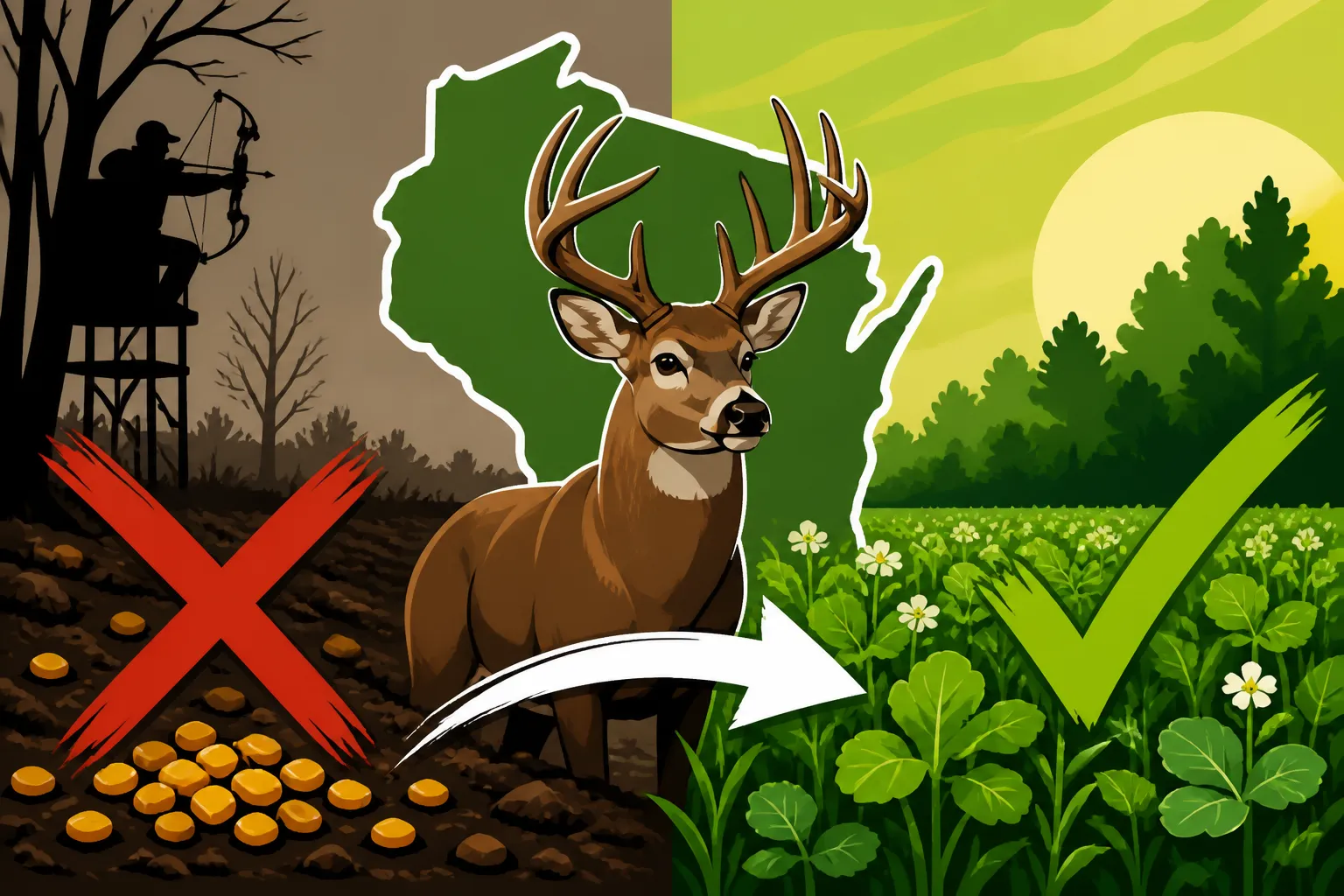
Food Plots Instead of Bait
It can feel like a real punch to the gut when you've got your hunting season all planned out, only for a baiting and feeding ban to pop up in your county. Suddenly, your usual go-to strategy for attracting deer is off-limits, leaving you scrambling for a new approach. This guide is here to help you navigate those challenges by showing you how food plots can be a fantastic, legal, and highly effective alternative for attracting and holding deer on your property, year after year, right here in Wisconsin.
Why Food Plots are a Game Changer When Baiting is Banned
Let's be honest, many of us grew up with bait piles. They were simple, they worked, and they were a part of the hunting tradition for generations in many areas. So, when the rules started changing, especially with the expansion of Chronic Wasting Disease (CWD) and the subsequent baiting and feeding bans in more and more counties, it left a lot of hunters scratching their heads, feeling frustrated, and wondering how they were going to put deer in front of their stands. The core problem with baiting, as the DNR has explained, is that it concentrates deer in unnaturally high numbers at a single spot, increasing nose-to-nose contact and the potential for disease transmission. It’s a bitter pill to swallow when you’re just trying to enjoy your passion, but it’s the reality we face.
This is where food plots step in as not just a good alternative, but often a superior one. Unlike a limited bait pile that's gone in a few days or weeks, a well-planned food plot provides a continuous, natural food source for deer over an extended period. This isn't just about attracting deer during hunting season; it's about improving the overall health of the deer herd on your property throughout the year, from antler growth in bucks to fawn production in does. It changes your property from a drive-thru for deer to a destination, encouraging them to stay, browse, and bed nearby. Instead of simply drawing deer in for a quick snack, you're providing vital nutrition that makes your property more attractive and healthy for them long-term. Plus, it's a perfectly legal way to concentrate deer, falling outside the definition of baiting as long as you adhere to planting guidelines and don't introduce non-natural feeds.
Understanding Different Types of Food Plots for Wisconsin Deer
When you start looking into food plots, you'll quickly realize it's not a one-size-fits-all solution. Different plants thrive in different conditions, attract deer at various times of the year, and require different levels of commitment. The key is to match the right plot type to your specific property, soil conditions, and hunting goals. Think about what time of year you want to attract deer most and what kind of cover and water sources are nearby.
Annual Plots for Quick Attraction and Seasonal Pull
Annual plots are those that complete their life cycle in one growing season, meaning you'll need to replant them every year. But don't let that deter you; they offer incredible flexibility and can be highly effective for specific times of the hunting season. Popular choices for Wisconsin hunters often include brassicas (like rape, kale, and turnips), cereal grains (oats, wheat, rye), and sometimes annual clovers or peas.
Brassicas, in particular, are fantastic for late-season hunting. They actually become more palatable to deer after a few hard frosts convert their starches to sugars. Imagine a deer herd pawing through a light snow to get at sweet turnip tops or digging for the bulbs; it's a sight many hunters dream of. Cereal grains like oats can offer excellent early-season draw, especially if planted in late summer, providing lush green forage when natural browse might be dwindling. Wheat and rye, on the other hand, are extremely hardy and can provide forage even into the coldest parts of the season. The beauty of annuals is that you can adapt them year to year based on your observations, a particular season's weather patterns, or even changing deer preferences.
Perennial Plots for Long-Term Nutrition and Reduced Work
Perennial plots, once established, come back year after year for several seasons, significantly reducing the annual labor compared to annuals. This makes them a favorite for hunters looking for a more hands-off approach to consistent deer attraction. Clover and alfalfa are the undisputed champions of perennial food plots in Wisconsin.
Clover, especially varieties like white clover or ladino clover, is incredibly attractive to deer throughout the spring, summer, and fall. It's high in protein, which is crucial for antler development and fawn growth. A well-maintained clover plot can last for three to five years, sometimes even longer, with just a bit of mowing and occasional reseeding of bare spots. Alfalfa offers similar benefits, being highly nutritious, but it generally requires more specific soil conditions and pH levels, often making clover the easier choice for many hunters. The consistent presence of a lush perennial plot can be a major factor in deer choosing to bed and live on your property, especially when other food sources are scarce. It provides a reliable food bank that deer learn to depend on, potentially reducing deer movement off your property in search of better forage.
Diverse Mixes and Strategic Planting
Sometimes, the best food plot isn't a single crop, but a thoughtful mix. Blending annuals and perennials can provide year-round attraction and hedge against unpredictable weather. For instance, planting a mix of clover and chicory can give you a hardy perennial base with added drought resistance and nutritional diversity. Or, consider planting a small patch of oats for early archery season, another plot of brassicas for the late season, and a perennial clover plot as a central hub. This strategy gives deer multiple reasons to visit your property at different times of the year, and provides a continuous buffet.
When considering what to plant, also think about your overall property layout. A long, narrow plot along a timber edge might be great for archery, offering close shots, while a larger, more open plot might be better suited for gun season. You can learn a lot about optimizing your property by studying resources like Hunting Wisconsin Farmland Deer or even looking into Scouting Wisconsin Public Land Before Season for ideas on deer movement patterns.
Planning and Establishing Your Food Plot
You can't just throw some seeds on the ground and expect a bountiful deer magnet. Successful food plotting requires careful planning, attention to soil health, and a commitment to proper planting and maintenance. This isn't a quick fix like dumping a bag of corn, it’s an investment in your property and the deer herd.
Site Selection and Soil Preparation
The first, and arguably most critical, step is choosing the right location. Deer need food, water, and cover, and your plot should ideally be near good bedding areas and water sources. Sunlight is paramount; most food plot crops need at least 6-8 hours of direct sunlight per day. Avoid heavily shaded areas. Also, consider accessibility. How will you get equipment in and out? Will you disturb deer too much during planting and maintenance? Using mapping tools, like those found on GoHunt, can be incredibly helpful for analyzing terrain, identifying potential bedding cover, and planning your access routes without bumping deer. You can even use these tools to interpret aerial photos to find ideal openings or edges.
Once you have a location, soil testing is non-negotiable. Seriously, don't skip this step. A soil test will tell you your soil's pH level and nutrient deficiencies. Wisconsin's soils vary wildly, from sandy loams to heavy clays, and their natural pH levels can differ greatly. Most food plot crops prefer a pH between 6.0 and 7.0. If your pH is too low (acidic), you'll need to apply agricultural lime, often months before planting, to raise it. The soil test will also recommend how much fertilizer your specific plot needs. Guessing is just a waste of time and money; getting your soil right is the foundation of a successful plot.
Then comes site preparation. This typically involves clearing any existing vegetation. For new plots, this might mean mowing, tilling, or even using herbicides. A good, firm seedbed is essential. You want to work the soil to a fine tilth, similar to what you'd prepare for a garden, but not so fine that it turns to powder.
Planting Techniques and Timing
Timing is everything when it comes to planting. Spring plots, often clover or oats, are typically planted after the last hard frost, usually late April to mid-May in much of Wisconsin. Fall plots, like brassicas or winter grains, are planted in late summer, usually mid-July through August, to allow them to establish before the cold weather sets in. The exact dates will depend on your specific region of Wisconsin and the specific crop you're planting.
There are a few primary planting methods:
- Broadcasting: This is the simplest method, scattering seeds by hand or with a hand-crank spreader. After broadcasting, you'll need to lightly drag or roll the plot to ensure good seed-to-soil contact.
- Drilling: For larger plots, a no-till drill or grain drill is highly efficient, placing seeds at the perfect depth and ensuring excellent seed-to-soil contact. This method conserves moisture and reduces weed pressure.
- Tilling and Planting: After tilling the soil, you can broadcast or use a planter. Tilling is often necessary for breaking new ground or incorporating lime and fertilizer.
Always follow the recommended seeding rates for your chosen crop. Too much seed can lead to overcrowding and stunted growth, while too little leaves bare spots for weeds to take over. And remember, good seed-to-soil contact is crucial for germination, so don't be afraid to roll your plot with a cultipacker or even the tires of your ATV after broadcasting.
Maximizing Your Food Plot's Effectiveness
A thriving food plot is only half the battle. To truly leverage it for your hunting success, you need to think strategically about its placement, size, and how you hunt it. This is where your food plot transitions from a nutritional buffet to a precision hunting tool.
Strategic Placement and Size
The location of your food plot should integrate seamlessly with the natural travel patterns of deer on your property. Consider placing plots along natural funnels, near known bedding areas, or between bedding and larger destination food sources. A small "kill plot" of a quarter to half an acre, nestled deep in the woods, can be incredibly effective for enticing a mature buck into bow range, especially if it’s designed for easy, low-impact access for you. Larger plots of several acres might serve as primary feeding destinations, drawing deer from a wider area. These larger plots are often ideal for Hunting the Wisconsin Rut in November, as bucks will cruise their edges looking for does.
Think about how you'll approach and exit your stand without alerting deer. Use natural terrain features or thick cover as screens. The goal is to set up your plot and stand in a way that allows deer to use the plot naturally, feeling secure, while you have a reliable, undetectable hunting setup. When using a tool like GoHunt, you can analyze topographical maps to identify ridge points, drainages, and other features that deer naturally use, helping you pinpoint the most effective plot locations. Even small "pocket plots" in strategic areas can provide a huge return on investment.
Integrating Food Plots with Overall Property Management
A food plot shouldn't exist in a vacuum. It's most effective when considered part of a larger habitat management strategy. This might involve hinge-cutting trees to create bedding cover, improving water sources, or establishing screening cover along roads or property lines. For example, a food plot positioned to offer a late-season draw pairs perfectly with nearby thermal cover, creating a complete package that keeps deer on your property during the harshest winter months. You can explore topics like Late-Season Food Sources for Whitetails to get more ideas on how to round out your strategy.
Consider the Wisconsin Deer Population Estimate for your area; if deer numbers are high, you might need larger plots or more plots to feed the herd adequately. Conversely, in areas with lower deer density, even a small, well-placed plot can be a magnet. Food plots, particularly perennial clovers and brassicas, can also help mitigate the impact of baiting bans by providing a safe, natural, and distributed food source, reducing the incentive for deer to congregate at illegal bait sites. This isn’t just about hunting; it’s about being a responsible land steward and contributing to the health of Wisconsin's deer herd.
Maintaining and Hunting Your Plot
Maintenance is key for keeping your food plot productive. Perennial plots will benefit from occasional mowing to encourage new growth and suppress weeds. Annuals might require spot-spraying for weeds if they become too aggressive. Monitor your plots throughout the season to see what deer are eating and when. Trail cameras can be invaluable here, giving you insights into deer visitation patterns and preferences.
When it comes to hunting, be smart. Don't overhunt your plots, especially small ones. If deer start associating the plot with danger, they'll become nocturnal or simply avoid it. Pick your days, paying close attention to wind direction and entry/exit routes. For gun season, you might consider setting up on a travel corridor leading to the plot, rather than directly on it, especially if it's a larger, more open area. If you're archery hunting, an elevated stand or ground blind on a field edge can offer great opportunities, especially if you're targeting deer moving between bedding and feeding areas. Understanding topics like Hunting Deer Without Bait in Wisconsin will help you adapt your tactics to food plot hunting.
Remember, patience and observation are your best allies. Food plots are not instant magic, but with consistent effort and strategic thinking, they will transform your property into a true deer haven and provide incredible hunting opportunities, even when Wisconsin Baiting and Feeding Bans are in effect.
Here's a quick overview of some popular food plot crops for Wisconsin:
| Crop Type | Best Use | Planting Time (Wisconsin) | Deer Preference | Key Benefits | Notes |
|---|---|---|---|---|---|
| Clover | Year-round forage, early/mid-season hunt | Spring (Apr-May), Fall (Aug-Sep) | High preference, especially lush growth | High protein, perennial, relatively low maintenance | Requires good pH, benefits from mowing. |
| Brassicas | Late-season attraction, post-frost | Late Summer (Jul-Aug) | Increases post-frost | Cold hardy, highly attractive after freezes | Needs fertile soil, can get weedy if not managed. |
| Oats | Early-season attraction (bow hunt) | Late Summer (Jul-Aug) | High preference when young and green | Quick growth, provides excellent early forage | Annual, dies back after hard freeze. |
| Winter Wheat/Rye | Late-season and winter forage | Late Summer (Aug-Sep) | Consistent browse throughout cold | Extremely cold hardy, provides winter food | Deer may prefer brassicas in fall, but will browse. |
| Alfalfa | High-protein, year-round (perennial) | Spring (Apr-May) | High preference, very nutritious | High yield, perennial, great for herd health | Requires higher pH, more intensive management. |
| Chicory | Mix with clover, drought tolerant | Spring (Apr-May) | Moderate to high, leafy greens | Drought tolerant, high mineral content | Best mixed with other crops, adds diversity. |
Disclaimer
The information provided in this guide is for informational purposes only and is not intended as legal advice. Hunting regulations, baiting and feeding bans, and other laws can change frequently. It is the responsibility of every hunter to consult the most current Wisconsin Department of Natural Resources (DNR) regulations and local ordinances before engaging in any hunting activities or establishing food plots. Always be aware of your specific Wisconsin Deer Management Units by County as rules can vary.