Grunt Calls in Mature Timber
Hunting mature timber in Wisconsin can often feel like you're chasing ghosts. The woods are thick, visibility is limited, and deer seem to vanish into thin air, leaving you feeling frustrated and unheard. This comprehensive guide will walk you through the nuanced art of using grunt calls effectively in these challenging environments, helping you break the silence and pull those elusive bucks right into your shooting lane.
The Unique Challenges of Grunting in Mature Wisconsin Timber
Hunting mature timber is a different beast altogether compared to chasing deer in open agricultural fields or even smaller woodlots. The sheer density and vastness of these areas, particularly in places like the Chequamegon-Nicolet National Forest or the larger county forests up north, demand a specialized approach to calling. You can't just blast a grunt call and expect a buck to come charging in like he would in a more open, competitive setting.
Why Mature Timber is Different
Mature timber, by its very nature, offers abundant cover and security for deer. They're not constantly on edge about being seen from a quarter-mile away. Instead, they navigate a labyrinth of ancient hardwoods, dense pine stands, and thick underbrush, moving with a quiet confidence that makes them incredibly hard to spot. Visibility is often measured in yards, not hundreds of yards, making visual scouting and shot placement tricky. This dense canopy also means that sound behaves differently. While your grunt call might carry a good distance on a still morning, the thick foliage can also absorb and muffle sounds, making it hard to judge how far your call is actually traveling or if it's even reaching a buck's ears effectively. It can feel like you're shouting into a void, which is a common and understandable frustration for hunters who spend time in these deep woods. Deer here are often older, wiser, and far more accustomed to being undisturbed, meaning they're not easily fooled by an aggressive, out-of-place sound.
Reading Deer Behavior in a Silent Woods
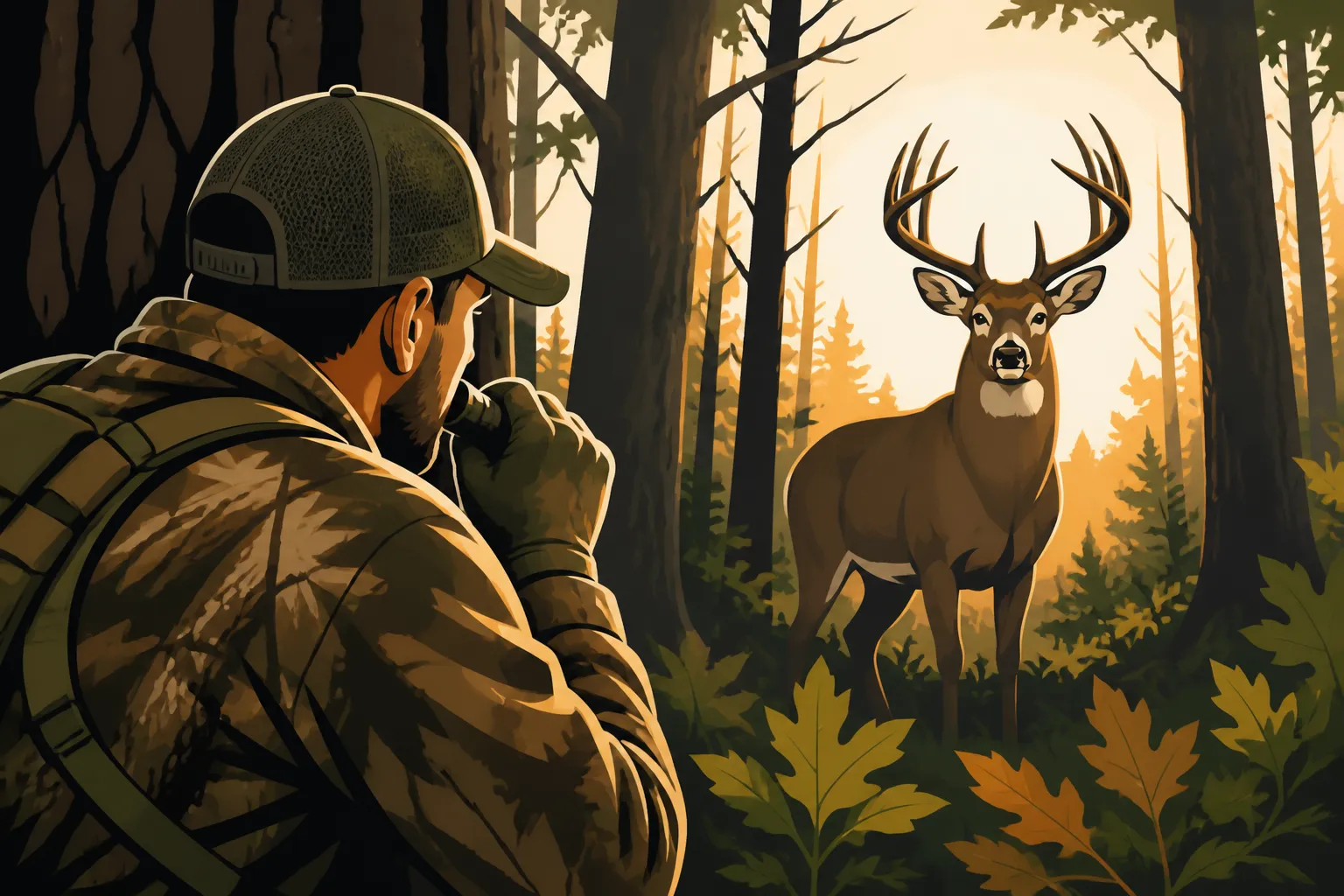
Before you even think about raising a grunt tube to your lips, you need to understand the whitetail's playbook in mature timber. Deer use these vast forests for everything: bedding down in thick pockets, traveling along ancient game trails, and finding sustenance. They aren't just randomly wandering; they follow patterns dictated by security, food sources (like acorn flats or browse), and topography. Look for subtle signs: faint trails weaving through the understory, fresh rubs on saplings, or the dark, disturbed earth of a scrape. These are the "silent communications" bucks leave behind, telling you where they've been and where they might be headed. Understanding these patterns, perhaps by utilizing mapping tools like those offered by GoHunt to identify potential travel corridors or bedding areas, is crucial. If you're set up near a scrape line along a logging road or where deer transition from a bedding area to a feeding area, your grunt call has a much higher chance of success. Remember, even if you don't see a deer, that doesn't mean they aren't there. They're often just out of sight, listening, watching, and making their own silent judgments.
Mastering the Art of the Grunt Call in Thick Woods
Successfully using a grunt call in mature timber isn't about volume; it's about nuance, timing, and realism. You're not trying to imitate a chainsaw, but rather a subtle, convincing communication that piques a buck's curiosity without raising red flags. It takes practice and a keen ear to get it right.
The Right Call, The Right Sound
When it comes to grunt tubes, you've got options. Some hunters prefer fixed-reed calls for their consistency, while others swear by adjustable calls, which allow you to vary pitch and tone to mimic different bucks. In mature timber, realism is paramount. You want a call that produces a deep, throaty grunt, not a high-pitched squeak. Think about the dominant buck sounds you might hear in nature. Most importantly, practice. Get to know your call. Understand how much air pressure is needed for a soft, subtle grunt versus a slightly louder, more urgent one.
There are a few core grunt types you'll want to master:
- Social Grunts: These are typically softer, shorter grunts that deer use to communicate their presence. Think of them as saying, "Hey, I'm here." These are excellent for cold calling or when you suspect a buck is nearby but out of sight.
- Contact Grunts: A bit more deliberate, these are used when a deer is actively looking for another deer. They're slightly longer and might be strung together in a short series. Use these when you want to make a deer believe another deer is in its immediate vicinity.
- Tending Grunts: These are longer, more drawn-out grunts, often associated with a buck actively pursuing a doe during the rut. They convey a sense of urgency and can be highly effective during the peak breeding phase.
Start with softer, more subtle sounds. You can always increase volume, but it's hard to dial it back once you've spooked a wary buck with an overly aggressive call. The goal is to sound natural, like just another deer in the woods.
Strategic Calling Sequences and Volume
The rhythm and volume of your calling are just as important as the sound itself. In thick timber, you rarely need to call loudly. Sound travels, and a buck might be closer than you think. Start with a series of 2-3 soft, social grunts, waiting about 20-30 seconds between each sequence. Then, be patient. Wait 5-10 minutes, straining your ears for any response: a twig snap, a deer blowing, or even a return grunt. You'd be amazed how often deer will respond with subtle cues you might miss if you're not fully tuned in.
If you don't hear anything, you can try a slightly louder series, perhaps a contact grunt, and then wait again. The key is to convey a sense of curiosity and presence, not desperation. Here’s a basic framework to consider, which can be modified for different situations:
| Grunt Call Type | Volume & Pace | When to Use (Mature Timber) | Expected Buck Behavior |
|---|---|---|---|
| Social Grunt | Soft, single, 3-5 sec apart | Cold calling, subtle curiosity, buck out of sight | Curiosity, may approach slowly, stop & listen |
| Contact Grunt | Medium, 2-3 grunts, 10 sec apart | Suspect buck is close, trying to locate | More direct approach, looking for source |
| Tending Grunt | Medium-loud, drawn out, aggressive | Peak rut, chasing a doe, high-stakes | Aggressive approach, direct, less cautious |
| Snort Wheeze | Loud, aggressive, short | Challenge a dominant buck, last resort | Aggressive challenge, may charge or flee |
Adjust your volume based on conditions. On a windy day, you might need to increase the volume slightly, but always err on the side of caution. In a calm, still woods, even a whispered grunt can be heard quite a distance. And if you’re positioned in a spot that uses the natural acoustics of the terrain, like a small hollow or a ridge point, sound will carry differently. Remember, patience is your best friend when hunting mature timber. Don't overcall and spook a deer that was already on its way.
Situational Grunting: When and Where to Use Your Call
Knowing when and where to deploy your grunt call in mature timber is just as important as knowing how to make the right sound. Timing and location can make all the difference between a buck ignoring you and one coming in on a string.
Key Times and Terrain for Grunting
The effectiveness of your grunt call in Wisconsin's mature timber often aligns with the various phases of the rut. During the early season, leading into the pre-rut in late October, bucks are establishing dominance and starting to scent check for does. A subtle social grunt can pique their curiosity. As you move into the heart of November, the peak rut week in Wisconsin, bucks are actively chasing does, making them much more responsive to aggressive calls like tending grunts or even snort-wheezes. However, even during the late season, a soft grunt can sometimes draw in a lonely buck still looking for a receptive doe or simply responding to what sounds like another deer.
When it comes to terrain, mature timber offers specific hot spots for calling:
- Ridge Lines and Saddles: Deer frequently travel along the tops of ridges and through saddles, which act as natural funnels. Setting up in a saddle and grunting can draw deer moving between bedding and feeding areas. If you're Reading a Ridge Point for Deer Movement, you'll know these are prime locations.
- Creek Bottoms and Drainages: These often provide natural travel corridors, especially during drier periods. Bucks will use them to move undetected.
- Edges of Thicker Bedding Areas: If you've done your scouting and know Where Northern Forest Bucks Bed, setting up on the downwind edge of these areas and using soft grunts can sometimes pull a buck out of its sanctuary.
- Transitional Zones: Areas where mature timber gives way to younger cuts, swamps, or even small clearings can be excellent spots. Bucks will stage in the timber before entering these more open areas.
Always consider the wind and thermals. In a coulee or hilly terrain, thermals often rise in the morning and fall in the evening. Setting up so your scent blows away from where you expect a buck to approach is critical. For a deeper dive into this, check out our guide on Wind and Thermals in a Coulee.
Setting Up for Success After a Call
Calling a buck in is only half the battle; getting a shot is the other. In thick mature timber, where visibility is limited, your setup needs to be impeccable. Once you make a call, assume a deer is coming and prepare for it.
- Concealment is King: Whether you're in a treestand or a ground blind, ensure you're well hidden. Mature timber offers plenty of natural cover, so use it. Break up your outline, stay still, and let the woods work for you. For insights on optimal elevation, read up on Treestand Setups in Wisconsin Hardwoods.
- Drawing Your Weapon: Anticipate the buck's approach. If you're bowhunting, you'll need to draw your bow before the buck is looking directly at you. In thick cover, this might mean drawing as soon as you hear a subtle sound or see the slightest movement, knowing that your shooting window will be small and fleeting.
- Anticipate the Downwind Approach: It's an age-old hunter's frustration, but bucks, especially older, wiser ones, will almost always try to circle downwind to scent-check the source of the grunt. Position yourself so that a buck approaching from downwind still has to expose itself or walk into a shooting lane before it gets directly into your scent cone. This often means setting up just off the main trail or funnel, allowing the buck to pass in front of you as it tries to circle. If you're on public land, remember that deer can be highly pressured, and this behavior is even more pronounced. This is where strategic scouting using tools like the Wisconsin Hunt Wild App (or external mapping apps like GoHunt for detailed terrain analysis) becomes invaluable, helping you pinpoint those approaches before the season even begins.
Common Grunting Mistakes and How to Avoid Them
Even seasoned hunters can make mistakes with grunt calls, especially in challenging environments like mature timber. Recognizing and correcting these errors can dramatically increase your success rate.
Overcalling and Undercalling
One of the most common mistakes is either calling too much or not enough.
- Overcalling: Blasting your call constantly can alert deer to your presence, sound unnatural, and ultimately scare them off. Wary timber bucks are not easily fooled. If you hear a deer, and it's not responding, don't keep hammering the call. Sometimes, silence is the best call. Let the deer stew over your initial sound, hoping curiosity wins out. They might already be heading your way silently.
- Undercalling: On the flip side, being too timid with your call means your message might not reach the deer you're trying to attract. If you're in a vast tract of timber, a very soft grunt on a windy day simply won't carry. You need to find that balance. Start soft, and if you don't get a response after a reasonable wait (5-10 minutes), slowly increase the volume or change the type of grunt. Pay attention to how the deer in your specific hunting area are reacting. They'll tell you what they like and what they don't.
Not Accounting for Wind and Terrain
This is perhaps the biggest cardinal sin in deer hunting, and it's amplified when you're actively trying to attract a deer. If you call a buck and it circles downwind into your scent cone before you can get a shot, the game is over. This is a crucial consideration, particularly in the Wisconsin Driftless Area where terrain is steep and unpredictable, making Wind and Thermals in a Coulee a complex challenge.
- Scent Management: Always hunt with the wind in your favor, blowing your scent away from where you expect deer to approach. This means positioning yourself downwind of likely travel corridors, bedding areas, or scrape lines.
- Using Terrain to Your Advantage: Identify natural funnels created by terrain features like thick draws, narrow saddles between ridges, or the edges of dense swamps. These features can help predict where a deer will travel and how it will approach your setup. If you're Hunting a Funnel Between Two Swamps, for example, you can often predict a buck's approach and set up accordingly. This kind of strategic placement allows you to control the engagement zone and ensure the deer steps into your shooting lane before it catches your wind.
Incorporating Visuals Sparingly
While grunt calling is primarily an auditory tactic, some hunters consider adding a visual element. However, in mature timber, this must be done with extreme caution, if at all.
- Decoys: A deer decoy, especially a doe or a small buck, can sometimes draw a buck in further, especially during the rut. However, in thick cover, a decoy's visibility is limited, and it can also present a challenge for your shot placement if the buck focuses solely on the decoy. Furthermore, in areas with high hunting pressure, some deer may be wary of decoys. Always check local regulations, as rules regarding decoys can vary. For instance, in some situations, using a visual aid might be considered an element of Hunting Without Bait in a Banned County, but the rules around decoys are separate and crucial to understand.
- Subtle Movement: If you're calling from the ground, a very subtle movement with your hat or a branch can sometimes mimic a deer, but this is incredibly risky and usually not recommended due to the high chance of being spotted.
- Focus on the Sound: In most mature timber scenarios, your best bet is to rely solely on the realism and strategic placement of your grunt calls. Deer often focus intently on the sound source, and if they catch any unnatural movement or a static decoy in a place they wouldn't expect it, they'll often spook. Your goal is to make them believe there's another deer in there, not to put on a show.
Ultimately, using grunt calls in mature Wisconsin timber is about being patient, understanding deer behavior, and applying your calls with precision and realism. It's a challenging but deeply rewarding aspect of hunting that, when done right, can turn a quiet sit into an unforgettable encounter.
Disclaimer
Hunting is an inherently dangerous activity. Always prioritize safety, adhere to all local and state regulations, and exercise good judgment in the field. This guide is for informational purposes only and should not replace proper hunter education or professional guidance. Stay safe and hunt responsibly.