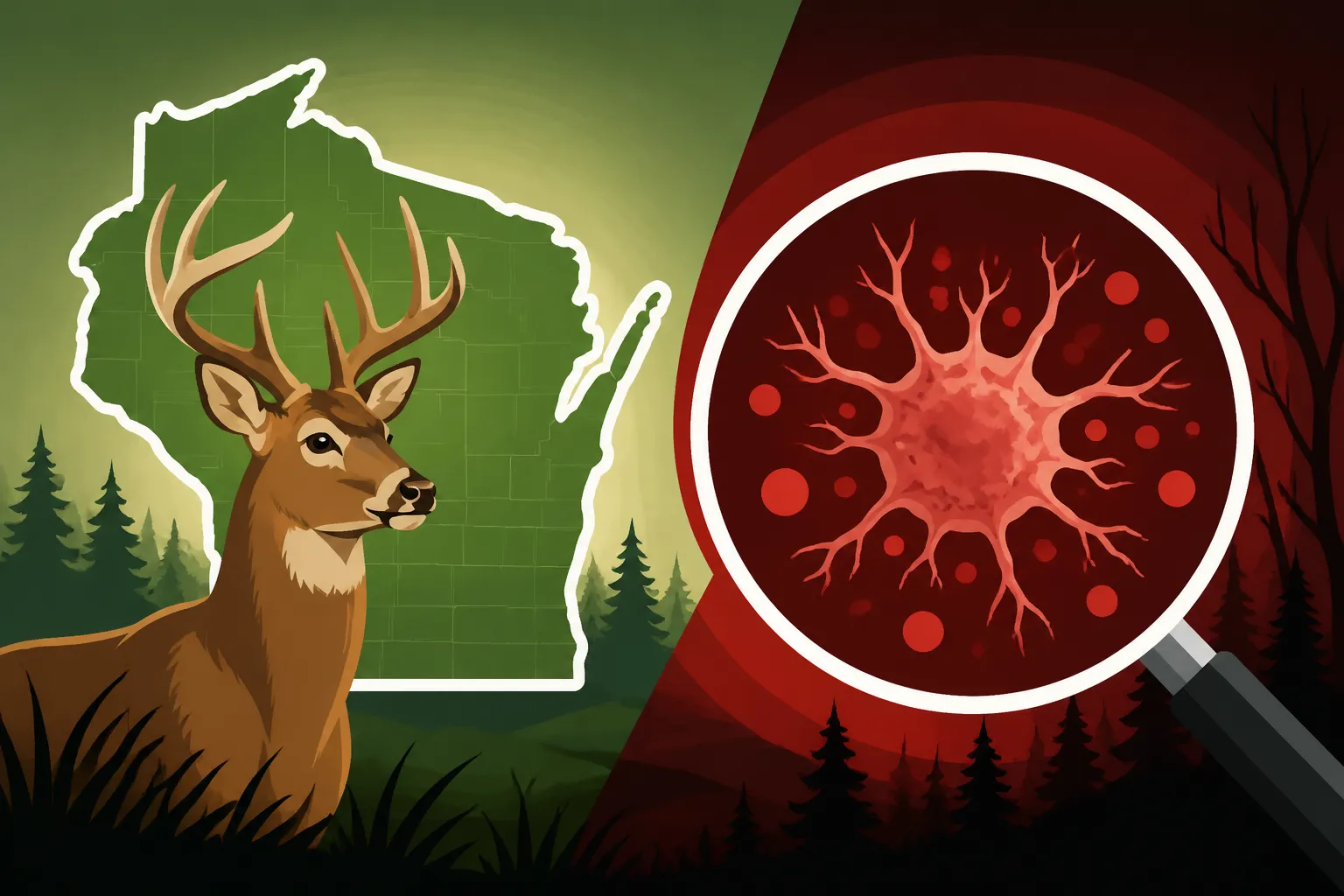
Wisconsin CWD Prevalence Rates
It's incredibly unsettling to hear about Chronic Wasting Disease (CWD) and the concerns around its spread, and many of us hunters find ourselves grappling with what the "prevalence rates" actually mean for our favorite hunting grounds and the future of Wisconsin's deer herd. This guide aims to demystify CWD prevalence rates, explain how these figures are derived, and most importantly, what they genuinely imply for you, the hunter, in various regions of our beloved state.
What Exactly Are CWD Prevalence Rates?
When you hear about CWD prevalence rates, it can sound like a complicated scientific term, but at its heart, it's pretty straightforward: it's a measure of how widespread the disease is within a specific deer population at a given time. Think of it as a snapshot. It's usually expressed as a percentage – for instance, if 5% of the deer tested in a certain area are positive for CWD, the prevalence rate for that area is 5%.
Breaking Down the "Prevalence" Meaning
This isn't just an abstract number; it tells us a lot. A higher prevalence rate in a particular deer management unit (DMU) or county means that a larger proportion of the deer in that area carry the prions responsible for CWD. This has significant implications for herd health, potential transmission, and even the regulations that manage hunting in that region. It’s not just about individual deer; it’s about the overall health trajectory of the entire herd. While a single positive test confirms CWD in an animal, the prevalence rate gives us a broader understanding of the disease's footprint across a landscape. It's what helps wildlife managers understand the scope of the problem and decide on appropriate actions.
Why This Measurement Matters to Hunters
For us hunters, understanding prevalence rates is crucial because it directly influences everything from carcass transportation rules to baiting bans. When the prevalence rate rises in an area, it often triggers management actions aimed at slowing the spread and reducing the number of infected animals. This could mean increased antlerless permits, specific testing requirements, or changes to how you can process your deer. It also gives us a personal risk assessment when we're considering consuming venison from an affected area, although health officials provide guidelines on this. The presence and rate of CWD can significantly impact the long-term health and sustainability of the deer herd, and by extension, our hunting traditions. For a deeper dive into the disease itself, check out our article on Chronic Wasting Disease in Wisconsin.
How Wisconsin Monitors CWD Prevalence
Wisconsin has a robust system in place to monitor CWD, and it relies heavily on hunter participation. It's not just random sampling; it's a strategic effort to gather data from areas known to have CWD and those bordering them, as well as new areas where the disease might appear. This meticulous data collection is what allows wildlife agencies to calculate those prevalence rates we discussed.
The Role of Hunter-Submitted Samples
The cornerstone of CWD monitoring in Wisconsin is the voluntary submission of deer heads by hunters. When you harvest a deer, especially in a CWD-affected county or a county adjacent to one, you're strongly encouraged to submit the head for testing. This is done at designated CWD sampling stations, which include kiosks, staffed check stations, and even some cooperating taxidermists and meat processors. Every head submitted provides a piece of the puzzle, helping wildlife biologists track the disease's geographic spread and its intensity within local deer populations. Without hunters actively participating in this program, getting an accurate picture of prevalence rates would be nearly impossible. You can find detailed information on how to participate by reading about Wisconsin CWD Testing for Hunters and locating a drop-off point at Where to Find a Wisconsin CWD Kiosk.
Laboratory Testing and Data Compilation
Once a sample is submitted, it's sent to a specialized laboratory for analysis. The labs test specific tissues, usually from the brainstem and lymph nodes, for the presence of CWD prions. This process takes time, but the accuracy is paramount. After the results are in, this data is compiled and analyzed by the Wisconsin Department of Natural Resources (DNR). They look at the number of positive samples against the total number of samples collected within specific geographic areas, like a particular DMU or county. These compilations allow them to determine the CWD prevalence rates. This isn't just about counting positives; it's about understanding trends, identifying hotspots, and observing if the disease is moving into new areas. The more samples they receive, the more accurate and reliable their prevalence rate calculations become. For those wondering about the timeline, we have an article on How Long Wisconsin CWD Results Take.
Understanding Regional Differences in Wisconsin CWD
Wisconsin is a big state with diverse landscapes and deer populations, and CWD doesn't affect all regions equally. The prevalence rates you'll hear about can vary dramatically depending on whether you're hunting in the Driftless Area of the southwest, the farmlands of the south-central region, or the vast Northern Forest.
Southern Wisconsin: The Epicenter of CWD Prevalence
The unfortunate reality is that Southern Wisconsin, particularly the Driftless Area and the surrounding farmland counties, remains the primary epicenter of CWD in the state. This is where the disease was first detected in wild deer in 2002, and unfortunately, prevalence rates in some localized areas here can be significantly higher than anywhere else. Factors like high deer densities, certain agricultural practices, and the disease's longer establishment contribute to this. You might find areas with double-digit prevalence rates in adult bucks, and while still lower, significant rates in adult does too.
When looking at specific counties, you'll often see higher numbers reported in counties like Iowa, Dane, and Grant. These areas have been under intense CWD management for years, and understanding the prevalence here is critical for hunters who frequent these parts. This is also where discussions around Wisconsin Carcass Movement Restrictions are most relevant, as preventing the spread from these areas is a top priority. Mapping tools, like those available through GoHunt, can be exceptionally helpful in visualizing these zones and understanding the proximity of high-prevalence areas to your hunting spots.
Lower Rates in Northern and Central Wisconsin
Thankfully, as you move north and into Central Wisconsin, the CWD prevalence rates generally drop significantly. In many Northern Forest counties, CWD is either undetected or found at very low, sporadic rates. This is due to a combination of factors, including naturally lower deer densities in some areas, different habitat types, and possibly the disease not having as long of a foothold there.
However, "lower rates" doesn't mean "no risk." The disease is always a concern, and monitoring continues across the state. Even a single positive detection in a new county can trigger intense surveillance and management actions, including the establishment of new CWD-affected areas. While hunters in the Northwoods may not face the same immediate concerns as those in the Driftless, vigilance and participation in testing are still important to keep these rates low. This statewide effort aims to protect all deer populations, as discussed in How Many Wisconsin Counties Have CWD.
Table: Illustrative CWD Prevalence Trends by Wisconsin Region (Hypothetical)
To give you a clearer picture of how these differences might manifest, here’s an illustrative table. Keep in mind, these are generalized hypothetical examples to show trends, and actual rates fluctuate and are reported by specific DMUs or counties. Always consult the latest DNR reports for current data.
| Wisconsin Region | Deer Density (General) | CWD Presence (General) | Illustrative Adult Buck Prevalence (%) | Illustrative Adult Doe Prevalence (%) | Common Management Responses |
|---|---|---|---|---|---|
| Southwest (Driftless) | High | Established, Higher Prevalence | 10-25% (localized hotspots) | 3-8% (localized hotspots) | Increased antlerless harvest, carcass movement restrictions, baiting bans |
| South-Central Farmland | High-Moderate | Established, Moderate-High Prevalence | 5-15% | 1-4% | Targeted harvest, carcass movement restrictions, baiting bans |
| Central Sands | Moderate | Present, Low-Moderate Prevalence | 1-5% | <1% | Monitoring, targeted surveillance, localized baiting bans |
| Northern Forest | Low-Moderate | Undetected to Very Low/Sporadic | <1% (if detected) | <0.5% (if detected) | Intensive monitoring, rapid response to new positives |
| Eastern Farmland | Moderate-High | Present, Low Prevalence | 0.5-2% | <0.5% | Surveillance, education, localized baiting bans |
Note: These are illustrative ranges to demonstrate typical differences. Actual prevalence rates are specific to individual Deer Management Units and can vary greatly year to year and within small geographic areas.
What CWD Prevalence Means for Hunters
The numbers and the maps can feel overwhelming, but ultimately, understanding CWD prevalence rates empowers us as hunters to make informed decisions about our practices, where we hunt, and how we interact with our harvested game. It's about being responsible stewards of the resource we cherish.
Adapting Hunting Strategies in CWD-Affected Areas
When you're hunting in a CWD-affected area, especially one with higher prevalence rates, you might find that traditional hunting strategies need a tweak. For example, some areas might have increased antlerless quotas to help manage deer density, which is often a factor in disease transmission. This means your focus might shift to harvesting does, which directly contributes to herd health management. You'll also encounter more regulations, like mandatory CWD testing or specific zones for Wisconsin Baiting and Feeding Bans.
Moreover, scouting becomes even more critical. Using tools like GoHunt can help you identify specific CWD zones and plan your approach, perhaps focusing on properties with good testing history or areas where the prevalence is lower. You might also consider adjusting your expectations for trophy hunting in high-prevalence zones, prioritizing healthy meat for the table instead. Learning to hunt without bait, as covered in Hunting Deer Without Bait in Wisconsin, becomes an essential skill when bans are in place.
Personal Decisions on Venison Consumption
This is probably one of the most personal and sensitive aspects of CWD. With positive CWD detections, hunters often wonder about the safety of consuming venison from an infected animal. While public health officials generally state there's no evidence of CWD prions infecting humans, they recommend against consuming meat from CWD-positive deer. For those hunting in areas with higher prevalence, this often means waiting for test results before processing or eating any venison.
Many hunters choose to get every deer tested in CWD zones, regardless of whether it's visibly ill. If a deer tests positive, most will not consume the meat. This is a personal choice, but it's an important one to consider when evaluating prevalence rates in your hunting area. Remember, submitting samples is part of our commitment to responsible hunting and ensuring the future health of the herd for generations to come.
The Long-Term Impact on Deer Management and Hunting Traditions
The ongoing presence of CWD and its varying prevalence rates directly impacts how Wisconsin manages its deer herd. It influences license structures, season lengths, and the allocation of Wisconsin Deer Management Zones. In the long run, consistent monitoring and adaptive management are crucial for mitigating the disease's impact. For us, this might mean new traditions around CWD testing, being more involved in local County Deer Advisory Council (CDAC) meetings, and staying informed through resources like the annual Reading a Wisconsin Harvest Report.
It’s a challenge, no doubt, but it's one we face together as a hunting community. By understanding CWD prevalence rates, we can be more effective partners in managing our deer herd, protecting our wild places, and ensuring that Wisconsin remains a premier hunting destination. The health of the deer and our hunting traditions are intertwined, and responsible action now is key for the future. We can also look at its potential effects on other game species, for instance, the CWD Risk to the Wisconsin Elk Herd is something that is actively monitored and discussed.
Disclaimer
This article is for general informational purposes only and does not constitute professional advice. Laws, prices and regulations vary by location and change over time. Consult a qualified professional for guidance on your specific situation.