Field Hunting Geese in Southern Wisconsin
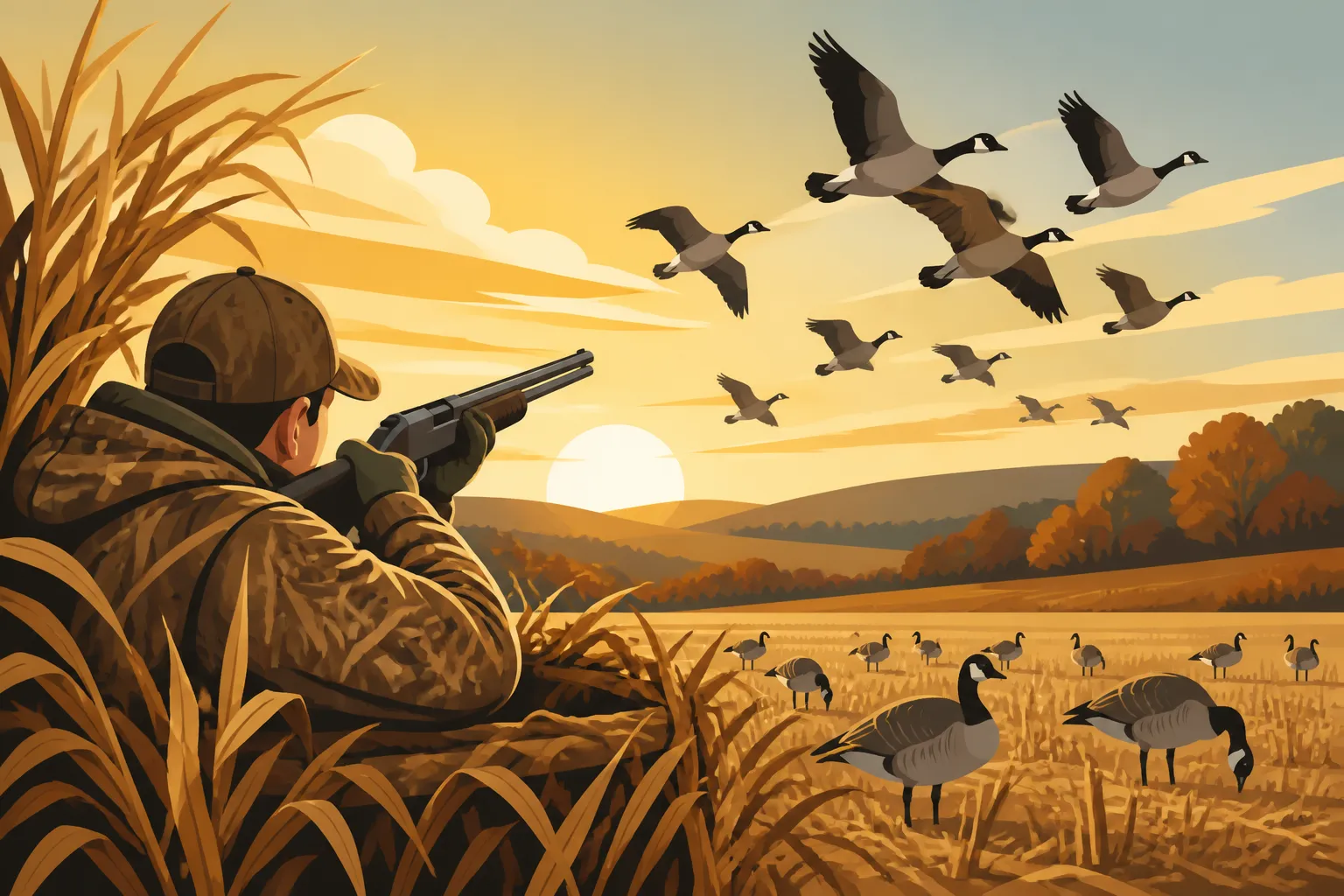
There's nothing quite like the sight of a flock of Canada geese cupping their wings, preparing to commit to your decoy spread, especially when you've put in the hard work to find them. Yet, in the rich agricultural landscapes of Southern Wisconsin, these magnificent birds can be incredibly wary, making successful field hunting a real challenge. This comprehensive guide is designed to walk you through the nuances of field hunting geese in our region, offering practical, in-depth strategies to help you fill your freezer and create lasting memories.
Understanding Southern Wisconsin Goose Behavior and Habitat
To consistently connect with geese in Southern Wisconsin, you really need to get inside their heads. These aren't just random birds flying around; they have routines, preferences, and a surprising amount of intelligence, especially the local flocks that have seen it all. Understanding their habits is the first, and arguably most important, step towards a successful hunt.
Migration Patterns and Timing
Southern Wisconsin lies directly in the heart of the Mississippi Flyway, a superhighway for migratory waterfowl. This means we see a significant influx of Canada geese, often referred to as "honkers," throughout the fall and into the early winter. The migration usually kicks off in earnest by late September or early October, peaking in November. Early season birds, often a mix of local and early migrants, can be a bit more forgiving, but as the season progresses and hunting pressure mounts, they become incredibly wise. Later in the season, particularly when harsh weather pushes birds south from Minnesota and Canada, you'll encounter truly massive flocks that can be both exhilarating and frustratingly difficult to decoy. You'll need to stay current with Wisconsin Waterfowl Seasons and Zones to know when these migratory birds are legally fair game.
The timing of these migrations isn't set in stone, though. It's heavily influenced by weather fronts, food availability further north, and even water conditions. A mild fall might mean birds linger longer in traditional staging areas up north, delaying their arrival in force. Conversely, an early cold snap or heavy snow can push them down quickly. Paying attention to weather forecasts, especially for areas to our north, can give you a crucial edge in predicting when the big pushes will occur. This also means scouting is an ongoing process, not just a one-time event.
Feeding Habits and Preferred Fields
Geese are primarily grazers, and in Southern Wisconsin, that means they're absolutely obsessed with agricultural fields. They love open spaces where they can feed and have a clear line of sight for predators, making them feel safe. Their preferred menu changes throughout the season, but typically includes harvested cornfields, especially those with some waste grain left behind, and winter wheat fields, where the young sprouts offer a fresh, green salad. Soybeans can also attract them, though usually to a lesser extent than corn or wheat.
Understanding their dietary preferences is crucial for locating them. Early in the season, they might be found in freshly cut silage fields or even short-cut hayfields. As the weather cools, the focus shifts heavily to corn and wheat. Identifying Late-Season Food Sources for Whitetails might also clue you into areas where geese are concentrating, as both species often utilize similar agricultural resources. They'll hit these fields hard, sometimes multiple times a day, before heading back to a secure roosting area, which is often a large lake, river, or even a smaller pond with open water.
Local vs. Migratory Flocks
It's really important to distinguish between our resident geese and the migratory birds that pass through or winter here. Southern Wisconsin has a robust population of local Canada geese that often spend their entire lives within a relatively small area. These birds are extremely educated. They've seen every decoy spread, heard every call, and probably survived multiple hunting seasons. They're often the ones that will circle high, give your spread a once-over, and then peel off without ever committing.
Migratory flocks, especially those fresh down from Canada, can sometimes be a bit "dumber" to the call and decoys, at least initially. They might be more focused on finding food and rest after a long flight, making them a bit more vulnerable. However, even these birds quickly learn once they've been shot at a few times in our region. The key is to recognize the difference. Local birds often fly lower, in smaller, more familiar groups, and have specific entry and exit routes to their preferred feeding and roosting sites. Migratory birds often come in at higher altitudes, in larger, more chaotic formations, and might initially explore new fields. Your strategies need to adapt to whether you're dealing with the seasoned locals or the fresh arrivals.
Essential Gear for Field Hunting Geese
Once you've wrapped your head around goose behavior, it's time to talk gear. Field hunting geese isn't like jump shooting a river bend; it requires specific equipment to fool these sharp-eyed birds. Investing in the right tools and knowing how to use them can make all the difference between a frustrating day and a successful one.
Effective Blind Options
Concealment is king when field hunting geese. These birds have incredible eyesight, and if they spot anything out of place, they're gone. There are several popular blind options, each with its pros and cons, especially when considering the varied agricultural settings of Southern Wisconsin.
- Layout Blinds: These low-profile blinds are designed for hunters to lie down in, covering them with stubble straps that allow you to brush them in with natural field vegetation. They're incredibly effective because they disappear into the field. Brands like Avery, Final Approach, and Rogers Sporting Goods offer excellent models. The challenge can be the comfort level for an all-day sit, especially if you have back issues, and they require you to be lying down, which isn't for everyone. However, for sheer concealment, they're tough to beat, especially in open Field Hunting Geese in Cut Corn.
- A-Frame Blinds: These are more portable, freestanding blinds that offer a little more room to sit up or stand. They're essentially a frame covered in camo material, often with stubble straps. While they provide more comfort and mobility than a layout blind, they also present a larger profile, meaning you'll need to work harder to brush them in and ensure they blend seamlessly with the surrounding environment. They're excellent for hunting field edges or areas with taller stubble.
- Pit Blinds: While a more permanent and labor-intensive option, custom-built pit blinds are arguably the most effective. These are dug into the ground, putting hunters at eye level with the field, offering virtually invisible concealment. Obviously, these are only feasible on private land where you have permission to dig, and they require a significant investment of time and resources. For landowners who frequently hunt their own fields, a well-placed pit blind is a game-changer.
No matter your choice, the golden rule is always to brush in your blind meticulously. Use local vegetation – corn stalks, soybean stubble, wheat straw, even dirt. The goal is to make it look like just another lump in the field, not a hunter. You can often find additional helpful tips for maximizing concealment when looking into Layout Blinds and Marsh Boats for duck hunting, as many principles apply.
Decoy Selection and Numbers
Decoys are your silent partners in the field, and a good spread can be the difference between birds landing in your lap and flying by at 100 yards. When it comes to goose decoys for Southern Wisconsin, realism and quantity both play a role.
- Full-Body Decoys: These are the most realistic and arguably the most effective. They mimic the full three-dimensional shape of a feeding or loafing goose, providing depth and realism that silhouettes can't match. Brands like Avian-X, Dakota Decoys, and Tanglefree offer highly detailed full-body decoys that can convince even the wariest birds. The downside is they are bulky, heavy, and expensive, making large spreads a significant investment.
- Shell Decoys: These are half-shells that sit on the ground, offering a decent profile without the bulk of full bodies. They're more affordable and easier to transport, making them a good option for building numbers. Many hunters use them to bulk up a spread of full bodies, creating the illusion of a larger flock.
- Silhouette Decoys: Simple, flat cutouts that are highly portable and inexpensive. While they lack the 3D realism, they can be effective in bright conditions or when trying to replicate a truly massive flock at a distance. They're best used as filler or to extend the edges of a full-body spread.
- Motion Decoys: Flappers, spinners, or even flags can add crucial movement to your spread, mimicking the activity of live geese. A slight breeze can bring a full-body decoy to life, but a well-placed motion decoy can really catch a goose's eye from afar. Be mindful of regulations regarding motorized decoys, though.
How many decoys do you need? That's the million-dollar question. In Southern Wisconsin, where geese are often hunted heavily, more is generally better. A small spread of 12-24 decoys might work for a small, unpressured flock early in the season, but as the season progresses, you'll want to aim for 50, 100, or even more. Large spreads create the illusion of safety and abundance, drawing in larger flocks. Hunters often debate Decoy Spreads for Wisconsin Divers, and while geese are different, the principle of creating a natural, inviting scene remains universal.
Shotguns, Ammunition, and Chokes
Your choice of firearm and ammunition is critical for clean, ethical kills on large, tough birds like Canada geese.
- Shotguns: A 12-gauge shotgun is the standard for goose hunting, offering the power needed to knock down big birds. A 3-inch or 3.5-inch chamber is preferred for heavier loads, and pump-action or semi-automatic models are reliable choices, allowing for quick follow-up shots. You'll want something that fits you well and that you can swing smoothly.
- Ammunition:
Nontoxic Shot Is Required in Wisconsinfor all waterfowl hunting, so steel shot, bismuth, or tungsten super shot (TSS) are your options. For Canada geese, steel shot in BB, BBB, or T size is common. If you're using bismuth or TSS, you can often drop down a shot size (e.g., #1 or #2 bismuth, #4 TSS) due to their increased density and energy transfer. Always prioritize the largest shot size you can pattern effectively to ensure sufficient energy at typical ranges. - Chokes: A modified or improved modified choke is a popular all-around choice for goose hunting, offering a good balance of pattern density and spread at typical shooting distances (30-45 yards). For longer shots, a full or extra-full choke might be considered, but be sure to pattern your chosen ammunition with your choke to ensure a dense, even pattern. Don't assume. Each gun and choke combination is unique, and what works for your buddy might not work for you. Always pattern your shotgun at the ranges you expect to shoot before the season.
Remember, proper Shot Placement on a Black Bear is important for big game, but for geese, it's about putting a dense pattern in the vitals.
| Blind Type | Pros | Cons | Ideal Use Case |
|---|---|---|---|
| Layout Blind | Excellent concealment, low profile, disappears into stubble. | Can be uncomfortable for long waits, requires lying down, can be hard to spot incoming birds initially. | Open cut cornfields, soybean stubble, winter wheat. |
| A-Frame Blind | More comfortable, allows sitting/standing, easier to watch incoming birds. | Larger profile, requires more brushing in, might stick out in very low cover. | Field edges, taller stubble, fence lines, ditch lines. |
| Pit Blind | Superior, virtually invisible concealment, very comfortable, weatherproof. | Permanent installation, requires digging, not portable, only feasible on private land with permission. | Dedicated, frequently hunted private fields where permission is secured long-term. |
Scouting and Permission for Field Hunting Success
You can have the best gear in the world, but without proper scouting and, crucially, permission to hunt private land, your goose hunting efforts in Southern Wisconsin will be largely fruitless. This region is a patchwork of farms, and access is almost always the limiting factor.
Identifying Key Feeding Fields
Scouting for geese is a daily, sometimes hourly, commitment. You're looking for where the birds want to be, not just where you think they should be. This involves a lot of "windshield time" – driving backroads, using binoculars to scan fields, and watching flight patterns. Start by observing where geese are flying from their roosts (often large lakes or rivers like the Wisconsin River or major impoundments). Then, follow those flight lines to identify potential feeding fields. Many hunters find that understanding Reading Roost-to-Field Flight Lines is critical for pinpointing these areas.
Key indicators of a hot field include:
- Visible geese: The most obvious sign. If birds are actively feeding, make a note of the field.
- Droppings and feathers: Look for signs of recent goose activity, even if the birds aren't currently there. Lots of fresh droppings and scattered feathers indicate a popular spot.
- Telltale "potholes": Geese often create small depressions in the ground where they've dug for leftover grain.
- Aircraft noise: Sometimes, if you're close enough, you can even hear the distinct sound of their honking from several fields away.
Tools like Google Earth or the Wisconsin Hunt Wild App can be invaluable for identifying potential fields, mapping routes, and understanding property lines. Commercial mapping apps like onX Hunt or GoHunt offer advanced features that overlay public and private land boundaries, landowner names, and satellite imagery, making your scouting efforts far more efficient. Look for fields adjacent to known roosting areas or within common flight corridors. Remember, geese prefer open fields with good visibility, often away from dense timber or buildings.
Gaining Landowner Access
This is where many aspiring field hunters hit a wall in Southern Wisconsin. Most prime goose hunting ground is on private agricultural land. Simply put, without permission, you can't hunt it. Knocking on doors is the most effective, albeit sometimes intimidating, method.
- Be Polite and Respectful: Always approach landowners with respect. Introduce yourself, explain what you're hoping to do (hunt geese), and assure them you will be responsible, clean up after yourselves, and respect their property.
- Timing is Key: Don't show up during busy planting or harvest times. Weekends or evenings after chores are done are generally better.
- Offer Something in Return: While not always necessary, offering to help with a chore, share some of your harvested birds, or even offering to cover a small lease fee can go a long way.
- Build Relationships: If you get permission, be impeccable. Send thank you notes, share photos, and check in occasionally. A good relationship can lead to years of hunting access.
- Know the Rules: Be familiar with Wisconsin Trespass and Permission Law before you even knock. Some landowners are wary due to past bad experiences, so being prepared and professional is vital.
It’s often easier to gain permission from farmers who have geese regularly feeding on their crops, as these birds can cause damage. Present yourself as a solution to their "problem." Many landowners are happy to let responsible hunters help disperse large flocks.
Reading the Landscape and Flight Paths
Beyond just finding fields with geese, you need to understand how the geese are using that field and the surrounding landscape. This is about identifying their specific entry and exit routes, which dictate where you should set up your blind and decoy spread.
- Wind Direction: Geese, like all birds, prefer to land and take off into the wind. This is crucial. Always set your blind downwind of your decoy spread, so incoming birds are flying directly towards you when they set their wings.
- Topography: Look for natural funnels, dips, or rises in the terrain that geese might follow. A slight ridge, a low spot, or even a line of trees can influence their flight path.
- Obstacles: Power lines, large tree lines, farm buildings, or even roads can act as barriers or guides for geese. They'll often adjust their flight paths to avoid or follow these features.
- Sun Position: Always try to keep the sun at your back, or at least to the side, especially during morning or evening hunts. This makes it harder for geese to spot your blinds and makes it easier for you to see them coming in without squinting.
Observing geese for multiple days, if possible, can reveal consistent patterns. Do they always enter from the same corner? Do they circle a particular tree before landing? These details are invaluable for optimizing your setup. Thinking about Entry Routes on Steep Driftless Ground might not seem directly related, but the principle of identifying how game animals navigate terrain for safety and access to resources is universal.
Decoying and Calling Strategies
Once you've done your scouting, secured your permission, and laid out your gear, it's time to bring those birds in close. Decoy spreads and calling are the art and science of goose hunting, and mastering them takes practice and adaptation.
Decoy Spreads for Different Scenarios
There's no single "perfect" decoy spread, as geese respond differently based on the time of year, hunting pressure, and local conditions. However, some foundational principles and common layouts can greatly increase your odds of success.
- The "J" or "U" Spread: This is a classic and very effective layout. The main body of decoys forms a "J" or "U" shape, with the open end facing into the wind. Your blind should be placed inside the "J" or "U", at the downwind end of the opening. This creates a natural landing zone for incoming geese, as they want to land amongst their "friends" in a clear area. Ensure the opening is wide enough for multiple birds to commit without feeling crowded.
- The "Family Group" Spread: Geese are social birds, but often fly in family groups. Instead of a single, large blob of decoys, try setting up smaller, distinct clusters of 3-6 decoys, spaced a bit apart. This looks more natural and less like a static, unnatural block. Place a few "sentries" (decoys with upright heads) on the edges to simulate alert birds.
- Early Season vs. Late Season: Early in the season, with less hunting pressure, you might get away with smaller, less intricate spreads. As the season progresses and birds become warier, you'll need larger numbers and more realistic, spread-out patterns. Early Goose Season Tactics in Wisconsin often involve smaller spreads and less aggressive calling.
- Adding Movement: Incorporating motion decoys or even a simple flag can draw attention from long distances. The subtle ripple of a motion decoy or the flash of a flag can be the final trigger that convinces a circling flock to commit.
- Mixing Decoy Types: A realistic spread often benefits from a mix of full-bodies, shells, and even silhouettes to create depth and mass. Place full-bodies in the most visible spots, and use shells or silhouettes to fill in and add numbers.
Remember, the goal is to make your spread look as natural as possible – like a group of content, feeding geese. Pay attention to how real geese arrange themselves in a field, and try to mimic that.
Calling Techniques and Sequences
Goose calling is an art, and a good caller can be a huge asset in the field. But more important than fancy notes is realistic, well-timed calling that matches the situation.
- The Basics: The foundation of goose calling includes the "honk" (a single, deep note), the "cluck" (a shorter, sharper honk), the "murmur" (a soft, contented chatter), and the "hail call" (a series of loud, drawn-out honks to get distant birds' attention).
- Matching the Situation:
- Distant Birds: Start with a loud, aggressive hail call to get their attention. Once they turn, back off slightly.
- Approaching Birds: As they get closer, transition to more conversational calls – a mix of honks, clucks, and murmurs. Don't overcall. Let the decoys do most of the work.
- Circling Birds: When birds are directly overhead or circling, scale back your calling. Use soft clucks and murmurs to reassure them. If they're hesitant, a few urgent "come back" calls might work, but often silence is golden here.
- Landing Birds: Just before they commit, often a soft murmur or light cluck is all that's needed to seal the deal.
- Aggressive vs. Subdued Calling: Early in the season, or when birds are unpressured, you can often be more aggressive with your calling. As the season progresses and birds become wary, a more subdued, realistic approach is often better. These Wisconsin Canada Goose Population are smart, and too much, or unrealistic calling, will send them packing.
- Team Calling: If you're hunting with a group, coordinate your calling. One person might be the primary caller, with others adding murmurs and clucks to create a natural chorus. Avoid everyone blowing their calls at once, as it often sounds unnatural.
- Practice, Practice, Practice: The only way to get good is to practice. Listen to real geese, watch calling videos, and spend time perfecting your technique. You can also gain valuable insights by checking out resources on Running Hounds for Wisconsin Bobcats – not for calling, of course, but for understanding how to use vocalizations to elicit a response from wary animals.
Remember, your call is a tool to communicate, not just make noise. Listen to the geese and try to talk back to them in their language.
Adapting to Changing Conditions
Goose hunting is rarely static. What worked yesterday might not work today. Being able to adapt to changing conditions is a hallmark of a successful hunter.
- Weather Changes: A shift in wind direction is the most immediate change that requires adaptation. You might need to quickly reposition your blinds and adjust your decoy spread. Rain or snow can affect how far calls carry and how visible decoys are. Geese often fly lower in foggy or overcast conditions, which can be an advantage.
- Hunting Pressure: If birds are consistently flaring from your spread, it might be a sign of too much pressure. Consider simplifying your spread, moving to a less obvious location, or changing your calling style. Hunting Pressure on Wisconsin Public Land can be immense, and geese quickly learn.
- Bird Behavior: Pay attention to how specific flocks are reacting. Are they circling high? Are they landing short? Adjust your decoy spread (e.g., extend the landing zone, add more sentries) or calling intensity based on their feedback. Sometimes, simply waiting for the right moment or a new flock is the best strategy.
- Scouting Throughout the Season: Geese will move to new fields as food sources are depleted or new crops become available. Continual scouting is necessary to stay on fresh birds. Use tools like
GoHuntto track land ownership and scout new potential fields if your current spot dries up.
The ability to observe, analyze, and make on-the-fly adjustments is what separates consistently successful goose hunters from those who just get lucky once in a while.
Setting Up for the Shot and Retriever Considerations
The moment of truth in goose hunting is when those big birds finally commit. Having a well-thought-out plan for the shot, along with a reliable retriever, can significantly improve your success rate and ethical recovery.
Optimal Blind Placement and Concealment
We touched on this earlier, but it bears repeating with an emphasis on the actual moment of the shot. Your blind's placement isn't just about hiding; it's about providing you with the best shooting opportunity.
- Wind Alignment: This is paramount. Always, always set your blind downwind of your primary landing zone. Geese will commit to land into the wind, meaning they'll approach your blind and spread head-on, then turn to land, exposing their bellies and wings for a clean shot. This ensures the birds are literally flying over or just past your concealed position when they're at their most vulnerable.
- Brush In Like Your Life Depends On It: Even with a low-profile layout blind, if it's not brushed in perfectly, geese will see it. Use copious amounts of local vegetation – cornstalks, grass, dirt clods, anything that makes it blend. Don't be lazy! Pay attention to shadows and ensure no reflective surfaces (like a shiny call or gun barrel) are exposed.
- Spacing from Decoys: Position your blind within easy shooting range of your primary landing zone, typically 20-35 yards. Too close, and birds might detect you; too far, and your effective range decreases, leading to missed shots or wounded birds.
- Sun Position: Ideally, the sun should be at your back, forcing the geese to look into it as they approach, making it harder for them to spot you. This also ensures clear visibility for you to identify the birds and take a clean shot.
Even in areas where Hunting Horicon Marsh Waterfowl might involve more diverse terrain, the principle of maximizing concealment and wind advantage remains consistent for goose hunting.
Shooting Lane Considerations
Once geese are committed and within range, chaos can sometimes ensue. Having clear shooting lanes and understanding when to call the shot is critical for a safe and effective hunt.
- Clear Line of Sight: Ensure you have an unobstructed view and clear shooting lanes from your blind to your landing zone. Avoid placing decoys or blinds behind obstacles like tall weeds, rocks, or anything that could block your swing or obscure incoming birds.
- Communication is Key (Group Hunts): If hunting with others, establish who will call the shot beforehand. Typically, the most experienced hunter or the person with the best view makes the call. A clear "Take 'em!" or "Now!" prevents confusion and ensures everyone is ready.
- Patience is a Virtue: It's tempting to jump up and shoot the moment you see a goose, but patience pays off. Let the birds commit fully, drop their feet, and turn to land. Often, waiting for them to cup their wings and set down will bring them in closer and offer a much larger, more vulnerable target. Don't shoot at birds flaring out or at extreme distances; this often results in wounded birds that are difficult to recover.
- Safety First: Always be aware of your muzzle direction and the position of your fellow hunters. Never swing your gun across another hunter. Establish safe shooting zones before the hunt begins.
Understanding Legal Shooting Hours is also essential to ensure you're only targeting birds when it's permitted.
Working with a Retriever
A well-trained retriever is not just a luxury; it's an ethical imperative in waterfowl hunting. Geese are large birds, and even with a clean shot, they can travel a surprising distance, especially if they hit a glide.
- Efficiency: A good retriever will quickly and efficiently recover downed birds, minimizing the chance of lost game and reducing the amount of time hunters spend wading through fields or cold water. This means you can get back to hunting quicker.
- Ethical Recovery: Losing a wounded bird is a terrible feeling and an ethical failure. A dog's nose and perseverance can find birds that would be impossible for a human to locate, particularly in thick cover or after a long glide.
- Training is Paramount: Start training your retriever early and consistently. Focus on obedience, retrieving skills (marked and blind retrieves), and exposure to gunshots and decoys. A dog that breaks (runs out prematurely) or is unruly in the blind can ruin a hunt.
- Blind Manners: A retriever needs to be calm and quiet in the blind, waiting patiently for the "fetch" command. This means teaching them to sit or lie down quietly, even with geese circling overhead.
- Cold Weather Considerations: In Southern Wisconsin, late-season goose hunting can mean frigid temperatures. Ensure your dog is physically conditioned for cold work and consider a dog vest for insulation, especially if they're retrieving from icy water. Even if you're Waders for Wisconsin Marsh Hunting, your dog needs protection too.
When Hunting the Wisconsin Youth Deer Hunt, young hunters are taught responsibility. The same applies to working with a retriever – it's a partnership where both hunter and dog have roles to play in ethical hunting. A reliable retriever truly completes the field hunting experience.
Common Challenges and Troubleshooting
Even with the best planning and gear, goose hunting in Southern Wisconsin can throw curveballs. These birds are intelligent and adapt quickly to pressure. Knowing how to troubleshoot common problems can turn a frustrating day into a successful one.
Dealing with Wary Birds
Southern Wisconsin geese, especially the resident flocks, are some of the most educated waterfowl you'll encounter. They've seen it all, and they don't give up easily. Dealing with wary birds requires patience, subtlety, and often, a willingness to change your game plan.
- Less is More with Calling: When birds are flaring or simply not responding to aggressive calling, try backing off. Sometimes, a few soft clucks and murmurs are all it takes to reassure them. Overcalling can signal danger to wary birds.
- Focus on Realism in Decoy Spreads: If birds are circling high and leaving, inspect your spread. Is it natural? Are there any unnatural glares or lines? Add more feeders, remove any overly active motion decoys if birds are suspicious, or adjust the spacing to appear more relaxed.
- Improve Concealment: The number one reason wary birds flare is seeing something unnatural. Re-evaluate your blind brushing. Are there gaps? Is your face visible? Even a sliver of exposed skin or a shiny gun barrel can be enough. Consider a face mask and gloves.
- Move Your Position: If a particular field becomes too "hot" (meaning birds are constantly flaring), it might be time to move. Sometimes, simply shifting your setup to a different corner of the field, or even a completely new field, can make a huge difference. These birds remember where they've been shot at.
- Scout for New Roosts/Feeds: Wary birds might have changed their routine due to pressure. Invest more time in Reading Roost-to-Field Flight Lines to locate new feeding areas they've moved to. This is where tools like GoHunt's satellite imagery can become indispensable for finding those hidden corners.
Remember, consistent pressure makes birds smarter. If possible, give heavily hunted spots a break for a few days to let the birds relax.
Weather's Impact on the Hunt
Wisconsin weather is famously unpredictable, and it plays a massive role in goose hunting success. Being prepared and understanding how weather affects goose behavior is crucial.
- Wind is Your Friend (and Foe): Wind provides vital movement for your decoys and dictates how geese approach. A steady breeze (5-15 mph) is ideal. Too little wind, and your decoys look lifeless. Too much wind, and it can be difficult to manage your gear and stay comfortable. Always position your spread and blind to take advantage of the wind.
- Cold Fronts and Migration: A strong cold front pushing down from the north is often a goose hunter's best friend. It can trigger massive migrations, bringing in fresh, less-pressured birds. Pay close attention to long-range forecasts.
- Rain and Snow: Overcast, drizzly, or snowy days can offer excellent hunting. Geese often fly lower in these conditions, and the reduced visibility can make them less wary of decoy spreads and blinds. Snow can also highlight waste grain in fields, attracting birds. However, keeping your gear dry and staying warm becomes even more important. Keeping a Muzzleloader Dry in Wet Snow isn't just for muzzleloaders; it's a good principle for all firearms in adverse conditions.
- Fog: Fog can be a mixed bag. Thick fog makes it almost impossible to see incoming birds until they're right on top of you, making it thrilling but challenging. Lighter fog can conceal you beautifully. Always prioritize safety in foggy conditions.
- Clear, Bluebird Days: These can be the toughest. Geese have excellent visibility, and your concealment needs to be impeccable. Expect birds to circle high and be extremely cautious. This is where large, realistic spreads and subtle calling shine.
Always check the local forecast before heading out. Dress in layers, prioritizing waterproof and windproof outer shells. Layering for a Wisconsin Deer Stand principles apply perfectly to a cold, exposed goose field.
Legal Considerations and Regulations
Hunting geese in Wisconsin, like all hunting, is governed by specific regulations. Ignorance of the law is not an excuse, and a violation can lead to hefty fines and license revocation. Always make sure you're up to date on Wisconsin Goose Zones and Seasons.
- Licenses and Stamps: You'll need a valid Wisconsin hunting license, a Wisconsin waterfowl stamp, and a federal duck stamp. Additionally, you must be HIP (Harvest Information Program) certified. You can purchase these through the
Wisconsin Go Wild Licence System. Make sure you understand the requirements for Wisconsin Federal Duck Stamp Rules and Wisconsin HIP Certification for Bird Hunters. - Seasons and Bag Limits: Pay very close attention to the specific dates for the goose season in your zone. Wisconsin has different goose zones, and dates can vary. There are also strict daily bag and possession limits. Know your Wisconsin Duck Daily Bag Limit and apply that knowledge to geese.
- Nontoxic Shot: As mentioned,
Nontoxic Shot Is Required in Wisconsinfor all waterfowl hunting. Lead shot is strictly prohibited. - Carcass Tagging and Registration: While not as stringent as deer registration, understanding the rules for transporting and possessing harvested waterfowl is important.
- Baiting and Feeding: It is illegal to hunt waterfowl over baited areas. Familiarize yourself with Wisconsin Baiting and Feeding Bans to ensure you are not hunting in an unlawful manner. This primarily applies to deer, but the spirit of fair chase is universal.
- Private Land Permission: We've stressed this, but it's a legal requirement. Hunting private land without permission is trespassing and illegal.
- Blaze Orange/Pink: While not required for waterfowl hunting, if you're hunting during an open gun deer season, specific blaze orange or pink requirements will apply. Always consult the current hunting regulations.
The Wisconsin DNR's website and their annual hunting regulations pamphlet are your best resources. Always carry your licenses and stamps with you while hunting, and consider using the GoHunt app's regulatory features for quick reference in the field. Staying informed keeps you legal, safe, and ethical.
Disclaimer
Please note: Hunting regulations and conditions can change rapidly. Always consult the official Wisconsin Department of Natural Resources (DNR) regulations and publications before heading into the field. This guide is for informational purposes only and does not supersede official state regulations.