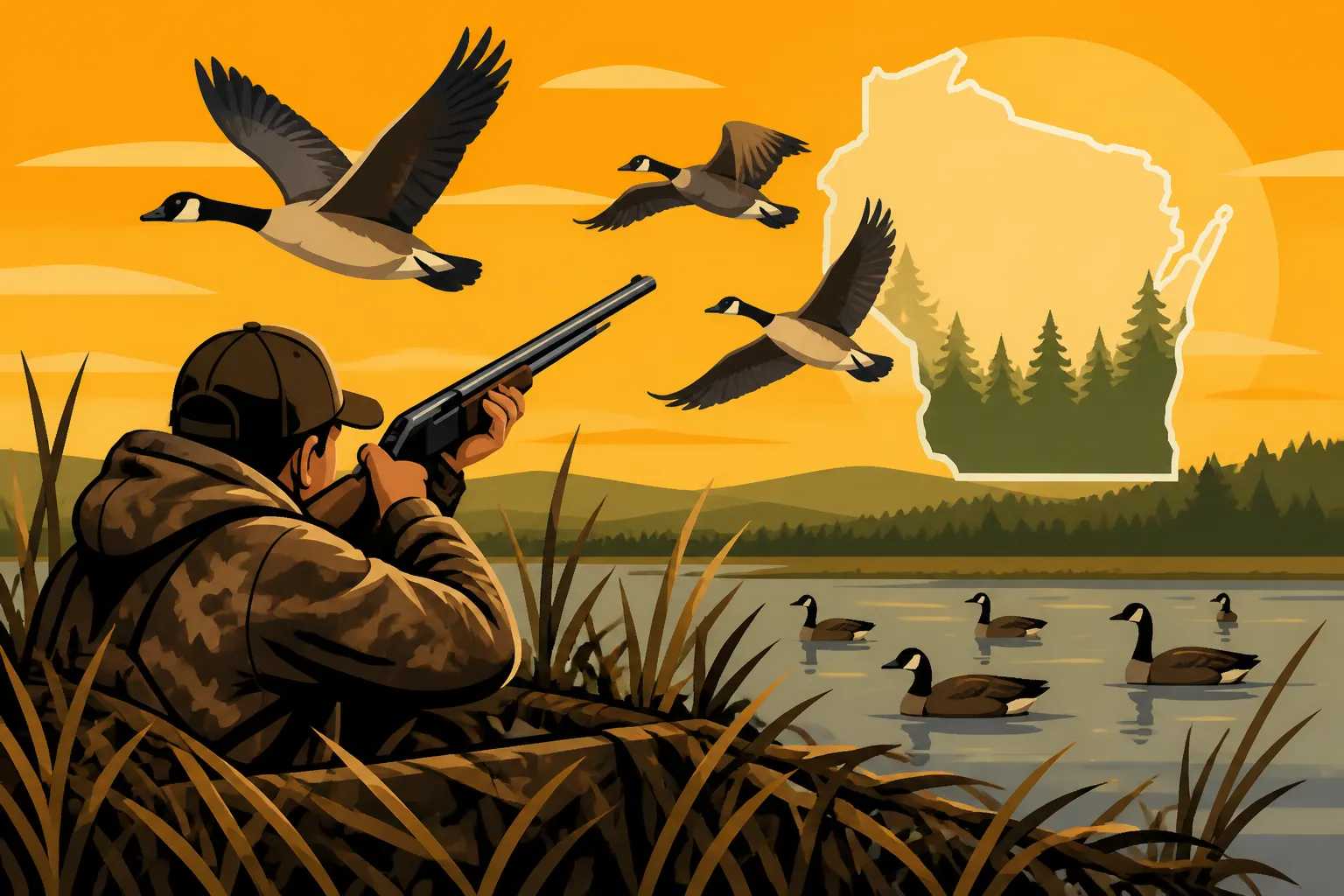
Early Goose Season Tactics in Wisconsin
The anticipation of Wisconsin's early goose season is always a mixed bag of excitement and a little bit of head-scratching. You've got birds around, sure, but they're not necessarily locked into those predictable late-season patterns, and getting them to commit can feel like trying to herd cats. This guide is all about cutting through that early-season confusion, helping you understand goose behavior, master your scouting game, fine-tune your decoy spreads, and get those wary honkers into range.
Understanding Wisconsin's Early Goose Behavior
When that early goose season rolls around, usually in September, things are a little different than the deep freeze hunts we often picture. The birds haven't been hammered by hunting pressure for months on end, but they're also not in their massive migratory flocks yet. Understanding these nuances is key to filling your limit.
The September Shift: Post-Summer Patterns
As summer slowly gives way to autumn, even if the temperatures still feel a bit like August, goose behavior starts to shift. Those big family groups that spent the summer raising goslings are often still intact, but they're beginning to mingle with other families, forming larger, looser aggregations. You won't typically see the huge, organized V-formations of migrating birds you'd expect later in the fall. Instead, think smaller, more localized groups moving from roost to feed and back again. These are often resident Canada geese, those birds that call Wisconsin home year-round, which contributes to the robust Wisconsin Canada Goose Population. While it's great to have them around, these resident birds can also present Resident Goose Problems in Wisconsin for farmers, making early season hunting a valuable management tool. They might be roosting on local ponds, lakes, or large rivers and making relatively short flights to feed.
Their routines can be surprisingly consistent day-to-day, but they're also quick to adapt if they feel pressured. You might find a dozen birds hitting the same cut cornfield every morning for a week, then suddenly disappear if a hunter pushes them too hard. It’s a delicate balance of finding their pattern and not breaking it. Keep an eye out for smaller groups of 10-30 birds rather than waiting for giant flocks; these are often the most common targets in the early season.
Identifying Key Food Sources
Unlike late season, when birds are often fixated on high-energy corn, early season geese in Wisconsin have a wider buffet to choose from. Freshly cut grain fields are always a top contender – corn silage fields, chopped hay, and early soybeans can be magnets. They’ll also hit winter wheat that’s just starting to sprout, offering tender green shoots. Alfalfa fields are another big one, especially in the mornings, providing a protein-rich meal.
Don't overlook those less obvious spots either. Golf courses, large private lawns, or even well-maintained pastures can be excellent feeding areas, especially for those highly localized resident geese. These green pastures offer consistent forage and often less disturbance. The trick is always to find where the birds want to be, not just where you think they should be. Fresh droppings, grazed-down areas, and muddy tracks are your best friends in confirming active feeding sites. Sometimes, what looks like an unassuming patch of grass can be the daily hot spot if it's got the right height and palatability for them.
The Impact of Hunting Pressure
One of the beautiful things about early goose season is that the birds haven't been shot at constantly for months. This means they can be a bit more forgiving, a little less wary, and sometimes, a lot easier to decoy. However, this honeymoon period doesn't last long. Geese are incredibly intelligent and learn quickly. Just a few encounters with hunters can turn them from curious to completely call-shy and high-flying.
This means you need to be strategic. Don't hunt the same field day after day, even if the birds are still using it. Give fields a break. If you shoot a field on Monday, consider moving to a different spot for Tuesday and Wednesday, then maybe returning on Thursday if the birds are still hitting it. This rotating pressure keeps the birds from associating a specific location with danger. Also, be mindful of your approach and exit from the field. Spooking birds flying in or out can educate them just as much as a bad shot. They see everything, and if they spot your truck or you walking in the open, they'll remember it. Minimizing your footprint and keeping your hunting times varied can keep the birds guessing and your success rates higher.
Scouting Strategies for Early Season Success
Effective scouting is truly the backbone of any successful goose hunt, but it's especially critical in the early season when patterns are still forming and might be less obvious. You can't just rely on historical knowledge; you need boots on the ground (or at least eyes on the fields) right now.
Pre-Season Reconnaissance
Before the season even opens, dedicated scouting can pay huge dividends. Start driving the backroads and rural highways a few weeks out, paying close attention to any field where you see geese. Use a good pair of binoculars or a spotting scope to identify what they're doing – are they feeding, loafing, or just passing through? Map out potential roosting areas like large lakes, reservoirs, or major rivers. The Mississippi River backwaters, for example, can be a major staging and roosting area, making Hunting Mississippi River Backwaters a strategic choice for many waterfowl hunters. Note general flight lines from these roosts to various feeding grounds.
Modern mapping tools are incredibly helpful here. Platforms like GoHunt, or the Wisconsin DNR’s Hunt Wild App, allow you to overlay public and private land boundaries, identify different crop types, and mark potential hotspots from the comfort of your home. You can often see the difference between cut corn, standing corn, alfalfa, and soybeans from satellite imagery, giving you a head start on what fields might be attracting birds. Combining this digital reconnaissance with actual field observation creates a powerful scouting advantage. Look for high-traffic areas, even if they aren't directly on a flyway; sometimes, geese will shift their routes based on where the best food is, and the early season is all about finding those temporary sweet spots.
Pinpointing Feeding and Loafing Areas
Once you have a general idea of where birds are, it's time to get specific. This often means early morning or late evening drives to actually see where geese are flying to and from. Watch for fields where flocks are dropping in to feed. Pay attention to specific corners or sections of fields where they concentrate. Fresh droppings, plucked grass, and muddy tracks are unmistakable signs of recent goose activity. If you can, get landowner permission to walk the field and confirm the sign. Don’t just look for where they land, but where they are actively feeding.
Geese also have loafing areas – places where they rest and digest between feeding sessions. These might be a small pond in the middle of a large field, a short-grass pasture adjacent to a feeding area, or even a wide-open mudflat. These spots can be just as important as feeding fields, as geese will often hit both in a single morning. If you find a field that birds are consistently using, try to confirm their presence as close to your hunt day as possible. This minimizes the chance of them changing their pattern. A quick drive-by the evening before or early morning of your hunt is often all it takes to make sure the birds are still using that field. Using a good set of optics, like a high-powered spotting scope, can help you confirm goose presence from a distance without disturbing them, particularly useful if you're targeting fields used by multiple Field Hunting Geese in Southern Wisconsin.
Adjusting to Changing Conditions
Geese are creatures of habit, but those habits can be quickly altered by weather and human activity. A sudden cold front might push more migratory birds into the area, or a heavy rain might make a preferred cornfield too muddy, causing them to shift to higher ground or a different crop. Wind direction is a huge factor, dictating how birds approach a field and where they'll want to land. Always consider the wind when setting up your decoys and blinds.
Even subtle changes can have a big impact. If a farmer suddenly plows a field that was being heavily used, the birds will immediately move on. Or if hunting pressure picks up in one area, birds will abandon it for quieter pastures. This means your scouting isn't a one-and-done deal. It's an ongoing process, right up until the minute you set out your decoys. Don't be afraid to pull the plug on a planned hunt if your pre-dawn check reveals no birds or new activity elsewhere. Being adaptable is perhaps the most important early season tactic. Keep an eye on weather forecasts and understand how they might affect bird movement. A strong north wind often means new birds might be coming in, while a calm, clear day might make them more wary.
Decoy Spreads and Blind Concealment
Now that you've done your homework and found where the geese want to be, it's time to set the stage. Your decoy spread is your invitation, and your concealment is your cloak of invisibility. Get these right, and those wary honkers will drop right into your lap.
Matching the Hatch: Decoy Types and Numbers
In the early season, you don't necessarily need a massive spread of hundreds of decoys. Remember, these are often smaller family groups and resident birds. A spread of 1-3 dozen high-quality decoys can be incredibly effective. Focus on realism. Full-body decoys are fantastic, especially if you can get them to move slightly with the wind, mimicking feeding or preening birds. Shells can also work well, especially for adding numbers, and silhouettes are surprisingly effective, particularly when viewed from a distance or when trying to create the illusion of a larger flock with less bulk.
The key is to "match the hatch" – observe the actual number of birds you've been seeing in your scouted field. If you're consistently seeing groups of 15-20, a spread of 20-30 decoys will look much more natural than a spread of 100. Mix up your poses: some feeders, some sentries, some resting. A few motion decoys can add incredible realism, making your spread come alive. Consider adding a few lesser Canada goose decoys if you see smaller birds in the area, or even a few mallard or pintail duck decoys on the edge of your spread, as geese and ducks will often feed in the same fields, especially in the early season.
Strategic Decoy Placement
This is where art meets science. The goal is to create a landing zone that looks irresistible to approaching geese, usually right in front of your blind and within easy shooting range. Wind direction is paramount. Geese, like airplanes, almost always land into the wind. So, you want your landing zone to be directly downwind from your main decoy cluster.
Common effective spreads for early season include:
- J-hook or U-shape: These spreads create a natural-looking open area for birds to land. Place the bulk of your decoys upwind of your blind, with the hook or "U" extending downwind, creating that inviting landing strip right in front of you.
- Family Groups: Instead of one large cluster, set up several smaller, natural-looking groups of 3-7 decoys. This mimics how early-season family units often spread out while feeding. Leave plenty of open space between these groups for birds to commit.
- The X-factor: Pay attention to how the natural birds land. Sometimes they'll land short of the main flock, sometimes they'll swing wide. Try to mimic that behavior.
Ensure your decoys are spaced out naturally – not in perfect rows. Give them room to "feed" and "loaf." Don't forget to position a few sentry decoys looking in different directions, especially downwind, as if they're watching for danger while the others feed. For those utilizing Layout Blinds for Wisconsin Cut Corn, ensure your landing zone is perfectly aligned with your blinds for ethical shots.
Achieving Ultimate Concealment
Your decoys might be perfect, but if the geese see you, it's game over. Concealment is non-negotiable. Layout blinds are incredibly effective in open fields, but they must be brushed in thoroughly. Don't just toss a layout blind in a field; take the time to gather natural vegetation from the surroundings – corn stalks, weeds, grass – and weave it into the stubble straps of your blind. Make it disappear into the background.
If natural cover is available, use it! A fence line, a stand of tall weeds, the edge of a standing cornfield, or a hedgerow can offer excellent cover. But remember, geese have incredible eyesight, and they'll spot anything out of place. Even your vehicle needs to be hidden. Park it well out of sight, ideally behind a hill, in a ditch, or tucked into a tree line a good distance away from your hunting spot. If you're using natural cover, break up your silhouette completely. Wear camouflage that matches the surroundings. If you're hunting a brown stubble field, don't wear bright green camo. Even the glint of sunlight off a bare face or hands can be enough to flare birds, so face masks and gloves are crucial. The goal is to be a ghost in the field, completely invisible to their sharp eyes.
Calling and Shot Selection Techniques
You've done the scouting, set the stage with decoys and blinds, now it's time for the final acts: calling the birds in and making the shot count. These are skills that improve with practice and experience.
Mastering Early Season Goose Calling
Unlike the frantic, loud calling often employed for large migratory flocks, early season goose calling for resident birds tends to be much softer and more nuanced. These birds haven't been subjected to a symphony of calls all season, so subtlety is your friend. Start with quiet clucks, murmurs, and soft greeting calls. Imagine a small group of birds contentedly feeding; that's the sound you want to replicate.
When birds are at a distance, a soft hail call can get their attention. As they respond and start to work your spread, decrease the volume and increase the realism. Incorporate feed calls (a rapid series of clucks and moans) to mimic birds happily dining. If they seem to hesitate, a pleading cluck or a quieter greeting call might entice them. The key is to listen to the birds and respond accordingly. Don't overcall; let the decoys do most of the work. If birds are coming straight in, sometimes no calling at all is the best calling. Learning to "read" the birds' body language and adjusting your calling is a skill that comes with time and observation. Practice your calling at home, but remember that less is often more in the early season.
The Critical Timing of the Shot
You've watched the birds work, they've committed to the spread, and they're dropping their landing gear. This is the moment of truth. Patience is paramount. It’s a common mistake, especially for excited new hunters, to jump up too early. Wait until the birds are fully committed, wings cupped, feet down, and ideally, well within ethical shooting range. For most shotgun setups, this means birds should be 20-35 yards from your blind. If you jump too early, they'll flare, and you'll often only get long, low-percentage shots.
Communicate with your hunting partners. Designate a shooter or have a specific signal for when to call the shot. On the call "Take 'em!" or "Kill 'em!", everyone rises in unison and picks a single bird. Focus on one bird, swing through it, and take a clean shot. Aim for the head and neck if possible, or the front half of the bird for a quick, ethical kill. Remember that Waterfowl Loads for Wisconsin Divers and geese require non-toxic shot in Wisconsin, so ensure you're using steel, bismuth, or tungsten shot. Always be aware of Where Nontoxic Shot Is Required in Wisconsin – essentially, anywhere you're hunting waterfowl. Don't just spray and pray; pick a bird, focus, and make every shot count.
Post-Hunt Strategies
After the excitement of the hunt, there are a few crucial steps to ensure future success and respect the land. First, retrieve your downed birds promptly and ensure they are all accounted for. Then, meticulously pick up every single decoy. Leaving decoys or trash in the field not only detracts from the experience for others but can also educate birds to avoid the area. You want to leave the field looking exactly as you found it, or even better.
If you hunted with layout blinds, ensure they are packed up completely. Do not leave them out overnight, as this is often prohibited on public lands and can damage the blinds. When packing up, try to do so discreetly, especially if other geese are still in the area or flying by. You don't want to alert them to your presence and educate them about the dangers of that field for future hunts. Thank the landowner if you were on private ground. Taking these extra steps ensures good relationships and preserves the integrity of your hunting spots for the remainder of the early season and into the later Wisconsin Waterfowl Hunting on Marsh and River seasons.
Here's a quick comparison of popular decoy types for early season Wisconsin goose hunting:
| Decoy Type | Realism | Portability | Durability | Cost | Ideal Use |
|---|---|---|---|---|---|
| Full Body | Excellent | Low | Good | High | Front of spread, sentries, creating natural movement |
| Shell | Good | Medium | Good | Medium | Adding bulk, filling out spread, feeding birds |
| Silhouette | Fair | High | Excellent | Low | Quick setup, adding numbers, distant visibility |
| Windsock | Good | High | Medium | Medium | Motion, adding bulk, very lightweight |
| Floater (water) | Excellent | Medium | Good | Medium | Roost hunting, marsh/pond edges |
Disclaimer
Hunting is an inherently risky activity. Always prioritize safety, understand and follow all Wisconsin Department of Natural Resources regulations, and obtain appropriate licenses and stamps. This guide is for informational purposes only and does not substitute for proper hunter education or professional advice. Conditions and regulations can change, so always check the most current Wisconsin hunting pamphlets before heading afield.