Field Hunting Geese in Cut Corn
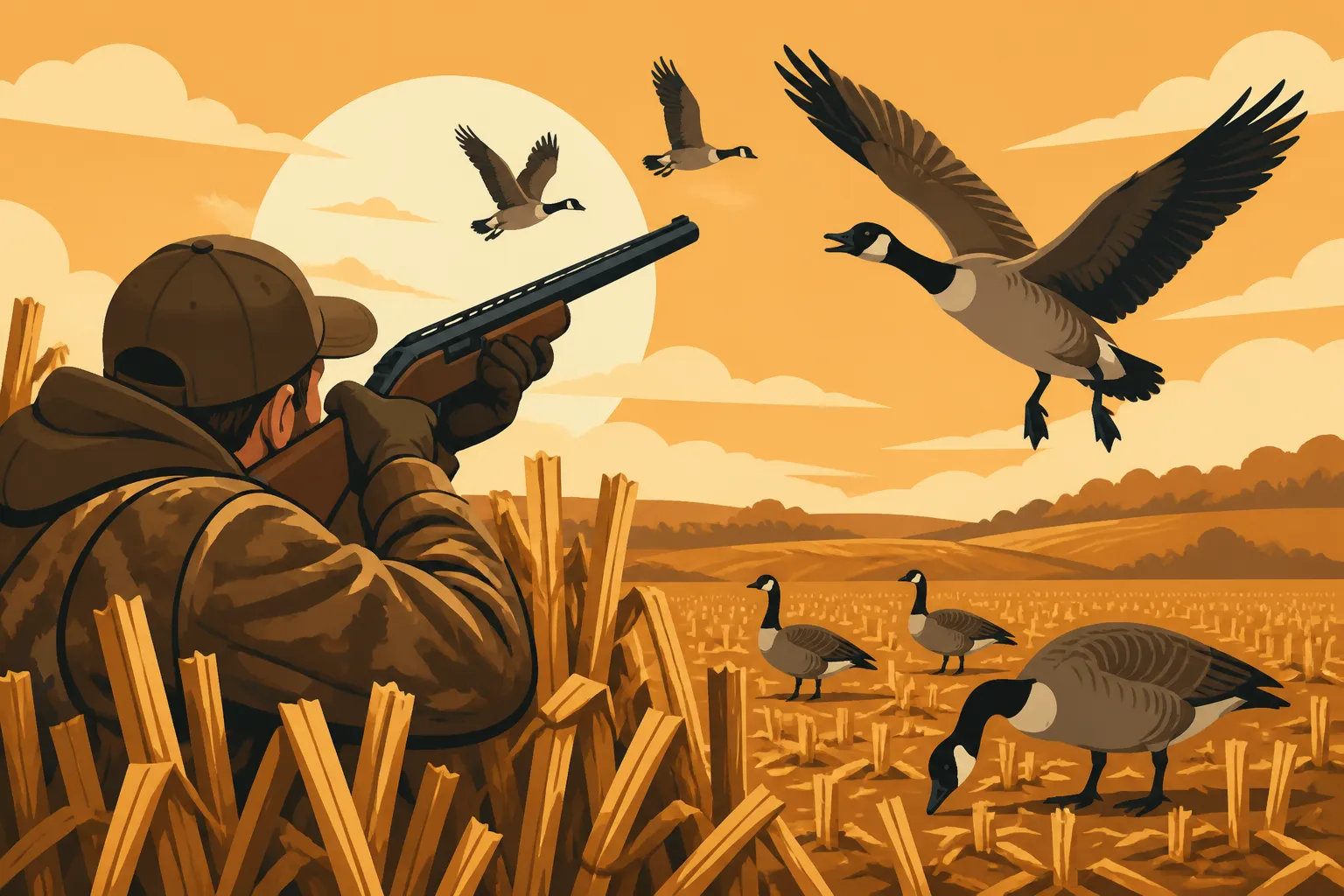
There's nothing quite like the sight of a perfect "V" of Canada geese cupping their wings and committing to your spread, only to have them flair at the last second or land just out of range. It's a frustrating but all-too-common scenario for many Wisconsin hunters who dedicate countless hours to pursuing these magnificent birds in agricultural settings. This guide is here to walk you through the nuances of field hunting geese in cut corn, sharing proven strategies to turn those near misses into successful harvests and make your time in the blind truly productive.
Understanding Goose Behavior in Cut Corn Fields
Geese, particularly Canada geese, are creatures of habit and efficiency. Their daily routine often involves roosting on large bodies of water, then flying out to feed in agricultural fields, especially those offering easy access to abundant calories. Cut corn fields are a prime example of such a location.
Why Geese Love Cut Corn
Imagine you're a goose. You've just spent a chilly night on the open water, and now it's time to fuel up for the day. A cut corn field offers a veritable buffet of dropped kernels, readily available and packed with energy. Unlike marshy areas or dense timber, cut corn fields typically provide wide-open spaces, giving geese excellent visibility to spot predators from a distance. This combination of abundant, easy-to-access food and inherent safety makes cut corn an irresistible draw. The remaining stalks also offer a bit of natural cover and a comfortable place to stand or loaf, further enhancing their appeal. Different species, like the smaller cackling geese or the occasional snow geese that pass through, might also use these fields, though the bulk of the field-hunting focus in Wisconsin is on Canada geese.
The nutritional value of corn is another significant factor. As winter approaches, geese need to build up fat reserves, and corn provides a dense caloric source that helps them do just that. They’ll often return to the same fields day after day until the food source is depleted or hunting pressure becomes too intense. This predictability, once you've scouted it out, is what makes field hunting so effective. They're not just flying randomly; they're following a purpose, and if you can intercept them on their way to or from that purpose, you're in business.
Scouting for Success: Reading Roost-to-Field Flight Lines
Before you even think about setting out a single decoy, dedicated scouting is absolutely paramount when it comes to field hunting geese. You simply cannot overstate its importance. Driving around blindly on the morning of a hunt is a surefire way to have a disappointing day. Geese are smart, and they stick to patterns. Your job is to uncover those patterns. This involves observing their movements over several days, ideally from a distance that won't spook them. You're looking for where they fly from (their roost), where they want to land (their preferred feeding zone), and their general flight path in between. Using powerful optics, like a good set of binoculars, is critical for identifying these subtle cues from afar.
Pay close attention to specific entry and exit points in the field. Do they consistently land at the far end near a tree line, or do they prefer the middle? Are they coming in from the north or the south? Understanding these flight lines, which you can also learn more about in our guide on Reading Roost-to-Field Flight Lines, allows you to position your decoy spread and blinds in the most advantageous spot. Look for evidence on the ground too: tracks in the mud, droppings, and obviously, remaining corn kernels indicate recent activity. A fresh pile of droppings in a relatively small area often signals a "hot" spot where geese are actively feeding. You'll also want to observe the size of the flock and how they interact with each other in the field. Are they tightly bunched, or spread out? This will inform your decoy spread later.
Setting Up Your Spread: Decoys and Blinds
Once you've done your homework and found a field geese are consistently using, the next step is to create a setup that convinces them it's safe to land. This means deploying an effective decoy spread and ensuring your concealment is top-notch.
Decoy Strategies for Cut Corn
Decoy choice and arrangement are key to a successful goose hunt in cut corn. You'll generally want a decent number of decoys to simulate a large, confident flock. Full-body decoys are often considered the gold standard, offering realistic three-dimensional profiles that are visible from great distances. Shell decoys, which are just the top half, are a more affordable and lighter option, and can be quite effective when mixed with full bodies. Silhouettes are the most budget-friendly and portable, great for adding numbers to a spread, especially on windy days when their movement can add realism. Many hunters even use a combination of all three to create a diverse and convincing spread.
The arrangement of your decoys should mimic natural goose behavior. Think about family groups or small clusters of feeding birds rather than perfectly symmetrical lines. Create a landing zone—an open space within your spread, preferably downwind of your blinds—where the geese can comfortably commit to landing. A common and effective pattern is a "J" or "U" shape, with the open end of the letter facing into the wind. This creates a natural funnel for geese to approach. Don't forget motion decoys! Windsocks or motorized flapping-wing decoys can add incredible realism, especially on calm days when static decoys look lifeless. When scouting, paying attention to the exact spots geese prefer to land and how they are spaced will give you valuable clues. Tools like the mapping features on the GoHunt app can assist in visualizing and planning your decoy setup relative to terrain features and potential flight paths, helping you optimize every decoy placement decision.
Decoy Comparison for Field Hunting Geese
| Decoy Type | Pros | Cons | Best Use |
|---|---|---|---|
| Full-Body | Most realistic, visible from afar | Expensive, bulky, heavier | Primary decoys, visible from all angles |
| Shell | More affordable, lighter than full-body | Less realistic from certain angles | Adds numbers to a spread, good for feeding postures |
| Silhouette | Very lightweight, portable, easy to set up | Two-dimensional, requires wind for realism | Adds bulk to a spread, effective in numbers, motion in wind |
| Motion (Windsock) | Excellent movement, attracts attention | Can look unnatural if no wind | Enhances realism, especially in low wind conditions |
| Motion (Motorized) | Consistent movement, highly attractive | Expensive, requires batteries, can spook wary birds | Great for attracting distant birds, but use sparingly on pressured birds |
Blinds for Concealment
Geese have incredible eyesight. They will spot anything out of place in a wide-open cut corn field, and if they do, your hunt is likely over before it even begins. Therefore, complete concealment is absolutely essential. The most common and effective type of blind for field hunting geese is the layout blind. These low-profile blinds allow you to lie down flat in the field, virtually disappearing into the stubble. The key is to brush them in properly. Don't just throw a handful of cornstalks on top; integrate them seamlessly into the surrounding environment. Gather local vegetation – cornstalks, grass, weeds – and weave it into the stubble straps and netting of your blind. The goal is to make it look like just another piece of the field.
If layout blinds aren't an option, or if the field offers natural cover, you can improvise. Hay bales, fence lines, or deep ditches can provide excellent concealment, but always ensure you blend in. A simple tarp thrown over you won't cut it. For example, if you're using a fence line, set up a small natural blind using cornstalks or burlap to break up your outline. Remember that geese will be looking down at your spread from above, so any unnatural shapes or colors will stick out. Ensure your face is covered with a mask or face paint, and your gloves match the environment. Even a reflective watch face can send birds flaring. Our article on Using a Ground Blind on Wisconsin Public Land offers more insights into effective blind setup and concealment techniques that can be adapted to field hunting.
Calling and Shooting Tactics
Once your spread is perfectly laid out and your blinds are invisible, the real fun begins: bringing the geese into range. This requires skillful calling and precise shooting.
Effective Goose Calling Techniques
Goose calling is an art form that takes practice and observation to master. The goal isn't just to make noise, but to communicate. You're trying to convince those wary birds that your spread is a safe, inviting place to land, full of happy, feeding geese. Short reed calls are popular for their versatility and ability to produce a wide range of goose vocalizations, from deep honks to quick clucks and moans. Flute calls are also effective, especially for producing the longer, drawn-out "come-back" calls.
Start with greeting calls when birds are still far off, letting them know your location. As they get closer and show interest, switch to a series of clucks and moans, mimicking feeding geese. If they start to drift or fly past, hit them with a loud "hail call" or "come-back call" to grab their attention and try to turn them. The most crucial part of calling is reading the birds. Watch their wing beats, their head positions, and their flight path. If they're locked up and coming in, often less calling is more. Over-calling can spook them. If they seem hesitant, subtle feed calls and contented clucks might be just the ticket. Practice your calling, listen to real geese, and don't be afraid to experiment. Remember that the weather, particularly wind, can greatly affect how far your calls carry and how birds react, just like it affects Hunting Mississippi River Backwater Sloughs for ducks.
Shot Placement and Post-Shot Protocol
When the geese are committed and within range, the moment of truth arrives. Communication within your hunting party is vital; establish a clear signal for when to shoot, often by having one person call the shot. This ensures everyone rises at the same time, startling the birds and presenting cleaner targets. Geese are large, tough birds, and proper shot placement is crucial for a clean kill. Aim for the head and neck, or if that's not possible, the front half of the bird where the vitals are concentrated. Resist the urge to sky-bust; let them come in close, ideally within 30-40 yards. Knowing your shotgun's pattern with your chosen non-toxic shot at various ranges is essential.
After the shot, swift retrieval of downed birds is critical, especially in dense cut corn stubble where they can easily disappear. A good retriever dog is invaluable for this, but if you're hunting without one, mark the exact spot where the bird fell and proceed directly to it. Even if you don't immediately see the bird, keep searching the area thoroughly. Wounded birds can run or crawl surprisingly far. Be aware of your shooting lanes and the locations of your fellow hunters to ensure a safe shot. Always use non-toxic shot for waterfowl hunting in Wisconsin, as it's a federal requirement. Information on Wisconsin Federal Duck Stamp Rules and non-toxic shot requirements will reinforce the legal necessities for any waterfowl hunter.
Overcoming Challenges and Advanced Tips
Field hunting geese can be immensely rewarding, but it also comes with its share of challenges. Being prepared for these can make all the difference.
Dealing with Pressure and Weather
Geese, especially those that have been hunted for a few weeks, quickly become "educated" and incredibly wary. They learn to spot unnatural setups, overzealous calling, and heavy hunting pressure. If you're hunting public land or areas with significant hunting activity, geese might adjust their patterns, becoming nocturnal feeders or using less obvious fields. To counter this, consider varying your spread, trying different calling sequences, or moving your setup within the field. Sometimes, even just being a few yards away from where everyone else sets up can make a difference. Early season, like the Wisconsin's September Early Goose Hunt, often sees less pressured birds, but that changes quickly.
Weather conditions also play a huge role. On windy days, geese will often fly lower and faster, making calling and shooting more challenging. The wind can also help mask your presence and make your decoys move realistically. On calm, clear days, geese have incredible visibility, so your concealment needs to be absolutely perfect. Rain or light snow can actually improve hunting, as it often gets geese moving and can reduce their visibility slightly. However, keeping your gear dry and yourself comfortable in wet weather is paramount. When things get cold, layering your clothing, similar to strategies for Cold Weather Sitting Strategy for deer, will ensure you stay warm and focused. If you're struggling to find unpressured ground, using mapping tools like GoHunt can help you identify remote public access areas or MFL lands open to public hunting, which might see fewer hunters.
Legality and Regulations for Field Hunting Geese
Navigating the rules and regulations is a non-negotiable part of goose hunting in Wisconsin. First and foremost, you need the correct licenses and stamps, including a Wisconsin small game license, a Wisconsin waterfowl stamp, and a federal migratory bird hunting and conservation stamp. You also need to be HIP (Harvest Information Program) certified. Knowing the specific season dates and bag limits for Canada geese is vital, as these can vary by goose zone within the state. Wisconsin typically has a southern zone, a Horicon zone, and an exterior zone for geese, each with its own specific rules. Check the current Wisconsin DNR migratory bird regulations, which are updated annually. Our detailed guide on Wisconsin Waterfowl Seasons and Zones is an excellent resource for this.
Beyond licenses and seasons, other regulations include the requirement for non-toxic shot (steel, bismuth, tungsten-alloy, etc.) when hunting waterfowl. You cannot use lead shot. Additionally, baiting is strictly prohibited for migratory birds, meaning you cannot hunt over any area where feed has been placed to attract birds. This is different from hunting over a normally harvested crop field. If you are hunting on private land, ensure you have explicit permission from the landowner; our guide on Asking a Wisconsin Farmer for Permission offers tips for securing access. Always ensure your firearm is plugged to only hold three shells (one in the chamber, two in the magazine) for migratory bird hunting.
Disclaimer
Please remember that hunting regulations and seasons can change frequently. Always consult the latest Wisconsin Department of Natural Resources (DNR) regulations and guidelines before planning any hunting trip. This guide is for informational purposes only and does not replace official legal requirements. Stay safe and hunt ethically.