Calling a Wisconsin Gobbler Off the Roost
Ah, the sound of a distant gobble breaking the pre-dawn silence in a Wisconsin woodlot – it's music to any turkey hunter's ears, but getting that bird to commit and come off the roost can feel like solving a cryptic puzzle. Many of us have been there, hearing a king gobbler fire off only to have him fly down and disappear in the opposite direction, leaving us scratching our heads. This guide will dive deep into the art and science of coaxing those roosted Wisconsin gobblers into shotgun range, offering practical strategies and insights to help you tag your bird.
Understanding Roosted Gobbler Behavior in Wisconsin
Before you can effectively call a gobbler off the roost, you really need to get inside his head a bit. They aren't just sitting up there to enjoy the sunrise; there's a whole social dynamic and survival instinct at play that dictates their morning routine.
Why Gobblers Stick to the Roost
Think of a gobbler's roost as his fortress for the night. It offers safety from ground predators like coyotes and bobcats. In the dim light of dawn, jumping down too early can expose them to danger. Often, they’ll wait until they can clearly see the ground and their surroundings before making that leap. This instinct for security is paramount.
Beyond safety, there's a social hierarchy at play, especially if multiple birds are roosted together. A dominant tom might be waiting for his subordinate rivals to fly down first, or he could be listening for hens. If he knows there are hens nearby, he might even try to "pull" them towards him with his gobbling before he descends. On cold, damp mornings, or after a night of heavy rain, turkeys might also delay flying down simply because they're not eager to hit wet ground. The colder the temperature, the longer they might cling to the warmth of their feathers up in the tree. This is particularly true in the earlier, chillier periods of Spring Turkey Hunting in Wisconsin.
The Morning Pecking Order and Your Calls
When you're trying to call a gobbler off the roost, you're essentially trying to insert yourself into this delicate morning pecking order. If a dominant gobbler is roosted with a group of hens, he's often less inclined to fly down directly to your calls, especially if they sound like another hen trying to lure him away from his existing harem. His primary goal is to gather and breed with the hens he already has or to attract more without exerting too much effort.
Conversely, a lone gobbler, especially one who hasn't secured any hens, might be much more susceptible to your calls. He's actively seeking companionship and could be more aggressive in responding. Understanding this social dynamic helps you gauge how aggressive or subtle your initial calling should be. If you hammer him with aggressive yelps right off the bat, he might just think another hen is already with a gobbler and opt to stay put or fly down in the opposite direction to find easier company. Sometimes, the soft, unassuming calls are the most effective way to start the conversation, just enough to get him to pinpoint your location without putting him off.
Essential Pre-Dawn Tactics for Roosted Birds
Success with roosted gobblers often hinges on what you do before the first sliver of light paints the horizon. It's about precision, stealth, and setting the stage just right.
Stealthy Approach and Setup
The absolute first rule of hunting roosted gobblers is silence. Turkeys have incredible hearing, and any unnatural noise – a snapping twig, a rustling backpack, or even a heavy footfall – can alert them to your presence and send them flying down in the wrong direction, or worse, make them hold tight until you leave. Your approach needs to be meticulously planned. Using features like ridges, creek beds, or thick brush as cover can help mask your movement and sound. Think about how deer hunters use terrain to their advantage; the same principles apply. Many hunters find that utilizing tools like the Scouting With the Wisconsin Hunt Wild App or other hunting apps, can provide invaluable insight into topography and potential approach routes, allowing them to mark their path in advance to avoid noisy areas.
Once you’re in the general vicinity, which typically means within 100-200 yards of the roost tree, it’s time to pick your setup spot. You want to be close enough to hear and be heard, but far enough not to spook the bird when he flies down. Your position should offer good visibility for a shot but also provide sufficient back cover to break up your outline. A large tree or a thick patch of evergreens can make an excellent blind. When Setting Up Against a Big Oak, ensure you have shooting lanes in the direction you expect the gobbler to approach. Positioning yourself so the gobbler has to come into easy shooting range before spotting any decoys is key. Remember, they will often try to "see" the source of the calls.
The Art of the First Call
Timing is everything with that first call. Most seasoned turkey hunters will wait until they hear the first few "sleep" yelps or soft tree gobbles from the birds themselves. This confirms their location and indicates they're starting to wake up. Making a loud call in pitch-black silence can sometimes shock a bird into silence or make him wary.
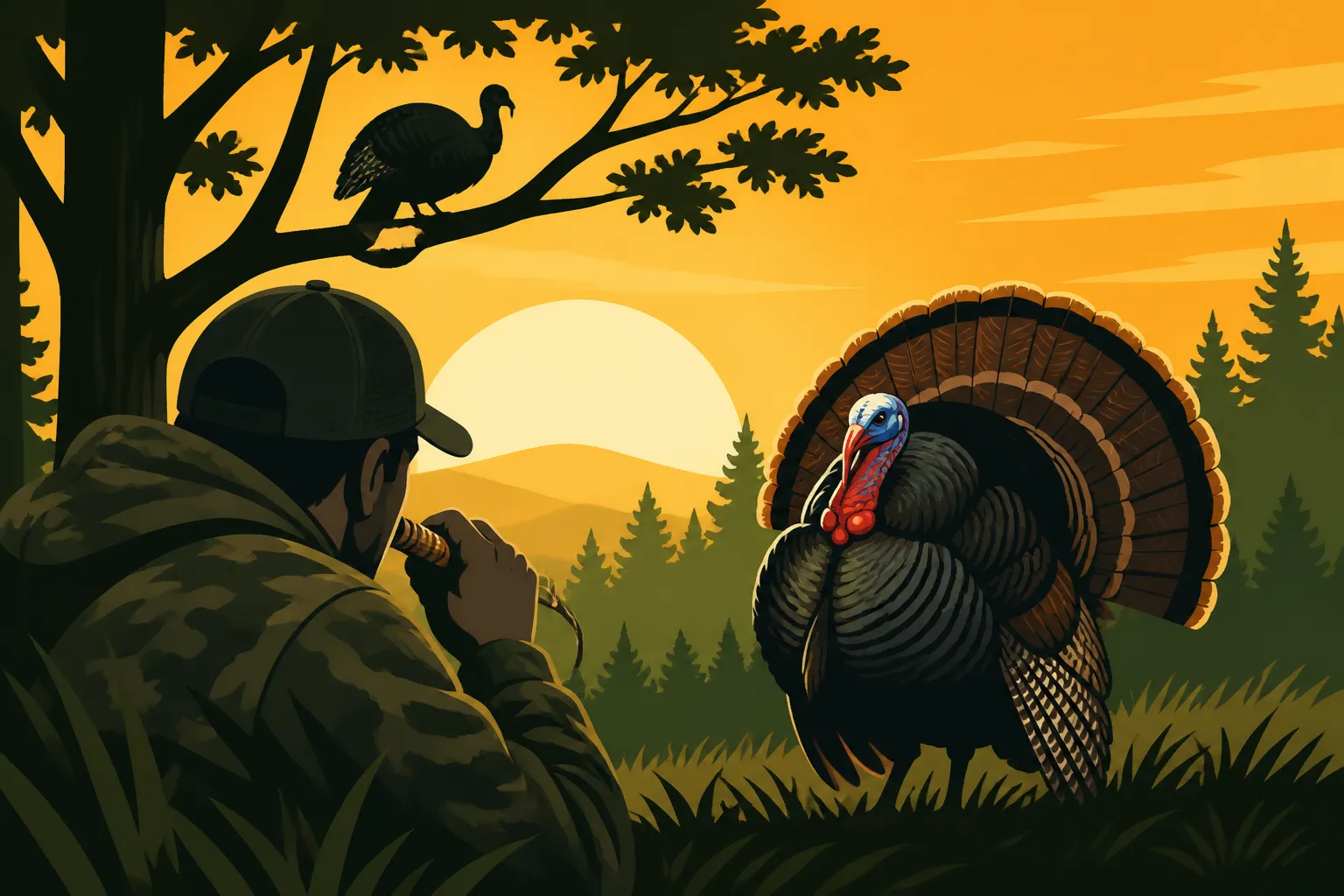
Your first call should be soft, realistic, and inquisitive. A few soft tree yelps, perhaps followed by a contented cluck or purr, can be incredibly effective. You're trying to mimic a hen just waking up on the roost. This can pique a gobbler's interest without giving away your exact position too aggressively. Avoid making loud, excited yelps right away; save those for later if needed. The goal is to make him believe a hen is nearby and ready to fly down. A subtle fly-down cackle, mimicking a hen jumping off her branch, can sometimes be the perfect trigger. It's a risk, as it reveals your "location" on the ground, but it can be irresistible to a lonely tom. Don't be afraid to experiment with the various Turkey Calls Worth Carrying in Wisconsin you might have, from slate to mouth calls, but always prioritize realism and subtlety for these initial interactions.
Calling Strategies Once They're on the Ground
The true test often begins the moment those big birds hit the ground. Their behavior can change in an instant, and your calling strategy needs to adapt just as quickly.
Adapting Your Calling to the Situation
Once a gobbler flies down, the dynamic shifts entirely. If he flies down alone and is gobbling his head off, he's probably looking for company, and you can generally be a bit more aggressive with your calling. A series of excited yelps, perhaps some clucking and purring, can convince him a hot hen is waiting. Keep his attention, but let him do some of the work too. A common mistake is to overcall, so listen to his responses and try to match his intensity, sometimes even backing off a bit to make him wonder where you went.
However, the situation changes drastically if he flies down with a harem of hens. Now you're competing! A gobbler with hens is notoriously difficult to pull away. In this scenario, being overly aggressive with your hen calls might just convince his real hens that you're a threat, prompting them to lead him away. Instead, often the best tactic is to switch to softer, more contented clucks and purrs, perhaps mimicking a subordinate hen. You're trying to make him believe that you are part of his flock, rather than trying to pull him away. Sometimes, even mimicking the subtle calls of a rival gobbler, like soft putts or jake yelps, can work to pique his dominant interest, making him want to investigate. Knowing When Wisconsin Gobblers Go Quiet and what to do next is a skill honed over many seasons.
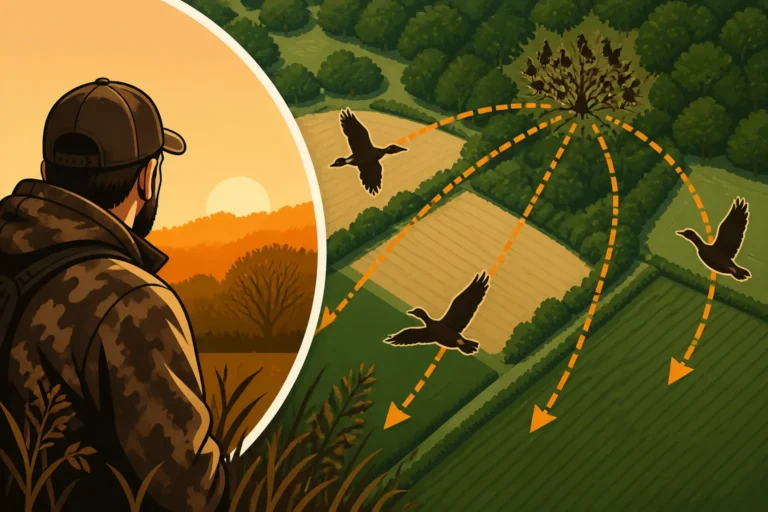
If he flies down and immediately heads in the opposite direction, don't despair! He might be checking out another field edge or simply has a preferred strutting zone. If you have the cover and the terrain allows, you might need to try a "run-and-gun" approach, repositioning yourself quickly and quietly to get ahead of him or intercept his path. Remember to use terrain features to break up your silhouette as you move. A helpful tool for hunters to visualize and execute such repositioning is a mapping app like GoHunt, which can quickly show property lines, topo maps, and satellite imagery, helping you plan your move efficiently and quietly.
Decoy Placement and Realism
Decoys can be an absolute game-changer, but their placement is critical. For a roosted bird, especially one you've heard gobbling intensely, placing your decoys within 20-30 yards of your setup is often ideal. This ensures that when the gobbler commits, he’s well within shotgun range when he reaches the "hens."
Consider the setup: a single hen decoy, perhaps in a receptive posture, can be very enticing to a lonely gobbler. If you’re dealing with a bird that has hens, sometimes a jake and hen setup can work. The jake decoy can trigger a dominant gobbler’s aggressive instincts, making him march in to confront the perceived intruder. However, be cautious with jake decoys on heavily pressured public land, as they can sometimes deter wary toms.
The angle of your decoys is also important. Position them facing slightly away from your shooting lane, so the gobbler approaches them and often turns broadside or slightly quartering away, presenting an ideal shot. Ensure they are visible from where the gobbler is likely to fly down or approach, but not so obvious that they look out of place. Realism is also key. While full-strut gobbler decoys can be effective, sometimes a simple DSD hen decoy that looks incredibly lifelike is all you need. For more detailed advice, check out Decoy Placement for Pressured Birds as these tactics apply heavily to birds coming off the roost as well.
| Gobbler Behavior | Initial Call Strategy | Follow-Up Call Strategy | Decoy Suggestion |
|---|---|---|---|
| Roosted Alone | Soft tree yelps, clucks | Excited yelps, cutting | Single hen (receptive) |
| Roosted with Hens | Soft clucks, purrs (submissive) | Mirror hen calls (soft), occasional jake yelp | Single hen (contented), maybe jake/hen |
| Flies Down, Goes Away | Aggressive cuts, series of yelps | If response, move and re-engage; if no, locator calls | Mobile jake/hen if repositioning |
| Hung Up (visible) | Go quiet, light clucks/purrs | Mimic feeding hens, scratch leaves | Hen(s) in feeding posture |
Common Mistakes and Troubleshooting
Even the best-laid plans can go awry when dealing with a wily Wisconsin gobbler. Knowing how to react when things don't go perfectly is often what separates a successful hunt from an empty vest.
Overcalling and Impatience
One of the most common mistakes hunters make, especially with roosted birds, is overcalling. We hear a gobble, get excited, and start hammering away on our calls. While it might sound enticing at first, an incessant string of hen calls can quickly make a gobbler suspicious. He might think, "Why is that hen so desperate? Something isn't right." Or worse, he might simply assume she's coming to him. Turkeys are naturally curious, but they're also incredibly wary.
The key is to listen more than you call. Let the gobbler dictate the pace of the conversation. If he gobbles, respond with a few soft yelps. If he gobbles again, wait. Make him want to know where you are. Patience is a virtue in turkey hunting, especially in the early morning when birds are still on the roost and vulnerable. Often, the less you call, the more curious and committed the bird becomes. It’s a delicate balance, and sometimes the best call is no call at all. Think of it as a game of cat and mouse; you want to maintain just enough interest without revealing all your cards too soon. When you're Hunting an Early Wisconsin Turkey Period, patience is especially critical as birds might be less vocal due to colder weather or still establishing their pecking order.
Dealing with Hang-Ups and Gobblers that Go the Other Way
A "hung-up" gobbler is one of the most frustrating scenarios in turkey hunting. You've done everything right: stealthy approach, perfect setup, good calling, and he's come in… but he stops just out of range, often behind some brush or a dip in the terrain, gobbling his head off but refusing to take those last few steps. This often happens because he's expecting the hen (you) to come to him, or he can't quite see the decoys or your setup.
When a gobbler hangs up, the first rule is to often go silent. Sometimes, the sudden silence will make him nervous enough to come looking. If that doesn't work, very soft clucks and purrs, mimicking a contented hen that's feeding, can sometimes draw him in. Resist the urge to hit him with aggressive calls unless he's still a good distance away and you're trying to pull him through a dense patch of timber. If you have a jake or hen decoy visible, he might be looking for it. If he's completely out of sight and hung up, a very slow, deliberate repositioning might be your only option. This is where understanding the terrain and having a good mapping application like GoHunt comes in handy. You can identify a new ambush point or a route to circle around and get a better angle.
If a gobbler flies down and immediately heads in the opposite direction, don't write him off entirely. He might have a preferred strutting zone, or he might be heading to meet real hens. If you can make a quick, quiet move to get ahead of him or parallel to his anticipated path, you might intercept him. This is a classic "run-and-gun" scenario, a tactic often employed on Run-and-Gun Turkey Tactics on Public Land. Sometimes, hitting him with a loud, aggressive series of yelps and cuts as he moves away can pique his interest and make him stop, turn, and investigate. It's a gamble, but sometimes you have nothing left to lose. Remember, Wisconsin gobblers, especially those in areas like the Turkey Tactics for Driftless Farm Edges, can be very mobile once on the ground.
Disclaimer
Please note that hunting regulations and seasons can change. Always consult the most current Wisconsin Department of Natural Resources (DNR) regulations before heading into the field. This guide provides general information and recommendations, and individual hunting success will vary. Safety should always be your top priority when hunting.