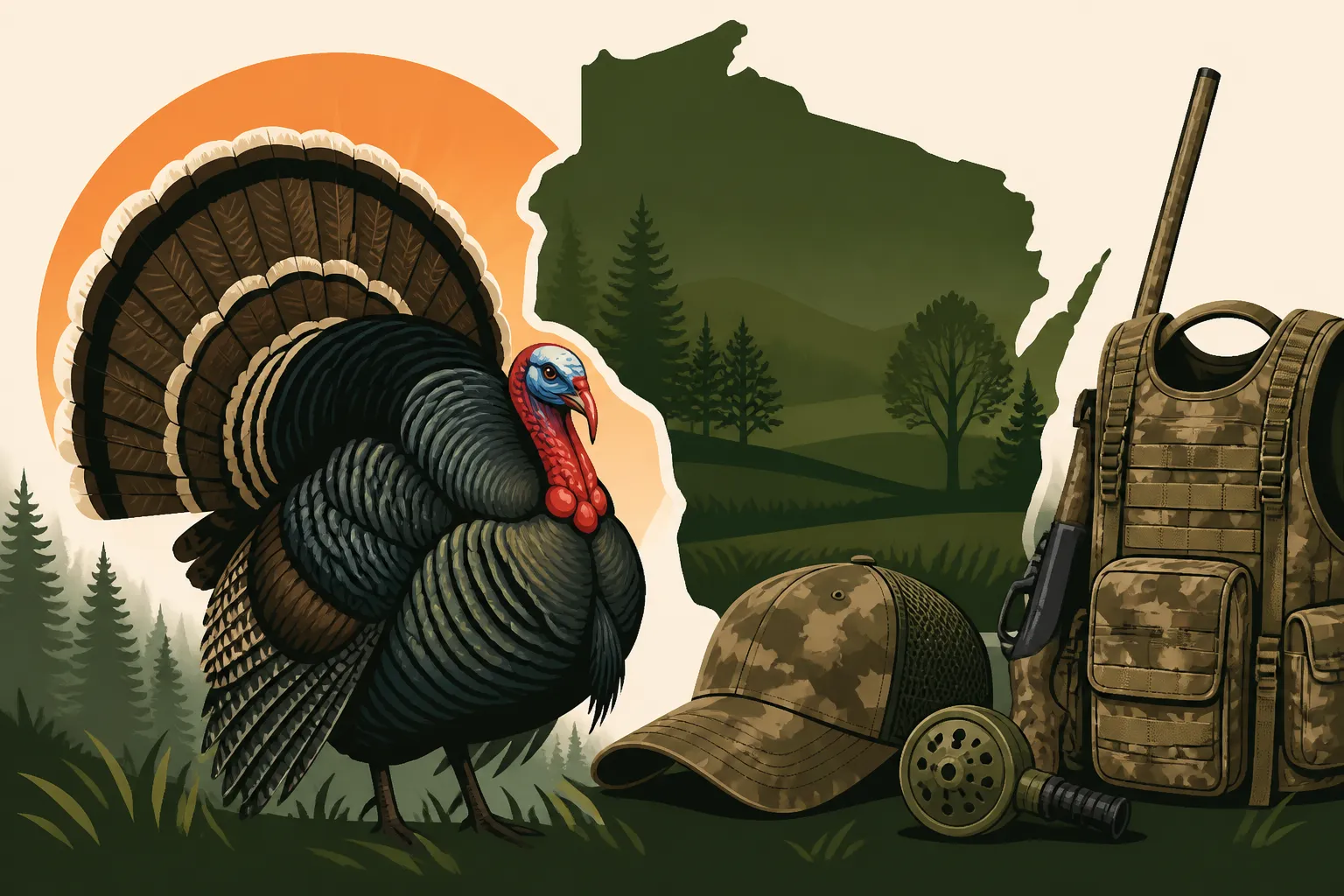
Turkey Gear for a Wisconsin Spring
There's nothing quite like the sound of a distant gobble cutting through the crisp, cool air of a Wisconsin spring morning. It's a sound that makes every turkey hunter's heart pound, sparking that primal urge to pursue. But let's be honest, getting ready for spring turkey season in Wisconsin can feel like preparing for three different seasons all at once. One morning you're shivering in a snow squall, the next you're sweating in an unexpected warm front, and all the while, you're trying to outwit a bird with laser-sharp vision and keen hearing. This comprehensive guide is here to walk you through all the essential gear you'll need to face Wisconsin's notoriously unpredictable spring turkey season with confidence, comfort, and, most importantly, success.
Understanding Wisconsin's Spring Conditions and How They Impact Gear
Wisconsin's spring weather is, simply put, a rollercoaster. One day you're enjoying sunshine and temperatures in the 60s, and the next, you're looking at a fresh blanket of snow and single-digit wind chills. This wild variability isn't just a minor inconvenience; it fundamentally dictates the kind of gear you need to bring to the woods to stay comfortable and effective. Ignoring these conditions is a surefire way to cut your hunt short or, worse, to be completely unprepared when that big gobbler finally steps into range.
Weather Volatility: From Frost to Forecast Flips
Early spring turkey periods in Wisconsin, often starting in mid-April, can still feel very much like winter. Picture this: you've set up before dawn, the air is biting, and there's a heavy frost coating everything. Your breath plumes in the weak beam of your headlamp as you wait for the world to wake up. But by mid-morning, the sun is high, and you're shedding layers, potentially even sweating in your blind. This isn't just a single-day phenomenon; week-to-week, the forecast can flip from unseasonably warm to bitterly cold, often accompanied by rain or even late-season snow.
This extreme temperature swing and precipitation risk mean your clothing system needs to be highly adaptable. A single heavy jacket just won't cut it. You need a base layer to manage moisture, a mid-layer for insulation, and a versatile outer layer that offers both warmth and weather protection. Waterproofing becomes paramount, not just for keeping you dry during a sudden shower, but also for sitting on damp ground or traversing dewy fields. Trust me, I've been caught in enough spring downpours to know that being wet and cold is the quickest way to kill a turkey hunt.
Terrain Challenges: From Hardwoods to Swamps and Farm Edges
The diverse landscapes of Wisconsin add another layer to your gear considerations. Are you hunting the sprawling hardwoods of the northern forests, trying to find a roosted bird in towering oaks? Or are you navigating the dense alders and tag alders of a central Wisconsin marsh, wading through muddy edges to get to that secluded strut zone? Perhaps you're in the rolling hills of the Driftless Area, setting up on a field edge bordered by a steep coulee, hoping to intercept a gobbler as he makes his way to feed. Each of these environments presents its own set of challenges and demands specific gear choices.
For instance, rugged terrain and long walks demand comfortable, supportive footwear that can handle mud, uneven ground, and potentially standing water. If you're hunting in heavy cover, your shotgun might need to be shorter and more maneuverable, while open farm fields might allow for a longer barrel and more precise aiming system. The type of decoys you choose and how you deploy them will also be influenced by the landscape. A full-strut tom might be perfect for an open field, but could be a hindrance in thick woods where visibility is limited. Thinking about your typical hunting spots and their specific characteristics will help you fine-tune your gear list. Hunting the Wisconsin Northern Forest for Deer is a great resource for understanding some of these unique terrain features.
Gobbler Behavior: How Conditions Influence Movement and Calling
Turkey behavior is intrinsically linked to the weather and terrain. A cold, wet morning might keep gobblers roosted longer, or cause them to move differently once on the ground, seeking shelter or warmer, sun-exposed areas. A blustery day can make hearing distant gobblers incredibly difficult, forcing you to move more aggressively or rely more heavily on locator calls. Conversely, a warm, sunny morning can bring birds down early, eager to strut and breed, making them more responsive to calls and decoys.
Understanding these patterns helps you make smarter gear choices. If you anticipate a lot of calling, especially soft, subtle calls, you'll want to ensure your friction calls are protected from moisture. If you expect to be moving frequently, trying to cut off a bird that's "henned up," then a light, agile setup is key, perhaps even a saddle hunt if the terrain allows for quick, silent adjustments. Observing how turkeys react to different conditions in your area will refine your approach and, by extension, your gear choices throughout the season. Sometimes, knowing When Wisconsin Gobblers Go Quiet can even help you decide if it's worth bringing out that full arsenal of calls or focusing on quiet, stealthy movement.
Essential Turkey Shotguns and Ammunition
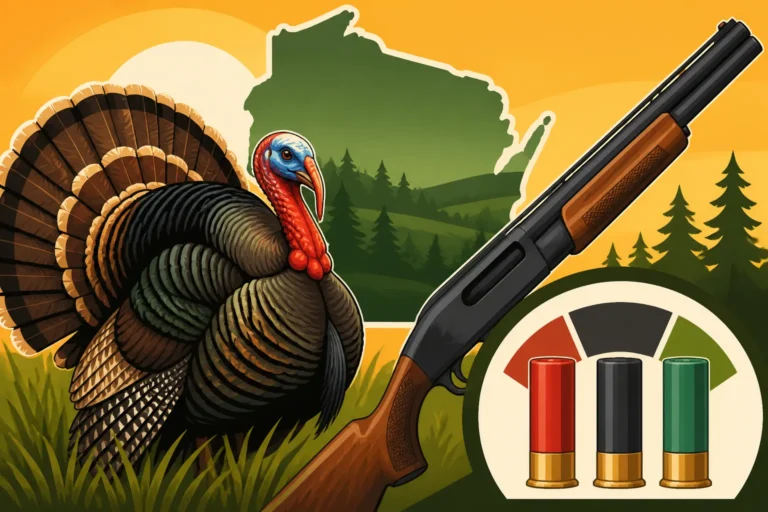
Your shotgun is, without a doubt, the centerpiece of your turkey hunting gear. It's the tool that seals the deal, so choosing the right one and pairing it with the perfect ammunition and choke combination is absolutely critical. A poorly patterned shotgun or the wrong load can turn a picture-perfect setup into a heartbreaking miss. We're aiming for clean, ethical kills, and that starts with understanding your firearm.
Gauge and Action Choices: 12-Gauge Versus 20-Gauge
For decades, the 12-gauge has been the undisputed king of turkey hunting shotguns, and for good reason. Its ability to throw a dense pattern of heavy shot with significant energy has made it a reliable choice for taking down big gobblers. A 3-inch or even 3.5-inch 12-gauge shell, packed with modern turkey loads, provides ample killing power and a wide effective range. Most hunters opt for pump-action or semi-automatic models. Pump actions are known for their rugged reliability and simplicity, while semi-autos offer faster follow-up shots and often lighter recoil, which can be a real blessing after a few rounds of heavy turkey loads at the range.
However, in recent years, the 20-gauge has seen a massive resurgence, largely thanks to advancements in ammunition technology, particularly Tungsten Super Shot (TSS). A 20-gauge loaded with TSS can rival or even surpass the performance of a traditional 12-gauge lead load in terms of pellet count and penetration. The benefits? Lighter weight, less recoil, and often more maneuverability, which can be a huge advantage when moving through thick brush or sitting in a cramped ground blind. It makes for a much more pleasant carry on those long walks. While some might still prefer the brute force of a 12-gauge, the 20-gauge with the right ammo is no longer a compromise; it's a legitimate, highly effective turkey slaying machine.
Chokes and Patterning: The Key to a Dense Spread
Perhaps even more important than the gauge itself is the choke tube you choose. A turkey choke is a specialized, extra-full constriction designed to produce the tightest possible pattern at turkey hunting distances. Unlike standard hunting chokes, which are meant to spread shot, a turkey choke focuses every pellet into a super-dense core, crucial for hitting a turkey's relatively small head and neck vital area. There are many brands out there—Carlson's, Indian Creek, Primos, Patternmaster—all claiming to be the best, and the truth is, what works perfectly in one gun might not in another.
This brings us to patterning. You absolutely, positively must pattern your shotgun with your chosen turkey choke and ammunition before hunting season. This isn't optional; it's essential for ethical hunting. Take your gun to the range, set up targets at realistic hunting distances (20, 30, 40, even 50 yards), and fire several shots with different brands and shot sizes of turkey loads. You're looking for a consistent, dense pattern that places enough pellets in a turkey's head and neck area to ensure a clean kill. Your goal isn't just to hit the target, but to see how your gun patterns with a specific load. Don't be afraid to try a few different chokes or loads until you find the combination that your shotgun "likes" best. For deeper insights, check out Turkey Chokes and Patterning.
Ammunition Selection: Lead, TSS, and Shot Size Considerations
When it comes to turkey ammunition, the market has expanded significantly. Traditional lead loads, typically in #4, #5, or #6 shot sizes, have been the standard for years. These are effective and generally more affordable. However, the game-changer in recent times has been Tungsten Super Shot (TSS). TSS pellets are significantly denser and harder than lead, meaning a smaller TSS pellet (like #9 or #7) carries more energy and penetrates deeper than a larger lead pellet. This increased density also allows for more pellets per shell, creating incredibly dense patterns even from smaller gauges like the 20-gauge.
While TSS is often more expensive, many hunters find its superior performance worth the investment, especially when paired with a modern choke. The confidence you gain from knowing you have a super-tight, hard-hitting pattern can be invaluable. Regardless of whether you choose lead or TSS, pay close attention to the shot size and shell length. A 3-inch 12-gauge with #5 lead might be perfect for one hunter, while another might prefer a 20-gauge 3-inch with #9 TSS. Test them out, see what performs best in your gun, and understand your effective range. Pushing the limits of your pattern is a recipe for crippled birds, and no ethical hunter wants that. For a deeper dive into the cost versus performance, consider reading Tungsten Turkey Loads Worth the Price.
Optics and Sighting Systems for Spring Turkeys
While a shotgun is your primary tool, what you use to aim it is equally important. In the fast-paced, often low-light world of turkey hunting, clear, precise aiming can be the difference between tagging out and going home empty-handed. From cutting-edge red dots to reliable binoculars, the right optics can significantly enhance your chances of success.
Red Dot Sights: Quick Acquisition in Varying Light
Red dot sights have become incredibly popular among turkey hunters, and for good reason. They offer several distinct advantages over traditional bead sights. First and foremost, they provide a single, illuminated aiming point that is incredibly fast to acquire. When a gobbler suddenly pops up in your shooting lane, you don't have to align a front and rear bead; you simply put the red dot on the turkey's head/neck and squeeze the trigger. This speed is crucial when a bird might only offer a fleeting shot opportunity.
Secondly, red dots excel in low-light conditions, like those first minutes after dawn or the last minutes before dusk when turkeys are most active. The illuminated reticle stands out clearly against dark timber or a shaded gobbler, giving you a precise aim point that a traditional bead might obscure. They also eliminate parallax within reasonable distances, meaning even if your head position isn't perfect, the point of impact remains the same as where the dot rests. Brands like Vortex, Bushnell, and Primary Arms offer robust, weather-resistant red dots that can withstand the rigors of a Wisconsin spring turkey hunt. Just be sure to zero it thoroughly at your intended hunting distances, usually 20-40 yards.
Traditional Scopes: Stability and Precision for Longer Shots
While less common than red dots for turkey hunting, a low-magnification scope can still be a valuable asset, especially if you anticipate longer shots or prefer the stability a scope offers. A 1-4x or 2-7x magnification scope, often found on deer rifles, can be very effective. The advantage of a scope is the magnified view, which allows for extremely precise aiming at a turkey's head and neck, particularly at the outer limits of your shotgun's effective range. This can be beneficial in open farmland or when you're forced to take a shot slightly further than ideal.
However, scopes do have a few downsides for turkey hunting. They can be slower to acquire a target, especially if you have to adjust magnification or find the reticle in a busy background. They can also be prone to fogging in damp, cold conditions if not properly sealed, and they can add considerable weight and bulk to your shotgun. If you do opt for a scope, ensure it's a model designed to handle shotgun recoil and is mounted securely. Practice quick target acquisition at close ranges as well as precise aiming at longer distances to fully understand its capabilities and limitations in a turkey hunting scenario.
Binoculars and Rangefinders: Scouting and Confirming Distance
Beyond your aiming system, a good pair of binoculars and a reliable rangefinder are indispensable tools for serious turkey hunters. Binoculars aren't just for birdwatching; they are crucial for scouting, especially when trying to locate turkeys from a distance without alerting them. You can pick out subtle movements, identify a strutter from afar, or confirm if that dark blob is a gobbler or just a stump. An 8×42 or 10×42 pair offers a good balance of magnification and field of view, making them versatile for the varied terrain you'll encounter in Wisconsin.
A rangefinder, on the other hand, is a safety and accuracy tool. Turkeys have a remarkable ability to make 40 yards look like 20, especially when your adrenaline is pumping. Taking a shot at an unknown distance is a gamble no ethical hunter should take. A rangefinder eliminates that guesswork, allowing you to quickly and accurately confirm the distance to a gobbler or a landmark in your setup. Many hunters will range trees or bushes around their blind or setup point beforehand, giving them predetermined markers for quick reference when a bird approaches. This simple step can prevent an out-of-range shot and ensure your shot pattern is delivered exactly where it needs to be.
Turkey Calls: Mastering the Language of the Woods
Few aspects of turkey hunting are as iconic and integral as calling. The ability to mimic the sounds of turkeys, drawing in a wary gobbler, is a skill that takes practice and patience. Having a versatile arsenal of calls in your vest ensures you can adapt to different situations, moods, and the unique challenges presented by Wisconsin's birds.
Mouth Calls (Diaphragm): Versatility and Hands-Free Operation
Mouth calls, also known as diaphragm calls, are perhaps the most versatile and widely used calls by seasoned turkey hunters. They consist of a latex reed stretched over a frame, held in the roof of your mouth, and operated by air pressure from your lungs and tongue manipulation. The beauty of mouth calls is their hands-free operation. This is a huge advantage when a gobbler is close, allowing you to keep your shotgun mounted, ready for the shot, while still delivering subtle clucks, purrs, or even aggressive cutts.
Mastering a mouth call takes practice, but the payoff is immense. You can produce a full range of turkey vocalizations, from soft, seductive tree yelps at dawn to loud, excited cutting sequences to draw in a hung-up gobbler. They are also highly portable and impervious to weather, unlike some friction calls. I recommend carrying at least two or three different mouth calls with varying reed cuts and tensions. A triple reed for loud, aggressive calling and a ghost cut or V-cut for softer, more realistic clucks and purrs will cover most situations. Start with a simpler single or double reed call, then work your way up.
Friction Calls (Slate, Glass, Box): Range of Sounds and Ease of Use
Friction calls, which include slate, glass, and box calls, are another cornerstone of a turkey hunter's kit. These calls produce sound by rubbing a striker across a surface.
Slate calls (or pot calls) feature a slate surface, often with a wood, carbon, or synthetic striker. They excel at producing soft, realistic yelps, clucks, and purrs, perfect for close-in work or when a gobbler is feeling shy. They're relatively easy to learn and offer a good range of vocalizations.
Glass calls, similar in design but with a glass or crystal surface, often produce sharper, louder, and higher-pitched sounds, ideal for cutting through wind or drawing attention from a distance. They can also create excellent kee-ke runs.
Box calls are often the easiest for beginners to pick up. They produce loud, resonant yelps and cutts that carry well, making them great for locating birds or calling aggressively. Some models, like the Primos Gobbler Shaker or WoodHaven's Red Devil, offer incredible realism and volume.
Each type of friction call has its own character and best use case. Many hunters carry a combination—a slate for soft talking and a glass or box call for louder, more aggressive sequences. The downside is they require two hands to operate, which can be an issue with a close-range gobbler. They also need to be kept dry, as moisture can significantly dampen their sound. Carrying them in a protective pouch is a must. For a direct comparison, take a look at Box Calls Versus Mouth Calls or Slate and Glass Calls in Wet Weather.
| Call Type | Pros | Cons | Best For |
|---|---|---|---|
| Mouth Call | Hands-free operation, highly versatile, compact, weather-resistant, wide range of sounds. | Steep learning curve, can be uncomfortable for some, sensitive to tongue/mouth pressure. | Close-range calling when you need to keep hands on gun, soft clucks/purrs, aggressive cutting, tree yelps. Ideal for run-and-gun tactics where quick transitions are needed, or when a bird is coming in hot and you need to keep your profile low. |
| Slate Call | Easy to learn, realistic soft sounds, good for purrs/clucks, natural tone. | Requires two hands, can be affected by moisture, louder sounds might not carry as far. | Finishing wary birds, soft calling on calm days, close-in work, purring and clucking to imitate contented hens. Excellent for creating realistic subtle sounds that can coax in a bird that's "hung up." |
| Glass Call | Louder, higher-pitched sounds than slate, good volume, sharp cuts and yelps, good kee-ke runs. | Requires two hands, susceptible to moisture, can sound less natural for soft calls. | Cutting through wind, reaching distant birds, aggressive calling, excited yelps and kee-ke runs. Perfect for when you need to get a gobbler's attention from a long way off or when ambient noise is high, like near a busy road or during windy conditions. |
| Box Call | Very loud, easy to use, excellent volume, great for locating, classic turkey sound. | Bulky, requires two hands, can sound less realistic up close, susceptible to moisture (though less so than pot calls). | Locating gobblers, aggressive calling, loud yelps and cuts that carry well. Ideal for covering large areas, especially on windy days, or when you need to provoke a response from a reluctant gobbler. Its simplicity makes it a favorite for new hunters or as a backup call. |
Locator Calls: Shocking Gobblers into Revealing Their Position
Sometimes, you need a different kind of call to get a gobbler to speak. Locator calls don't mimic turkeys; instead, they imitate sounds that cause a gobbler to "shock gobble" in response, revealing his position. Common locator calls include owl hoots, crow calls, and coyote howls. The theory is that turkeys gobble in response to loud, sudden noises, instinctively asserting their dominance or announcing their presence to other turkeys.
Owl hoots, particularly the barred owl "who cooks for you, who cooks for you all" call, are deadly effective just before dawn or right at dusk, when turkeys are on the roost. A gobbler will often sound off, giving you a precise location to plan your morning setup. Crow calls are versatile and can be used throughout the day to elicit a shock gobble, especially after a period of silence. Coyote howls, while less common, can sometimes provoke a response from a particularly tight-lipped gobbler. Carry at least one or two locator calls, and learn to use them realistically. They are your scouting tools, helping you pinpoint birds before you ever make a turkey sound. More on these can be found in Locator Calls for Wisconsin Gobblers.
Decoys and How to Use Them Effectively
Decoys are an integral part of modern spring turkey hunting, capable of pulling in a wary gobbler that might otherwise hang up out of range. However, their effectiveness hinges on understanding how and when to use them, as well as being mindful of safety.
Types of Decoys: Full-Strut Tom, Jake, Hen, and Fanning Techniques
The world of turkey decoys is vast, with options ranging from simple foam hens to elaborate, realistic full-strut toms.
Hen Decoys: These are the bread and butter of turkey decoy spreads. A single contented hen, or a pair of feeding or breeding hens, can be incredibly effective at drawing in a gobbler looking for love. They communicate safety and opportunity. Many hunters use one or two hens, sometimes posed in feeding or breeding positions.
Jake Decoys: A jake decoy, representing a juvenile male turkey, is often paired with a hen. This setup simulates a scenario where a jake is trying to breed a hen, which can provoke an aggressive response from an adult gobbler. Seeing a smaller male with a hen can make a dominant tom jealous enough to come in for a fight.
Full-Strut Tom Decoys: These are the most aggressive decoys, portraying a dominant gobbler in full strut. They are designed to challenge other toms, daring them to come in and fight. While highly effective at drawing in aggressive birds, they can also intimidate less dominant gobblers or make wary birds hang up.
Fanning Decoys: A more recent trend is "fanning," which involves using a turkey fan (either real or artificial) to mimic a strutting gobbler or a gobbler peeking over a rise. This can be incredibly effective, especially in open country, as the visual of a fanning bird can elicit an immediate, aggressive charge. However, fanning requires extreme caution and is not recommended in areas with other hunters due to the risk of mistaken identity.
The key is to select decoys that match the mood and aggression level of the birds you're hunting. Early in the season, a jake and a hen might be perfect, while later, a single hen or a breeding pair could be more subtle and effective.
Placement Strategies: Reading the Terrain and Expected Approach
Where you place your decoys is almost as important as the decoys themselves. Think about the terrain, the direction you expect the gobbler to approach from, and the desired shot angle.
Open Fields: In open fields or clearings, decoys should be highly visible. Place your hen decoys facing away from your position, perhaps 15-20 yards out, to force the gobbler to circle and offer a broadside shot. If using a jake, place it behind the hen, mimicking a breeding scenario.
Wooded Edges/Funnels: In denser cover or along woodland edges, you might want to place decoys closer, perhaps 10-15 yards. Position them so that the gobbler must come into a clear shooting lane. In a funnel area, place them directly in the travel path you expect the turkey to use.
Against a Backdrop: Always try to place your decoys against a natural backdrop, like a small rise, a downed log, or even a fence line. This helps them appear more natural and gives the approaching gobbler something to focus on, drawing his attention away from your hiding spot.
Wind Direction: Consider wind direction. Turkeys often approach into the wind, trying to use their senses to pick up scents and sounds. Position your decoys to capitalize on this, ensuring the gobbler approaches from your desired direction.
A common mistake is placing decoys too far away. Remember, you want to bring that bird into shotgun range, not just make him stop and stare. Aim for 15-25 yards as your sweet spot. Decoy Placement for Pressured Birds can offer some more specific strategies for challenging birds.
Decoy Safety and Realism: Avoiding Accidental Mistaken Identity
Decoy use, especially aggressive setups like full-strut toms or fanning, carries an inherent safety risk. In areas with high hunting pressure, another hunter might mistake your decoy for a real turkey, or worse, mistake you for a turkey if you're fanning.
Visibility is Key: Always set up your decoys in a spot where you have a clear view of the approaching area and where your position is clearly delineated. Never approach or retrieve decoys without wearing blaze orange or pink, especially if other hunters are around.
Backdrop Protection: When sitting and calling, ensure you are backed up against a wide tree or a solid structure that protects your back and sides. This prevents a gobbler (or another hunter) from sneaking up behind you.
Realistic Poses: Choose decoys with realistic feather detail and paint schemes. A stiff, unnatural decoy can spook a wary bird. Some hunters even add real turkey feathers to their plastic decoys for added realism.
Minimal Movement: Keep decoy movement to a minimum unless it's designed to move (like a B-Mobile or a simple fan). Too much unnatural movement can alert a bird.
Decoys are powerful tools, but they require responsible use. Always prioritize safety, especially when hunting public land or areas with other hunters.
Clothing and Comfort: Staying Stealthy and Warm/Dry
Wisconsin's spring can dish out anything from balmy breezes to bitter cold and soaking rain. Being improperly dressed is a guaranteed way to cut your hunt short. Your clothing needs to be more than just camouflage; it needs to be a system that allows you to adapt, stay comfortable, and remain undetected.
Layering for Variable Weather: Base, Mid, and Outer Layers
The key to comfort in Wisconsin's fickle spring weather is layering. This isn't just about throwing on extra clothes; it's about building a system that allows you to regulate your body temperature effectively.
Base Layer: This is the layer closest to your skin. Its primary job is to wick moisture away from your body, keeping you dry even if you're hiking in or working up a sweat. Merino wool or synthetic fabrics are excellent choices. Avoid cotton at all costs, as it absorbs moisture and stays wet, chilling you to the bone.
Mid Layer: This is your insulation layer, providing warmth. Fleece jackets, down vests (if dry conditions are expected), or heavier merino wool shirts work well here. The mid-layer can be easily added or removed as temperatures fluctuate throughout the day. I often carry two different weights of mid-layers in my pack, one lighter and one heavier, to fine-tune my warmth.
Outer Layer: This is your protective shell. It needs to be windproof, waterproof, and durable. A good quality waterproof shell jacket and pants are non-negotiable for spring turkey hunting in Wisconsin. Even if the forecast looks clear, a pop-up shower can ruin your day. This outer layer also needs to be in a camouflage pattern that blends with your hunting environment. My favorite is a quiet, soft-shell fabric that doesn't rustle when I move.
Remember, you're not just dressing for the temperature when you leave the truck. You're dressing for the coldest part of the morning, the warmest part of the afternoon, and any potential rain or wind in between. It's always better to start a little cold and add layers than to start too warm and sweat through everything, only to get cold later.
Camo Patterns and Blaze Orange/Pink: Blending In, Safety Considerations
Choosing the right camouflage pattern is essential for turkey hunting. Turkeys have incredible eyesight and are highly attuned to movement and unnatural shapes. Your camo should break up your outline and help you blend seamlessly into your surroundings. Common patterns like Mossy Oak, Realtree, or Sitka offer effective concealment in various Wisconsin environments, from hardwoods to swamp edges.
Head and Hands: Don't forget your face and hands! A camo face mask, head net, or face paint is crucial to cover exposed skin, as a pale face can stand out like a beacon. Gloves are also important, not just for warmth but for breaking up the outline of your hands as you operate your calls or gun.
Blaze Orange/Pink for Safety: While camouflage is key for concealment, safety is paramount. Wisconsin law requires certain amounts of blaze orange or fluorescent pink to be worn during specific hunting seasons, but generally not for spring turkey hunting. However, when walking in or out of your hunting area, especially on public land, it's a very wise safety practice to wear an orange or pink hat or vest. Once you're set up and ready to call, you can remove it. This simple act dramatically increases your visibility to other hunters and can prevent accidents. Make sure to understand How Much Blaze Orange Wisconsin Requires for different seasons.
Footwear for Diverse Terrain: Waterproof, Comfortable Boots
Your feet are your foundation, and uncomfortable, wet feet will make any hunt miserable. Good quality footwear is a critical investment for Wisconsin spring turkey hunting.
Waterproof is Non-Negotiable: Given the damp conditions, dew-soaked fields, potential puddles, and spring showers, waterproof boots are an absolute must. Look for boots with a Gore-Tex or similar waterproof membrane.
Comfort and Support: You might be covering miles on uneven terrain, from muddy trails to rocky hillsides. Choose boots that offer good ankle support to prevent twists and sprains, and sufficient cushioning for long hours on your feet. Break them in before the season starts to avoid blisters.
Insulation (or lack thereof): The amount of insulation you need depends on the period you're hunting. For early April hunts, insulated boots might be appreciated. However, for later May hunts, uninsulated or lightly insulated boots are usually preferred to prevent overheating. Consider layering socks instead of relying solely on heavy insulation in the boot itself.
Traction: Good traction is vital for navigating slippery mud, wet leaves, or steep hills. Look for boots with aggressive lug patterns on the soles.
Rubber boots can be an excellent choice if you're primarily hunting swampy areas, wet fields, or frequently crossing small creeks, as they offer superior waterproofing. However, they can be less comfortable for long hikes over varied terrain. Find a balance that suits your primary hunting style and the specific areas you frequent.
Packs, Vests, and Essential Accessories
Once you have your gun, calls, decoys, and clothing sorted, you need a way to carry it all efficiently and have those crucial extras at your fingertips. This is where a well-designed turkey vest or a versatile day pack comes into play, along with a few indispensable accessories.
Turkey Vests: Organization, Comfort, Built-in Seats
The turkey vest is truly the heart of an organized turkey hunter's kit. It's designed specifically to carry everything you need, keeping it accessible and organized. Good turkey vests feature multiple specialized pockets for different calls (mouth calls, slate/glass calls, box calls), shell loops for extra ammunition, and pouches for decoys, water, and snacks.
Organization: Look for a vest with logical pocket placement. You want your mouth calls easily reachable, your friction calls protected but quick to deploy, and your locator calls within easy grasp. A well-organized vest means less fumbling and more focus on the hunt.
Comfort: A vest needs to be comfortable for long hours of sitting and potentially long walks. Padded shoulder straps and an adjustable fit are crucial. Some vests have a removable lumbar support or a hydration bladder sleeve, which are great features.
Built-in Seat: One of the best features of many modern turkey vests is a built-in padded seat or kickstand. This allows you to sit comfortably against a tree or in a blind for extended periods, reducing fatigue and allowing you to remain still when a gobbler is approaching. If you're going to be run-and-gunning, look for a lightweight vest with a comfortable, quick-deploy seat. Check out Turkey Vests With a Kickstand Seat for more specific examples.
Day Packs: Carrying Extra Layers, Food, and Water
While a turkey vest handles the essentials, a small day pack can be invaluable for carrying bulkier items, especially if you're planning an all-day hunt or dealing with highly variable weather. This is where those extra layers of clothing come in. When the morning warms up, you'll shed your heavy jacket and need a place to stash it.
Capacity: A 15-25 liter pack is usually sufficient. You don't want anything too large or bulky that will get in the way.
Comfort: Padded shoulder straps and a waist belt are important for distributing weight, especially if you're carrying water or heavier layers.
Contents: Beyond extra clothing, your day pack is ideal for:
- Water: Staying hydrated is crucial, especially on warmer days or after long walks. A hydration bladder or water bottles are essential.
- Food: Snacks like trail mix, granola bars, or a sandwich will keep your energy up throughout the day.
- First-Aid Kit: A small, basic first-aid kit for minor cuts, blisters, or bug bites.
- Emergency Gear: A whistle, a small flashlight or headlamp (even if you have one on your person, a backup is smart), and perhaps a small emergency blanket.
- Game Bags: If you're successful, you'll want a way to transport your bird cleanly.
Think about your planned duration and distance of your hunt, and pack accordingly.
Miscellaneous Gear: Headlamps, First-Aid, Insect Repellent, Portable Seats
Beyond the major categories, a few other accessories can significantly improve your hunting experience and safety:
- Headlamp: Absolutely critical for navigating in the dark before dawn and after dusk. Choose a model with a red light option to preserve your night vision and be less disruptive to wildlife.
- First-Aid Kit: Even a small, compact kit can be a lifesaver for blisters, cuts, or allergic reactions. Pack pain relievers, bandages, antiseptic wipes, and any personal medications.
- Insect Repellent: Wisconsin springs mean ticks and mosquitoes. Permethrin-treated clothing and a good skin-applied repellent with DEET or picaridin are highly recommended. Check yourself thoroughly for ticks after every hunt.
- Pruning Shears/Folding Saw: Useful for clearing shooting lanes or improving your blind setup.
- Seat Cushion/Pad: Even with a vest seat, an extra pad can add comfort and insulation if sitting on cold, damp ground.
- GPS/Map App: While often considered scouting tools, having a reliable GPS device or a mapping app like GoHunt or onX Hunt on your phone can prevent you from getting lost, especially in dense public land. Make sure to download offline maps if relying on a phone.
- License and Tags: Don't forget your Wisconsin hunting license and turkey authorization! Carry them securely, either physically or digitally on the Wisconsin Go Wild Licence System app, and know the Wisconsin Turkey Registration Rules.
- Small Knife: A sharp utility knife for field dressing or other tasks.
- Zip Ties/Game Carrier: To secure your turkey's legs for carrying out.
- Trash Bag: Pack out everything you pack in!
This might seem like a lot, but a well-thought-out kit means you're prepared for whatever Wisconsin's spring throws at you, allowing you to focus on the gobblers.
Shelter Options: Ground Blinds and Natural Cover
When hunting turkeys, concealment is paramount. Their eyesight is legendary, and any unnatural movement or silhouette will send them running. Whether you opt for a portable ground blind or prefer to use nature's own camouflage, having a solid plan for staying hidden is crucial.
Portable Ground Blinds: Concealment, Weather Protection, Drawing Turkeys In
Portable ground blinds have become incredibly popular for turkey hunting, offering several significant advantages.
Superior Concealment: Modern hub-style ground blinds provide nearly 360-degree concealment, effectively hiding your movement and breaking up your human silhouette. This is especially beneficial for fidgety hunters, those hunting with children, or when filming a hunt. The black interior lining of many blinds makes it very difficult for turkeys to see in.
Weather Protection: A blind offers a welcome refuge from unpredictable Wisconsin spring weather. It shields you from wind, rain, and even snow, significantly increasing your comfort and extending your time in the woods. This can be a game-changer on a miserable weather day.
Drawing Turkeys In: Strategically placed blinds can act as a beacon, drawing turkeys to a specific spot. Setting one up along a field edge, a logging road, or near a known strutting zone makes your position a natural part of the landscape over time. Turkeys often grow accustomed to seeing them.
Mobility (with caveats): While not as mobile as run-and-gun tactics, many hub blinds are surprisingly quick to set up and take down. This allows for some flexibility if you need to relocate during a hunt.
Setup Tips: When setting up a blind, position it against a solid backdrop (like a tree line or thick brush) to further break up its outline. Clear shooting lanes from multiple windows, and ensure you have a comfortable chair inside for long sits. Brush it in slightly with natural vegetation to help it disappear even more. Ensure that no light passes through any window or opening behind you, as a turkey can see that contrast. Brushing In a Blind on a Field Edge offers more advice.
Natural Cover Strategies: Using Trees, Blowdowns, and Terrain to Hide
While ground blinds are fantastic, many traditional turkey hunters prefer the simplicity and mobility of hunting from natural cover. This approach relies on careful observation of the landscape and understanding how to use existing features to your advantage.
The "Big Tree" Backer: The classic turkey hunting setup involves backing up against a large tree, preferably one that is wider than your shoulders and provides a solid, safe backdrop. This breaks up your silhouette and protects your back from any sneaking gobblers (or other hunters). The tree should be large enough to completely conceal you from behind.
Blowdowns and Brush Piles: Fallen trees, brush piles, and thickets can offer excellent natural concealment. Position yourself on the side of a blowdown that faces the likely approach of a turkey, allowing you to hide your movements while still having a clear view and shooting lane.
Terrain Features: Use the natural contours of the land to your advantage. Sitting just below the crest of a ridge, in a ditch, or behind a small knoll can provide excellent cover. The key is to be low and hidden, while still maintaining a good line of sight for calling and shooting.
Shadows and Light: Pay attention to the sun's position. Setting up in shadow, especially on clear, sunny days, will make you much harder for turkeys to spot than if you're silhouetted against a bright background.
Minimal Movement: When hunting from natural cover, absolute stillness is paramount. Turkeys can spot even the slightest twitch. Practice drawing your gun slowly and smoothly, and try to make any movements only when the turkey's head is obscured or when it's looking away.
Safety Considerations: Visibility from a Blind, Setting Up Against a Good Backdrop
Regardless of your chosen shelter, safety must always be your top priority, especially when dealing with the high-stakes, camouflage-heavy world of turkey hunting.
Blind Placement: When using a ground blind, ensure it is clearly visible to other hunters from a distance, or at least that your position relative to the blind is safe. Some hunters tie a small strip of blaze orange or pink to the top of their blind when not actively hunting from it, or when walking in/out. Never hide a blind where it could be mistaken for a natural feature.
Backdrop Protection: Whether in a blind or against a tree, always have a robust backdrop that prevents anything from approaching unseen from behind you. This isn't just about stealth; it's about protecting yourself from an accidental shot by another hunter who might be stalking your calls or decoys.
Scanning the Area: Before you even sit down, take a full 360-degree scan of your surroundings. Are there any other hunters in the vicinity? Are there any hazards? Once you're set up, continue to scan, not just for turkeys, but for any other human activity.
Calling Safety: Never stalk a gobbler that is actively responding to your calls, especially on public land. Let the bird come to you. If you hear another hunter's calls nearby, either move away or make your presence known verbally and clearly, without moving. Yell "Hunter!" not "Gobble!"
By being deliberate about your concealment and hyper-vigilant about safety, you'll increase your chances of a successful and secure spring turkey hunt in Wisconsin.
Disclaimer
This article is for general informational purposes only and does not constitute professional advice. Laws, prices and regulations vary by location and change over time. Consult a qualified professional for guidance on your specific situation.