Climbing Sticks for Wisconsin Hardwoods
The biting chill of a Wisconsin autumn morning, a light dusting of fresh snow on the ground, and a new scrape line just appeared overnight. You've been scouting, watching, and waiting, only to realize your trusty old treestand is exactly where it was last year, miles from this fresh sign. This is a common frustration for many Wisconsin deer hunters: deer patterns change, and fixed stand locations can leave you high and dry. This guide is all about how climbing sticks can become your most versatile tool, enabling you to adapt on the fly, access new spots, and stay on top of the ever-shifting movements of whitetails in our diverse Wisconsin hardwoods.
Why Climbing Sticks are a Game-Changer for Wisconsin Hunters
For years, many of us relied on screw-in steps, heavy ladder stands, or bulky hang-ons that were a pain to move. But Wisconsin's deer hunting landscape, especially on public land or properties where deer movement dictates strategy, demands adaptability. Climbing sticks offer that crucial flexibility, allowing you to quickly and quietly get into position, no matter how remote or how last-minute the scouting intel.
The Advantage of Portability and Adaptability
Imagine hitting a new public land block in the Chequamegon-Nicolet National Forest Hunting and finding fresh rub lines deep within a cedar swamp or along a transition area that you simply couldn't access with a fixed stand. This is where climbing sticks shine. They break down into manageable sections, often strapping right to your pack alongside your hang-on treestand or saddle. This modular design means you can carry them further and deeper into the woods, leaving behind the well-worn paths and hitting those overlooked pockets where mature bucks often seek refuge.
This portability isn't just for public land; it's also a boon for private land hunters dealing with shifting crop rotations or timber cuts. A cornfield edge that was hot last year might be a soybean field this year, altering deer travel routes entirely. With climbing sticks, you're not committed to one tree. You can scout a new area, find a fresh scrape line or active feeding pattern, and set up a stand within hours, not days. This ability to adapt quickly, often after getting real-time intel from a scouting platform like GoHunt, is invaluable when deer habits are unpredictable.
Stealth and Minimal Impact on the Woods
One of the often-underestimated benefits of climbing sticks is their minimal impact on the hunting environment. Unlike screw-in steps that permanently mar the tree or bulky ladder stands that are difficult to conceal, climbing sticks leave almost no trace once removed. This is especially important in heavily pressured areas where deer are wary of human disturbance. By leaving minimal sign, you reduce the chances of educating deer to your presence.
Furthermore, the quick setup and takedown inherent with climbing sticks means less time spent at a specific tree. This translates to fewer scent particles left behind, less noise, and less visual disturbance in the days leading up to your hunt. For the truly mobile hunter, this means you can be in and out, leaving the area pristine until your next visit. This stealth factor plays a huge role in hunting mature bucks, which are notoriously sensitive to pressure. When you're constantly moving to find Where Northern Forest Bucks Bed, maintaining a low profile is paramount.
Versatility Across Diverse Wisconsin Tree Types
Wisconsin's hardwood forests are a mosaic of different tree species. From the smooth, straight trunks of maples and poplars to the rough, furrowed bark of mature oaks and elms, a hunter needs a system that can adapt. Climbing sticks are designed with this versatility in mind. Their independent sections allow you to navigate around branches, knots, or leaning trunks that would make a traditional ladder stand impossible.
The attachment methods on most climbing sticks grip securely to various bark types, from the relatively smooth surface of a young ash to the deeply grooved bark of an old red oak. This means you're not limited to hunting only "perfect" trees. You can pick the tree with the best cover, the optimal wind direction, or the ideal shooting lanes, regardless of its shape. This flexibility empowers you to maximize your stand placement for any scenario, whether you're Hunting the Wisconsin Rut in November or trying to pinpoint a specific feeding area.
Navigating the Different Types of Climbing Sticks
The market offers a variety of climbing stick designs, each with its own advantages and ideal applications. Understanding these differences will help you choose the best system to match your hunting style and the unique challenges of Wisconsin's diverse terrain.
Single-Piece Climbing Sticks
While less common for mobile, deep-woods hunting, single-piece climbing sticks do exist and have their niche. These are essentially fixed sections, typically about 3-4 feet long, that you attach individually to the tree. They tend to be very robust and offer excellent stability, as there are fewer connection points to potentially flex or create noise.
The primary drawback, as you might guess, is their bulk and weight. Carrying several 3-foot-long, rigid sections through dense Wisconsin timber can be cumbersome, especially when paired with a hang-on stand and other gear. They're often best suited for hunters who want to leave a few sections permanently attached (where legal and permissible by land rules) at a particular stand location, or for those who don't need to ascend very high. For hunters looking to truly cover ground and adapt quickly, their lack of packability makes them less ideal.
Sectional Climbing Sticks: The Mobile Hunter's Staple
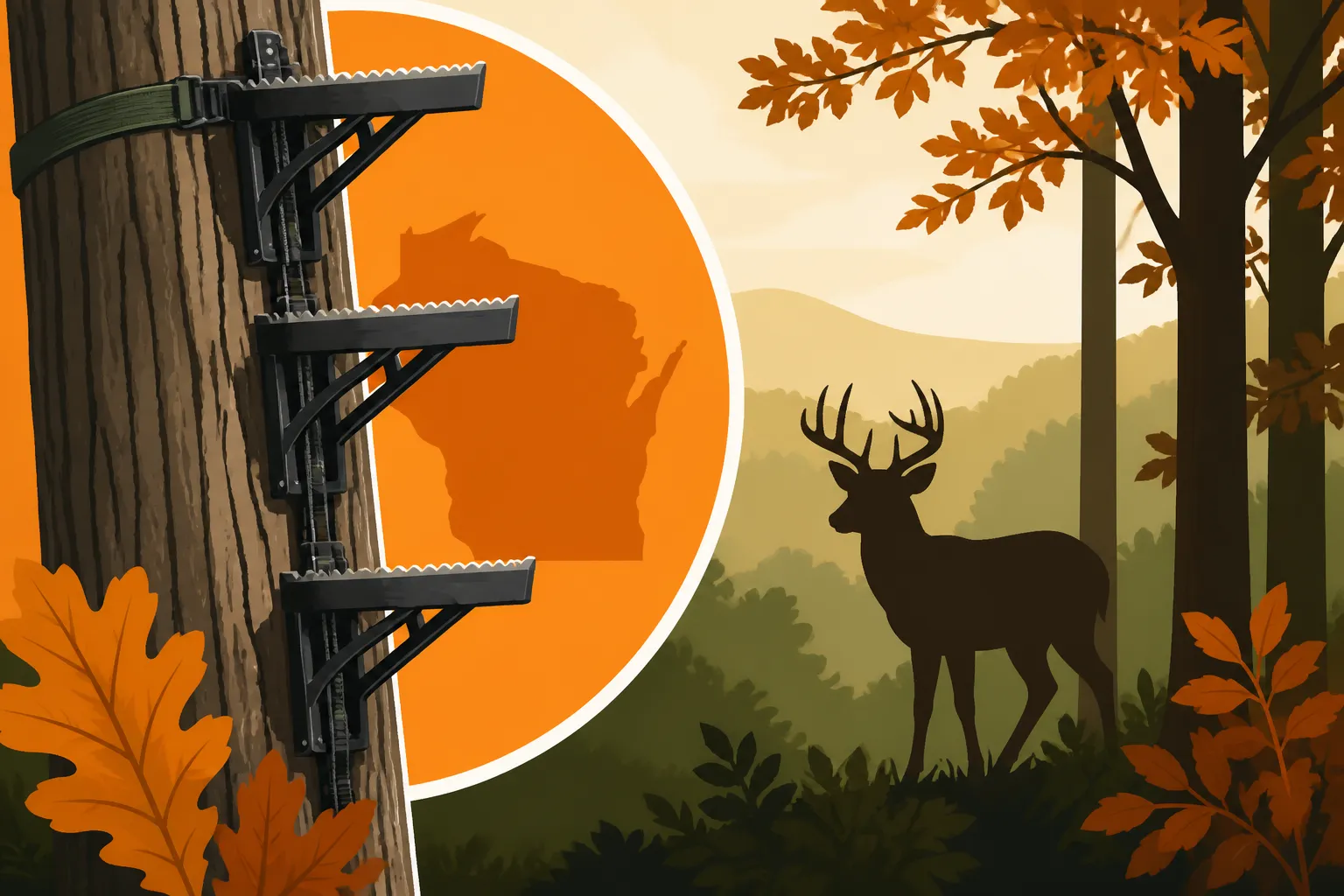
This is the bread and butter for most modern mobile hunters, and for good reason. Sectional climbing sticks break down into shorter, stackable segments, usually 2-4 feet long, that can be easily strapped together and carried on a pack. When you reach your chosen tree, you assemble them one by one as you ascend. This design strikes an excellent balance between portability and functionality.
Most sectional sticks utilize either a cam-buckle strap system or a more advanced cinch rope system for attachment. They often feature various stacking or nesting designs to minimize bulk during transport. Brands like Lone Wolf, Hawk, Muddy, and Summit all offer popular sectional stick options. The lightweight aluminum construction found in many of these models, combined with their ability to break down, allows a hunter to confidently trek miles into the Driftless Area Deer Hunting in Wisconsin or deep into public swamps without feeling overly burdened. The ability to carry 20 feet of climbing capability in a compact package is revolutionary for adaptable hunting.
Strapless or Rope-Attachment Systems
A newer, often lighter-weight option involves sticks that attach to the tree using rope or similar cordage systems rather than traditional buckles. These systems can be incredibly quiet to install and remove, as there are no metal buckles to clank or clatter. They also often allow for a more secure, "bite" into the tree, reducing potential slippage, especially on trees with smooth bark.
However, these systems often come with a steeper learning curve. Tying off the ropes securely and efficiently in the dark or with cold, gloved hands requires practice. Ensuring the knot is consistently tight and safe is paramount. While some hunters swear by their lightweight and silent operation, others prefer the quick and straightforward nature of a cam-buckle strap, especially when speed and ease of use are critical during a morning rush. The choice often comes down to personal preference, practice, and how much you prioritize weight savings over ease of deployment.
Essential Features to Look for in Wisconsin-Ready Climbing Sticks
When you're outfitting yourself for hunting in Wisconsin's varied conditions, from early archery's mild days to the bone-chilling late-season gun hunts, your gear needs to stand up to the task. Climbing sticks are no exception. Several key features dictate their performance, durability, and most importantly, your safety and comfort in the tree.
Material and Construction: Weight Versus Durability
The two primary materials for climbing sticks are aluminum and steel. Each has distinct advantages and disadvantages that are worth considering.
- Aluminum Sticks: These are overwhelmingly popular among mobile hunters due to their light weight. A typical 3-4 section aluminum stick system might weigh anywhere from 8 to 15 pounds, making it manageable for longer treks into the woods. Aluminum is also corrosion-resistant, a big plus in Wisconsin's often wet and snowy conditions. However, aluminum can be less durable than steel; impacts or excessive force can bend or dent the tubing. While modern aluminum sticks are remarkably strong, it's something to be mindful of, especially if you're prone to dropping gear or are rough with your equipment. When packing deep, especially with tools like the GoHunt app guiding your route, every ounce matters, making aluminum a top choice.
- Steel Sticks: Steel sticks are incredibly robust and can take a beating. They are generally less expensive than their aluminum counterparts and offer exceptional rigidity and strength. The trade-off, of course, is weight. Steel sticks are significantly heavier, making them less ideal for hunters who plan to move their stands frequently or hike long distances. They are more prone to rust if the powder coating or paint gets scratched, so proper maintenance is crucial. Steel sticks might be a good option if you primarily hunt from a few fixed locations close to access points and prioritize brute strength and cost savings.
Step Design and Grip for All Conditions
This feature is critical for both safety and comfort, particularly when you're wearing heavy, insulated boots or when the steps are icy or wet.
- Step Width and Depth: Wider and deeper steps provide a more stable platform for your feet, reducing fatigue and increasing confidence during ascent and descent. This is especially important when you're trying to quietly adjust your footing in the dark or when you're carrying a pack.
- Non-Slip Texture/Coating: Look for steps with aggressive knurling, a textured coating, or built-in serrations. These features help prevent your boots from slipping, even when covered in mud, ice, or snow. A smooth step, while seemingly minor, can be a major hazard in slick conditions.
- Angled Steps: Some stick designs feature steps that are angled slightly upward. This design helps to cup your boot, providing a more secure foothold and reducing the chance of your foot slipping off the back of the step.
- Single vs. Double Steps: Many sticks offer a single step per section, keeping them lightweight and streamlined. Others have double steps, providing more room but adding a bit of weight and bulk. Consider your foot size, boot preference, and how much standing room you need while ascending.
Attachment Methods: Straps, Ropes, and Quiet Operation
The way your sticks attach to the tree is paramount for both security and ease of use.
- Cam-Buckle Straps: This is a very common and effective attachment method. A strap with a cam buckle is wrapped around the tree, and the strap is threaded through the buckle, which then cams down to secure it tightly. They are generally quick to deploy and offer a very secure hold. However, some cheaper buckles can be noisy if they clank against the stick or if you're not careful during installation. Quality straps are usually made of strong, quiet material.
- Cinch Straps/Rope Systems: These systems often use a rope or a thin strap that cinches down tight around the tree. They are frequently lauded for their silent operation, as there are no metal buckles to make noise. Some designs allow for a "stick-and-a-half" attachment, meaning you can attach the next section from a lower step, further increasing safety and stability. Mastering the proper cinching technique is key to ensuring a rock-solid, safe attachment. These systems are often lighter too, aligning with a minimalist approach to hunting gear.
- Integrated Tree-Huggers: Some sticks incorporate a "tree-hugger" design, where a curved section of the stick itself wraps around the tree, providing inherent stability before the strap is even fully tightened. This can make the initial attachment process easier and more secure.
Weight and Packability for the Long Haul
For the Wisconsin hunter who likes to go deep, or who operates with a mobile mindset, weight and packability are paramount.
- Overall System Weight: This includes the weight of all the sticks you need to reach your desired hunting height. Aim for a system that provides adequate height without excessive bulk. Many hunters find 3-4 stick sections, providing 15-20 feet of climbing, to be a good balance. Remember, this weight adds to your overall pack weight, alongside your treestand, bow, and other essentials. Packs for a Day on Public Land need to accommodate these items comfortably.
- Stacking and Nesting Design: Good climbing sticks are designed to stack or nest together efficiently, minimizing their profile on your pack. This prevents them from snagging on branches or making noise as you walk. Look for features like built-in grooves or offset designs that allow sections to fit snugly together.
- Attachment to Pack: Consider how the sticks will attach to your hunting pack. Many come with straps or have attachment points that integrate well with popular hunting packs. Ensuring a secure, quiet attachment is crucial to avoid frustration and noise during your hike in.
Safe and Effective Setup in Wisconsin Hardwoods
Climbing sticks are fantastic tools, but like any piece of hunting equipment, they demand careful, safe, and deliberate use. Rushing the setup or neglecting safety protocols can lead to dangerous situations, especially when you're 20 feet up in a tree in the dark before dawn.
Pre-Season Practice and Preparation
This step cannot be stressed enough: practice at home before you ever take your sticks to the woods during hunting season.
- Backyard Drills: Set up your sticks and hang-on stand in your backyard. Practice attaching each section, ascending, descending, and deploying your stand. Do this repeatedly until the movements become fluid and instinctive, even with your eyes closed or in low light. This will help you identify any kinks in your system or technique.
- Familiarity with Gear: Get to know every buckle, every strap, every connection point. Understand how your sticks interact with your specific hang-on stand or saddle setup. This familiarity breeds confidence and efficiency, which are critical when time is short and silence is paramount.
- Mock Setups: Try setting up on different types of trees in your yard – a thicker oak, a smoother maple. This helps you understand how different bark textures and tree shapes affect the stick's grip and attachment. A good platform like GoHunt can also offer scouting maps that help you pre-plan tree choices, which you can then simulate at home.
Choosing the Right Tree for Your Stand
The tree you choose is as important as the stand itself. A healthy, sturdy tree is essential for a safe setup.
- Straight and Healthy: Select a live, healthy tree with a relatively straight trunk. Avoid dead trees, snags, or trees with extensive rot, as their structural integrity can be compromised. Look for trees that are free of large, impeding branches in the section where you plan to climb.
- Appropriate Diameter: Most climbing sticks are designed for trees within a certain diameter range. Ensure your chosen tree falls within these parameters for optimal grip and stability. A tree that's too small might not allow the stick's attachment method to cinch down properly, while a tree that's too large might not allow the straps to wrap fully around.
- Cover and Shooting Lanes: Beyond safety, consider your hunting objectives. Does the tree offer good cover from approaching deer? Can you achieve the desired shooting lanes from your intended height? Is it strategically located near bedding areas, feeding routes, or funnel points? Using mapping tools and aerial photos found on services like GoHunt can significantly aid in this pre-hunt analysis, helping you locate prime spots that might not be obvious from the ground.
Step-by-Step Setup Process for Maximum Safety
Once you've chosen your tree, a methodical approach to setup is crucial.
- Clear the Base: Clear away any debris, sticks, or loose rocks from the base of the tree. You want a stable, level area to start your climb and to land safely if you slip.
- First Stick Placement: Attach your first stick section firmly to the tree, ensuring it's level and secure at a comfortable height for your first step. Double-check the strap or rope for tightness.
- Ascend and Attach: As you climb, attach each subsequent stick section while always maintaining three points of contact (two hands, one foot, or one hand, two feet). Ensure each section is tightly secured before putting your full weight on it. Many hunters attach their treestand to their pack and hoist it up with a rope after the sticks are set, or carry it up with them.
- Stand Attachment: Once your sticks reach your desired height, attach your hang-on treestand. Make sure it is level and rock-solid before you ever step onto it.
- Lifeline Deployment: As soon as your stand is secured, immediately attach your full-body harness to a safety lifeline that extends from the base of the tree up to your stand platform. You should be connected to this line from the moment your feet leave the ground until they return.
Essential Safety Gear and Practice
Safety is non-negotiable when hunting from an elevated position.
- Full-Body Harness: This is your absolute most important piece of safety gear. Wear it correctly, ensuring all straps are snug and buckles are fastened. If you fall, a harness will catch you and prevent serious injury or death.
- Lifeline/SRS (Single Rope Safety): A lifeline is a rope that runs from the ground up to your stand, allowing you to stay connected to the tree via your harness from the moment you leave the ground until you are safely back on it. This eliminates the dangerous "transition zone" where most falls occur (transferring from sticks to stand, or vice versa).
- Rope-Man/Prusik Knot: Many lifelines come with a Prusik knot or a similar device that slides freely up and down the rope when not under tension, but locks tight if you fall. Ensure this is always above you as you climb.
- Communication Device: Carry a fully charged cell phone or two-way radio, especially if hunting alone in remote areas. This is crucial for emergencies.
- First-Aid Kit: A basic first-aid kit should always be in your pack, ready for any minor injuries. First Aid Kits for Remote Northwoods Ground can be lifesavers.
Longevity and Maintenance of Your Climbing Sticks
Investing in a good set of climbing sticks means you want them to last. Just like your firearm or bow, proper care and maintenance will extend their lifespan, ensure their safe operation, and prevent unexpected failures when you're relying on them in the field. Wisconsin's varied weather, from humid summers to freezing winters, can be tough on gear, so vigilance is key.
Post-Hunt Cleaning and Inspection
After each hunt, especially if your sticks have been exposed to the elements or dirty conditions, take a few minutes to clean and inspect them.
- Remove Debris: Wipe down your sticks to remove mud, sap, leaves, and any other organic matter. A damp cloth usually does the trick. Pay close attention to the steps and attachment points where grime can accumulate.
- Prevent Corrosion: If your sticks are steel, ensure any scratches in the paint or coating are touched up to prevent rust. Even aluminum sticks can benefit from a quick dry-off if they've been out in the rain or snow, preventing water from lingering in crevices.
- Check Straps and Ropes: Inspect all straps and ropes for fraying, cuts, excessive wear, or sun damage. These are critical components that can degrade over time. If a strap looks suspicious, replace it immediately. You can often buy replacement straps directly from the manufacturer or a reputable gear supplier.
Regular Inspection of Components
Beyond a quick post-hunt wipe-down, schedule more thorough inspections periodically, particularly before the start of a new season.
- Weld Points and Connections: Carefully examine all welds and connection points on the stick sections. Look for any cracks, bends, or signs of metal fatigue. If you see anything unusual, discontinue use and contact the manufacturer or a professional for advice.
- Buckles and Pins: If your sticks use cam buckles, inspect them for proper function. Ensure the cam engages tightly and doesn't slip. Check any pins or bolts that connect sections for tightness and wear. Sometimes, a little lubrication on moving parts can help maintain smooth operation.
- Rubber Coatings/Silencers: Many sticks come with rubber coatings on steps or attachment points to reduce noise. Check these for tears or missing pieces. Replacing them can help maintain stealth.
Proper Storage for Extended Life
How you store your climbing sticks during the off-season or between hunts can significantly impact their longevity.
- Dry and Ventilated Space: Store your sticks in a dry, well-ventilated area, away from direct sunlight and extreme temperatures. A garage, shed, or basement is usually suitable. Avoid leaving them exposed to the elements year-round.
- Organized Storage: Keeping your sticks organized not only helps you find them easily but also prevents them from getting damaged. Hanging them on a wall or storing them neatly in a designated container prevents them from being thrown around or having heavy objects stacked on them, which could lead to bends or damage.
- Out of Reach of Pests: If storing in a shed or garage, ensure they are not accessible to rodents or other pests that might chew on straps or ropes, compromising their integrity.
By dedicating a little time to care for your climbing sticks, you ensure they remain a reliable, safe, and effective part of your Wisconsin hunting arsenal for many seasons to come.
Advanced Tactics and Considerations for Mobile Hunting in Wisconsin
Climbing sticks are the foundation of a truly mobile hunting strategy, allowing you to react to deer movement and conditions rather than being tied to a static location. Mastering these advanced tactics can elevate your success, especially when pursuing wary Wisconsin whitetails.
Run-and-Gun Applications and Rapid Deployment
The ability to "run-and-gun" is perhaps the ultimate expression of mobile hunting, and climbing sticks make it possible. This tactic involves quickly setting up a stand in a new location based on fresh sign or real-time observations, hunting for a few hours, and then moving to another spot if conditions or deer activity dictate.
- Scouting on the Move: Instead of just scouting before the season, many mobile hunters are constantly scouting during the season. This might involve walking new areas, checking trail cameras, or observing deer movement from a distance. When you find a hot sign, like a fresh scrape line or a suddenly active travel corridor, your climbing sticks allow you to immediately capitalize on it. Platforms like GoHunt are fantastic for analyzing topo maps and aerial imagery, helping you pinpoint those transition lines and habitat changes where deer often move.
- Adapt to Wind Shifts: Wind direction is paramount for deer hunting. If the wind shifts unexpectedly during your hunt, or if your chosen stand location becomes compromised by a swirling wind, a mobile setup allows you to quickly pack up and move to a new tree with a more favorable wind direction. This is far more effective than trying to "tough it out" in a bad wind, which usually results in busted deer.
- Rut Roving: During Hunting the Peak Rut Week in Wisconsin or Hunting the Pre-Rut in Late October, bucks are constantly on the move, covering vast distances looking for does. A run-and-gun strategy lets you cover more ground, setting up in funnels, pinch points, or near doe bedding areas that show fresh buck sign. You might hunt a ridge line in the morning, then move to a swamp edge in the afternoon.
Multiple Pre-Setups and Strategic Placement
For hunters with access to multiple areas, or those who want to maximize efficiency, a strategy of having multiple pre-set stick locations can be incredibly effective.
- Leaving Sticks on Trees: In areas where it's legal and safe, you might leave the bottom section or two of sticks permanently attached to several promising trees. This means you only need to carry a few upper sections and your hang-on stand when you head to that specific location, drastically reducing your carry weight and setup time. Always check local regulations regarding leaving stands or sticks on public land.
- Stand Rotations: Having 3-5 trees pre-set with sticks allows you to rotate your stand locations based on wind, pressure, and deer activity without spending valuable hunting time on setup. This keeps deer guessing and reduces the pressure on any single spot. One day you might be Hanging a Stand in a Wisconsin Coulee, the next you're setting up on an aspen cut edge.
- Diverse Options: Pre-setting sticks in different habitat types (e.g., a swamp edge, a ridge point, a food plot approach) gives you a wide array of options for various conditions and deer patterns. This versatility is critical for success throughout the long Wisconsin deer season.
Integrating with Saddle Hunting for the Ultimate Mobile Setup
For many dedicated mobile hunters, climbing sticks pair perfectly with saddle hunting, creating what is arguably the most versatile, lightweight, and stealthy elevated hunting system available.
- Minimalist Approach: Saddle hunting inherently encourages a minimalist approach, and climbing sticks are a natural fit. They are lightweight, compact, and allow for a 360-degree shooting radius from the saddle, which is often difficult from a traditional hang-on stand. Saddle Hunting in Wisconsin Oaks is a rapidly growing technique that leverages the flexibility of sticks.
- Enhanced Stealth: Saddle hunting and sticks often make less noise than a hang-on stand during setup and removal. There's no large platform to clank, and the streamlined nature of a saddle means less bulk to bang against the tree or sticks.
- Finding Ground Others Walk Past: With this ultra-mobile setup, you can access incredibly remote and challenging terrain that other hunters bypass. Think of steep coulee bottoms, thick cedar swamps, or deep public land pockets that are simply too far or too difficult for bulky ladder stands. Your ability to get off the beaten path, facilitated by lightweight sticks, directly correlates with your chances of finding unpressured deer. This tactic is key for Finding Ground Others Walk Past.
- Strategic Scouting Integration: When you're scouting areas like a Funnel Between Two Swamps or identifying Entry Routes on Steep Driftless Ground, knowing you have the ability to quickly and silently get into a tree with sticks and a saddle opens up a world of possibilities for stand placement that might be inaccessible with traditional methods.
By embracing these advanced tactics, and utilizing the flexibility that climbing sticks provide, you can transform your Wisconsin hunting experience, making you a more adaptable, stealthy, and ultimately, more successful deer hunter.
| Feature | Sectional Sticks (Aluminum) | Single-Piece Sticks (Steel) |
|---|---|---|
| Weight | Light (8-15 lbs for a full set) | Heavy (20-30+ lbs for a full set) |
| Packability | Excellent (breaks down into short sections) | Poor (rigid, long sections) |
| Setup Speed | Moderate (assembly required) | Fast (attach rigid sections) |
| Stability | Very good (when properly attached) | Excellent (fewer connection points) |
| Stealth | High (quiet attachment options) | Moderate (metal can clank) |
| Best Use Case | Mobile hunting, deep woods access, run-and-gun, public land | Fixed sets, short climbs, close to vehicle access, less frequent moves |
| Common Attachment | Cam-buckle straps, cinch ropes | Cam-buckle straps, chains |
Disclaimer
This article is for general informational purposes only and does not constitute professional advice. Laws, prices and regulations vary by location and change over time. Consult a qualified professional for guidance on your specific situation.