Decoy Placement for Pressured Birds
When you're trying to coax ducks, geese, or turkeys into range here in Wisconsin, it can feel like you're playing a chess game against a master opponent, especially when those birds have been hunted hard all season. They've seen every spread in the book, skirted countless blinds, and heard every call. This guide will walk you through the nuanced art of decoy placement specifically for those incredibly wary, pressured birds, focusing on how to make your setup look irresistible and safe, rather than a blatant trap.
Understanding Pressured Bird Behavior
Hunting pressured birds, whether it's the late-season mallards on a frozen marsh or the gobblers that have been called at since April, requires a different mindset. These aren't naive birds; they're seasoned veterans of evasion.
The Wary Nature of Hunted Birds
Birds that have been hunted extensively develop an almost uncanny ability to detect anything out of place. They’ve learned to associate large, dense decoy spreads, perfectly symmetrical patterns, or stationary, unnatural-looking decoys with danger. Think about those big flocks of Canada geese flying high over a cut cornfield near Horicon Marsh. They'll circle once, maybe twice, and then flare at the slightest glint of sunlight off a plastic decoy, or the shadow of a hunter. They're looking for escape routes, checking for too many "eyes" staring in one direction, and scrutinizing the landing zone for any anomalies. Their survival instincts are dialed up to eleven, making them incredibly tough to fool. They've seen their buddies disappear from similar situations, and that memory sticks.
Reading Bird Reactions
One of the most critical skills a hunter can develop is the ability to read how birds react to your setup. Are they circling wide? Are they flaring hard at the last moment? Are they simply ignoring you altogether and flying on to the next field or wetland? Each of these reactions tells a story. If ducks are cupping their wings for a landing but then suddenly pull up and climb, it's often a sign that something in your landing zone or blind presentation is off. Geese that make a single, high pass and then power away without even a second look are telling you your spread is unconvincing from altitude. Turkeys that gobble enthusiastically on the roost but go silent the moment they hit the ground and see your decoys are also sending a clear message: something's not right. Paying close attention to these subtle cues, even if it's frustrating, is the first step to adapting your strategy.
Common Mistakes Hunters Make
Many hunters, myself included, fall into predictable traps when setting decoys for pressured birds. The biggest mistake is often "more is better." We think a massive spread will attract more attention, but to wary birds, it can scream "danger" or simply look unnatural. Another common error is uniformity: placing decoys in neat rows or tight clusters that don't mimic how real birds behave. Real ducks and geese feed and loaf somewhat randomly, with varying distances between them. Stiff, static decoys with no movement on the water or in the field are also a dead giveaway. Without the subtle bob and weave of real birds, especially on a calm day, your spread looks lifeless. Lastly, hunters often neglect concealment, either of themselves or their blind, making the decoy spread's purpose obvious. Even the best decoy spread can be ruined if the birds spot you fidgeting or see the tell-tale outline of a pop-up blind.
Key Principles of Decoy Placement for Wary Birds
When targeting those cunning, educated birds, you need to think like them. What makes a place feel safe? What looks natural?
Less is Often More
For heavily pressured birds, the "less is more" philosophy is often a game-changer. Instead of a dozen full-body goose decoys, try three to five strategically placed ones. For ducks, a spread of six to nine quality decoys can often outperform twenty cheaper ones. Why? Because a smaller spread looks more cautious, less like a party, and more like a small group of contented birds that have found a safe haven. This is especially true for late-season ducks and geese who have seen hunting pressure since September. A smaller number of decoys also makes it easier to achieve a natural, spread-out appearance without creating obvious, artificial patterns. It suggests a more secluded, less-trafficked area, which wary birds actively seek. When I'm in a tough spot on public land, like a small pond in a county forest, I often just take three mallard floaters and position them very naturally, focusing on the quality of their posture and realism.
Natural Movement and Realism
One of the greatest advancements in decoy technology has been the introduction of motion. Static decoys, even realistic ones, can look dead to high-flying birds. Adding subtle, natural movement is absolutely critical for pressured birds. For ducks, consider a jerk string or a vibrating decoy that creates ripples on the water. On the ground for geese, a few feeder decoys with heads down and some upright sentries, combined with a couple of motion decoys like a flapper or a windsock, can make a significant difference. The key is natural movement, not constant, frantic flapping that screams "fake." For turkeys, a single hen or jake decoy with subtle head movement, or even a fan, can make them feel at ease. Companies like Mojo Outdoors have really nailed this, with decoys that provide just enough life-like action to fool wary eyes. When birds are circling, that flicker of movement can be the final push they need to commit. This realism, whether it's a feeding posture or a subtle head turn, helps to sell the illusion that your spread is a safe haven.
Creating Landing Zones
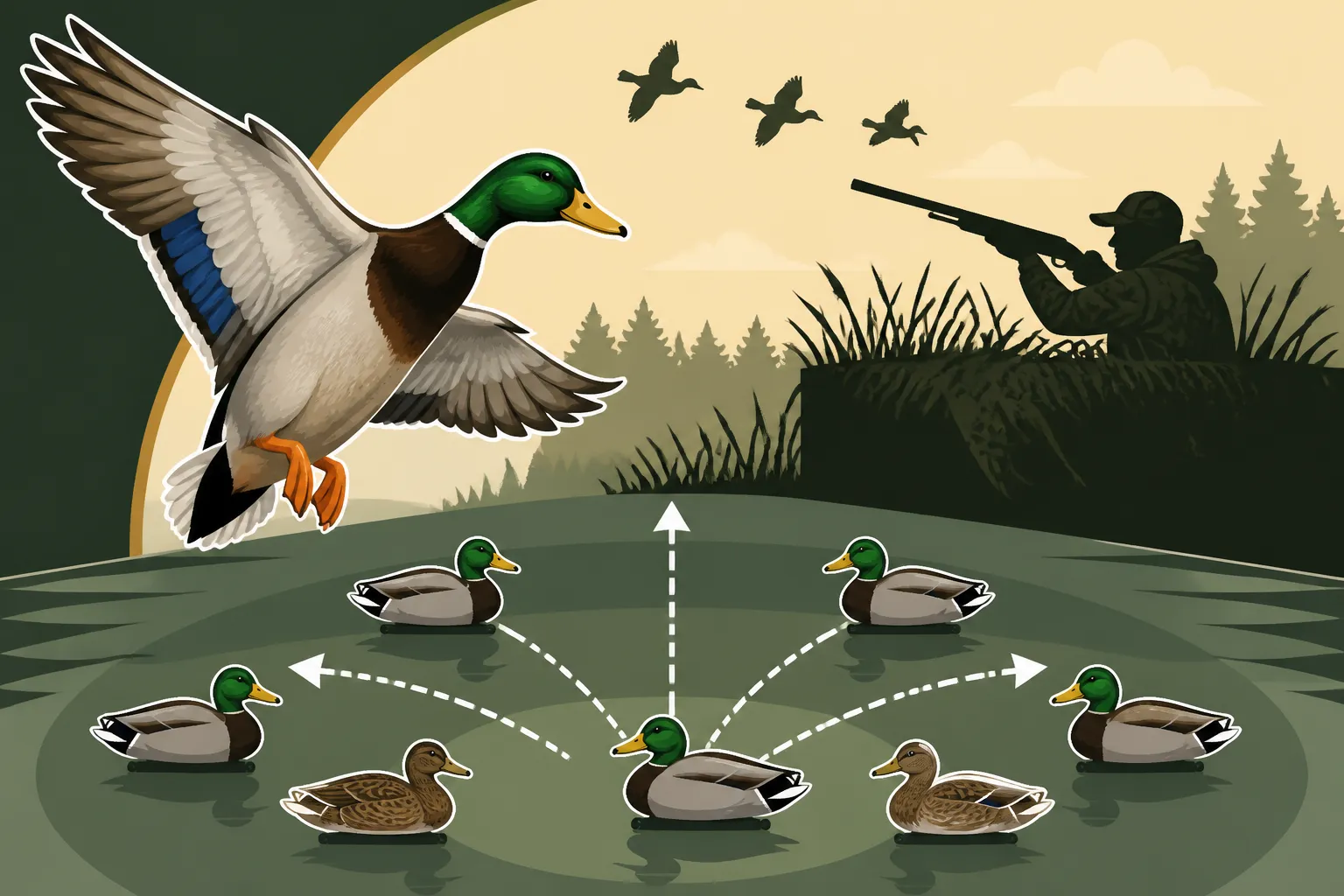
No matter the species, pressured birds need a clear, inviting landing zone. This is the spot where they feel safest touching down. For waterfowl, this usually means an open patch of water in front of your blind, free of decoys, or a bare patch of field for geese. The size of this landing zone matters; it shouldn't be too small, making them feel cramped, nor too vast, making them feel exposed. For ducks, think of a "J-hook" or "U-shaped" spread, with the open end of the "J" or "U" directly in front of your blind, leading into the landing zone. For geese, create a pocket within your spread, making sure no decoys are in the path of their approach or directly where you want them to land. For turkeys, place your hen or jake decoys slightly off to the side, creating an open path for an approaching gobbler to strut directly into gun range without having to navigate a cluttered decoy field. Remember, wary birds will often try to land outside your spread if they detect danger within it, so clearly defining that safe space is paramount.
Specific Scenarios and Setups
Applying these principles to different hunting scenarios is where the rubber meets the road. Each type of hunting, and each species, presents unique challenges.
Field Hunting Geese in Southern Wisconsin
Field hunting geese, especially the big Canada geese that frequent the cut cornfields in southern Wisconsin, requires a nuanced approach. These birds are some of the most educated out there. Forget the massive spreads of 100+ decoys unless you're targeting early season birds. For pressured geese, start with a smaller spread, say 1-2 dozen, of highly realistic full-body decoys. Focus on creating small family groups rather than one giant blob. Place 2-3 decoys close together, then a gap, then another 2-3. Mix in feeders with sentries. Crucially, pay attention to the wind. Geese always land into the wind. Your landing zone should be a wide-open gap in the spread, directly in front of your blinds, allowing them a comfortable, unobstructed approach.
When using a spread of a dozen decoys, consider placing the majority of your decoys upwind of your desired landing zone. This encourages birds to fly over your decoys, see the "safe" birds below, and commit to landing in the open pocket you've created downwind, directly in your shooting lane. Tools like the GoHunt app can be invaluable here for scouting those exact field contours and identifying potential landing approaches. Remember, those big flocks at Horicon Marsh or over a stubble field near Madison have seen it all. You're trying to convince a small, cautious family group that your field is safe.
Waterfowl on Small Marshes and Rivers
Hunting ducks on smaller bodies of water, like those backwater sloughs on the Mississippi River or tucked-away cattail marshes, calls for an intimate setup. Forget huge spreads of diver decoys when you're hunting mallards in a tight spot. For pressured puddle ducks, a spread of 6-12 high-quality mallard and pintail decoys, with a few active ones, is often perfect. The goal is to mimic a small, contented group that has found a quiet spot away from the crowds.
Here's where realism really shines. On rivers, place a few decoys along the current lines, as if they're feeding naturally. In marshes, position them along the edges of small openings in the reeds, offering a clear landing strip. Using a jerk string that subtly pulls and releases a couple of decoys, creating ripples, can be incredibly effective. Consider using a spread that mirrors the wind direction, with the bulk of your decoys positioned to your left or right, creating a clear landing zone directly in front of your blind where the ducks can swing in and cup their wings for a perfect shot. If you're targeting diving ducks on larger water, you might need a different approach entirely, focusing on a strong block of decoys to imitate a raft, as outlined in guides like "Decoy Spreads for Wisconsin Divers".
Spring Turkeys on Public Land
Spring turkey hunting on public land in Wisconsin can be a humbling experience. These gobblers are extremely pressured, having often been called to and hunted heavily since the season opened. They're wary of anything that looks too aggressive or too static. For these birds, less is definitely more. Often, a single hen decoy, or a single jake/hen combination, is all you need. Place the hen in a relaxed, feeding posture. If using a jake, ensure it's not overly aggressive.
Position your decoys slightly off to the side, about 15-20 yards from your blind, and angled so that an approaching gobbler has a clear path to walk directly into range without encountering any obstacles. You want him to feel comfortable strutting in, showing off, and ideally presenting a broadside shot. The key here is not to challenge him directly with an aggressive strutting tom decoy, which can cause pressured birds to hang up or circle. Instead, offer him an easy conquest with a receptive hen or a non-threatening jake. For more insights on how to handle these wily birds, check out strategies like "Run-and-Gun Turkey Tactics on Public Land" or specific advice on "Turkey Decoys That Work on Pressured Birds."
| Decoy Placement Strategy | Species | Number of Decoys | Key Principle | Ideal Weather |
|---|---|---|---|---|
| Small Family Group | Canada Geese | 3-5 full bodies | Natural, safe haven | Calm, low wind |
| J-Hook / U-Shape | Puddle Ducks | 6-9 floaters | Clear landing zone | Light to moderate breeze |
| Single Hen | Wild Turkey | 1 hen or jake/hen | Non-threatening, inviting | Any |
| Active Feeding | Puddle Ducks | 4-6 floaters + motion | Realistic movement, contented | Calm |
| Scattered Pairs | Diving Ducks | 12-18 divers | Suggests larger, safe raft | Moderate to strong wind |
Adjusting to Changing Conditions
Even the best-laid plans can go awry. Wary birds are constantly reacting to their environment and previous hunting encounters, so your setup needs to be dynamic.
Wind and Sun Considerations
Wind is a duck and goose hunter's best friend and worst enemy. Birds always land into the wind, so your decoy spread and blind placement must account for this. If the wind shifts unexpectedly, your carefully crafted landing zone might become a no-fly zone, or worse, put the birds directly over your blind from an unexpected direction. Always be prepared to quickly adjust your decoys if the wind changes significantly. A slight repositioning of a few key decoys can make all the difference.
The sun's position is equally important. On bright days, glaring sun can make your decoys look unnatural or create harsh shadows that wary birds can detect. Try to set up with the sun at your back, if possible. This not only puts the sun in the birds' eyes, making it harder for them to see you, but it also illuminates your decoys, making them pop and look more realistic. However, sometimes the terrain dictates your position, and you might have to adapt your spread to minimize glare. Being aware of these elements helps ensure your spread remains convincing throughout the hunt.
Reacting to Non-Committed Birds
This is where experience really pays off. If ducks are circling high or flaring just outside your range, they're telling you something is wrong. Don't be afraid to make a change. Sometimes it's as simple as pulling a few decoys to make the spread even smaller, or moving a motion decoy to a more prominent spot. If they're flaring at a specific point, check that area for anything out of place – a shiny blind edge, an exposed hunter, or a decoy that's too close to the landing zone.
For turkeys, if a gobbler is hung up at 80 yards, gobbling but refusing to come in, he's likely seen something he doesn't like or he feels he's in danger. You might need to change your call frequency, or even consider moving to a new setup. Sometimes, removing a jake decoy can convince a hung-up tom to commit. It’s a constant process of observation, analysis, and adjustment. Using the GoHunt mapping layers can sometimes help you visualize escape routes or terrain features that might be influencing bird behavior. Always be ready to adapt, because static strategies rarely work on truly pressured game.
Scouting for Success
The absolute best way to counter pressured birds is thorough scouting. You can have the most realistic decoys and the most perfect spread, but if you're not where the birds want to be, it's all for naught. Watch their flight patterns: Where do they leave the roost? Where do they feed? What path do they take to get there? What time of day do they move?
For waterfowl, this might mean spending hours observing a specific marsh or watching flight lines over cut fields. Knowing exactly where geese are " Reading Roost-to-Field Flight Lines" can give you an undeniable edge. For turkeys, it means locating their roosts and understanding their preferred strutting or feeding areas. Don't just scout from the truck; get out and walk the edges, look for droppings, tracks, and feathers. Your scouting will inform not only where to set up but also the type of spread that will be most effective for the specific birds you're targeting. After all, the best decoy placement for pressured birds starts with being in the right place to begin with.
Disclaimer
Hunting is an inherently dangerous activity. Always prioritize safety, follow all local and state regulations, and obtain proper licensing before heading into the field. The information provided here is for educational purposes and should not replace professional guidance or personal judgment.