Slate and Glass Calls in Wet Weather
There are few things more frustrating than being out in the Wisconsin turkey woods, the birds finally gobbling, only for your trusty slate or glass call to suddenly go silent and squeaky because of a little morning dew or an unexpected drizzle. We've all been there, frantically trying to wipe the moisture away on our pant leg, only to get a sad, dull note when what we need is a crisp yelp or a sharp cut. This guide is all about tackling that common problem head-on, giving you the knowledge and practical tips to keep your friction calls singing, even when the Wisconsin weather tries its best to mute them.
The Frustration of Wet Friction Calls in the Turkey Woods
Turkey hunting often means being out at dawn, when the air is cool and damp, or pushing through mid-morning showers. For many of us, our favorite slate or glass call is a go-to for its realistic sounds and ease of use. But these calls have a glaring weakness: moisture. When they get wet, their performance drops off a cliff, leaving us feeling unprepared and missing out on crucial calling opportunities.
Why Moisture is the Enemy of Friction Calls
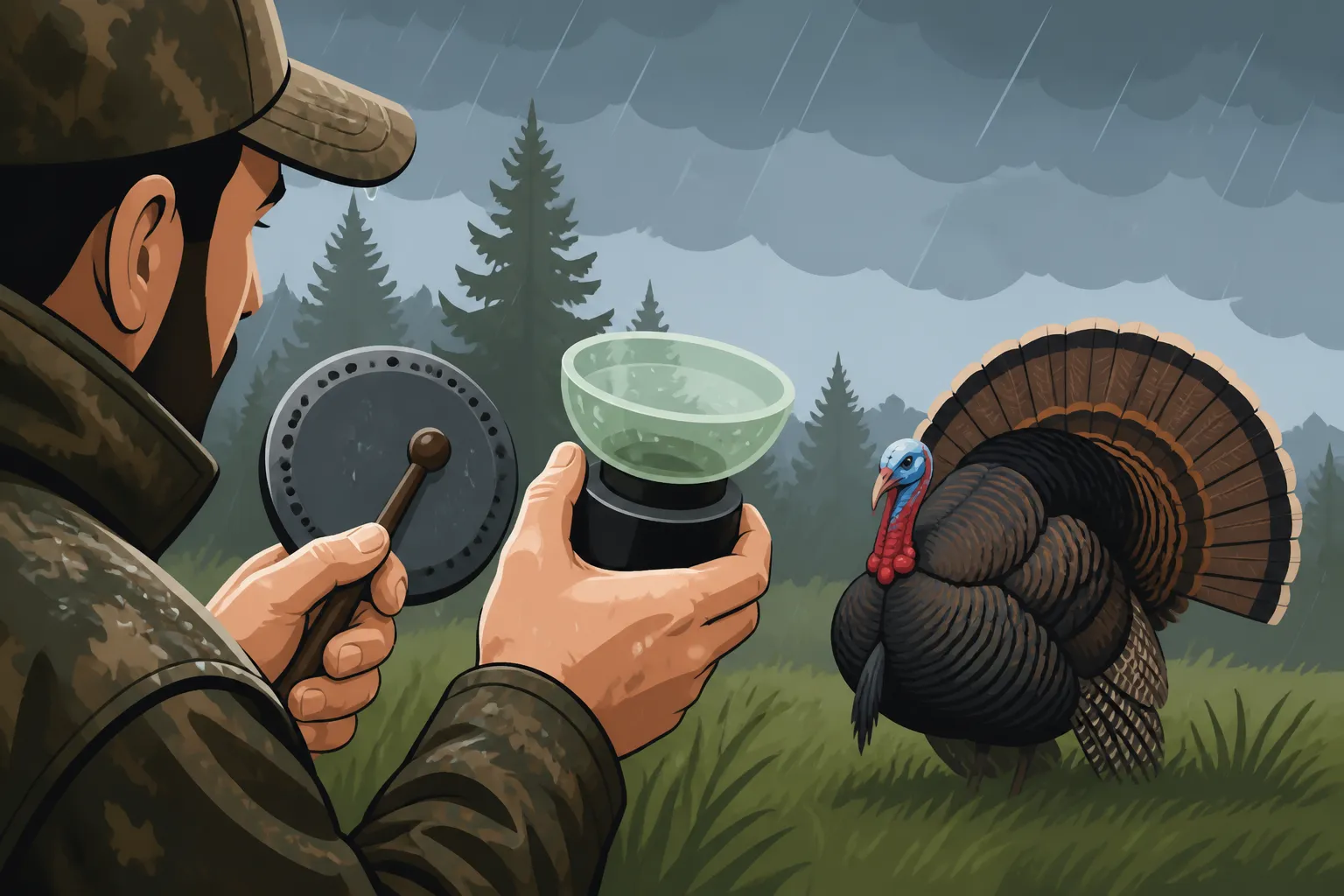
At its core, a friction call works by, well, friction. When you draw a striker across the surface of a slate, glass, or ceramic call, it creates vibrations that produce sound. It's a finely tuned system, and any disruption to that friction fundamentally changes the sound. Moisture acts as a lubricant, creating a thin film between your striker and the call's surface. Instead of a crisp, gripping action, the striker slides, creating a dull, muted, or even squeaky sound that sounds nothing like a real turkey. It's like trying to start a fire by rubbing two wet sticks together – it just doesn't work.
Think about a typical Wisconsin spring morning. You've heard a gobbler Calling a Wisconsin Gobbler Off the Roost and you've snuck in close, Setting Up Against a Big Oak. The dew is still heavy on the grass, clinging to every leaf. You pull out your call, ready to offer a soft tree yelp, and the surface feels slick. That little bit of dampness, or even just high humidity, is enough to kill the vibrant tones you worked so hard to master during the off-season. The vibrations are dampened, the sound wave isn't produced cleanly, and your lifelike yelps turn into pathetic squawks. It's incredibly frustrating when the conditions conspire against your best efforts, and it's a common struggle for hunters who rely on these fantastic calls.
Common Scenarios Where Calls Get Wet
It's not always a torrential downpour that ruins your day. Sometimes it's the subtle, everyday dampness of the woods that catches us off guard. Picture yourself sitting against that big oak, patiently waiting. You might be in a slight depression where the ground stays wet, or the tree itself might be covered in condensation. Your call, sitting in an open pocket of your vest, slowly absorbs that ambient moisture. Or perhaps you've been working a ridge, trying to locate a bird, and a light drizzle starts. You might not even feel wet through your layers, but your call, exposed for even a few minutes, can quickly become compromised.
Even sweat can be an issue. After a long hike uphill to get into position, or if you're layering for cold mornings that turn into warm afternoons, a damp vest pocket can transfer enough moisture to a call to diminish its performance. And let's be honest, we've all had those clumsy moments: a call slips out of a hand, bouncing into a pile of wet leaves or splashing into a shallow puddle while crossing a ditch. It happens to the best of us. The key isn't to prevent your calls from ever getting wet – that's often impossible in the field – but to know how to mitigate the damage and keep them performing.
Preparing Your Slate and Glass Calls for Wet Weather
Prevention and preparation are truly your best friends when it comes to keeping friction calls effective in wet Wisconsin weather. A little proactive effort before you ever step foot in the woods can make a huge difference when that gobbler finally answers.
Surface and Striker Conditioning – The First Line of Defense
Proper conditioning is absolutely crucial for friction calls, and it becomes even more vital when facing damp conditions. Before every hunt, and especially if you anticipate moisture, take the time to properly prepare your call surface and striker. For slate calls, you'll want to use a conditioning stone or a piece of fine-grit sandpaper (around 120-180 grit works well) to rough up the calling surface. This creates tiny peaks and valleys that provide the necessary grip for your striker. When moisture is present, these textured surfaces can still grab the striker, allowing for some sound production where a smooth surface would just slick over.
Glass calls, while often louder and higher-pitched than slate, are also highly susceptible to moisture. They need similar conditioning, often with a dedicated conditioning pad or a very fine-grit sanding block. Some hunters prefer carbon strikers for wet conditions with glass calls, as carbon can sometimes cut through a thin film of moisture better than a traditional wood striker. But don't forget the striker itself! The tip of your striker needs to be conditioned as well. A smooth, glazed striker tip won't grab the call surface, wet or dry. Keep a small piece of sandpaper or a conditioning pad in your kit to roughen the striker tip regularly. This consistent maintenance forms your first, most important line of defense against the damp.
Protective Measures in the Field
Once your calls are perfectly conditioned, the next step is to protect them while you're out in the field. This means thinking about how you carry and store them. Specialized call pouches, often made of durable, water-resistant material, are fantastic for this. These pouches usually have individual compartments to keep calls separate and secure, preventing them from rubbing against each other or collecting debris. Many turkey vests from brands like GoHunt integrate such pouches or offer accessories specifically designed for call protection.
If you don't have dedicated pouches, simple Ziploc bags can work wonders for individual calls. Slip your slate or glass call into a small bag before putting it in your vest. This creates a barrier against incidental moisture from dew, light rain, or even your own body heat and sweat. However, remember to take the call out of the Ziploc when you're actively calling – the bag will muffle the sound. The idea is to keep them dry during transit or while you're waiting. Always store your calls deep within your vest, preferably in an internal pocket, rather than an exposed external one. If rain is a real threat, consider a waterproof vest or a rain jacket that can cover your calls completely. And don't forget your strikers! Many come with small rubber tips, but keeping them in a separate, dry pouch or internal pocket is just as important as protecting the call surface itself. A wet striker is just as detrimental as a wet call face.
Techniques for Calling in Damp Conditions
Even with the best preparation, sometimes your calls will get damp. That's just the reality of hunting Wild Turkeys in Wisconsin. The trick is knowing how to adapt your calling style and employ quick-drying methods to keep those crucial sounds alive when a gobbler is within earshot.
Adapting Your Calling Style
When your call surface feels a bit slick, your normal, aggressive calling might not work. Instead of trying to force a loud yelp that will likely squeak, scale back your approach. Try a lighter touch with the striker and slower, more deliberate strokes. Sometimes, a specific edge or corner of your call might be drier than the main calling surface; experiment with different areas to find a spot that still produces a decent sound. Carbon strikers, which we mentioned earlier, can sometimes perform better on damp glass than wooden strikers, so if you carry multiple strikers (and you should!), try switching.
For subtle sounds like clucks and purrs, a gentle tapping motion might be all you can get from a damp call. Instead of drawing the striker, gently tap it on the surface. While it won't produce a loud yelp, it can still create soft, reassuring turkey sounds that might be enough to coax a hesitant bird closer. Remember that volume isn't always the key; realistic sound, even if quiet, often trumps loud, unrealistic squawking. Understanding Grunt Calls in Mature Timber for deer can translate here – sometimes less is more. Don't be afraid to change your hold on the call as well. If you're using a pot call, try holding it slightly differently to expose a drier part of the lip to your striker, or angle it to shed any water that might be pooling.
Quick Drying and On-the-Fly Solutions
When your call inevitably gets damp mid-hunt, you need quick solutions to get it back in action. One of the most effective tools is a small, rough piece of cloth. Many hunters keep a square of old denim, terry cloth, or even a piece of a soft towel in their vest specifically for this. A quick, vigorous wipe of both the call surface and the striker tip can often remove enough surface moisture to restore some sound. The friction from wiping can even generate a little heat, aiding in the drying process.
Another trick involves using your clothing. If you're wearing a rougher material, like an old wool shirt or even a sturdy pair of canvas pants, you can sometimes rub the call surface and striker briskly against it to dry and re-condition them in a pinch. If the sun happens to peek out briefly, even a minute or two of exposure can help evaporate some moisture. For stubborn dampness, especially if you've been sitting in heavy dew, a small, fine-grit sanding block or conditioning stone is your best friend. Carry one in your vest pocket. A few quick passes over the call surface and striker tip can rough them up, creating fresh, dry friction points. This is especially useful after your call has been exposed for a while, allowing you to quickly get back to producing those vital calls when the moment is right. Many dedicated hunters use detailed scouting apps like GoHunt for pre-season planning, but it's the on-the-fly improvisation with gear that often makes the difference on hunt day.
Post-Hunt Care and Long-Term Strategies
Your efforts shouldn't stop when the hunt is over. Proper post-hunt care ensures your calls remain in top condition for seasons to come, especially if they've endured wet conditions. Beyond that, having a broader strategy for your calling arsenal can save you headaches down the line.
Thorough Cleaning and Drying at Home
It might seem obvious, but one of the biggest mistakes hunters make is putting a damp or wet call away in a case or drawer without properly drying it. This is a recipe for mold, mildew, and permanently damaged call surfaces. As soon as you get home, take all your calls out of your vest and allow them to air dry completely. Don't rush it by placing them on a heater, as extreme heat can warp or damage some materials. Simply lay them out on a towel in a dry, room-temperature environment.
Once dry, inspect them for any caked-on mud, dust, or debris. A gentle wipe with a clean, dry cloth is usually sufficient. If necessary, you can lightly re-condition the surface with your sanding stone or sandpaper, just to refresh it. Store your calls in a dry place, away from extreme temperature fluctuations. Consistent care, especially after exposure to moisture, will significantly extend the life and performance of your calls. Think of it like taking care of your Muzzleloader Tactics in December Cold – a little extra effort goes a long way in ensuring reliability.
Considering Other Call Types or Backup Options
While friction calls are incredibly versatile, it's wise to acknowledge their limitations, especially in consistently wet conditions. Many seasoned turkey hunters will tell you that a mouth call (diaphragm call) is an absolute must-have in your vest. They are waterproof, hands-free, and incredibly versatile. In a downpour, when your slate or glass call is utterly useless, a mouth call can still produce all the necessary sounds to seal the deal. It's often the primary choice for Run-and-Gun Turkey Tactics on Public Land where hands-free calling is a huge advantage.
Box calls are another option. While their wooden lids can swell and become difficult to operate in high humidity or rain, some models are more resilient than others if kept somewhat sheltered. For a deeper dive into what works, check out Turkey Calls Worth Carrying in Wisconsin. The realism is that sometimes, despite our best efforts, a particular type of call just won't cooperate with the weather. Having a reliable backup, particularly a mouth call, can be the difference between a silent hunt and a successful one. Don't put all your eggs in one basket – or all your yelps on one call.
Here's a quick comparison of slate and glass calls and their general performance in damp conditions:
| Feature | Slate Call | Glass Call |
|---|---|---|
| Material | Natural slate rock | Tempered glass |
| Sound Profile | Softer, more mellow, realistic purrs/clucks | Sharper, louder, higher-pitched yelps/cuts |
| Wet Performance | Can become muted, squeaky. Requires good conditioning to maintain grip. | Very prone to slicking up. Conditioning is vital. Carbon strikers can help. |
| Drying Time | Absorbs some moisture, can take longer to fully dry naturally. | Surface moisture evaporates quicker, but needs immediate attention. |
| Striker Needs | Wood, carbon, or plastic. All need to be kept dry and conditioned. | Carbon or wood. Carbon often preferred for damp conditions. |
| Best Use | Close-in calling, soft talk, finishing birds | Long-distance locating, aggressive calling, windy conditions |
Remember, no call is truly foolproof in all conditions, but with the right preparation, in-field techniques, and a smart backup plan, you can confidently chase those Wisconsin gobblers no matter what the spring weather throws at you.
Disclaimer
This article is for general informational purposes only and does not constitute professional advice. Laws, prices and regulations vary by location and change over time. Consult a qualified professional for guidance on your specific situation.