Turkey Chokes and Patterning
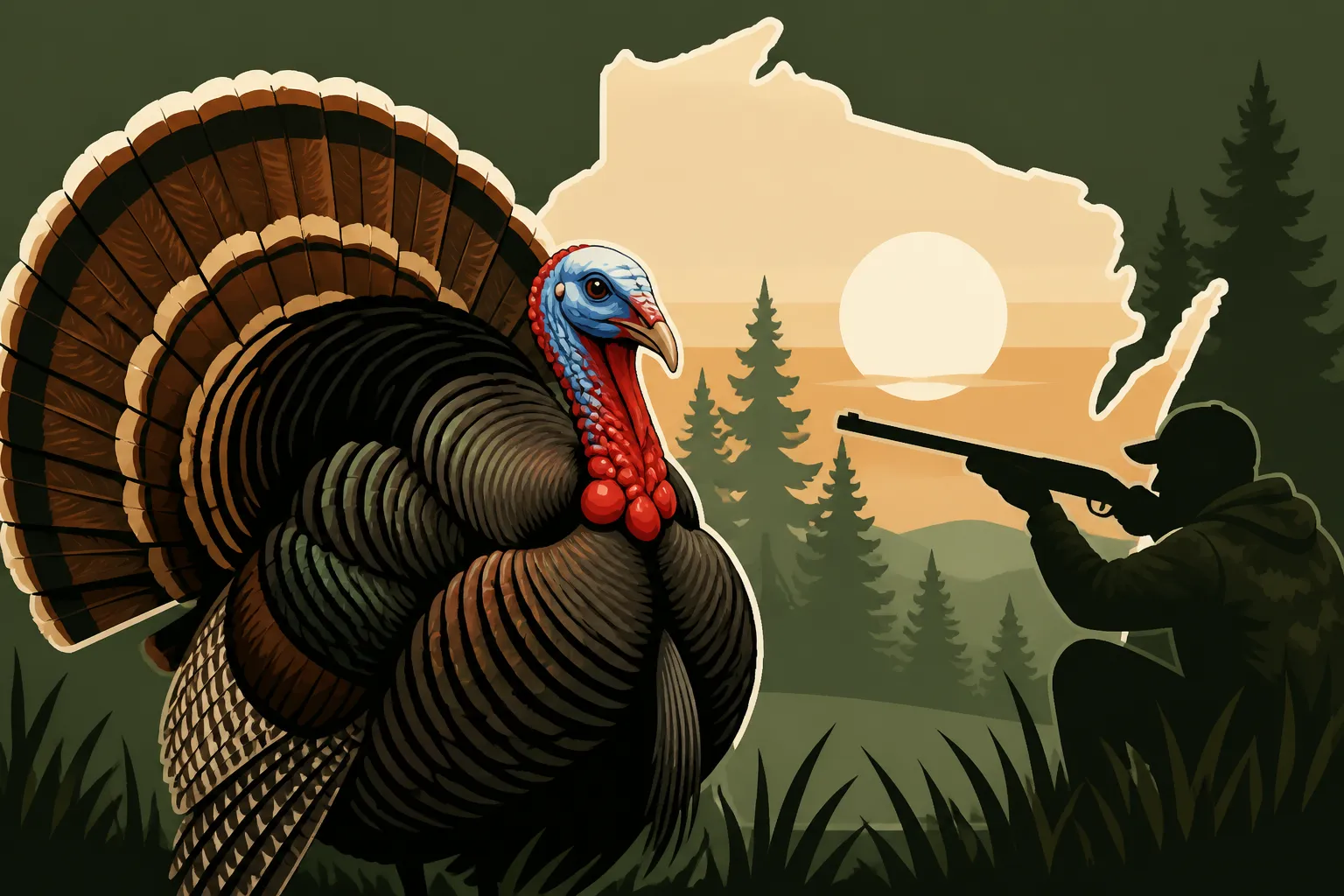
There's nothing quite like the heartbreak of missing a hard-earned gobbler, or worse, making a questionable shot because your pattern wasn't quite right. For Wisconsin turkey hunters, knowing your shotgun's true capabilities is crucial. It all comes down to understanding turkey chokes and the non-negotiable art of patterning. This guide will walk you through everything you need to know to ensure your setup is lethal and ethical in the spring woods.
The Science of the Turkey Choke: What You Need to Know
At its heart, a shotgun choke is simply a constricted section at the end of your barrel, designed to control how the shot column spreads after leaving the muzzle. For turkey hunting, where precision and dense patterns are paramount for a clean kill, chokes become incredibly specialized. We're not talking about your everyday modified or full choke here; turkey chokes are engineered for maximum constriction, often far beyond a standard full choke.
Imagine your shot string as a cloud of pellets. Without a choke, that cloud spreads rapidly, quickly losing density. A turkey choke funnels those pellets, packing them tighter, making the cloud smaller but much denser at longer ranges. This density is what creates a lethal pattern, ensuring enough pellets hit a gobbler's head and neck vital zone to incapacitate it quickly. Different chokes achieve this constriction in varying degrees, typically measured in thousandths of an inch. A standard "Full" choke might constrict by about .030 to .035 inches, while a dedicated "Extra Full" or "Super Full" turkey choke could constrict by .050 inches or more.
It’s important to understand that chokes aren't one-size-fits-all. Barrel length, bore diameter, and even the manufacturing tolerances of your specific shotgun can affect how a choke performs. Some chokes are designed with specialized internal geometry, like straight sections, conical sections, or even porting, to further fine-tune the pattern. These proprietary designs aim to reduce pellet deformation and improve pattern uniformity. Choosing a choke is the first step, but it’s just the beginning of truly understanding your shotgun's capabilities. Remember, the goal isn't just a tight pattern, but a consistent and even pattern, free of "holes" that a turkey's head could slip through.
The Absolute Must: Patterning Your Shotgun for Wisconsin Turkeys
If there's one piece of advice I can give any Wisconsin turkey hunter, it's this: you absolutely must pattern your shotgun. Neglecting this step is like driving in the dark without headlights – you're just hoping for the best. Patterning is the process of test-firing your shotgun at paper targets to see exactly how your chosen choke and load combination performs. This isn't just about knowing if it shoots straight; it's about seeing the density, consistency, and point of impact of your pellet swarm.
Start by setting up large paper targets, at least 3×3 feet, at various realistic hunting distances. I usually begin at 20 yards to get a baseline, then move to 30, and finally 40 yards. Forty yards is often considered the maximum ethical range for many turkey setups, and it's a critical distance for patterning. However, don't stop there. Test at 50 yards too, just to see what your pattern looks like and understand its absolute limits, even if you never intend to shoot that far. For targets, specific turkey head and neck targets are excellent, as they give you a realistic vital zone to evaluate. Use a stable rest, like sandbags or a lead sled, to eliminate human error during the test. You want to assess the gun's performance, not your shooting skills on this day.
After each shot, carefully examine the target. Count the number of pellets that landed within the head and neck area. Are they evenly distributed, or do you see dense clumps and noticeable "holes"? Take a few shots with the same load and choke at each distance to ensure consistency. You might be surprised to find that a "tight" choke might actually blow patterns or create erratic patterns with certain loads. This is where a community forum or resource like GoHunt can be invaluable, as other hunters often share their successful choke and load combinations for various shotguns. Document everything: choke type, shotshell brand, shot size, and distance. This meticulous approach is how you build confidence in your setup long before you're out Hunting an Early Wisconsin Turkey Period or trying to Calling a Wisconsin Gobbler Off the Roost.
Forging the Perfect Partnership: Choke, Load, and Your Shotgun
The magical combination for turkey hunting success isn't just a great choke or a powerful shell; it's how they work together with your specific shotgun. Think of it as a three-legged stool: if one leg is off, the whole thing tumbles. Finding this perfect partnership often involves trial and error, but it's a rewarding process that builds immense confidence. Many hunters make the mistake of buying the "tightest" choke they can find and then grabbing any box of turkey loads. This rarely yields optimal results.
First, let's talk about loads. Turkey shotshells are a specialized breed. They typically use larger, harder pellets like lead #4, #5, or #6, or even denser, more expensive materials like tungsten super shot (TSS). The density of TSS allows for smaller pellet sizes (e.g., #7, #9) that carry more energy and maintain tighter patterns at longer ranges than traditional lead. When selecting a load, consider the pellet size and material, as these interact differently with various choke constrictions. A very tight choke combined with very hard, large pellets might actually "blow" the pattern, creating flyers or an inconsistent spread. Conversely, a more open choke might benefit from larger, harder pellets to maintain density. A quick search on GoHunt or a visit to a local pro shop can give you insights into popular and effective turkey loads.
Next, you need to match that load with your choke. This is where the patterning process really pays off. You might find that your shotgun prefers a slightly less constricted choke with a particular brand of TSS, or that it absolutely loves a specific lead load with a very tight aftermarket choke. Don't be afraid to experiment. Buy a few different choke tubes – often from manufacturers like Carlson's, Indian Creek, or Jeb's – and several boxes of different turkey loads. It's an investment, but it's far cheaper than missed opportunities. What works for your buddy's Mossberg 835 might be terrible in your Remington 870. The goal is to get a consistent pattern with at least 100-150 pellets in the vitals at your maximum intended shooting distance, typically 40 yards. Keep in mind that Patterning a Turkey Gun at 40 Yards is a benchmark, but understanding your gun's performance at 20 and 30 yards is just as crucial for those close-range birds.
| Choke Type | Typical Constriction (relative to bore) | Recommended Shot Material | General Pellet Size Range | Effective Range (yards) |
|---|---|---|---|---|
| Full | Moderate | Lead, Copper-plated Lead | #4, #5, #6 | 30-40 |
| Extra Full (Turkey) | High | Lead, Copper-plated Lead, TSS | #4, #5, #6, #7, #9 | 35-45 |
| Super Full (Turkey) | Very High | Lead, TSS | #4, #5, #6, #7, #9 | 40-50+ |
| TSS Specific Choke | Extremely High | TSS Only | #7, #9, #10 | 45-60+ |
Note: These are general guidelines. Actual performance varies significantly by shotgun, load, and individual choke design.
Beyond the Paper: Fine-Tuning and Field Considerations
Once you've found a choke and load combination that consistently puts a dense, even pattern on paper, you're almost ready for the woods. But there are still a few more considerations to ensure you're as prepared as possible. First, pay attention to the point of impact (POI). Does your pattern hit exactly where you aim, or is it consistently high, low, left, or right? Many modern turkey shotguns come with adjustable sights, or you might consider adding an aftermarket red dot sight. These can be invaluable for precise aiming and ensuring your pattern hits exactly where you want it, especially important when Setting Up Against a Big Oak and waiting for a tight shot.
Another aspect to consider is recoil. Turkey loads, especially the magnum offerings, can produce significant recoil. While a little kick is expected, excessive recoil can lead to flinching or poor shooting form when it matters most. Practice shooting your chosen load enough to become comfortable with it. If recoil is truly an issue, look into reduced-recoil turkey loads, or consider adding a recoil pad to your stock. This is part of the overall setup, which you can read more about in Turkey Shotguns and Chokes. Being comfortable with your gun means you'll make better shots under pressure, whether you're trying Run-and-Gun Turkey Tactics on Public Land or patiently waiting for a gobbler to commit.
Finally, remember that conditions in the field are rarely as perfect as at the patterning range. Wind, rain, temperature, and even the angle of your shot can slightly influence pellet flight. The confidence you gain from extensive patterning, however, helps you account for these variables. Knowing your effective range down to the yard means you can make ethical decisions in the moment. It means you won't be second-guessing yourself when a tom hangs up at 45 yards, leaving you to wait for him to come closer or find a better position. Knowing your setup's capabilities lets you focus on the hunt itself, from deciphering When Wisconsin Gobblers Go Quiet to making a clean, ethical shot when the opportunity finally arises. Your consistent efforts in patterning will directly translate to a more successful and responsible hunting season for Wild Turkeys in Wisconsin.
Disclaimer
This article is for general informational purposes only and does not constitute professional advice. Laws, prices and regulations vary by location and change over time. Consult a qualified professional for guidance on your specific situation.