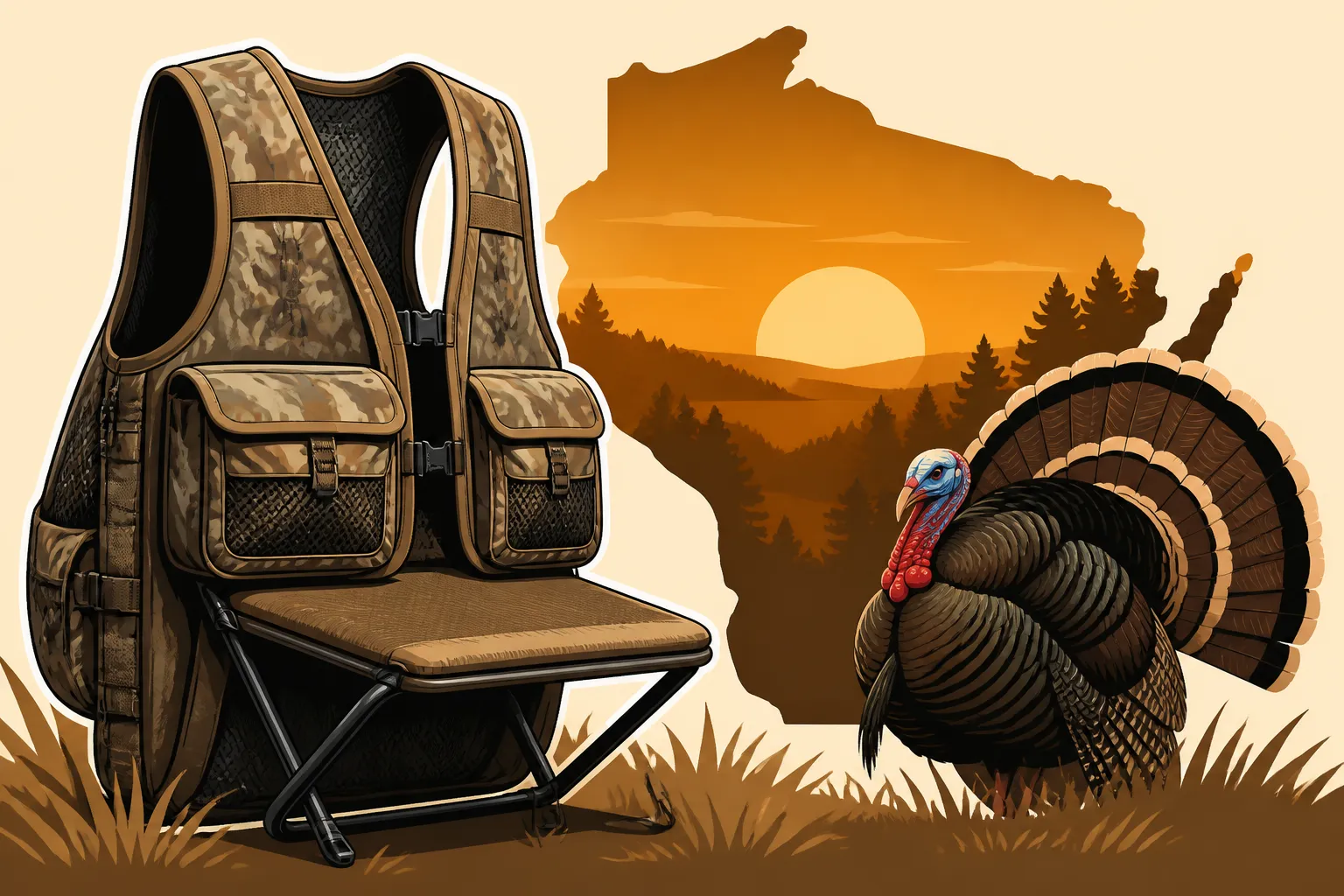
Turkey Vests With a Kickstand Seat
Every Wisconsin turkey hunter knows the struggle: you're trying to stay mobile, chasing gobblers across rugged terrain or sprawling farmlands, but then suddenly, that tom sounds off, and you need to get still, right now. The problem is, plopping down on wet ground, a jagged rock, or a thorny patch of briars isn't exactly conducive to a comfortable, patient setup. This guide is all about exploring the game-changing convenience and tactical advantage of turkey vests equipped with a kickstand seat, designed to keep you comfortable, quiet, and ready to seal the deal on those wary Wisconsin birds.
The Hunter's Dilemma: Why a Mobile Seat Matters for Wisconsin Turkeys
Wisconsin's diverse landscape, from the steep, timbered coulees of the Driftless Area to the sprawling agricultural fields of the south and the thick woods up north, presents unique challenges for turkey hunters. One moment you might be covering ground, the next you need to melt into the shadows and wait for that strutting tom to commit. This constant shift between movement and stillness is where traditional turkey vests often fall short, leaving hunters in awkward, uncomfortable positions that can compromise their hunt.
The Pain of Traditional Turkey Vest Seats
For years, turkey vests came with a thin, often flimsy foam pad tucked into a pocket on the backside. While better than nothing, these pads rarely offered true comfort or stability. Imagine trying to sit motionless for twenty minutes against a tree with roots digging into your back, or worse, on a small, exposed rock. Not only is it uncomfortable, but the constant shifting to alleviate pressure can alert a sharp-eyed gobbler. The mental toll of discomfort can also lead to impatience, making you leave a setup too early. Hunters who frequent areas like the hardwoods around the Kettle Moraine or the remote corners of county forests often find themselves making compromises just to get comfortable enough to call.
Think about those moments when a gobbler hangs up just out of range, drumming and strutting for what feels like an eternity. You've got to be absolutely still, patient, and prepared to wait him out. If your backside is getting numb or a sharp twig is poking you, your focus shifts from the bird to your discomfort, and that's a recipe for a missed opportunity. This is a common frustration, especially during the colder, earlier periods of the spring season when the ground can still be damp and chilly.
The Advantage of Being Instantly Ready and Comfortable
The beauty of a kickstand seat is its ability to transform any spot into a comfortable, stable blind in mere seconds. No more scanning for the "perfect" tree or fumbling with a separate stool. You hear that gobble, hit the ground, deploy your kickstand, and you're settled, stable, and ready to call. This speed and fluidity are absolutely critical in run-and-gun scenarios, particularly when you're working a hot bird that might be moving quickly.
For those of us who prefer to stay mobile, hitting multiple spots on public land, this feature is invaluable. You might be working a ridge top in the Driftless Area Deer Hunting in Wisconsin, hear a distant gobble, pinpoint its location using a mapping app like GoHunt, and then quickly reposition. Once you get close, the kickstand allows you to drop down instantly, minimizing movement and maximizing your chances. It’s about reducing the friction between hearing a bird and being absolutely ready to engage it. This instant readiness translates into more focused calling, steadier shooting, and ultimately, more successful hunts.
Unpacking the Kickstand Turkey Vest: Essential Features
Not all kickstand vests are created equal. The design and construction can vary wildly, and understanding the core features will help you pick one that truly enhances your hunting experience in the diverse landscapes of Wisconsin. It's not just about having a seat; it's about having the right seat integrated into a functional vest.
The Kickstand Mechanism and Seat Design
The heart of these vests is, of course, the kickstand itself. Most designs feature a lightweight, sturdy frame that deploys quickly from the bottom of the vest, usually with a simple flip or push. You want a mechanism that is quiet, reliable, and easy to operate with gloved hands, especially during those chilly Wisconsin spring mornings. Some vests use a single, wider foot, while others have two narrower legs. Stability is paramount; a wobbly seat is no better than sitting on the ground. Look for robust materials like aluminum or reinforced composites that can handle your weight and the uneven ground you'll encounter.
The seat pad itself also deserves attention. It should be thick, comfortable, and made from a weather-resistant material. Many offer extra padding or even contoured designs for better ergonomic support, reducing fatigue during long waits. Some higher-end models feature a magnet or strap to keep the kickstand securely folded when not in use, preventing accidental deployment or noise while walking. When you're Setting Up Against a Big Oak or hunkering down in thick cover, the last thing you want is a clanking kickstand giving away your position.
Storage, Organization, and Accessibility
Beyond the seat, a turkey vest needs to be a well-organized mobile command center. Wisconsin turkey hunters often carry a multitude of calls, decoys, hydration, snacks, and other essentials. Good vests offer a variety of pockets—zippered, magnetic, and open-top—specifically designed for different types of calls. Slate calls need dedicated pockets that protect their surfaces, while mouth calls require easy-access pouches.
Consider the layout: are the pockets positioned for easy reach without excessive movement? Many vests feature call-specific pockets on the chest or sides for quick access. You'll want ample storage for at least one decoy (or two, if you're like me and run a jake and hen), often in a dedicated compartment on the back. A hydration sleeve for a water bladder is a huge plus, especially when you're out all day during a warmer Hunting a Late Wisconsin Turkey Period. Look for external loops or straps for attaching additional gear like pruning shears or a small shovel. A large game bag on the back is also essential for carrying out your bird, keeping it secure and off your clothes.
Durability and Material Construction
Wisconsin hunting conditions can be tough. From muddy spring fields to thick alder swamps and thorny briar patches, your gear needs to stand up to abuse. Look for vests constructed from durable, quiet fabrics like Cordura or heavy-duty nylon. Reinforced stitching at stress points, robust zippers, and quality buckles are indicators of a vest that will last more than a season. Water-resistant or waterproof coatings are also a huge advantage, helping to keep your calls and electronics dry during an unexpected spring shower.
Quietness is also key. Avoid vests with excessive Velcro closures that can rip loudly or jingling metal hardware. The fabric itself should be soft enough not to create a swishing sound as you move. A vest that sheds burrs easily can also save you a lot of frustration after crawling through thick cover. Many hunters also appreciate vests that come in camouflage patterns appropriate for Wisconsin's woodlands, blending seamlessly into the environment whether you're in an oak forest or a pine stand.
Matching Your Hunting Style: Selecting the Perfect Kickstand Vest
Your turkey hunting strategy, the specific terrain you frequent, and your personal preferences all play a significant role in determining which kickstand turkey vest will serve you best. There's no one-size-fits-all, so thinking about how and where you hunt is crucial.
The Run-and-Gun Specialist
If your style is all about covering ground, chasing gobbles, and making quick moves, you need a vest that prioritizes lightweight design and rapid deployment. A minimalist kickstand vest might be your ideal choice. These vests often streamline pocket configurations, focusing on only the most essential calls and a small hydration system. The kickstand mechanism will be designed for ultra-fast setup and takedown.
For hunters who adopt Run-and-Gun Turkey Tactics on Public Land, every ounce counts. You're constantly moving, walking miles in a day, and the last thing you want is a bulky, heavy vest slowing you down. A vest with a slightly smaller frame and a lighter seat pad, while still comfortable, might be more appealing. Consider vests that offer an integrated chest rig or easily accessible front pockets for mouth calls and a pot call, allowing you to call on the move or with minimal interruption. Brands that focus on technical hunting gear often design their vests with this mobile hunter in mind, understanding the demands of covering extensive ground. Using mapping applications like GoHunt to identify potential roosting areas or feeding flats will further enhance this mobile approach, making a quick-deploying seat even more beneficial when you inevitably encounter a hot bird.
| Feature | Run-and-Gun Specialist | Sit-and-Wait Strategist |
|---|---|---|
| Weight | Lightweight, minimalist | Moderate to Heavy, comfort-focused |
| Pockets | Streamlined, essential calls, quick access | Abundant, varied, organized |
| Seat Pad | Adequate, lighter foam | Thick, contoured, high-density foam |
| Kickstand | Ultra-fast, quiet deployment | Sturdy, stable, durable |
| Hydration | Bladder compatible, easily accessible | Ample capacity, multiple bottle holders |
| Game Bag | Sufficient for one bird | Generous, extra capacity |
| Comfort | Good, focuses on mobility | Excellent, focuses on extended sitting |
| Terrain Focus | Diverse, undulating, fast movement | Varied, but emphasizes long-term stability |
The Patient Sit-and-Wait Strategist
Perhaps you prefer to scout extensively, identify key travel corridors, feeding areas, or strut zones, and then settle in for a long, patient wait. This style often involves picking a strategic spot before dawn, Calling a Wisconsin Gobbler Off the Roost, and committing to it for several hours. For these hunters, comfort and ample storage are paramount. Your vest will be your home base for the morning or afternoon.
You'll want a kickstand seat that offers maximum comfort, likely with thicker, more supportive padding and a wider base for stability on uneven ground. Multiple pockets for a wide array of calls – diaphragm, pot, box, and locator calls – are essential, as are designated slots for extra strikers, conditioning pads, and maybe even a small thermos for coffee on a chilly morning. Look for vests with a generous game bag, potentially even one with extra pockets for unexpected additions. These vests often lean towards a more robust, slightly heavier construction because the primary goal isn't constant movement, but absolute comfort and preparedness for an extended sit. Whether you're hunting along a field edge in southern Wisconsin or nestled deep in a cedar swamp in the north, ultimate comfort while waiting is key to success.
Specific Considerations for Wisconsin Terrain
Wisconsin's landscape adds layers to this decision. In the steep hills and deep valleys of the Driftless Area, you might encounter very uneven ground. A kickstand with individually adjustable legs or a very wide, stable base can be a huge asset. For those hunting the dense Northern Forest Deer Density in Wisconsin, durability against snags and quiet materials become even more critical, as do blaze orange options if you're out during specific seasons that overlap. If you're Hunting Wisconsin Farmland Deer, where cover can be sparse, blending into a fence line or hedgerow with a low-profile kickstand seat becomes essential. Thinking about the specific challenges of your favorite hunting grounds will help you narrow down the best vest.
Beyond the Hunt: Care and Maintenance for Longevity
Investing in a quality kickstand turkey vest is like investing in a good firearm or optics; proper care ensures it performs season after season. Neglecting your gear can lead to premature wear, malfunctions, and unnecessary expenses down the road.
Cleaning and Storage Best Practices
After a long season, your turkey vest will undoubtedly be covered in dirt, dust, mud, and maybe even some blood. Before storing it away, give it a thorough cleaning. Most vests can be hand-washed with mild soap and water. Avoid harsh detergents or bleach, which can damage fabric and camouflage patterns. Pay special attention to zippers and buckles, ensuring they are free of grit. A soft brush can help dislodge caked-on mud.
Once clean, hang the vest to air dry completely. Never store a damp vest, as this can lead to mold, mildew, and unpleasant odors. Once dry, store it in a cool, dry place away from direct sunlight, which can fade fabrics over time. Consider a dedicated gear bag or tote to protect it from dust and pests during the off-season. This also prevents it from getting crushed or having heavy items placed on it, which could potentially warp the kickstand frame or compress padding.
Inspecting for Wear and Tear
Before each season, or even periodically during a long one, take the time to inspect your vest thoroughly. Check all zippers for smooth operation; a quick application of a zipper lubricant can resolve minor stiffness. Examine all buckles and straps for cracks or fraying, replacing them if necessary. Look at the stitching, especially around stress points like the shoulder straps, kickstand attachment points, and large pockets. Small tears can often be repaired with a needle and thread before they become major problems.
Pay close attention to the kickstand mechanism itself. Ensure it deploys and retracts smoothly and quietly. Check for any loose rivets, screws, or bent components. Lubricate pivot points if recommended by the manufacturer. The seat pad should also be checked for compression or tears; a worn-out pad defeats the purpose of the comfort feature. Being proactive with these small inspections can prevent a critical gear failure when you're deep in the woods, hot on a gobbler's trail, perhaps even using a mapping tool like GoHunt to navigate to a new location.
Extending the Life of Your Investment
A few simple habits can significantly extend the life of your kickstand turkey vest. Avoid overloading pockets beyond their intended capacity, which can stress seams and zippers. Be mindful of where you place the vest when not wearing it; tossing it carelessly into the back of a truck can lead to unnecessary damage. If your vest has detachable components, like a separate lumbar pack or water bottle holders, remove them for cleaning or storage to prevent unnecessary strain on the main vest.
Finally, consider the conditions you hunt in. If you're often in extremely wet environments, treat your vest with a water-repellent spray designed for outdoor gear. If you frequent areas with lots of thorns or sharp branches, being extra careful when moving through brush can prevent punctures and tears. By treating your turkey vest with the same respect you show your firearms, you'll ensure it remains a reliable and comfortable partner for many successful Wisconsin turkey seasons to come.
Disclaimer
This article is for general informational purposes only and does not constitute professional advice. Laws, prices and regulations vary by location and change over time. Consult a qualified professional for guidance on your specific situation.