Binocular Power for Timber Hunting
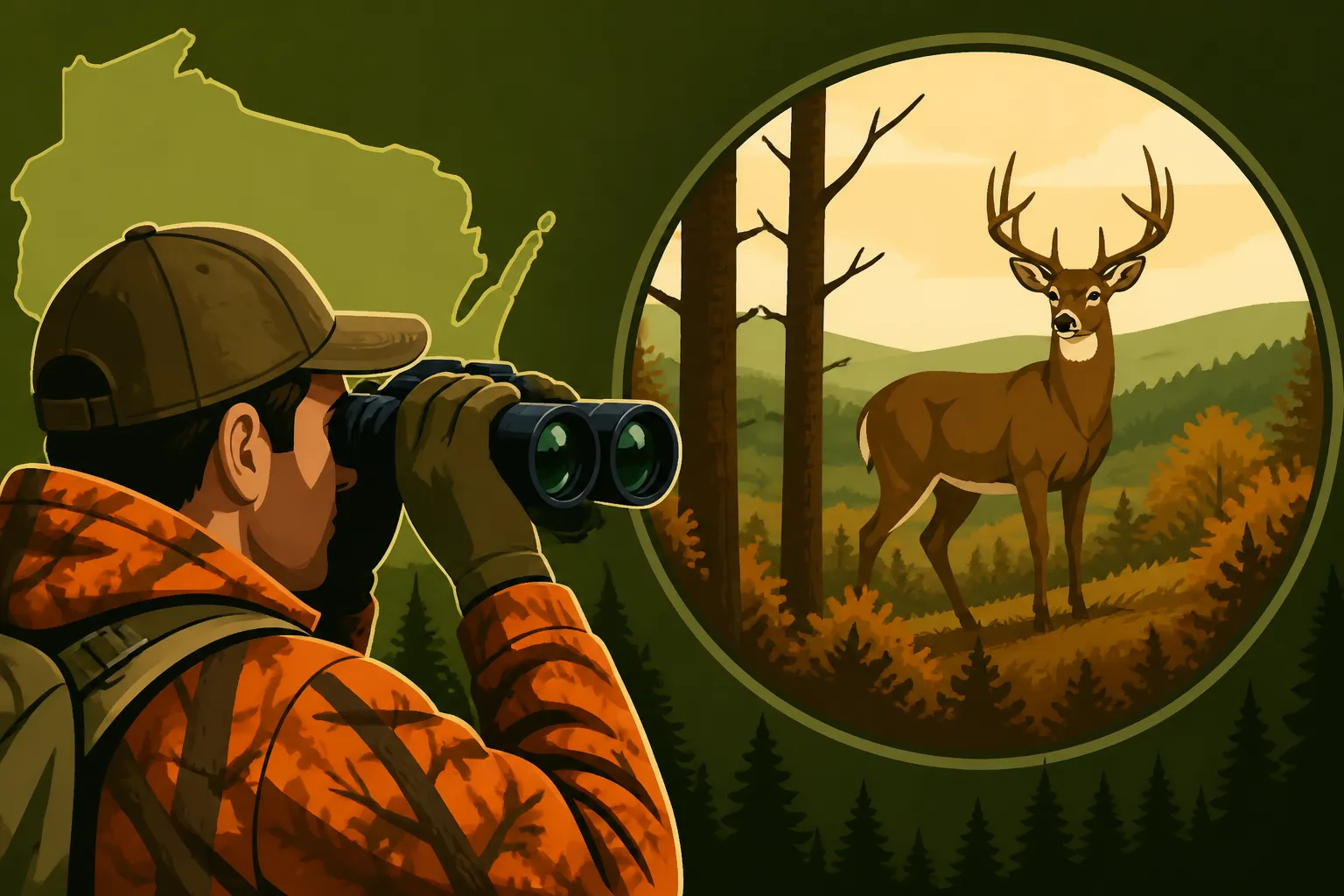
It's a familiar struggle for any hunter in Wisconsin: you're trying to pick apart thick alder swamps, scan dense cedar thickets, or decipher movement in the shadowed folds of a Driftless Area coulee, and your binoculars just aren't cutting it. Too often, we reach for the highest magnification we can afford, thinking "more power is better," only to find ourselves frustrated by a narrow field of view or a shaky image. This guide will help you understand how to choose the ideal binocular power specifically for timber hunting in Wisconsin, ensuring you spot more deer and less blurred foliage.
The Timber Hunter's Dilemma: Magnification Versus Field of View
When you're hunting in Wisconsin's dense timber, whether it's the vast expanse of the Chequamegon-Nicolet National Forest Hunting or a brushy patch of private land, your binoculars are your most crucial scouting tool in hand. But the real challenge isn't just seeing things; it's seeing everything and quickly identifying what you're looking for amidst the clutter of branches and shadows. This is where the balance between magnification and field of view becomes incredibly important.
Why High Magnification Isn't Always Your Friend in Dense Cover
It's tempting to grab a pair of 12x or even 15x binoculars, especially when you're looking at pictures of western hunts with wide-open spaces. But in the tight confines of Wisconsin's hardwoods, northern forests, or even the small woodlots of farm country, too much magnification can actually hinder you. Imagine trying to find a squirrel in a leafy oak tree with a telescope – it's practically impossible to get on target. The same principle applies here.
High magnification narrows your field of view significantly. This means you see a smaller "slice" of the woods at any given time. While that slice is highly magnified, it's easy for a deer to be just outside that narrow cone of vision. When you're trying to glass a dense swamp edge or a regenerating clearcut for the subtle flick of an ear or the horizontal line of a deer's back, constantly sweeping and re-acquiring your target becomes tiring and ineffective. Your hands also become much shakier with higher power, making a stable image nearly impossible without a tripod, which isn't always practical when you're still-hunting or sitting in a treestand in a cedar swamp. The goal in timber isn't usually to count antler points at 500 yards; it's to confirm a deer at 50 yards and understand its direction of travel before it slips away.
Maximizing Your View: The Importance of Field of View
For timber hunting, a wide field of view is a game-changer. It allows you to quickly scan a broader area with fewer movements, increasing your chances of picking up subtle details that indicate deer presence. A wider field of view means you can take in more of a blowdown, a series of thick saplings, or the shadowy undersides of hemlocks, all while holding the binoculars steady. This becomes especially critical when you're trying to Still-Hunting Wisconsin Cedar Swamps or picking apart a dense bedding area.
Think of it like this: are you trying to read the fine print on a sign far away (high magnification, narrow view), or are you trying to spot a specific face in a crowded room (lower magnification, wide view)? Timber hunting is definitely more like the latter. A wider field of view lets you acquire targets faster, track moving deer more effectively, and generally reduces the eye strain and frustration associated with constantly searching for the animal you know is somewhere in that thicket. It allows your brain to process more information about the habitat and potential hiding spots, which is invaluable.
Common Binocular Powers for Wisconsin Hunting
When you're sifting through the options for hunting binoculars, you'll quickly notice that 8x and 10x are the most prevalent choices. Each has its place in Wisconsin's diverse hunting landscapes, but for timber-specific applications, one often shines brighter. Understanding the nuances of each power will help you make an informed decision that truly suits your hunting style and the terrain you frequent.
The All-Around 8x Bino: A Timber King
For the vast majority of timber hunting scenarios in Wisconsin, an 8x binocular is truly the "king." The "8x" means the object appears 8 times closer than it does to the naked eye. This magnification offers a fantastic balance of a wide field of view, a bright image, and excellent stability.
- Wide Field of View: An 8x binocular typically provides a significantly wider field of view than a 10x model, allowing you to quickly scan dense cover without feeling like you're looking through a straw. This is invaluable when you're trying to find a standing deer in a maze of branches or track a buck slowly slipping through heavy brush. You're less likely to miss an ear flick or a tail twitch on the periphery.
- Bright Image: Generally, 8x binoculars with the same objective lens size (e.g., 8×42 vs. 10×42) will gather more light and provide a brighter image, especially in low-light conditions prevalent in timber, at dawn, or at dusk. This is due to a larger exit pupil (the diameter of the light beam that leaves the eyepiece and enters your eye). A larger exit pupil is much more forgiving if your eye isn't perfectly aligned with the eyepiece, which can happen quickly in a cold, rushed moment. For Low-Light Performance in a Scope, the same principles apply.
- Stability: Holding an 8x binocular steady with your hands is much easier than a 10x or higher power. Every little tremor in your hand is magnified by the binocular, so lower magnification results in a much more stable and comfortable viewing experience. This is especially true after a long walk through the woods or during an extended sitting period on a cold morning. A stable image means less eye strain and better detection of subtle movement.
- Closer Focus: Many 8x binoculars also offer a closer minimum focus distance, which can be surprisingly useful when you need to identify something just a few yards in front of your treestand or ground blind.
If you're primarily hunting in thick woods, dense swamps, or the broken terrain of the Driftless Area Deer Hunting in Wisconsin where shots are typically under 100 yards, an 8x binocular is likely your best choice. It allows for quick target acquisition, comfortable extended glassing, and superior performance in dim light, which often translates directly to more deer spotted.
When 10x Makes Sense: Openings and Longer Shots
While 8x is king in the timber, a 10x binocular certainly has its place for Wisconsin hunters who find themselves in different terrain or situations. "10x" means the object appears 10 times closer.
- Openings and Edges: If your hunting grounds feature more open agricultural fields, expansive clearcuts, or power line rights-of-way where you'll be glassing longer distances, a 10x binocular can be advantageous. For example, if you're hunting the edges of a large cornfield in southern Wisconsin or overlooking a vast aspen cut, that extra magnification can help you pick apart distant deer that might just be a blur with 8x. The "GoHunt" platform, with its mapping tools, can be excellent for identifying these kinds of openings where 10x might shine.
- Coulee Country and Ridge Tops: In the more open, rolling hills of the Driftless Area, where you might be Hunting Wisconsin Coulees and Ridge Tops and taking longer shots across valleys, 10x can offer the extra reach needed. Here, you might be trying to identify a buck bedding on a distant ridge or feeding in a hidden draw a few hundred yards away.
- Scanning Specific Features: If you're set up on a ridgetop or overlooking a wide expanse, and you've already spotted a general area of interest, the 10x can help you zoom in to examine specific features like a rub line, a scrape, or the body language of a distant deer.
However, remember the trade-offs: a 10x will have a narrower field of view, be harder to hold steady, and gather slightly less light than an equivalent 8x model. You'll need a steadier hand, and potentially a tripod adapter for truly comfortable, extended viewing, especially when Hunting the Wisconsin Rut in November and trying to find cruising bucks.
Here's a quick comparison of 8x and 10x for various Wisconsin hunting scenarios:
| Feature/Scenario | 8x Binoculars | 10x Binoculars |
|---|---|---|
| Primary Use | Dense timber, thick cover, still-hunting | Open fields, clearcuts, long-range glassing |
| Field of View | Wider, easier to scan large areas quickly | Narrower, more focused on specific spots |
| Image Brightness | Brighter, better in low light (due to larger exit pupil) | Slightly dimmer, still good but less low-light advantage |
| Image Stability | Easier to hold steady, less hand shake | More prone to hand shake, often requires support |
| Target Acquisition | Faster, easier to find targets in cluttered scenes | Slower, better for zooming into known areas |
| Typical Shot Range | Under 100 yards | Over 100 yards, especially in open country |
| User Comfort | Less eye strain, comfortable for long periods | More eye strain, can be fatiguing without support |
| Example Terrain | Cedar swamps, thick hardwoods, young clearcuts | Farmland edges, wide river bottoms, long coulees |
Beyond Magnification: Other Factors for Timber Binos
While magnification is what often first comes to mind, a great binocular for timber hunting is more than just a number. Several other optical and ergonomic features play a huge role in how effective and enjoyable your binocular will be in the Wisconsin woods.
Objective Lens Size and Low Light Performance
The second number in a binocular's specification (e.g., 8x42) refers to the diameter of the objective lens in millimeters. This lens is what gathers light. A larger objective lens gathers more light, which translates directly to a brighter image, especially in those crucial low-light periods of dawn and dusk when deer are most active. For timber hunting, where shadows are deep and light penetration is often limited, good low-light performance is absolutely critical.
A 42mm objective lens is generally considered the sweet spot for a hunting binocular, offering a good balance of light-gathering capability and manageable size/weight. You might see 50mm or even 56mm objective lenses, which will gather even more light, but they become significantly heavier and bulkier, which isn't ideal when you're hiking into your stand on public land or Still-Hunting Wisconsin Cedar Swamps. On the other hand, smaller objective lenses like 32mm or 28mm make for a very compact and lightweight binocular, but they sacrifice quite a bit of low-light performance, making them less ideal for those critical minutes at legal shooting hours. Always prioritize good light transmission for timber work; it makes all the difference in picking out a deer from a shadowy background.
Comfort and Clarity: What Matters in the Woods
Beyond the raw optical specifications, the overall comfort and optical clarity of a binocular are paramount. You'll be spending a lot of time with these binoculars pressed against your face, so they need to feel good and perform flawlessly.
- Ergonomics and Weight: A binocular should feel good in your hands, with a balanced weight that doesn't cause fatigue during extended glassing sessions. Rubber armoring provides a good grip, protects the optics from bumps and drops (which happen in the woods!), and often helps dampen sound if you accidentally bump them against your rifle or treestand. Pay attention to how the focus wheel operates – is it smooth and precise? Can you operate it with gloves on in cold Wisconsin weather? A comfortable neck strap or, even better, a bino harness like those offered by "GoHunt" can make a world of difference in keeping your optics secure, accessible, and comfortable during long treks or sits.
- Optical Clarity: This refers to how sharp, crisp, and true-to-life the image appears. Good clarity means less eye strain and easier identification of details. It's not just about magnification; it's about the quality of the glass and the coatings applied to the lenses. High-quality glass and multi-coatings reduce glare, improve contrast, and ensure accurate color reproduction. You want to see natural colors and sharp edges, not fuzzy outlines or chromatic aberration (color fringing) around objects. When evaluating binoculars, try to look through them in varied lighting conditions, especially dim ones, and compare them side-by-side if possible.
- Eye Relief: This is the distance your eye can be from the eyepiece and still see the full field of view. If you wear eyeglasses, you'll need binoculars with generous eye relief (typically 15mm or more) and adjustable eyecups that twist down to allow you to see the full image without having to remove your glasses. This often overlooked feature can be a deal-breaker for many hunters.
- Durability and Weatherproofing: Wisconsin weather is famously unpredictable. Your binoculars need to be built to withstand rain, snow, cold, and humidity. Look for models that are fully waterproof (often nitrogen or argon purged to prevent internal fogging) and fogproof. A sealed unit means no moisture or dust can get inside to degrade the optics, ensuring your investment lasts through many seasons of Bowhunting Wisconsin's Long Archery Season and beyond.
Ultimately, the best binocular power for timber hunting is one that you can hold steady, comfortably scan with, and that delivers a clear, bright image when you need it most. For most Wisconsin timber hunters, an 8×42 will be that sweet spot, providing the perfect balance to unravel the mysteries of the deep woods. Optics for Wisconsin Timber and Coulees further delves into this critical gear choice.
Disclaimer
This article is for general informational purposes only and does not constitute professional advice. Laws, prices and regulations vary by location and change over time. Consult a qualified professional for guidance on your specific situation.