Turkey Calls Worth Carrying in Wisconsin
One of the biggest frustrations for a Wisconsin turkey hunter is putting in the miles, scouting hard, finding birds, and then having them hang up just out of range or simply ignore your calls. It’s enough to make you pull your hair out! Choosing the right turkey calls and knowing how to use them effectively in our diverse Wisconsin landscapes, from the rolling Driftless Area Deer Hunting in Wisconsin to the dense northern forests, can truly make the difference between a silent, frustrating sit and a thrilling gobbler in your vest. This guide will walk you through the essential turkey calls that deserve a spot in your vest, helping you understand their nuances and how to deploy them for maximum success in the Wisconsin woods.
The Foundation of Turkey Calling: Mimicking the Birds
Before we even talk about specific calls, it's crucial to understand the language of the wild turkey. These birds are incredibly vocal, and their communications tell us a lot about what they're doing, where they're going, and what they might be thinking. Your calls are essentially an attempt to speak their language, to draw them in by sounding like a real bird. Without this foundational understanding, even the most expensive call won't do you much good.
Understanding Basic Turkey Vocalizations
Turkeys have a surprisingly varied vocabulary, each sound conveying a different message. As hunters, our primary goal is often to mimic the sounds of a hen looking for a gobbler, or sometimes, a gobbler looking for hens. But it's not just about one sound; it's about context and nuance.
The yelp is arguably the most recognized and frequently used turkey vocalization. It’s the bread and butter of turkey calling. A hen's yelp can vary wildly, from the soft, contented "tree yelps" she makes on the roost in the morning, greeting the day, to the louder, more urgent "assembly yelps" used to gather a scattered flock. You also have "lost yelps," which are typically longer, louder, and more pleading, indicating a hen separated from her group. Mastering the variation in these yelps is key. A simple, three-note yelp might sound like a curious hen, while a rapid, excited string of ten or more yelps could be interpreted as a hot, ready-to-breed hen. Understanding these subtle differences and being able to replicate them with your calls will allow you to adapt to the mood of the birds.
Then there are the more subtle, close-range sounds: clucks and purrs. A soft cluck is usually a single, sharp note, indicating alertness or a gentle inquiry. Multiple clucks, often blended with purrs, signify contentment, like hens feeding peacefully in a field. These are incredibly important for drawing in a wary gobbler that's hung up at 60 yards. When a bird is close, those loud yelps can actually push him away, making him think the hen is getting too close and he needs to wait for her. A soft cluck or purr can be the reassuring nudge he needs to take those last few steps into range. These sounds are critical for those delicate, high-pressure situations, especially when you are trying to convince a tom that a hen is right there, just out of sight, and he needs to commit.
Finally, you have the more aggressive or excited calls like cuts and cackles. Cuts are sharp, irregular, choppy notes, often used by an excited hen trying to get a gobbler's attention or challenge another hen. A cackle is a series of rapid yelps, often starting with sharp cuts, and is typically heard when a hen flies down from the roost. These are high-energy calls that can sometimes provoke a gobbler into responding, especially a dominant tom who doesn't want another hen intruding on his territory. However, use these with caution, as they can sometimes sound unnatural if not done correctly, or simply overwhelm a bird that's already feeling pressured.
Reading the Turkey's Mood and Response
Understanding the "language" is one thing, but truly becoming a skilled turkey hunter means learning to "read" the bird you're calling to. Every gobbler is an individual, and every hunting situation is unique. What works one day, or on one bird, might completely fail on another. This isn't just about making sounds; it's about having a conversation.
Sometimes, a gobbler will respond aggressively to your first series of loud yelps, practically shaking the trees with his booming gobble. In these situations, you might be able to keep up that aggressive calling, getting him fired up and running towards you. However, many times, especially with heavily pressured birds on public land, an overly aggressive approach can quickly shut them down. You might get one good gobble, and then silence. This is where subtlety comes in. If a bird gobbles strongly once, then seems to quiet down, try a softer series of yelps and listen intently. Is he still there? Did he soft-gobble? Did he cluck? You might even hear the rustle of leaves as he slowly makes his way towards your position, trying to slip in undetected.
The importance of patience cannot be overstated. After a series of calls, resist the urge to immediately call again. Wait. Listen for soft answers, rustling in the leaves, the tell-tale drumming, or even just the absence of another gobble, which might mean he’s covering ground. Sometimes, a gobbler will only gobble once or twice, but he's already on his way. Continuously calling might make him realize you're not moving, making him suspicious. Observe the terrain and what the bird might be doing. Is he in a field, in dense timber, or on the edge of a ridge? His location will influence his behavior and how he approaches your calls. Knowing how to adjust your Turkey Tactics for Driftless Farm Edges or in thick timber relies heavily on reading his subtle cues.
Essential Friction Calls for Wisconsin Gobblers
Friction calls are, for many, the easiest and most versatile calls to master, making them a staple in any Wisconsin turkey hunter's vest. These calls produce sound by creating friction between two surfaces, and they are capable of incredibly realistic turkey vocalizations.
The Versatility of Slate and Pot Calls
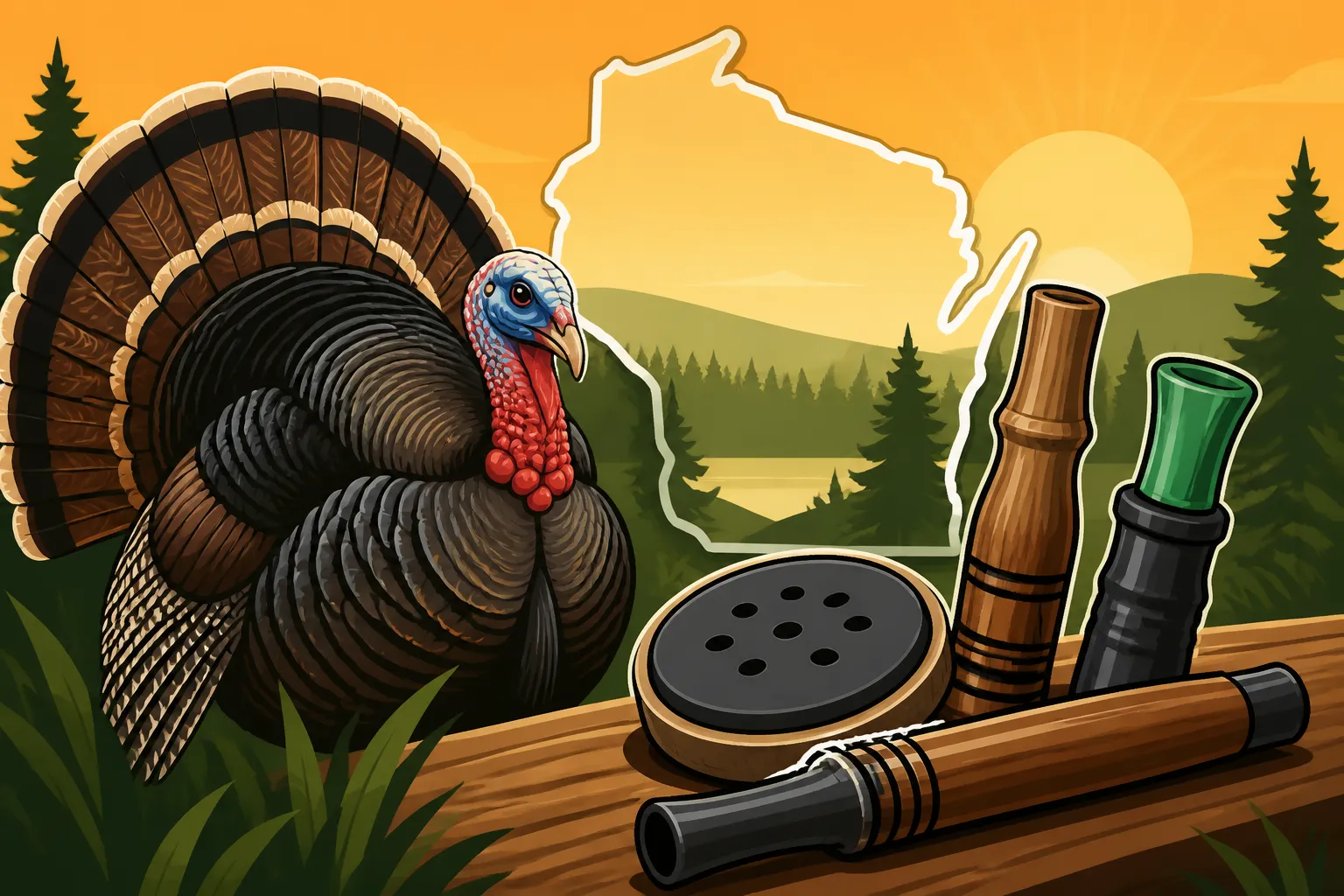
Slate calls, often referred to as pot calls because of their shape, are arguably one of the most effective and popular types of friction calls. They consist of a round "pot" made of wood, slate, glass, or aluminum, and a "striker" or "peg" made of wood, carbon, or a composite material. By dragging or tapping the striker across the surface of the pot, you can create a wide range of turkey sounds.
One of the biggest advantages of slate calls is their incredible realism and versatility. With practice, you can produce everything from soft, contented purrs and clucks to loud, piercing yelps and aggressive cuts. The sound quality is generally excellent, often mimicking the natural rasp and tone of a real hen. They are also relatively easy to learn, making them a great choice for beginners. Many experienced hunters keep a slate call handy for their ability to control volume and nuance. They excel in scenarios where you need soft, seductive calls to coax in a wary gobbler that's hung up, perhaps at the edge of a field or just over a ridge. You can also use them for louder, more urgent yelps when trying to locate birds or get a distant gobbler to respond. Different pot materials (slate, glass, aluminum) and striker types (wood, carbon) will produce slightly different tones, so it’s worth experimenting to find what you like best.
However, slate calls aren't without their drawbacks. They require two hands to operate, which can be a significant disadvantage when a gobbler suddenly appears and you need to shoulder your shotgun or draw your bow. They can also be susceptible to moisture. If the surface gets wet or muddy, the friction is compromised, and the call will squeak or refuse to make sound. Carrying a small piece of sandpaper or a conditioning pad to roughen the surface and clean your striker is essential, especially when Keeping a Muzzleloader Dry in Wet Snow or facing spring rain. Lastly, they can be a bit bulkier than other call types, taking up more space in your vest. Despite these minor issues, the realism and versatility of a good slate call make it an indispensable tool for chasing longbeards across Wisconsin.
The Timeless Charm of Box Calls
The box call is another classic friction call that has stood the test of time, and for good reason. It's an incredibly effective tool for producing loud, distinct turkey sounds that can carry a long distance, making it perfect for locating birds or cutting through wind and dense cover.
A box call typically consists of a hollow wooden box with a lid that pivots on a screw. By dragging the lid across the lip of the box, you create a sharp, distinct sound. The primary advantage of a box call is its volume and ease of operation. You don't need a lot of finesse to make a loud yelp or cut, which can be a huge asset when trying to get a shock gobble from a distant bird or when calling on a windy day. The distinct, resonant sound of a box call can be heard from afar, making it excellent for initial locating calls, especially when Roost Hunting Wisconsin Gobblers in the pre-dawn darkness. They are also fantastic for aggressive calling, as their loud, sharp notes can really get a gobbler fired up. Some hunters find that the sharp, clear sound of a box call can sometimes trigger a response from birds that might ignore softer calls.
On the flip side, box calls can be less subtle than slate calls. While you can make softer sounds with practice, it's harder to get those delicate purrs and clucks needed for close-range work. The sound can sometimes be perceived as less natural if not wielded carefully, and an overzealous caller might accidentally "over-call" a bird. Like slate calls, they require two hands to operate, limiting your readiness when a bird is approaching. They are also typically bulkier than a slate or mouth call, though many compact versions are available. Despite these points, a good box call is a reliable workhorse, particularly valuable when you need to reach out and touch a gobbler from a distance or stir up some excitement in a silent woods.
The Precision of Push-Pull Calls
Push-pull calls, sometimes called "push-button" calls, are a fantastic entry-level friction call and a useful tool for even experienced hunters who need consistent, one-handed operation. These calls typically consist of a small box or cylinder with a striker rod that you push and pull to create sound.
Their biggest draw is their incredible ease of use and consistency. With minimal practice, almost anyone can produce realistic yelps and clucks. This makes them ideal for beginners who are just learning the rhythm of turkey calling. More importantly, they offer one-handed operation. This is a huge advantage when a gobbler is spotted coming in, and you need to keep your shotgun mounted or your bow at the ready while making those crucial, soft, reassuring calls. They are perfect for those moments when you've got a bird at 70 yards and he's just not quite committing; a soft cluck or purr from a push-pull call can be the last bit of convincing he needs. They are also relatively compact and durable, making them easy to carry in a vest pocket without much fuss.
The main limitation of push-pull calls is their volume and versatility. While they produce excellent close-range sounds, they generally lack the sheer volume of a box call or the broad range of tones you can achieve with a slate call. You're mostly limited to yelps and clucks, and varying the inflection or rasp can be challenging. They won't be your go-to for locating distant birds across a valley. However, for quiet, subtle calling when a bird is close or when you need hands-free operation, the push-pull call shines. It's an often-underestimated call that deserves a spot for those specific, high-stakes scenarios.
Hands-Free Calling: Diaphragm Calls
Diaphragm calls, commonly known as mouth calls, represent the pinnacle of stealth and versatility for many seasoned turkey hunters. While they have a steeper learning curve, mastering a mouth call opens up a world of possibilities, allowing you to call silently and remain completely ready for a shot.
The Stealth and Freedom of Mouth Calls
Mouth calls are small, horseshoe-shaped frames holding one or more latex reeds, which you place in the roof of your mouth. By forcing air across the reeds and manipulating your tongue and mouth shape, you can produce a startling array of turkey vocalizations.
The most significant advantage of mouth calls is that they are completely hands-free. This means you can keep your gun shouldered, your bow drawn, or simply remain motionless and ready to shoot while making calls. This is invaluable when a gobbler is silently slipping into range, especially when you're Setting Up Against a Big Oak or hunkered down in a ground blind. You can make subtle clucks and purrs without any movement that might spook a keen-eyed tom. Their compact size is another huge benefit; they are tiny, lightweight, and can be carried in a small pouch in your vest, unaffected by rain or snow. With practice, mouth calls can produce incredibly realistic sounds, from soft tree yelps and seductive purrs to aggressive cuts and full gobbler vocalizations. This versatility, combined with their stealth, makes them the preferred choice for many run-and-gun hunters who are constantly on the move, like during a Run-and-Gun Turkey Tactics on Public Land scenario.
However, the major hurdle with mouth calls is the learning curve. They are notoriously difficult to master. It takes a lot of practice, often with a significant amount of squawking and squeaking, to consistently produce clean, realistic sounds. Frustration is common, but perseverance pays off. Beyond the initial learning, mouth calls can also wear out over time, losing their crispness, or they can be affected by saliva or damage to the reeds. Carrying several different calls in your vest is a common strategy. Despite the challenges, the freedom and versatility a mouth call offers are unparalleled, making it a truly rewarding call to master for serious turkey hunters.
Different Cuts and Their Sounds
The world of diaphragm calls is surprisingly complex, with a vast array of "cuts" available, each designed to produce slightly different sounds or to be easier for certain individuals to blow. Understanding these variations can help you find a call that best suits your mouth shape and calling style.
The most common cuts include the V-cut, the batwing, and various ghost cuts or combo cuts. A V-cut call has one or more reeds with a V-shaped notch cut into them. These are often known for producing clear, crisp yelps and good front-end notes, making them excellent all-around calls. Batwing calls feature a notch that resembles a bat's wing, often creating a slightly raspier sound with more back pressure, which many hunters find effective for producing deep, throaty yelps and aggressive cuts. Ghost cuts or combo cuts are hybrid designs that often incorporate elements of both, aiming to offer a balance of clear and raspy tones. Some calls will have two, three, or even four reeds, which generally increases the volume and raspiness of the call. A single-reed call will typically be higher pitched and clearer, while a triple-reed call will be raspier and louder.
The key here is personal preference and what feels comfortable in your mouth. What works for one hunter might not work for another. It's highly recommended to try several different brands and cuts to see which ones you can blow most effectively and which produce the sounds you like best. Don't be afraid to experiment! Many hunters will carry a selection of mouth calls in their vest—perhaps a clear-sounding V-cut for subtle morning calls, a raspier batwing for aggressive mid-day scenarios, and a ghost cut for versatility. The right call for you is the one you can consistently produce realistic turkey sounds with, helping you to effectively communicate with Wisconsin gobblers, especially when they are being particularly cagey.
Locator Calls: Pinpointing Wisconsin Turkeys
Locator calls aren't meant to sound like a turkey hen. Instead, their purpose is to provoke a "shock gobble" from a tom, revealing his location without him realizing you're a potential predator or rival hen. These calls are invaluable for pinpointing birds, especially in vast public lands or dense timber.
Owl Hoots and Crow Caws
The most classic and widely used locator calls mimic the sounds of natural turkey predators or rivals: the owl hooter and the crow call. These calls work because turkeys often gobble in response to loud, sudden noises in their environment, a territorial instinct or a response to potential danger.
An owl hooter is incredibly effective, particularly during low-light conditions like dawn and dusk. Turkeys on the roost will often gobble back at an owl, helping you pinpoint their exact tree before they've even hit the ground. A series of soft "hoo-hoo-hooo" hoots, mimicking a barred owl, can often get a gobbler to announce his position without becoming alarmed. In fact, some hunters use these calls at night to locate roosted birds for the next morning's hunt. Crow calls, producing a loud "caw-caw-caw," are versatile and can be used throughout the day. Crows are common in Wisconsin woods, and a tom will often respond to their calls with a shock gobble, especially if he's feeling feisty. Both of these calls are generally low-risk because they don't sound like a turkey hen, so the gobbler isn't likely to associate the sound with a hunter directly.
However, discretion is key. Overusing any locator call can educate birds. If a gobbler hears an owl hooter every 10 minutes in the same area, he might eventually stop responding. It's best to use them sparingly, listen carefully for a response, and then move on or switch to another locator if you don't hear anything. The goal is to get one gobble to mark his position, then switch to subtle hen calls to draw him in. These calls are particularly useful when you're covering a lot of ground, trying to identify areas where turkeys are active, perhaps using your Scouting Wisconsin Public Land Before Season information to identify likely roosting or feeding areas.
Other Effective Locator Options
While owl hoots and crow caws are mainstays, other locator calls can be surprisingly effective, and sometimes, the unexpected sound is what really gets a gobbler to speak up. Diversifying your locator arsenal can be a smart move, especially when hunting pressured birds that have heard every crow caw in the book.
Coyote howlers can be highly effective, particularly in areas where coyotes are prevalent. A realistic coyote howl, especially a series of barks and howls, can often make a tom gobble, as it represents a significant threat to his brood. Similarly, hawk screams can also work, mimicking the high-pitched shriek of a red-tailed hawk or other raptor. These sounds are natural parts of the turkey's world, and they can trigger a defensive or territorial gobble without raising suspicion. On private land, or in very remote public areas, some hunters even use car horns or other loud, artificial noises to elicit a gobble. The key is to produce a sharp, loud sound that contrasts with the ambient noise of the woods.
The true art of using locator calls lies in not just making the sound, but in understanding when and where to use them. Early morning, right after fly-down, is prime time. Mid-day, when turkeys are often quiet, is another good time to try to "cold call" with a locator, hoping to stir up a silent tom. When you hear a response, try to triangulate the gobbler's position. Then, move stealthily to a good setup location, ideally where the bird can't see you coming, and switch to subtle hen calls to draw him in. Remember, the goal is to pinpoint, not to call him all the way in with the locator. By combining these tools with careful scouting and understanding of Wind and Thermals in a Coulee, you significantly increase your chances of putting a bird on the ground.
Combining Calls for a Realistic Sequence
Once you understand the individual calls and their purposes, the next step is to combine them into a realistic and compelling calling sequence. Turkeys don't just make one sound; they engage in conversations, and your calling should reflect that.
The Art of a Calling Sequence
A well-executed calling sequence is much more than just a series of yelps. It's about painting a picture with sound, mimicking the natural rhythm and inflection of a hen communicating in the woods. Think of it as telling a story that invites a gobbler to join in.
Typically, you'll want to start a sequence subtly. A few soft tree yelps as if you've just come off the roost, or a few contented clucks and purrs, can be a great opener. This sets a non-threatening tone. If you get a response, you can then gradually build intensity. Perhaps a series of five to seven medium-volume yelps, followed by a few confident clucks. The key is to listen to the gobbler's response. Is he gobbling hard and coming your way? Then maybe a few more yelps to keep him interested. Is he hung up? Then it's time for those softer, more enticing purrs and clucks to try and get him to close the distance. An excited hen will often throw in some sharp cuts into her yelping sequence, especially if she's looking for a tom or challenging another hen. Incorporating these can add realism and urgency, but again, use them judiciously.
The biggest mistake many hunters make is over-calling. Once a gobbler commits and starts coming, you often need to call less, not more. A few soft clucks or purrs to reassure him you're still there might be all that's needed. If you're constantly yelping loudly, he might expect the hen to come to him, or he might become suspicious if the "hen" isn't moving. Patience is a virtue, and silence can often be the most effective call once a bird is on its way. Knowing when to call, how loudly to call, and when to be completely silent is the true art of turkey hunting, and it's a skill that develops with experience and by observing how birds react. When you hear a bird responding, assess his direction and set up properly, referencing tips on Decoy Placement for Pressured Birds or Setting Up Against a Big Oak for optimal visibility and cover.
Adapting to Pressured Birds and Different Seasons
Wisconsin turkeys, especially those on public land or in heavily hunted areas, can be incredibly "call-shy" or "educated." What works in one area might completely fail in another. Successful hunters learn to adapt their calling strategies to these challenging conditions and to the different phases of the season.
For pressured birds, especially those on public land, less is often more. Avoid overly aggressive or loud calling right off the bat. Start with soft tree yelps or very subtle clucks and purrs. These birds have likely heard every trick in the book, and a loud, continuous string of yelps can send them heading in the opposite direction. Consider using calls that produce a slightly different tone than what everyone else is using—perhaps a different type of slate, or a mouth call with a unique rasp. Sometimes, a series of softer, irregular yelps, as if a less-than-perfect hen is calling, can sound more realistic than a perfectly executed, machine-like call. You're trying to sound like a real hen, not a professional caller in a contest. Silence after a gobble can also be effective; let him wonder where you went, creating curiosity that might draw him in.
The timing of the season also plays a huge role. Early in the Wisconsin Spring Turkey Zones and Periods, gobblers might be more aggressive and less henned-up, responding well to louder, more confident yelps. As the season progresses into the late periods, birds often become more "henned up," meaning they are with real hens and are less inclined to leave them for a calling hen. This is when incredibly soft, seductive calls become paramount. You might only get a few clucks or soft purrs, or a very quiet gobble, but those subtle sounds can be enough to pull a tom away from his flock. During the Wisconsin's Fall Turkey Season, calling strategies shift dramatically. Instead of imitating a lone hen, you're often trying to mimic a lost young bird or a flock. Scatter a flock, then use a series of "kee-kee" runs or assembly yelps to draw them back in, mimicking lost young turkeys. This is a completely different game than spring gobbler hunting and requires a different set of calls and a very different approach.
| Call Type | Pros | Cons | Best Use Cases |
|---|---|---|---|
| Slate/Pot Call | Realistic, versatile sounds, good volume control, easy to learn. | Two-handed, susceptible to moisture, slightly bulky. | Seductive close-range purrs and clucks for hung-up birds. Versatile yelps for general calling. Good for both subtle and moderately loud calling. |
| Box Call | Loud, distinct, carries far, easy to operate, good for windy conditions. | Less subtle, can sound unnatural if overused, bulky, two-handed. | Locating distant gobblers, aggressive calling to provoke a response, cutting through wind or dense cover. Good for getting attention across long distances or for Grunt Calls in Mature Timber where sound needs to carry. |
| Push-Pull Call | Very easy to use, consistent sound, one-handed operation. | Limited volume, less versatile sound variation. | Close-range, subtle calling when a bird is in sight, hands-free operation to remain ready to shoot, ideal for beginners or as a dependable backup. |
| Diaphragm Call | Hands-free, stealthy, versatile sounds, compact. | Difficult to master, takes significant practice, can wear out. | Close-in calling when birds are approaching, run-and-gun hunting for mobility, maintaining readiness with firearm/bow. Excellent for Calling a Wisconsin Gobbler Off the Roost without revealing your position. |
| Owl Hooter | Effective for shock gobbling, useful in low light, natural. | Can educate birds if overused, not always reliable for all birds. | Locating roosted birds at dawn/dusk, mid-day "cold calling" in vast areas. |
| Crow Call | Effective for shock gobbling, versatile throughout the day, natural. | Can educate birds if overused. | Locating birds throughout the day, especially in varied terrain. |
| Coyote Howler | Strong shock gobble potential, good for pressured birds. | Less common, requires practice for realism, can spook other game. | Diversifying locator calls, particularly in areas with high coyote populations, or when birds are not responding to other locators. |
Learning to use a variety of calls and adapting your strategy based on the bird's response and the hunting pressure is what truly separates successful Wisconsin turkey hunters. From the opening day gobblers to Hunting Gobblers Late in May, having a diverse range of calls and the knowledge to use them effectively will dramatically increase your odds in the field.
Disclaimer
This article is for general informational purposes only and does not constitute professional advice. Laws, prices and regulations vary by location and change over time. Consult a qualified professional for guidance on your specific situation.