Upland Guns for Aspen and Alder
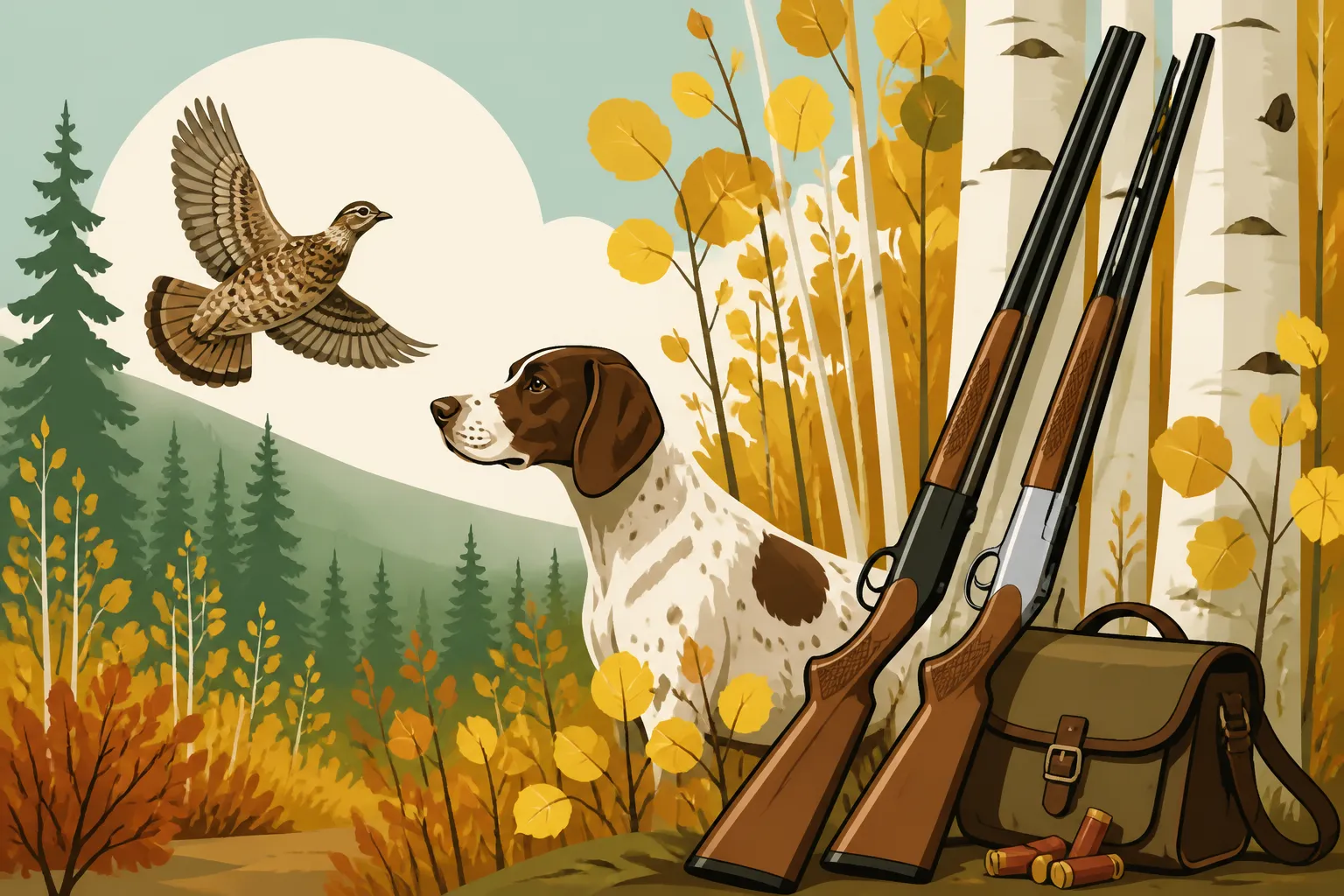
Hunting ruffed grouse and woodcock in Wisconsin's dense aspen and alder covers is a truly unique challenge, one that tests your reflexes, your stamina, and certainly your choice of firearm. So many hunters wrestle with picking the "perfect" gun for these fast-flushing birds in thick stuff, wondering if their trusty waterfowl gun is just too cumbersome, or if a smaller gauge truly has enough punch. This guide will walk you through the nuances of selecting, carrying, and even maintaining the ideal upland shotgun for those legendary, heart-stopping flushes in Wisconsin's famously tangled grouse and woodcock habitats.
The Unique Challenge of Wisconsin's Upland Habitat
Wisconsin's northwoods and low-lying alder bottoms offer some of the most exciting, yet frustrating, upland hunting experiences. The birds here aren't flying open fields; they're exploding from a tangle of branches, often giving you mere seconds, if that, to react. This isn't your grandfather's pheasant hunt over a cornfield; this is a baptism by fire, or rather, by branch.
The Dynamics of Aspen and Alder Growth
Aspen stands, particularly those in the 10-20 year range, are grouse magnets. They offer dense overhead cover from predators, abundant buds for winter food, and a thick understory for hiding. But for the hunter, this translates to a wall of skinny, intertwined saplings, making a clear shot almost impossible until the bird is already well on its way. You're often shooting through a tiny window, or at a ghost of a bird glimpsed between trunks. The frustration of hearing wings beating, seeing a blur, and not being able to shoulder your gun fast enough is a universal experience for Wisconsin grouse hunters. For more on this critical habitat, check out Grouse Hunting Wisconsin Aspen Cover.
Alder runs, on the other hand, are the woodcock's preferred address. These swampy, wet areas feature dense, multi-stemmed shrubs, often growing along stream banks or in low-lying depressions. While the alders themselves might not be as tall as aspen, their horizontal branching creates an incredibly tight, often soggy, maze. Woodcock, with their peculiar flight pattern, often flutter up and then level off just above the alders, giving you only a fleeting moment before they dart away through the thicket. Negotiating these habitats also means dealing with wet feet, mud, and often crossing small trickles or beaver ponds, adding another layer of challenge to your gear. These unique habitats demand a gun that can be shouldered quickly and handled effortlessly, even when your boots are sucking mud.
Why a Specialized Upland Gun Makes a Difference
You might think any shotgun will do, but after a few hours of wrestling a long, heavy waterfowl gun through thick aspen or dragging it through an alder bog, you'll quickly understand the appeal of a specialized upland firearm. The tight cover means shots are almost always close – often within 20 to 30 yards. A heavy, long-barreled gun designed for distant geese or high-flying pheasants becomes a liability when a grouse bursts out at your feet and disappears into the timber. The weight and length can slow your swing, catch on branches, and make it difficult to get on target fast enough.
Furthermore, these environments are tough on equipment. You'll be bumping, scraping, and occasionally dropping your gun. A rugged, reliable firearm that can take a beating and still perform flawlessly is essential. It's not about having the fanciest gun, but the most practical one for the demanding conditions of a Wisconsin upland hunt. The right gun becomes an extension of yourself, allowing you to react instinctively to those thrilling, explosive flushes that define upland hunting in our state.
Shotgun Types for Wisconsin's Upland
When you're slogging through a Wisconsin cedar swamp or navigating a labyrinth of young aspens, the type of shotgun you carry makes a huge difference. Each action type—from the classic doubles to the fast-shooting semi-autos—has its own set of pros and cons that become glaringly apparent once you're deep in the cover, chasing a flushing bird.
Side-by-Sides and Over/Unders: Traditional Choices
For many upland purists, a double-barreled shotgun, whether a side-by-side or an over/under, is the quintessential choice. These guns exude a certain charm and tradition that connects you to generations of hunters who pursued grouse and woodcock long before semi-automatics were common. Beyond aesthetics, they offer a significant practical advantage: two barrels, each capable of having a different choke. This means you can have an open choke (like skeet or improved cylinder) in the first barrel for those close-in, explosive flushes, and a tighter choke (like modified) in the second barrel for a bird that gets a little distance or for a follow-up shot. This versatility is incredibly useful in Wisconsin's variable cover.
Side-by-sides, with their wider profile, can sometimes feel a bit "clunky" in extremely dense cover, but they often balance wonderfully and point instinctively for many shooters. Over/unders, with their single sighting plane, can be easier for some to shoot accurately. Both types tend to be shorter overall, even with slightly longer barrels, and often lighter than semi-automatics, making them easier to carry all day without fatigue. The immediate availability of a second shot, without the need for a pump action, is also a distinct advantage when a pair of grouse goes up or you miss with the first shot. However, doubles typically hold only two rounds, which can feel limiting if you're used to a pump or semi-auto's greater capacity.
Pumps and Semi-Autos: Practicality and Firepower
Pump-action shotguns are the workhorses of the hunting world. They are renowned for their rugged reliability, simple mechanics, and often, a more budget-friendly price point. For a hunter who might only go out a few times a year, or who needs a gun that can take a beating and still cycle reliably in harsh Wisconsin weather, a pump is an excellent choice. Their manual cycling means you're in control, and they are generally less prone to cycling issues with light upland loads compared to some semi-autos. The main drawback for upland hunting is the need to manually pump for a follow-up shot, which can be a slow process when you're trying to hit a blur through the trees. However, for many, the rhythm of a pump becomes second nature, and they can be just as effective.
Semi-automatic shotguns offer the fastest follow-up shots of any action type, automatically cycling the next round with each pull of the trigger. This can be a huge advantage when you have a bird that flushes hard and fast, or if you encounter multiple birds from a covey. Modern semi-autos are incredibly reliable, often lighter than their predecessors, and many have systems designed to reduce felt recoil, which is a nice bonus if you're shooting a lot of rounds in a day. The downside is that they are mechanically more complex, can be more sensitive to variations in ammunition (though modern guns are much improved), and are generally more expensive than pump actions. They also often tend to be a bit longer and heavier than double barrels, which can make navigating the tightest cover a little more challenging. Brands like GoHunt, while primarily known for mapping, sometimes feature gear reviews where hunters discuss the pros and cons of these different action types for specific hunting scenarios, helping you decide what might suit your hunting style best.
Gauge and Shot Size: Matching the Payload to the Bird
The debate over the "perfect" gauge and shot size for upland birds is as old as upland hunting itself. In Wisconsin's thick cover, where shots are typically close and fast, your choice here is even more critical. You need enough pellets to ensure a clean kill without overdoing it, risking excessive meat damage.
The Classic 12-Gauge and Its Role
The 12-gauge shotgun is undeniably the most popular and versatile shotgun on the market. It offers a wide array of ammunition choices, from light target loads to heavy waterfowl shells, and it's what many hunters already own. For upland hunting in Wisconsin, a 12-gauge can certainly be effective, especially if you opt for lighter loads (e.g., 1 oz or 1 1/8 oz) and open chokes. The larger payload of a 12-gauge means a denser pattern, which can be forgiving on those fast, imperfect shots in thick cover.
However, the primary drawback of the 12-gauge for dedicated upland hunting, particularly in aspen and alder, is often its weight and bulk. Many 12-gauge guns are designed for waterfowl or larger game, making them heavier and less nimble. Carrying a heavy 12-gauge through miles of thick undergrowth can quickly lead to fatigue, slowing down your swing when that critical flush occurs. If you're using a 12-gauge, look for lighter field models, often with aluminum receivers, to cut down on carry weight. For specific insights into the 12-gauge for grouse, you might want to look at detailed discussions in forums or articles like Best Shotgun Gauge for Wisconsin Grouse.
20-Gauge: The Sweet Spot for Upland
For many seasoned Wisconsin grouse and woodcock hunters, the 20-gauge is the "Goldilocks" choice – just right. It offers a significant reduction in weight and recoil compared to a 12-gauge, making it a joy to carry all day in demanding terrain. The smaller receiver and lighter barrels contribute to a gun that handles quickly, points instinctively, and allows for rapid target acquisition. This speed and maneuverability are paramount when a grouse explodes from cover just feet away.
While it carries a slightly smaller payload (typically 7/8 oz or 1 oz), the 20-gauge still delivers more than enough power and pattern density to cleanly dispatch grouse and woodcock at the typical close ranges encountered in Wisconsin's covers. With modern ammunition, the performance gap between a 20 and 12-gauge for upland birds is negligible within 35 yards. The reduced recoil also allows for faster, more accurate follow-up shots, should you need them. If you're serious about upland hunting in Wisconsin, a lightweight 20-gauge is an investment you won't regret.
Smaller Gauges: 28 and .410 Considerations
While less common, the 28-gauge and even the .410 bore have their ardent devotees among upland hunters. The 28-gauge, in particular, is an elegant and incredibly light-handling gun. It throws a modest 3/4 oz load, but it does so with exceptionally uniform patterns and very little recoil. In the hands of a skilled shooter, a 28-gauge is a deadly and delightful gun for grouse and woodcock, perfectly suited for the close shots and easy carrying in dense cover. Its biggest drawback is usually the higher cost and more limited availability of both firearms and ammunition.
The .410 bore is the smallest shotgun gauge and is often considered a specialist's gun. It throws a very light 1/2 oz load, requiring precise shooting and excellent pattern understanding. While incredibly light and easy to carry, the .410's tight pattern and limited pellet count make it unforgiving for even slight errors. It's truly a gun for those who relish a challenge and prioritize extreme light weight and low recoil above all else. For most Wisconsin upland hunters, the 20-gauge offers a much better balance of carry weight, handling, and effective patterning for consistently successful hunting.
Choosing the Right Shot Size
For grouse and woodcock in Wisconsin, shots are generally close, often 10-30 yards, occasionally 40. This means you want a shot size that delivers a good number of pellets for a dense pattern, but not so large that you risk blowing a bird apart at close range or having too few pellets in your pattern.
- #7.5 Shot: This is the most common and arguably best all-around choice for grouse and woodcock. It offers a high pellet count, creating a dense pattern that increases your chances of hitting these small, fast-moving birds, yet still carries enough energy for clean kills at typical ranges.
- #8 Shot: For woodcock, which are smaller and often flushed even closer, #8 shot is an excellent option. The increased pellet count provides an even denser pattern, perfect for those fluttering, darting shots over alder tops. It also works perfectly for grouse at close range.
- #6 Shot: While some hunters might opt for #6 shot, it's generally considered too large for grouse and woodcock unless you're expecting longer shots or are using a very open choke to compensate for the lower pellet count. At close range, it can be too destructive to the meat.
Remember, with upland birds, it's about putting enough pellets into a vital area, not about individual pellet energy. A dense pattern of smaller shot is often more effective than a sparse pattern of larger shot for these quick-flushing targets.
Chokes and Barrel Length: Optimizing Your Spread
The combination of your choke constriction and barrel length might seem like technical minutiae, but for the specific challenges of Wisconsin's aspen and alder, these factors are critical to putting birds in the bag. They directly impact how quickly and effectively you can get a pattern on a fast-flushing bird.
Choke Selection for Close-Quarters Flushes
In the thick cover that grouse and woodcock call home, birds rarely offer you a long, leisurely shot. More often, they erupt from literally underfoot, rocketing away through a dense screen of branches. This scenario demands an open choke. You want your shot pattern to spread quickly, providing a wider "kill zone" for those blink-and-you-miss-it opportunities.
- Skeet or Cylinder Choke: For the first shot, especially if you're using a double gun, a skeet or cylinder choke is often ideal. These are the most open chokes, producing the widest pattern at close ranges. They are incredibly forgiving when a bird flushes just 10-20 yards away, giving you the best chance to connect before the bird disappears.
- Improved Cylinder Choke: This is an excellent all-around choke for upland hunting. It's slightly tighter than skeet or cylinder but still provides a broad, effective pattern at typical grouse and woodcock ranges (20-30 yards). Many hunters will run an Improved Cylinder in both barrels of a double gun, or in their single-barrel pump or semi-auto, for its versatility.
- Modified Choke: A modified choke is generally tighter than what's needed for the first shot in dense cover. However, if you're using a double gun, having a modified choke in the second barrel can be beneficial for a bird that gets out a bit further, or if you completely miss with your first, more open shot. It provides a denser pattern at longer ranges, giving you a better chance to reach those stretching birds.
It's a common mistake to use too tight of a choke in these environments. A full or even modified choke at 15 yards can turn a grouse into a pile of feathers and ruined meat. Err on the side of open chokes for these close-range encounters. For a deeper dive into how chokes impact your shooting, explore resources like Choke Choice for Fast Flushes.
Barrel Length for Maneuverability
Barrel length is a hotly debated topic, but in Wisconsin's tight upland cover, shorter is often better. Traditional upland guns often featured barrels around 26 to 28 inches. However, for the dense aspen and alder, many hunters are finding advantages in even shorter barrels.
- 24-26 Inch Barrels: These shorter barrels significantly improve a shotgun's maneuverability. When you're constantly pushing through dense brush, traversing thickets, and quickly bringing the gun to shoulder as a bird flushes, every inch counts. A shorter barrel is less likely to get snagged on branches, allowing for a faster, smoother swing and quicker target acquisition. This reduced length helps you get on the bird before it can weave its way through the timber.
- Balance and Swing: While some argue that shorter barrels can make a gun feel "whippy" or harder to swing smoothly, for the kind of snap shooting required in Wisconsin's grouse woods, this isn't usually a major concern. The quick handling characteristics of a shorter barrel often outweigh any perceived loss in swing dynamics, especially since you're rarely making long, deliberate swings at distant targets.
Ultimately, the goal is to have a gun that becomes an extension of your body, moving fluidly as you navigate the challenging cover. A shorter barrel, paired with the right choke, significantly contributes to this seamless operation. When considering a new gun, picking up various models and feeling their balance and swing will quickly tell you what feels right for your style of hunting in this demanding terrain. You can even use resources like the GoHunt app to scout potential hunting spots and visualize how different gun lengths might fare in specific cover types you identify on the map before you even step foot in the woods.
Carrying and Handling: Ease of Use in the Thick Stuff
Hunting Wisconsin's upland covers isn't a casual stroll; it's an active, often physically demanding pursuit. You'll be walking miles, climbing over downed logs, pushing through dense brush, and wading through wet spots. The way your shotgun carries and handles throughout the day directly impacts your comfort, energy levels, and ultimately, your ability to make the shot when it counts.
Weight and Balance: All-Day Comfort
This is perhaps the most critical factor for an upland gun in Wisconsin. A heavy gun might feel stable at the shooting range, but after an hour of walking through tangled aspen, its weight becomes a burden. You want a shotgun that feels light and lively in your hands, one you can carry effortlessly for several hours. This typically means looking for guns weighing between 5.5 and 7 pounds, depending on the gauge and action type. A 20-gauge often hits this sweet spot perfectly, but some lighter 12-gauge models can also be viable.
Beyond overall weight, balance is equally important. A well-balanced shotgun, where the weight is distributed evenly or slightly forward, feels lighter and points more naturally. A gun that's too "muzzle heavy" will feel cumbersome, and one that's "butt heavy" might make the barrel feel flighty. When shouldering a gun, it should come up smoothly and quickly, aligning naturally with your eye. This instinctive pointing is crucial for snap-shooting flushing birds in tight cover. You'll often be walking with the gun at the "ready," cradled in your arms, for hours on end, so finding a gun that feels good in this position is paramount. Fatigue is a hunter's worst enemy, and a heavy, poorly balanced gun will wear you out long before the best cover is hunted out.
Slings and Carrying Methods
While many upland purists prefer to carry their shotguns in hand, a good sling can be a lifesaver, especially during long treks between coverts or when navigating particularly difficult terrain. There will be times you need both hands free to climb over a fence, push through an especially dense thicket, or help your dog.
- Padded, Non-Slip Slings: If you choose to use a sling, opt for one that is padded and has a non-slip backing. This will prevent it from digging into your shoulder or sliding off as you walk. Neoprene slings are popular for their comfort and grip.
- Carrying Position: When using a sling, most hunters carry the gun with the muzzle pointed up or down, across their back or shoulder. The key is to find a position that allows for quick and silent removal of the gun when a flush is imminent. For example, carrying it across your chest, muzzle down, can allow for a quicker transition to the shoulder than a gun slung over your back.
- Hands-Free Carrying: Remember, some areas of Wisconsin's public land can be quite rugged. Whether you're climbing a steep bank in the Driftless Area Deer Hunting in Wisconsin or crossing a beaver dam in the Northwoods, having a sling to free up your hands can prevent a nasty fall or damage to your firearm. Even when not using a sling, developing a comfortable "ready" carry position, such as the modified cradle carry, can minimize fatigue and maximize readiness.
Ultimately, the best carrying method is the one that allows you to hunt comfortably and effectively throughout the day, ensuring you're ready when that grouse bursts from the leaves.
Maintenance and Durability: Protecting Your Investment
Wisconsin's upland hunting season can throw all sorts of weather at you: crisp autumn mornings, wet, drizzly afternoons, and even early season snow. This isn't fair-weather hunting, and your shotgun will be exposed to the elements, mud, and endless brush. Protecting your firearm from these harsh conditions is vital for its longevity and reliable performance.
Protecting Your Gun from Wisconsin Weather
Imagine this: you've been working a dense stand of aspen for an hour, your boots are squishing with mud, and a persistent drizzle has started. You finally get on a grouse, shoulder your gun, and boom! But then you notice water droplets inside your action or rust forming on a pristine barrel. This is why weather protection is paramount.
- Exterior Protection: Many modern shotguns feature synthetic stocks and durable finishes (like Cerakote or stainless steel) that are much more resistant to moisture and scratches than traditional blued steel and walnut. If you're using a blued steel and wood gun, be extra diligent. A good quality gun oil or wax applied to the metal surfaces can create a barrier against moisture. For wooden stocks, a weatherproof finish is essential. During the hunt, a quick wipe-down with a silicone-treated cloth after a rain shower or after pushing through wet brush can make a big difference. Consider carrying a small, absorbent cloth in your Upland Vests With Water Capacity pocket for immediate drying.
- Rain Gear for Your Gun: For really nasty weather, some hunters opt for a neoprene gun sleeve or even just wrap their gun in a plastic bag during transport or while waiting out a heavy downpour. While not always practical during the active hunt, it can protect your gun during breaks or when walking between far-flung coverts. The most crucial part of weather protection, however, happens after the hunt.
Routine Cleaning and Care
This is where the real work begins to ensure your upland gun stays in prime condition for years of Wisconsin hunting. Neglecting post-hunt cleaning, especially after a wet or muddy outing, is the fastest way to invite rust and mechanical problems.
- Immediate Post-Hunt Cleaning: As soon as you get home, or at least before storing your gun for any extended period, a thorough cleaning is in order.
- Safety First: Always ensure the gun is unloaded and cleared.
- Disassemble: Field strip your shotgun according to the manufacturer's instructions.
- Barrel and Action: Use a bore brush and patches with a good quality solvent to clean the barrel, removing all powder residue and lead fouling. Clean the action, bolt, and trigger group, paying close attention to any grit, mud, or moisture. For semi-automatics, ensure the gas system (if applicable) is clean and clear.
- Lubrication: Lightly lubricate all moving parts and pivot points with a quality gun oil. Avoid over-oiling, as this can attract dirt and grime.
- Exterior Wipe Down: Wipe down all exterior metal surfaces with an oiled cloth, and clean the stock. Pay extra attention to areas that might have accumulated moisture, like under the forend or near the buttplate.
- Storage: Store your gun in a clean, dry, climate-controlled environment, ideally in a breathable gun sock, not a padded case that can trap moisture.
- Addressing Scrapes and Dings: Bumping your gun on branches is inevitable when Still-Hunting Wisconsin Cedar Swamps or pushing through brush. While minor cosmetic scrapes add character, deep gouges in wood stocks should be touched up to prevent moisture ingress. For blued metal, minor rust spots should be addressed immediately with fine steel wool and oil before they spread. Regular inspection will catch these issues early.
By being diligent with post-hunt cleaning and proper storage, you'll ensure your upland gun remains a reliable companion for countless seasons of chasing grouse and woodcock in the beautiful, yet challenging, landscapes of Wisconsin. This dedication ensures your gear is always ready for that next thrilling flush.
Table: Upland Shotgun Comparison for Wisconsin Cover
Here's a quick comparison of common shotgun gauges and their suitability for hunting ruffed grouse and woodcock in Wisconsin's challenging aspen and alder covers:
| Feature | 12-Gauge (Light Field Models) | 20-Gauge | 28-Gauge | .410 Bore |
|---|---|---|---|---|
| Typical Weight | 6.5 – 7.5 lbs | 5.5 – 6.5 lbs | 5.0 – 6.0 lbs | 4.5 – 5.5 lbs |
| Recoil | Moderate – Heavy | Light – Moderate | Very Light | Very Light |
| Maneuverability | Good (with shorter barrels) | Excellent | Exceptional | Superior |
| Payload (Oz.) | 1 oz – 1 1/8 oz | 7/8 oz – 1 oz | 3/4 oz | 1/2 oz |
| Pattern Density | Very Good | Good | Good (with proper load) | Challenging (tight) |
| Ammunition Cost | Common / Affordable | Common / Moderate | Less Common / Higher | Less Common / Higher |
| Optimal Chokes | Skeet, IC, Mod | Skeet, IC, Mod | Skeet, IC | IC (for wide spread) |
| Pros | Versatile, common ammo | Best balance, light | Elegant, very light | Extremely light |
| Cons | Can be heavy/bulky | Slightly less payload | Limited ammo/guns | Very unforgiving shots |
| Ideal Use | All-around, if light model | Dedicated upland | Dedicated upland, expert | Specialist, close range |
Disclaimer
This article is for general informational purposes only and does not constitute professional advice. Laws, prices and regulations vary by location and change over time. Consult a qualified professional for guidance on your specific situation.