GPS Collars for Bear Hounds
There's nothing quite like the sound of a well-trained bear hound on a track through the vast Northwoods of Wisconsin, but the thrill can quickly turn to anxiety when your valuable canine partner vanishes into dense cover. Losing track of your hounds in the sprawling forests, thick swamps, and rugged terrain is a hunter's worst nightmare, and traditional bells or even radio collars just don't cut it anymore in such expansive country. This guide is here to walk you through everything you need to know about GPS collars for bear hounds, ensuring you can keep tabs on your pack, strategize effectively, and bring everyone home safely after a long chase.
The Indispensable Role of GPS Collars for Bear Hounds in Wisconsin
Hunting bear with hounds in Wisconsin is an art form, a tradition passed down through generations. But the modern landscape, both literally and technologically, demands more than just grit and good dogs. The sheer scale of the hunting grounds, coupled with regulations and the increasing value of trained hounds, makes advanced tracking tools not just a luxury, but an absolute necessity.
Navigating Vast and Challenging Terrain
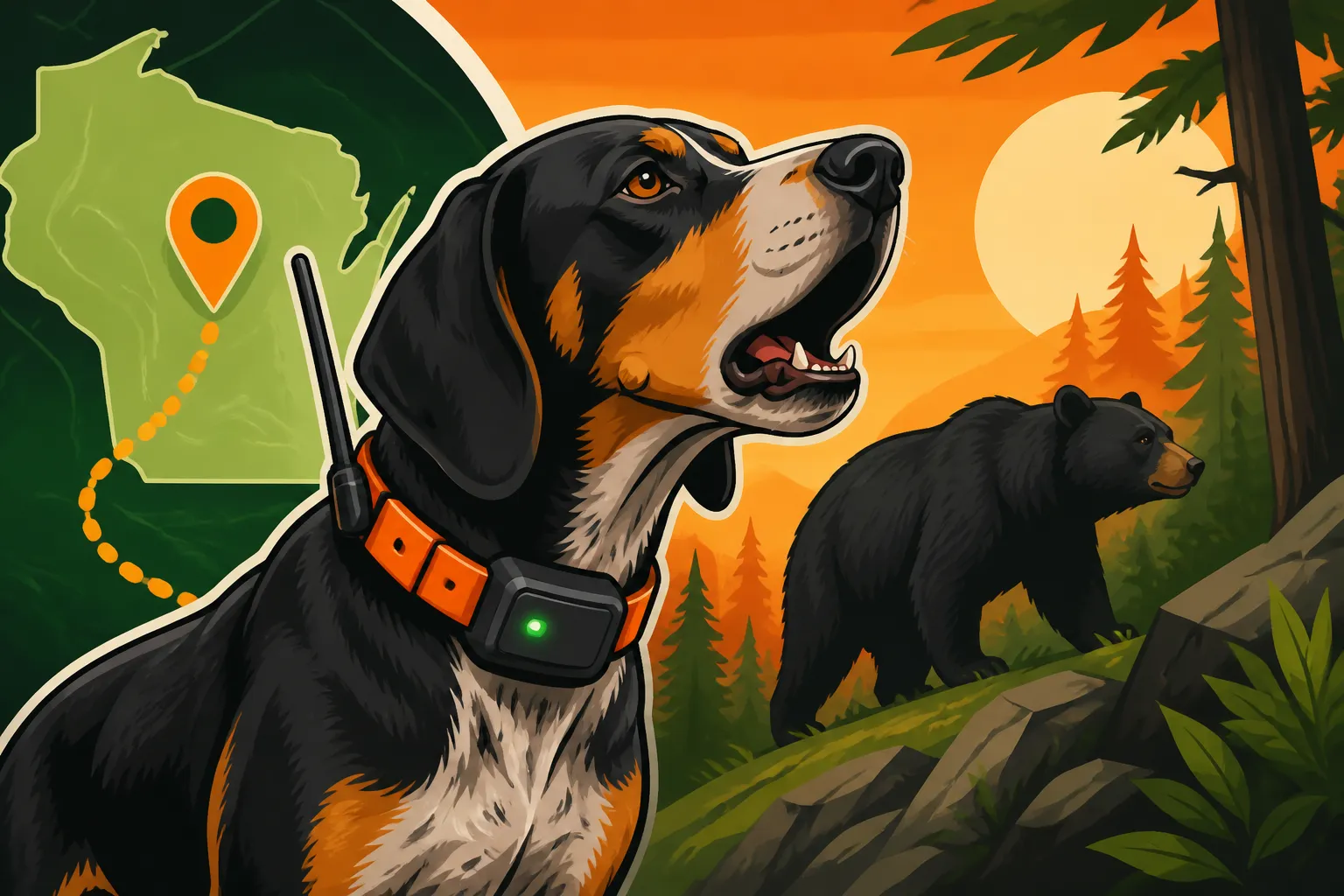
Wisconsin's bear country is a mosaic of dense conifer swamps, vast aspen cuts, mature hardwoods, and rugged terrain, especially in the northern counties. A bear, pushed by hounds, can cover miles in a short amount of time, often leading dogs through areas that are nearly impenetrable for humans on foot. Imagine your prized lead dog, hot on a track, disappearing into a cedar swamp so thick you can barely see ten feet in front of you. Traditional radio collars, while still having their place, often lose signal in deep valleys, dense timber, or when the dog is simply too far away. This is where GPS collars shine. They provide real-time location data, often visible on a handheld device or even your smartphone, showing you exactly where each dog is, where they've been, and how fast they're moving. This level of situational awareness is paramount when you're trying to coordinate a chase across miles of Chequamegon-Nicolet National Forest Hunting or sprawling county forests. You can see if a dog has treed a bear, if they've doubled back, or if they've perhaps gotten distracted by something else entirely.
Ensuring Dog Safety and Recovery
The safety of your hounds is, without a doubt, the top priority. These aren't just hunting tools; they're family members and significant investments of time, training, and affection. The Wisconsin woods hold many dangers for a running dog. From encounters with other predators, like coyotes or even Wolf Depredation on Wisconsin Hounds, to getting tangled in thick brush, or simply becoming exhausted and lost, the risks are real. A GPS collar system allows you to monitor your dog's activity levels, often showing their speed and direction. If a dog stops moving for an extended period, or if their location is in a dangerous spot like a busy road, you can quickly pinpoint their exact whereabouts and plan a safe recovery. This proactive capability can mean the difference between a stressful search and a swift, successful reunion. Hunters often coordinate with chase vehicles on logging roads, and knowing precisely which road intersects with your dog's location dramatically cuts down recovery time and stress for both dog and handler.
Enhancing Hunt Strategy and Coordination
Bear hunting with hounds is a team sport. It involves multiple handlers, drivers, and often chase vehicles working in concert to keep up with the dogs and eventually locate the bear. GPS collars transform this coordination, turning what used to be a frantic guessing game into a highly strategic operation. With each dog's location displayed on a shared map, handlers can make informed decisions in real-time. You can see if your pack is splitting up, if a young dog needs support from an older, more experienced hound, or if the bear is heading towards a specific ridge or swamp where you can anticipate its movements. This also makes planning for a successful retrieve much easier once the bear is treed or bayed. Knowing exactly where the action is allows you to direct ground crews efficiently, minimizing disturbance to the bear and ensuring a calm, safe conclusion to the hunt. For those engaging in methods like Running Bear Hounds in Northern Wisconsin, where the chase can cover truly immense distances, this coordination is absolutely vital.
What to Look for in a Top-Tier GPS Collar System
Investing in a GPS collar system for your bear hounds isn't a small decision, and the market offers a wide range of options. It's crucial to choose a system that can withstand the rigors of Wisconsin's diverse hunting environments and provide reliable performance when it matters most.
Durability and Weather Resistance for Rugged Wisconsin Conditions
Wisconsin's hunting seasons can throw anything at you: scorching early fall days, torrential downpours, biting cold, and heavy snow. Your GPS collars need to be built like tanks. Look for collars with robust, impact-resistant casings that can shrug off blows from rocks, branches, and roughhousing with other dogs. Waterproofing is non-negotiable. Hounds will often cross streams, plunge into swamps, and run through pouring rain or wet snow, so an IPX7 or IPX8 rating is a must to ensure the electronics remain protected. The collar straps themselves should be tough, preferably reinforced, and resistant to chewing. Components like antennae should be sturdy yet flexible to avoid snagging or breaking. Don't compromise on durability; a collar that fails in the field is worse than no collar at all.
Range and Signal Reliability in Dense Cover
The advertised "range" of a GPS system can be misleading if not considered in context. In open terrain, many systems boast impressive distances, but Wisconsin's northern forests are far from open. Here, signal penetration through dense hardwoods, thick cedar, and undulating topography is paramount. Look for systems that are known for strong signal acquisition and retention in challenging environments. Some systems utilize both GPS and GLONASS for improved accuracy and faster satellite acquisition. Consider how the system communicates between the handheld device and the collars—some use VHF radio frequencies to transmit GPS data, offering better penetration than cell service alone, which is often nonexistent in remote areas. Brands like GoHunt often integrate advanced antenna designs and robust signal protocols to tackle these challenges, giving you greater peace of mind that your dog's location won't suddenly vanish off your screen.
Battery Life and Power Management for Long Hunts
Bear chases can be unpredictable. A short track might last an hour, while a tough bear can lead your hounds on an all-day epic that stretches into darkness. Excellent battery life for both the collars and the handheld receiver is critical. Look for collars that offer at least 20-30 hours of continuous tracking on a full charge, with options for "sleep" modes or adjustable update rates to conserve power when needed. Rechargeable batteries are standard, but consider the ease of recharging in the field—some systems allow for car charging or even portable power banks. It's always a good idea to carry spare fully charged batteries for your handheld unit, or portable chargers, especially if you plan on multi-day hunts or deep dives into wilderness areas. There's nothing worse than your handheld dying just as your dogs are reaching a crucial point in the chase.
Mapping and Real-time Tracking Features
The real power of GPS collars comes from how the data is displayed and utilized. A good system will offer detailed topographic maps, often preloaded, allowing you to visualize terrain, elevation changes, and water features. Many units also allow for satellite imagery overlays, which can be invaluable for identifying clearcuts, logging roads, and different timber types where a bear might seek refuge or a hound might get hung up. Real-time tracking with frequent update rates (e.g., every 2.5 seconds) is essential for keeping up with fast-moving dogs. Look for features like:
- Customizable Map Views: Toggle between topo, satellite, or a combination.
- Track Logging: Review past tracks to understand dog behavior or for future scouting.
- Geofencing/Boundary Alerts: Set virtual perimeters to get notified if a dog crosses a road or enters a prohibited area.
- Multiple Dog Tracking: Simultaneously monitor an entire pack, often with different icons or colors for each dog.
- Dog Status Updates: Some systems display battery life, speed, and whether the dog is moving, stopped, or "treed" (based on accelerometer data).
These features not only help with immediate tracking but also provide valuable data for post-hunt analysis and planning for future expeditions, whether you're working the scent trails for Wisconsin's Black Bear Population or simply navigating new public land.
Best Practices for Deploying GPS Collars in the Field
Having the best gear is only half the battle; knowing how to use it effectively is what truly counts. Integrating GPS collars into your hunting routine requires practice, smart planning, and a bit of fieldcraft.
Pre-Hunt Setup and Device Familiarization
Before you ever hit the woods with your hounds, spend significant time at home setting up and familiarizing yourself with your GPS system. Charge all devices fully. Update maps and software on both collars and handhelds. Test the collars on your dogs in a controlled environment to ensure they're working correctly and that the dogs are comfortable wearing them. Learn how to navigate the menus, zoom in and out of maps, mark waypoints, and switch between different dogs. Understand how to interpret the various icons and data points displayed. A crucial step is to synchronize all devices in your hunting party, so everyone sees the same map data and dog locations. If you're using a system that requires a subscription for map updates or cellular data (for remote tracking via phone apps), ensure it's active and paid up. It's often helpful to practice in areas where cell service is spotty, so you know the limitations of your specific setup.
Combining GPS with Traditional Hound Handling
GPS collars are a powerful enhancement, not a replacement, for good old-fashioned hound handling and woodsmanship. Your ears are still your primary tool for judging the pace and intensity of the chase. The excited bark of a dog hot on a track, the change in tone when they tree a bear, or the frantic barks of a bayed bear—these auditory cues remain vital. Use the GPS to confirm what your ears are telling you, or to locate a dog when sounds become indistinct or vanish. Continue to use bells on your dogs; they provide an immediate, close-range indication of location and can help prevent accidental shots by other hunters if a dog wanders off the path. Knowing the terrain, predicting where a bear might go, and understanding Where Wisconsin Bears Range still relies heavily on your experience. GPS gives you the data, but your knowledge helps you interpret it and react strategically.
Troubleshooting Common Issues in Remote Areas
Even the best GPS systems can run into hiccups. Be prepared to troubleshoot in the field.
| Issue | Possible Cause | Field Solution |
|---|---|---|
| No Signal/Lost Dog | Dense canopy, deep valleys, battery low | Try moving to higher ground or a clearing. Check collar battery status on handheld. If radio-based, check handheld antenna connection. Try a different channel if applicable. Ensure dog is still moving (check last known location/speed). |
| Short Battery Life | High update rate, old battery, cold weather | Adjust update rate to conserve power if possible. Carry spare power banks for handheld. Keep handheld warm in a pocket. Consider if collars need new batteries/service. |
| Inaccurate Location | Poor satellite reception, old maps | Ensure handheld has a clear view of the sky. Update maps regularly (some GoHunt systems offer seamless map updates). Recalibrate compass on handheld if it seems off. |
| Handheld Freezing | Software glitch, low battery | Perform a soft reset (check manual for specific button combos). Ensure battery is charged. Avoid extreme temperatures. |
| Collar Physical Damage | Snagging, chewing, impact | Regularly inspect collars for wear and tear. Use protective sleeves or stronger straps. Consider a backup collar for multi-dog hunts. Carry electrical tape for temporary fixes. |
Remember that cellular-based GPS systems will be useless in many of Wisconsin's remote northern forests where cell service is non-existent. Always have a backup plan, whether that's traditional radio tracking, or simply a good compass and map for your own navigation.
Maximizing Your Success and Minimizing Risks
A bear hunt is an adventure, and with the right preparation and tools, it can be a truly rewarding experience. GPS collars are a huge part of that preparation, allowing you to focus more on the hunt and less on the worry.
Understanding System Limitations and Environmental Factors
No GPS system is perfect, and understanding its limitations is as important as knowing its strengths. Heavy cloud cover, dense foliage (especially evergreen forests), and deep ravines can all interfere with satellite signals, causing temporary drops in accuracy or signal loss. Extreme cold can affect battery performance, and while units are built to be rugged, prolonged exposure to harsh elements can still take a toll. Be aware of the potential for electromagnetic interference from other electronic devices or power lines. Also, remember that the map on your screen is a representation of the real world—it might not show every fallen tree or every tiny stream crossing. Use it as a powerful guide, but always combine it with your senses and knowledge of the terrain. Hunters often use tools like Scouting Wisconsin Public Land Before Season to get an on-the-ground understanding that even the best maps can't fully convey.
Safety Protocols and Emergency Preparedness
Your dogs' safety, and your own, should always be paramount. When using GPS collars, establish clear communication protocols with your hunting partners. Who is monitoring which dogs? Who is responsible for vehicle movements? Have a designated "go-to" person for troubleshooting. Beyond the collars, ensure each dog wears proper identification tags with your contact information. Carry a comprehensive first-aid kit for both humans and canines, and know basic canine first aid. Always inform someone not with your hunting party of your general location and expected return time. In Wisconsin, the vast public land offers incredible hunting, but it also means being self-sufficient. Don't rely solely on technology; carry a physical map, compass, and emergency communication device (like a satellite messenger) as backups, especially when you're deep in country with limited access and no cell service. Understanding Wisconsin Bear Season Dates by Method and other regulations is also crucial for a safe and legal hunt.
GPS collars have revolutionized bear hunting with hounds in Wisconsin, providing an unparalleled level of control, safety, and strategic advantage. While the upfront investment might seem significant, the peace of mind and enhanced success they bring are truly invaluable. So gear up, familiarize yourself with your system, and hit the woods knowing you've got the best technology on your side to help you pursue the exciting challenge of Bear Hunting With Bait and Dogs in Wisconsin while keeping your loyal companions safe.
Disclaimer
This article is for general informational purposes only and does not constitute professional advice. Laws, prices and regulations vary by location and change over time. Consult a qualified professional for guidance on your specific situation.