Bow Draw Weight for Wisconsin Whitetails
Hunting whitetails with a bow in Wisconsin is an incredibly rewarding experience, but one of the biggest questions that often ties archers up in knots is, "What's the right draw weight for me?" It's a common struggle, whether you're a seasoned veteran looking to fine-tune your setup or a newcomer trying to figure out where to start. This guide aims to demystify bow draw weight for Wisconsin whitetail hunters, helping you understand the factors involved, make informed choices, and ensure you're both ethical and effective in the field.
Understanding Draw Weight Basics for Bowhunters
Before we dive into the specifics of hunting Wisconsin's beautiful whitetails, it's crucial to grasp the fundamental concepts behind bow draw weight. This isn't just a number; it's a critical component of your archery setup that directly impacts your shooting experience and hunting effectiveness.
What Draw Weight Actually Means
At its core, draw weight is the amount of force, measured in pounds, required to pull your bowstring back to its full draw length. For most compound bows, this isn't a constant force throughout the entire draw cycle. Instead, you'll experience a "peak draw weight" as you pull the string back, and then, thanks to the bow's cam system, a significant reduction in force when you reach full draw. This reduced force is known as "holding weight" or "let-off." Traditional bows, like recurves and longbows, typically don't have let-off; their draw weight increases steadily up to full draw.
It's easy to get caught up in the idea that "more is better," but the reality is that the sustainable draw weight is what truly matters. If you're struggling to pull your bow back smoothly, or if it causes you to shake or fatigue quickly, that peak number is too high, regardless of what others might be shooting. Being able to consistently draw, hold steady, and execute a clean shot is far more important than boasting about a high draw weight that compromises your form and accuracy.
The Physics of Arrow Energy and Penetration
Draw weight directly influences the energy transferred to your arrow, which is critical for an ethical harvest. This energy is typically discussed in terms of kinetic energy (KE) and momentum. Kinetic energy is a measure of the arrow's energy in motion, often expressed in foot-pounds (ft-lbs), and is largely determined by arrow speed and mass. Momentum, on the other hand, is a measure of how hard the arrow pushes forward, taking into account its mass and velocity. Both are vital for achieving adequate penetration on a whitetail.
While a higher draw weight generally translates to more kinetic energy and momentum, it's not the sole factor. Arrow weight, broadhead type, and fletching all play significant roles. A heavier arrow, even from a slightly lower draw weight, can often achieve better momentum and penetration than a lighter, faster arrow from a higher draw weight. For deer hunting, you want enough energy to pass through bone and tissue, ensuring a quick and humane kill. Insufficient energy can lead to superficial wounds and a lost animal, which is every hunter's worst nightmare.
The Legal Side of Draw Weight in Wisconsin
When you're preparing for Bowhunting Wisconsin's Long Archery Season, it's not just about what feels right; it's also about what's legal. Understanding Wisconsin's specific regulations regarding bow hunting equipment is paramount to ensuring a lawful and enjoyable hunt.
State Regulations for Bows and Crossbows
Wisconsin's Department of Natural Resources (DNR) sets the rules, and it's your responsibility as a hunter to know them. For vertical bows (compound, recurve, longbow), Wisconsin does not specify a minimum draw weight for hunting deer. This often comes as a surprise to new hunters, as many assume there must be a legal minimum. However, while there isn't a legal floor, there's certainly an ethical one. You still need to ensure your bow setup can deliver enough force for a humane kill. Most experienced hunters would agree that a draw weight below 40 pounds is generally inadequate for whitetails, even with a perfectly tuned setup and heavy arrows.
When it comes to crossbows, the rules are slightly different, though still not focused on minimum draw weight in the same way. Crossbows are legal for hunting all species during any bow season in Wisconsin. The key regulations for crossbows revolve around their general use and safety, rather than specific draw weight requirements. For a deeper dive into these nuanced rules, checking resources like GoHunt, which often aggregates state-specific regulations, can be incredibly helpful. You can also review How Wisconsin's Archery and Crossbow Seasons Run for a comprehensive look at the archery seasons.
Crossbow Draw Weight Considerations
While Wisconsin doesn't mandate a minimum draw weight for crossbows either, most modern hunting crossbows come with draw weights significantly higher than vertical bows, typically ranging from 150 to over 200 pounds. However, the actual effort required to cock a crossbow is often mitigated by cocking aids like ropes or cranking devices, making it less about physical strength and more about the mechanical process.
The higher draw weight of a crossbow generally results in greater arrow speeds and kinetic energy, which can be advantageous for penetration. However, the choice between a vertical bow and a crossbow is often a personal one, driven by physical ability, hunting style, and preference. For those weighing their options, Crossbow Versus Vertical Bow in Wisconsin offers a great comparison of the pros and cons of each. Regardless of your choice, ensuring your equipment is correctly matched to your abilities and that you can consistently shoot accurately is the ultimate goal.
Matching Draw Weight to Your Physical Abilities
This is perhaps the most critical aspect of choosing your bow's draw weight. It's not about ego or keeping up with others; it's about what you can comfortably and consistently handle. Many hunters fall into the trap of setting their draw weight too high, leading to a host of problems in the field.
Assessing Your Strength and Form
The ideal draw weight is one you can pull back smoothly, without excessive straining or contorting your body, even when you're cold, tired, or have been sitting still in a treestand for hours. The "smooth test" is simple: can you draw your bow straight back, using your back muscles rather than just your arms, without pointing the bow skyward? Can you do this 5-10 times consecutively without feeling completely gassed? If the answer is no, your draw weight is likely too high.
Good form is the foundation of accuracy, and an overly heavy draw weight will inevitably compromise your form. You'll compensate by recruiting incorrect muscle groups, shrugging your shoulders, or twisting your torso, all of which introduce inconsistencies into your shot. When adrenaline is pumping and a big Wisconsin whitetail steps into your shooting lane, the last thing you want is to struggle with your draw. It's far better to shoot a lower draw weight with perfect form than a higher one with bad habits.
Preventing Injury and Fatigue
Pulling a bow with excessive force repeatedly can lead to a variety of injuries, particularly to the shoulder and rotator cuff. These injuries can be debilitating and keep you out of the woods for extended periods. It's a classic case of chasing a number and losing out on the bigger picture of sustained hunting enjoyment. If you feel sharp pain, persistent soreness, or clicking in your shoulder, it's a clear sign your draw weight needs to be reduced, or you need to consult a medical professional.
Beyond outright injury, an over-aggressive draw weight leads to rapid fatigue. Imagine drawing your bow several times during a practice session, and then try to replicate that same effort after a long morning walk through the woods or after enduring a chilly late-season sit. Fatigue degrades your ability to hold steady, aim precisely, and execute a clean release. When deer hunting in Wisconsin, especially during the rut when bucks are on the move, you might only get one shot opportunity. You need to be at your best, not fighting your equipment.
The Importance of Practice
Finding your ideal draw weight isn't a one-and-done deal; it's an ongoing process supported by consistent practice. The more you shoot, the stronger your archery-specific muscles become, and the more comfortable you'll feel with your current setup. If you're new to bowhunting or returning after a long break, starting with a lower draw weight (e.g., 40-50 lbs) and gradually increasing it as your strength and form improve is a smart strategy. Many modern compound bows offer a wide range of draw weight adjustability, allowing you to easily go up or down in 5-10 pound increments.
Regular practice doesn't just build strength; it builds muscle memory and confidence. The more repetitions you get at your chosen draw weight, the more natural and effortless the entire shot process becomes. This consistency is what pays off in the field when that moment of truth arrives. Consider linking up with local archery clubs or pro shops that offer coaching and facilities for consistent practice.
Optimizing Draw Weight for Hunting Performance
Once you've found a draw weight you can comfortably and accurately shoot, the next step is to ensure it's optimized for ethical and effective hunting of Wisconsin whitetails. This involves more than just hitting the target; it's about making sure your arrow performs its job reliably.
Ethical Harvest and Penetration on Whitetails
The ultimate goal of any hunter is a quick, humane kill. For bowhunters, this hinges on adequate arrow penetration to reach vital organs. While Wisconsin doesn't have a minimum draw weight, most ethical bowhunters would agree on a practical minimum. For adult whitetail deer, a compound bow set between 45 and 60 pounds, paired with a properly matched hunting arrow and a sharp broadhead, is generally considered sufficient for clean pass-throughs. The exact number depends heavily on factors like arrow weight, broadhead type, and shot placement. A heavy, well-constructed arrow with a sharp fixed-blade broadhead can penetrate deeply even from a moderate draw weight.
However, if you're hunting larger bodied bucks, especially in areas like the rich farmlands of southern Wisconsin or the bigger deer found in the Driftless Area Deer Hunting in Wisconsin, a bit more kinetic energy and momentum can provide an extra margin of error, particularly if a shot encounters shoulder bone. It's always better to be slightly over-prepared in terms of penetration capability than under-prepared. You want your arrow to exit the deer, creating two holes for a better blood trail, which is crucial for recovery.
Shot Distance and Arrow Trajectory
Higher draw weights generally result in faster arrow speeds, which translates to a flatter trajectory over typical hunting distances. A flatter trajectory is forgiving of minor range estimation errors, which can be critical when a deer unexpectedly steps closer or farther than your initial range. While most bowhunting shots are taken within 20-40 yards, knowing your bow can deliver a precise shot at the upper end of that range, even with a slight misjudgment, provides confidence. This is particularly relevant when Hunting Wisconsin Farmland Deer, where shots can sometimes stretch a bit further in open fields.
However, raw speed isn't everything. An arrow that's too light for its speed can be less stable in flight, especially with certain broadheads, and may lose energy faster. The key is finding the right balance between arrow speed, weight, and your chosen draw weight to achieve a flat-shooting, stable arrow that carries enough energy downrange. Regularly practicing at various distances, from 10 to 60 yards, will reveal your bow's true trajectory and help you understand your setup's limitations. Using a quality rangefinder, like those recommended by GoHunt, is still paramount, regardless of your arrow speed.
Shooting from a Treestand or Ground Blind
Hunting in Wisconsin often involves confined spaces, whether it's the elevated perch of a treestand in hardwoods or the tight quarters of a ground blind along a field edge. These environments pose unique challenges for drawing your bow. Trying to draw a heavy bow while twisting your body in a treestand, or silently from a seated position in a blind, is significantly harder than drawing on a flat archery range.
If your draw weight is too high, you might find yourself struggling to draw without bumping the blind's roof, scraping the treestand rail, or making excessive movement that spooks a wary whitetail. This is where a comfortable, manageable draw weight truly shines. You want to be able to draw smoothly, silently, and with minimal effort, even from awkward positions. Many hunters find that reducing their maximum comfortable draw weight by 5-10 pounds for actual hunting scenarios can make a huge difference in their ability to execute a clean shot when it matters most. For more on optimizing your hunting positions, check out Treestand Setups in Wisconsin Hardwoods or Using a Ground Blind on Wisconsin Public Land.
| Factor | Lower Draw Weight (e.g., 40-50 lbs) | Higher Draw Weight (e.g., 60-70 lbs) |
|---|---|---|
| Ease of Draw | Easier to draw smoothly, less fatigue, better for awkward positions. | More challenging draw, higher risk of injury/fatigue, difficult in confined spaces. |
| Accuracy Potential | Generally higher, as good form is easier to maintain. More consistent shot execution. | Potentially lower if form is compromised by strain. Consistency can suffer. |
| Arrow Speed | Slower arrow speed, more pronounced arrow trajectory (needs precise rangefinding). | Faster arrow speed, flatter trajectory (more forgiving of minor range errors). |
| Kinetic Energy/Momentum | Sufficient for whitetails with proper arrow/broadhead selection. Focus on heavy arrows. | Higher KE/Momentum, more "punch" for penetration, broader margin of error. |
| Injury Risk | Lower risk of shoulder/rotator cuff injuries. | Higher risk of musculoskeletal injuries from strain. |
| Practice Stamina | Can practice longer sessions without fatigue, leading to better muscle memory. | Practice sessions may be shorter due to fatigue, potentially hindering consistent improvement. |
| Recovery Difficulty | Potential for less dramatic pass-throughs, requiring closer attention to blood trails. | Higher likelihood of pass-throughs and robust blood trails for easier recovery. |
| Versatility | Excellent for whitetails, but may be marginal for much larger game (elk, bear) without specific setups. | Versatile for whitetails and can be adapted for larger game. |
Considerations Beyond Static Draw Weight
While the peak draw weight is the number most often discussed, it's just one part of the equation. Several other factors work in conjunction with draw weight to define your bow's overall feel and performance, and understanding them can help you fine-tune your setup even further.
Let-Off and Holding Weight
Modern compound bows offer a significant "let-off" percentage, meaning that once you reach full draw, the cams roll over, and the weight you have to hold back dramatically decreases. This "holding weight" is typically a small fraction of your peak draw weight, often as low as 10-20 pounds for a bow set at 60 pounds. This high let-off is a huge advantage for hunters, as it allows you to hold at full draw for an extended period without fatiguing. This can be crucial when a deer is quartering away slightly, and you need to wait for it to take another step for a perfect broadside shot.
The amount of let-off can vary between bows and even be adjustable on some models. A higher let-off (e.g., 85-90%) means a very light holding weight, which is great for stamina. A lower let-off (e.g., 65-75%) will have a heavier holding weight, which some shooters prefer for better tension on the string, but it demands more strength to hold steady. When you're stuck waiting for that perfect shot window in Hunting Wisconsin's Rut in November, the comfort of a low holding weight can make all the difference.
Cam System and Draw Cycle
The cam system on your compound bow greatly influences how the draw weight "feels" throughout the draw cycle. Some cam systems are designed for a "smooth" draw cycle, meaning the force builds up gradually and smoothly to its peak, often with a wider valley (the part of the draw cycle where let-off is engaged) before dropping into the holding weight. This makes the bow easier to pull back and more forgiving if you creep forward slightly from full draw.
Other cam systems are considered more "aggressive" or "hard" drawing. These typically build up to peak weight more quickly and might have a narrower valley, demanding more precise control at full draw. While often associated with higher arrow speeds, they can be less comfortable for long holding times and less forgiving of minor form inconsistencies. Understanding your bow's cam system and how it affects the draw cycle is key to finding a draw weight that feels comfortable and natural for your shooting style. This personal preference is vital for consistent accuracy, far more than any slight speed advantage.
Arrow Weight and FOC
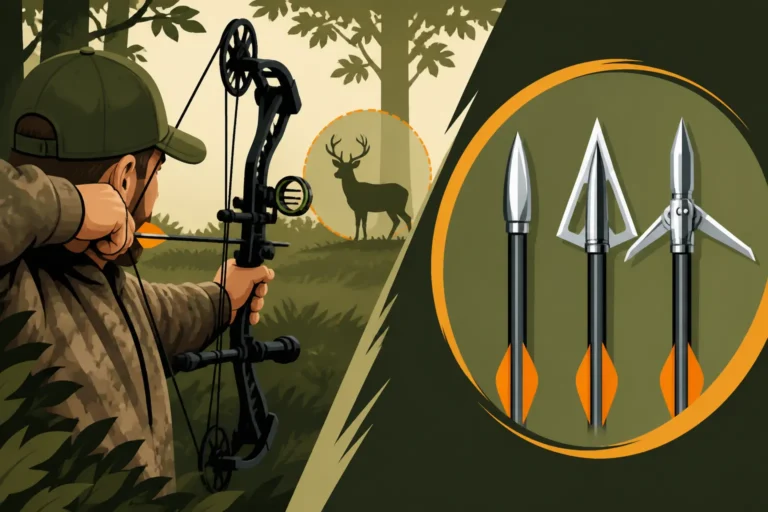
Your arrow's weight and its Front of Center (FOC) balance point are just as important as your bow's draw weight for hunting performance. These factors work together to determine kinetic energy, momentum, flight stability, and ultimately, penetration. A heavier arrow, even launched from a moderate draw weight, typically carries more momentum and can achieve better penetration than a lighter, faster arrow. This is particularly relevant for broadhead penetration, especially with Fixed Versus Mechanical Broadheads.
FOC refers to how far forward the balance point of your arrow is. A higher FOC (typically 10-15% for hunting arrows) means the arrow is more stable in flight, which is crucial for accuracy, especially with broadheads. While not directly related to draw weight, an arrow that is well-matched in terms of weight and FOC to your draw weight will maximize the efficiency of the energy your bow is producing. For instance, if you're shooting a lower draw weight, opting for a heavier arrow (350-450 grains total) can significantly boost your effective penetration power, turning what might seem like a marginal setup into an ethical and deadly hunting tool. Don't forget to consider Arrow Weight for Short Shots when tuning your setup.
Practical Tips for Setting and Adjusting Draw Weight
Finding your perfect draw weight isn't always obvious. It takes a bit of experimentation, patience, and self-awareness. Here are some practical tips to guide you through the process, ensuring you're ready for the challenges of hunting in Wisconsin.
Starting Low and Working Up
This is perhaps the best piece of advice for any bowhunter. If you're new, returning after a break, or just unsure, start with the lowest draw weight your bow allows (or a weight you know you can easily handle) and gradually increase it. Incrementally adding 2-5 pounds at a time, and then practicing extensively at each new setting, allows your muscles to adapt and strengthen without injury or sacrificing form. You should be able to draw your bow smoothly and without excessive strain, a dozen times, after a light warm-up.
Don't feel pressured to shoot a high draw weight just because others do. Focus on what you can control: your form, your accuracy, and your ability to execute a clean shot under pressure. Many seasoned bowhunters find that they actually shoot better with a slightly lower draw weight because they can maintain perfect form longer and avoid fatigue. It’s also easier to quietly draw a slightly lighter bow when a buck appears unexpectedly close while Still-Hunting Wisconsin Cedar Swamps.
Using a Bow Scale for Accuracy
While most bows have markings indicating their draw weight range, these can sometimes be slightly off, or the actual weight can fluctuate with string stretch or cam adjustments. Investing in a simple handheld bow scale is a smart move. This tool allows you to accurately measure your bow's peak draw weight, ensuring that what you think you're shooting is actually what you are shooting. This is especially important if you're adjusting your bow yourself or want to verify the settings after a visit to a pro shop.
Consistency is key in archery, and knowing your exact draw weight helps in tuning your arrows and broadheads, as well as maintaining a precise setup. Using a scale also helps you track your progress if you're intentionally working your way up in draw weight over time. Resources like GoHunt often review gear, and you might find recommendations for good bow scales there.
Regular Maintenance and Checks
Your bow is a piece of finely tuned machinery, and like any machine, it benefits from regular maintenance. Strings stretch, cables wear, and components can shift over time. These changes can subtly affect your draw weight, even if you haven't intentionally adjusted it. Periodically checking your draw weight with a scale, especially before and during the hunting season, can help you catch any inconsistencies.
It's also a good practice to have your bow inspected and tuned by a reputable pro shop at least once a year. They can check cam timing, string and cable condition, and ensure everything is working optimally. This not only keeps your draw weight consistent but also ensures your bow is safe and performing at its peak potential. A well-maintained bow means fewer surprises in the field and more confidence when you finally get that shot opportunity at a Wisconsin whitetail.
Disclaimer
This article is for general informational purposes only and does not constitute professional advice. Laws, prices and regulations vary by location and change over time. Consult a qualified professional for guidance on your specific situation.