Run-and-Gun Turkey Tactics on Public Land
The pre-dawn chill on public land can feel incredibly lonely when you're chasing Wisconsin gobblers, especially when those birds seem to know every trick in the book and vanish the moment you get close. It's frustrating to invest time in a spot only to find silent woods or birds that simply won't commit. This guide is all about equipping you with the dynamic "run-and-gun" tactics that can turn those frustrating mornings into successful hunts, helping you adapt to the unpredictable nature of public land turkeys.
Understanding the "Run-and-Gun" Philosophy for Public Land Turkeys
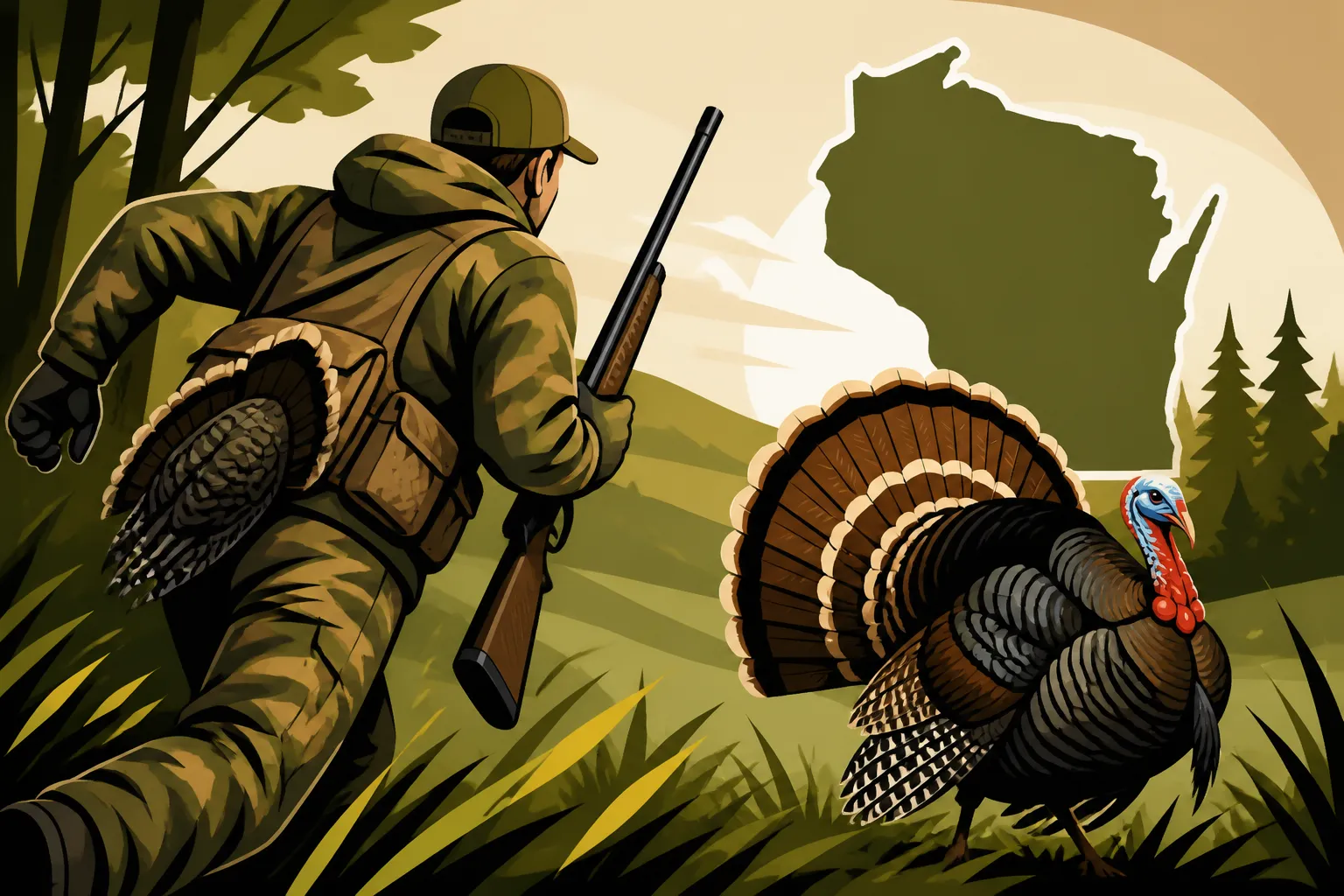
Public land turkeys are a different breed. They're pressured, they're wary, and they often aren't concentrated in one easily accessible spot. That's where the run-and-gun approach shines. It's not about setting up and waiting; it's about actively seeking, engaging, and reacting to the birds, covering significant ground in the process.
Why it Works and Sometimes Doesn't on Public Land
The primary advantage of run-and-gun tactics on public land is the ability to cover vast amounts of ground and locate turkeys that are widely dispersed or holding tight. You're not banking on a single bird in a specific area; you're casting a wide net, moving from one promising spot to another, listening for that tell-tale gobble that gives away a bird's location. This aggressive approach allows you to escape areas with high hunting pressure and find unpressured birds or those that have simply moved. Think about those days when you've sat for hours, only to hear a distant gobble an hour later in a direction you couldn't possibly reach quietly. Run-and-gun helps you close that gap.
However, it's not a foolproof method, and it certainly has its downsides. Moving constantly means you might spook birds that were just out of sight. You also might miss subtle responses or soft tree yelps if you're not pausing long enough in each spot to truly listen. On heavily hunted public parcels, a loud gobble might attract not only you but also other hunters, turning it into a race to the bird. Furthermore, run-and-gun can be physically demanding, requiring you to be in decent shape to navigate varied terrain, especially in areas like the hilly Driftless or dense Northern Forest.
The Mindset of a Mobile Turkey Hunter
Embracing the run-and-gun style means adopting a specific mindset: one of perpetual motion, keen observation, and unwavering confidence. You need to be aggressive, but also patient in your pauses. It's about believing that there are birds to be found, even if they aren't gobbling their heads off. You're constantly scouting, even while hunting, looking for fresh sign, subtle terrain features, and listening intently to the sounds of the forest.
This mindset also involves quick decision-making. If a bird gobbles once and then shuts up, do you stick around or move on? The run-and-gun hunter is more likely to move, attempting to get ahead of the bird or find another one that's more vocal. It's about adapting on the fly. Maybe the birds were on the ridge yesterday, but today they're in the bottomland following a fresh batch of insects. You need to be ready to change your entire plan based on real-time observations, never getting too attached to a single setup or location.
Essential Gear for the Mobile Wisconsin Turkey Hunter
When you're constantly on the move, every ounce matters. Your gear needs to be lightweight, efficient, and versatile enough to handle whatever Wisconsin's public lands throw at you, from thick brush to open timber.
Lightweight and Streamlined Setups
Your shotgun is your primary tool, and for run-and-gun, a lighter model with a shorter barrel (24-26 inches) is ideal. It's easier to swing through brush, quicker to shoulder when a bird pops up unexpectedly, and less fatiguing to carry all day. Many hunters opt for a 20-gauge for its lighter weight and manageable recoil, especially with modern tungsten super shot loads delivering excellent patterns. Ensure your choke is throwing a tight pattern at your ethical range, typically 30-40 yards.
For calls, prioritize versatility and minimal bulk. A few mouth calls (diaphragm calls) allow for hands-free operation and a wide range of vocalizations without adding weight. Supplement these with a compact slate or glass call for softer purrs, clucks, and yelps that can be crucial when a bird is close and wary. A small box call can be great for loud, attention-grabbing calls that carry across open terrain. When it comes to decoys, think minimalist. A single, realistic hen decoy that folds flat or a strutting gobbler fan can be incredibly effective without being cumbersome. Some hunters even forgo a full decoy, opting for a lightweight fan that can be quickly deployed for fanning tactics. You can learn more about various turkey setups in a comprehensive guide like Turkey Gear for a Wisconsin Spring.
Navigational Tools and Scouting Aids
Knowing where you are and where you're going is paramount, especially when you're off-trail in unfamiliar public land. A reliable GPS unit or a smartphone app like GoHunt or OnX Hunt is indispensable. These apps provide detailed topographical maps, satellite imagery, and critical public/private land boundary overlays. This is a game-changer for run-and-gun, allowing you to instantly identify property lines, find subtle terrain features, and plan your routes efficiently. Imagine hearing a gobble deep in a block of public land, and with a quick glance at GoHunt, you can see the easiest, quietest approach route that keeps you off private property.
Beyond digital tools, don't underestimate the power of good old-fashioned binoculars. They help you scan distant fields, identify terrain features, and even spot a gobbler strutting long before it's within calling range, saving you precious steps. Before the season, spend time with these tools. Use GoHunt's satellite view to identify potential travel corridors, pinch points, and openings where a bird might hold up. This virtual scouting informs your initial plan, even if you end up deviating significantly once the hunt begins. Having a physical map as a backup is always a smart move, especially if you find yourself in an area with no cell service, which is common in many of Wisconsin's more remote public parcels.
Pre-Season Scouting and Early Morning Strategy
Even with a run-and-gun approach, a little groundwork before the season opens, and a solid plan for the first hours of daylight, can dramatically increase your odds.
Identifying Potential Roosting Areas and Travel Corridors
Turkeys, especially gobblers, are creatures of habit. They prefer to roost in large, mature trees (often oaks, pines, or even large maples) near water, particularly along creek bottoms, river edges, or on high ridges that offer good visibility. During your pre-season scouting, use aerial maps to identify these types of timber stands. Look for dark timber blocks that stand out, often nestled against agricultural fields or clearings. These are prime locations for turkeys to fly down into for feeding.
Once you've identified potential roosting areas, consider how a turkey might travel once it hits the ground. Look for natural funnels like logging roads, old two-track trails, creek beds, or subtle ridge lines that offer easier walking or concealment. These become your "run" routes. Scouting these areas helps you visualize the birds' morning routine. You might find droppings, shed feathers, or even dusting bowls under certain trees, confirming turkey activity. If you're wondering which turkey zones in Wisconsin have the best potential, consider researching Wisconsin Spring Turkey Zones and Periods to align your scouting efforts.
The First Move: Calling Off the Roost
The early morning hours, right before and just after fly-down, are often your best chance to locate a vocal gobbler. Your strategy should be to get as close as possible to a known or suspected roosting area without bumping the birds. This often means a silent, cautious approach in the dark. Once you're in position, ideally before first light, start with soft, subtle tree yelps and clucks. You don't want to overcall or alarm the birds. The goal is to get a response, confirming their presence and location.
If a gobbler responds, listen carefully to pinpoint his exact location and direction. As soon as he flies down, often with a thunderous wing beat, go silent for a few minutes. Let him hit the ground and begin his routine. Then, offer some soft ground calls – a few clucks, a purr, or light yelps. The key here is patience. Sometimes, a gobbler will land and immediately come looking. Other times, he might strut and gather hens first. If he goes silent, this is where the run-and-gun transition begins. If he's not coming, you need to quickly assess if you can reposition or if it's time to move to your next planned location, perhaps by trying some Calling a Wisconsin Gobbler Off the Roost techniques you've practiced.
Mastering the Mid-Morning to Mid-Day Grind
Many hunters pack up after the initial morning flurry, but mid-morning to mid-day can be incredibly productive for run-and-gun hunters, especially on public land where other hunters might be heading out. This is when you can capitalize on silent gobblers that have been left alone or those that have bred their hens and are now looking for more company.
Strategic Calling and Listening Sequences
The rhythm of run-and-gun is a constant cycle of moving, stopping, calling, and listening. Don't just walk and call aimlessly. Instead, choose a strategic route, perhaps along a ridge line or a logging road, and stop at regular intervals – every 100 to 200 yards, or whenever the terrain changes and opens up a new listening post. When you stop, stand perfectly still for several minutes and listen intently. Pay attention to subtle sounds: distant gobblers, hen yelps, crows, and even squirrels that might indicate movement on the ground.
Once you've listened, initiate a calling sequence. Start with a loud, attention-grabbing call like an owl hoot or a crow call to try and elicit a shock gobble. If nothing responds, switch to turkey vocalizations. Start with a series of loud yelps and cutts that carry well, then immediately go silent and listen for a response. If a bird gobbles back, try to pinpoint its direction. If it's distant, you can repeat the loud calls. If it's closer, switch to softer, more enticing calls to try and draw it in without spooking it. Don't be afraid to vary your calls; sometimes a different cadence or tone is all it takes to spark a response from a wary bird. For deeper insights into this approach, consider reviewing Run-and-Gun on Wisconsin Public Land.
Covering Ground Effectively
Efficiency in covering ground is vital for the run-and-gun hunter. Utilize the terrain to your advantage. Ridge tops offer excellent listening posts and generally easier walking. Logging roads and ATV trails, where allowed, can be highways for moving quickly and quietly through the woods. However, remember that these are also common travel routes for other hunters, so maintain situational awareness. Creek beds, especially dry ones, can also offer quiet travel corridors and natural funnels for turkeys.
When moving, keep your head on a swivel. Scan ahead and to the sides. Look for subtle signs like fresh tracks in soft earth, droppings, or even a turkey feather. These indicators tell you that birds are using the area, even if they aren't gobbling. As you traverse different cover types – transitioning from open hardwoods to thick pine stands or alder bottoms – pause and adjust your calling. Thicker cover might require louder calls to penetrate, while open timber allows for more subtle engagement. The goal is to maximize your chances of encountering a bird by actively searching rather than passively waiting.
Decoy and Set-Up Finesse on Pressured Land
On public land, turkeys are often wary and have seen it all. Your decoy strategy and how quickly and effectively you set up can make or break a close encounter.
Minimalist Decoy Strategies
For run-and-gun, less is often more with decoys. Carrying multiple, bulky decoys just isn't practical when you're covering miles. A single, realistic hen decoy is often all you need. Place it where it's highly visible from the direction you expect the gobbler to approach, and ensure you have a clear shooting lane beyond it. The goal is to give the gobbler something visual to focus on, drawing his attention away from your hiding spot.
Another highly effective minimalist strategy, especially on public land, is fanning. This involves using a real or artificial turkey fan to mimic a strutting gobbler or a receptive hen. It can be incredibly effective for drawing in aggressive gobblers, but it comes with a significant safety caveat: always be absolutely certain of your target, as other hunters may mistake your fan for a real bird. For close-range encounters, particularly with hung-up gobblers, a fanned gobbler can provide just enough visual stimulation to get them to close the final distance. To perfect your decoy tactics, especially for wary birds, consider reading Decoy Placement for Pressured Birds.
Quick Setups and Adaptable Ambush Points
The essence of run-and-gun is speed and adaptability. When a gobbler responds and starts to close the distance, you don't have time for an elaborate blind setup. You need to identify a quick, effective ambush point within seconds. Look for a wide tree, a thick bush, or a cluster of evergreens that breaks up your outline and provides concealment from the direction of the approaching bird.
Once you've picked your spot, get down quickly and quietly. Position yourself so you can see the turkey's approach, but remain hidden. Ensure your shotgun is shouldered and ready, with a clear shooting lane. Use your knees and natural terrain to further break up your silhouette. Remember to always have a solid backdrop behind you to prevent other hunters from seeing you if they approach from behind. This kind of rapid deployment is key to capitalizing on a hot bird that's coming in fast. Sometimes, simply Setting Up Against a Big Oak or a thick cluster of pines is all you need.
Overcoming Public Land Challenges
Public land turkey hunting presents unique obstacles. The birds are often more skittish, and you're not the only hunter in the woods. Learning to navigate these challenges is crucial for consistent success.
Dealing with Hunting Pressure and "Educated" Birds
It's an unfortunate reality that public lands, especially those easily accessible, often see significant hunting pressure. This pressure makes turkeys "educated" – they've heard all the calls, seen all the setups, and are incredibly wary. The run-and-gun strategy inherently helps by allowing you to move away from pressured areas, but you also need to adapt your tactics. This means often going deeper, further from roads and parking areas, into the less-traveled corners of a property. These out-of-the-way spots are where you're more likely to find less pressured birds.
Another adaptation is to vary your calling. Don't stick to the same sequence of loud yelps if birds are shutting down. Try softer, more subtle calls. Instead of cutting aggressively, try soft clucks, purrs, and even silent setups. Sometimes, the best call is no call at all, just waiting quietly in a likely travel path. Pay attention to what other hunters are doing. If you hear someone else calling aggressively, you might want to try a completely different approach, or move to an entirely new area. For specific techniques in challenging terrains, consider how Turkey Tactics for Driftless Farm Edges might translate to less pressured public parcels.
Adapting to Silent or "Hung Up" Gobblers
The "hung-up" gobbler is the bane of every turkey hunter's existence. He's gobbling, he's close, but he just won't come the last 50-100 yards. This is where your run-and-gun flexibility really comes into play. If a bird hangs up, resist the urge to overcall. Often, that just reinforces his wariness. Instead, try circling him – if the terrain allows – to get into a new position. Sometimes, simply moving a short distance, even 50 yards, and offering a new angle of approach or a different type of call can be enough to break the stalemate.
If a gobbler goes completely silent after an initial response, don't assume he's gone. He might be coming in silently, or he might have a band of hens that pulled him away. Give it time, 15-20 minutes, listening intently for any sounds of movement. If still nothing, it's time to put the "run" back in run-and-gun. Move to a new location, circle wide to try and get ahead of him, or simply move on to find a more cooperative bird. This is the essence of staying persistent and adaptable. For more on this common challenge, read up on When Wisconsin Gobblers Go Quiet.
Public Land Turkey Hunting: Call Usage Quick Reference
| Call Type | Best Use for Run-and-Gun | Notes & Tips |
|---|---|---|
| Mouth Diaphragm | Hands-free calling while moving or with shotgun shouldered. | Versatile: yelps, clucks, purrs, cuts. Practice to master various sounds. |
| Slate/Glass Call | Softer, realistic hen sounds for close-in work. | Good for purrs and clucks. Less volume, but very enticing. |
| Box Call | Loud, attention-grabbing yelps that carry across open terrain. | Quick to use for shock gobble attempts or locating distant birds. |
| Locator Calls | Owl hoot, crow call, coyote howl. | Used to elicit a shock gobble without sounding like a turkey. |
| Gobble Tube | Challenge a gobbler by mimicking another gobbler. (Use with caution!) | Can be highly effective but also attracts other hunters. |
Disclaimer
Hunting is an inherently dangerous activity. Always prioritize safety, follow all Wisconsin Department of Natural Resources regulations, and respect private property boundaries. This guide is for informational purposes only and does not replace official hunter education or local laws.