Practical Range in Wisconsin Timber
It's a common dilemma, isn't it? You've spent countless hours scouting, hanging stands, and dreaming of that perfect shot, only to find yourself facing a deer at what feels like 20 yards, but through a maze of branches and thick brush, it might as well be 200. The wide-open fields and long-range shooting opportunities we see on TV just don't reflect the reality of hunting in much of Wisconsin's timber. This guide is here to cut through that frustration, helping you understand the practical shooting ranges you can realistically expect in our dense forests and offer strategies to make those close-quarters shots count.
The Realities of Shooting in Wisconsin's Timber
Hunting in Wisconsin's diverse timber, from the dense cedar swamps of the north to the oak ridges of the Driftless Area, presents a unique set of challenges that directly impact your effective shooting range. It's rarely a clean, unobstructed shot.
Navigating Obstacles and Limited Visibility
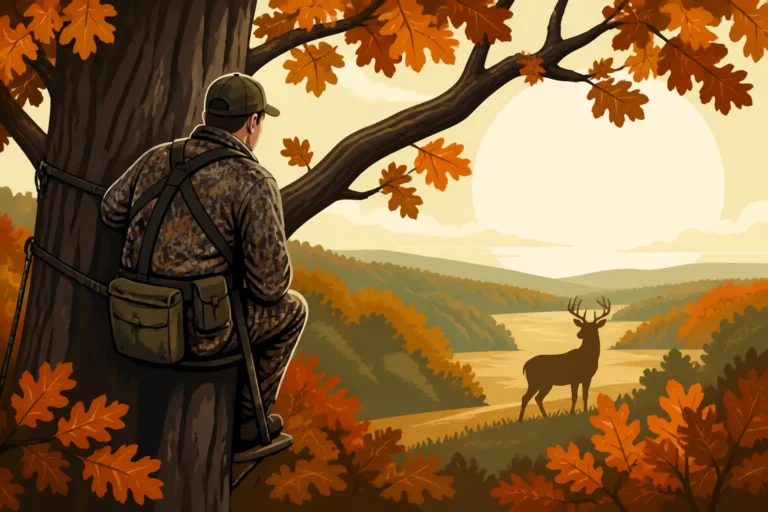
Imagine yourself sitting in a stand in the middle of a thick maple ridge in October. The leaves are still mostly on, and even at 40 yards, that buck might only present a clear shot for a split second between two large trunks, or through a tiny window in the undergrowth. This isn't just about spotting the deer; it's about seeing a clear path for your bullet or arrow to the vital zone.
Dense timber is full of bullet and arrow deflectors. A small twig that seems insignificant can send a projectile wildly off course, turning a perfect shot into a wounding one. The frustration of carefully ranging a deer, lining up, and watching your arrow thwack into an unseen branch just feet from your target is a feeling many of us know all too well. It's a constant battle against the environment, and it forces us to reconsider what "in range" truly means. Rifle Setups for Wisconsin Deer often prioritize accuracy and power for these conditions, but even the best rifle can't overcome a poorly chosen shot lane.
Target Acquisition and Ethical Considerations
In the low light of a northern Wisconsin cedar swamp, or under the heavy canopy of an old-growth forest, target acquisition can be incredibly difficult. A deer might materialize silently, moving quickly through shadows, giving you only a fleeting glimpse. Identifying the animal clearly, ensuring it's the deer you're after (buck vs. doe, legal vs. illegal for your tag), and finding the vitals requires excellent optics and quick decision-making. Optics for Wisconsin Timber and Coulees can make a huge difference here.
But beyond merely seeing the deer, there's the ethical responsibility. Every hunter wants a clean, quick kill. Taking a shot that has a high probability of simply wounding an animal because the lane isn't clear, or you can't confidently place your shot, is a risk we should always avoid. This commitment to ethical hunting means setting a personal practical range that might be much shorter than what your weapon is technically capable of. It means passing on shots that feel iffy, even if the deer is "close." It's about knowing your limits and respecting the animal.
What Defines Your Practical Shooting Range in the Woods
Your practical range isn't just a number on a ballistic chart; it's a dynamic assessment based on a confluence of factors, heavily influenced by the environment you're hunting in. It’s what you can actually do, not just what the gun can do.
Weapon Type and Ammunition Selection
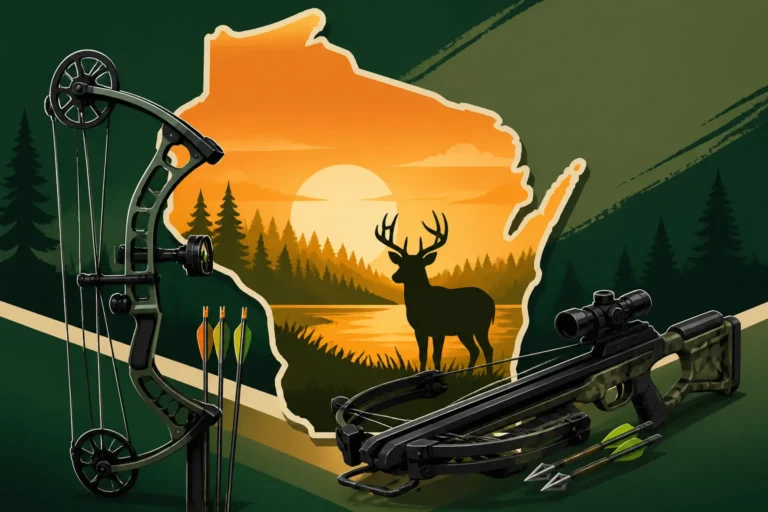
The type of weapon you choose plays a massive role in your practical timber range. A modern compound bow or crossbow, for instance, typically has an effective ethical range for most hunters somewhere between 30 and 60 yards, depending heavily on the shooter's practice and confidence. In thick Wisconsin woods, where clear lanes are rare, those distances shrink even further. For archers, it's often more about having any lane than a wide-open one.
Rifles, while offering far greater potential range in open country, are still limited by timber. A .30-30 lever action, a classic Wisconsin deer choice, is known for its effectiveness at closer ranges in the woods, often considered ideal for shots within 100-150 yards. While many cartridges are capable of much longer shots, ammunition type also matters. Heavier, slower bullets tend to be less prone to deflection from light brush than very fast, light projectiles, though even these are not immune. Shotguns with slugs, popular in some parts of Wisconsin, have their own trajectory limitations that often mean practical ranges of 75-125 yards, even with modern sabot slugs and rifled barrels. Each weapon demands honest self-assessment regarding its real-world performance in thick cover.
Hunter Skill, Practice, and Confidence
This is perhaps the most critical factor. Your ability to consistently hit a target the size of a deer's vitals under pressure is paramount. Are you practicing from a stand, in hunting clothes, with cold hands, and simulating the exact angles you might get in the woods? Zeroing a Rifle for Mixed Distances is a good start, but actual field practice is vital. Many hunters can group shots beautifully at 100 yards from a bench rest. Can you do the same kneeling, with a shaky heart, after a long walk through the snow, with only a small window of opportunity?
Confidence isn't just about believing you can make the shot; it's born from consistent, realistic practice. If you haven't shot your bow beyond 30 yards in a dense setting, 40 yards in the woods is probably beyond your practical range, regardless of what the bow is "rated" for. Similarly, if you only practice your rifle at 100 yards and then find yourself with a 150-yard shot through thick poplars, that extra distance combined with the potential for deflection should make you pause. Know yourself, know your equipment, and never let ego override ethics.
Environmental Conditions and Shot Presentation
Wind, rain, snow, and declining light all compress your practical range. A strong crosswind can push an arrow or lightweight bullet off course, especially at greater distances. Rain or snow can obscure your vision and make target acquisition harder. Low light conditions, especially at dawn and dusk, reduce contrast and detail, making it tough to pick out a clear shot lane or confirm vitals.
The angle of the shot also matters significantly. A deer broadside at 60 yards in the woods, even with a clear lane, is often a more challenging shot than a quartering-away shot at 30 yards. Quartering shots often offer a larger, clearer target area for an ethical kill, though they also demand an understanding of anatomy. An animal standing at an odd angle, perhaps slightly behind a tree, might tempt you with a marginal shot that's best left alone. Always wait for the best possible shot presentation you can get.
Strategies for Confident Shots in Dense Cover
While you can't change the density of the woods, you can certainly change your approach to improve your confidence and increase your effective range within those limitations. It's all about preparation and smart hunting.
Meticulous Pre-Season Scouting and Stand Placement
Before you even step foot in the woods with your weapon, using tools like GoHunt to analyze terrain features and identify potential clearings, funnels, or natural travel corridors is crucial. Scouting Wisconsin Public Land Before Season isn't just about finding deer sign; it's about finding places where you can actually get a shot. Look for natural openings, old logging roads, or edges of clearcuts that provide longer lines of sight.
When you hang your stand, don't just pick a tree with good cover. Visualize shot lanes. Use a small saw or pruners to clear shooting lanes before the season, where legal and appropriate. Just a few strategic cuts can open up a 20-yard shot into a 40-yard opportunity. Think about the deer's likely travel paths and where they might pause. Placing your stand to overlook a logging road or a natural pinch point, like a funnel between two swamps, can significantly increase your practical range by creating a clearer field of fire. Treestand Setups in Wisconsin Hardwoods need to consider these factors intensely.
Gear Selection and Sighting-In for Close Range
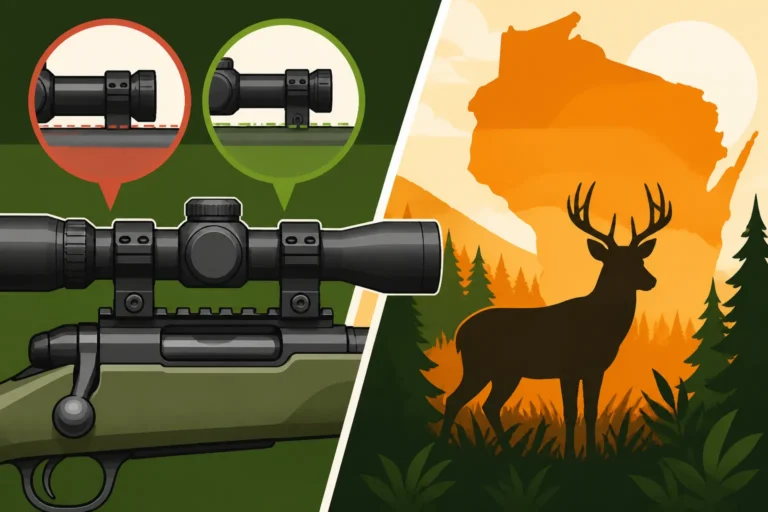
Your equipment needs to be tailored for the conditions. For rifles, prioritize scopes with good low-light gathering capabilities and a wide field of view at lower magnifications. You rarely need 9x or 12x power in dense woods; often 3-5x is more than enough and allows for quicker target acquisition. Rifle Scope Magnification for Wisconsin Deer often leans towards lower powers for precisely this reason. For bows, a multi-pin sight is excellent, but make sure your pins are set for realistic timber distances, not just wide-open fields.
When sighting in, don't just shoot at 100 yards. Practice at 20, 40, 60, and maybe 80 yards for a rifle, and 20, 30, and 40 for a bow. Practice shooting off-hand, kneeling, and from a simulated stand height. Knowing your exact point of impact at various close ranges will instill immense confidence when a deer appears close but requires a precise hold. Understanding how your arrow or bullet performs at these shorter, obstructed distances is invaluable.
Patience and Shot Selection
Perhaps the hardest strategy to master is patience. In the heat of the moment, with adrenaline coursing, it's incredibly tempting to take the first available shot. But in thick timber, that first shot is often not the best one. Be prepared to wait, to let the deer take a few more steps, to angle differently, or to clear that crucial branch. If you've done your scouting right, and your stand is well-placed, there's a good chance the deer will eventually offer a better shot.
Always, always confirm your shot lane. Before raising your weapon, quickly scan the path from your barrel or arrow rest to the deer's vitals. Look for any small twigs or branches that could deflect your shot. If there's any doubt, pass. A missed opportunity stings, but a wounded animal that escapes is a far worse outcome. Remember, the goal is a clean, ethical harvest, not just pulling the trigger.
Timber Types and Their Impact on Range
Wisconsin's landscape is incredibly varied, and the type of timber you're hunting in will significantly influence what constitutes a practical shooting range. Each habitat presents its own unique challenges and opportunities.
Northern Forests: Dense Cover and Limited Sightlines
The vast northern forests, including areas like the Chequamegon-Nicolet National Forest and numerous county forests, are often characterized by dense stands of pines, spruces, balsam fir, and mixed hardwoods. These areas can be incredibly thick, with visibility often limited to 30-50 yards in many spots. When Hunting the Wisconsin Northern Forest for Deer, expect short-range encounters.
In these environments, practical rifle ranges often drop to 75-100 yards, and bowhunting shots rarely extend beyond 30-40 yards. The dense canopy and thick undergrowth make spotting deer at a distance nearly impossible, and clear shooting lanes are precious commodities. Hunters here often focus on still-hunting or carefully selected stand sites along subtle changes in cover, logging roads, or small clearings. Tactics like Still-Hunting Wisconsin Cedar Swamps emphasize silent movement and quick reaction times for very close-range shots.
Driftless Area: Steep Terrain and Pocketed Timber
The unique unglaciated terrain of Wisconsin's Driftless Area, with its steep coulees, ridge tops, and hardwood forests, offers a different kind of challenge. While some areas can be relatively open on the ridge tops, the coulee bottoms and side hills are often choked with brush, cedars, and dense timber. Driftless Area Deer Hunting in Wisconsin means dealing with vertical changes and hidden pockets.
Here, a practical range might be 150-200 yards across a coulee if you're on a high ridge and the deer is on an opposing hillside with a clear view. However, if you're down in a coulee bottom, or hunting a steep, brushy hillside, your practical range could quickly shrink to 50-75 yards. Knowing your Wind and Thermals in a Coulee is also critical, as swirling air can make scent control a nightmare, forcing deer to present at unexpected ranges. Scouting for natural openings and using topography to your advantage, such as Reading a Ridge Point for Deer Movement, becomes paramount.
Farmland Edges and Aspen Clearcuts: Mixed Opportunities
In the agricultural areas of central and southern Wisconsin, particularly where farm fields meet woodlots, or in regions with active timber management creating aspen clearcuts, you'll find a blend of short and medium-range opportunities. Hunting Wisconsin Farmland Deer often means hunting edges.
Along field edges, you might have clear shots of 100-200 yards into an open field, but the moment a deer steps into the adjacent timber, your practical range can plummet to 50-75 yards. Clear cuts, especially those 5-15 years old, offer incredibly dense cover for deer but also create thickets that limit visibility. Hunting Wisconsin Clearcuts and Aspen Cuts means shots are often close and fast, as deer tend to move quickly through these areas. While a longer shot might be possible across a larger clearcut opening, most engagement will be inside of 75 yards. Understanding these transitions and setting up accordingly is key to success.
Here's a quick reference table to help visualize practical range expectations:
| Habitat Type | Typical Visibility | Typical Rifle Range (Yards) | Typical Bow/Crossbow Range (Yards) | Key Challenges |
|---|---|---|---|---|
| Northern Forests (Dense Conifer) | 30-50 yards | 75-100 | 20-35 | Extreme density, thick undergrowth, low light |
| Driftless Area (Hardwood/Coulee) | 50-150 yards (varied) | 100-200 (across coulees); 50-75 (in bottoms) | 25-50 | Steep angles, hidden pockets, swirling thermals |
| Farmland Edges/Woodlots | 50-200+ yards | 75-150 (into woods); 150-250+ (fields) | 30-60 | Edge cover, transition zones, brief windows |
| Aspen Clearcuts (5-15 years old) | 20-70 yards | 50-100 | 20-40 | Very thick cover, fast-moving deer, limited lanes |
Regardless of the timber you find yourself in, remember that your personal practical range is a dynamic assessment. It's about combining your skill, your equipment's capabilities, and the specific environmental conditions to make a confident, ethical shot. The woods of Wisconsin are beautiful and rewarding, but they demand respect and a realistic understanding of what's possible.
Disclaimer
This article is for general informational purposes only and does not constitute professional advice. Laws, prices and regulations vary by location and change over time. Consult a qualified professional for guidance on your specific situation.