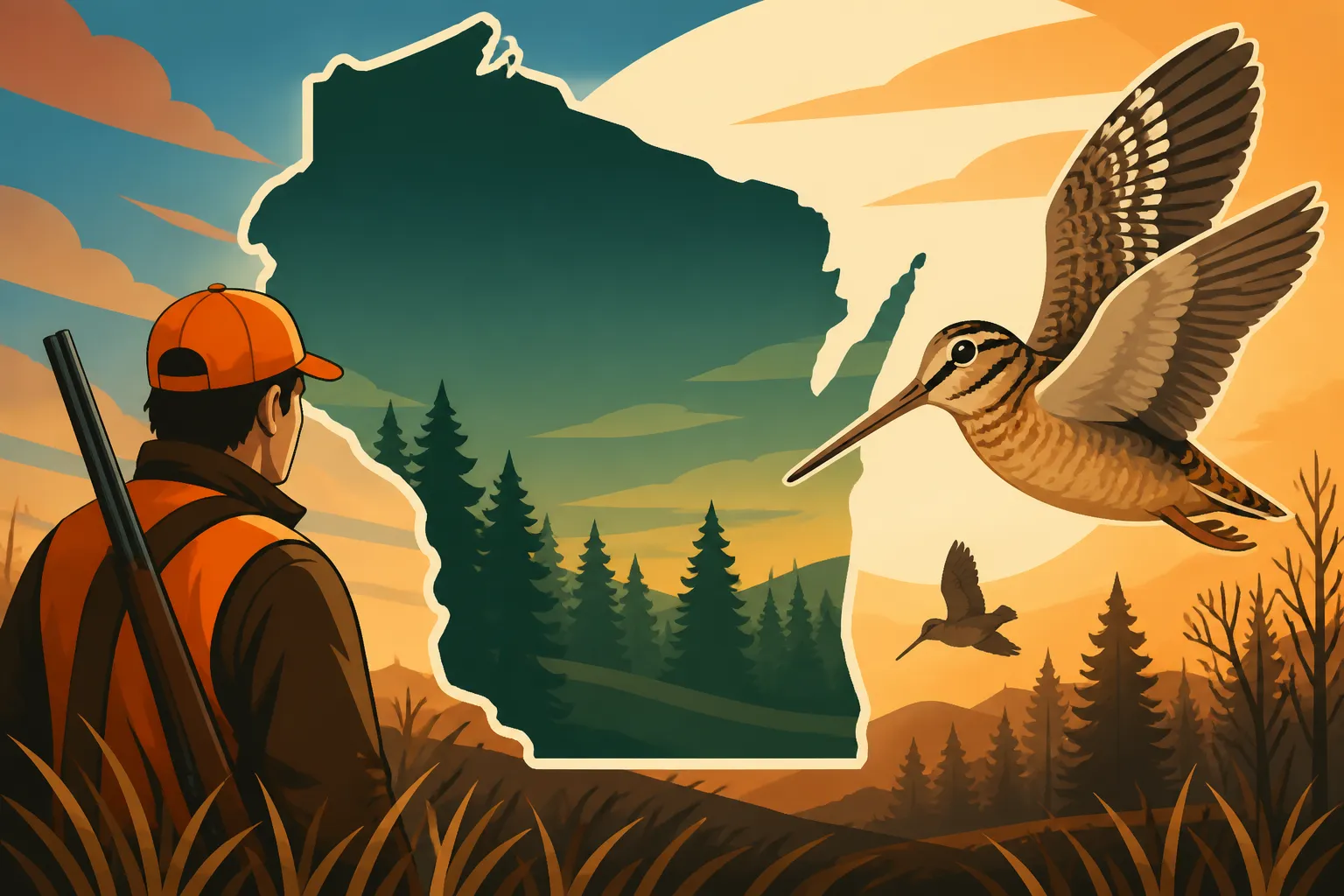
Wisconsin’s Place on the Woodcock Flight
For many Wisconsin upland hunters, the American woodcock, often affectionately called the "timberdoodle," remains a bit of a mystery. We're often so focused on ruffed grouse or pheasants that these little migratory wonders can pass through our covers almost unnoticed. But understanding Wisconsin's crucial position on their migratory flight path can open up incredible hunting opportunities and a deeper appreciation for this unique bird.
Understanding the American Woodcock's Migration
The American woodcock's journey is one of the continent's most fascinating avian migrations. These small, secretive shorebirds, despite living in forested uplands, undertake impressive annual journeys between their breeding grounds in the northern United States and Canada, and their wintering havens in the southern U.S.
The Grand Migration Pathway
Woodcock primarily use the Mississippi Flyway, a broad migratory corridor that funnels birds from vast breeding ranges through the central United States. Wisconsin, nestled firmly within this flyway, acts as a critical pathway and stopover point. Unlike waterfowl that often travel along major river systems or coastlines, woodcock navigate through forested and brushy landscapes, relying on familiar habitat types as they travel. This means that while a duck hunter might watch the skies, a woodcock hunter needs to be walking the dense, young coverts on the ground. The sheer volume of birds that can pass through Wisconsin during the peak migration can be astounding, offering hunters fleeting but memorable opportunities.
Key Drivers of Woodcock Movement
The impetus behind the woodcock's migration is a delicate balance of environmental cues. Day length, naturally, signals the approach of colder weather and shorter days, prompting an initial restlessness. However, the most significant trigger for large-scale movements, especially in the fall, is cold fronts. When frigid air pushes down from Canada, freezing the ground and making their primary food source—earthworms—inaccessible, woodcock are forced to move. A hard frost can empty a covert of birds overnight, only to be refilled a day later by new arrivals from further north, pushed by the same conditions. Hunters who pay close attention to the weather maps and understand the timing of these shifts often find themselves in the right place at the right time. For more on this, check out our guide on When Woodcock Migrate Through Wisconsin.
Preferred Breeding and Wintering Grounds
Wisconsin isn't just a pit stop for woodcock; it's a vital part of their breeding range. Our state, particularly the northern and central regions, provides the perfect mosaic of young forests, alder thickets, and moist woodlands essential for nesting and raising broods. Hens require dense, young cover for nesting and brooding, typically within 100 feet of a more open area for foraging. After a successful breeding season, these birds will eventually make their way south, often to states like Louisiana, Mississippi, and parts of the Carolinas, where the ground remains soft enough for them to probe for worms throughout the winter months. This annual cycle highlights the importance of preserving diverse habitats across their entire range.
Wisconsin's Vital Role as a Migratory Hub
Wisconsin's diverse landscape offers an exceptional range of habitats that make it an indispensable corridor and stopover for American woodcock. From its dense northern forests to its extensive river bottoms, the state is perfectly positioned to intercept birds moving south.
The Badger State's Unique Habitat Offerings
Wisconsin's success as a woodcock haven stems from its abundance of early successional forest and wetland edge habitats. These birds aren't fans of mature, open timber. Instead, they thrive in young, regenerating aspen and birch stands, often found near alder thickets, willow clumps, and other dense, shrubby growth. The key is moist, loamy soil where earthworms, their primary food, can be found in abundance. These specific habitat types are often created through timber harvests, prescribed burns, or natural disturbances, resulting in a mosaic of dense cover and moist feeding grounds. Hunters often discover prime woodcock habitat in areas that might seem too thick or messy for other upland game. For a deeper dive into finding these spots, explore Finding Woodcock in Alder Runs.
Northern Wisconsin's Importance for Woodcock
The vast tracts of public and private forest lands in northern Wisconsin are absolutely critical for woodcock. Areas within the Chequamegon-Nicolet National Forest and numerous county forests like Bayfield, Sawyer, and Price counties offer expansive young forest habitat. These northern reaches serve as significant breeding grounds throughout the summer, producing a strong local population. As fall approaches, these areas also become important staging grounds for birds migrating from further north in Canada. Hunters here often experience a "double dip": first, hunting resident birds, then a fresh influx of migratory woodcock. The combination of dense cover, moist soils, and relatively low hunting pressure in some remote corners makes northern Wisconsin a hotspot for those seeking the timberdoodle.
Southern Wisconsin as a Migration Corridor
While the northern parts of the state might hold more resident birds, central and southern Wisconsin play an equally vital role as a migration corridor. As birds move south, they follow river systems like the Wisconsin River and its tributaries, utilizing the rich, moist bottomland forests and floodplain edges. State Wildlife Areas in these regions, often managed for a variety of game, provide invaluable stopover habitat. Places like the Mead Wildlife Area, Navarino Wildlife Area, or even smaller, unheralded tracts along agricultural edges can hold significant numbers of woodcock during the migratory push. These southern areas might not hold birds for extended periods, but during a strong cold front, they can be absolutely loaded, offering a different kind of fast-paced hunting experience. Keeping an eye on weather patterns and understanding the movement of birds through these corridors is key to success.
Timing the Wisconsin Woodcock Flight for Hunters
Successfully hunting woodcock in Wisconsin is often less about finding a bird and more about timing your hunt with the migratory patterns. These birds are here today, gone tomorrow, making timing absolutely everything.
Early Season Opportunities September/October
When Wisconsin's woodcock season opens, typically in mid-September, hunters have the chance to pursue "resident" birds—those that were hatched and raised within the state. These birds are often found in familiar local coverts, still benefiting from the warm, soft soil conditions. The early season can be incredibly rewarding, with milder weather making for more comfortable walks and less dense foliage to navigate. However, it's also a time when birds are more dispersed.
Hunters should focus on those classic woodcock spots: young aspen stands, alder runs along streams, and dogwood thickets, especially those with moist, worm-rich soil. At this time of year, many hunters are still dialing in their deer hunting strategies or scouting for grouse, making woodcock less pressured. Using mapping tools, such as those found on GoHunt, can be incredibly beneficial for identifying suitable early-season cover. You can scout remotely, looking for areas with the right mix of young timber, water features, and public access. Our guide on Wisconsin Woodcock Season Opens provides specific dates and regulations to help plan these early excursions.
The Peak Migration Window Mid-October
This is the golden window for woodcock hunters in Wisconsin. Typically, from mid-October through the end of the month, the state experiences the "big push" of migratory birds. This influx is almost always triggered by strong cold fronts from the north, which freeze the ground in Canada and northern Minnesota, forcing a massive southward movement. Suddenly, coverts that were empty just days before can be absolutely teeming with woodcock. The key is to be ready to hunt as soon as these fronts hit.
Hunters should look for consistent southwest winds preceding a strong cold front, followed by calm, clear days just after the front passes. These are prime conditions for new birds to drop into Wisconsin coverts. The migration doesn't happen all at once; it's a series of pushes. If you hunt a covert and find it empty one week, don't dismiss it – a fresh wave of birds might arrive a few days later. This is also a fantastic time for Hunting Grouse and Woodcock Together, as many of the same cover types are ideal for both species.
Late Season Challenges and Rewards Late October/November
As November rolls in, woodcock hunting in Wisconsin becomes more challenging, but it can also offer unique rewards. By this point, many birds have moved further south, and those that remain are often concentrated in specific areas as frost hardens the ground in many places. The colder weather, potentially with early snowfalls, means woodcock will seek out coverts with persistent soft ground, often found along spring-fed creeks, seepages, or south-facing slopes that thaw during the day.
While the numbers might be lower than the peak migration, the birds you do find are often grouped together. The bare trees also make for easier shooting, though the thick undergrowth remains challenging. Success in late season often comes down to knowing specific micro-habitats that retain moisture and offer protection. It's a grind, but finding a late-season covert packed with timberdoodles after a long, cold walk is an incredibly satisfying experience.
Here's a quick look at the typical woodcock migratory timing in Wisconsin:
| Migration Phase | Typical Dates | Key Weather Triggers | Bird Behavior/Hunting Notes |
|---|---|---|---|
| Early Season | Mid-September – Early October | Mild, stable temperatures. | Resident birds, often dispersed. Easier walking, less dense foliage. Focus on local habitat. |
| Peak Migration | Mid-October – Late October | Strong cold fronts, freezing temperatures up north. | Major influx of northern birds. Coverts can be "loaded." Prime hunting window, fast-paced action. |
| Late Season | Late October – Mid-November | Consistent cold, hard freezes, early snow. | Fewer birds, concentrated in specific, soft-ground micro-habitats. Challenging but rewarding. |
Habitat Management and Conservation Efforts
The American woodcock is a testament to the importance of active habitat management. Unlike species that thrive in mature forests, woodcock depend almost entirely on early successional habitats, which are increasingly rare in many parts of the country.
The Critical Need for Young Forest Habitat
Woodcock are truly "young forest" birds. They rely on dense, regenerating forests that are typically 1 to 20 years old. This type of habitat provides the dense overhead cover needed for nesting and protection from predators, while also offering the open understory for easy movement and foraging for earthworms. Without active management, many forests naturally mature, transitioning out of this critical early successional stage. This is why practices like clear-cutting, selective timber harvests, and prescribed burns, when done sustainably, are not just about timber production; they are vital conservation tools for woodcock and other species like ruffed grouse. Understanding the lifespan of these young forest stages is critical, as detailed in our discussion on How Old a Cut Should Be for Grouse, which applies equally well to finding prime woodcock habitat. The decline of this specific habitat type is the single greatest threat to woodcock populations.
Partners in Conservation
Many dedicated organizations work tirelessly to ensure the future of woodcock and their crucial habitats in Wisconsin. Groups like the Ruffed Grouse Society (RGS) and the American Woodcock Society (AWS) are at the forefront, partnering with landowners, foresters, and state agencies like the Wisconsin Department of Natural Resources (DNR). These partnerships lead to on-the-ground projects, like creating "woodcock patches" – small, strategically managed clearcuts designed specifically to provide ideal woodcock habitat.
The Wisconsin DNR also plays a significant role in managing public lands, including State Forests and Wildlife Areas, with an eye toward early successional forest management. Their long-term forest management plans often incorporate timber harvests that benefit woodcock, grouse, and a host of other wildlife. These collaborative efforts are essential to reverse habitat loss and provide sustainable hunting opportunities for future generations.
Hunter's Role in Supporting Woodcock
As hunters, our commitment goes beyond just pursuing game; it extends to ensuring the health and abundance of the species we cherish. Every hunting license and federal duck stamp purchased, and every firearm and ammunition sale, contributes directly to conservation through the Pittman-Robertson Act. This funding is critical for habitat restoration, land acquisition, and wildlife research that directly benefits woodcock.
Beyond financial contributions, hunters can be advocates for sound forest management. Understanding the ecological benefits of timber harvest and supporting policies that promote young forest creation is crucial. Additionally, many hunters actively engage in citizen science, participating in programs like the Wisconsin Woodcock Singing Ground Surveys, which help biologists monitor populations. Using tools like GoHunt can further empower hunters by providing detailed land management information, allowing them to locate public lands that are actively managed for these species and thus support those conservation efforts through their presence and participation. This direct engagement ensures that our passion for hunting translates into tangible conservation outcomes for the American woodcock.
Hunting Strategies for Wisconsin Woodcock
Chasing woodcock through the thick cover of Wisconsin is a unique and rewarding challenge. These birds are quick, often flushing silently before rocketing through the branches, making for exciting, albeit sometimes frustrating, hunting.
Locating Productive Cover
Finding woodcock is all about habitat. Forget the open woods; you're looking for dense, brushy areas. Focus on young aspen stands, typically less than 20 years old, especially those near water sources like creeks or swamps. Alder thickets, with their interwoven branches and moist ground, are prime woodcock real estate. Look for areas with moist, dark soil, indicating a healthy earthworm population. Woodcock sign, or "splash," their distinctive white droppings, are a dead giveaway. You'll often find small holes in the ground where they've probed for worms. These signs confirm you're in the right kind of cover.
Leveraging technology can significantly improve your scouting efficiency. Modern mapping applications, including the ones offered by GoHunt, allow you to analyze satellite imagery and public land maps from home. You can identify potential young forest cuts, areas with dense thickets, and proximity to water, all factors critical for woodcock. This kind of digital scouting before you even step foot in the woods can save hours of aimless walking and help you pinpoint high-potential areas, even on unfamiliar public land. Remember, Reading Aerial Photos for Coulee Deer applies to woodcock as well, albeit with a focus on different habitat characteristics.
Working with a Bird Dog
For many woodcock hunters, a good bird dog is an indispensable partner. Whether it's a pointing dog like a German Shorthaired Pointer or an English Setter, or a flushing dog like a Springer Spaniel or Labrador Retriever, a dog's nose and ability to penetrate thick cover vastly increases your chances of finding birds. Woodcock hold tight, often allowing a pointing dog to lock up solidly, giving the hunter time to approach for a shot. Flushing dogs, on the other hand, systematically work cover, ensuring no bird is overlooked.
Training is key, as woodcock cover can be extremely dense and challenging for both dog and handler. Your dog needs to be conditioned to work in thick brush and trained to retrieve birds from tangles. For insights into preparing your canine companion, consider our article on Bird Dog Gear for Wisconsin Cover. A well-trained dog transforms woodcock hunting from a grueling walk into a highly efficient and enjoyable pursuit, making those otherwise impossible flushes a reality.
Still-Hunting and Flushing Tactics
Even without a dog, successful woodcock hunting is absolutely possible, though it requires a different approach. This often involves "still-hunting" or slowly moving through prime cover, pausing frequently. Woodcock are masters of camouflage, and they'll often let you walk right past them. By pausing every 10-20 yards, you might cause a nervous bird to flush, or you might spot that tell-tale "splash" on the ground. When walking, move slowly and deliberately, paying close attention to the ground in front of you and the cover around you.
When a woodcock flushes, it's usually a chaotic, explosive event in incredibly thick cover. Your shotgun needs to be shouldered quickly, and your shots need to be instinctive. A light, fast-swinging shotgun, typically a 20-gauge or 28-gauge with an open choke (improved cylinder or skeet), loaded with small shot (7 1/2 or 8), is ideal. Focus on getting a clean shot through the branches, rather than trying to track a bird for too long. For those without dogs, these tactics can be similar to Flushing Grouse Without a Dog, where patience and knowing where to look are paramount.
Disclaimer
Please remember that hunting regulations, season dates, and public land access rules can change. Always consult the latest Wisconsin Department of Natural Resources (DNR) hunting regulations pamphlet or their official website before heading into the field. This guide is for informational purposes only and does not replace official regulations.