How Turkeys Were Restored to Wisconsin
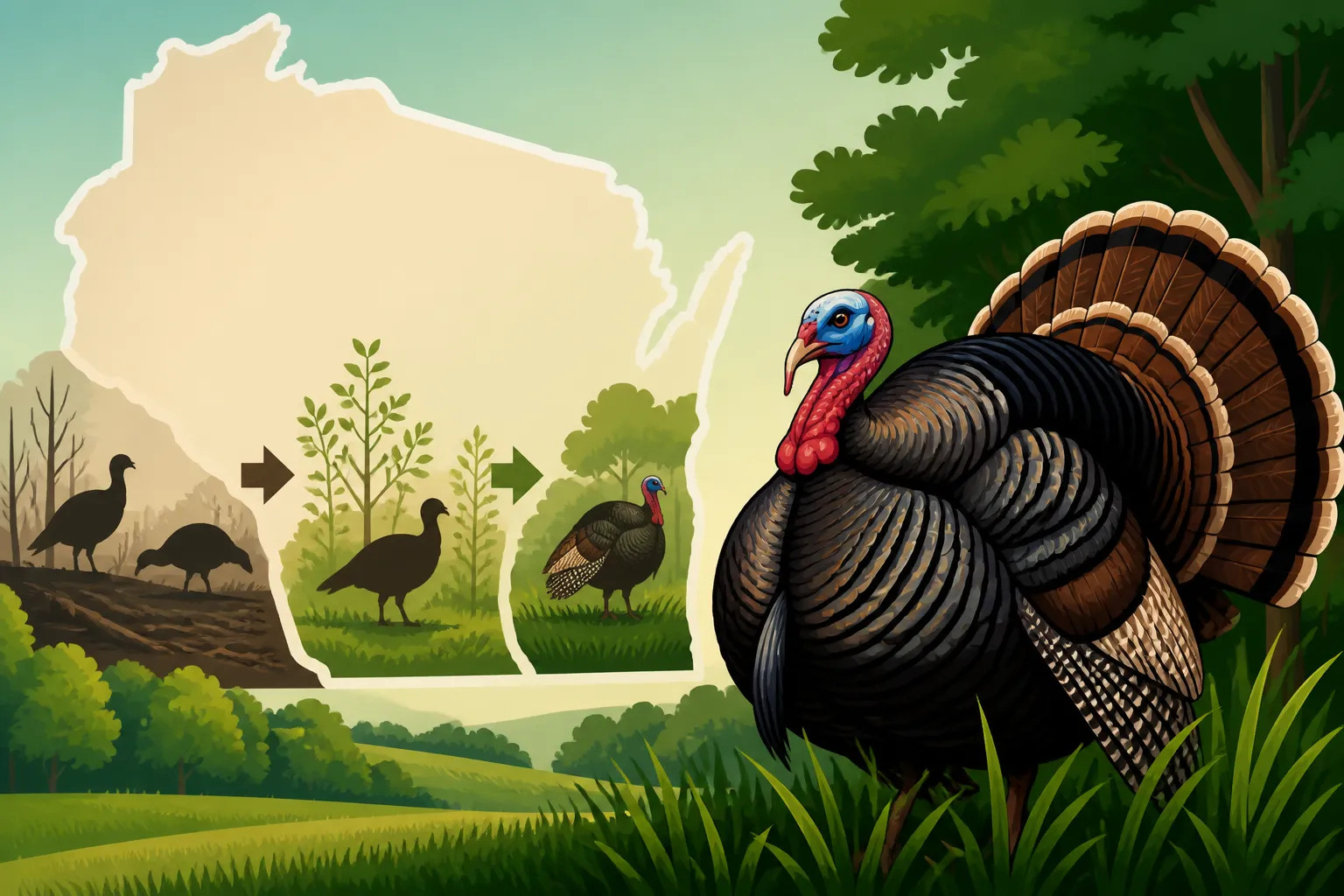
Many hunters today take Wisconsin's thriving wild turkey population for granted, enjoying the challenge and reward of pursuing these magnificent birds across nearly every county. Yet, for a significant part of the 20th century, these iconic game birds were practically non-existent in the state, a disheartening loss for both wildlife enthusiasts and the rich tapestry of Wisconsin's ecosystems. This guide will walk you through the incredible, multi-decade journey of how wild turkeys were brought back from the brink, detailing the strategic conservation efforts that transformed a barren landscape into the robust turkey hunting paradise we know today.
The Early Decline and Disappearance of Wild Turkeys in Wisconsin
It's hard to imagine Wisconsin without the booming gobble echoing through the spring woods, or the sight of a flock scratching through fallen leaves in autumn. But for many decades, that was the reality. The story of the wild turkey in Wisconsin is a classic tale of initial abundance, rapid decline, and eventual, hard-won restoration. To truly appreciate what we have today, we need to understand how close we came to losing them forever.
Pre-Settlement Abundance and Habitat Loss
Before European settlement dramatically altered the landscape, wild turkeys were a common sight across much of what would become Wisconsin. They thrived in the vast expanses of mature hardwood forests, particularly in the southern and western parts of the state. These forests, characterized by towering oaks, hickories, and other mast-producing trees, provided abundant food in the form of acorns and nuts, as well as crucial roosting sites. The birds moved freely between these timbered areas and more open prairies and savannas, taking advantage of diverse food sources and nesting cover.
However, as settlers pushed westward, bringing with them a relentless drive for agriculture and timber, the turkey's primary habitat began to vanish at an alarming rate. Massive deforestation, driven by the need for farmland and lumber to build a growing nation, fragmented and ultimately obliterated much of the contiguous hardwood forest. Without the expansive, unbroken tracts of mature timber they relied on, turkeys lost their essential roosting areas, their primary food sources, and their safe havens from predators. The landscape was being remade, and the wild turkey simply couldn't adapt quickly enough to such a drastic transformation.
The changes were profound. Areas that once provided rich, diverse habitat became monoculture farmlands or clear-cut timber tracts, leaving little for turkeys to survive on. This habitat destruction wasn't just about trees; it also impacted the understory vegetation and insect populations that are so vital for turkey poults to grow. The very foundation of their existence was eroded, setting the stage for their eventual disappearance.
Unregulated Hunting and Market Pressures
Compounding the devastating effects of habitat loss was the relentless pressure of unregulated hunting. In the early days of settlement, wildlife was often seen as an inexhaustible resource, and there were virtually no laws governing bag limits, seasons, or hunting methods. Wild turkeys, being large and relatively easy to locate, became prime targets for both subsistence hunters putting food on their tables and market hunters supplying growing urban populations.
Market hunting, in particular, was incredibly destructive. Turkeys were shot and trapped by the dozens, their meat sold to restaurants and their feathers used for decorative purposes. The demand seemed endless, and the commercial exploitation of wildlife combined with the ongoing habitat destruction created a lethal one-two punch that the wild turkey population simply could not withstand. There was no concept of sustainable harvest, no understanding of population dynamics, and certainly no state agency to manage the resource.
This unchecked exploitation meant that even in areas where some habitat remained, the turkey populations were rapidly depleted. Breeding stock was decimated, and the ability for the birds to naturally rebound was severely compromised. It was a stark reminder of what happens when human demand and lack of foresight outweigh ecological understanding and conservation ethics.
The "Gone" Decades
By the early 1900s, the wild turkey was functionally extinct in Wisconsin. Imagine a state renowned for its outdoor heritage, completely devoid of one of North America's most iconic game birds. For generations of Wisconsinites, the gobble of a wild turkey was a sound unheard, something relegated to history books or stories from other states. Many believed they were forever lost to the state, a tragic symbol of a bygone era when wildlife was abundant and the land seemingly boundless.
This period of absence left a significant void in Wisconsin's ecosystems and its outdoor culture. While other game species, like white-tailed deer, managed to cling on in reduced numbers, the turkey simply vanished. Early conservation efforts often focused on other species or broader habitat protection, with the prospect of bringing back a bird as complex as the wild turkey seeming insurmountable. The sheer scale of the challenge, coupled with a lack of proven reintroduction techniques, meant that the "gone decades" dragged on, leaving many to resign themselves to a future without wild turkeys in the Badger State.
This void served as a powerful, albeit silent, lesson for future conservationists. It underscored the fragile balance of ecosystems and the profound impact human activity can have. The memory of the vanished turkey would later fuel the determination to bring them back, demonstrating that with enough effort, collaboration, and scientific understanding, even seemingly impossible conservation goals could be achieved.
The Pioneering Efforts of Restoration: A Collaborative Journey
Bringing back a vanished species is no small feat. It requires vision, dedicated effort, and a willingness to learn from past mistakes. The successful restoration of wild turkeys in Wisconsin stands as a testament to what can be achieved when scientific understanding meets persistent conservation action and inter-state cooperation. It was a journey marked by early failures, crucial lessons, and the forging of powerful partnerships.
Early (Failed) Attempts at Reintroduction
The idea of bringing turkeys back wasn't entirely new, even in the mid-20th century. However, early attempts at reintroduction in Wisconsin, much like in other states, were largely unsuccessful. The prevailing thought at the time was to raise turkeys in captivity, release them into suitable habitat, and hope for the best. The birds used were often hybrid strains, mixes of wild and domestic stock, or simply full-blown pen-raised turkeys that had never learned to survive in the wild.
These pen-raised birds lacked the essential instincts for survival that are critical for wild turkeys. They didn't know how to evade predators, forage efficiently for natural foods, or cope with harsh weather conditions. They were also highly susceptible to diseases common in domesticated poultry. As a result, most of these released birds quickly succumbed to predation, starvation, or illness, leading to frustratingly low survival rates and a significant waste of resources. The Wisconsin DNR learned a crucial lesson: simply releasing any turkey wouldn't work; it had to be wild-trapped stock, genetically pure and possessing all the innate behaviors necessary for survival.
These early failures, though discouraging, provided invaluable data. They proved conclusively that "soft releases" of farm-raised birds were a dead end and underscored the absolute necessity of using genuinely wild, vigorous turkeys that had already mastered the art of survival in challenging environments. This realization became the cornerstone of the successful restoration strategy that would eventually follow.
Learning from Other States
While Wisconsin grappled with its turkey void, other states, particularly Missouri, were making significant strides in wild turkey restoration. Missouri had developed a highly effective "trap-and-transfer" program, pioneering techniques for safely capturing wild turkeys and relocating them to new habitats. Their success demonstrated that it was possible to transplant healthy, thriving wild populations to areas where they had been extirpated.
Wisconsin wildlife biologists closely studied these successful programs, realizing that the key was not just habitat, but the source of the birds. Wild-trapped turkeys possessed the genetic makeup, the wariness, and the survival skills that pen-raised birds utterly lacked. These were tough, intelligent birds, perfectly adapted to their environment. Learning from Missouri's experience, Wisconsin understood that building a new population required starting with a strong foundation of truly wild individuals.
This inter-state collaboration was vital. It wasn't just about borrowing techniques; it was about a shared commitment to conservation. States that had managed to retain or rebuild their turkey populations were willing to share their precious wild birds and their hard-won expertise, recognizing that wildlife management transcends state lines. This spirit of cooperation laid the groundwork for Wisconsin's own ambitious restoration plan, preventing them from repeating the mistakes of the past.
Building the Foundation: Research and Funding
With a clear understanding of what not to do, and a successful model to emulate, the Wisconsin DNR embarked on a more scientifically rigorous approach. This involved extensive research into wild turkey biology, preferred habitats, and the specific needs for successful reproduction and survival in Wisconsin's varied landscapes. Understanding local mast crop cycles, preferred nesting cover, and predator dynamics became paramount.
Crucially, this renewed effort required significant funding. The financial backbone for much of Wisconsin's wildlife restoration, including turkeys, came from hunters themselves. Revenue generated from the sale of hunting licenses, stamps, and federal excise taxes on hunting equipment (thanks to the Pittman-Robertson Act) directly funded these critical conservation programs. This self-perpetuating funding model, where hunters pay for conservation, is a cornerstone of wildlife management in North America.
Beyond state agencies, conservation organizations played an absolutely vital role. The National Wild Turkey Federation (NWTF), founded in 1973, emerged as a powerful partner. The NWTF provided financial support, equipment for trapping and transferring birds, and critical volunteer labor for habitat improvements and monitoring efforts. Their motto, "Save the Habitat. Save the Hunt." encapsulates the synergistic relationship between conservation and hunting. This collaborative foundation of research, hunter funding, and organizational support was essential to kickstarting what would become one of Wisconsin's greatest conservation triumphs.
Translocation Strategies: Bringing Turkeys Back Home
The success of wild turkey restoration hinged on a specific, carefully executed strategy: trapping healthy, wild birds from thriving populations and moving them to suitable new habitats. This wasn't a random act; it was a highly scientific and logistical undertaking that required precision, patience, and a deep understanding of turkey behavior and biology.
The First Successful Releases (1970s)
The real breakthrough for Wisconsin came in the mid-1970s. Following the successful model established by Missouri, the Wisconsin DNR initiated its trap-and-transfer program with wild-trapped turkeys generously provided by Missouri. These weren't just any birds; they were robust, genetically pure eastern wild turkeys, fully adapted to surviving in a challenging environment.
The first release sites were carefully selected, primarily in the rugged, forested terrain of Wisconsin's southwestern Driftless Area, specifically in parts of Grant and Crawford counties. This region was chosen for several key reasons: it boasted extensive mature hardwood forests, offered a diverse topography of ridges and coulees, had milder winters with less persistent snow cover compared to northern Wisconsin, and contained numerous agricultural fields that provided crucial winter food sources. It closely mimicked the ideal turkey habitat where the Missouri birds had thrived.
The process itself was meticulous. Biologists used specialized rocket-nets or cannon-nets to capture entire flocks of wild turkeys. Once captured, the birds were quickly processed—checked for health, banded, and then carefully placed into specially designed crates for transport. Speed and minimizing stress were paramount. They were then driven to the waiting release sites in Wisconsin, often under the cloak of darkness to further reduce stress, and carefully released into their new homes. These initial releases were small, often fewer than 20 birds per site, but the hope was that these small populations would establish, grow, and become the source for future transplants within Wisconsin.
Expanding the Range Across Wisconsin
The initial releases in the Driftless Area proved remarkably successful. The wild-trapped Missouri birds not only survived but began to reproduce and expand their local populations. As these foundational flocks grew, Wisconsin was able to "grow its own" source population. This meant that the DNR could then trap turkeys from these thriving Wisconsin flocks and use them for further translocations to other suitable habitats within the state. This strategy of serial translocations was critical for expanding the turkey's range.
Over the subsequent decades, wild turkeys were gradually trapped from the burgeoning populations in the southwest and moved to other regions. This expansion included areas like the Black River Falls State Forest, the central Wisconsin plain, and eventually, even suitable pockets in the north. Each new release required careful consideration of habitat suitability, winter severity, and potential conflicts. The process was not without its challenges; adapting to different forest types, such as the mixed hardwoods and pines of central Wisconsin, or dealing with deeper, longer-lasting snow in more northern regions, tested the birds' resilience.
The program's success meant that what started as a few isolated flocks soon blossomed into a widespread distribution. By the late 1980s and 1990s, turkeys were not only re-established but were thriving in many parts of the state. This incredible expansion laid the groundwork for the robust turkey hunting opportunities that would follow, allowing hunters to eventually pursue birds in regions that hadn't seen a wild turkey in over a century. If you're looking for where the birds are densest today, a glance at Where Wisconsin Turkeys Are Densest will show you the results of these efforts.
Monitoring and Adaptation
Successful reintroduction isn't just about releasing birds; it's about continuously monitoring their progress and adapting strategies as needed. The DNR employed various methods to track the health and expansion of the turkey populations. Released birds were often fitted with radio transmitters, allowing biologists to track their movements, monitor survival rates, and identify nesting success. This data was invaluable for understanding how the turkeys were adapting to their new environments and what factors influenced their success or failure.
Biologists also relied on citizen science and hunter observations to gather valuable information. Hunters, particularly, became informal data collectors, reporting brood sightings, flock sizes, and general turkey activity, which helped paint a broader picture of population trends. This feedback loop allowed the DNR to make informed decisions about future release sites, adjust habitat management practices, and eventually, set hunting seasons and bag limits.
Ongoing genetic monitoring also played a role, ensuring that the reintroduced populations maintained healthy genetic diversity. As the turkey population stabilized and grew, the emphasis shifted from initial reintroduction to long-term sustainable management. This involved continuously assessing Wisconsin Turkey Population Trends, adjusting management zones, and refining harvest strategies to ensure the long-term health and abundance of the wild turkey in Wisconsin.
Habitat Management: Creating a Welcoming Environment
Even the hardiest wild turkeys can't survive without the right place to call home. While the trap-and-transfer program was the spark that ignited restoration, sustained habitat management was the fuel that allowed the turkey population to truly flourish and spread across Wisconsin. It’s a complex interplay of forest health, agricultural integration, and providing specific needs for different life stages of the birds.
Forest Management for Turkeys
Wild turkeys are intrinsically tied to forests, particularly mature hardwoods. These areas provide their primary roosting sites – tall, sturdy trees that offer safety from nocturnal predators. Oaks and hickories are especially critical because they produce mast (acorns and nuts), which is a primary food source, especially in fall and winter. Effective forest management for turkeys involves promoting the growth of these mast-producing trees and ensuring a diverse age structure within the timber stand.
This might mean selective timber harvesting rather than clear-cutting, which removes all trees. Selective cuts can open up the forest canopy, allowing sunlight to reach the forest floor and stimulate the growth of new understory vegetation and other food plants. It can also encourage the regeneration of oak and hickory trees, ensuring a future food supply. The goal is a mosaic of different forest stages: open, mature stands for foraging and roosting, dense younger stands for cover, and brushy edges for nesting.
Prescribed burns are another valuable tool, particularly in certain forest types. Controlled fires can reduce dense undergrowth, clear out competing vegetation, and stimulate the growth of beneficial grasses and forbs that provide food and insect prey. This type of active management ensures that the forest isn't just a collection of trees, but a dynamic, productive ecosystem that meets the varied needs of a turkey flock throughout the year.
Farmland Integration and Food Sources
While forests are crucial, wild turkeys in Wisconsin also thrive in areas that blend forest cover with agricultural lands. Modern farming practices, particularly fields of corn and soybeans, can provide abundant supplementary food sources, especially during harsh winters. Waste grain left in fields after harvest becomes a critical survival resource when natural foods are scarce or buried under snow.
The challenge is to find the right balance. Turkeys need access to open fields for foraging, but they also require nearby forest cover for roosting, nesting, and escape. This creates a reliance on "edge habitat" – the transition zone between woods and fields. Wildlife managers often work to maintain or create these diverse edge habitats, encouraging brushy fencerows, hedgerows, and small woodlots adjacent to agricultural fields.
For private landowners, managing small food plots with crops like corn, clover, or brassicas can further enhance winter food availability, especially in areas where baiting is prohibited. These supplemental food sources, strategically placed near dense cover, can significantly improve winter survival rates, particularly for young birds. The ability of turkeys to utilize both natural forest foods and agricultural handouts has been a key factor in their successful spread across Wisconsin's varied landscape.
Protecting Nesting and Roosting Sites
A successful turkey population depends on a healthy cycle of reproduction. This means providing hens with safe, secluded nesting sites where they can lay and incubate their eggs, and secure brooding cover for their poults. Hens typically prefer dense, low-growing vegetation, such as thickets, tall grasses, or brush piles, which offer concealment from predators like coyotes, raccoons, and skunks. These sites often need to be relatively close to water sources and areas rich in insects, which are vital protein for growing poults. Understanding factors like Nest Predation and Turkey Hatches is key to ensuring higher survival rates.
Roosting sites are equally critical, offering security for the entire flock, especially at night. Turkeys seek out tall, large-limbed trees, often near the tops of ridges or along river bottoms, providing an elevated vantage point and clear flight paths in case of danger. These sites are used year after year, so protecting them from disturbance or removal is paramount.
Conservation efforts focus on minimizing disturbance in these critical areas, especially during the spring nesting and brooding seasons. This might involve carefully timed logging operations or agricultural activities. Landowners and public land managers play a crucial role in identifying and protecting these essential components of turkey habitat, ensuring that the birds have both the security to reproduce and the safety to rest.
The Role of Hunters and Conservation Organizations
The story of Wisconsin's wild turkey restoration is a powerful example of successful conservation, and it’s a story where hunters and dedicated organizations are undeniably the heroes. Their passion, financial contributions, and boots-on-the-ground efforts were, and continue to be, absolutely essential to the turkey’s comeback and ongoing management.
Funding through Licenses and Stamps
It's a fact often overlooked by those outside the hunting community: hunters are the primary funders of wildlife conservation in the United States. In Wisconsin, every time a hunter purchases a license or a turkey authorization, a portion of that money goes directly towards wildlife management, habitat restoration, and research. This system, often called the "user pays, user benefits" model, is incredibly effective. For detailed costs, hunters can always check Wisconsin Hunting Licences and What They Cost.
Beyond state license fees, federal funds from the Pittman-Robertson Act (formally the Federal Aid in Wildlife Restoration Act) are crucial. This act imposes an excise tax on firearms, ammunition, and archery equipment. The revenue collected is then distributed to state wildlife agencies for conservation projects, including land acquisition, habitat development, and wildlife research. This means that every time a hunter buys a new shotgun for turkey season or a box of shells, they are directly contributing to the conservation of the very animals they pursue.
This funding mechanism has provided hundreds of millions of dollars nationwide, creating a stable and dedicated source of revenue for wildlife agencies. Without this consistent financial support, the ambitious, multi-decade project of bringing back wild turkeys would simply not have been possible. It's a testament to the fact that hunters, by participating in their sport, are actively investing in the future of wildlife.
The National Wild Turkey Federation (NWTF)
No discussion of turkey restoration would be complete without highlighting the immense contributions of the National Wild Turkey Federation (NWTF). Founded in 1973, just as Wisconsin was beginning its serious reintroduction efforts, the NWTF became an indispensable partner to state agencies. Their mission is clear: the conservation of the wild turkey and the preservation of our hunting heritage.
The NWTF provides critical financial support, often directly funding trap-and-transfer operations, habitat improvement projects, and scientific research. They also contribute equipment, such as rocket nets and specialized vehicles, and organize thousands of volunteers to assist with fieldwork. Their "Save the Habitat. Save the Hunt." initiative drives efforts to restore and enhance critical turkey habitat across North America.
Local NWTF chapters in Wisconsin are incredibly active, holding fundraising banquets, organizing youth hunting events, and coordinating volunteer workdays. These grassroots efforts translate into tangible benefits for wild turkeys, from planting food plots to improving forest health. The synergy between the NWTF, the Wisconsin DNR, and individual hunters has been a powerful force in ensuring the turkey’s comeback and its continued prosperity.
Hunters as Citizen Scientists and Stewards
Beyond financial contributions, hunters actively participate as citizen scientists and dedicated stewards of the land. Their presence in the field allows them to provide valuable observations to wildlife biologists, from reporting brood sightings and flock sizes to noting changes in habitat or potential threats. This on-the-ground intelligence is incredibly useful for supplementing formal surveys and helps paint a more complete picture of the turkey population's health and distribution.
Ethical hunting practices are also a core component of conservation. Hunters adhering to regulations, respecting bag limits, and practicing fair chase all contribute to sustainable harvest and healthy populations. The very act of pursuing game instills a deep connection to the land and a sense of ownership over the wildlife resource, fostering a desire to protect and enhance it. This stewardship extends to advocating for sound wildlife policies and participating in public discussions, such as those that inform County Deer Advisory Council Recommendations, which often touch on broader habitat and wildlife issues affecting turkeys as well.
Furthermore, hunter recruitment and retention are vital for the future of conservation funding and advocacy. Programs like Wisconsin Hunter Safety and Mentored Hunting ensure that new generations are introduced to hunting responsibly, understanding its role in conservation. Hunters often spend countless hours scouting, and using tools like the Wisconsin Hunt Wild App or advanced mapping platforms like GoHunt can help them identify ideal habitat, potential roosting areas, and public land boundaries, which directly supports their role as informed stewards. This deep engagement ensures that the wild turkey, once lost, will continue to thrive under watchful eyes.
The Resurgence and Future of Wisconsin's Turkey Population
The story of the wild turkey in Wisconsin is a textbook example of successful conservation. What started as a daring experiment, an uphill battle against historical loss, has blossomed into one of the state's most celebrated wildlife triumphs. Today, the gobble is a common sound, but the journey isn't over. Ongoing management, adaptation, and continued vigilance are crucial to ensuring this success endures for generations to come.
From Non-Existent to Widespread Success
The transformation of Wisconsin's landscape from a turkey-barren state to a vibrant turkey hunting destination is nothing short of miraculous. From those initial, tentative releases in the Driftless Area in the 1970s, the population exploded. Wild turkeys, once completely absent, are now found in virtually all 72 counties of Wisconsin, adapting to a remarkable range of habitats, from the hardwood ridges of the southwest to the mixed forests and agricultural fields of the central and eastern parts of the state. Even in northern Wisconsin, where deeper snow can pose a challenge, turkeys have established a foothold, as outlined in How Turkeys Reached Northern Wisconsin.
This dramatic increase in numbers and distribution led to the establishment of regulated hunting seasons, first in the initial release zones and then gradually expanding across the state. The creation of Wisconsin Spring Turkey Zones and Periods marked a turning point, offering hunters the opportunity to pursue these magnificent birds once again. The economic impact has also been significant, boosting rural economies through hunting-related tourism, equipment sales, and guide services. The return of the wild turkey has not only enriched Wisconsin's biodiversity but also revitalized its outdoor recreation culture.
The success serves as a powerful reminder that with dedicated effort, scientific management, and public support, even species thought lost forever can make a triumphant return. It's a source of immense pride for conservationists, hunters, and all Wisconsinites who value their natural heritage.
Challenges and Ongoing Management
While the wild turkey story is largely one of success, it's not without its ongoing challenges. As populations have stabilized, management has shifted from reintroduction to maintaining healthy densities and dealing with localized issues. In some areas, high turkey densities can lead to conflicts with landowners, such as crop damage or perceived competition with other ground-nesting birds. This requires careful population monitoring and adjustments to harvest quotas to ensure ecological balance.
Habitat fragmentation due to continued development and urban sprawl remains a long-term concern. While turkeys are adaptable, large, contiguous tracts of quality habitat are always preferred, particularly for security and large-scale mast production. Wildlife managers must continuously work to protect and enhance existing habitats, often through partnerships with private landowners and careful land-use planning.
Predation by species like coyotes, bobcats, and even domestic dogs and cats can impact poult survival, especially in years with poor hatches. Disease monitoring, particularly for avian illnesses, is also a constant vigilance, requiring biologists to keep an eye on the health of the flocks. Climate change also presents an evolving challenge, potentially impacting spring weather patterns that are crucial for successful nesting and poult survival. Reading a Wisconsin Harvest Report helps track these trends and informs management decisions.
| Year | Milestone Event in Wisconsin Turkey Restoration | Key Region(s) Affected | Impact on Population |
|---|---|---|---|
| Early 1900s | Wild Turkey Extirpated (functionally extinct) | Statewide | Population: 0 |
| 1950s-1960s | Unsuccessful Pen-Raised Turkey Releases | Various, limited | Negligible |
| 1976 | First Successful Wild-Trapped Releases (from Missouri) | Southwestern Driftless Area (Grant, Crawford) | First established wild flocks |
| 1970s-1980s | Initial In-State Trap-and-Transfer Program Begins | Expansion within Driftless Area | Steady population growth |
| 1983 | First Modern Regulated Spring Turkey Season | Southwestern Zones | Controlled harvest begins |
| 1990s | Continued Statewide Translocations | Central, Western, gradually North/East | Rapid expansion across state |
| Early 2000s | Turkeys Established in nearly all 72 counties | Statewide | Widespread, stable populations |
| Present | Ongoing Habitat Management & Harvest Regulation | Statewide | Sustainable hunting opportunities |
The Future of Turkey Hunting and Conservation
The future of wild turkey conservation in Wisconsin remains bright, but it requires continued commitment. Ongoing habitat management efforts, often facilitated by local NWTF chapters and state agencies through programs like those described in Habitat Work on Wisconsin Wildlife Areas, are essential to ensure the birds have the resources they need. Protecting and enhancing public land access is also vital for ensuring that all citizens have the opportunity to experience this incredible conservation success story.
Hunter recruitment and retention are critical, not just for the tradition of hunting itself, but for the financial and advocacy support they provide to wildlife management. Engaging new hunters, particularly through programs that teach ethical hunting and conservation principles, is paramount. Modern tools like the Using the Wisconsin Hunt Wild App or private land mapping platforms such as GoHunt empower hunters to find new areas, understand habitat features, and plan their hunts more effectively, fostering a deeper connection to the land and its wildlife.
The wild turkey's return is a powerful narrative of resilience and recovery. It stands as a testament to what can be achieved when dedicated individuals, science-based management, and robust funding mechanisms align. The vibrant gobble that echoes across Wisconsin's woods today is not just a sound of spring; it's a living symbol of one of North America's greatest conservation achievements, a legacy we are all responsible for cherishing and protecting.
Disclaimer
Please note that hunting regulations, seasons, and management zones are subject to change. Always consult the official Wisconsin Department of Natural Resources (DNR) regulations and guidelines before planning any hunting activity. This information is intended for educational purposes and general guidance only.