Snowshoe Hares in Northern Wisconsin
There's a special kind of challenge and reward that comes with pursuing snowshoe hares in the quiet, snow-covered woods of Northern Wisconsin. Many hunters, accustomed to deer or grouse, might find these masters of camouflage surprisingly difficult to spot, let alone bag, amidst the dense conifers and brush. This comprehensive guide is here to unravel the mysteries of these fascinating creatures, offering insights into their world, the best places to find them, and proven strategies to help you fill your winter pot with some delicious wild game.
Understanding the Elusive Snowshoe Hare
Snowshoe hares are truly a marvel of adaptation, perfectly at home in the colder, snowier reaches of Wisconsin. They're not your typical bunny; these creatures are built for survival in harsh conditions, making them a unique and rewarding quarry for the dedicated hunter.
Life Cycle and Habitat Preferences
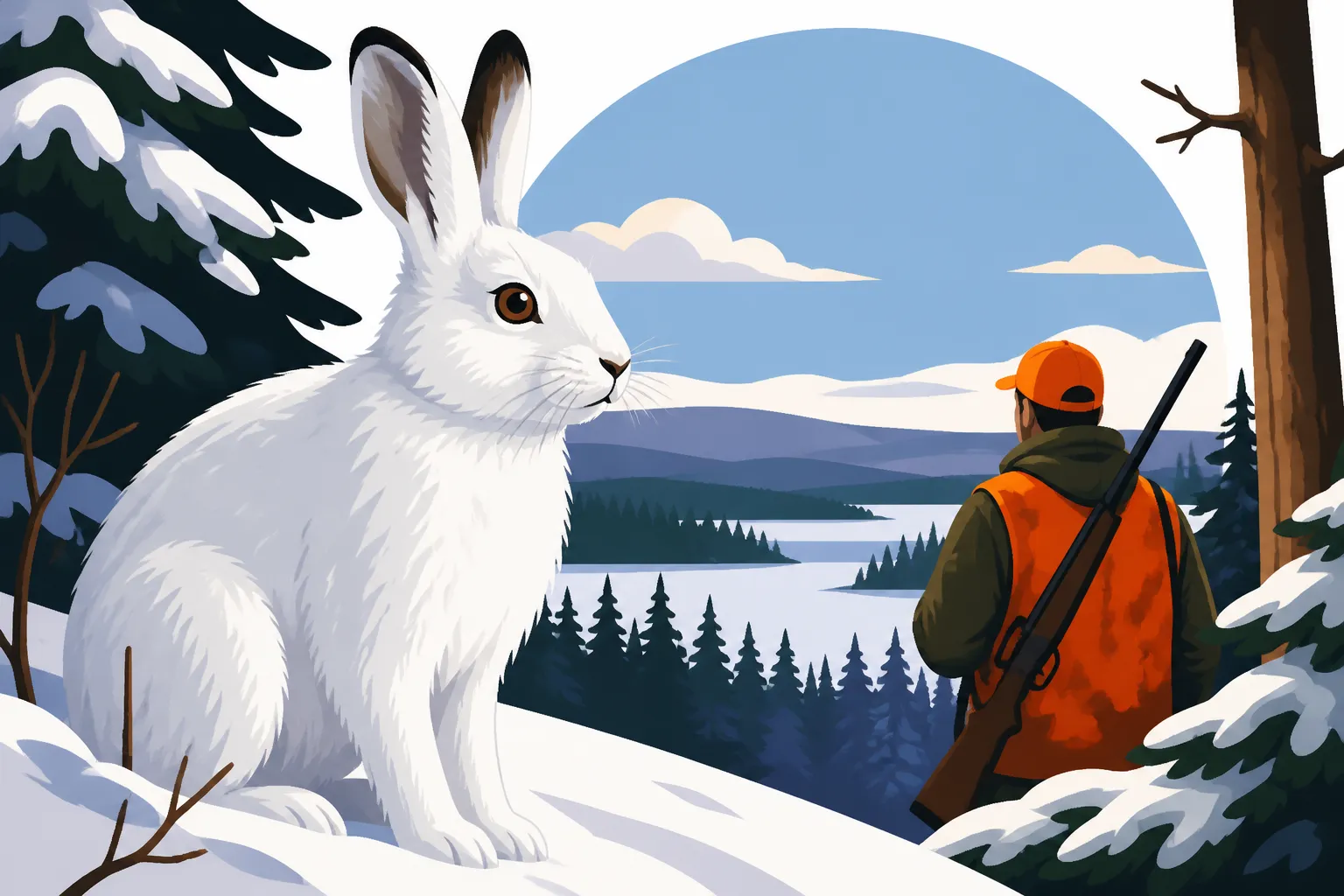
The life cycle of a snowshoe hare is closely tied to the seasons, influencing their behavior and where you'll find them. In spring and summer, they blend seamlessly with the forest floor, their brown coat providing excellent camouflage against dirt, leaves, and bark. They feast on a variety of green vegetation, clover, and forbs. As autumn deepens and the first snowflakes begin to fall, a remarkable transformation occurs: their fur gradually changes from mottled brown to brilliant white, preparing them for a winter landscape. This seasonal color change is one of their most iconic features, crucial for evading predators in a snowy environment.
Their habitat preferences are quite specific, leaning heavily towards dense, young coniferous forests, particularly stands of spruce, balsam fir, and cedar. These thick evergreen stands provide vital cover from predators like bobcats, coyotes, and various raptors, offering a canopy that intercepts snow and keeps the undergrowth accessible. You'll often find them favoring areas with a dense understory of brush, fallen logs, and slash piles from old logging operations. Cedar swamps are absolute hare magnets, offering both food and impenetrable cover. They thrive in regenerating clearcuts and young aspen cuts too, where dense new growth offers a labyrinth of protection and browse opportunities. Understanding these preferred habitats is the first step to success.
The Snowshoe Hare's Adaptations for Survival
The snowshoe hare's very name speaks to its primary adaptation: those incredibly large, well-furred hind feet. These "snowshoes" distribute their weight over a larger area, allowing them to literally float atop deep snow where other animals would sink. This gives them a significant advantage when escaping predators, enabling them to maintain speed and agility in conditions that would bog down a coyote or fox. These specialized feet are also heavily padded with fur, providing insulation against the biting cold of a Wisconsin winter.
Beyond their physical footwear, their camouflage is second to none. The transformation from brown to white is so complete that a hare sitting still in fresh snow can be virtually invisible. Even their eyes are often closed to mere slits, further reducing their profile. When startled, they exhibit explosive speed, darting through thick cover with surprising grace. They often run in a zig-zag pattern, making it incredibly difficult for a predator to get a lock on them. Their keen hearing and excellent eyesight also play a critical role, allowing them to detect threats long before they are seen. These combined adaptations are why pursuing them is such a test of a hunter's patience and keen observation skills. For more detail on this incredible natural shift, check out our piece on Why Wisconsin Hares Turn White.
Population Trends and Cycles
Like many small game species, snowshoe hare populations in Wisconsin don't remain static; they experience natural cycles of boom and bust. These cycles are often tied to predator-prey dynamics, specifically the fluctuating populations of their primary predators, such as lynx (historically), bobcats, and coyotes. When hare numbers are high, predator populations often increase in response. As predators become more numerous, they exert greater pressure on the hare population, eventually leading to a decline in hare numbers. This, in turn, can cause a drop in predator populations due to food scarcity, allowing the hare numbers to rebound, and the cycle continues.
Habitat availability also plays a crucial role in these trends. Areas with consistent regeneration of young conifer stands and dense brush provide ideal conditions for hares to flourish. Timber management practices, such as clearcutting, can initially create excellent hare habitat as the forest regrows, offering dense cover and browse. However, as these areas mature, they become less suitable, causing hare populations to shift. Hunters need to be aware of these natural fluctuations and habitat changes, as a historically productive area might be less so during a low point in the cycle or if the timber has grown too mature. Understanding these broader ecological patterns gives you a better chance of finding a good population. You can often find information about current trends by looking at reports regarding Snowshoe Hare Numbers in Wisconsin.
Where to Find Snowshoe Hares in Northern Wisconsin
Finding snowshoe hares is all about understanding their preferred haunts. They are not evenly distributed across the landscape; instead, they concentrate in very specific types of cover. Northern Wisconsin, with its vast tracts of public land and diverse forest types, offers some fantastic opportunities for hare hunting.
Identifying Prime Hare Habitat
As we touched on, hares are creatures of dense cover. When you're scouting for them, look for areas that look almost impenetrable to humans – the thicker, the better. Specifically, target dense stands of spruce, balsam fir, and white cedar. These evergreens provide year-round thermal cover and protection from aerial predators. Areas where these conifers are growing in thick, young stands, perhaps 5-15 feet tall, are particularly attractive. Think of it as a rabbit's natural fortress.
Beyond the specific tree species, look for structural elements within the habitat. Downed timber, brush piles, and thickets of alder or hazel provide additional layers of security. Hares will often create intricate tunnel systems through this dense vegetation, especially in deep snow, allowing them to move unseen. Pockets of thick cover adjacent to wetter areas, like cedar swamps or the edges of beaver ponds, are also excellent bets. The moisture often promotes the type of dense undergrowth that hares love. When you're looking at a map, identify dark green areas that denote coniferous forests, especially those near wetlands or areas that show recent logging activity, indicating regenerating growth.
Public Land Hotspots and Accessibility
Northern Wisconsin is blessed with an abundance of public hunting land, much of which contains prime snowshoe hare habitat. The Chequamegon-Nicolet National Forest, sprawling across many northern counties, is a fantastic place to start. Within its vast acreage, you'll find numerous pockets of dense conifer stands, particularly in areas near lakes and wetlands. Similarly, many Wisconsin County Forests (like those in Douglas, Bayfield, Sawyer, Price, Vilas, and Oneida counties) are managed for timber, creating a mosaic of different forest ages, including the young, dense growth that hares favor. Exploring these vast public lands often yields excellent results. For more details on these expansive hunting grounds, check out our guide on Chequamegon-Nicolet National Forest Hunting and Wisconsin County Forest Hunting.
To efficiently scout these areas, digital mapping tools are incredibly valuable. Platforms like GoHunt, for example, can overlay public land boundaries with satellite imagery and topographic maps, allowing you to zoom in and identify those dark green, dense conifer stands or regenerating clearcuts from the comfort of your home. You can mark potential hotspots, plan your access routes, and even identify areas that might see less pressure. Don't underestimate the power of these tools to help you pinpoint access points and navigate the often-featureless winter landscape. Remember that access during deep snow conditions can be challenging, so always check road conditions or plan for extended walks. The Using the Wisconsin Hunt Wild App can also be a valuable tool for identifying public land boundaries and features on the ground.
Seasonal Movements and Patterns
Snowshoe hares are pretty resilient and don't typically undertake long-distance migrations, but their local movements and accessibility to hunters certainly change with the seasons, especially in relation to snow depth. In the early fall, before significant snow, they might be more dispersed and can be found in a broader range of brushy areas. However, once the snow starts to pile up, they become much more concentrated in their preferred dense cover.
Deep snow, while providing insulation and access to higher browse, also makes their travel paths more predictable. They will often create well-used trails or "runs" through the snow in their thickets, connecting feeding areas with bedding cover. Learning to identify these runs is key to effective still-hunting or setting up for a pass shot if you're hunting with hounds. On particularly cold days, hares will often hunker down deep in the densest part of their cover to conserve energy, making them harder to flush. During thaws or lighter snow, they might venture out more, but they rarely stray far from the safety of their conifer strongholds. Observing these subtle shifts in behavior based on weather and snow conditions will greatly increase your chances of success.
Essential Gear and Tactics for Hare Hunting
Success in the snowshoe hare woods often comes down to having the right gear and employing the best tactics for the conditions. Unlike deer hunting, where stealth is paramount, hare hunting can be a bit more dynamic, especially if you're utilizing hounds.
Firearms and Ammunition Choices
When it comes to firearms for snowshoe hares, you have a couple of primary options, each with its own advantages. For the still-hunter or those looking for a challenging shot, a .22 caliber rifle (rimfire) is an excellent choice. Its light recoil, quiet report, and accuracy make it ideal for carefully picking off a stationary hare that you've managed to spot in the thick cover. A basic .22 Long Rifle cartridge is usually more than sufficient for hares. The challenge here is making that precise shot through dense brush, often at a small, camouflaged target.
Alternatively, many hunters prefer a shotgun, particularly when hunting with dogs or in extremely thick cover where quick, reactive shots are more common. A 20-gauge or 12-gauge shotgun loaded with lighter game loads, such as #6 or #7.5 shot, is very effective. The spread of a shotgun shell increases your chances of hitting a fast-moving hare as it bursts from cover. The choice between a rifle and a shotgun often comes down to your hunting style and the density of the cover you're in. If you're busting through truly impenetrable thickets, a shotgun often makes more sense for those close-range, fleeting opportunities.
Winter Clothing and Footwear
Northern Wisconsin winters are no joke, and staying warm, dry, and comfortable is absolutely critical for an enjoyable and safe hare hunt. Layering is your best friend. Start with a moisture-wicking base layer to pull sweat away from your skin. Add insulating middle layers, such as fleece or wool, to trap body heat. Your outer layer should be windproof and waterproof, protecting you from snow, sleet, and biting winds. Remember, you'll likely be moving and stopping, so you need adaptable clothing. Our article on Layering for a Wisconsin Deer Stand offers great general advice that translates well to hare hunting in cold weather.
Footwear is equally important. Insulated, waterproof boots are non-negotiable. Look for boots designed for cold weather and deep snow, often with ratings for sub-zero temperatures. Good traction is also key, as you'll be navigating uneven terrain, slippery ice, and deep snow. Many hunters opt for rubber bottom boots with insulated uppers, which offer excellent waterproofing in snowy and wet conditions. If you're breaking trail in truly deep snow, snowshoes might be necessary to avoid exhausting yourself. Without proper protection, you risk cold feet, frostbite, and cutting your hunt short. For more boot recommendations, check out our guide on Boots for Wisconsin Swamps and Snow.
Hunting Methods: Still-Hunting vs. Running Hounds
There are two primary, distinct methods for pursuing snowshoe hares in Wisconsin, each offering a unique experience.
Still-Hunting: This method involves moving slowly and deliberately through prime hare habitat, carefully scanning the dense cover for any sign of a hare. It's a game of patience and keen observation. You're looking for that tell-tale black eye against a white background, the outline of an ear, or an unnatural shape in the brush. The key is to move at a snail's pace, pausing frequently to simply listen and observe. Hares often sit tight, relying on their camouflage, so you might walk right past them if you're moving too quickly. When you spot one, you'll need to make a precise shot. Still-hunting is a solitary, quiet pursuit that rewards sharp eyes and careful movement. It's often favored by hunters who enjoy the challenge of spotting elusive game without the aid of dogs.
Running Hounds: This is a much more active and social way to hunt hares. Hunters use small, enthusiastic hounds, typically beagles, to sniff out and flush hares from their cover. Once a dog jumps a hare, it will give chase, often with an excited baying that signals the hunt is on. Hares typically run in circles, trying to lose the dogs in familiar territory. The hunter's role is to position themselves along these predicted hare runs or escape routes, waiting for the hare to come into view as it attempts to evade the pursuing dogs. This method is incredibly exciting, filled with the sounds of the chase and the anticipation of a fast-moving target. It's also often more productive in extremely thick cover where still-hunting can be nearly impossible. Our article on Running Beagles on Wisconsin Snowshoe Hares dives deeper into this traditional and popular method.
Here's a quick comparison of the two main hunting methods:
| Feature | Still-Hunting | Running Hounds (Beagles) |
|---|---|---|
| Pace | Slow, methodical, silent | Active, fast-paced, noisy chase |
| Primary Skill | Visual identification, patience, precise shooting | Understanding hare runs, quick reaction, dog handling |
| Equipment | Rifle (often .22), warm clothing, good optics | Shotgun (20ga/12ga), warm clothing, GPS for dogs |
| Cover Type | Anywhere you can move slowly and see a bit | Extremely dense thickets, cedar swamps, clearcuts |
| Social Aspect | Solitary, contemplative | Often social, teamwork with dogs and other hunters |
| Challenge | Spotting camouflaged hare in dense cover | Anticipating hare's path, quick shots on moving targets |
Strategies for a Successful Snowshoe Hare Hunt
Knowing where hares live and what gear to use is one thing, but putting it all together in the field requires some strategic thinking. These tactics will help you increase your odds of success.
Reading Hare Sign and Tracking
Just like with deer or other game, learning to read the "sign" that hares leave behind can tell you a lot about their presence and recent activity. One of the most obvious signs, especially after a fresh snowfall, are their tracks. Snowshoe hare tracks are distinctive: large, roundish hind feet prints with smaller front feet prints slightly behind or to the side, giving them a loping, bounding gait. In deep snow, these tracks will be quite pronounced due to their large "snowshoe" feet. Following a fresh set of tracks can often lead you directly to a bedded hare or a well-used feeding area. Look for tracks entering and exiting thickets, especially along the edges of dense cover.
Beyond tracks, look for droppings. Hare droppings are small, round pellets, similar to rabbit droppings, often found in concentrated areas where they have been feeding or bedding. Another key sign is "browse lines" on vegetation. Hares will clip off twigs and small branches of various shrubs and young conifers, especially in winter when other food sources are scarce. Look for cleanly clipped twigs, often at snow height, indicating recent feeding activity. Identifying these signs confirms that hares are in the area and helps you focus your efforts on active zones.
Effective Stalking and Flushing Techniques
For the still-hunter, effective stalking is paramount. The primary goal is to spot the hare before it spots you, or to get close enough to flush it from cover for a shot. Start by moving incredibly slowly, taking only a few steps at a time, then pausing for several minutes to scan the cover. Use binoculars to carefully examine every shadow, clump of brush, and tree trunk for the tell-tale signs of a hare. Remember, they are masters of camouflage, so you're often looking for an absence of perfection in the natural surroundings – a slight bump, a dark eye, or the edge of an ear.
When you're still-hunting, don't be afraid to deliberately "bump" or flush hares in very dense pockets. Sometimes, the only way to confirm their presence is to make some noise or kick through a thicket. If a hare bursts out, be ready for a quick shot, especially if you're using a shotgun. If you're hunting with a partner, you can employ a mini-drive strategy: one person still-hunts or pushes through a thicket, while the other positions themselves quietly on the downwind side, or at a natural escape route, waiting for a flushed hare to come into view. This can be particularly effective on small, isolated islands of dense cover.
Safety Considerations in Winter Conditions
Hunting in Northern Wisconsin's winter can be incredibly rewarding, but it demands respect for the elements and a strong focus on safety. Hypothermia is a real and present danger. Always dress in layers and carry extra dry clothing, especially socks. If you start to feel uncontrollably cold or notice symptoms like shivering, fumbling fingers, or confusion, get to shelter and warm up immediately. A small backpack with emergency essentials like a fire-starting kit, a space blanket, and high-energy snacks is always a good idea.
Getting lost is another serious concern, especially in vast, uniform conifer stands or during heavy snowfall where visibility can drop quickly. Always carry a reliable GPS device or use a mapping app like GoHunt on your phone (with downloaded maps for offline use, as cell service can be spotty). Inform someone of your hunting plans, including your exact location and expected return time. If hunting with others, have a plan for communication and rendezvous points. Be mindful of legal shooting hours; the light fades quickly in the winter woods. Finally, always be aware of your muzzle and your hunting partners' locations, especially when moving through thick brush where visibility is limited. This is especially true if you are doing Deer Drives With Three or Four Hunters in other seasons, but applies to hare hunting too.
Processing and Enjoying Your Harvest
Bringing a snowshoe hare from the field to the dinner plate is a satisfying process that completes the hunting experience. With a little care, you can ensure your hard-earned meal is of the highest quality.
Field Dressing and Transport
Once you've harvested a snowshoe hare, the goal is to cool the meat down as quickly and cleanly as possible. While some hunters may wait until they are out of the woods, field dressing immediately can help prevent spoilage, especially if temperatures are milder. Make a small incision along the belly, from the sternum to the pelvis, being careful not to puncture the intestines. Reach in and remove all internal organs. You can then wipe the cavity clean with a bit of snow or a paper towel if you have one.
During transport, especially in areas where brush and snow might introduce dirt, it's a good idea to protect the meat. A simple game bag or even a clean plastic bag can keep the carcass clean as you make your way back to your vehicle. If temperatures are well below freezing, the hare will chill naturally. If it's warmer, consider putting it in a cooler with ice (though this is less common for winter hare hunting). The key is to keep it clean and cool until you can fully process it at home.
Skinning and Butchering Tips
Skinning a snowshoe hare is relatively straightforward once you get the hang of it. Many hunters find it easiest to make an incision around the middle of the hare's body, then use their fingers to pull the skin away from the meat in opposite directions, like peeling a banana. The skin of a hare can be quite tough, so a sharp knife is essential for the initial cuts around the feet and head. Be careful to avoid getting hair on the meat.
Once skinned, you can either butcher the hare whole or divide it into primals. Typically, hares are small enough that you might simply separate the front legs, hind legs, and the saddle (the main body section). Some hunters choose to quarter them further, but for most recipes, these larger pieces work well. Remember to remove any glands or fat deposits, as these can sometimes impart a gamey flavor. A good pair of kitchen shears can be helpful for cutting through smaller bones and joints.
Culinary Delights: Cooking Snowshoe Hare
Snowshoe hare meat is lean, flavorful, and incredibly versatile, making it a wonderful addition to any wild game cook's repertoire. It has a mild, slightly sweet flavor that's often compared to chicken or even darker game birds. Because it's so lean, it benefits from cooking methods that add moisture or prevent it from drying out.
One of the most popular ways to prepare hare is in a slow-cooked stew or braise. Browning the pieces first, then simmering them slowly with vegetables, herbs, and broth or wine, yields tender, falling-off-the-bone meat. Hare also lends itself well to roasting, especially if wrapped in bacon or barded with fat to keep it moist. You can also fry the hind legs or create delicious hare patties. Don't be afraid to experiment with your favorite rabbit recipes; they often translate beautifully to snowshoe hare. It’s a rewarding end to a challenging hunt, providing a taste of the wild Northern Wisconsin woods.
Disclaimer
This article is for general informational purposes only and does not constitute professional advice. Laws, prices and regulations vary by location and change over time. Consult a qualified professional for guidance on your specific situation.