How Old a Cut Should Be for Grouse
It's a common frustration for grouse hunters in Wisconsin: you scout a promising-looking timber cut, hike through seemingly ideal cover, and yet the birds just aren't there. It leaves you wondering if you're looking in the right spots, or if the cover simply isn't what the grouse are looking for. This guide will walk you through the sweet spot of timber cut ages and other vital habitat considerations to help you find more ruffed grouse in Wisconsin's diverse landscapes.
Understanding Ruffed Grouse Habitat Needs
Ruffed grouse, those elusive "thunder chickens" we all love to pursue, are incredibly particular about their homes. They thrive in what we often call "young forest" or "early successional habitat." This isn't just a preference; it's a matter of survival, providing them with everything they need to dodge predators, raise broods, and find food.
Why Young Forest Is Crucial
Think about it from a grouse's perspective. They're ground-nesting birds, relatively small, and preyed upon by just about everything with teeth or talons. Mature, open timber, while beautiful, is a death trap for them. There's no dense undergrowth to hide from hawks circling overhead or foxes slinking through the brush. Young forest, on the other hand, provides that critical overhead and lateral cover. It’s like a fortress of tangled branches, thick saplings, and dense shrubs that make it incredibly difficult for predators to pinpoint a grouse. This thick structure allows grouse to move around relatively safely, foraging for food without constantly being exposed. It's the ultimate hide-and-seek playground for them.
Food, Cover, and Drumming Sites
Beyond just hiding, young forest also offers a buffet and prime real estate. The diverse plant life that springs up after a timber harvest, particularly aspen, birch, and various berry-producing shrubs, provides a year-round food source. In spring, they're feasting on catkins and buds. In summer, it's insects and berries. As fall sets in, a mix of aspen buds, clover, and whatever berries are left keeps them going.
Crucially, these dense young stands also offer ideal drumming logs for the males, often in areas with a bit more vertical structure for their display. These logs are typically fallen trees that provide a clear view for the drumming male but also have plenty of cover around them for a quick escape if danger approaches. You'll often find these drumming sites on slight rises or near the edges of different cover types, offering both security and good acoustics for attracting a mate. Without all three — food, cover, and drumming sites — a stand of timber, no matter how recent the cut, simply won't hold grouse consistently.
The Ideal Age of Timber Cuts for Grouse in Wisconsin
This is often the million-dollar question for grouse hunters: what exactly constitutes "young forest" in terms of timber cuts? It's not just a blanket statement; there's a specific window that tends to be most productive, and understanding it can drastically improve your odds.
The Sweet Spot: 8-20 Years
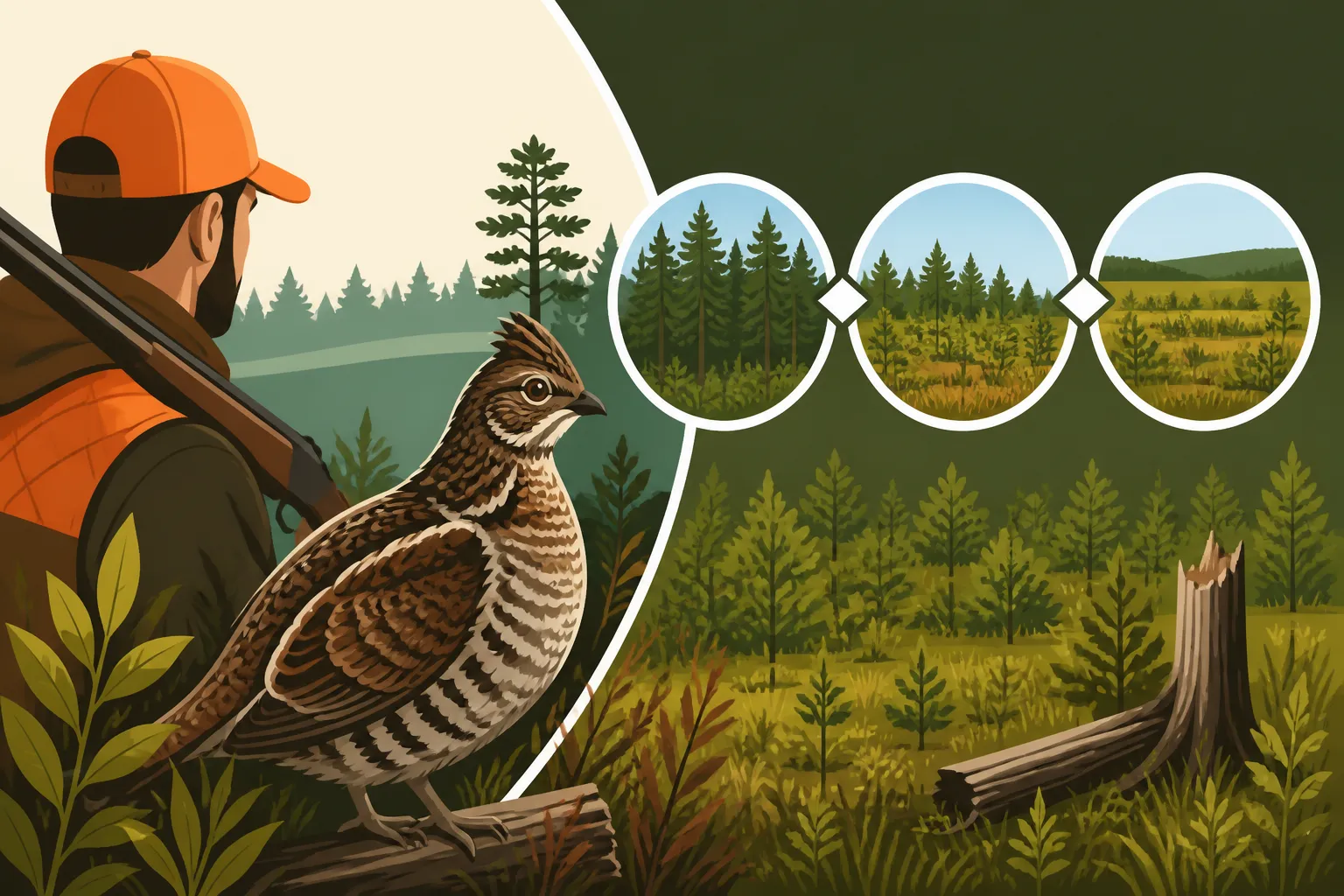
From extensive research by wildlife biologists and decades of hunter experience across Wisconsin, the sweet spot for ruffed grouse habitat in timber cuts typically falls within the 8-to-20-year range post-harvest. This timeframe allows for the vigorous regrowth of species like aspen, birch, and various shrubs, creating a dense, tangled mess of vertical cover that grouse absolutely adore.
Imagine walking through a stand that was clear-cut 10-15 years ago. The saplings are now 10-20 feet tall, growing so close together that you're constantly pushing branches out of your face. Sunlight still filters through enough to promote ground vegetation, but the canopy hasn't closed over to create a sterile, open understory yet. This is prime grouse real estate. The cover is thick enough to hide birds from aerial predators, but open enough on the ground for them to move and forage. They have plenty of buds to eat, protective overhead cover, and abundant horizontal stems to break up predator sightlines. If you're looking at a forest map or using an app like GoHunt to analyze timber stand ages, focus your efforts on these younger regeneration areas, especially those dominated by aspen. You'll find that many successful hunts happen in precisely this type of habitat.
Older Cuts and Declining Productivity
As a timber cut matures beyond that 20-year mark, its value for grouse generally starts to decline. The canopy begins to close, shading out the understory plants that provide crucial food and cover. The trees grow taller, and the lower branches, which once offered dense protection, start to die off and fall away. This creates a more open, park-like understory, making grouse far more vulnerable to predators. You might still find an occasional bird in these older stands, especially if they border younger regeneration or diverse habitat, but they won't typically hold the consistent numbers you'd expect from prime habitat.
Think of an aspen stand that's 30-40 years old. The trees are tall and straight, forming a relatively open cathedral of trunks. While there might be some ground cover, it's rarely dense enough to offer the kind of escape cover a grouse needs. Predators, both avian and terrestrial, have a much easier time spotting and pursuing birds in these conditions. This is often why hunters will find themselves walking for miles through seemingly good woods without a flush – the age of the timber has simply pushed the grouse out to younger areas.
Too Young: When a Cut Isn't Ready
On the flip side, a timber cut can also be too young to be productive for grouse. A clear-cut that's only 1-5 years old might be a sea of stumps and very small saplings, or perhaps even just an open field of weeds and grasses. While some early successional species might be growing, there simply isn't enough vertical and lateral cover established yet to provide adequate protection.
In these very young cuts, grouse are still highly exposed. They lack the dense, interwoven network of branches and stems that they depend on for concealment. While they might occasionally use the extreme edges of such areas, especially if adjacent to older, thicker cover, they won't typically inhabit the interior. It takes several years for the regenerating forest to grow to a height and density that offers meaningful shelter. So, while it's good to keep an eye on these areas for future potential, don't expect to find many birds in a cut that's just a few years old. Patience is key when it comes to waiting for these areas to "grow up" into prime grouse habitat.
Beyond Age: Other Factors for Productive Grouse Cover
While the age of a timber cut is a monumental factor, it's by no means the only piece of the puzzle. An 8-year-old aspen cut might be fantastic, but it becomes even better when other habitat elements are present. Ignoring these additional factors can lead to missed opportunities, even in perfectly aged timber.
Species of Trees Matter
Not all young forests are created equal. The dominant tree species in a cut can profoundly influence its attractiveness to grouse. In Wisconsin, aspen (both trembling and bigtooth) is the king of grouse habitat. Aspen regenerates incredibly vigorously after a clear-cut, often sending up thousands of new shoots per acre, creating that perfect dense cover. Its buds are also a crucial winter food source for grouse. Birch and oak can also contribute positively, providing food and some cover, but they rarely create the sheer density of aspen regeneration. Conifer stands, while offering thermal cover in winter, are generally less productive for grouse, unless they are scattered within a hardwood matrix or provide critical refuge during severe weather.
When you're looking at maps or scouting in person, pay attention to the species composition. A predominantly aspen or mixed hardwood clear-cut is usually more promising than one that regenerates primarily with conifers, although a mix can offer valuable diversity. Understanding Aspen Management and Wisconsin Grouse can give you a deeper insight into why this specific tree is so vital.
Stand Diversity and Edge Habitat
The most productive grouse cover often isn't a monolithic block of a single-aged timber cut. Instead, it's a mosaic of different stand ages and types, creating abundant "edge" habitat. Grouse love edges – the transitions between young cuts and older timber, between conifer swamps and upland hardwoods, or even between different regeneration ages within a larger clear-cut. These edges provide a variety of food sources and cover types within a small area, allowing grouse to quickly move between feeding and hiding.
Consider a younger aspen cut bordering a mature oak ridge. The aspen provides dense escape cover and buds, while the oak offers acorns for fall foraging. Or perhaps a regenerating clear-cut with fingers of conifer swamp providing winter thermal cover. Using an app like GoHunt or even the Wisconsin Hunt Wild App can help you identify these transitions on aerial imagery, guiding you to areas where different habitat types converge. The more diversity in a smaller area, the more likely you are to find birds throughout the season, as their needs shift with the weather and available food.
Water Sources and Topography
While often overlooked, water sources and topography also play a role in where grouse congregate. Grouse, like all wildlife, need water, especially during drier periods or when raising broods. Seeps, small streams, or even pockets where water collects after rain can be attractive. In Wisconsin's Driftless Area, the steep coulees and ridge tops create microclimates and distinct habitat zones. Grouse might prefer the north-facing slopes in summer for cooler temperatures or utilize south-facing slopes in winter for more sun exposure.
Areas with varied topography can also create natural funnels or pinch points that concentrate grouse movement. A small drainage or a subtle ridge can lead birds from one feeding area to a drumming log, making it a predictable spot to find them. When you're scouting, keep an eye out for these subtle features; they can often be the difference between an empty walk and a flush.
Putting It All Together: Scouting and Hunting Cut Areas
Armed with knowledge about timber cut ages and other habitat factors, the next step is translating that information into successful hunts. This involves strategic scouting and adapting your hunting approach to the specific conditions of these regenerating areas.
Reading Maps and Aerial Photos
Your scouting starts long before you ever step foot in the woods. Modern technology has made it easier than ever to pinpoint potential grouse hotspots. Online mapping tools or apps like GoHunt allow you to examine aerial photos and often overlay timber harvest data, helping you identify cuts and estimate their age. Look for areas with a mottled, "broccoli-like" appearance on aerial photos, indicating dense, young regrowth. Older cuts will appear darker and more uniform, while very recent cuts will show bare earth or very low vegetation.
Pay close attention to the edges of these cuts and how they interact with other habitat types. Are there conifer swamps nearby for winter refuge? Are there mature mast-producing trees adjacent for fall food? Use these tools to identify access points, potential walking routes, and areas where grouse are likely to be concentrated. Identifying these key features from the comfort of your home is a huge time-saver and makes your time in the field much more efficient. Many hunters use the Scouting With the Wisconsin Hunt Wild App to enhance their preparation.
Walking the Ground and Interpreting Sign
Once you've identified promising areas on a map, it's time for boots on the ground. When you're walking through a timber cut, you're looking for more than just dense cover. Keep an eye out for grouse sign: droppings (often found near drumming logs or feeding areas), dusting bowls (small depressions where birds dust themselves), and of course, drumming logs themselves. Look for evidence of browsing on aspen buds or other preferred food sources.
Notice the density of the cover. Is it thick enough to hold birds? Are there open lanes for you to walk, or is it an impenetrable tangle? The best grouse cover is often challenging to walk through, requiring you to push through brush and navigate fallen logs. Don't be afraid to penetrate deeper into these thickets; often, the further you get from easy access, the less Hunting Pressure on Wisconsin Public Land there is, and the more likely you are to find undisturbed birds.
Hunting Strategies for Timber Cuts
Hunting grouse in timber cuts requires a specific approach. Unlike deer hunting, where you might sit and wait, grouse hunting is an active pursuit. You'll be covering ground, often at a slow, deliberate pace. If you're hunting with a dog, let them work the cover, but be ready for sudden flushes. If you're hunting without a dog, a slow, methodical walk, pausing frequently, can cause birds to flush. These pauses often make an edgy grouse think you've passed, and they'll flush when you restart, giving you a chance.
Consider the time of day and weather. Grouse are often most active in the mornings and late afternoons. After a rain, they might be more concentrated in areas with good ground cover that has dried out. When hunting specific Hunting Wisconsin Clearcuts and Aspen Cuts, plan your route to work the edges of the thickest cover, moving into the densest areas as you get deeper. Remember, these birds are masters of concealment, and even in ideal cover, they can be incredibly difficult to spot until they burst into flight. A good shotgun, like those recommended in Best Shotgun Gauge for Wisconsin Grouse, and appropriate Boots for Walking Wisconsin Aspen Cuts are essential for navigating these challenging yet rewarding environments.
| Timber Cut Age (Years) | Grouse Productivity | Characteristics | Hunting Advice |
|---|---|---|---|
| 1-5 | Low | Very open, young saplings, stumps. Insufficient cover. | Avoid for consistent hunting; note for future potential. |
| 6-7 | Increasing | Developing cover, saplings growing taller, still somewhat open. | Hunt edges; might hold some birds, but not prime. |
| 8-20 | High (Prime) | Dense, interwoven saplings (especially aspen), excellent overhead and lateral cover. | Focus efforts here; expect good flushes. |
| 21-30 | Declining | Canopy closing, understory thinning, trees getting taller. | Hunt if bordering younger cuts or diverse habitat; birds less consistent. |
| 30+ | Low | Open understory, mature timber. Poor escape cover. | Generally unproductive; move to younger stands. |
Disclaimer
The information provided in this guide is for general educational purposes and intended to supplement, not replace, official regulations. Hunting regulations and conditions in Wisconsin can change, and it is the hunter's responsibility to consult the latest Wisconsin Department of Natural Resources (DNR) publications and local ordinances before engaging in any hunting activities. Always prioritize safety and ethical hunting practices.