Running Hounds for Bobcat in the North
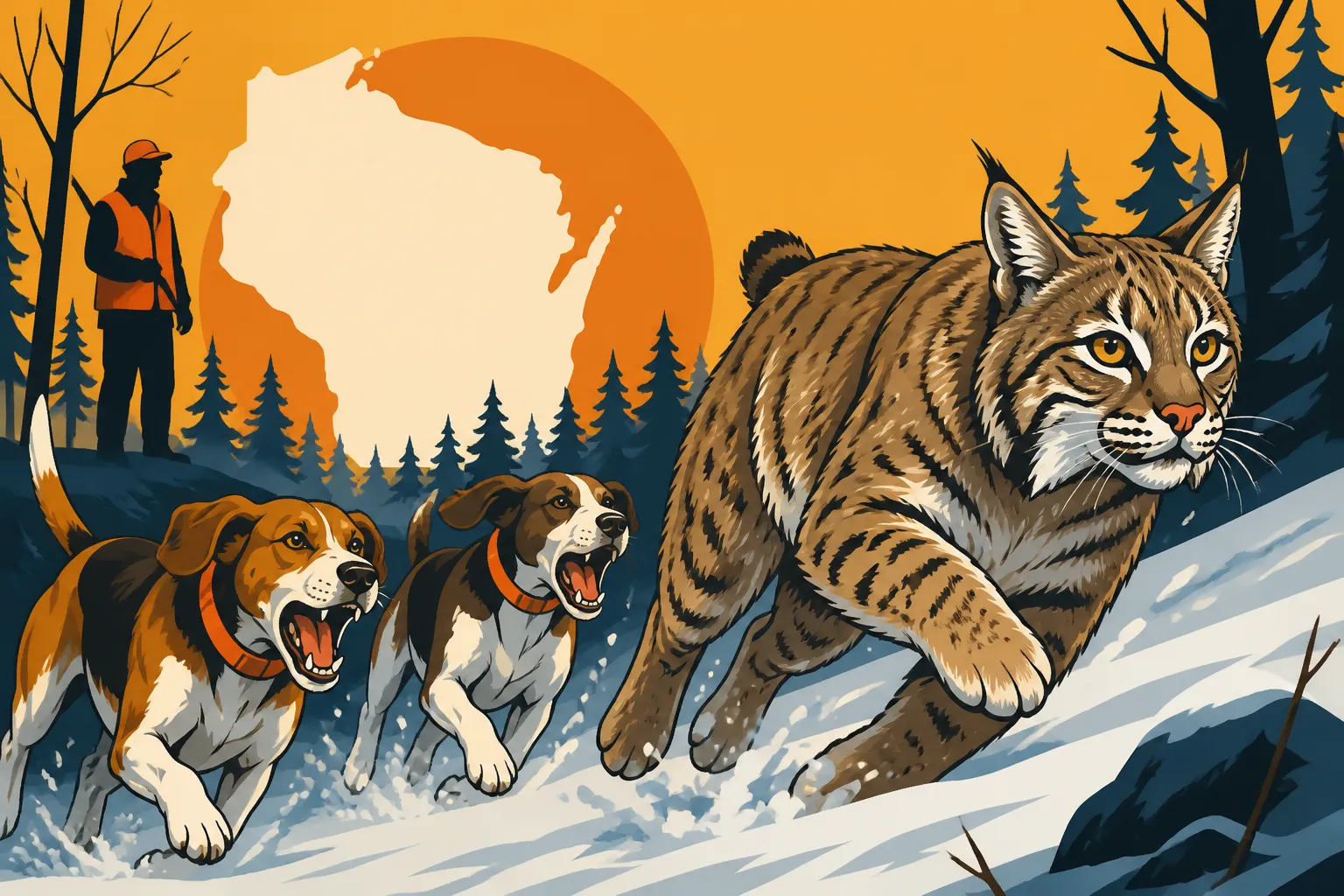
Hunting bobcats in the vast, unforgiving expanses of Northern Wisconsin presents a unique challenge, one that tests both hunter and hound against the elements and the elusive nature of this incredible feline. Many hunters find themselves frustrated by the sheer difficulty of locating and pursuing these nocturnal predators, often dealing with tough snow conditions and sparse populations. This comprehensive guide is here to unravel the complexities of running hounds for bobcat in the north, offering practical advice and seasoned strategies to increase your chances of success and make your experience unforgettable.
Understanding Northern Wisconsin Bobcat Habitat and Behavior
Successfully hunting bobcats with hounds in northern Wisconsin starts long before you ever release a dog. It begins with a deep understanding of where these elusive felines prefer to live and how they behave throughout the hunting season. Without this foundational knowledge, you'll be running your dogs in circles and burning precious time and energy.
Preferred Habitats and Terrain Features
Bobcats in northern Wisconsin are masters of adaptation, thriving in dense, often remote, forested areas that offer both concealment and abundant prey. When you're scouting, think thick coniferous swamps, especially those dominated by cedars and black spruce, which provide crucial thermal cover during harsh winters. Look for heavy aspen regeneration in old clearcuts, mixed conifer-hardwood stands, and areas with significant fallen timber and rocky outcrops. These features offer excellent hiding places, secure den sites, and ambush points for hunting their primary food sources.
These felines love areas where their prey—primarily white-tailed deer fawns, rabbits, and particularly snowshoe hares—also thrive. Therefore, understanding Where Northern Forest Bucks Bed can also clue you into prime bobcat territories. Often, these prime areas are tucked away from easy human access, requiring significant effort to reach, making them less pressured but also more challenging to navigate. The vast expanses of the Chequamegon-Nicolet National Forest and numerous county forests across Vilas, Price, and Ashland counties are prime examples of this rugged, bobcat-friendly terrain.
Topography also plays a significant role. Bobcats will readily utilize ravines, steep river bottoms, and dense cuts to move undetected across their territory. When snow depths increase, they often gravitate towards areas with dense canopy cover that provides some relief from deep drifts, or they might follow packed-down deer trails to conserve energy. Identifying these transition zones—where a thick cedar swamp meets a younger aspen clearcut, for instance—is absolutely critical for finding fresh tracks and understanding their movement patterns.
Bobcat Behavior and Activity Patterns
Bobcats are largely nocturnal or crepuscular, meaning their peak activity generally occurs during dawn, dusk, and throughout the night. This natural inclination presents a unique challenge for hound hunters, who often rely on finding fresh morning tracks. However, don't rule out daytime activity entirely. During periods of extreme cold, heavy snowfall, or when food is scarce, bobcats may extend their hunting hours into daylight to secure enough sustenance to survive. Their entire existence revolves around hunting, so understanding the habits of their prey is equally important.
Their home ranges in northern Wisconsin can be quite expansive, particularly for males, and size will vary significantly based on prey availability and habitat quality. Females with kittens, however, tend to have smaller, more concentrated territories. Bobcats are solitary and territorial, with males often overlapping several female territories. When a bobcat is actively traveling or hunting, they can cover an impressive amount of ground quickly, meaning that once your hounds are on a hot track, you should be prepared for a potentially long and demanding chase.
Understanding the bobcat's breeding cycle, often referred to as their "rut," can also provide strategic advantages. Breeding typically occurs from late winter to early spring, usually between February and March, which falls squarely within Wisconsin's regulated hunting season. During this period, males become significantly more mobile, actively seeking out females, which can make them more detectable and increase the chances of encountering a fresh track. For more general information on furbearer seasons, check out Wisconsin Small Game and Furbearer Seasons.
Assembling Your Bobcat Hound Pack and Gear
Hunting bobcats with hounds isn't a solo sport for either hunter or dog; it demands a well-coordinated team. Beyond the canine athletes, specialized gear for both you and your pack is absolutely essential to navigate the challenging northern Wisconsin wilderness and ensure a successful, safe hunt.
Building and Training Your Pack
A truly successful bobcat hound pack is a finely tuned unit, not just a random collection of dogs. Most experienced bobcat hunters utilize a mix of breeds, often favoring Plott Hounds, Walkers, or Redbones, all renowned for their incredible grit, keen cold noses, and remarkable endurance. You’ll typically want a pack of 2-4 dogs, sometimes more, depending on the ruggedness of the terrain and the individual capabilities of your hounds. Each dog should ideally have a distinct role, whether they are a phenomenal track dog, a relentless chase dog, or a reliable "tree dog" that will stick with the cat once it's treed.
Training these specialized hounds begins early. It's an intensive process focused on developing their nose specifically for cat scent, building their physical endurance, and ensuring they understand commands and work cohesively as a team. This often involves foundational training with other furbearers like raccoons or even coyotes as a stepping stone, gradually introducing them to the more subtle and challenging scent of a bobcat. Patience is more than a virtue here; it's a necessity. Bobcat hounds are not deer dogs; they require a hyper-focus on finding and sticking to the track of an incredibly difficult and elusive animal, often in the most challenging winter conditions. Many find that a blend of eager, younger dogs paired with a few experienced, older "cold-nosed" veterans creates the most potent and balanced hunting combination.
Furthermore, the physical conditioning of your dogs cannot be overstated. Running through deep snow, scrambling over downed timber, and navigating steep hillsides is incredibly demanding on their bodies. Year-round conditioning, including regular exercise and a high-quality diet, is absolutely essential to prevent injuries and ensure your pack can sustain the long, arduous chases that are characteristic of bobcat hunting. Just as you meticulously prepare yourself for a physically demanding deer season, your hounds need to be in peak physical condition.
Essential Gear for Hunter and Hounds
Beyond the hounds themselves, specialized gear is critical for both the safety and success of your hunt. For the dogs, robust GPS tracking collars are an absolute non-negotiable item. Modern systems, like those from Garmin Alpha or the excellent mapping features found through GoHunt, provide real-time updates on your dogs' locations. This is vital in the vast, often unmarked wilderness of northern Wisconsin, where losing a dog can be a heartbreaking and dangerous situation. Look for collars with extended battery life and strong signal penetration to cut through dense forest cover.
Hunters, in turn, must be prepared for the extreme cold and unforgiving conditions of a Wisconsin winter. Think in terms of multiple layers of warm, waterproof clothing, deeply insulated boots, and a reliable headlamp for those pre-dawn track searches or late-night walks out. A well-equipped backpack is essential, containing plenty of water (for both you and your dogs), high-energy snacks, a comprehensive first-aid kit (critically, one for both human and canine injuries), and robust navigation tools such as a dedicated GPS handheld, a compass, and a detailed paper map. A legal firearm, typically a small-caliber rifle or handgun, will be needed for the ethical dispatch of a treed bobcat. Remember, you might be covering ground quickly and aggressively, so your gear needs to be durable, comfortable, and highly practical.
Consider also a sturdy, well-ventilated dog box for safe transport, dog booties to protect paws from abrasive snow and ice, and a supply of high-energy dog food and water for long days in the field. A treeing pole, a long collapsible stick, can be remarkably useful for visually confirming if the cat is actually in the tree or if the dogs simply "false treed." Always double-check current regulations regarding specific gear, especially for Wisconsin Bobcat Permit and Tagging requirements, as rules are subject to change and vary by jurisdiction.
Tactics for Running Hounds on Bobcat Tracks
Once you've got your well-trained pack and essential gear, the next crucial step is putting theory into practice in the field. This involves meticulous scouting to find fresh tracks and then expertly managing the dynamic, often unpredictable chase that follows.
Locating Fresh Tracks and Starting the Chase
Finding fresh bobcat tracks is, for many, the most challenging and time-consuming aspect of the entire hunt. This demanding task typically involves extensive scouting both before and throughout the season. Your best friend here is fresh snowfall; a new blanket of white acts like a pristine canvas, clearly showcasing tracks laid down over the previous night. Focus your scouting efforts intently on areas you've identified as prime habitat: dense cover, natural pinch points where animals are funneled, and creek bottoms. Early morning is the absolute ideal time for cutting tracks, as your goal is to be on a track laid down within the last few hours, maximizing freshness.
Your scouting will involve driving or walking logging roads, snowmobile trails, or perhaps even snowshoeing deep into promising, remote areas, slowly cruising for fresh sign. Once you encounter a track, the critical work truly begins. You must meticulously assess the track: How fresh does it appear? Is the bobcat traveling purposefully, or does it seem to be actively hunting? Which direction is it heading? Developing the skill to differentiate the subtle nuances of a bobcat track versus those of a coyote or fox is paramount. A good rule of thumb is that bobcats are "cleaner" walkers; their hind feet often step directly into their front prints, creating a precise, almost linear trail.
Once you are definitively confident that you've found a fresh bobcat track, it's time to unleash your "strike" or "jump" dogs. These are typically your most skilled track dogs, specifically trained to pick up even a cold scent and unravel a complex trail. The rest of your pack should generally be held back until the initial track is solidified and the chase is unequivocally on. This selective release strategy ensures that you don't exhaust your entire pack on a questionable track and allows your most adept dogs to perform their specialized role. For help with navigation and public land access, many hunters rely on mapping apps like those offered by GoHunt, which can greatly assist in scouting and managing Hunting Pressure on Wisconsin Public Land.
Managing the Chase and Treed Bobcat
Once your dogs are on a hot track, settle in, because you're likely in for a real chase. Bobcat pursuits are renowned for being long and arduous, often covering many miles across some of the most rugged terrain northern Wisconsin has to offer. Continuously monitoring your dogs' progress via their GPS collars is absolutely essential. You'll need to develop an ear for their baying – a steady, strong chop usually indicates they're hot on the trail, while a change in tone, a slower pace, or circling might signal they've lost the track or are working a more complex puzzle. Be prepared to move quickly yourself, sometimes utilizing a snowmobile or ATV where legally permitted, but often relying on your own two feet, equipped with snowshoes, to keep pace or strategically intercept the dogs.
The ultimate goal, of course, is for your dogs to "tree" the bobcat, driving it up a tree where it instinctively seeks refuge from the ground-bound hounds. This is where your pack's cooperative skills truly shine, as they work together to put pressure on the cat until it climbs. Once treed, the dogs will typically gather at the base of the tree, baying excitedly, signaling their success. Approach cautiously and as quietly as possible. Confirm visually that it is indeed a bobcat, and carefully assess the situation. The animal might be perched high in a dense conifer, making a clean shot challenging. Patience, strategic positioning, and unwavering focus are absolutely key to ensure a safe and ethical shot.
After the shot, it is imperative to ensure your dogs are safely handled and secured before you approach the treed bobcat. This precaution is vital for both your safety and the well-being of your dogs. Proper handling of the harvested animal is also crucial, strictly adhering to all Wisconsin Bobcat Permit and Tagging regulations, including immediate registration. Remember, a truly successful hunt extends beyond just the harvest; it encompasses the respect shown for the animal, the incredible effort put in by your hounds, and the unforgettable experience forged in the wild. If you're wondering about other similar hunting methods, you might find Coyote Calling in Wisconsin Winter interesting, though it's a different approach.
Legal Considerations and Ethical Hunting Practices
Hunting bobcats with hounds in Wisconsin isn't just about the thrill of the chase; it's deeply rooted in responsibility, ethics, and strict adherence to the law. Understanding these facets ensures a sustainable future for bobcat populations and preserves the integrity of this unique hunting tradition.
Wisconsin Bobcat Regulations and Seasons
Hunting bobcats in Wisconsin is not an open-access activity; it is highly regulated by the Department of Natural Resources (DNR), a reflection of the bobcat's status as a valued managed furbearer. To legally pursue bobcats, you must first apply for and successfully draw a bobcat harvest authorization. This is a highly competitive drawing, often requiring a significant number of preference points to secure, much like the process for Wisconsin Bear Preference Points and Zones. Applications typically open in late spring or early summer, and you can manage this process through Wisconsin's The Wisconsin Go Wild Licence System. The state is divided into specific bobcat zones, and permits are allocated based on annual harvest quotas for each of these zones.
The bobcat season itself is usually structured into two distinct periods. The first period generally runs from late October through December, while the second period typically begins in late December and extends through January. This split season offers hunters opportunities under varying conditions, from early snow to the deeper, more consistent snow cover of mid-winter, which is often ideal for tracking. Precise season dates, specific zone boundaries, and bag limits are published annually by the Wisconsin DNR. It is absolutely crucial to consult the most current Wisconsin hunting regulations pamphlet or the DNR website for up-to-date information, as rules and regulations can, and sometimes do, change.
Beyond the general harvest authorization, you must be intimately familiar with the rules governing the use of dogs. While Running Hounds for Bobcat in the North is a legal method during the open season, always ensure you're aware of any specific county-level restrictions or property-specific rules, especially when hunting on public lands where other hunters or recreational users might be present. Pay close attention to regulations concerning possession limits, the requirement to immediately tag your harvested bobcat, and the mandatory reporting of your kill to the DNR. For broader context on similar hunting, you might want to review Wisconsin Predator and Furbearer Hunting in Wisconsin.
Responsible Hunting and Conservation
Ethical hunting practices are paramount when pursuing bobcats with hounds. This commitment involves prioritizing the welfare of your hounds, respecting the wild animal you pursue, and adhering strictly to all state and federal laws. It's your responsibility to ensure your dogs are supremely well-trained and physically conditioned to minimize stress, injury, or potential loss during the often grueling, long chases. Always carry a comprehensive first-aid kit designed for your dogs, and be honest with yourself about their limits. If a chase becomes too long, conditions turn dangerously extreme, or you cannot keep up, you must know when to responsibly call off the dogs. The health and safety of your pack should always be your foremost concern.
When it comes to the bobcat, ethical considerations mandate ensuring a clean, humane harvest. This often means patiently waiting for a clear, unobstructed shot once the animal is safely treed, even if it requires additional effort to position yourself or your team. Avoid taking risky or speculative shots that could wound the animal or, worse, endanger your dogs. While tracking, be hyper-aware of property boundaries, and always obtain explicit permission if there's any chance your dogs might cross onto private land. Modern mapping tools and apps, such as those provided by GoHunt with their property line overlays, are invaluable for preventing trespass and maintaining good relationships with landowners.
Furthermore, actively participating in conservation efforts is an integral part of being a responsible bobcat hunter. This can involve cooperating with DNR research initiatives, such as voluntarily submitting jawbones or other biological samples for age and health analysis. Understanding the current population trends and management goals for Bobcat Range and Harvest in Wisconsin directly contributes to ensuring the long-term sustainability of this unique hunting opportunity. Your actions in the field significantly influence the public perception of hound hunting, so always conduct yourself professionally, respectfully, and with the utmost regard for wildlife and fellow citizens.
| Aspect | Description | Key Considerations for Northern Wisconsin |
|---|---|---|
| Habitat Focus | Dense coniferous swamps, cedar thickets, aspen regeneration, mixed woods, rocky outcrops. | Prioritize areas with high snowshoe hare and deer populations; look for cover from deep snow and thermal protection. Remote access often means less pressure. Scouting Wisconsin Public Land Before Season is crucial to locate these areas. |
| Bobcat Activity | Primarily nocturnal/crepuscular; extended daytime activity in severe winter/scarce prey. | Best to search for fresh tracks early morning. Breeding season (Feb-Mar) can make males more mobile and detectable. |
| Hound Breeds | Plott Hounds, Walkers, Redbones, or mixes – chosen for cold nose, grit, and endurance. | A pack of 2-4 dogs is common; blend experienced "cold-nosed" dogs with eager young ones. GPS Collars and Wisconsin Bear Hounds are also effective for bobcat hounds to track movement over vast distances. |
| Hunter Gear | Layered warm, waterproof clothing; insulated boots; GPS; headlamp; first-aid; firearm. | Prepare for extreme cold, deep snow, and rugged terrain. Consider snowshoes for deep snow access. Ensure sufficient battery life for all electronics. |
| Track Location | Scout logging roads/snowmobile trails after fresh snow; identify fresh bobcat tracks. | Bobcat tracks are distinct – often "cleaner" with hind feet stepping into front prints. Focus on areas where you might be Finding Ground Others Walk Past to locate less pressured animals. |
| Chase & Treeing | Monitor GPS and listen to hound baying; be prepared for long, demanding chases. | Bobcat chases can cover miles. Be ready to follow quickly, sometimes with legal snowmobiles or ATVs, but often on snowshoes. Confirm species and ensure a clear, ethical shot once treed. |
| Regulations | Wisconsin DNR bobcat harvest authorization (draw only); specific zones; two hunting periods. | Highly competitive draw; plan ahead for preference points. Consult current DNR regulations for season dates, zone maps, and Wisconsin Trapping Seasons and Tagging details, as they may apply to bobcat harvest and registration. Also be aware of Night Hunting Rules for Wisconsin Coyotes as they might influence general predator hunting perceptions. |
Disclaimer
Please remember that hunting regulations, seasons, and licensing requirements in Wisconsin are subject to change by the Wisconsin Department of Natural Resources. While every effort has been made to provide accurate and up-to-date information in this guide, it is the hunter's sole responsibility to consult the most current official Wisconsin DNR regulations pamphlet and website before engaging in any hunting activities. This guide is for informational purposes only and does not supersede state or federal hunting laws.