GPS Collars and Wisconsin Bear Hounds
The frustration of trying to keep tabs on a pack of eager bear hounds as they disappear over a ridge or into the depths of a Wisconsin cedar swamp is a feeling many hunters know all too well. Before modern technology, locating a dog after a long chase was a mix of gut instinct, listening for faint barks, and a whole lot of driving around logging roads. This comprehensive guide is here to shed light on how GPS collars have become an absolute game-changer for Wisconsin bear hound hunters, providing an in-depth look at the technology, how to choose the right system, and how to use it to keep your canine athletes safe and boost your hunting success.
Why GPS Collars Became Essential for Bear Hounding
There was a time when bear hounding was an even more stressful affair, driven by the constant worry of losing a valuable dog in the vastness of the Northwoods. GPS collars have, quite simply, transformed the experience from one of constant anxiety into a more managed and efficient pursuit.
The Challenges of Traditional Hounding
Before the advent of GPS technology, hound hunters in Wisconsin faced immense challenges every time their dogs hit a hot bear track. Dogs, especially those with an abundance of enthusiasm and speed, can cover incredible distances in a short amount of time, easily disappearing out of earshot and sight. The dense timber, rolling hills, and expansive swamps characteristic of much of Wisconsin's bear habitat played havoc with traditional radio telemetry. Hunters relied on handheld receivers that picked up a directional signal, essentially a "beep-beep-beep" that got stronger as you got closer. However, topography, thick canopy, and even weather could interfere with these signals, turning a straightforward pursuit into a frustrating and often frantic search.
Imagine a typical autumn morning deep in the Chequamegon-Nicolet National Forest. Your pack is let loose on a fresh scent, and the glorious chorus of their baying quickly fades into the distance. You try to get a read on them with your old-school receiver, but the signal is weak, fading in and out. One dog's collar bell, usually your reassurance, is now just a distant memory. You pile into the truck, driving mile after mile down winding logging roads, stopping frequently to scan the horizon with your antenna, hoping for a clear signal. This wasn't just inconvenient; it was genuinely stressful. A lost dog could face numerous dangers, from becoming disoriented and starving to encountering dangerous wildlife like wolves or even wandering onto busy highways.
It wasn't uncommon for dogs to be gone for a full day, or even longer. Hunters would often leave gates open at camp, put out food and water, and rely on the hope that their dogs would eventually make their way back, or that a sympathetic local would find them. The emotional toll of a lost dog was significant, and the hours spent searching drastically cut into the precious time available for actual hunting. This constant worry highlighted the desperate need for a more reliable, real-time tracking solution, a way to stay connected with these valuable members of the hunting team.
Safety and Recovery of Hounds
The most profound impact of GPS collars on bear hounding in Wisconsin is undoubtedly the dramatic increase in the safety and recovery rate of hounds. When your dogs are equipped with GPS, their location is no longer a vague estimation based on signal strength. Instead, you see their precise position, often down to a few feet, displayed clearly on a digital map. This means you can immediately assess their direction of travel, their speed, and critically, whether they've settled down, indicating a treed or bayed bear. This real-time visibility dramatically alleviates the anxiety that comes with hounds venturing far from your sight and hearing.
Consider a common scenario: your pack splits during a chase, with a younger dog peeling off on a different track or simply getting separated from the main group. With traditional radio telemetry, finding that lone dog could be an arduous, time-consuming ordeal of triangulation and guesswork. With GPS, however, you can instantly see if that individual dog is still moving, if it's circling, or if it's stationary. This immediate information allows you to prioritize which dog needs attention, or to send a dedicated handler directly to its location. This significantly reduces the risk of a dog getting lost, injured by a vehicle, or, in the northern reaches of the state, encountering dangerous predators. The concern of Wolf Depredation on Wisconsin Hounds is a very real one, and GPS offers a crucial layer of protection.
Furthermore, when a bear is finally treed or bayed up, GPS collars allow handlers to approach the situation with a calm, strategic plan. Knowing the exact location of both the bear and the dogs minimizes stress on all animals involved and helps ensure the safety of both the hounds and the hunters during the critical final moments of the hunt. The ability to review a dog's past movements also provides invaluable data for understanding individual dog performance, preferred terrain, and identifying areas where additional training might be beneficial. It's an indispensable tool for responsible hound management and ensuring these dedicated animals make it home safely.
Improving Hunting Efficiency and Success
Beyond the paramount concern of safety, GPS collars have truly revolutionized the efficiency and overall success rates of bear hunting with hounds across Wisconsin. Before this technology, a significant portion of a hunt could be consumed simply by trying to locate and track the dogs, leading to wasted time, fuel, and effort. Now, hunters can monitor multiple dogs simultaneously from a single device, whether it's a dedicated handheld unit or a smartphone application. This facilitates unprecedented coordination among handlers, enabling them to position themselves more effectively to intercept a bear, retrieve a wandering dog, or confirm a treed animal.
Imagine a high-stakes chase that extends for miles across varied and challenging terrain. With GPS, one handler might observe the dogs heading directly towards a major highway and can quickly drive ahead to intercept the bear or dogs, thereby preventing a dangerous road crossing. Simultaneously, another hunter, viewing the same map, can confirm that a particular dog has "gone on track" and is maintaining a steady pace, signaling a hot trail. This level of synchronized effort was simply unattainable with older methods. The process of Following a Bear Race by Truck and GPS has become immeasurably more precise and effective thanks to these systems, turning what used to be a hopeful pursuit into a data-driven strategy.
The real-time data flow from GPS collars also provides hunters with an unparalleled understanding of the hunt's progression. You can see how long the dogs have been running, their average speed, and if they've settled into a pattern that strongly suggests a treed bear. This wealth of information is vital for making critical in-the-moment decisions, such as whether to continue the chase, if it’s time to call the dogs back, or how to execute a safe and effective approach to the treed bear. The outcome is a significantly more organized, less chaotic hunting experience, often leading to a higher rate of successful bear harvests and a far more enjoyable and controlled experience for the entire hunting party.
Understanding GPS Collar Technology
Diving into the specifics of GPS collars can feel a bit technical at first, but once you grasp the basics, you'll see how elegantly simple and powerful this technology is. It's all about reliable, precise location data for your hounds, ensuring you're always connected, even when they're far out in the Wisconsin wild.
How GPS Tracking Works in the Field
At its heart, a GPS collar system operates through a network of satellites orbiting the Earth. Each collar contains a small GPS receiver that picks up signals from these satellites. By receiving signals from multiple satellites, the collar can calculate its exact geographical position—its latitude and longitude—with remarkable accuracy. This is the same fundamental technology found in your car's navigation system or your smartphone. Once the collar determines its position, it then needs a way to transmit that data to you, the hunter. This transmission method is where the primary differences between system types emerge, but the core GPS positioning remains constant.
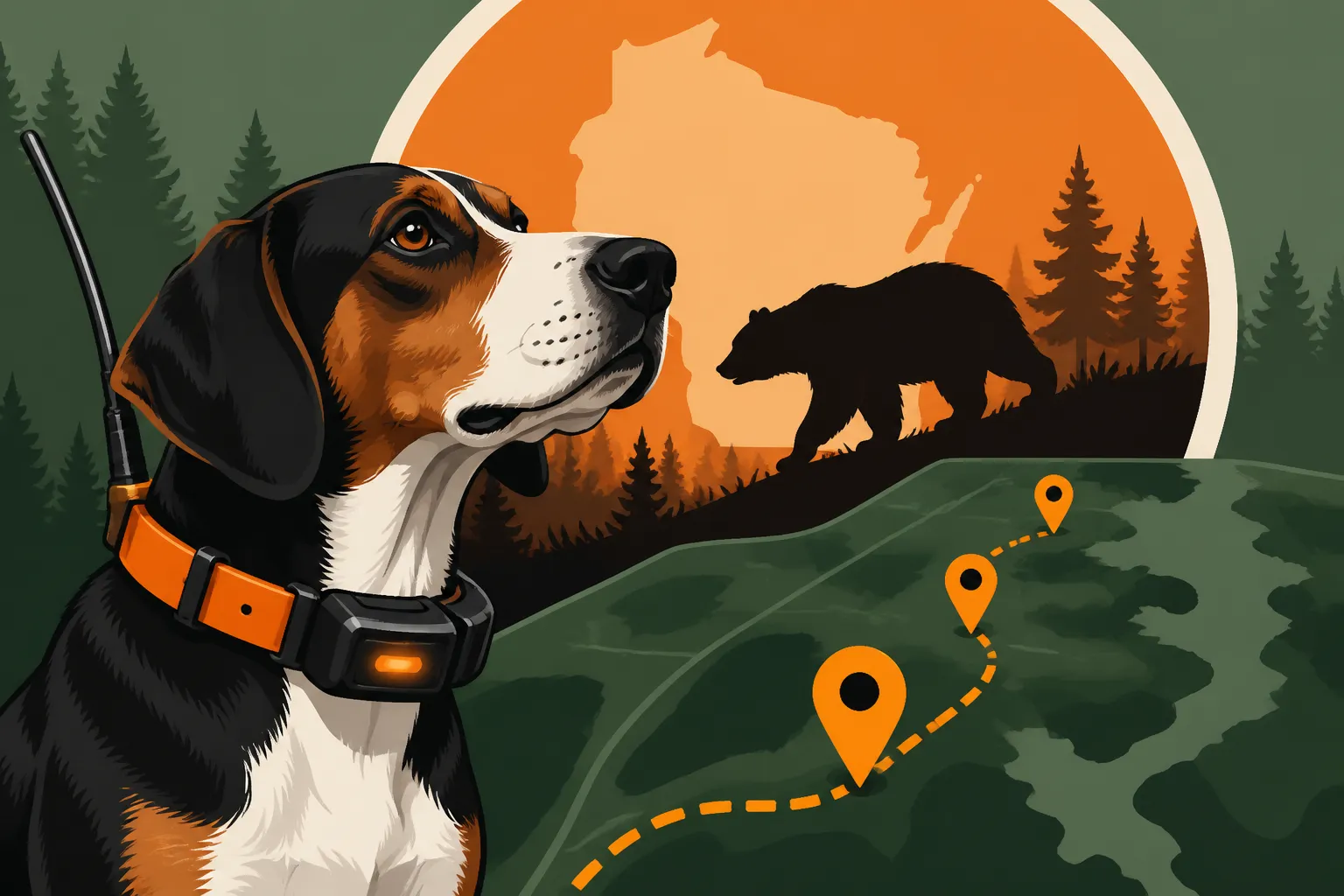
When your dog is out on a chase in the field, its GPS collar continuously updates its position, sending this data back to your handheld receiver or smartphone app every few seconds or minutes, depending on your settings and the system. The power of GPS collars lies in this precision. Unlike older radio telemetry, which could only give you a general direction and an estimate of increasing or decreasing distance, GPS provides a real-time, exact dot on a detailed digital map. You can see not just where your dog is, but also its past track, its current speed, and even if it's been stationary for an extended period, which is often a strong indicator of a treed or bayed bear. This granular level of detail transforms a once-frantic search into a controlled, strategic approach.
Modern GPS systems integrate this location data seamlessly with sophisticated mapping software. Whether you're using a dedicated handheld device or an app on your smartphone, you'll see your dogs' locations overlaid on high-resolution topographic maps, detailed aerial imagery, and often crucial public/private land boundary information. This visual representation is incredibly powerful, allowing you to quickly assess the surrounding terrain, identify potential obstacles like swamps or major roads, and determine the most efficient and safest route to your dogs. The ability to review your dog's historical track on a detailed map also offers invaluable insights for Reading a Ridge Point for Deer Movement or understanding how bears utilize the landscape, serving as both a recovery tool and a powerful scouting aid.
Comparing Radio Frequency RF and Cellular-Based Systems
When you're in the market for a GPS collar system for your Wisconsin bear hounds, you'll primarily be choosing between two distinct communication technologies: Radio Frequency (RF) and Cellular-based systems. Each has its own set of strengths and weaknesses, making the best choice highly dependent on your specific hunting grounds and personal preferences.
RF-based systems, such as those pioneered by brands like Garmin and offered by some GoHunt models, communicate directly between the dog's collar and a specialized handheld receiver. The collars transmit their GPS coordinates to this receiver using a dedicated radio signal, typically within a range of several miles, often up to 9-10 miles in ideal conditions. The significant advantage of RF systems is their independence from cellular service. This makes them the go-to choice for hunting deep in the expansive, remote public lands of northern Wisconsin, like the national and county forests, where cellular signals are notoriously spotty or entirely absent. While dense cover and rugged topography can affect their range, within their operational limits, they provide exceptionally reliable communication. Critically, these systems generally do not require ongoing monthly service fees.
Cellular-based systems, conversely, transmit their GPS coordinates over a cellular network, much like your smartphone does. This means the collar contains a small cellular modem and relies on a cellular data plan. The data is then sent to a smartphone app or a web-based platform that you access. The major benefit here is the potential for virtually unlimited range, provided both the collar and your receiving device (phone) have cellular service. You could theoretically track your dog from many miles away, even across state lines, if both have coverage. However, the obvious drawback is this absolute reliance on cellular coverage, which can be a severe limitation in many of Wisconsin's prime bear hunting regions. These systems also typically come with a recurring monthly or annual subscription fee for data usage.
To help you decide, here’s a quick overview of their key characteristics:
| Feature | RF-Based Systems (e.g., Garmin Alpha, Astro) | Cellular-Based Systems (e.g., GoHunt Cell, others) |
|---|---|---|
| Communication | Direct radio signal to handheld receiver | Cellular network (requires data plan) |
| Range | Limited (up to ~10 miles, terrain dependent) | Unlimited (where cell service is available) |
| Subscription | Generally no recurring fees | Typically requires monthly/annual fee |
| Terrain Impact | Can be affected by dense cover/hills | Relies entirely on cellular tower availability |
| Receiver | Dedicated, rugged handheld device | Smartphone App / Web Platform |
| Best Use | Remote, off-grid areas with no cell service | Areas with reliable cell coverage, long distance monitoring capability |
Features to Look For in a Modern Collar
When you're ready to invest in a GPS collar system, looking beyond just the basic tracking function will help you choose a unit that truly enhances your bear hunting experience. Modern collars come packed with features designed to improve durability, usability, and the overall effectiveness of your hunt.
First and foremost, durability and waterproofing are non-negotiable. Bear hounds are incredibly tough on their gear, plunging through dense brush, swimming across streams, and enduring all manner of Wisconsin weather. A collar must be built to withstand heavy impacts, resist abrasion, and be completely waterproof to survive repeated submersions and torrential downpours. Look for ratings like IPX7 or IPX8, indicating it can handle immersion. Robust casings and secure, fail-safe fastening mechanisms are crucial—you don't want a collar failing or falling off halfway through a critical chase.
Next, prioritize battery life. A long-lasting battery is absolutely critical for multi-day hunts or when dogs embark on extended chases that can last many hours. High-quality collars typically offer battery lives ranging from 20-30 hours up to several days on a single charge. Many systems also allow you to adjust the update rate (how often the collar transmits its position), which can significantly extend battery life, though it means less frequent location updates. The ability for a collar to last an entire hunting day, and ideally beyond, greatly reduces the stress of needing to constantly recharge in the field.
Another vital feature is real-time tracking and customizable update rates. The more frequently the collar updates its position, the more precisely you can follow your dog's movements. Top-tier collars can provide updates as fast as every 2.5 seconds, giving you an almost live feed of the chase. This rapid update is essential for navigating intricate terrain, determining if a bear is circling, or confirming if your dog has truly treed. Many collars also offer intelligent "treed" or "baying" alerts, which can send an immediate notification if the dog has been stationary and actively barking at an animal for a predefined period. This signal often means the hard work is done, and it’s time for you to make your approach.
Finally, consider map compatibility and advanced integration. Does the system support detailed topographic maps, high-resolution satellite imagery, and allow you to easily mark waypoints, plot routes, and clearly see public land boundaries? Advanced functionalities like geofencing (setting virtual boundaries that alert you if a dog exits or enters a specific area) and multi-dog tracking are incredibly useful. The ability to track your entire pack on a single screen, often with unique icons or color-coding for each dog, dramatically streamlines pack management during a rigorous Running Bear Hounds in Northern Wisconsin hunt.
Choosing the Right GPS Collar System
Selecting the ideal GPS collar system for your bear hounds is a highly personal decision, heavily influenced by where and how you hunt. There’s no universal "best" system; rather, it’s about finding the perfect match for your specific needs, the terrain you'll encounter, and your budget.
Considering Your Hunting Style and Terrain
The type of terrain you primarily hunt in Wisconsin is perhaps the most critical factor in determining which GPS collar system will serve you best. If your bear hunting takes you deep into the vast, remote public lands of northern Wisconsin—think sprawling national forests or immense county forests where cellular service is known to be unreliable or entirely absent—then an RF-based system is almost certainly your optimal choice. These areas are characterized by dense timber, dramatic elevation changes, and significant swamp lands, all of which can severely impede cellular signals. An RF system, while having a more limited maximum range compared to cellular options, provides a direct and consistent communication link between your dog's collar and your handheld receiver, ensuring connectivity even when miles from the nearest cell tower. This inherent reliability in truly remote environments is paramount for both hound safety and successful recovery.
Conversely, if your hunting endeavors tend to be closer to more developed areas, perhaps on private lands where you have permission or on smaller public parcels with generally strong cellular service, then a cellular-based system might offer distinct advantages. The "unlimited" range of cellular systems can be incredibly appealing, allowing you to monitor your dogs from much greater distances, potentially even from back at camp or even your home, as long as both collar and your receiving device have coverage. This can be particularly beneficial for keeping tabs on a dog that has gone on an exceptionally long, extended chase across multiple properties. However, it’s crucial to be acutely aware of potential dead zones. Even in areas with generally good service, there can be pockets where cellular signals drop out, leaving you temporarily without real-time tracking of your dog's location.
Beyond connectivity, also consider the physical demands of your typical hunting environment. Do your hounds frequently swim across rivers, slog through mucky swamps, or navigate treacherous rocky outcrops? Then extreme waterproofing, corrosion resistance, and robust housing are absolutely essential. Are they constantly busting through impenetrable alder thickets or thorny briar patches? Look for collars with heavily reinforced antennae and highly impact-resistant casings. Your battery life requirements will also shift; a hunter whose dogs typically run shorter, localized races might prioritize a lighter collar with adequate battery life, whereas someone whose dogs might be on a track for 10-12 hours will need a system with exceptional battery longevity, possibly augmented by a portable charging solution.
Key Brands and Their Offerings
The market for GPS dog tracking collars has matured significantly, with a few key brands dominating the space by offering robust and reliable systems specifically designed for the rigors of hound hunting. Understanding the core strengths and offerings of each major player can greatly assist you in making an informed decision.
Garmin stands as arguably the most recognizable and dominant name in the dog tracking world, and for very good reason. Their Alpha and Astro series systems are RF-based and are widely considered the industry standard for traditional hound hunting. The Alpha series, in particular, boasts impressive range, exceptional durability, and feature-rich handheld units that seamlessly combine advanced GPS mapping capabilities with real-time dog tracking. With a Garmin system, you can track multiple dogs simultaneously, communicate with other hunters in your party, and often even control training features directly from the same rugged device. Garmin’s comprehensive ecosystem of collars (like the TT series) and handhelds is extensive, allowing for significant customization and easy expansion as your pack grows. Many seasoned hunters choose Garmin for its long-standing reputation for proven reliability in the most challenging, off-grid hunting conditions.
Another strong and increasingly popular contender in this specialized market is GoHunt. While GoHunt may not possess the same decades-long history as Garmin in the dog tracking sector, they have rapidly carved out a significant niche by prioritizing innovation and user-friendly interfaces, often leveraging intuitive smartphone integration. GoHunt offers a diverse range of products, including both traditional RF systems that are direct competitors to Garmin's offerings, and a growing selection of highly popular cellular-based options. Their cellular collars provide excellent range in areas with consistent cell service, and their accompanying app-based tracking solution is frequently praised for its intuitive design and rich, detailed mapping features. GoHunt is particularly appealing to modern hunters who are comfortable with smartphone technology and desire a sleek, integrated solution for tracking their dogs, especially if they primarily operate in areas with reliable cellular coverage.
While Garmin and GoHunt lead the pack, other reputable brands also exist, often specializing in particular niches or offering more budget-friendly alternatives. Some might focus exclusively on cellular tracking, while others could offer hybrid systems capable of switching between RF and cellular depending on signal availability. When evaluating brands, always look beyond just the initial purchase price. Factor in the total cost of ownership, which includes any necessary accessories (e.g., replacement antennae, extended batteries), potential replacement parts, and any recurring subscription fees. Crucially, research each brand's customer support reputation and warranty policies. When a piece of equipment is as vital to safety and success as a GPS collar, knowing you have reliable support if something goes wrong is absolutely invaluable. Engaging with other experienced hound hunters in your region to gather real-world feedback on what systems they use and their experiences can provide some of the most practical and trustworthy insights.
Battery Life and Durability Requirements
When it comes to GPS collars for bear hounds in Wisconsin, robust battery life and uncompromising durability are not merely desirable features; they are foundational requirements. Without sufficient power, even the most advanced GPS system becomes a useless ornament, and a collar that can’t withstand the rigors of the hunt will inevitably fail at the worst possible moment.
For battery life, it’s crucial to consider the typical duration and intensity of your hunts. A quick training run might only demand a few hours of power, but a full day of Bear Hunting With Bait and Dogs in Wisconsin on an active track can easily stretch to 8-10 hours, and sometimes even longer if the dogs range far or the bear makes an extended run. Most quality GPS collars today provide a minimum of 20-30 hours of continuous tracking on a single full charge, with some pushing upwards of 40-50 hours or more, particularly when set to a slightly slower update rate. If you routinely undertake multi-day hunts without reliable access to charging facilities, or if your dogs are known for marathon chases, prioritizing maximum battery life is absolutely critical. Many savvy hunters also carry portable power banks to recharge their handheld units, and some even keep spare, pre-charged collars ready to swap out if a dog is recovered mid-hunt.
Durability is where a collar truly proves its worth in the harsh Northwoods environment. A bear hound's world is one of relentless movement through unforgiving landscapes. They crash through dense underbrush, plunge into icy rivers and swamps, scramble over rocky terrain, and inevitably get into scuffles with other dogs or even the quarry itself. The collar must be engineered to withstand all of this abuse. Look for key features that denote superior construction:
- Rugged Housing: Opt for collars featuring high-impact, reinforced polymers or even metal components around sensitive electronics. These materials resist crushing and abrasion.
- Superior Waterproofing: "Water-resistant" isn't enough; you need fully waterproof (IPX7 or IPX8 rated) protection to ensure the collar can survive complete and prolonged submersion, essential for dogs that swim or hunt in consistently wet conditions.
- Secure Antennae: The antenna is often the most exposed and vulnerable part of the collar. Seek out integrated or deeply protected antenna designs, or short, flexible antennae that are far less likely to snag on branches and break.
- Industrial-Strength Collar Strap: The strap itself needs to be incredibly robust, resistant to tearing, cutting, and chewing. Many experienced hunters upgrade to ballistic nylon or even Kevlar-reinforced straps for ultimate security.
- Reliable Latches/Closures: A collar that comes undone in the field is effectively a lost collar and, potentially, a lost dog. Prefer secure buckle or screw-in designs over flimsy clips that can easily be snagged open.
Always remember that making a sound investment in a high-quality, durable collar from the outset will save you countless headaches, prevent lost hunting time, and potentially spare you the heartbreak of a lost dog down the line. This equipment is as much an essential safety device as it is a tracking tool.
Legal and Ethical Considerations for GPS Collar Use
While GPS collars offer undeniable benefits to bear hound hunting, their deployment, like all hunting practices, is subject to specific regulations and a strong set of ethical considerations. Being a responsible and respected hunter means not only adhering to the letter of these guidelines but also embracing their spirit, especially in Wisconsin with its deeply rooted hunting traditions and unwavering commitment to sound wildlife management.
Wisconsin Regulations on Electronic Devices
Wisconsin, much like many other hunting states, has clear and concise regulations governing the use of electronic devices in hunting. For the specific practice of bear hunting with hounds, GPS collars are generally permitted and, as we've discussed, are widely adopted by the hunting community. The Wisconsin Department of Natural Resources (DNR) rules typically focus on prohibiting devices that would provide an unfair advantage in the taking of an animal, such as those that project a light beam directly onto game, or those that electronically attract game. GPS tracking devices for dogs, however, fall into a distinct category, as their primary function is the safe and efficient location and management of your hounds, not the direct attraction or harvesting of the bear itself.
It is absolutely imperative to always consult the most current Wisconsin hunting regulations, which are meticulously published in the annual hunting pamphlet and are readily available on the DNR website. Regulations can and do change, and it's a fundamental principle of responsible hunting that ignorance of the law is never an acceptable excuse. While the use of GPS for tracking your own dogs during a legal hunt is permitted, there can be specific rules concerning the use of other electronic devices, such as trail cameras or two-way communication tools, which may be restricted depending on context. For example, some regulations might prohibit using certain communication methods to direct hunters to the precise location of game when not actively pursuing with hounds, or outside of established hunting hours.
A critical distinction is usually made between tracking your own dogs for recovery and using electronic means to locate or harass game without direct dog involvement or outside of legal hunting hours. The overarching spirit of the law is to facilitate legitimate dog hunting practices while strictly preventing any artificial or unfair advantages that could compromise the principles of fair chase. Hunters utilizing GPS collars should meticulously ensure that their use of this technology remains squarely within these established legal frameworks. If any doubt whatsoever arises, directly contacting the Wisconsin DNR is invariably the best and most prudent course of action to ensure full and unwavering compliance. This principle extends to all electronic devices used in hunting, including understanding the specific regulations around Trail Cameras on a Wisconsin Bait Site if you integrate them into your bear hunting strategy.
Respecting Private Land Boundaries
One of the most paramount ethical and legal responsibilities inherent in using bear hounds, a responsibility significantly amplified and made more manageable by GPS technology, is the unwavering respect for private land boundaries. Bear hounds, particularly when locked onto a hot track, are instinctively driven to follow scent, not human-drawn property lines. With the precise, real-time tracking capabilities offered by GPS, you now possess an unprecedented level of awareness regarding your dogs' exact location relative to private land.
Before ever embarking on a hunt, it is absolutely essential to thoroughly scout your intended hunting area using detailed digital maps that clearly delineate property lines. Tools like onX Layers for Wisconsin Land Status or the comprehensive mapping available through the Scouting With the Wisconsin Hunt Wild App are invaluable for this purpose. Knowing who owns the adjacent properties and, ideally, proactively securing explicit permission before your dogs ever cross their land, represents the gold standard of responsible hound hunting. While Wisconsin law often provides provisions for the retrieval of legally harvested game or dogs that have inadvertently wandered onto private land without prior permission, this privilege typically comes with specific stipulations, such as requiring immediate notification to the landowner. It is unequivocally better to have proactively cultivated positive relationships with landowners rather than dealing with an accidental trespass after the fact.
GPS collars make it significantly easier to immediately identify when a dog is approaching or has already crossed a property line. This instantaneous feedback empowers you to take prompt action—whether that involves attempting to call the dog back using an e-collar, driving around to intercept it, or immediately contacting the landowner to respectfully request permission for retrieval. Willfully ignoring known property lines, even if done unintentionally, can very quickly lead to strained relationships with landowners, can unjustly cast a negative light on the entire practice of hound hunting, and potentially result in serious legal repercussions. Responsible hunters leverage GPS technology precisely to prevent trespass and to consistently uphold the highest standards of ethical conduct, thereby demonstrating profound respect for both private property rights and the public perception of our hunting heritage.
The Ethics of Using Technology in Hunting
The introduction of any new technology into the realm of hunting inevitably sparks rigorous debate regarding its ethical implications, and GPS collars for hounds are certainly no exception. Some purists staunchly argue that such technology erodes the fundamental principle of "fair chase" in hunting, while passionate proponents vehemently highlight the undeniable benefits in terms of safety, efficiency, and responsible wildlife management. Within the specific context of bear hounding, the ethical discourse primarily centers on whether GPS provides an "unfair" advantage that undermines the challenge of the hunt.
The prevailing consensus among the vast majority of hunters and wildlife management agencies is that GPS collars serve as indispensable tools for dog management and safety, rather than devices that directly or unethically aid in the harvesting of game. The hounds themselves are still performing the arduous and instinctual work of tracking the bear, running it, and ultimately holding it at bay or treed. The hunter still bears the responsibility of physically reaching the treed or bayed animal to execute a clean, ethical shot. GPS technology primarily facilitates the complex human-dog coordination aspect and, crucially, ensures the responsible and humane recovery of valuable and cherished animals that are operating far beyond the hunter's direct sight and hearing.
Ethical considerations also extend to how the data gleaned from GPS collars is utilized. For instance, analyzing historical track data to gain a deeper understanding of bear patterns, preferred travel corridors, and habitat use is generally considered a legitimate and ethical scouting technique, akin to using topographical maps or aerial photos. However, the continuous, real-time monitoring of a specific bear's every move via a GPS-collared animal (a scenario that is not practical or common in the wild, unpredictable nature of bear hounding) could raise different ethical questions if it were possible. In the practical application of bear hounding, the primary and widely accepted ethical use of GPS is clearly defined: to safeguard the well-being of the hounds and to render the pursuit and recovery of game more efficient, safer, and more humane, all strictly within established legal parameters. This thoughtful and responsible application of technology demonstrably aligns with the core tenets of ethical hunting.
Training and Maximizing Your GPS Collar Investment
A GPS collar should be viewed as far more than a mere tracking device; it is a potent, strategic tool that, when thoughtfully integrated into both your training regimen and your overall hunting strategy, has the power to significantly elevate your bear hound operations. Truly maximizing your investment means thoroughly understanding how to harness the technology to its fullest potential, benefiting both the performance and safety of your dogs and your ultimate hunting success.
Acclimating Dogs to Collars
Introducing any new piece of equipment to your dogs, especially something as persistent as a collar that will be worn for extended periods, demands a gradual, patient, and overwhelmingly positive approach. Your primary goal is to ensure your hounds associate the GPS collar with entirely positive experiences, rather than discomfort, stress, or punishment. Begin by allowing your dogs to wear the unactivated (or simply "off") collars for very short periods during routine, non-hunting activities around your home, kennel, or yard. This initial phase helps them accustomed to the unfamiliar weight, feel, and presence of the collar without the added pressure or distraction of an active hunt. While many dogs will quickly become oblivious to it, some might initially try to scratch, rub, or shake it off.
Gradually, and progressively, increase the duration of wear time. Take your dogs on short walks, training runs, or even just playtime sessions with the collars securely fastened, consistently praising and rewarding them for ignoring its presence. If your particular GPS system also incorporates training (e-collar) functions, introduce these features with extreme care and precision. Ensure that any corrections administered are fair, consistently applied, and immediately followed by clear positive reinforcement when the dog exhibits the desired response. The overarching objective is for the GPS collar to become a normal, unremarkable component of their gear, something they don't even consciously acknowledge once it's on.
It is also critically important to ensure that the collar fits your dog correctly and comfortably. It should be snug enough to prevent it from slipping off or rotating excessively around their neck, but never so tight that it chafes, restricts their breathing, or impedes their natural movement. Regularly check for any signs of skin irritation or hair loss, particularly during the initial wearing phases. A well-fitting, comfortable collar not only minimizes distraction for the dog but is also crucial for maintaining optimal contact with the dog's skin for proper GPS signal reception (depending on the antenna design) and effective e-collar functionality. A positive and comfortable introduction ensures that when the adrenaline of a real hunt kicks in, the collar is a non-issue, allowing your dogs to focus entirely on the pursuit of the bear.
Interpreting Data for Better Hound Management
The rich data continuously generated by GPS collars offers an unparalleled opportunity for profoundly improving your hound management strategies and gaining deeper insights into individual dog performance. It's not merely about knowing where a dog is at any given moment, but understanding where it has been, how it got there, and the behavioral patterns it exhibits along the way. By meticulously analyzing track data, recorded speeds, and prolonged stops, you can glean invaluable intelligence about your entire pack and each individual hound.
Following a hunt or even a dedicated training session, take the time to meticulously review the GPS tracks on your handheld device or, even better, on a larger computer screen. Did a particular dog consistently run wide of the main track, or did it demonstrate an exceptional ability to stick tightly to the scent? Did it exhibit significant slowdowns at certain points, perhaps indicating it was working a cold trail, or did it maintain a blistering, consistent pace, strongly suggesting a hot, fresh pursuit? This detailed historical information is instrumental in helping you understand the unique strengths, weaknesses, and tendencies of each dog in your pack. You might discover that a young, inexperienced dog consistently takes risky shortcuts or struggles disproportionately in dense cover, directly informing future, targeted training needs. Conversely, you might definitively identify your most reliable "starter" dogs or those exceptional hounds that consistently excel at holding a treed bear for extended periods.
Understanding these individual dog behaviors is paramount for cultivating a more cohesive, harmonious, and ultimately, a far more effective hunting pack. For instance, if your GoHunt system's data clearly shows that one of your dogs tends to quit a cold track prematurely, you might strategically pair it with a more persistent, experienced hound on subsequent hunts, or design specific training exercises to bolster its drive and endurance. If another dog habitually attempts to cut the track rather than follow it diligently, you can focus on teaching it to stay on the main scent line. This data-driven approach moves well beyond subjective anecdotal observation, providing concrete, quantifiable evidence of performance that directly leads to more precise, targeted training, improved pack dynamics, and, as a direct consequence, a higher rate of successful bear harvests.
Integrating GPS with Hunting Strategy
GPS collars are far from being just emergency recovery devices; they are sophisticated strategic assets that, when fully integrated into your overarching bear hunting plan, can significantly enhance your effectiveness and decision-making in the field. From the very moment you release your dogs to the final recovery of the bear, the continuous stream of GPS information can profoundly guide your actions and refine your entire hunting methodology.
Even before your dogs are released, you can leverage the advanced mapping features of your GPS unit to thoroughly assess the terrain that lies ahead. Are there major highways, expansive bodies of water, or known private property lines that your dogs might potentially encounter or cross? Having this crucial foresight allows you to proactively plan strategic interception points or to precisely position handlers to minimize risks. Once the chase commences, the continuous real-time monitoring provided by GPS empowers you to react dynamically to the unfolding situation. If the bear and dogs are heading rapidly towards a potentially dangerous area, you can make an informed decision to attempt to cut them off or to try calling the dogs back before they enter hazardous territory. This proactive management is particularly vital for mitigating situations where dogs might encounter Wolf Depredation on Wisconsin Hounds or stray into areas impacted by Wisconsin Carcass Transport Rules due to CWD.
During the active chase, GPS plays an instrumental role in coordinating multiple hunters. Imagine a scenario where you have two chase trucks positioned on different logging roads. With real-time GPS updates, you can instantly determine which truck is closest to the unfolding action, or which route offers the most advantageous chance to get ahead of the bear. When the dogs ultimately tree or bay the bear, the GPS provides the exact location, enabling a precise, efficient, and discreet approach. Instead of blindly crashing through the woods, you can utilize the detailed map to navigate the easiest, quietest, and safest route, thereby minimizing disturbance to the treed bear and maximizing the likelihood of a calm, ethical shot opportunity. The invaluable ability to review your pack's entire movement on a map also greatly assists in understanding typical bear escape routes and preferred habitat, providing a wealth of critical information for future hunts and dedicated scouting efforts.
Troubleshooting and Maintenance
Even the most rugged and reliable GPS collar systems can encounter issues in the demanding environments where bear hounds operate. Knowing how to quickly troubleshoot common problems and consistently maintain your gear can save you invaluable time, prevent significant frustration, and ultimately extend the functional life of your substantial investment.
Common Issues and Quick Fixes
One of the most frequently encountered issues with GPS collars is a temporary loss of signal or occasional inaccuracies in the reported location data. This often occurs in areas with exceptionally dense tree cover, within deep ravines or coulees, or under conditions of heavy cloud cover, all of which can severely obstruct the line of sight to orbiting satellites. If your handheld unit or smartphone app displays a "no signal" message, or if a dog appears to be erratically "jumping" wildly on the map, your first course of action should be to move to slightly higher ground or a more open area to attempt to re-establish a clear line of sight to the GPS satellites. Sometimes, simply power cycling (restarting) the collar itself (if it features a power button) or the handheld receiver can resolve a temporary software glitch.
Another common area of concern relates to battery life. If a collar appears to be draining its power much too quickly, first verify that it was indeed fully charged before the hunt commenced. Batteries, particularly older ones, can degrade in capacity over time, so consider replacing them if they are clearly past their prime or consistently underperforming. Also, meticulously check the update rate setting; a collar configured to transmit its position every few seconds will consume battery power significantly faster than one set to update every minute. While rapid updates are highly desirable during intense, fast-moving chases, you might consider adjusting this rate for less critical tracking periods to conserve valuable power. Just as with Keeping a Muzzleloader Dry in Wet Snow, electronics and excessive moisture are often incompatible; always inspect charging ports for any signs of moisture or debris before attempting to charge.
Physical damage is an ever-present concern in the demanding world of hound hunting. If a collar entirely stops tracking, perform a thorough visual inspection for any visible damage to the antenna, the main casing, or the charging port. A compromised or broken antenna is a frequent culprit for poor or non-existent signal reception. If your collar system also includes an e-collar training function and it's not responding, inspect the contact points for any accumulation of dirt, corrosion, or debris, and ensure they are making firm, consistent contact with the dog's skin. Many modern systems incorporate self-diagnostic tools or provide clear visual indicators (such as specific flashing lights) that can help pinpoint the exact nature of a problem, so it's always wise to familiarize yourself with your system's user manual.
Battery Care and Longevity
Proper and consistent battery care is absolutely fundamental to both the operational longevity and the unwavering reliability of your entire GPS collar system. Batteries, whether they are housed within the collars themselves or powering your handheld receiver, are ultimately consumable components, but adopting good charging and storage habits can significantly extend their useful lifespan.
Always make it a priority to fully charge all your collars and handheld devices before embarking on each hunt. Whenever possible, avoid repeatedly allowing batteries to run completely dead, as this practice can accelerate the degradation of their overall capacity over time, particularly for modern lithium-ion batteries. While contemporary batteries are generally more forgiving than older chemistries, consistently topping them off is typically healthier for their long-term integrity than subjecting them to deep discharges. If you know you'll be on an extended, multi-day hunt, strongly consider carrying fully charged spare batteries for your handheld unit, or a high-capacity portable power bank to keep it topped off in the field. Some advanced systems even offer the capability to remotely monitor the battery life of your collars, providing you with a crucial heads-up before a dog's collar battery reaches critically low levels.
When storing collars for the extended off-season, aim to charge their batteries to approximately 50-70% capacity, rather than storing them either fully charged or completely drained. Store them in a cool, dry environment, meticulously protected from extreme temperatures, as excessive heat can rapidly accelerate battery degradation. Routinely clean any charging contacts to ensure an unobstructed and efficient connection, and always verify that charging ports are thoroughly dry before plugging in any charging cables. Over extended periods, even with the most diligent care, batteries will inevitably experience a gradual loss of capacity. If you observe a significant and persistent drop in operational run time, it's a strong indicator that it's likely time to replace the battery pack, assuming your particular system allows for user-replaceable batteries. Relying on an old, unreliable battery to perform optimally in the field is a direct recipe for disappointment and, potentially, a lost dog.
Firmware Updates and Customer Support
Just like your smartphone, computer, or other sophisticated electronic devices, GPS collar systems frequently receive firmware updates. These crucial updates often introduce valuable new features, enhance overall performance, rectify lingering bugs, and can even improve battery efficiency. Regularly checking for and diligently installing these firmware updates is a simple yet profoundly effective way to ensure your system consistently operates at its absolute peak performance. Most reputable manufacturers provide clear, step-by-step instructions on how to download and install these updates, often through a dedicated desktop application or, in some cases, directly via the handheld unit when it's connected to Wi-Fi. Neglecting these updates could mean missing out on significant operational improvements or leaving your system vulnerable to known, unaddressed issues.
Beyond ensuring your system is up-to-date, knowing how to effectively access and utilize customer support is an invaluable asset. Even with the most meticulous preparation and diligent maintenance, unforeseen issues can and do arise that you simply cannot resolve on your own. Always keep your product's user manual readily accessible, and make sure you know where to find the manufacturer's official website, comprehensive troubleshooting guides, and direct customer service contact information. Leading brands like Garmin and GoHunt typically maintain dedicated support teams that are equipped to guide you through complex issues, facilitate necessary repairs, or assist with warranty claims.
Before initiating contact with customer support, make an effort to gather as much pertinent information as possible regarding the problem: when it first started, what specific steps you've already undertaken to troubleshoot, and any particular error messages you may have encountered. This detailed information will significantly aid the support team in diagnosing the issue more quickly and efficiently. Additionally, registering your products with the manufacturer can often streamline the entire support process and ensure you receive important notifications about critical updates, safety alerts, or potential recalls. A reliable GPS collar system represents a substantial investment, and access to competent, responsive customer support is an absolutely critical component in maximizing its value and ensuring its dependable operation throughout its lifespan.
Disclaimer
This article is for general informational purposes only and does not constitute professional advice. Laws, prices and regulations vary by location and change over time. Consult a qualified professional for guidance on your specific situation.