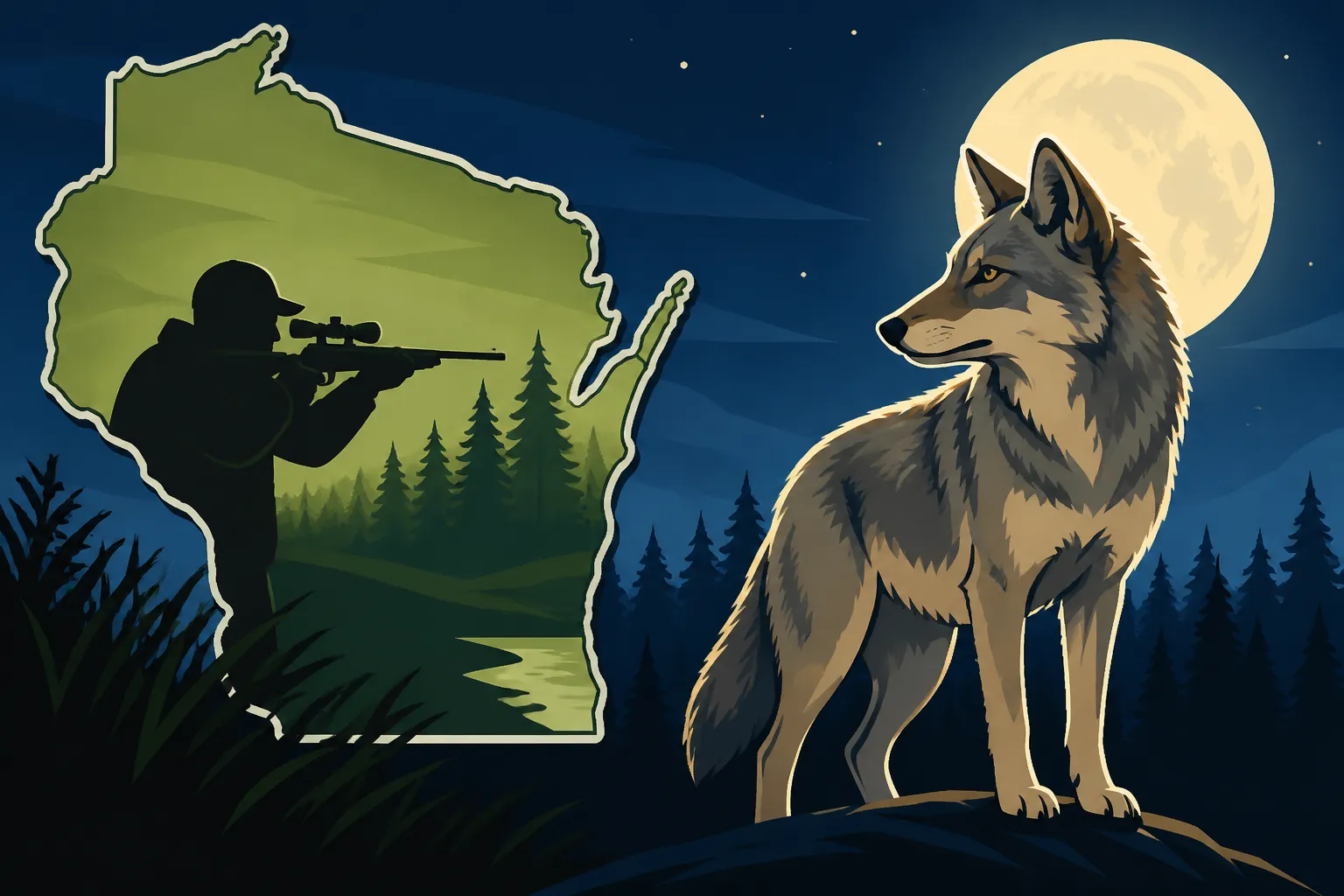
Night Hunting Rules for Wisconsin Coyotes
Hunting coyotes at night in Wisconsin can feel like navigating a maze of conflicting information. Many hunters feel frustrated by the lack of clear, concise guidelines, especially when dealing with nuanced rules about lights and optics that differ from general deer season regulations. This comprehensive guide aims to unravel Wisconsin's specific night hunting rules for coyotes, helping you stay legal, safe, and successful in the field after dark.
Understanding Wisconsin's General Night Hunting Regulations
When the sun dips below the horizon in Wisconsin, the rules for hunting change dramatically for most game species. However, coyotes, being an unprotected species, often fall into a different category, which can cause confusion. It's crucial to understand the baseline regulations before diving into the specifics of night hunting for these cunning canines.
Legal Shooting Hours and Equipment Restrictions
For the vast majority of game animals in Wisconsin, legal hunting hours are tied to sunrise and sunset, typically half an hour before sunrise to half an hour after sunset. This foundational rule is ingrained in every hunter's mind from their hunter safety course. The reason behind it is clear: ensuring fair chase, promoting safety by allowing positive target identification, and preventing unethical practices. However, coyotes are a notable exception to this strict daylight-only paradigm.
While you might be able to hunt coyotes outside of traditional daylight hours, this doesn't automatically mean a free-for-all when it comes to equipment. Historically, using artificial lights or electronic night vision devices for hunting game animals was heavily restricted or outright prohibited. These regulations were put in place to maintain a level playing field between hunter and quarry, and to prevent the exploitation of animals disoriented by bright lights. For instance, the general rule preventing the use of a spotlight to locate or shoot a deer at night is a prime example of these restrictions. Even with the more relaxed rules for coyotes, understanding these underlying principles helps in comprehending the specific allowances.
General Hunting License and Permit Requirements
Before you even think about stepping out into the twilight with your coyote calls, you need to ensure you're properly licensed. Unlike some specific game animals that require drawings or special tags, hunting coyotes in Wisconsin is relatively straightforward in terms of licensing. All you need is a valid small game license, a patron license, or an archery/crossbow license. If you're hunting during the regular gun deer season, a valid deer license also covers coyote hunting. It’s always best practice to carry proof of your license, whether it's your physical card or digital proof accessible via the Go Wild app on your smartphone.
It's tempting to think that because coyotes are an "unprotected species" in many contexts, the need for a license might be waived. This is a common misconception. While their hunting season is generally open year-round, and bag limits are non-existent, the requirement for a base hunting license remains firm. The state uses these licenses not just for revenue, but also to track participation and ensure that anyone carrying a firearm or bow in the field has met basic educational and legal requirements. Double-checking your license status before heading out, especially if you haven't been in the woods since deer season, is a simple step that can save you a lot of hassle.
Specific Rules for Night Hunting Coyotes in Wisconsin
This is where the rubber meets the road for coyote hunters. Wisconsin has distinct rules for night hunting coyotes that set them apart from other species, but these allowances come with their own set of specific parameters you absolutely must understand.
The "Unprotected Species" Advantage and Its Limits
One of the biggest advantages for coyote hunters in Wisconsin is that these animals are classified as an "unprotected species." What does this mean in practical terms? Primarily, it means there are no closed seasons and no daily or annual bag limits. You can hunt coyotes year-round, day or night, if you meet the specific regulations for the method and time of day. This contrasts sharply with regulated game animals like deer, turkey, or even small game, which have defined seasons and strict quotas. This "unprotected" status is a reflection of Wisconsin's management approach to a species that can have significant impacts on other wildlife populations and livestock.
However, "unprotected" does not mean "unregulated." This is a critical distinction that often trips up new night hunters. While you have year-round opportunity, you still must adhere to all other state hunting laws, local ordinances, and specific regulations regarding methods and equipment, especially for night hunting. For instance, while you can hunt coyotes at night, you cannot use any method that would be deemed illegal for other game, or violate general safety statutes. The allowance for night hunting is a specific carve-out, not a blanket exemption from all hunting rules. This nuanced approach helps manage coyote populations while still promoting responsible hunting practices.
Artificial Light and Night Vision Device Use
Here's the really exciting part for night coyote hunters: Wisconsin does allow the use of artificial lights and certain night vision devices for hunting coyotes and other unprotected species at night. This was a significant rule change, with the use of night vision and thermal optics for hunting unprotected species becoming legal in April 2023, expanding opportunities for hunters targeting these animals. Prior to this, restrictions were much tighter, often limited to specific situations or requiring special permits.
Now, for night hunting coyotes, you can use a weapon-mounted artificial light or a handheld light to illuminate your target. This is a game-changer, allowing for positive target identification and precise shot placement in low-light conditions. When it comes to advanced optics, both thermal imaging and night vision devices are permitted. This means you can use that new thermal scope or night vision monocular to detect, identify, and harvest coyotes after dark. Just remember, while these tools are now legal for coyote hunting, their use for other regulated game species generally remains prohibited. Always be absolutely sure of your target and what's beyond it, as these devices can sometimes obscure depth perception or surrounding details. The Thermal and Night Vision Rules in Wisconsin are critical to review thoroughly before heading out.
Firearm and Ammunition Considerations for Night Hunting
When it comes to the specific firearms and ammunition you can use for night hunting coyotes, Wisconsin's rules are generally consistent with those for daylight hunting, meaning you have a wide range of options. Unlike deer hunting, where Legal Firearms for Wisconsin Deer can have specific restrictions based on zone or weapon type (e.g., shotgun-only zones), coyote hunting is far more flexible. Most common rifle calibers are suitable, such as .223 Remington, .204 Ruger, or .243 Winchester, providing flat trajectories and adequate knockdown power for coyotes. Shotguns loaded with buckshot or predator loads are also effective, especially in thicker cover where shots might be closer.
There are typically no specific ammunition restrictions (like lead-free requirements) for coyote hunting, but always double-check local ordinances or specific property rules, as some private lands might have their own stipulations. The key is to select a firearm and ammunition combination that you are proficient with, that offers sufficient ethical killing power, and that allows for precision, especially in low light. Remember, safety should always be your top priority. Ensure your chosen setup is legal, properly zeroed for the distances you expect to shoot, and that you have a firm understanding of its capabilities in the dark.
Navigating Public and Private Land for Night Coyote Hunting
While Wisconsin's statewide regulations for night hunting coyotes have become more permissive, the location you choose to hunt can still present unique challenges and additional rules. Public and private lands each have their own sets of considerations that can impact your night hunting plans.
Public Land Restrictions and Considerations
Hunting coyotes on public land at night can be a fantastic experience, offering vast tracts of ground to explore. However, just because the DNR allows night hunting for coyotes statewide doesn't mean every single piece of public land follows suit. It's crucial to understand that many state parks, some wildlife areas, and even specific sections of county or national forests might have their own, more restrictive rules regarding hunting after dark. For instance, many state parks prohibit any hunting activity after sunset, regardless of species.
Before planning a night hunt on public land, your absolute first step should be to meticulously research the specific property. Resources like the Wisconsin DNR's Scouting With the Wisconsin Hunt Wild App are invaluable for this, often providing boundary information and links to specific property regulations. You can also call the local DNR office or property manager directly to confirm. Failing to do so could lead to a citation for trespassing or hunting out of season for that particular property. Furthermore, hunting on public land at night means an increased need for vigilance regarding other users. Even if hunting is permitted, hikers, campers, or other recreational users might be present, making positive target identification and safe shot angles even more critical. Respect for other users and clear communication, if you encounter anyone, goes a long way.
Private Land Permission and Safety Protocols
For many seasoned night hunters, private land offers the most consistent and often safest opportunities for coyote hunting after dark. The primary reason is control: with landowner permission, you can establish clear safety zones, anticipate potential human presence, and manage calling setups more effectively. However, the absolute prerequisite for hunting on private land is explicit permission from the landowner. For night hunting, it's highly advisable to obtain this Do You Need Written Permission in Wisconsin? and to discuss your specific intentions clearly. Explain that you'll be hunting at night, potentially using lights or thermal optics, and what kind of noise to expect.
Establishing clear communication with the landowner about your schedule, the areas you'll be hunting, and any specific safety concerns they might have is paramount. On your part, strict adherence to safety protocols is non-negotiable. Always know your backstop, identify your target positively before every shot, and be aware of any buildings, livestock, or roads nearby. Consider notifying local law enforcement of your presence to avoid any calls from concerned neighbors about lights or gunshots after dark. A simple heads-up to the local sheriff's department can prevent misunderstandings and ensure a smoother hunting experience for everyone involved.
Best Practices and Ethical Considerations for Night Coyote Hunting
Night hunting coyotes is a unique challenge that demands more than just knowing the rules; it requires a commitment to best practices, safety, and unwavering ethical conduct.
Calling Tactics and Setup Strategies for Darkness
Night hunting calls for a slightly different approach than daylight hunting. Coyotes often feel more secure under the cover of darkness, making them potentially more responsive to calls, but also more cautious. Electronic callers loaded with distress sounds (rabbit, fawn, bird) are highly effective at night, as their volume and clarity can cut through the darkness over long distances. Hand calls, like open reed or diaphragm calls, also have their place, especially for finishing an animal close or when you need a more nuanced sound.
Your setup needs to prioritize visibility and safety. Positioning yourself with the wind in your face or crosswind is even more crucial at night, as coyotes rely heavily on their sense of smell. Consider setting up with the moon at your back if possible, allowing its subtle light to illuminate incoming animals. Elevated positions can offer better visibility, but a well-chosen ground blind can also be effective. Always select a location that provides a clear shooting lane and a safe backstop. When Coyote Calling in Wisconsin Winter, the snow can dramatically reflect ambient light, making target acquisition easier, but also revealing your position if not careful.
Safety First: Identifying Your Target and Backstop
This cannot be stressed enough: safety is the paramount concern when night hunting. The allowance for artificial lights and thermal/night vision for coyote hunting comes with a huge responsibility. In the dark, it is incredibly easy to mistake one animal for another, or to misjudge distances and terrain. Every hunter must make a solemn commitment to positive target identification before pulling the trigger. This means identifying the animal as a coyote, ensuring it's not a domestic animal or a protected species like a bobcat, and confirming that no other animals or humans are in the line of fire.
Furthermore, always know your backstop. What is behind that coyote if you miss or if the bullet passes through? A hillside, a thick tree line, or open agricultural ground are ideal. Never shoot towards the horizon or at a target silhouetted against the night sky, as you have no way of knowing what lies beyond. Take your time, use your optics and lights to confirm everything, and if there's any doubt, do not shoot. This diligence protects wildlife, property, and, most importantly, human lives.
Respecting Property and Public Perception
As hunters, our actions are constantly under public scrutiny, and night hunting, by its very nature, can draw more attention and sometimes concern from non-hunting neighbors or landowners. It’s imperative to conduct yourself with the utmost respect for private property, local communities, and the broader public perception of hunting. Minimize noise, especially when driving to and from your hunting spot. If using lights, be mindful of how they might appear to distant homes; avoid sweeping them across residences or public roads unnecessarily.
When hunting on private land, ensure you leave no trace behind. Pick up all spent casings, trash, and any other indicators of your presence. Building and maintaining positive relationships with landowners is essential for continued access and for portraying hunters as responsible stewards of the land. Hunting Pressure on Wisconsin Public Land can sometimes lead to competition, but private land access relies heavily on good behavior. The more responsibly we act, the better it is for the future of hunting in Wisconsin. Remember, every time you step out, you are an ambassador for the hunting community.
| Equipment Type | General Rule for Deer (Daylight) | Night Hunting Coyotes (Current WI Rules) | Key Considerations |
|---|---|---|---|
| Artificial Light | Prohibited for shooting/locating | Permitted: Weapon-mounted or handheld | Positive ID, Backstop Critical |
| Night Vision Optics | Prohibited | Permitted: Thermal & NV scopes/monoculars | Training & Ethical Use, Recent Change |
| Thermal Imaging Optics | Prohibited | Permitted: Thermal & NV scopes/monoculars | Training & Ethical Use, Recent Change |
| Firearms | Regulated by zone/type (e.g., rifle/shotgun) | Most legal firearms allowed | Proficiency, Ethical Caliber |
| Ammunition | General rules apply | General rules apply | No specific night restrictions |
| Electronic Callers | Generally permitted for most species | Permitted | Effective, varies by species |
| Decoys | Permitted | Permitted, often used with lights | Realism, Scent Control |
Disclaimer
Please remember that hunting regulations can change. While every effort has been made to provide accurate and up-to-date information, it is your responsibility to consult the most current Wisconsin Department of Natural Resources (DNR) regulations and local ordinances before engaging in any hunting activity. This guide is for informational purposes only and should not be considered legal advice.