Coyote Calling in Wisconsin Winter
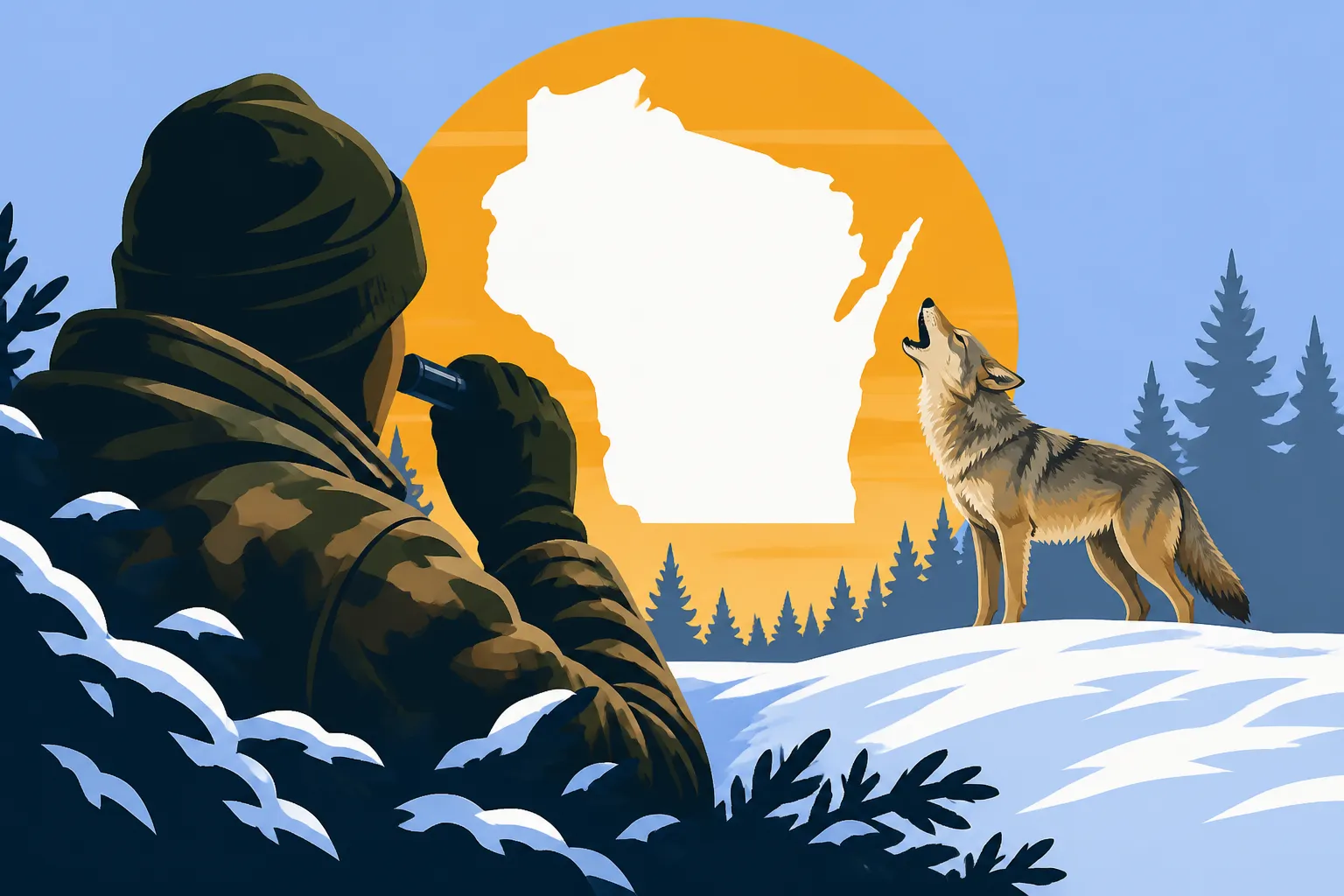
Winter in Wisconsin brings a unique set of challenges for hunters, and if you've ever tried to call coyotes when the snow is deep and the air bites, you know the frustration. These smart predators become even more elusive in the cold, forcing us to adapt our tactics. This guide is dedicated to equipping you with the knowledge, gear, and strategies to successfully call coyotes during Wisconsin's demanding winter months, turning those frozen frustrations into thrilling hunts.
The Unique Challenges of Winter Coyote Hunting in Wisconsin
Hunting coyotes in Wisconsin during the winter isn't just about calling; it's about understanding how the harsh climate molds their behavior and where they'll be spending their time. The landscape transforms, and so do the coyotes. Ignoring these changes means you're likely to go home empty-handed and frozen.
How Wisconsin's Winter Climate Shapes Coyote Behavior
When the thermometer dips and the snow starts piling up, a coyote's world changes dramatically. Unlike warmer months where they might roam more freely, winter forces them to become incredibly efficient with their energy and movements. This means they're often found in areas that offer the best combination of food, shelter, and easy travel.
Deep snow, for instance, significantly impacts how coyotes move. They'll often rely on established deer trails, logging roads, or frozen waterways to conserve energy, rather than breaking new paths through waist-deep drifts. This creates predictable travel corridors that savvy hunters can exploit. Think about how much harder it is for you to walk in deep snow; it's no different for a coyote. Their hunting habits also shift. While they're always opportunistic, the scarcity of easy meals in winter means they'll focus heavily on vulnerable prey, deer carcasses in wintering yards, or small rodents that might be struggling under the snow. They become more desperate, which can sometimes make them more responsive to calls, but also warier of anything out of place.
Identifying Prime Winter Coyote Habitat
Knowing where coyotes should be in the winter is half the battle. They're looking for thermal cover, reliable food sources, and efficient travel routes. Neglecting these key elements will have you calling into empty woods.
Cedar swamps and dense conifer stands are absolute magnets for coyotes in deep winter. These areas offer crucial thermal protection from biting winds and heavy snow, providing a warm, relatively dry place to bed down. You'll often find a higher concentration of deer in these same areas, which means a readily available food source for coyotes if a deer dies or is weakened. River bottoms, especially those with thick brush or standing timber, also provide excellent winter habitat. These areas often have less snow accumulation, offer travel corridors along the banks, and are frequented by other small game like rabbits and squirrels. Agricultural field edges, particularly those with standing corn or bean stubble, can also be hotspots, especially if they're adjacent to good cover. Coyotes will patrol these edges, hoping to catch rodents or scavenge leftover crops. When scouting, remember that coyotes are seeking efficiency. Look for the junctions of these habitat types – where a cedar swamp meets a logging road, or a river bottom opens up to a cornfield – as these transition zones are often prime ambush points for them.
Assembling Your Winter Coyote Calling Kit
Wisconsin winters are no joke, and being unprepared can quickly turn a promising hunt into a miserable ordeal. Your gear choices, from the clothes on your back to the calls in your hand, play a massive role in your comfort, stealth, and ultimately, your success. This isn't the time to cut corners.
Staying Warm, Quiet, and Concealed
Being comfortable and unnoticeable in freezing temperatures is paramount for winter coyote calling. Coyotes have incredible senses, and any shiver, rustle, or unnatural movement can blow your setup.
Layering is your best friend when battling Wisconsin's cold. Start with a moisture-wicking base layer against your skin to pull sweat away. Nobody wants to feel clammy when it's five below. Follow that with insulating mid-layers, like fleece or down, to trap warmth. Finally, your outer layer needs to be windproof, waterproof, and quiet. Wool or high-quality synthetic fabrics are ideal, as they retain warmth even if damp and don't make a racket when you move. Insulated, waterproof boots are non-negotiable; your feet will be in the snow for extended periods. Brands like Schnee's or Lacrosse make excellent options that stand up to the cold. Don't forget hand and foot warmers – they can be a game-changer on those extra frigid days. For concealment, consider white camo or simply wearing a white sheet or coveralls over your existing layers. Snow camo breaks up your outline against the snowy backdrop, making you virtually disappear. A balaclava or face mask is also crucial, not just for warmth, but to prevent the visible vapor from your breath from betraying your position. For more specific advice on staying warm, check out Base Layers for a Wisconsin November, which offers principles applicable to even colder winter hunts.
Firearms and Optics for Snowy Conditions
The right rifle and clear optics are critical when a coyote suddenly appears at range, often in fading light. You need gear you can trust to perform flawlessly in the cold and deliver a humane shot.
For firearms, common calibers like the .223 Remington, .22-250, .204 Ruger, or .243 Winchester are popular choices for coyotes. They offer flat trajectories and enough punch to humanely dispatch a coyote without excessive pelt damage, especially important if you're interested in the fur. A reliable bolt-action rifle with a synthetic stock is often preferred, as wood stocks can swell and warp with temperature and moisture changes. When considering Rifle Setups for Wisconsin Deer, remember that for coyotes, lighter, faster rounds are often key. Optics are equally important. A good quality scope with excellent low-light gathering capabilities and a clear, uncluttered reticle is a must. The ability to quickly acquire a target against a snowy, often dim backdrop is invaluable. Variable power scopes around 3-9x or 4-12x offer versatility for both close and longer shots. A bipod or shooting sticks are highly recommended for stability, allowing for precise shots, especially if you're set up in an open field or on a snow drift. Always check Wisconsin's regulations regarding night hunting; while coyotes can be hunted at night, there are specific rules on light sources and equipment. Night Hunting Rules for Wisconsin Coyotes provides a detailed overview.
Decoys and Calls Built for the Cold
The proper selection and operation of your calls and decoys can make all the difference when trying to lure a wary winter coyote into range. They need to withstand the elements and sound convincing.
Electronic calls are incredibly versatile, offering a wide array of sounds from various distress calls to howls and barks. They allow for hands-free operation and consistent volume, which can be a huge advantage. However, batteries drain much faster in cold weather, so always carry spares and keep them warm (e.g., in an inside pocket). Brands like Foxpro and Lucky Duck are popular for their robust construction and realistic sounds. Hand calls, while requiring more skill, offer infinite variability in tone and volume and don't rely on batteries. A good open-reed or closed-reed distress call, along with a howler, should be in every winter coyote hunter's vest. Remember that coyotes in winter can be more pressured and therefore more cautious, so realistic sounds are crucial. Motion decoys, such as a fluttering flag or a rabbit decoy, can draw a coyote's attention away from your position, giving you those precious extra seconds for a shot. Again, battery life is a factor, so ensure your decoys are cold-weather rated. For more on tactical calling, including specific techniques for different landscapes, Coyote Calling in Wisconsin Farm Country might offer useful insights that can be adapted to winter.
| Call Type | Primary Purpose | Ideal Winter Scenario | Pros | Cons |
|---|---|---|---|---|
| Rabbit Distress | Simulates injured rabbit, universal prey sound | Hungry coyotes, general calling, less pressured areas | Highly effective, widely understood | Overused, wary coyotes may avoid |
| Fawn Distress | Simulates young deer in distress | Areas with winter deer yards, late winter/early spring | Very appealing to opportunistic coyotes | Can sound unnatural if overdone |
| Pup Howls/Whimpers | Mimics young coyotes, can trigger maternal/territorial instincts | Early winter, can draw in females or dominant males | Can draw in multiple coyotes | Less effective if no pups are present |
| Challenge Howls | Signals territorial intrusion, aggressive sound | Used to provoke dominant males in their territory | Can bring in aggressive males quickly | May push off submissive coyotes |
| K-9 Locator | Determines coyote presence/location | Before setting up, to survey an area | Helps locate coyotes without over-calling | Doesn't directly draw them in |
| Mouse Squeaks | Mimics small prey under snow | Close-range, subtle calling, finishing coyotes | Very subtle, good for wary coyotes | Limited range, requires extreme patience |
Mastering Winter Calling Tactics and Setup
Calling coyotes in winter demands precision in your setup and nuance in your calling. A single mistake can send a wary coyote packing before you even know it's there. Every detail, from your approach to your exit, matters more when conditions are tough.
Scouting and Stand Location in Snow-Covered Terrain
Effective coyote calling starts long before you ever make a sound. Winter scouting is all about reading the landscape, which is often made easier by a fresh blanket of snow. This fresh snow is like a blank canvas, revealing every movement the coyotes have made.
You're looking for tracks, scat, and kill sites. Fresh tracks will tell you where coyotes are traveling and how recently. Pay attention to well-worn paths, especially those leading into or out of dense cover, along field edges, or crossing frozen creeks. These are their highways. Scat can indicate their diet and general health, while kill sites (like a deer carcass picked clean) show you where they've been feeding. Using mapping apps like GoHunt is incredibly valuable here. You can identify potential stand locations, windbreaks, thermal cover, and crucial travel corridors right from your phone or computer. The topo and aerial imagery layers on GoHunt allow you to pinpoint pinch points, funnels, and natural barriers that coyotes will use. Always plan your approach and exit routes meticulously. You want to be able to get to your stand without crossing any obvious travel routes or skylining yourself. The goal is to arrive and depart undetected, leaving as little trace as possible. For insights on using technology for terrain analysis, Reading Aerial Photos for Coulee Deer can be a good primer, even though it's deer-focused, the principles apply.
Crafting Effective Calling Sequences
Once you're settled into your well-scouted stand, the real art of calling begins. It's not just about making noise; it's about telling a convincing story that draws a coyote in. In winter, this usually means appealing to their basic needs: food or territory.
Starting your calling sequence soft and subtle is almost always the best approach. A few quiet pup whimpers or very soft rabbit distress calls can pique a coyote's curiosity without immediately putting them on high alert. Many experienced callers find that starting with too much volume or an aggressive sound can scare off close-by or wary coyotes. If you don't get a response after a few minutes, gradually increase the volume and intensity. Varying your sounds is also key. Don't just stick to one rabbit distress call; mix it up with a few barks, a challenge howl, or switch to a different distress sound entirely. Coyotes can become call-shy, especially in areas with high hunting pressure, so variety keeps them guessing. Listen intently between calls; sometimes a coyote will respond with a faint bark or howl, confirming its presence and direction.
Call duration is another critical factor. While some coyotes will come charging in immediately, others might take their sweet time, circling downwind or approaching cautiously. A typical stand should last anywhere from 15 to 20 minutes, but in colder conditions or with wary coyotes, extending that to 30 minutes isn't uncommon. Patience is your most potent weapon.
Patience and Perseverance in the Cold
Calling coyotes is often a waiting game, and in the bitter cold of a Wisconsin winter, that waiting can test even the most seasoned hunter's resolve. But it’s precisely this patience that often separates success from failure.
Coyotes, particularly those that have been called to before or live in heavily hunted areas, are masters of caution. They might hang up at a distance, circling downwind to catch your scent, or approach so stealthily you won't know they're there until they're practically in your lap. The colder the weather, the more cautious they often become, as energy conservation is critical. This means they are less likely to make rash decisions. Remaining absolutely still, even when your fingers and toes are screaming for attention, is vital. Any movement, no matter how small, can be picked up by their keen eyesight against the stark white backdrop of snow. Your breath fogging in the cold, a twitch of your hand, or the rustle of clothing can all give you away.
Mentally preparing for long, cold sits is part of the game. It's about enduring the discomfort, trusting your setup, and believing that a coyote will eventually make a mistake. The reward of seeing a ghost-like coyote materialize from the timber, drawn in by your calls, is what keeps us coming back. It’s a testament to your perseverance and skill, making those frozen moments all the more worthwhile.
Navigating Regulations and Ethical Hunting
As with any hunting pursuit, understanding the rules and maintaining ethical standards are non-negotiable. Wisconsin has specific regulations for coyote hunting, and respecting both the law and the land ensures a sustainable and positive hunting experience for everyone.
Understanding Wisconsin's Coyote Hunting Rules
Before you even step foot in the woods, it's crucial to be familiar with Wisconsin's hunting regulations for coyotes. The rules can vary, and ignorance is never an excuse.
First and foremost, you'll need a valid Wisconsin hunting license. For residents, this typically means a small game license or a Conservation Patron license, which covers a wide array of hunting and fishing activities. Wisconsin Hunting Licences and What They Cost offers a detailed breakdown of the various options. Coyotes are generally classified as a furbearer or unprotected species, meaning they have a very long season, often open year-round with some specific firearm restrictions depending on the season (e.g., during deer gun season). However, there are nuances. Night hunting for coyotes is permitted, but it comes with strict guidelines on legal shooting hours, light sources, and methods. It's not a free-for-all, and safety is paramount. Always double-check the current Wisconsin DNR regulations publication for the most up-to-date and specific rules. While baiting for coyotes is generally allowed, local baiting and feeding bans for deer (due to CWD) can impact what you can do. It's essential to know if you're in a county with a baiting ban.
Respecting the Resource and Landowners
Ethical hunting extends beyond just following the law; it's about respecting the animals you pursue, the land you hunt on, and the people who own it. This is especially true when hunting predators like coyotes.
Always strive for a clean, ethical shot to ensure a humane harvest. This means knowing your rifle and your limits, and only taking shots you're confident in. After a successful harvest, responsible carcass disposal is important. If you're not planning to keep the pelt, move the carcass away from public view or well-used trails. Leaving no trace means packing out everything you pack in, including spent shell casings. When hunting on private land, obtaining explicit permission from the landowner is absolutely essential. Many farmers appreciate coyote control, but asking politely and respecting their property (closing gates, not driving on fields, etc.) goes a long way. Hunting Pressure on Wisconsin Public Land and Finding Ground Others Walk Past highlight the importance of being a responsible and respectful hunter, which helps maintain access for all. Understanding the ecological role of coyotes, even while you hunt them, is also part of respecting the resource; they are an important part of the ecosystem.
Safe Practices for Winter Hunting
Winter conditions inherently bring additional risks, and safety should always be your top priority. Hypothermia, frostbite, and getting lost are real dangers that can turn a hunt tragic.
Always dress in layers, as discussed, and be vigilant for signs of hypothermia – uncontrollable shivering, confusion, slurred speech. If you or a hunting partner exhibit these signs, seek warmth immediately. Carry emergency gear, including a fire starter, extra warm clothing, a first-aid kit, and high-energy snacks. Inform someone of your hunting location and expected return time, especially if you're hunting alone in remote areas. A GPS unit or a reliable mapping app like GoHunt on your phone (with downloaded offline maps) is crucial for navigation, especially if you venture deep into vast tracts of public land like the Chequamegon-Nicolet National Forest. Although not always required for coyote hunting, be mindful of blaze orange or pink rules if you're hunting during an overlapping deer season. During any gun deer season, specific amounts of blaze orange or fluorescent pink are legally required. Even outside these seasons, wearing some bright color can increase your visibility to other hunters or outdoor enthusiasts. Check How Much Blaze Orange Wisconsin Requires for the exact specifications.
Maximizing Your Winter Coyote Harvest
Successfully calling coyotes in the dead of a Wisconsin winter requires more than just making noise; it's about strategy, adaptability, and understanding the nuances of coyote behavior. You need to adjust your approach based on the individual coyote and the ever-changing winter landscape.
Targeting Different Coyote Personalities
Just like people, coyotes have different "personalities," and a smart caller knows how to tailor their sounds to appeal to various types of animals. Not every coyote will respond to the same call in the same way.
Aggressive, territorial coyotes might be spurred to action by a challenge howl or a more intense K-9 distress sound, especially if you're encroaching on their established territory. These are often dominant males or females. They might come in hard and fast, looking to chase off the intruder. For these coyotes, you want to project confidence and a bit of a threat. On the other hand, shyer, more cautious coyotes, perhaps younger individuals or those from heavily pressured areas, might be more attracted to a softer, more subtle distress call, like a pup whimper or a mouse squeak. These calls appeal to their hunger instinct without posing a direct threat. They'll often approach more cautiously, circling downwind and taking their time. The effectiveness of pup distress calls cannot be overstated in winter. They can draw in both females (displaying maternal instincts) and dominant males (investigating a potential meal or threat to their young). It's about creating a scenario that triggers their strongest instincts, whether it's hunger, dominance, or curiosity.
Adapting to Changing Winter Conditions
Wisconsin winters are dynamic, and successful coyote hunters are those who can adapt their tactics to whatever the weather throws at them. What works one day might be a bust the next.
Calling after a fresh snowfall can be incredibly productive. Coyotes are often on the move, taking advantage of the fresh powder to hunt small game or investigate new smells. Fresh snow also makes tracking much easier, allowing you to quickly locate areas of recent activity. During light snow or sleet, coyotes might be more inclined to respond as the weather muffles sound and can make them more reliant on hearing. However, avoid calling during high winds. Strong winds carry sound poorly and make it difficult for coyotes to pinpoint the source of your call. Save those days for scouting or other pursuits. Paradoxically, some of the best winter coyote hunting occurs during extremely cold snaps. When temperatures plummet and food becomes even scarcer, coyotes can become more desperate and therefore more willing to investigate a potential meal, even if they're usually wary. These are the days when persistence truly pays off, as hungry coyotes might take a chance they wouldn't otherwise.
Disclaimer
Hunting is an inherently dangerous activity. Always prioritize safety, follow all local, state, and federal regulations, and obtain proper licensing. The information provided in this guide is for informational purposes only and should not replace professional guidance or official regulations. Always verify current hunting seasons, bag limits, and specific rules with the Wisconsin Department of Natural Resources before heading afield.