Crossbow Versus Vertical Bow in Wisconsin
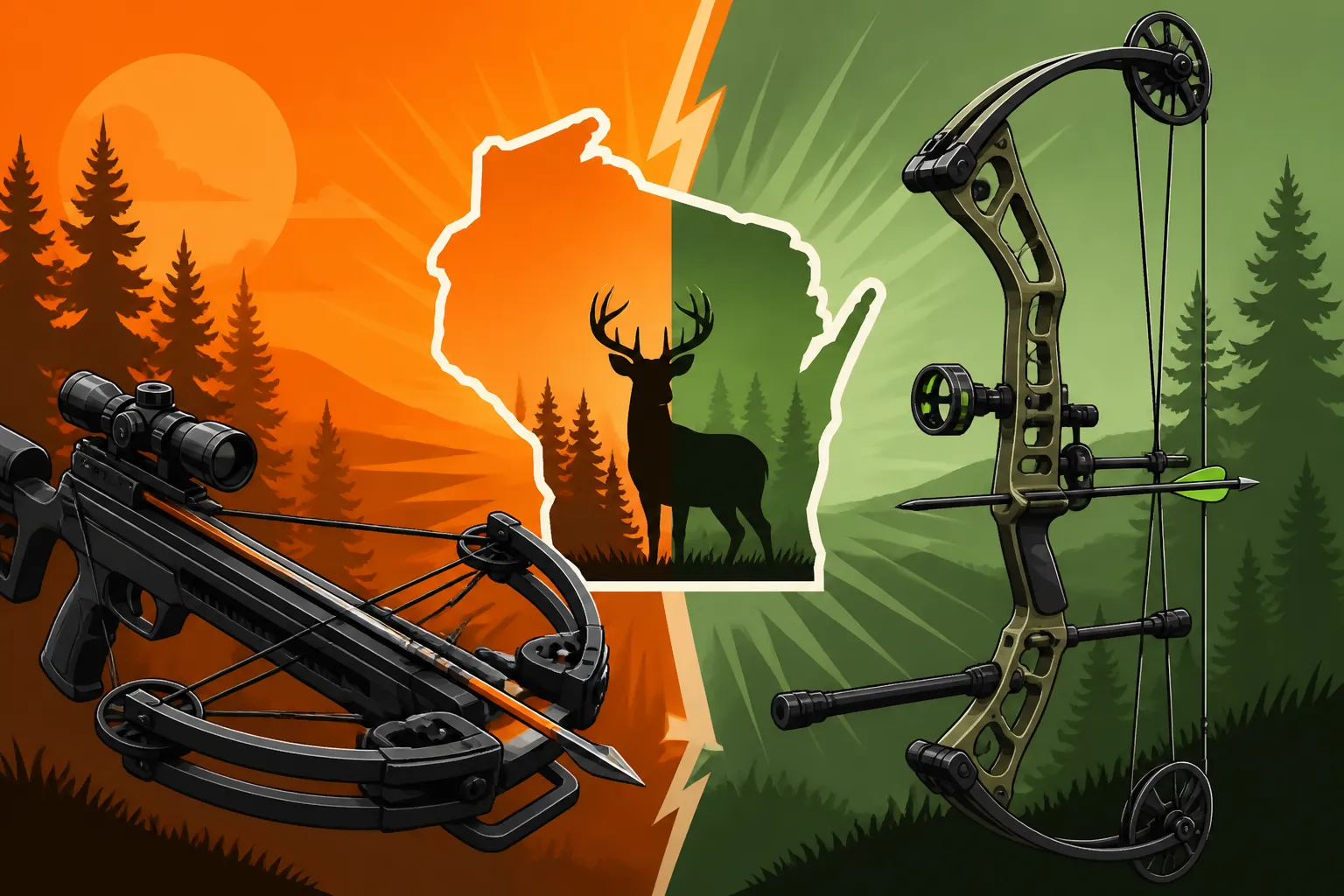
Choosing between a vertical bow and a crossbow for deer hunting in Wisconsin can feel like navigating a minefield of opinions, traditions, and sometimes, outright judgment. Many hunters struggle with this decision, weighing the personal challenge of a traditional bow against the practical advantages of a crossbow, often feeling caught between what they've always done and what might offer a better chance at success or simply a more accessible way to stay in the woods. This guide is here to break down the realities of both options in Wisconsin, helping you understand the nuances so you can make an informed choice that best suits your hunting style and physical capabilities.
Understanding the Basics: Vertical Bows in Wisconsin
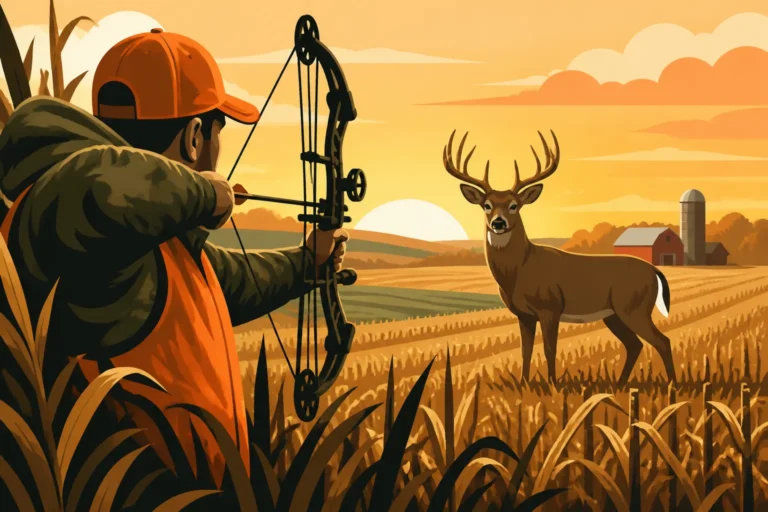
Vertical bows, encompassing traditional recurves, longbows, and modern compound bows, have a long and storied history in Wisconsin's deer woods. For many, the act of drawing a vertical bow is a deeply ingrained part of the hunting experience, a connection to generations past.
The Traditional Experience: Recurves and Longbows
When we talk about traditional archery, we're really thinking about recurves and longbows. These bows represent the purest form of archery hunting, demanding an incredible amount of practice, dedication, and a deep understanding of shot mechanics. There's an undeniable allure to harvesting a deer with a stick and string, something that speaks to a primal hunting instinct. However, that romantic notion comes with a steep learning curve. Mastering instinctive shooting, consistently hitting tight groups, and being able to do so under the pressure of a live animal requires countless hours on the range, focusing on form, release, and holding steady. The effective range for most traditional archers is quite limited, typically within 20 yards, which means you need to get incredibly close to your quarry – a true test of woodsmanship.
Modern Archery: Compound Bows
Compound bows, on the other hand, brought a revolution to vertical archery. Their system of cams and cables provides a significant "let-off" at full draw, meaning once you pull the string back, a good portion of the weight is taken off, allowing you to hold at full draw for a much longer time with less strain. This feature dramatically increases accuracy potential, especially under stress, and extends ethical shooting ranges compared to traditional bows. With a compound, you're looking at more forgiving brace heights, faster arrow speeds, and the ability to fine-tune your setup with sights, stabilizers, and rests. Most modern compounds are incredibly efficient, delivering impressive kinetic energy for clean, humane kills. The learning curve is still present, requiring regular practice to maintain muscle memory and form, but it's generally less demanding than traditional archery. You'll still need to practice consistently, focusing on your shot sequence and managing buck fever, but the technology certainly helps bridge some of the gaps.
Physical Demands and Skill Curve
Regardless of the vertical bow type, there are inherent physical demands. Drawing a recurve or longbow requires constant strength and endurance, as there's no let-off. Compound bows alleviate some of that with their let-off, but you still need the strength to pull back the full draw weight initially. If you've been considering getting into archery, remember that Minimum Draw Weight for Wisconsin Deer is a crucial factor. Injury, age, or physical limitations can make consistently and ethically drawing a vertical bow a real challenge. This isn't about being "tough enough"; it's about being able to perform a precise, repeatable motion under pressure, ensuring a clean shot. The skill curve for vertical bows, especially compounds, involves consistent practice with your bow sight, understanding your pin gaps, and executing a smooth release. It's a commitment, but one that many hunters find incredibly rewarding, especially when they manage a successful Hunting the Pre-Rut in Late October with a vertical bow.
The Rise of the Crossbow: Accessibility and Precision
Crossbows have seen a significant increase in popularity in Wisconsin, moving from a niche weapon primarily for hunters with disabilities to a mainstream option available to all during the state's archery season. This shift has sparked a lot of debate, but it's undeniable that crossbows offer distinct advantages for many hunters.
Crossbow Mechanics and Advantages
A crossbow essentially combines aspects of a bow and a rifle. It's drawn and held at full draw by a mechanical system, requiring only a minimal effort to load the bolt (the crossbow equivalent of an arrow). Once loaded, the hunter simply aims through a scope and pulls a trigger, much like firing a rifle. This inherent stability and precision, coupled with optical sights, means that crossbows can be incredibly accurate, even in the hands of a less experienced shooter. They remove much of the physical exertion and nuanced technique required for vertical bows, opening up the sport to a wider demographic, including older hunters, those with physical limitations, or newcomers who want to get into archery season quickly. The higher bolt speeds and flatter trajectories also extend the effective range for many hunters, though ethical shot distances remain crucial. For instance, brands like TenPoint and Ravin have engineered crossbows that push the boundaries of speed and accuracy, making them highly effective tools in the deer woods.
Legal Considerations for Crossbow Use in Wisconsin
Wisconsin has embraced crossbow hunting, allowing them throughout the entire archery season for all licensed hunters, resident and nonresident alike. This means you don't need a separate permit or disability authorization, unlike in some other states. However, it's vital to be aware of the specific regulations. For example, knowing Crossbow Rules During Wisconsin Archery Season is paramount. You need a valid archery license to hunt with a crossbow, and the same blaze orange or pink requirements apply during specific periods of the archery season, particularly when the gun deer season or youth gun deer hunt overlaps. There are also minimum draw weights and maximum arrow lengths to ensure humane kills, although most commercially available crossbows meet these standards. Always double-check the current Wisconsin DNR regulations because these things can change. While you don't typically need to ask, "Do You Need a Separate Crossbow Licence?", staying informed about all regulations is crucial for responsible hunting.
Perceived Disadvantages and Ethical Debates
Despite their advantages, crossbows are not without their critics. The primary arguments often revolve around ethics and the idea that they make hunting "too easy," diminishing the "skill" of archery hunting. Some traditionalists argue that crossbows effectively turn archery season into an extended gun season, particularly with their longer effective ranges and scoped optics. This can lead to increased hunting pressure and potentially impact deer behavior. However, proponents counter that "easy" is a subjective term; while the shooting mechanics might be simpler, successfully harvesting a deer still requires deep woodsmanship, scent control, stand placement (perhaps a well-placed Treestand Setups in Wisconsin Hardwoods), and understanding deer movement. Another point of contention is shot opportunities. A crossbow hunter might feel compelled to take a longer shot that a vertical bow hunter would pass on, which can lead to higher rates of wounded, unrecovered animals if the hunter isn't proficient and disciplined. The key, regardless of weapon, is to know your personal ethical and accurate range and stick to it, whether you're using a crossbow or a traditional bow.
Key Differences and Choosing Your Weapon
Deciding between a vertical bow and a crossbow often boils down to a few critical differences that impact your hunting experience and success potential.
Shot Distance, Accuracy, and Speed
This is where the rubber meets the road for many hunters.
- Vertical Bows (Traditional): Generally limited to 20 yards or less for ethical, high-percentage shots, though highly skilled archers can push this slightly. Accuracy is heavily dependent on the shooter's form, release, and muscle memory. Arrow speed is typically lower, resulting in a more pronounced arrow trajectory.
- Vertical Bows (Compound): Expand the ethical range significantly, with many hunters comfortably shooting out to 40-50 yards with consistent practice. Modern compounds are incredibly accurate, often shooting tight groups at these distances thanks to advanced sights, stabilizers, and release aids. Arrow speeds are much higher than traditional bows, resulting in a flatter trajectory that's more forgiving of minor range estimation errors.
- Crossbows: Can offer rifle-like accuracy, especially with scoped optics, and many hunters are confident out to 50-60 yards, or even further with ample practice. The stability of the weapon means less shooter input impacts accuracy. Bolt speeds are often comparable to or even exceed those of faster compound bows, leading to very flat trajectories. This can be particularly advantageous when trying to punch through heavy cover or get to a deer quickly when Hunting a Funnel Between Two Swamps.
It's important to remember that these are ethical ranges, not maximum possible ranges. Just because a crossbow can shoot 80 yards doesn't mean it's ethical to do so on a live animal, especially in hunting scenarios where an animal might move.
Portability and Maneuverability in the Woods
How your weapon handles in the field is a huge factor, especially in Wisconsin's varied terrain, from dense northern timber to the open fields and coulees of the Driftless Area.
- Vertical Bows: Generally more compact and easier to maneuver in thick brush, dense woods, or when making slight adjustments in a tree stand or saddle. A compound bow, for instance, allows for a more fluid movement and a smaller profile in tight quarters. Saddle Hunting in Wisconsin Oaks benefits greatly from the compact nature of a vertical bow. When stalking or still-hunting, a vertical bow can be carried more discreetly and quietly.
- Crossbows: Tend to be wider and can be bulkier, making them more challenging to navigate through dense brush, especially when still-hunting. In a ground blind or smaller tree stand, the width can be a real hindrance, making quick, quiet adjustments harder. Their weight can also be a factor on long walks to remote stands. However, in a stationary elevated stand or a larger ground blind, the stability they offer can outweigh the bulk. They shine in situations where you might have limited space for a full draw but can pivot the entire weapon.
Personal Preference and Hunting Style
Ultimately, the best weapon is the one you are most proficient and confident with. Your choice should align with your personal hunting philosophy and physical reality.
- Challenge Seekers: If you thrive on the challenge, the pure archery experience, and the satisfaction of mastering a difficult skill, a vertical bow – especially a traditional one – will likely be your preference. It's about the journey and the intense connection to the hunt.
- Accessibility and Confidence: If physical limitations, time constraints for practice, or simply a desire for greater confidence in your shot are factors, a crossbow might be the better choice. It allows more people to participate effectively in archery season and ensures a higher likelihood of a clean, ethical kill for those who might struggle with a vertical bow. Brands like TenPoint, known for their user-friendly designs and safety features, make crossbows a strong contender for those prioritizing accessibility.
- Wisconsin Terrain: Consider where you hunt. If you're primarily still-hunting vast tracts of northern forest or navigating thick cedar swamps, a more compact vertical bow might be advantageous. If you hunt from a fixed position over a food plot or in a box blind in farm country, the extra width of a crossbow might be less of an issue. Whether you're doing Deer Drives With Three or Four Hunters or sitting solo, the practical handling of your weapon matters.
| Feature | Traditional Vertical Bow | Compound Vertical Bow | Crossbow |
|---|---|---|---|
| Physical Effort | High (constant draw weight) | Moderate (initial draw, then let-off) | Low (cocking mechanism) |
| Skill Curve | Very High (instinctive shooting) | High (form, release, pin gaps) | Moderate (aiming, trigger control) |
| Typical Ethical Range | 15-20 yards | 30-50 yards | 40-60 yards |
| Accuracy Potential | Good (highly shooter-dependent) | Excellent (with practice) | Excellent (optic-aided, stable) |
| Maneuverability | Excellent (compact, lightweight) | Good (compact) | Fair (wider, bulkier) |
| Speed/Trajectory | Moderate (more arching) | High (flatter trajectory) | Very High (flattest trajectory) |
| Noise Level | Quiet | Moderate (string slap, cams) | Moderate (string slap, mechanism) |
| Holding at Full Draw | Difficult (requires constant strength) | Easy (due to let-off) | Very Easy (mechanically held) |
Gear Considerations for Both Bow Types
No matter which type of bow you choose, having the right gear is essential for success and safety in the Wisconsin woods.
Accessories and Setup for Vertical Bows
For vertical bow hunters, especially those using compounds, the accessory market is vast. Your sight, for instance, can range from a simple three-pin fixed sight to a more complex movable sight like those often featured on the GoHunt platform for serious western hunters, adapted for whitetails. A quality release aid is critical for consistent shots, removing human error from the release itself. Stabilizers help balance the bow and reduce vibration, making it more accurate and comfortable to shoot. Quivers, arrow rests, and string silencers all play a role in optimizing performance. And, of course, broadheads are paramount. Deciding between Fixed Versus Mechanical Broadheads is a personal choice based on your bow's setup, arrow speed, and ethical considerations for a clean pass-through. Arrows themselves need to be properly spined for your bow's draw weight and length to ensure consistent flight. Regular tuning by a pro shop is highly recommended to keep your vertical bow shooting at its peak.
Crossbow-Specific Gear
Crossbows have their own set of unique accessories. The most noticeable is the optic. While some come with basic red dots, most serious crossbow hunters opt for magnified scopes, often with specific reticles designed for crossbow ballistics, allowing for holdovers at various distances. Cocking devices are crucial, as manually cocking a high-draw-weight crossbow can be difficult and inconsistent. Modern crossbows often come with integrated cranking devices or rope cockers to make this process easier and ensure a consistent draw. Bolts (arrows for a crossbow) are generally shorter and heavier than vertical bow arrows and need to be matched to the specific crossbow for optimal performance. Broadheads are similar to vertical bows, with fixed or mechanical options available. Ensuring your crossbow is properly sighted in and that you understand the trajectory of your bolts at different ranges is critical, just like you would with any firearm.
Maintenance and Longevity
Regardless of your choice, proper maintenance is key to the longevity and safe operation of your hunting tool.
- Vertical Bows: Requires regular inspection of the string and cables for wear, timely replacement (typically every 2-3 years for compounds), and keeping all screws and bolts tight. Limbs should be checked for cracks. Traditional bows also benefit from waxing the string and inspecting limb tips.
- Crossbows: The string and cables on a crossbow are under immense tension constantly, leading to more frequent wear. Regular waxing and replacement (often annually or every two years depending on use) are essential. The trigger mechanism also needs to be kept clean and free of debris. Lubricating the rail where the bolt sits can reduce friction and extend string life. Just like a rifle, keeping the scope clean and zeroed is paramount.
Both types of bows should be stored in a cool, dry place, preferably in a case, to protect them from environmental damage. Before every hunt, a quick visual inspection can prevent mishaps in the field. When hunting in Wisconsin's often wet and cold conditions, like when Keeping a Muzzleloader Dry in Wet Snow, it's equally important to keep your bow, whether vertical or crossbow, as protected as possible to maintain performance.
Disclaimer
Hunting is an inherently dangerous activity. Always prioritize safety, follow all local and state regulations, and ensure you are proficient with your chosen weapon. This guide provides general information and should not replace professional instruction or official DNR regulations.