Fixed Versus Mechanical Broadheads
Choosing the right broadhead for your bowhunt in Wisconsin can feel like trying to solve a complicated puzzle, especially with so many options promising the world. It’s a decision that weighs heavily on every archer because it directly impacts your shot accuracy, penetration, and ultimately, whether you recover that deer you've worked so hard for. This guide is here to cut through the noise, helping you understand the real differences between fixed-blade and mechanical broadheads, and how to pick the best one for your personal setup and hunting style in our diverse Wisconsin landscapes.
Understanding Fixed-Blade Broadheads: The Tried-and-True Workhorses
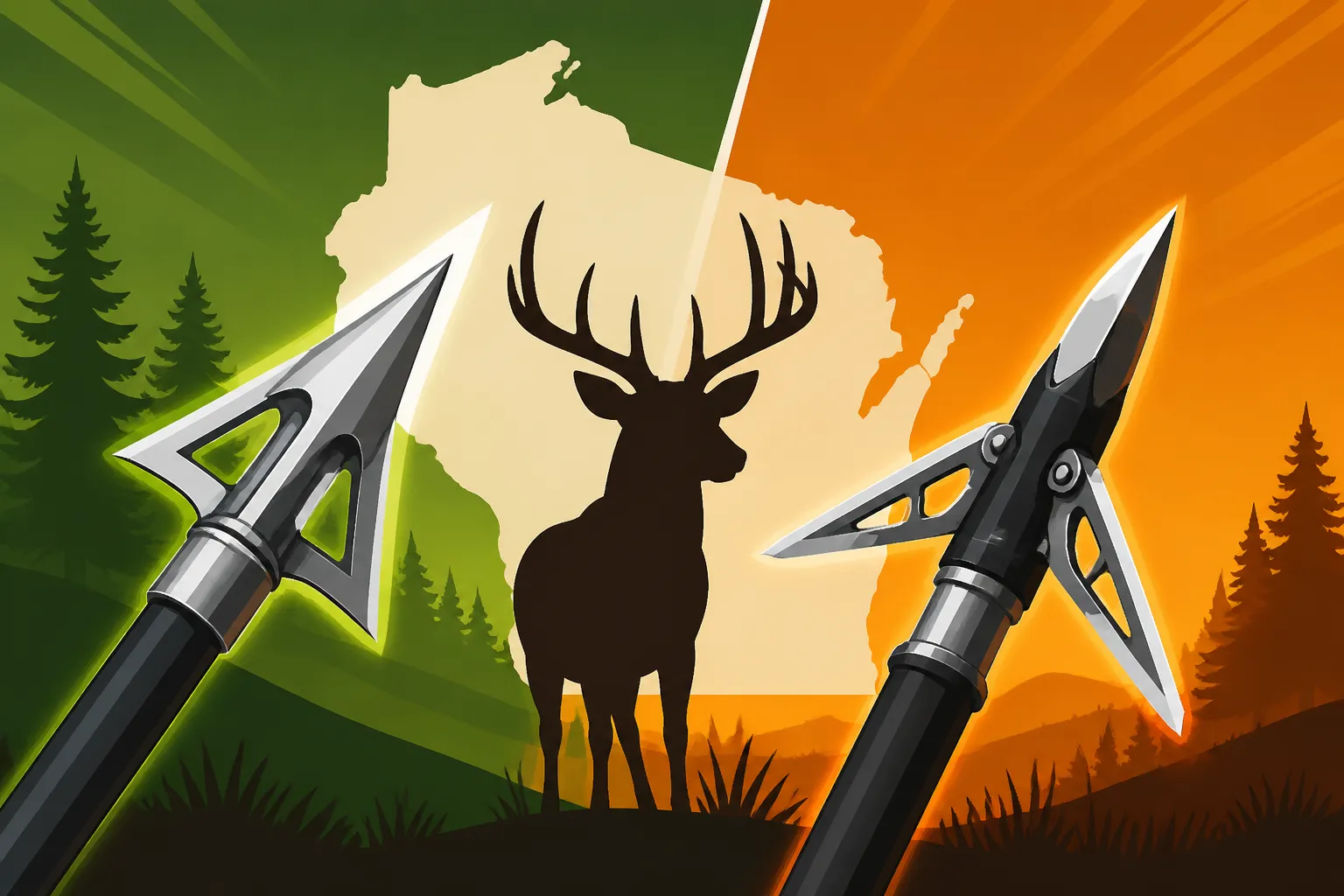
Fixed-blade broadheads are the veterans of the archery world, the kind of gear that’s been proven effective for generations. They’re called "fixed-blade" because their blades are rigid and permanently set, meaning they don't move or deploy upon impact. Think of them like a miniature razor-sharp airplane with wings that are always open. This simple design is precisely why many Wisconsin hunters, from the seasoned old-timers to new archers seeking reliability, lean on them year after year.
The Anatomy and Unwavering Strength of Fixed Blades
At their core, fixed-blade broadheads are straightforward: a ferrule (the body of the broadhead) with two, three, or even four blades rigidly attached to it, topped with a sharp tip. This tip can be a cut-on-contact design, which is like a sharpened chisel point that immediately starts slicing upon impact, or a more robust bone-crushing tip, designed to power through tougher obstacles. The strength of this design comes from its inherent simplicity and lack of moving parts. There’s nothing to fail or malfunction, no O-rings to snap, no pivot points to bend. When you send a fixed-blade broadhead downrange, you know exactly what it's going to do when it hits its mark, assuming your bow is well-tuned.
This unwavering strength is a huge confidence booster, especially when you're facing a quartering-away shot on a mature buck or if you happen to hit bone. Those rigid blades are designed to hold up and continue penetrating, giving you the best chance for a pass-through shot and a quick, ethical harvest. I've been in situations in the thick cedar swamps of northern Wisconsin where a deer might be tucked into heavy cover, and knowing I had a sturdy fixed-blade on my arrow gave me peace of mind about punching through any unseen brush or a shoulder blade.
Flight Characteristics and Penetration Power
One of the most common concerns about fixed-blade broadheads is their flight. Because the blades are always exposed, they can act like miniature wings, catching the wind and potentially causing your arrow to plane or steer off course, especially at higher speeds or longer distances. This is a very real challenge, and it means that precise bow tuning is absolutely critical. You can't just slap any fixed-blade on your arrow and expect it to fly like a field point. Your bow needs to be perfectly tuned for broadhead flight, which often involves slight adjustments to your rest or nocking point. Many veteran hunters will tell you they spend just as much time tuning their bow with broadheads as they do practicing their shot.
However, once properly tuned, a fixed-blade broadhead offers exceptional penetration. Because there's no energy wasted on deploying blades, all the kinetic energy of your arrow is focused on driving that broadhead deep into the animal. This is particularly advantageous for hunters with lower draw weights, or when hunting larger, tougher game like a big Wisconsin buck. The cut-on-contact designs are legendary for their ability to slice through hide and muscle with minimal resistance. This deep penetration capability means a higher likelihood of exiting the animal, creating two wound channels and a better blood trail, which is absolutely invaluable when tracking through thick cover or across a snowy landscape. It's often the difference between a long, frustrating search and a relatively quick recovery.
Diving into Mechanical Broadheads: Modern Innovation and Expanding Blades
Mechanical broadheads, often called "expandables," are the newer kids on the block, designed to address some of the flight characteristics often associated with fixed blades. Their biggest selling point is that their blades remain tucked away during flight and only deploy upon impact, creating a much larger cutting diameter. This innovation has certainly changed the game for many archers, offering a different set of advantages and considerations.
How Mechanical Broadheads Work and Their Design Principles
The magic of a mechanical broadhead lies in its spring-loaded or slip-cam blade retention system. The blades are folded back, typically held in place by a small O-ring, a collar, or even just friction, during the arrow's flight. This streamlined profile makes them fly remarkably similar to a field point, which can be a huge confidence booster for hunters who struggle with fixed-blade tuning or prefer a simpler setup. Upon striking the target, the force of the impact causes the blades to pivot or expand outwards, creating a cutting diameter that can be significantly wider than most fixed blades. We're talking about potential cutting widths of 1.5 to 2 inches or more, compared to the 1 to 1.25 inches of most fixed blades.
This larger cutting diameter translates to a massive wound channel, which is exactly what you want for maximum hemorrhage and a quick, ethical kill. When those blades open up, they create a wider path through tissue, leading to more blood loss and a better blood trail. Many archers find this especially appealing for deer hunting, where a wide cut through the vitals can drop an animal very quickly. Think about tracking a deer through a dense Wisconsin marsh or even a standing cornfield—a heavy, easy-to-follow blood trail makes all the difference.
Trade-offs: Penetration, Reliability, and Shot Angles
While the field-point flight and massive wound channels are undeniable benefits, mechanical broadheads do come with some trade-offs. The primary concern often revolves around penetration. Because the blades have to deploy, a certain amount of kinetic energy is expended in that process. This means that a mechanical broadhead might penetrate less deeply than a comparable fixed blade, especially if you have a lower draw weight or encounter significant bone. If you hit a shoulder blade dead-on, those deploying blades might struggle to open properly or could even deflect, leading to reduced penetration or a non-lethal wound. This is a crucial consideration for Wisconsin hunters, as our deer can be tough, and shots aren't always perfect.
Another point of discussion is reliability. While modern mechanicals are incredibly well-designed, there's always a slight chance of mechanical failure. Blades could deploy prematurely in flight (though rare with quality heads), or they might not open fully on impact, especially if they hit an obstruction like heavy brush or a glancing blow on bone. This is why many hunters with higher draw weights and those who prioritize maximum penetration, regardless of shot angle, might stick with fixed blades.
When it comes to shot angles, mechanicals generally perform best on broadside or slightly quartering-away shots where the blades have a clear path to deploy and cut through soft tissue. Steeper quartering shots or straight-on shots can be more problematic, as the blades might not open symmetrically or could be hindered by dense muscle or bone, potentially reducing penetration or causing the arrow to glance. It’s always best to understand the limitations and strengths of your chosen broadhead and hunt within those parameters.
Key Considerations for Your Wisconsin Hunting Style
Deciding between fixed and mechanical broadheads isn't just about the broadhead itself; it's about matching the gear to your unique hunting situation, your bow setup, and your personal ethics. Wisconsin's diverse terrain and deer population mean there's no one-size-fits-all answer.
Bow Setup and Performance
Your bow's setup is arguably the most critical factor. What's your draw weight? What arrow speed are you achieving? If you're shooting a traditional bow, a recurve, or a compound bow with a lower draw weight (say, under 50-55 pounds), maximizing penetration is paramount. In these cases, the energy-conserving design of a fixed-blade broadhead often makes it the superior choice. Every ounce of kinetic energy needs to go into driving that arrow deep. A broadhead that expands blades and uses energy to do so might compromise that crucial penetration.
Conversely, if you're rocking a modern compound bow with a high draw weight (60+ pounds) and blazing arrow speeds, you likely have plenty of kinetic energy to spare. Many hunters in this category find that mechanicals fly exceptionally well from their fast setups, giving them that field-point accuracy combined with a huge wound channel. However, even with a powerhouse bow, it's essential to ensure your mechanicals are robust enough to handle the impact without structural failure. When researching different models, a comprehensive resource like GoHunt can provide detailed specs and hunter reviews that speak to real-world performance.
Then there's the tuning aspect. If you're meticulous about tuning your bow, you can absolutely get fixed blades to fly perfectly. It takes patience and attention to detail, but the reward is a system that's incredibly reliable. If you're someone who prefers a simpler tuning process and wants the closest possible flight to your practice field points, a well-designed mechanical broadhead can be a fantastic option. Just remember, "field point accuracy" doesn't mean "no tuning required"—you should always practice with your hunting broadheads.
Shot Angles, Ethical Considerations, and Tracking
Wisconsin hunting often means diverse shot opportunities. You might be in a wide-open ag field near Baraboo, where a broadside shot is likely, or tucked deep in the hardwoods of the Chequamegon-Nicolet National Forest Hunting where quartering-away shots through brush are common. Consider the types of shots you typically encounter and are comfortable taking. Fixed blades, with their robust construction, generally handle bone hits and less-than-ideal shot angles with more resilience. They maintain their integrity and continue to penetrate, which is vital for reaching vitals from tough angles. This is where the cut-on-contact tip really shines, as it begins cutting immediately and minimizes deflection.
Mechanicals excel at creating massive wound channels on broadside shots, leading to quick kills and often dramatic blood trails. However, if your shot is severely angled, or you hit significant bone with a mechanical, there's an increased risk of deflection or inadequate penetration. We all strive for perfect broadside shots, but deer in the wild don't always cooperate. It's an ethical responsibility to choose a broadhead that maximizes your chances of a clean, humane kill, even if the shot isn't absolutely ideal.
Think about the environment where you hunt most often. Are you regularly hunting areas with dense undergrowth, like the alder runs for woodcock, but you also archery hunt deer there? Or are you hunting mostly in open hardwoods where shots might be cleaner? If you anticipate hitting brush or heavy bone, a fixed blade might give you more confidence. If you're in an area where clear broadside shots are the norm, a mechanical could be a great choice for its impressive cutting diameter.
Personal Confidence and Experience Level
Ultimately, the broadhead you choose should be one you have absolute confidence in. If you're constantly second-guessing your gear, it will affect your shot. Newer hunters might find the field-point-like flight of mechanicals less intimidating to tune and shoot, which can build confidence quickly. As you gain experience, you might become more comfortable with the tuning required for fixed blades and appreciate their inherent reliability.
Experienced hunters often have strong preferences developed over years in the field. Some swear by fixed blades for their ruggedness and deep penetration, especially when hunting White-Tailed Deer Across Wisconsin or bigger game. Others embrace mechanicals for their accuracy and the devastating wound channels they create. What matters most is that you trust your setup. Spend time at the range, not just with field points, but with your actual hunting broadheads. Practice from various distances and angles, if safely possible, to truly understand how your chosen broadhead performs with your bow and arrow combination. Resources like GoHunt often have forums or articles where hunters share their experiences with different broadheads, which can offer valuable real-world insights.
Making the Smart Choice for Your Next Wisconsin Hunt
So, how do you put all this information together and make the right call for your Wisconsin deer hunting adventures? It's about weighing the factors and making an informed decision that suits your specific needs and hunting ethics.
When Fixed Blades Might Be Your Best Bet
You might find fixed blades are the perfect fit if:
- Your bow setup has a lower draw weight: For bows under 50-55 pounds, maximizing every bit of kinetic energy for penetration is critical. Fixed blades don't waste energy on deployment.
- You prioritize maximum penetration above all else: If you want the deepest possible penetration, especially for quartering shots or the potential of hitting bone, fixed blades are incredibly reliable.
- You hunt in dense, brushy cover: In areas like thick cedar swamps or dense clearcuts, where there's a higher chance of hitting small twigs or brush before the animal, fixed blades are less likely to deflect or prematurely deploy.
- You're comfortable with bow tuning: You enjoy the process of broadhead tuning and are confident you can get them flying true.
- You value simplicity and absolute reliability: No moving parts means less to go wrong in the field. This can be a huge peace of mind for many hunters.
- You're pursuing Wisconsin's Black Bear Population: For larger, tougher animals, the deep penetration and robust nature of fixed blades are often preferred.
Many hunters who pursue big northern bucks in heavy timber or who use more traditional archery gear find fixed blades to be indispensable. For a discussion on traditional methods, you might find Bowhunting Wisconsin's Long Archery Season interesting.
When Mechanical Broadheads Could Be Your Advantage
Mechanical broadheads could be your go-to if:
- You have a powerful modern compound bow: With higher draw weights and faster arrow speeds, you have ample kinetic energy to spare for blade deployment without significantly compromising penetration on broadside shots.
- You value field-point-like accuracy: If tuning fixed blades proves frustrating, or you simply want the easiest path to consistent accuracy, mechanicals often deliver.
- You prioritize large wound channels: For quick, clean kills and easier tracking, the wider cutting diameter of mechanicals is incredibly effective, especially on broadside shots through the vitals.
- You hunt in more open terrain: If your primary hunting grounds offer clean, broadside shot opportunities, such as Hunting Wisconsin Farmland Deer or along field edges, mechanicals can perform exceptionally well.
- You want to simplify your practice routine: Being able to practice with field points and have your broadheads fly nearly identically can save time and build confidence.
Regardless of your choice, it’s vital to practice with the actual broadheads you plan to use for hunting. Never assume they will fly exactly like your field points, especially fixed blades. Shoot them at various distances, from your typical hunting setup, and observe their flight. This is the only way to truly build confidence in your gear.
Table: Fixed vs. Mechanical Broadheads for Wisconsin Hunters
To help you visualize the key differences, here's a quick comparison:
| Feature | Fixed-Blade Broadheads | Mechanical Broadheads |
|---|---|---|
| Blade Design | Blades are rigid and permanently fixed. | Blades are folded during flight, deploy on impact. |
| Flight | Can plane or steer; requires precise bow tuning. | Generally fly like field points; easier to tune. |
| Penetration | Excellent; all energy goes into pushing through. | Good; some energy lost during blade deployment. |
| Wound Channel | Good; typically 1" – 1.25" cutting diameter. | Excellent; typically 1.5" – 2"+ cutting diameter. |
| Reliability | Extremely high; no moving parts to fail. | Very high; potential for rare mechanical failure or partial deployment. |
| Bone Hits | Very robust; maintains integrity, pushes through bone. | Can struggle with dense bone; risk of deflection/non-deployment. |
| Brush Hits | Less prone to deflection or premature deployment. | Can be more prone to deflection or premature deployment. |
| Ideal For | Lower draw weights, heavy cover, angled shots, larger animals. | Higher draw weights, open terrain, broadside shots, quick kills. |
Ultimately, both fixed and mechanical broadheads are capable of ethically harvesting deer in Wisconsin when used correctly and paired with a properly tuned bow. The "best" broadhead is the one that you shoot most accurately, provides adequate penetration for your setup and target game, and gives you the utmost confidence in the field. Don't be afraid to experiment during the off-season. Consult other experienced archers, do your research on sites like GoHunt, and most importantly, spend time practicing. Your dedication at the range will pay off when that moment of truth arrives on a crisp Wisconsin morning. Good luck out there!
Disclaimer
This article is for general informational purposes only and does not constitute professional advice. Laws, prices and regulations vary by location and change over time. Consult a qualified professional for guidance on your specific situation.