Hunting Wisconsin Farmland Deer
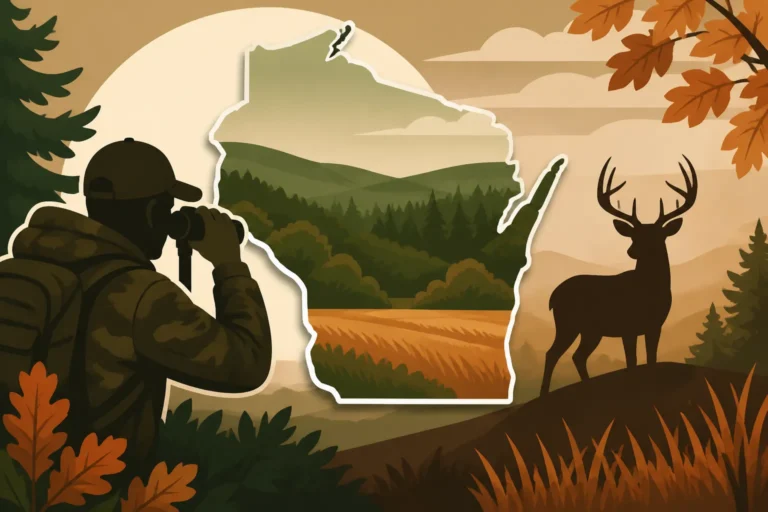
Hunting Wisconsin farmland deer can be a real head-scratcher. One day you've got a pattern dialed in, and the next, the farmer harvests a field, or a week of rain changes everything, leaving you feeling like you're starting from scratch. It's a constant puzzle, but one that offers incredible rewards if you can adapt. This guide will dive deep into the unique challenges and proven strategies for successfully pursuing whitetails in Wisconsin's rich agricultural landscapes.
Understanding the Farmland Deer Landscape
Wisconsin's farmland is a mosaic of different habitats, and understanding how deer use these areas is your first step to success. It’s not just cornfields and bean fields; it's also those sneaky woodlots, the overgrown fence rows, the creek bottoms, and even the edges of suburban developments. Each piece plays a role in the deer's daily life, and their patterns are constantly shifting with the seasons and agricultural activity.
The Role of Crop Fields and Food Sources
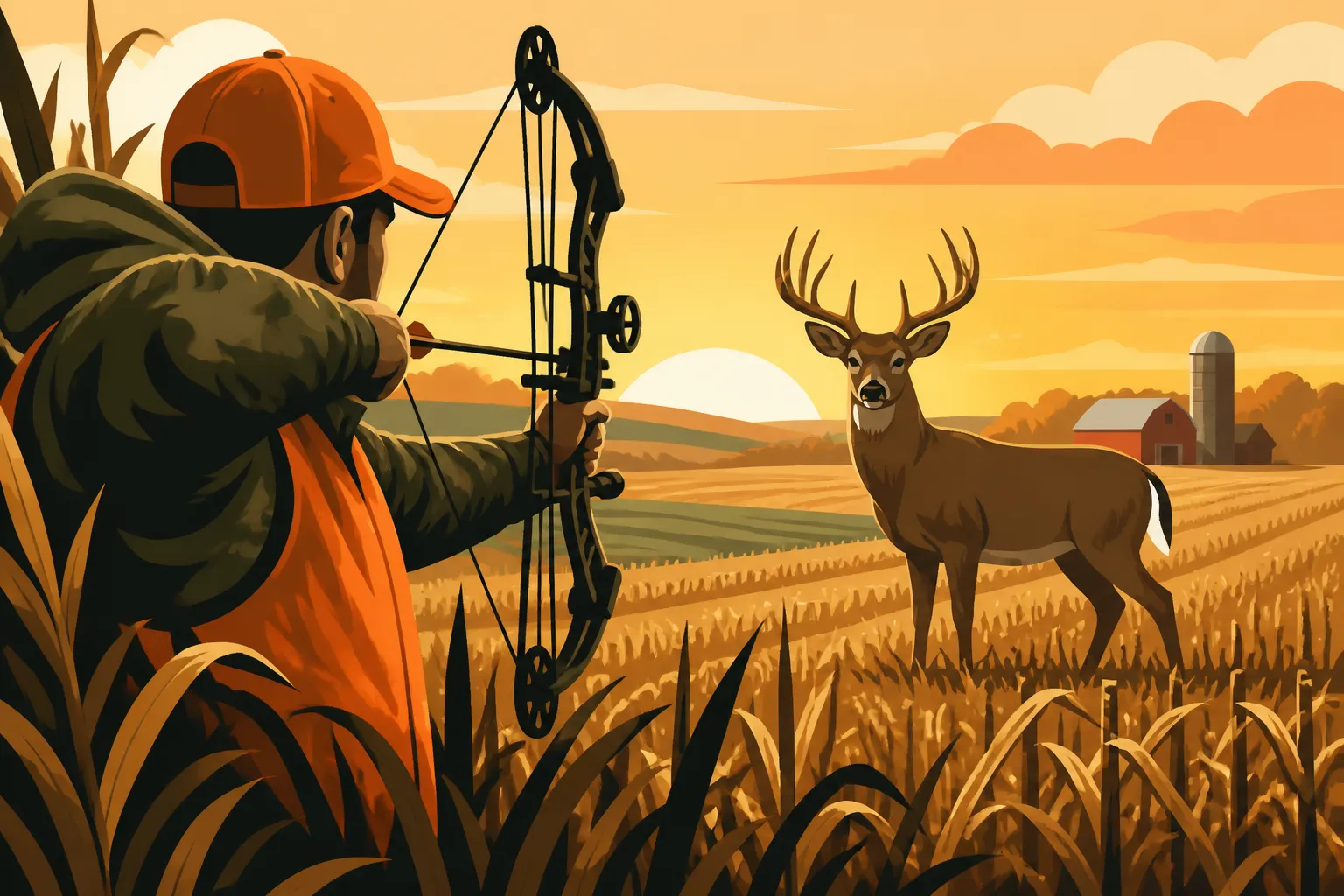
When we talk about farmland, the first thing that comes to mind is often corn and soybeans. These are undeniable magnets for deer for much of the year. In early archery season, standing corn offers incredible cover and an abundant food source, making deer practically invisible. They might bed right in the middle of a large field, only emerging at the edges after dark. Understanding when crops are planted, growing, and harvested is paramount.
Later in the season, after the combines have run, those same fields transform. Waste grain becomes a crucial late-season food source, drawing deer back to areas that were once thick with stalks. Alfalfa and winter wheat fields also act as magnets, providing palatable forage even under light snow. These fields are often used as staging areas before deer move to heavier cover or as primary feeding grounds when other options are scarce. You'll often see deer funneling to these spots right at last light, making them prime ambush locations, especially if you're Late-Season Food Sources for Whitetails.
Cover and Travel Corridors in Agricultural Areas
While crop fields provide food, deer still need secure cover for bedding and travel. This is where woodlots, creek bottoms, and overgrown fence lines become critical. Even a narrow strip of dense brush along a drainage ditch can be a major travel corridor, allowing deer to move between bedding and feeding areas undetected. These "breaks" in the open agricultural landscape are often overlooked but are absolute goldmines for deer sign.
Mature timber blocks, even small ones, offer thermal cover in winter and shade in summer. They are often surrounded by ag fields and serve as central hubs for deer activity. Connecting these isolated pockets of cover are fence rows, old hedgerows, and riparian zones along streams. These natural funnels dictate where deer will walk, offering predictable travel routes. Identifying these subtle features on an aerial map is a huge advantage, and using mapping tools like GoHunt can really help you visualize these connections.
Scouting and Locating Deer in Agricultural Areas
Scouting is an ongoing process in farmland environments because things change so rapidly. You can't just scout once in August and expect it to hold true through November. From crop rotation to harvest schedules, everything impacts deer movement, so you need to be constantly observing and adapting.
Utilizing Aerial Maps and Topographical Features
Before you even set foot on a property, dive into aerial imagery. This is where you'll identify those critical woodlots, finger-like projections of timber, and pinch points created by waterways or field edges. Look for where different habitat types converge – a standing cornfield meeting a thicket, or a woodlot bordering an alfalfa field. These are natural congregation points.
Topographical maps can also reveal subtle terrain features that deer exploit, even in relatively flat farm country. A slight rise in elevation, a ditch, or a shallow depression can offer just enough cover for deer to travel or bed undetected. Mapping apps are invaluable here. Many hunters use tools like GoHunt to layer public and private land boundaries, topo lines, and recent satellite imagery, allowing them to mark potential stand sites, travel corridors, and bedding areas right from their couch. This kind of pre-season work can save you countless hours in the field.
Interpreting Deer Sign and Patterns
Once you’re on the ground, your scouting efforts shift to finding and interpreting deer sign. In farmland, this often means focusing on the edges of fields, woodlots, and along those travel corridors. Look for heavily used trails, fresh rubs and scrapes, and bedding areas. A fresh rub line along the edge of a timber block next to a bean field can indicate an active buck regularly moving through that area.
Pay close attention to where deer are entering and exiting fields. Are they crossing in an open section, or are they sticking to the cover of a fence row or brushy ditch? Observing these entry and exit points will tell you a lot about their preferred routes and how pressured they feel. Droppings can also give you clues about their diet, and if you find a large concentration of fresh beds in a small woodlot, you've likely found a key bedding area for deer using the surrounding fields.
Stand and Blind Strategies for Farm Country
Setting up effectively in Wisconsin's farmland means knowing when to be mobile and when to commit to a more permanent setup. The dynamic nature of crops and deer movement often demands flexibility, but sometimes a well-placed, long-term blind is just the ticket.
Treestands in Woodlots and Transition Zones
Treestands are excellent choices when you can find suitable trees within or on the edges of woodlots that border crop fields. These setups offer a commanding view and keep your scent above the primary deer travel lanes. Focus on trees that provide natural cover for your silhouette, like oaks with dense canopies or evergreens. Position your stand to intercept deer moving between bedding cover and feeding areas, or along those key travel corridors we discussed earlier.
Consider the prevailing wind direction for any given spot. In farmland, deer are often hyper-aware of human scent due to closer proximity to homes and roads. A wrong wind can blow your hunt before it even starts. Have multiple stand locations for different wind directions, especially if you plan on Hunting the Wisconsin Rut in November when bucks are on the move regardless of typical patterns. Even small, isolated groups of mature trees can be perfect for a single treestand if it's a funnel.
Ground Blinds Along Field Edges and Natural Cover
Ground blinds are often unsung heroes in farmland hunting, especially for those open areas or when suitable trees are scarce. They offer excellent concealment, can be set up quickly, and are less sensitive to your approach if you can get in and out quietly. Place them along field edges, at the corners of standing corn, or in a brushy fence line that deer use as a travel route.
The key to a successful ground blind is brushing it in naturally. Don't just plop it down. Use local vegetation – corn stalks, branches, tall grasses – to break up its outline. Consider putting it in a spot where the sun will be at your back during your primary hunting times to reduce glare for yourself and make it harder for deer to spot movement within the blind. For example, if you're hunting an evening feed, place the blind on the eastern edge of the field. Many hunters find great success Using a Ground Blind on Wisconsin Public Land in these open farmland settings.
Adapting to Changing Crop Conditions
This is perhaps the biggest variable in farmland hunting. A field of standing corn in September offers totally different opportunities and challenges than that same field after harvest in October. When crops are standing, deer have ample cover and may move less predictably within the field. Focus on pinch points and entry/exit trails.
Once the crops are harvested, the game changes entirely. The previously hidden deer are now exposed, and their patterns will shift drastically. They’ll either move to thicker cover nearby or become highly nocturnal if pressure is high. This is where you need to adapt your strategy immediately. Look for new feeding patterns on waste grain, or focus on the remaining pockets of cover. Sometimes, the best strategy after harvest is to find small, unharvested patches of corn or even food plots that farmers leave standing, as these become major drawing cards.
Hunting Tactics for Wisconsin Farmland
Hunting farmland deer isn't just about finding them; it's about predicting their movements and then executing your plan with precision. The open nature of many agricultural areas means your tactics need to be sound to avoid detection.
Still-Hunting and Ambush Strategies
Still-hunting can be incredibly effective in certain farmland situations, particularly in small woodlots, creek bottoms, or along thick fence rows. The key is slow, deliberate movement, constantly scanning for deer. Move into the wind, taking one step at a time, pausing to observe your surroundings for several minutes before moving again. This tactic works best when you suspect deer are bedded in a particular patch of cover and you want to sneak in for a shot.
Ambush strategies, however, are often the bread and butter of farmland hunting. This involves positioning yourself in a treestand or ground blind along a known travel route or feeding area and waiting for deer to come to you. Pay close attention to legal shooting hours. In Wisconsin, these are defined by the DNR and often extend 30 minutes before sunrise and 30 minutes after sunset, giving you crucial low-light opportunities when deer are most active in open country. Setting up on a funnel between a bedding woodlot and a newly cut bean field right before dusk is a classic ambush scenario.
Using Wind and Thermals to Your Advantage
In flat or gently rolling farmland, understanding wind is critical. Deer rely heavily on their sense of smell, and a swirling or unpredictable wind can ruin a hunt quickly. Always try to position yourself downwind of where you expect deer to approach. This might mean having multiple stand options for different wind directions.
While not as pronounced as in mountainous regions, thermals still play a role, especially in creek bottoms or areas with small elevation changes. In the morning, cold air sinks into valleys and low spots, carrying your scent downwards. In the evening, as the air warms, thermals rise. Factor these subtle shifts into your setup, especially if you're hunting a draw or a coulee that extends into farmland, where Wind and Thermals in a Coulee can be quite tricky. A light breeze can often override thermals, but it's always something to consider in still conditions.
Calling and Decoy Use in Open Country
Calling can be surprisingly effective in farmland, particularly during the rut. Grunts, bleats, and even rattling can draw in curious bucks looking for does or challengers. The open nature of farmland means your calls can carry further, and deer might be more likely to investigate if they can't immediately pinpoint the source. However, use caution: if deer are highly pressured, they might be call-shy.
Decoys can also be highly successful, especially buck or doe decoys during the pre-rut and rut. A well-placed decoy in an open field can draw a buck right into shooting range. Position your decoy to look natural, facing away from your stand, as if it's feeding or looking off into the distance. Make sure you set it up so that any approaching buck will be distracted by the decoy and present a good shot opportunity. Consider using a smaller, less aggressive decoy for pressured areas, or a full-size dominant buck decoy in areas with known big bucks.
Navigating Access and Permission
Gaining access to private farmland is often the biggest hurdle for hunters. While Wisconsin offers substantial public land opportunities, many of the prime agricultural areas are privately owned. Navigating these waters requires respect, good communication, and often, a little persistence.
Respecting Private Land and Seeking Permission
Always remember that private land is just that – private. Never trespass. It's not only illegal but also harms the reputation of all hunters. Your first step is always to Asking a Wisconsin Farmer for Permission. This can feel daunting, but a polite, respectful approach can go a long way. Start by identifying the landowner (county plat maps or online mapping tools like GoHunt can help here). Then, approach them in person, preferably when they're not busy.
Be clear about your intentions, offer to help with chores, and always leave the property cleaner than you found it. Emphasize that you'll be respectful of their crops, livestock, and property. Offering a portion of your harvest can also be a generous gesture. Remember, you're not just asking for permission for yourself, but potentially paving the way for other hunters in the future. Building a relationship with a landowner can secure hunting access for years to come.
Understanding Managed Forest Law MFL Lands
Wisconsin has a unique program called Managed Forest Law (MFL), which offers landowners tax incentives for sustainable forestry practices. A key component of this program is that some MFL parcels are designated as "open" to public recreation, including hunting. These lands are often found nestled within or adjacent to farmland, offering pockets of accessible timber that can be absolute magnets for deer.
It's crucial to understand how to identify these open MFL lands. The Wisconsin DNR provides online mapping tools that highlight MFL parcels and their access status. Look for these areas near the farmland you're interested in. While you won't typically find large, expansive crop fields within MFL lands, you will find critical woodlots and corridors that deer use to move between private feeding areas and secure bedding. Always check the specific MFL entry to confirm public access, as not all MFL lands are open.
Adapting to Weather and Crop Cycles
The weather and the rhythms of the agricultural calendar are the most significant external forces impacting deer in Wisconsin's farmland. Hunters who can interpret and adapt to these changes will consistently find more success.
The Impact of Crop Harvest on Deer Movement
As touched on earlier, crop harvest is a game-changer. When hundreds of acres of corn or beans suddenly disappear, deer are displaced. They will either move to the nearest available cover—be it a woodlot, a CRP field, or even just a thick ditch—or they will become increasingly nocturnal, moving only under the cover of darkness. This shift can happen overnight, turning a hot spot cold in a matter of hours.
Savvy hunters will scout immediately after harvest to identify new bedding areas and revised travel routes. Watch for deer funneling out of cut fields towards remaining cover. Often, the deer will stick close to the edges of the cut fields for a day or two, picking up dropped grains, before establishing new patterns. This transitional period can offer excellent hunting if you're flexible enough to adjust your stand locations and tactics. Sometimes, this means packing up your gear and being ready to relocate your entire setup to a different part of the property.
Utilizing Weather Patterns and Cold Fronts
Deer in farmland, like all deer, are highly influenced by weather. Cold fronts, in particular, often trigger increased activity. A sudden drop in temperature following a warm spell, especially during the rut, can send deer moving throughout the day. Be prepared to sit longer during these times, as your chances of seeing mature bucks increase significantly.
Rain and snow also play a critical role. Light rain can make deer feel more secure, masking human scent and sound. A fresh snowfall provides tracking opportunities and highlights deer trails like nothing else. After a heavy snow, deer will often concentrate on the most accessible food sources and seek out thermal cover. In the northern parts of Wisconsin's farmland, heavy snow can drastically alter deer movements, pushing them towards areas with better forage or protection from the elements. Knowing Still-Hunting After a Wisconsin Snow can open up new opportunities.
Importance of Timing Your Hunts
Given the constant changes in farmland, timing your hunts strategically is paramount. Early archery season might see you hunting small woodlots adjacent to standing corn, capitalizing on deer moving between bedding and feeding. During the rut, focus on those natural funnels and pinch points between cover types, as bucks will be cruising them looking for does.
Late season often means targeting waste grain in cut fields or any remaining standing cover that offers food and shelter. The key is not to just hunt the same spot repeatedly, expecting the same results. Observe, adapt, and be willing to move. Using trail cameras year-round can provide valuable insights into deer behavior and help you anticipate these shifts, allowing you to time your hunts for maximum effectiveness.
| Farmland Habitat Feature | Best Hunting Season | Primary Deer Use | Recommended Strategy |
|---|---|---|---|
| Standing Corn/Beans | Early Archery | Food, Bedding, Cover | Hunt field edges, pinch points, still-hunt internal travel lanes. |
| Harvested Crop Fields | Late Archery, Gun | Waste Grain Food | Ambush near remaining cover, hunt after cold fronts. |
| Woodlots/Timber Pockets | All Seasons | Bedding, Cover, Travel | Treestands, still-hunting through cover, focus on funnels. |
| Creek Bottoms/Draws | All Seasons | Travel Corridors, Water | Treestands or ground blinds on edges, utilize thermals. |
| Thick Fence Rows/CRP | All Seasons | Cover, Travel, Secondary Food | Ground blinds, still-hunt slowly, focus on intersections. |
| Alfalfa/Winter Wheat | Early/Late Archery, Gun | Primary Food Source | Ambush points for evening feeds, especially after frost. |
Disclaimer
Please remember that hunting regulations and land access rules can change. Always consult the most current Wisconsin Department of Natural Resources (DNR) regulations before heading afield. This guide is for informational purposes only and does not constitute legal advice.