Deer Drives With Three or Four Hunters
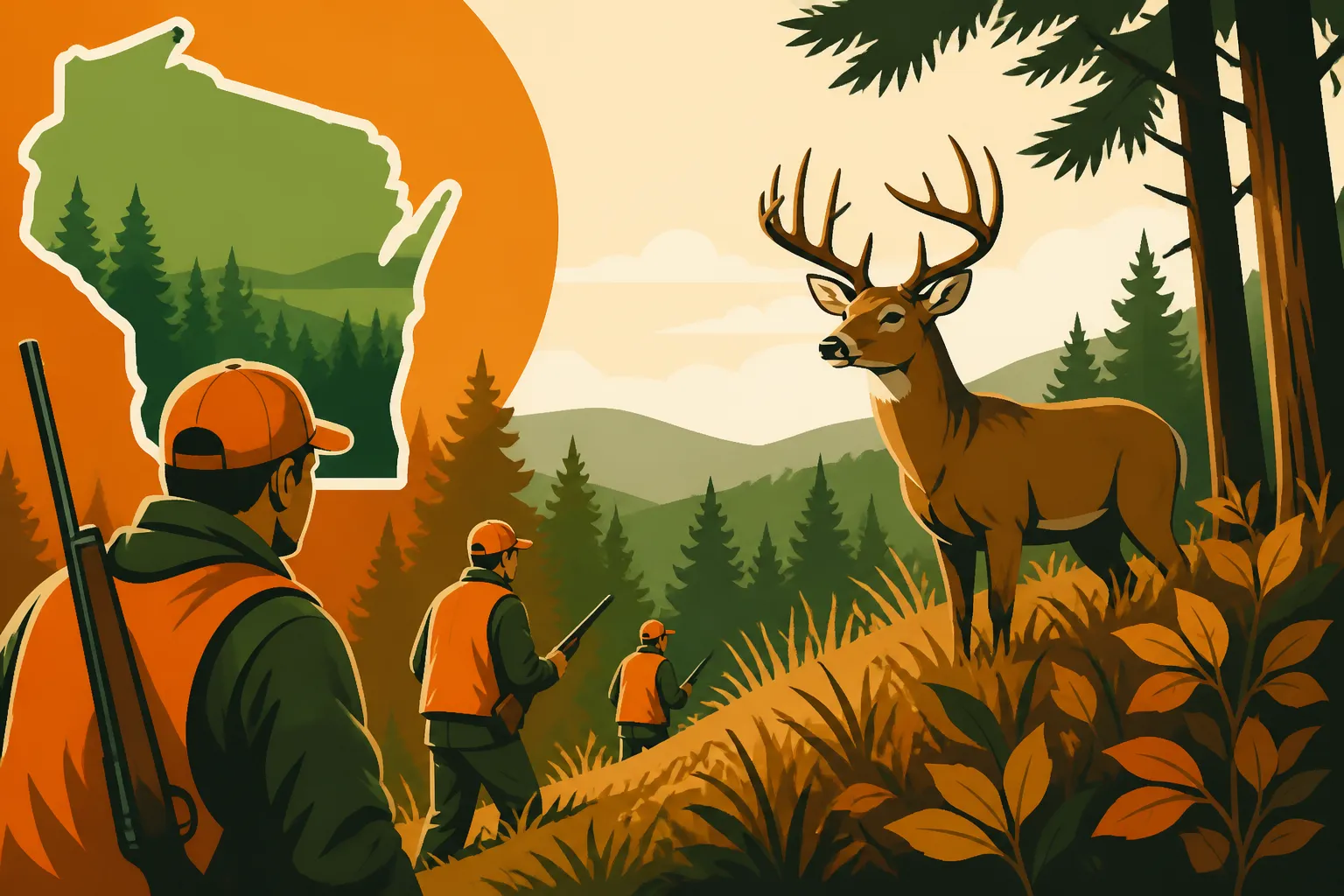
Hunting deer in Wisconsin, especially with a small crew of three or four, can often feel like trying to herd shadows in a vast forest. You've got limited boots on the ground, sprawling tracts of timber or the infamous tangled swamps, and whitetails that are absolute masters at disappearing into thin air the moment they sense any real pressure. It's a common frustration many hunters face, particularly when you don't have a small army of buddies available for those classic large-scale drives. But just because your group is small doesn't mean you can't be incredibly effective. This guide is all about maximizing your chances and making every single hunter count when you're working with just three or four people.
The Philosophy Behind Small Deer Drives in Wisconsin
When most people think of a deer drive, they picture a line of hunters loudly crashing through the woods. While that can work in certain situations with a large group, it's often counterproductive with fewer people in the diverse landscapes of Wisconsin. Our whitetails here are smart, and they've learned to deal with that kind of blunt force. Small drives require a more nuanced, strategic approach.
Why Less Can Be More (Sometimes)
It might sound counterintuitive, but having fewer hunters on a drive can actually be a huge advantage. Imagine a chaotic, loud drive with a dozen people; deer often just blow out the sides, disappearing long before they reach the standers. With a small, coordinated team, you gain precision and control. You can move slower, more deliberately, and subtly influence deer movement rather than just spooking them into a full sprint. Less noise and fewer human scent cones mean deer are less likely to go into full panic mode. Instead, they might just quietly slip away from the perceived threat, often along their most comfortable escape routes, which is exactly what you want to predict. This targeted approach allows you to focus on specific pieces of cover or known travel corridors, increasing your chances exponentially compared to a scattergun method.
Understanding Deer Movement Under Pressure
Deer don't always run in a straight line when pressured. Often, they'll try to circle back, sneak out a low-pressure side, or use dense cover to hide. With a smaller driving force, your goal isn't just to push deer through an area, but to push them to your standers by making the planned escape route seem like the path of least resistance. This means understanding local terrain, bedding habits, and preferred escape corridors. If you're pushing a small woodlot adjacent to a swamp, deer might naturally want to bail into that swamp. If you're in a rolling coulee, they might try to slip over a ridge point to another valley. Knowing these tendencies allows your standers to be precisely where the deer want to go, not just where you hope they'll end up. Effective small drives capitalize on these natural inclinations rather than fighting them.
Essential Roles for Your Small Drive Team
With only three or four hunters, defining clear roles is paramount. Everyone needs to understand their objective, their pace, and how they contribute to the overall strategy. This isn't about everyone doing everything; it's about specialized tasks working together seamlessly.
The Driver's Art: Pushing Smart, Not Hard
When you're working with only one or two drivers, their job isn't to make as much noise as possible. Instead, the driver (or drivers) must become a master of subtle pressure. This means moving slowly, deliberately, and often at an uneven pace. Think of it as nudging deer, not stampeding them. A driver should be constantly observing, looking for flicking ears, deer sneaking ahead, or escape routes being used. They might pause for a few minutes, let the woods settle, and then move again, creating just enough discomfort to get deer on their feet and moving. Using the wind to carry their scent can be a powerful tool, subtly pressuring deer from a specific direction without being seen. Sometimes, a quiet driver who suddenly makes a small, natural sound, like stepping on a dry branch or whispering, can get a bedded deer up and moving. Remember, a smart driver is always looking for a shot opportunity too, as pressured deer might try to sneak past them.
The Standers: Strategic Placement and Patience
The standers are the linchpin of any drive, especially a small one. With only one or two standers, their placement needs to be absolutely perfect. They should be positioned on known escape routes, natural funnels, or tight bottlenecks that deer are likely to use when pushed. This isn't about standing out in the open; it's about finding good cover, a solid backdrop, and an elevated position if possible, allowing them to see approaching deer without being silhouetted. Patience is paramount. Deer pushed by a small, quiet drive might take their time, slipping along rather than running. Standers must be ready, quiet, and absolutely still. They need to anticipate where the deer will emerge and identify shooting lanes beforehand. Their job is not to move or make noise once they are in position; they are the silent interceptors. Understanding Reading a Ridge Point for Deer Movement or how deer might use terrain in specific areas like the Driftless Area Deer Hunting in Wisconsin can significantly improve stander success.
The "Flanker" or "Silent Pumper" Role (Optional but Powerful)
For a three or four-person drive, you often have one or two drivers and one or two standers. If you have that crucial fourth person, or if one of your drivers is particularly skilled, consider a "flanker" or "silent pumper." This individual moves quietly along the very edge of the main drive, slightly ahead or to the side, covering a potential escape route that deer often try to exploit. They provide a subtle, almost invisible presence that helps keep deer moving in the desired direction without adding undue pressure. For example, if you're pushing a narrow strip of timber, the main driver goes up the middle, and the flanker moves silently along the outside edge. This can prevent deer from circling back or escaping the drive early. This role demands exceptional woodsmanship, as the flanker needs to be incredibly quiet and always aware of their position relative to the other hunters for safety. Using a mapping app like GoHunt can help coordinate these complex movements, ensuring everyone knows their boundaries and objectives.
Executing a Successful 3-4 Person Drive
Success in small deer drives isn't accidental; it's the result of meticulous planning, clear communication, and adaptability. Without a solid foundation, even the best intentions can quickly fall apart.
Scouting and Planning Your Drive Route
Before you even step foot in the woods on hunt day, extensive scouting is your best friend. You need to understand the topography, the prevailing wind, and where deer are bedding and moving. Start by identifying specific areas you want to drive: a thick stand of pines, a dense willow bottom, or a finger of woods leading to a larger tract. Then, using aerial maps (physical or digital, like those found on GoHunt), identify likely deer trails, escape routes, and natural funnels. This is where you determine your stander positions. They should be placed where deer will naturally feel comfortable traveling, not just randomly. Consider the prevailing wind direction – drivers should ideally move into or across the wind, pushing deer downwind towards standers. It's helpful to walk the area yourself, even if just virtually with an app, to visualize the drive. Understanding Scouting Wisconsin Public Land Before Season is paramount here, as deer behavior can be predictable if you know what to look for. For example, when Hunting a Funnel Between Two Swamps, you'd want standers covering the narrowest point and exit trails.
Communication is Key (Even When Silent)
With a small group, communication needs to be crystal clear before the drive begins, and then largely silent once underway. Discuss the exact start and end points, the speed of the drive, and specific stander locations. Everyone needs to know what to expect and what their role entails. During the drive itself, verbal communication should be minimized to avoid spooking deer or giving away positions. Hand signals, pre-arranged whistle codes (used sparingly and only for emergencies), or even text messages via a hunting app like GoHunt (if cell service allows) can be used for crucial updates. The most important "communication" often happens implicitly through understanding each other's pace and staying in sync. Safety is always the top priority, so reiterate shooting lanes and safe zones of fire.
Situational Awareness and Adaptability
Even the best-laid plans can go awry, especially when dealing with wild animals. Deer might break out early, the wind might shift unexpectedly, or a previously unknown obstacle might force a change in the drive path. This is where situational awareness and the ability to adapt come into play. Drivers need to pay attention to deer sign, fresh tracks, or sounds that indicate deer movement ahead of them. Standers should be constantly scanning their shooting lanes, not just staring straight ahead. If deer try to circle back, a driver might have to adjust their path slightly to push them forward again. If you only have three hunters, perhaps one drives a smaller pocket of cover while two standers cover the most likely escape routes. Being able to read the situation and make minor adjustments on the fly, while still prioritizing safety, can turn a potentially busted drive into a success. This level of coordination can be particularly challenging when experiencing high Hunting Pressure on Wisconsin Public Land, as deer are already on high alert.
Different Scenarios for Small Drives
Wisconsin's diverse landscape means no two drives are exactly alike. Adapting your small group's tactics to the specific cover you're hunting is vital for success.
Driving Cedar Swamps and Thickets
Cedar swamps and dense thickets are classic holding areas for Wisconsin whitetails, especially mature bucks. These areas can be incredibly difficult to navigate, but they're also prime candidates for small, focused drives. When Posting a Drive on a Wisconsin Swamp, the key is a slow, methodical push. Deer will often try to sneak, crawl, or circle back through the densest cover. Drivers must move at a snail's pace, pausing frequently, letting their scent and presence subtly filter through the cover. Standers should be placed on the edges where the swamp meets more open timber, or along narrow fingers of high ground that deer use as travel corridors within the swamp. The goal is to make the deer feel just enough pressure to want to leave the core cover, but not so much that they try to bust through the middle or completely circle back on the drivers. Expect close-range encounters and be ready for quick shots.
Moving Deer in Open Hardwoods or Coulees
Hunting the rolling hills and open hardwoods of the Driftless Area or parts of central Wisconsin presents a different challenge. Here, deer can see and hear you from a long distance. Small drives in these areas need to be incredibly subtle. Drivers might use terrain features like small rises, draws, or the backsides of hills to remain concealed as long as possible. The "flanker" role really shines here, as they can provide pressure from an angle that deer don't immediately perceive as a direct threat. Standers need excellent concealment and should be positioned on natural travel corridors such as saddles, pinch points along ridge tops, or creek bottoms. Understanding Wind and Thermals in a Coulee is crucial, as deer will use these air currents to their advantage. For instance, when Hunting Wisconsin Coulees and Ridge Tops, standers might be set up on a downwind saddle where deer typically cross. The objective is to gently steer deer along their natural paths toward a hidden stander, rather than forcing them across wide-open spaces.
Utilizing Natural Funnels and Bottlenecks
Natural funnels and bottlenecks are the bread and butter of successful deer drives, regardless of group size, but they are absolutely essential for small teams. These are geographical features that naturally constrict deer movement, such as narrow strips of timber between open fields, saddles between two ridges, or a dense thicket bordered by a river and a road. Your scouting should identify these choke points. With just three or four hunters, you can position your standers at the narrowest parts of these funnels, while your drivers push a small, manageable piece of cover leading into them. For example, if there's a small patch of woods that consistently holds deer, and it's surrounded by open fields except for a narrow tree line connecting it to a larger forest, that tree line is your bottleneck. Two standers on that tree line, and one or two quiet drivers pushing the small woodlot, can be incredibly effective. Even Finding Ground Others Walk Past can reveal overlooked funnels that see less pressure.
Here's a quick look at the roles for a successful small drive:
| Role | Key Tasks | Strategic Goal |
|---|---|---|
| Driver(s) | Move slowly, deliberately, using scent/wind. Observe. | Subtly pressure deer, guiding them towards standers without full panic. |
| Stander(s) | Remain silent, still, concealed. Identify shooting lanes. | Intercept deer moving along natural escape routes or funnels. |
| Flanker | Move silently along drive edge, slightly ahead. | Redirect deer from side escapes, maintaining desired drive direction. (Optional) |
Disclaimer
Hunting is an inherently dangerous activity. Always prioritize safety, wear appropriate blaze orange or pink, know your target and what is beyond it, and adhere to all Wisconsin hunting regulations. The advice provided here is for informational purposes only and should not replace proper hunter education and experience.