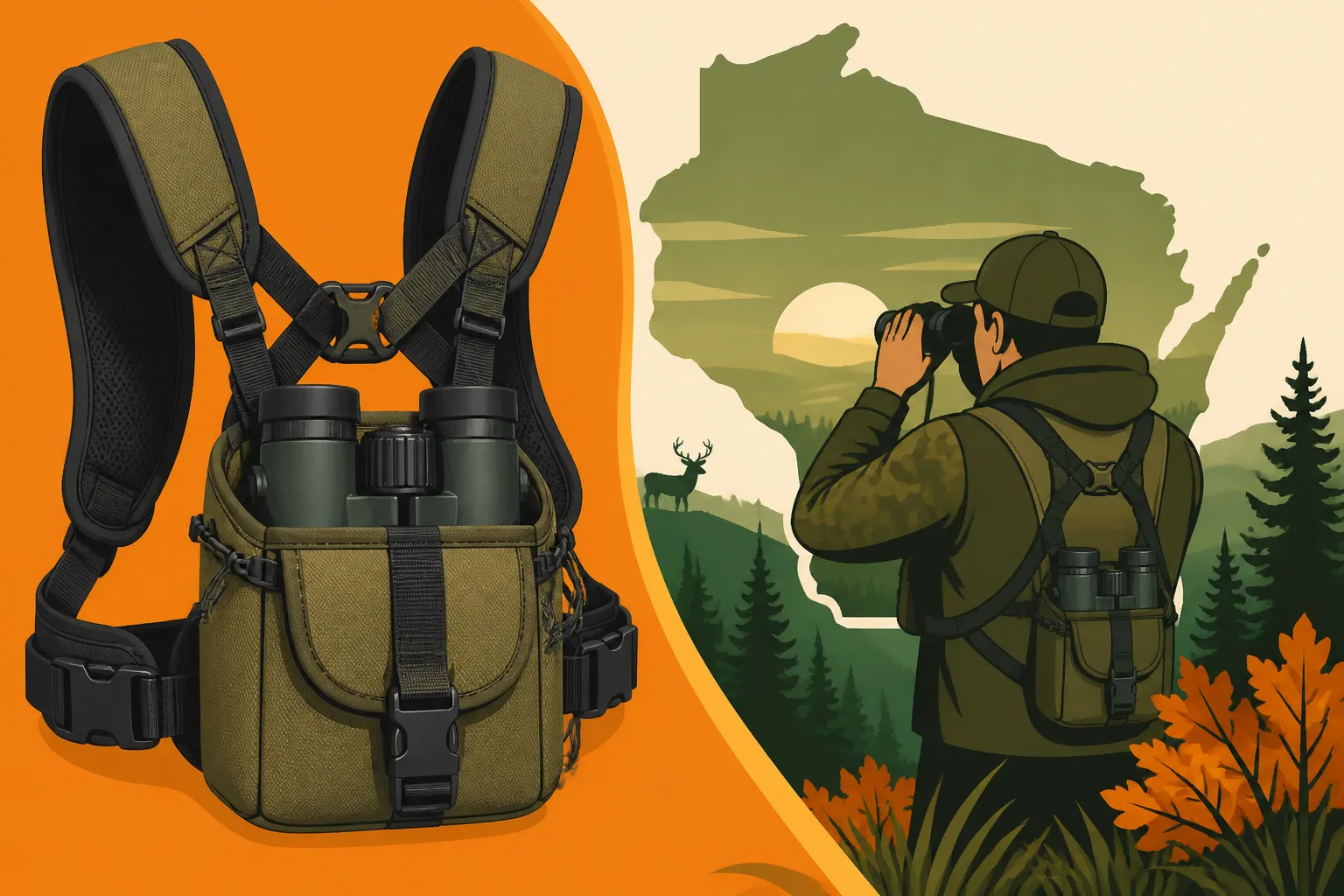
Binocular Harnesses Worth Wearing
Every Wisconsin hunter knows the frustration: you're trying to move through thick alders, climb into a treestand, or just make your way silently along a ridge, and your binoculars are either bouncing around your neck, getting snagged on branches, or constantly needing to be adjusted. It's not just annoying; it can actively hinder your hunt by creating noise or forcing you to stop and fuss with gear. This guide is here to help you ditch those old, uncomfortable neck straps and embrace the comfort, efficiency, and quietness of a proper binocular harness, ensuring your optics are always where you need them, ready for that critical moment.
Why a Binocular Harness is Essential for Wisconsin Hunters
Hunting in Wisconsin throws a lot at us, from steep coulees in the Driftless Area to dense cedar swamps in the north, and all the diverse farmlands in between. Each of these environments presents unique challenges, and a simple neck strap often falls short, leading to discomfort, noise, and missed opportunities. A well-designed binocular harness isn't just a luxury; it's a piece of essential gear that significantly improves your hunting experience.
Hands-Free Convenience and Security on the Move
Imagine trying to navigate a slippery creek bottom or climbing a tricky ladder stand with your binoculars swinging freely. Not only is it a safety hazard, but the constant movement can bang your optics around, risking damage. A good harness keeps your binoculars snug against your chest, eliminating the bounce and sway. This means your hands are free for climbing, bracing yourself, or carrying other gear like your bow or rifle. When you're Still-Hunting Wisconsin Cedar Swamps or picking your way through a dense clearcut, that freedom makes all the difference. You're less likely to trip, and your optics are protected from bumps and scrapes against trees.
Moreover, the security a harness provides means your expensive optics aren't going to suddenly slip off your neck as you lean over a fence or retrieve a dropped item. They're locked in, ready for action, but out of the way when you don't need them. This peace of mind allows you to focus on the hunt itself, rather than constantly babysitting your gear.
Ergonomics and All-Day Comfort in the Field
Anyone who's spent a full day with binoculars hanging from their neck knows the pain. The thin strap digs into your shoulders, the weight pulls on your neck, and by evening, you're stiff and sore. This discomfort isn't just unpleasant; it can be a significant distraction, making you less observant and even impacting your ability to hold steady for a shot.
Binocular harnesses are designed to distribute the weight of your optics across both shoulders and your back, much like a small backpack. This ergonomic design drastically reduces neck and shoulder strain, allowing you to wear your binoculars comfortably all day long. Whether you're making long treks Hunting the Wisconsin Northern Forest for Deer or sitting patiently in a Treestand Setups in Wisconsin Hardwoods, you'll barely notice they're there until you need them. The difference in fatigue level at the end of a long day can be astounding, letting you stay sharper, longer.
Quick and Quiet Access for Critical Moments
In hunting, milliseconds can matter. You spot movement in the timber, and you need to bring your binoculars up for a closer look now. Fumbling with a strap that's tangled in your jacket or catching on your pack can cause you to miss that fleeting glimpse of an antler or a turkey's beard. A well-designed harness ensures your binoculars are always in the same, easily accessible spot on your chest.
With a good harness, retrieving your optics is a fluid, silent motion. Many harnesses feature magnetic closures or quiet buckles that won't spook game. You simply reach down, unclip or unlatch, and bring them to your eyes. This quick, quiet access is invaluable, especially when you're glassing for a wary buck or trying to identify a distant gobbler while Calling a Wisconsin Gobbler Off the Roost. The less movement and noise you make, the better your chances of success.
Key Features to Look For in a Quality Harness
Choosing the right binocular harness isn't about picking the most expensive one; it's about finding one that fits your hunting style, your optics, and the conditions you'll face in Wisconsin. Several features stand out as crucial considerations for durability, function, and comfort.
Durability and Weather Resistance
Wisconsin weather can be unpredictable. One day it's sunny and mild during early archery, the next it's a full-blown November snowstorm. Your harness needs to stand up to it all. Look for harnesses made from robust, water-resistant materials like Cordura or other durable synthetics. Double-stitched seams and heavy-duty zippers are also indicators of quality construction that will resist tears and wear from brush and branches.
Consider how the harness will perform in wet conditions. While many modern binoculars are waterproof, keeping the harness itself from becoming waterlogged can extend its lifespan and prevent it from getting uncomfortably heavy. Some harnesses offer rain covers or highly water-resistant outer shells, which are a huge plus if you find yourself sitting in a late-season drizzle or heavy wet snow.
Comfortable and Adjustable Fit
A harness is only as good as its fit. It needs to be comfortable enough to wear all day without chafing or restricting movement, especially when you're wearing multiple layers of Clothing for a Wisconsin November. Look for wide, padded shoulder straps that distribute weight effectively. Adjustable straps are critical, allowing you to customize the fit to your body size and accommodate different clothing layers, from a light shirt in September to a heavy parka in December.
The harness should sit high enough on your chest so that your binoculars don't interfere with your belt or pant line, but low enough for easy access to your mouth calls or rangefinder. Make sure it allows for a full range of motion, particularly when drawing a bow or shouldering a rifle. A harness that feels restrictive will quickly become a nuisance.
Quiet Operation and Secure Closure
Noise is a hunter's enemy, and a noisy harness can ruin a hunt faster than almost anything else. Avoid harnesses with loud velcro closures or jingly metal buckles. The best harnesses utilize silent magnetic closures, quiet plastic buckles, or smooth, silent zippers. Practice opening and closing the main compartment to ensure it can be done without a sound.
Beyond the closure, consider the materials themselves. Some stiff, synthetic fabrics can make a swishing sound as you move. Look for soft, quiet materials that won't rustle against your jacket. A secure closure is also paramount. You want your binoculars to be safely enclosed, preventing them from falling out if you bend over or scramble up an embankment. Many hunters will browse sites like GoHunt to see what's new in quiet harness technology.
Storage Capacity and Accessibility
While the primary function is holding your binoculars, many harnesses offer additional storage, turning them into a mini-chest rig. This extra space can be incredibly useful for carrying small, essential items you need close at hand.
Consider what you typically carry:
- Rangefinder: Many harnesses have dedicated, easy-access side pockets for a rangefinder. This is crucial for quick range estimation, especially when deer are moving quickly.
- Wind indicator: A small pocket for a wind checker bottle.
- GPS or phone: A secure, quick-access compartment for your navigation device, especially when Scouting Wisconsin Public Land Before Season where cell service might be spotty.
- Calls: Small pockets for a grunt tube or turkey mouth calls.
- Licence/Tag: A secure internal pocket for your hunting licence and tag.
The key is that these items should be accessible with one hand and without making excessive noise. Look for harnesses with well-thought-out pocket placement and secure, silent closures on these auxiliary compartments. When comparing options, resources like GoHunt can help you visualize the different storage layouts available on various models.
Types of Harnesses and Their Best Uses
Just like different hunting methods, there are different styles of binocular harnesses, each with its own strengths. Understanding these distinctions will help you pick the best fit for your typical Wisconsin hunting adventures.
Full-Containment Harnesses
These are arguably the most popular and versatile harnesses, especially among deer and elk hunters. A full-containment harness completely encloses your binoculars within a soft-sided pouch that sits on your chest. The lid of this pouch typically secures with a magnetic, buckle, or silent elastic closure.
- Pros: Offers maximum protection from the elements (rain, snow, dust, debris), prevents lens scratches, and keeps optics extremely secure. Often includes ample additional storage pockets. Excellent for aggressive movement through thick cover.
- Cons: Can be slightly bulkier and sometimes takes a fraction of a second longer to access your binoculars compared to an open design. May generate a tiny bit more heat on very warm days.
- Best Uses: Bowhunting Wisconsin's Long Archery Season, Hunting the Wisconsin Rut in November, still-hunting, walking extensive distances on public land, hunting in inclement weather, or when you need maximum protection for expensive optics. If you hunt in diverse conditions and need to keep your optics pristine, this is likely your best bet.
Minimalist or Open Harnesses
These harnesses are typically a simple elastic or webbing strap system that cradles your binoculars against your chest, often with a small lens cap or tether system to protect the objective lenses. They don't have a full enclosure or extensive pockets.
- Pros: Extremely lightweight, highly breathable, and offer the quickest access to your binoculars. Minimal bulk, which is great for hot weather or when layered under a heavy jacket.
- Cons: Offers very little protection from rain, dust, or bumps. Your binoculars are largely exposed, meaning more susceptibility to scratches and damage. Usually no extra storage.
- Best Uses: Spring Turkey Hunting in Wisconsin where quick glassing is crucial and weather is generally milder. Ideal for stand hunting or short walks where maximum protection isn't the primary concern, and quick access is paramount. Some hunters prefer this for Grouse and Woodcock Hunting in Wisconsin as it keeps the binoculars handy for spotting flushes without adding bulk.
Chest Pack Style Harnesses
These are a hybrid, often resembling a small chest pack with dedicated compartments for binoculars and other gear. They might have an open top for binoculars, but a larger, more structured body with multiple zippered pockets.
- Pros: Combines bino storage with significant additional capacity for other gear (GPS, extra calls, first aid, snacks, even a sidearm). Excellent for organizing essentials and keeping them quickly accessible.
- Cons: Can be quite bulky and heavy when fully loaded. May interfere with backpack straps if not designed well. Access to binoculars may not be as instantaneous as a dedicated minimalist harness.
- Best Uses: Longer day hunts where you need to carry more than just binoculars, like Bear Hunting With Bait and Dogs in Wisconsin where you might need tracking collars or extra batteries, or when Hunting Wisconsin Waterfowl on Marsh and River and need a spot for calls, rangefinder, and maybe even extra shells. This style works well for hunters who want to consolidate their essential gear into one easily reachable platform.
| Harness Type | Key Features | Pros | Cons | Best for Wisconsin Hunting Scenarios |
|---|---|---|---|---|
| Full-Containment | Encloses binoculars completely, often with magnetic/buckle lid, multiple pockets | Maximum protection, very secure, good storage, quiet operation. | Slightly bulkier, can be warmer, slightly slower access (milliseconds). | All-around deer hunting, adverse weather, long walks, protecting expensive optics. |
| Minimalist / Open | Simple strap system, minimal material, often with lens covers/tethers | Lightweight, breathable, fastest access, minimal bulk. | Limited protection from elements/damage, no extra storage, optics exposed. | Turkey hunting, warm weather, stand hunting where quick access is critical, less aggressive movement. |
| Chest Pack Style | Integrated binocular compartment plus larger, structured storage | Excellent storage capacity for additional gear, organized access, sturdy. | Can be bulky and heavy, may interfere with backpack, bino access not always instant. | Bear hunting, waterfowl, long day hunts needing extra gear, organized essentials. |
Making the Right Choice for Your Hunting Style
With so many options, how do you really decide which binocular harness is "worth wearing" for you? It boils down to a few critical considerations unique to your hunting habits and the Wisconsin landscape.
Consider Your Primary Hunting Method
Your go-to hunting method heavily influences the ideal harness.
- Still-hunting or Spot-and-Stalk: If you're constantly on the move, covering ground quietly in areas like the Driftless Area Deer Hunting in Wisconsin, a full-containment harness offers the best balance of protection, security, and quiet operation. The ability to pull out your binoculars, scan, and put them away silently without breaking your rhythm is key.
- Treestand or Ground Blind Hunting: For stationary hunting, quick, silent access is paramount. A minimalist harness can be excellent here for its speed, as the weather protection isn't as critical within the confines of a blind or under a stand roof. However, if you have valuable optics or hunt in truly foul weather, a full-containment still makes sense.
- Hunting with Dogs (Bear/Coyote): When running hounds for Bear Hunting With Bait and Dogs in Wisconsin or Coyote Calling in Wisconsin Winter, you're often moving fast through rough country. A full-containment or chest pack style harness provides the best protection for your optics and allows you to carry GPS units or other tracking devices conveniently.
Think about how often you need your binoculars, how much protection they need from the elements and physical impact, and how much other gear you need immediately accessible.
Match Your Optics Size and Weight
Not all binoculars are created equal, and their size and weight should influence your harness choice. A compact 8×32 binocular will fit differently and feel lighter than a hefty 12×50 pair.
- Smaller Optics: If you run smaller, lighter binoculars, a minimalist harness might offer enough comfort and security without the bulk of a full-containment system.
- Larger, Heavier Optics: For bigger, heavier binoculars, a full-containment harness with wider, more padded straps will be far more comfortable. The added support and protection are invaluable for these larger investments. Make sure the chosen harness's main compartment is large enough to comfortably fit your specific binocular model without being overly tight or too loose, which could cause rattling. When checking out various brands on sites like GoHunt, pay close attention to the stated dimensions and compatibility.
Durability and Longevity for Wisconsin Conditions
We've talked about weather, but consider the sheer abuse your gear takes during a typical Wisconsin hunting season. Pushing through thick brush, climbing over downed logs, or just the constant wear and tear of a full season in the field. You want a harness that's built to last.
Look for reputable brands known for their quality. Read reviews from other hunters. Inspect stitching, zippers, and buckle quality. A harness might seem like a simple piece of gear, but investing in a durable one means you won't be replacing it every couple of seasons, and it won't fail you when you need it most. After all, the best gear is the kind you don't have to worry about.
Maintenance and Care of Your Binocular Harness
A good binocular harness is an investment, and like all good hunting gear, it benefits from a little care to ensure its longevity and performance. Neglecting your harness can lead to premature wear, reduced functionality, and even compromised quietness.
Routine Cleaning and Inspection
After each hunting season, or even more frequently if it's seen heavy use, give your harness a thorough inspection and cleaning.
- Cleaning: Use a mild soap and water solution (never harsh detergents) to gently clean any dirt, mud, or blood from the fabric. A soft brush can help with stubborn grime. Rinse thoroughly with clean water and allow it to air dry completely, away from direct sunlight or heat, to prevent mildew and material breakdown. Pay special attention to zippers and buckles, ensuring they're free of grit that could cause them to seize or break.
- Inspection: Check all seams for fraying, especially where straps attach to the main body. Examine buckles and hardware for cracks or damage. Test all zippers and closures to ensure they operate smoothly and quietly. Look for any tears or weak spots in the fabric. Addressing minor issues early can prevent them from becoming major problems in the field. This proactive approach helps ensure your harness is ready for Opening Weekend Tactics in Wisconsin next season.
Proper Storage Between Seasons
How you store your harness can impact its lifespan.
- Dry Environment: Ensure your harness is completely dry before storing it. Any residual moisture can lead to mildew, which not only smells terrible but also degrades fabric over time.
- Away from Pests: Store it in a clean, dry place where it's protected from rodents or insects that might chew on straps or nest inside pockets. A gear tub or closet shelf works well.
- Avoid Extreme Temperatures: Don't store your harness in an attic that gets scorching hot or a shed that freezes solid. Extreme temperature fluctuations can degrade materials over time.
By taking these simple steps, your binocular harness will serve you faithfully for many seasons to come, keeping your valuable optics safe, accessible, and ready for whatever Wisconsin's wild places throw at you.
Disclaimer
This article is for general informational purposes only and does not constitute professional advice. Laws, prices and regulations vary by location and change over time. Consult a qualified professional for guidance on your specific situation.