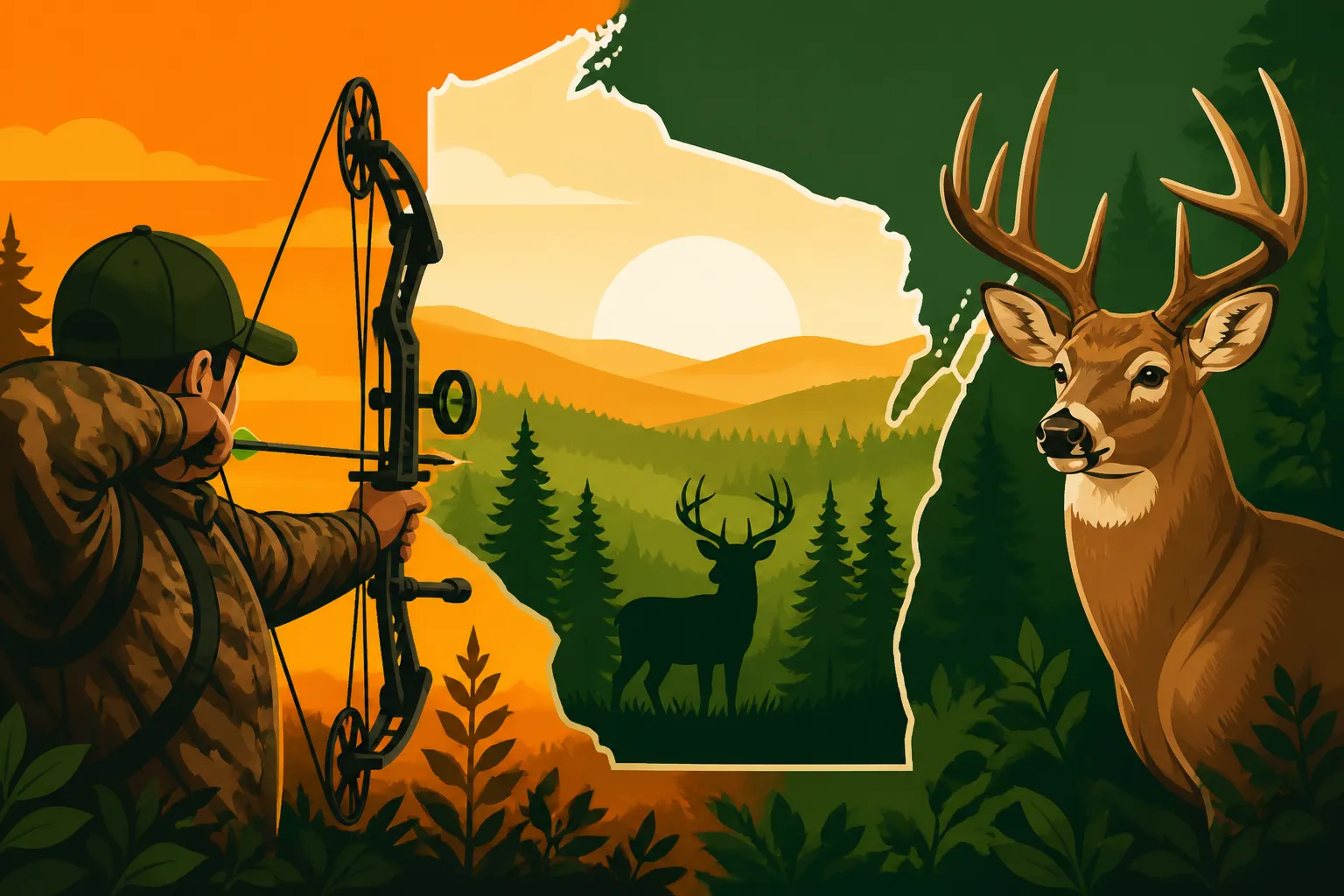
Bowhunting Wisconsin’s Long Archery Season
The incredibly long archery season in Wisconsin can feel like both a blessing and a curse. On one hand, you've got months to get out there, chase deer, and experience the woods. On the other, such a vast window of opportunity can be overwhelming, leaving many hunters wondering where to even start, how to adapt, and what tactics truly work across different stages of the season. This comprehensive guide is here to cut through that confusion, offering practical, realistic advice to help you maximize your success and truly enjoy every moment of bowhunting Wisconsin's diverse landscapes.
Understanding Wisconsin's Archery Season Layout
Wisconsin boasts one of the longest archery seasons in the country, a fantastic opportunity for bowhunters. But with that extended timeframe comes the need to understand its nuances. It's not just one continuous hunt; it's a series of mini-seasons, each with its own characteristics, challenges, and opportunities. Knowing these details is your first step to consistent success.
Dates, Zones, and Extended Opportunities
The standard archery season in Wisconsin typically kicks off in mid-September and runs all the way through the first week of January, with a brief interruption during the nine-day gun deer season in November. That's a huge window! This long duration means you'll experience everything from warm, buggy early-season hunts to frigid, snowy late-season pursuits. Understanding when specific events, like the rut, are likely to occur within this broad timeframe is crucial for planning. For instance, the general archery season dates are something every hunter should commit to memory, along with any special extended opportunities like the holiday antlerless hunt, which sometimes allows archery hunters to continue past the general closing date in certain areas. Different deer management zones across the state can also have slight variations or special hunts, so always check the Wisconsin DNR regulations for your specific hunting area. This attention to detail will help you identify the best times to be in the woods, especially when planning a trip to a new zone.
Required Licenses and Tags: What You Need to Know
Before you even think about nocking an arrow, you need to be properly licensed and have the correct tags. This can sometimes feel a bit like navigating a maze, but it's essential. Every bowhunter in Wisconsin, whether resident or nonresident, needs a valid archery license. On top of that, you'll need deer harvest authorizations (tags) to legally harvest deer. Typically, your archery license comes with a "buck tag" valid statewide. Antlerless tags are where it gets a little more complex. These are allocated by county and often by land type (public versus private). You'll usually receive one free antlerless tag with your license for specific areas, and you can purchase additional "bonus antlerless tags" as they become available. Keep a close eye on the availability and sale dates for these, especially if you plan to hunt in areas with high antlerless quotas. Remember, a common frustration is showing up to hunt only to realize you needed a specific tag for that county or land type. Make sure to understand what a Wisconsin buck authorization covers and how many antlerless tags you can buy. The "Go Wild" system is where you'll handle all your licensing needs, and it's always a good idea to double-check your purchases before heading afield.
The Crossbow Option: Rules and Considerations
For years, crossbows were a hotly debated topic among bowhunters, but now they are fully integrated into Wisconsin's archery season. This means that if you choose to hunt with a crossbow, you can do so for the entirety of the archery season. There's no separate crossbow license required; your standard archery license covers it. This offers a fantastic option for hunters who might have physical limitations, those looking for a slightly different challenge, or even beginners who find the learning curve of a vertical bow daunting. However, it's not just about picking up a crossbow and going. There are still specific regulations to follow, such as minimum draw weight and bolt length, though most commercially available crossbows meet these. It's important to understand the practical differences between a Crossbow Versus Vertical Bow in Wisconsin in terms of shot distance, maneuverability in a treestand, and ethical shot placement. While a crossbow can offer increased accuracy at longer ranges for some, the core principles of ethical hunting and knowing your effective range remain paramount. Many hunters appreciate the added flexibility and accessibility that crossbows bring to the long Wisconsin archery season.
Mastering Pre-Season Scouting and Habitat Interpretation
Success in bowhunting rarely happens by accident. It’s the result of diligent preparation, and that starts long before opening day. Pre-season scouting is your secret weapon, allowing you to understand deer patterns, identify key habitat features, and ultimately select the perfect spot for your stand. Neglecting this crucial step means you're largely relying on luck, and luck is a fickle hunting partner.
Early Summer Reconnaissance: Cameras and Field Walks
Summer is not just for fishing and barbecues; it’s prime time for deer scouting. As soon as the fawns hit the ground and antlers start growing, deer patterns begin to emerge. This is when I like to hit the woods for some serious reconnaissance. Start by walking your planned hunting areas, looking for old sign like rubs and scrapes from the previous year, but more importantly, fresh trails and summer food sources. Deer patterns during summer can give you huge clues about their travel corridors, bedding areas, and feeding preferences, even if these shift slightly come fall. Trail cameras are invaluable during this period. Position them on main trails, near water sources, and especially overlooking agricultural fields or natural food plots. Photos from late summer and early fall will show you which bucks are in the area, their travel times, and their preferred entry and exit points. Remember, as the season progresses, food sources will change, so what’s hot in July might be cold in October. But knowing where the deer are generally spending their time is a fantastic baseline. I often use apps like GoHunt to mark potential bedding areas and food sources I find during these summer walks, making it easy to refer back to them later.
Reading the Landscape: Food, Water, and Cover
Deer are creatures of habit, driven by their core needs: food, water, and cover. Your job as a scout is to decipher how these elements are arranged across the landscape and how deer use them. In Wisconsin, this means understanding everything from oak ridges dropping acorns in the fall to standing cornfields in farm country, to thick cedar swamps offering thermal cover in winter. Identify natural funnels, such as narrow strips of timber between open fields, creek bottoms, or saddlebacks on ridges. These are high-percentage travel corridors where deer feel secure moving between bedding and feeding areas. Water sources, especially in drier years, can also be major attractants. Don't forget the importance of various types of cover—dense conifer stands for winter shelter, tall CRP fields for bedding, or brushy clearcuts for fawning and security. For instance, in the Driftless Area Deer Hunting in Wisconsin, deer often navigate steep coulees and ridge tops. Understanding the subtle changes in elevation, vegetation, and how wind and thermals interact with these features will tell you where deer will feel safest moving, resting, and eating. A truly skilled bowhunter can read the terrain like an open book, predicting deer movement before it even happens.
E-Scouting Tools and Public Land Strategies
In today's world, pre-season scouting isn't just about boots on the ground; it's also about fingers on a keyboard. E-scouting, using online mapping tools, has revolutionized how we approach public land hunting. Before you ever step foot in the woods, you can analyze aerial photos and topographical maps to identify potential hotspots. Look for pinch points, hidden food plots, water sources, and areas of dense cover that might hold deer away from typical hunting pressure. Tools like GoHunt or the Wisconsin DNR’s Hunt Wild app allow you to mark waypoints, measure distances, and visualize the terrain in incredible detail. For those who enjoy Scouting Wisconsin Public Land Before Season, this is indispensable. Once you've identified potential areas through e-scouting, then comes the ground verification. This combined approach is particularly effective on larger tracts of public land, where walking every inch isn't feasible. Remember, public land often sees more pressure. Your goal is to find those overlooked pockets, those difficult-to-access areas that other hunters might bypass. This could mean walking an extra mile, crossing a creek, or navigating a thick, nasty briar patch to find a secluded bedding area or a quiet feeding spot.
Effective Stand Placement and Hunting Tactics
Once you've done your homework scouting, the next critical step is to translate that knowledge into effective stand placement and in-the-moment hunting tactics. This is where the rubber meets the road—where your understanding of deer movement, terrain, and wind direction culminates in a high-percentage setup.
Strategic Treestand Setups for Deer Movement
Choosing the right tree and the exact angle of your shot can make or break your hunt. A great treestand setup isn't just about being high; it's about being invisible, being quiet, and having a clear shooting lane for the most likely approach of a deer. Think about deer travel patterns: where are they moving from bedding to feeding? Are there natural funnels like creek bends, fence lines, or timber changes that concentrate their movement? Place your stand downwind or crosswind of these travel corridors, always prioritizing the prevailing wind direction for that specific hunt. Consider the sun's position throughout the day; you don't want to be silhouetted or have the sun directly in your eyes during prime hunting hours. Also, think about your entry and exit routes. Can you get to and from your stand without disturbing the area? A poorly executed entry can blow your hunt before it even begins. For more detailed advice, check out Treestand Setups in Wisconsin Hardwoods, which covers optimal placement in diverse timber settings. Remember to trim shooting lanes before the season, but don't overdo it—you still want some cover. The goal is to blend in seamlessly with the environment.
Ground Blind Advantages and Disadvantages
Treestands aren't always the answer, and ground blinds offer a fantastic alternative, especially in certain situations. They can be particularly effective in open areas where there are no suitable trees for a treestand, like field edges, thick brush, or even in areas with small, young timber. Ground blinds provide excellent concealment, masking your movement, and offering protection from the elements, which can be a huge advantage during cold, wet, or windy conditions that are common during Wisconsin's long archery season. They're also a great option for hunters with mobility issues or those introducing new hunters to the sport. Setting up a ground blind requires careful brushing in to make it look as natural as possible. Place it well in advance if possible to allow deer to get used to its presence. However, ground blinds do have their drawbacks. Your scent is much closer to the ground, requiring even stricter wind management. Visibility can be more limited compared to a treestand, and deer might pick up on ground-level movement more easily. Learn more about Using a Ground Blind on Wisconsin Public Land to maximize your chances, ensuring you understand how to pick your spot and blend in for ultimate concealment.
Still-Hunting and Spot-and-Stalk Approaches
While stand hunting is popular, still-hunting and spot-and-stalk tactics can be incredibly rewarding, especially for those who love to be mobile and actively pursue deer. Still-hunting involves moving very slowly and deliberately through the woods, pausing frequently to observe, listen, and scan for deer. This is particularly effective in dense cover, along creek bottoms, or in timber where visibility is limited, such as in Still-Hunting Wisconsin Cedar Swamps. The key is to move at a snail's pace, often only taking a few steps every minute, using every bit of available cover. Spot-and-stalk, on the other hand, is better suited for more open terrain, like agricultural fields, barrens, or along the edges of vast public land tracts. This involves spotting deer from a distance, then carefully planning and executing a stalk to get within bow range. Both methods demand immense patience, exceptional woodsmanship, and a keen understanding of wind direction, thermals, and deer behavior. They are also highly weather-dependent; a slight breeze can cover your noise, while falling leaves or crunchy snow can make stealth almost impossible. When attempting these methods, wearing quiet clothing and being acutely aware of your surroundings are paramount.
Navigating the Wisconsin Rut with Archery Gear
Ah, the rut! This magical time of year is what most bowhunters dream about. It’s when deer behavior becomes more predictable and bucks, driven by the urge to breed, let their guard down, making them more vulnerable to hunters. However, even during the rut, timing and tactics are everything.
The Pre-Rut Excitement: Early Signs and Strategies
The pre-rut, usually in late October, is arguably one of the best times to be in a bow stand. Bucks are feeling the hormonal surge, starting to make rubs and scrapes, and actively seeking does, but they haven't yet locked down with them. This means they're on the move more frequently during daylight hours. This period is characterized by increased sign—fresh scrapes along logging roads and heavily rubbed trees are clear indicators. During the pre-rut, focusing on scrape lines, pinch points between bedding and feeding areas, and subtle funnels that funnel deer movement are excellent strategies. Bucks will be covering ground, scent-checking areas, and responding well to calling. Light rattling and grunt calls can be incredibly effective right now, as bucks are eager to assert dominance or find a receptive doe. Many hunters find their biggest success during this window, often catching a mature buck cruising midday. For specific strategies, consider reading up on Hunting the Pre-Rut in Late October. It’s a time of high anticipation and often high reward for the patient bowhunter.
Peak Rut Week: High-Stakes Hunting
The peak rut, typically occurring in early to mid-November, is when things really heat up. Bucks are actively chasing does, and some might be locked down with a hot doe for a day or two. This period is chaotic but thrilling. You might see bucks acting in ways you wouldn't expect—chasing does right through open fields, or even ignoring your presence momentarily in their single-minded pursuit. While the conventional wisdom might say to hunt travel corridors, during the peak rut, I often focus on areas where does congregate. Find the does, and a buck will eventually show up. Hunting all day, from dawn to dusk, becomes a viable and often necessary strategy, as bucks can be on their feet at any time. Aggressive calling, including rattling and a variety of grunt calls, can be very effective as bucks are highly responsive to sounds that mimic other deer vying for breeding rights. Remember to adapt to what you're seeing; if bucks are locked down, you might need to get more aggressive or move closer to known doe bedding areas. The article on Hunting the Peak Rut Week in Wisconsin provides excellent insights for this critical timeframe. This is when dedication to the stand truly pays off.
Post-Rut Challenges and Adaptations
As quickly as it arrives, the peak rut eventually winds down, usually by late November. Bucks are exhausted, having expended significant energy reserves, and are now focused almost exclusively on feeding to recover. This period, the post-rut, can be challenging for bowhunters. Deer movements become more predictable again, but they are often more nocturnal and wary. Strategies shift back to targeting food sources, especially those rich in carbohydrates, like standing corn, brassicas, or late-dropping acorns if available. Bedding areas near these food sources become prime locations. Deer will often move in low light to and from these areas. It’s also a good time to consider thick thermal cover, as winter approaches and deer seek shelter. Patience is key during the post-rut. Long, cold sits are often required, and you might not see as much activity as during the peak. However, if you can locate a consistent food source that deer are hitting, you stand a good chance of intercepting a weary buck trying to refuel. Focus on unpressured areas, quiet entry/exit, and maximizing your time during the early morning and late afternoon hours.
| Rut Stage | Typical Dates (Approx.) | Deer Behavior Focus | Archery Tactics | Key Considerations |
|---|---|---|---|---|
| Pre-Rut | Late October | Bucks seeking, making rubs/scrapes, increased movement | Hunt travel corridors, light calling | High daytime activity, good for aggressive bucks |
| Peak Rut | Early-Mid November | Bucks chasing does, often locked down | Hunt doe bedding/feeding, aggressive calling | All-day sits, chaotic movement, high energy burn for bucks |
| Post-Rut | Late November-Early Dec | Bucks recovering, focused on high-energy food | Hunt primary food sources near bedding | More nocturnal, wary deer, patience is crucial |
Capitalizing on Late-Season Archery Opportunities
Just because the leaves are gone and the snow might be flying doesn't mean your archery season is over. Wisconsin's late archery season, running through December and into January, offers unique challenges and incredible rewards for the dedicated bowhunter. Many hunters hang up their gear after the gun season, meaning less pressure and potentially more deer to yourself.
Locating Crucial Late-Season Food Sources
As winter tightens its grip on Wisconsin, food becomes the number one driver of deer movement. Natural food sources dwindle, forcing deer to concentrate on what's available. Your late-season success hinges almost entirely on finding these crucial food sources. This often means agricultural fields, especially standing corn or beans if farmers haven't harvested them, or even fields of brassicas or winter rye planted as food plots. Hard mast, like acorns, can still be a draw if there's a good crop and they're not buried too deep under snow. Look for areas where deer are actively pawing through snow to reach browse. Thermal cover, such as dense conifer stands or thickets, adjacent to these food sources, will be key. Deer will bed in these sheltered areas and only travel as far as necessary to feed, often during the warmest parts of the day. A great place to start your scouting, even during the season, is to look for tracks leading to and from potential food sources. Understanding Late-Season Food Sources for Whitetails is paramount.
Dealing with Extreme Cold and Snow
Late-season bowhunting in Wisconsin means you're going to encounter cold, and often, snow. This presents challenges for both you and your equipment. Layering is absolutely critical for staying warm and comfortable on stand. Start with good base layers that wick moisture, add insulating mid-layers like fleece or down, and top it with a windproof and waterproof outer shell. Don't forget insulated boots, hand warmers, and a good face mask. A silent, insulated blind can be a game-changer. For your gear, snow and freezing rain can wreak havoc. Keep your bowstrings and cams clear of ice and snow. Broadheads can sometimes get clogged with snow, so check them before a shot. If you're using a mechanical broadhead, ensure it functions correctly in icy conditions. This is where durable, reliable gear truly shines. Preparing your body and your equipment for Cold Weather Sitting Strategy will greatly extend your endurance and increase your chances of success during the challenging but rewarding late archery season.
Patient Waiting and Thermal Management
Deer in the late season are often more concentrated and less active, making patience an even greater virtue. Long, quiet sits are the norm. Deer will typically move during the middle of the day, when temperatures are at their highest, and they're conserving energy. This means your best bet is often to be on stand from mid-morning through late afternoon. Thermal management, beyond just layering, also includes how you approach your stand. Avoid getting overheated on the walk-in, which can lead to sweating and subsequent chilling. Open your vents or shed layers during the walk, then bundle up once you're settled. Pay attention to wind and thermals, especially in hilly terrain like the Driftless. Cold air sinks, warm air rises. Deer will often use these thermal currents to their advantage, so position yourself accordingly. Finding that perfect balance of staying warm, staying quiet, and adapting to the deer's late-season behaviors will lead to success when many other hunters have packed it in. This dedication allows you to take advantage of Hunting Wisconsin's Late Archery Season after the crowds have dwindled.
Essential Gear and Equipment for Bowhunting Success
Bowhunting success isn't just about skill and scouting; it's also about having the right tools for the job. Wisconsin's diverse terrain and varied weather conditions demand reliable, well-maintained equipment that can stand up to anything Mother Nature throws your way. Investing in quality gear isn't a luxury; it's a necessity for ethical and enjoyable hunting.
Choosing the Right Bow and Broadheads
Your bow is, obviously, the core of your archery setup. Whether you prefer a traditional recurve, a vertical compound bow, or a modern crossbow, ensuring it's properly tuned and sighted in is non-negotiable. For compound bowhunters, consider a comfortable Bow Draw Weight for Wisconsin Whitetails that you can hold steadily for an extended period, especially in cold weather when muscles might be stiff. Precision is paramount, so make sure your arrows are matched to your bow and that you're consistently grouping shots at all realistic hunting distances. When it comes to broadheads, the debate between fixed-blade and mechanical continues. Fixed-blade broadheads are known for their reliability and penetration, especially through bone, while mechanical broadheads often fly more like field points and create larger cutting diameters upon impact. Both are effective, but choose one that you've extensively practiced with and have full confidence in. Your choice should complement your bow setup and your personal preferences. Always carry sharp, well-maintained broadheads; a dull broadhead is an unethical broadhead.
Optics and Rangefinding: Seeing Your Shot
In the varied landscapes of Wisconsin, from dense timber to open farm fields and sprawling marshlands, having good optics can be a significant advantage. A quality pair of binoculars, perhaps 8×42 or 10×42, will help you pick apart distant cover, identify deer, and analyze their movements without having to move yourself. In the thick woods, a lighter power might be better, allowing for a wider field of view. But beyond simple identification, precise distance measurement is critical for bowhunting. A rangefinder is an absolute must-have piece of equipment. Unlike rifle hunting where a few yards off might not matter as much, a misjudged distance of just 5-10 yards can mean the difference between a clean kill and a missed shot, or worse, a wounded animal. Practice ranging objects at various distances and terrains, ensuring you can quickly and accurately get a reading when a deer steps into your shooting lane. Some hunters even use a rangefinding binocular, combining two essential tools into one. For low-light situations, ensuring your optics have good light-gathering capabilities is also important for those crucial first and last minutes of legal shooting light.
Layering Clothing for All Conditions
Wisconsin's archery season spans months, meaning you can experience everything from warm, humid September mornings to freezing, blustery December afternoons. Your clothing system needs to be adaptable. The key here is layering. Start with a good base layer that wicks moisture away from your skin, preventing you from getting chilled by sweat. Next, add insulating mid-layers like fleece or down to trap warmth. Finally, your outer layer should be windproof and waterproof to protect you from the elements. This system allows you to add or remove layers as conditions change throughout the day or during your walk to the stand. Don't forget a warm hat, gloves, and quality insulated boots that are appropriate for the terrain and expected temperatures. Nothing ends a hunt faster than cold feet or hands. Quiet fabrics are also essential for bowhunting, as any rustling or swishing can alert a deer. Check out Layering for a Wisconsin Deer Stand for more in-depth advice on how to stay warm and comfortable during those long sits. Proper layering isn't just about comfort; it's about extending your time in the field and staying focused when opportunity knocks.
Overcoming Challenges and Understanding Regulations
Even with the best preparation, bowhunting in Wisconsin comes with its share of challenges. From dealing with other hunters to navigating ever-evolving regulations, staying informed and adaptable is key to a smooth and successful season. Ignoring these aspects can lead to frustration or, worse, legal issues.
Dealing with Hunting Pressure on Public Land
Public land in Wisconsin offers incredible opportunities, but it often comes with hunting pressure, especially during the early season and around popular holidays. It's a reality that we all face. The key is to anticipate it and adapt. First, acknowledge that others will be out there. Second, use your scouting to find less-pressured areas. This often means walking further, finding areas with difficult access, or seeking out thick, nasty cover that other hunters might avoid. Sometimes it's about finding that small, overlooked patch of public land adjacent to private property. Being mobile and willing to move your stand if an area becomes too pressured can also be beneficial. Early mornings before first light and late evenings after the crowds have dispersed are often good times. Also, respect other hunters. If you arrive at a spot and someone is already there, move on quietly and find another area. For more insights on dealing with shared spaces, consider the advice in Hunting Pressure on Wisconsin Public Land. A positive attitude and willingness to adjust will serve you well.
CWD and Carcass Movement Rules
Chronic Wasting Disease (CWD) is a serious concern in Wisconsin, and as hunters, we play a vital role in monitoring and managing its spread. The Wisconsin DNR has specific regulations regarding Wisconsin Carcass Movement Restrictions. If you harvest a deer in a CWD-affected county, there are restrictions on where you can transport the carcass or certain parts of it. Typically, you can only move the whole carcass out of the affected county if you're taking it directly to a licensed taxidermist or meat processor within 72 hours, or if you're transporting it to another CWD-affected county. Otherwise, only boned-out meat, quarters without spinal column material, hides, or clean skulls/antlers can be moved. Always check the current DNR regulations for the county you're hunting in. The DNR also encourages hunters to have their deer tested for CWD, often providing kiosks and sampling stations during the season. Understanding these rules is not just about compliance; it's about being a responsible steward of the deer herd and the hunting tradition.
Baiting Bans and Alternative Attractants
Wisconsin has a complex system of baiting and feeding bans, primarily in response to CWD detection. If a county has a confirmed case of CWD, it triggers a multi-year ban on baiting and feeding deer. Furthermore, counties adjacent to a CWD-affected county also incur a two-year ban. This means many areas of southern and central Wisconsin, and sometimes even northern counties, are subject to baiting bans. It’s crucial to know Which Wisconsin Counties Ban Baiting before you head out. If you're in a banned county, using bait piles or food attractants is illegal and can result in significant fines. This challenge often forces bowhunters to become better woodsmen, focusing on natural food sources, travel corridors, and bedding areas. Instead of bait, consider planting legal food plots (if on private land and properly managed), using mock scrapes, or employing scent wicks with deer urine. Relying on natural attractants and good scouting skills often leads to more rewarding and sustainable hunting practices. Embracing these alternative strategies can actually make you a more versatile and successful hunter in the long run.
Ethical Hunting Practices and Meat Processing
The hunt doesn't end when the arrow flies. What happens next is just as crucial, defining our ethics, our responsibility, and our respect for the game we pursue. From shot placement to proper meat care, these steps ensure an ethical harvest and provide healthy, delicious wild game for your table.
Shot Placement and Tracking Wounded Deer
For bowhunters, shot placement is paramount. Due to the nature of archery tackle, a clean, ethical kill relies on hitting the vital organs: the heart and lungs. This means understanding deer anatomy intimately and only taking shots when you are confident you can hit this vital zone. Broadside or slightly quartering-away shots are generally preferred, offering the largest target for a double-lung or heart shot. Quartering-to or straight-on shots carry a much higher risk of wounding and should generally be avoided unless absolutely necessary and you are highly skilled and confident. After the shot, resist the urge to immediately jump down and track. Give the deer time, often 30 minutes to an hour (or longer for questionable hits), to expire. This allows the animal to lay down and stiffen up, making recovery much easier. When tracking, look for a good blood trail, broken branches, and disturbed leaves. If the trail is sparse, slow down, mark your last known blood, and grid search. Having a good tracking light or headlamp is critical, especially when the light fades. For serious tracking challenges, refer to guidance like Blood Trailing After Dark in Wisconsin, which can save you a deer and prevent an unethical loss.
Field Dressing and Game Care in the Field
Once you've recovered your deer, the clock starts ticking, especially in warmer early-season temperatures. Prompt field dressing is essential to cool the carcass quickly and prevent meat spoilage. This involves carefully opening the body cavity, removing all internal organs, and wiping the cavity clean. If hunting in early September when temperatures can still be quite warm, consider bringing ice packs or frozen water bottles to place inside the cavity immediately after gutting. The goal is to get that body heat out as fast as possible. For colder late-season hunts, cooling is less of an issue, but proper care is still vital. Avoid dragging the deer directly through mud or excessive debris if possible, as this can contaminate the meat and hide. If you're planning a long drag or have to navigate rough terrain, consider quartering the animal in the field. This significantly reduces the weight you need to transport. Remember that the article Field Dressing a Deer in Cold Weather can give you additional tips for those frigid hunts. Having a sharp knife, gloves, and a few game bags in your pack will make this process much cleaner and more efficient.
Processing Your Harvest at Home or by a Butcher
After getting your deer out of the woods, you have two primary options for processing: do it yourself or take it to a professional butcher. Many hunters find great satisfaction in butchering their own deer at home. It allows for complete control over the cuts of meat, the trim, and ensures you know exactly what you're getting. It's also a fantastic way to save money and become more self-sufficient. This requires a dedicated workspace, sharp knives, and some basic knowledge of deer anatomy. Learning Butchering a Deer at Camp or at home is a skill that pays dividends for years. However, if you lack the time, space, or expertise, taking your deer to a professional wild game processor is an excellent choice. They have the equipment and experience to efficiently turn your deer into neatly packaged cuts, sausage, and jerky. Just be sure to find a reputable processor known for handling wild game cleanly and efficiently. Whichever route you choose, proper handling and storage (freezing or vacuum sealing) are crucial to preserve the quality and flavor of your venison for months to come.
Disclaimer
Please note that hunting regulations, season dates, and specific rules are subject to change. Always consult the most current Wisconsin Department of Natural Resources (DNR) hunting regulations pamphlet or website before planning and executing any hunting activity. This guide is for informational purposes only and should not be considered a substitute for official DNR publications. Hunters are responsible for knowing and abiding by all applicable laws and regulations.