Best Shotgun Gauge for Wisconsin Grouse
Oh, the age-old question that gets every Wisconsin grouse hunter's gears turning: what's the absolute best shotgun gauge for chasing those thunderbirds in our thick cover? It's a debate as lively as a flush in an aspen stand, and honestly, the sheer volume of options can leave you feeling more tangled than a bird dog in a hawthorn thicket. This guide is all about cutting through the noise, validating your frustration with countless choices, and helping you truly understand which shotgun gauge will serve you best when those ruffed grouse explode from the brush.
Understanding Wisconsin Grouse Hunting Conditions
Hunting ruffed grouse in Wisconsin isn't like shooting clays at the local club. It's an immersive, often physically demanding experience that requires specific gear considerations. The dense woodlands and quick-flushing nature of these birds demand a particular kind of shotgun.
The Ruffed Grouse Habitat Challenge
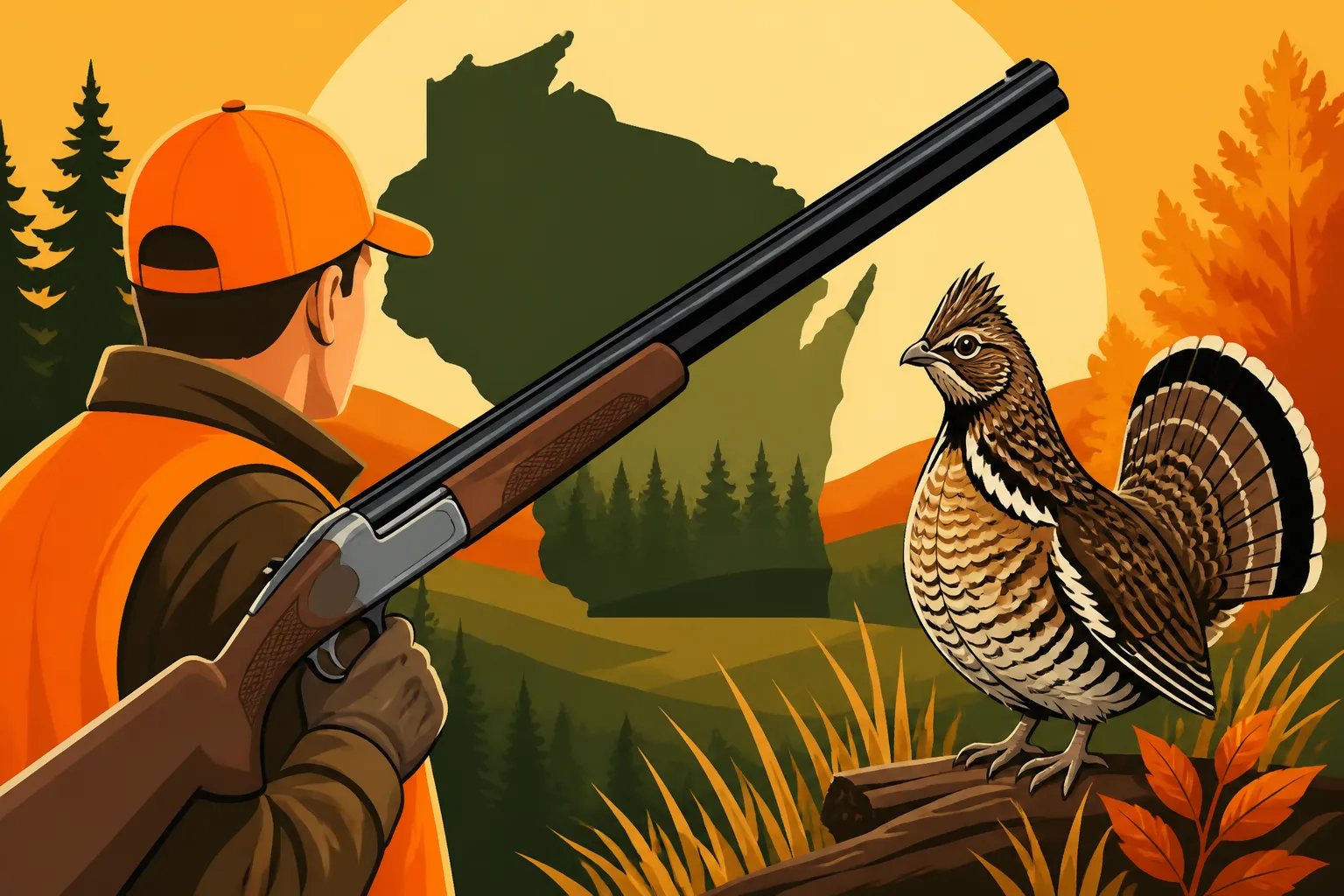
If you've spent any time slogging through the Northwoods, you know exactly what I'm talking about. Wisconsin grouse thrive in thick, regenerating timber – think aspen cuts, alder swamps, and areas with dense undergrowth. When a grouse decides to flush, it's usually with a startling explosion of wings, a blur of feathers, and a direct line to the nearest impenetrable cover. We're talking about reaction shots, often at very close range, sometimes through a lattice work of branches. There's rarely time for a slow, deliberate swing. You need to get on the bird fast, make a quick decision, and pull the trigger before it disappears behind a stand of pines or slips into Wisconsin cedar swamps. This isn't long-range pheasant hunting; it's an intimate, explosive dance in tight quarters.
These challenging conditions mean that a heavy, slow-to-swing shotgun can feel like a liability. You're carrying it all day, often uphill and through tangles, so weight matters. And when that flush happens, every ounce and inch of barrel length can impact how quickly you can react. The ideal grouse gun is an extension of your body, balanced and responsive, ready to snap into action at a moment's notice.
Shotgun Characteristics for Upland Success
Given the habitat, certain characteristics in a shotgun become paramount for grouse hunting. First and foremost is weight. A lighter gun is a joy to carry through miles of thick cover, and less fatigue means you're more alert and ready when a bird flushes. Secondly, balance and swing are critical. A well-balanced gun feels lively in your hands, allowing for quick, fluid movements to track a fast-moving bird. A barrel that's too long or too heavy can make the gun feel sluggish, leading to missed opportunities.
Thirdly, pattern density at close range is key. Most grouse are shot within 15-25 yards, sometimes even closer. You don't need a super-tight, long-range pattern; in fact, a wider, more forgiving pattern is often beneficial in dense cover where you might only get a split-second glimpse of the bird. This is why choke selection is so important, often favoring more open options like Skeet or Improved Cylinder. Finally, reliability is a given. You don't want a gun that jams or misfires when that once-a-day trophy bird bursts out. Whether it's a trusty double-barrel or a pump, it needs to work every single time. Many hunters appreciate the simplicity and quick follow-up shot of a break-action double in these tight spots, making 20 Gauge Doubles for Aspen Cover a popular choice.
The Contenders: Popular Shotgun Gauges for Grouse
When we talk about shotgun gauges, each one brings its own set of advantages and disadvantages to the grouse woods. It's not just about raw power; it's about finding the right tool for the job.
The Classic 12-Gauge
Ah, the venerable 12-gauge. It's the most popular shotgun in America for a reason, offering an incredible array of ammunition choices, from light target loads to heavy magnum goose thumpers. For grouse, its biggest pros are versatility and pattern options. You can load a 12-gauge with lighter, fast-shooting upland loads that still deliver plenty of pellets. The larger bore means you can achieve very dense patterns, even with open chokes, which can be forgiving on those quick, close shots. With the right load and choke, you can cover a decent amount of air.
However, the 12-gauge also has its cons in the grouse woods. Many 12-gauges tend to be heavier than their smaller-bore counterparts, which can wear you down during a long day of walking. That extra weight can also make them feel slower to shoulder and swing, which is a significant handicap when you only have a second to react to a flushing bird. Recoil, while manageable with lighter loads, can still be more pronounced than with smaller gauges, potentially making follow-up shots slightly slower for some shooters. If you're looking for an all-day carry gun in thick cover, a heavy 12-gauge might quickly become cumbersome.
The Nimble 20-Gauge
If there's a reigning champion for upland birds like grouse, many would argue it's the 20-gauge. It strikes a fantastic balance that makes it incredibly appealing to most grouse hunters. Its primary pros are its lighter weight and reduced recoil compared to a 12-gauge. This translates directly into less fatigue over a long hunting day and quicker, more comfortable shooting. The reduced recoil also helps you stay on target for potentially faster follow-up shots if the first one misses or if you happen to get a double flush.
Despite its smaller bore, modern 20-gauge ammunition is remarkably effective. With quality shotshells, you can achieve excellent pattern density suitable for grouse out to typical ranges. The "perceived" disadvantage of a smaller pattern is often negligible in the dense cover where grouse are typically shot. On the con side, while ammunition is readily available, the selection might not be quite as vast as for the 12-gauge, and some hunters might feel it lacks the "oomph" of a 12. However, for a bird as delicate as a grouse, the 20-gauge delivers more than enough power to cleanly harvest birds. Many consider it the quintessential Best Shotgun Gauge for Wisconsin Grouse.
The Elegant 28-Gauge
The 28-gauge is often considered the connoisseur's choice in the upland world. It's not as common as the 12 or 20, but those who love it, really love it. The pros are numerous for grouse. It's incredibly light, making it an absolute dream to carry all day without fatigue. The recoil is minimal, almost negligible, which allows for incredibly fast and comfortable shooting. What truly surprises many is the 28-gauge's patterning ability; it's renowned for producing exceptionally uniform and effective patterns for its bore size, making it surprisingly deadly on grouse. For a gun that feels like a wand, it hits hard.
The cons mostly revolve around availability and cost. 28-gauge ammunition can be more expensive and harder to find in some local stores compared to 12 or 20 gauge. If you're someone who doesn't handload, this can be a real consideration. The effective range is also slightly more limited than the 20 or 12, though still perfectly adequate for typical grouse distances. If you’re a purist, or simply appreciate a lighter, more agile firearm, and don't mind the ammo considerations, the 28-gauge is a truly elegant and effective choice for the Grouse and Woodcock Hunting in Wisconsin. You might even find reviews and discussions about specialized 28-gauge guns on communities like GoHunt.
The Youthful .410 Bore
The .410 bore is the smallest commonly available shotgun gauge, often associated with youth models or highly skilled shooters. Its primary pros are its incredibly light weight and virtually nonexistent recoil. It's a fantastic option for young hunters or those extremely sensitive to recoil.
However, the cons are significant for most grouse hunting scenarios. The .410 throws a very small payload of shot, meaning its pattern is inherently smaller and less dense than any other gauge mentioned. This makes hitting a fast-flushing grouse significantly more challenging. It requires a much higher degree of precision and is far less forgiving. While an expert shot can certainly take grouse with a .410, for the average hunter, especially those new to grouse hunting, it can lead to frustration and potentially wounded birds. It's generally not recommended as a primary grouse gun unless you are truly dedicated to mastering its unique challenges.
Making Your Choice: Factors Beyond Gauge
While gauge is a major consideration, it's far from the only factor in choosing your ideal grouse gun. Many other elements will impact your success and enjoyment in the field.
Fit and Feel
This cannot be stressed enough: a shotgun that fits you properly is paramount, regardless of its gauge. A gun that's too long, too short, or has an improper comb height will make you struggle to get on target quickly and consistently. When that grouse flushes, you need the gun to come up to your shoulder naturally, with your eye instantly aligned down the rib. If you have to fight the gun to get a proper sight picture, you're already behind the bird. This is why getting to a local gun shop and actually shouldering different models is so important. Swing them, feel the balance, and make sure it points where you look. This intangible "feel" is often more critical than any other specification on paper. Don't be afraid to take your time and find what truly feels right in your hands.
Ammunition and Choke Selection
Once you've narrowed down a gauge, the next crucial step is selecting the right ammunition and choke combination. For grouse, you generally want an open choke. Improved Cylinder (IC) is a fantastic all-around choice, offering a wide, effective pattern at close to medium ranges. Many hunters also favor Skeet or Cylinder chokes, especially for hunting in very dense cover where shots are almost always under 20 yards. These chokes spread the pattern quickly, giving you a larger "kill zone" for those blink-and-you-miss-it flushes.
For shot size, 7.5 or 8 shot are the most common and effective for ruffed grouse. Number 8 shot provides a higher pellet count per shell, increasing pattern density, which can be advantageous in close quarters. Number 7.5 shot offers a bit more individual pellet energy, which some hunters prefer, though both are perfectly adequate for grouse. It’s always a good idea to pattern your chosen gun and choke with your preferred ammunition at typical grouse distances (say, 20-25 yards) to see how it performs. Choke Choice for Fast Flushes is a topic many veteran hunters discuss extensively.
| Gauge | Common Shot Size | Typical Choke(s) for Grouse | Pros for Grouse | Cons for Grouse |
|---|---|---|---|---|
| 12-Gauge | #7.5, #8 | IC, Skeet | Versatility, wide ammo choice, dense patterns | Heavier, more recoil, slower to swing |
| 20-Gauge | #7.5, #8 | IC, Skeet | Lighter, less recoil, good balance, excellent patterns | Slightly less ammo variety than 12-ga |
| 28-Gauge | #7.5, #8 | IC, Skeet | Very light, minimal recoil, superb patterns | Ammo can be expensive/hard to find, limited range |
| .410 Bore | #7.5, #9 | Full, Modified | Extremely light, almost no recoil | Very small pattern, extremely challenging to hit |
Recoil Management and Follow-Up Shots
The ability to manage recoil directly impacts your capacity for fast, accurate follow-up shots. With grouse, especially when hunting in pairs or with a dog that flushes multiple birds, having the ability to quickly get back on target for a second shot can make a huge difference. Heavier recoil can cause you to flinch, slow your recovery, and affect your natural swing.
This is where the lighter recoiling gauges like the 20-gauge and 28-gauge really shine. Their gentler kick allows for faster target reacquisition, making it easier to connect on a second bird or recover if your first shot wasn't quite on. Even within the 12-gauge family, opting for lighter upland loads can significantly reduce felt recoil compared to heavy field loads. Consider how many shots you anticipate taking in a day and how much shoulder punishment you're willing to endure, especially if you're planning multi-day trips. Comfort translates to better shooting and more enjoyment.
Recommendations for the Wisconsin Grouse Hunter
Now that we've dug into the details, let's look at some practical recommendations for those of you hitting the Wisconsin grouse covers.
For the All-Arounder
If you're looking for a single shotgun to do it all – handle grouse, maybe some pheasants, and even some ducks – the 20-gauge is incredibly tough to beat. It offers a fantastic blend of light weight for easy carrying, moderate recoil for comfortable shooting, and ample patterning ability for quick-flushing grouse. A 20-gauge with 26-inch or 28-inch barrels, choked Improved Cylinder and Modified (if it's a double gun), or with interchangeable chokes, will serve you exceptionally well in just about any Wisconsin upland scenario. It's truly a versatile workhorse that won't leave you feeling over-gunned or under-gunned. You'll find many hunters agree it's perfect for Hunting Wisconsin Aspen Cover.
Beyond its versatility for various birds, the 20-gauge is also a superb choice for hunters who might be sensitive to recoil or who simply want a more enjoyable shooting experience without sacrificing effectiveness. With the quality of modern ammunition, its performance easily rivals that of a 12-gauge for most upland applications. It handles beautifully in tight situations, making it easier to make those snap shots through the trees.
For the Dedicated Purist
For those who live and breathe grouse hunting, who relish the challenge and appreciate the finer points of upland shooting, the 28-gauge or a specifically configured light 12-gauge might be your ideal companion. The 28-gauge, with its feather-light feel and superb patterns, offers an incredibly refined hunting experience. It demands a bit more precision from the shooter, but rewards good form with consistently clean kills and absolute joy to carry. It feels almost effortless, allowing you to focus purely on the hunt. You won't find many discussions on GoHunt or other forums where a dedicated grouse hunter doesn't wax poetic about their 28-gauge.
Alternatively, a very lightweight 12-gauge, perhaps a dedicated upland model with short barrels and an open choke, can also be a fantastic choice. These specialized 12-gauges are designed to shed weight and handle like smaller gauges, providing the benefit of a larger payload without the typical bulk. This gives you the best of both worlds: the familiar power of the 12-gauge in a quick-handling package. These are often premium firearms, but for the true enthusiast, the investment is well worth it for the improved feel and performance in the field.
Practical Considerations and the "GoHunt" Factor
Beyond the technical specs, think about how you hunt. Do you walk miles every day, or do you primarily hunt specific small coverts? Your physical stamina and the terrain you cover will strongly influence how much weight you want to carry. Are you a solo hunter, or do you hunt with a dog and friends? The pace and style of your hunt can also impact your choice.
And remember, the hunting community is a treasure trove of information. Platforms like GoHunt, for example, often have forums and gear reviews where hunters share their real-world experiences with different shotgun gauges and specific models in various hunting conditions. You can read up on what fellow Wisconsin hunters are using for Grouse Hunting Wisconsin Aspen Cover, how certain guns perform in specific types of thickets, and even get tips on Flushing Grouse Without a Dog. Tapping into that collective knowledge can be invaluable as you weigh your options and make your final decision. Consider renting or borrowing different gauges from friends or ranges if possible, to truly "try before you buy" and ensure the gun feels right when shouldered.
Ultimately, the "best" shotgun gauge for Wisconsin grouse hunting is highly personal. However, the 20-gauge stands out as an incredibly effective, versatile, and comfortable choice for the vast majority of hunters. The 28-gauge offers a more refined, lightweight experience for those willing to commit, while a lighter, upland-specific 12-gauge can still be a strong contender. Focus on a gun that fits you well, swings smoothly, and that you'll enjoy carrying through the beautiful, challenging grouse covers of Wisconsin.
Disclaimer
This article is for general informational purposes only and does not constitute professional advice. Laws, prices and regulations vary by location and change over time. Consult a qualified professional for guidance on your specific situation.