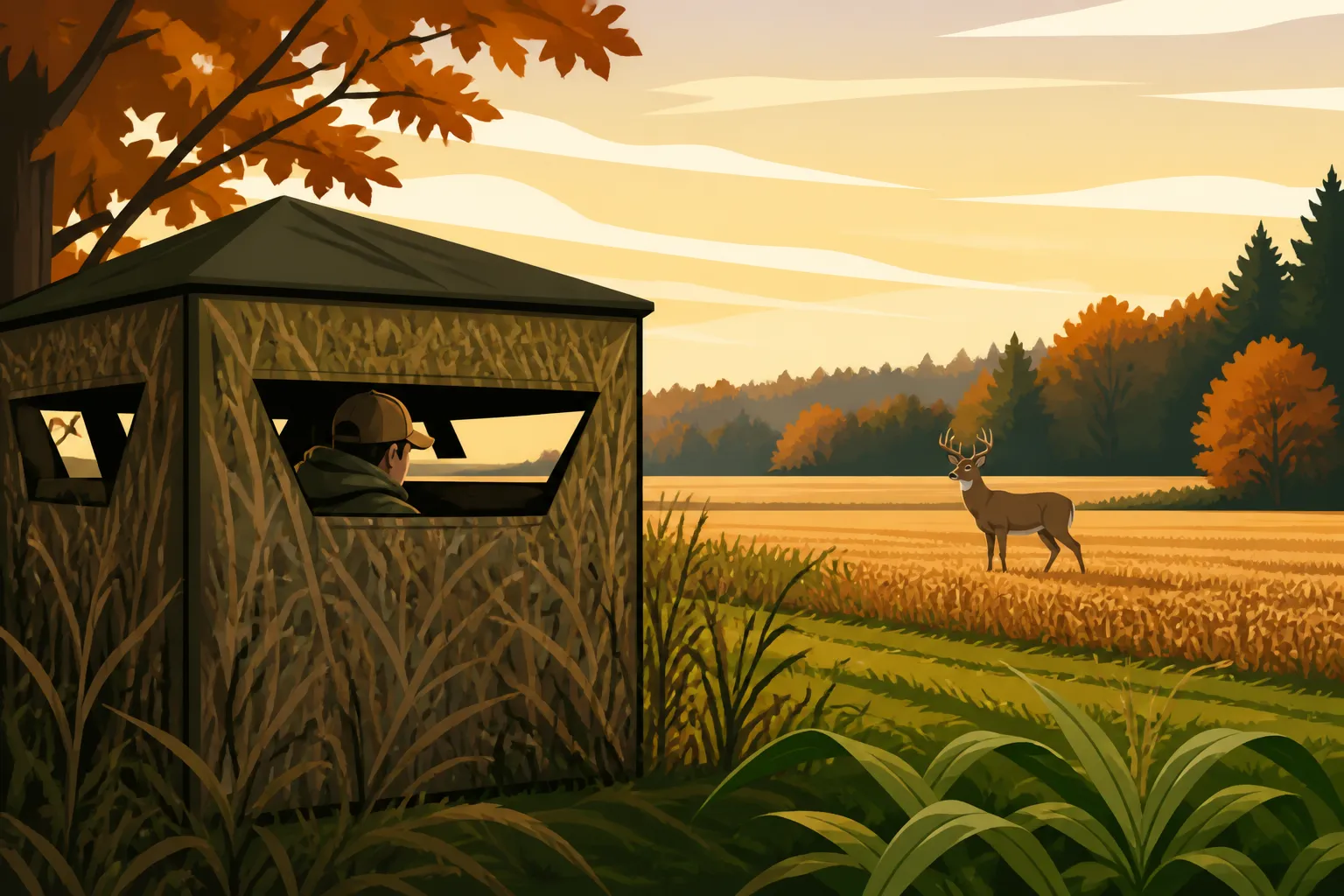
Ground Blinds on Wisconsin Field Edges
Hunting deer along Wisconsin's field edges can be incredibly productive, but it also leaves you feeling incredibly exposed. That wide-open view that lets you spot deer moving at a distance also means they can spot you just as easily. This guide is all about mastering the art of using ground blinds effectively on those crucial field edges, helping you disappear into the landscape and increase your chances of success without sacrificing comfort or visibility.
The Allure and Challenge of Wisconsin Field Edge Hunting
There's something undeniably magnetic about a Wisconsin field edge during deer season. Whether it's a freshly cut cornfield, a standing soybean plot, or a lush alfalfa field, these agricultural havens are natural magnets for deer. They offer abundant food, often serving as a staging area before deer move into thicker cover for bedding. For hunters, this translates into fantastic opportunities, especially during the early archery season or the late antlerless hunts. Yet, the very openness that makes these spots appealing also presents a significant challenge: concealment.
Imagine setting up a treestand on the edge of a vast field. While you gain elevation, your silhouette might still be easily picked out against the skyline, especially at dawn or dusk when deer are most active. Then there's the issue of wind direction; a slight shift can carry your scent directly into the field, blowing your cover before a deer even steps out. Ground blinds offer a different solution, one that, when executed correctly, can be incredibly effective for remaining hidden at ground level. They allow you to be eye-level with the deer, providing a unique perspective and often more comfortable hunting experience, but they demand careful planning to truly blend into the environment.
Why Ground Blinds Shine Where Treestands Falter
While treestands are a staple for many Wisconsin deer hunters, there are specific scenarios where a ground blind simply outclasses them on field edges. First off, not every field edge has a suitable tree. Maybe the timber is too sparse, too young, or filled with species that don't lend themselves to safe stand placement. In many agricultural areas of southern and western Wisconsin, mature trees might be few and far between right where you need them most. A ground blind offers instant flexibility; if you've got a decent clump of brush, a fence line, or even a large round bale, you've got a potential blind location.
Secondly, ground blinds are champions of comfort and concealment from the elements. Picture a frigid November afternoon during Hunting the Wisconsin Rut in November, tucked inside a blind, shielded from the biting wind and light snow. You can move a little, stretch a bit, and even use a portable heater if conditions demand it. This extended comfort allows for longer sits, which often translates to more opportunities. For hunters with mobility challenges, or those introducing new hunters like during Hunting the Wisconsin Youth Deer Hunt, ground blinds are a game-changer, providing a stable, enclosed, and accessible hunting position that a treestand simply can't match. They also offer a higher degree of scent containment, assuming you manage your air flow, which can be critical when deer are approaching from multiple directions in an open setting.
The Unique Challenges of Field Edge Blinds
Despite their advantages, ground blinds on field edges come with their own set of hurdles. The primary challenge is the sheer lack of natural cover. Unlike hunting in thick timber where a blind can easily melt into the background, a field edge often means you're placing a relatively large, man-made object in a highly visible location. Deer, especially mature whitetails, are incredibly observant. They're accustomed to the contours and features of their home range, and anything new or out of place immediately raises their suspicion.
Another significant challenge is managing scent and sound in an open environment. Wind currents along field edges can be unpredictable, swirling and carrying your scent in unexpected directions. A slight rustle from inside the blind, or even the subtle sound of clothing against fabric, can travel further in open air than it would in dense woods. Furthermore, shooting lanes need careful consideration. While a blind offers multiple windows, ensuring a clear shot at various angles without obstacles like corn stalks or saplings can be tricky. It requires thoughtful placement and often a bit of pre-season clearing to optimize your shooting opportunities, ensuring you're ready when that trophy buck steps out.
Selecting the Ideal Ground Blind for Wisconsin Field Edges
Choosing the right ground blind isn't just about picking one off the shelf; it's about matching the blind to the environment and your hunting style. For Wisconsin field edges, durability, portability, and camouflage are paramount. You need something that can withstand the elements, be easily moved if scouting reveals a better spot, and most importantly, disappear into the background.
There's a wide range of blinds out there, from simple pop-up models to robust hub-style designs. The material, frame construction, and window configurations all play a role in how effective a blind will be on an open field edge. It’s a balance between visibility for you and invisibility to the deer. Investing in a quality blind built for the rigors of the outdoors can make all the difference in comfort and success.
Blind Types and Material Considerations
When it comes to ground blinds for field edges, you'll primarily encounter pop-up and hub-style blinds, though some hunters even fashion natural blinds. Pop-up blinds are incredibly portable and quick to deploy, making them ideal for run-and-gun tactics or if you need to set up fast. They're generally lighter and more compact when folded. However, their lighter construction can sometimes make them more susceptible to high winds, which are common across open Wisconsin farmlands. Hub-style blinds, like those from popular brands, tend to be more robust, with a stronger frame that can better withstand strong gusts and heavy snow. They offer more interior space and often more versatile window configurations, but they are typically heavier and take a bit longer to set up and take down.
The material itself is crucial. Look for blinds made from durable, waterproof, and UV-resistant fabric. A dark interior lining is essential to prevent silhouetting, which happens when light passes through the blind and makes your movements visible from the outside. Some blinds feature a "blackout" interior that effectively hides your form. Consider also the noise factor; some fabrics can be quite loud when brushed against, especially in cold weather. Choose materials that are quiet to the touch, minimizing any unintentional sounds that could alert nearby deer.
Camo Patterns and Light Management
The camouflage pattern on your ground blind needs to harmonize with the specific field edge environment you're hunting. While a deep forest pattern might work in the timber, it could stick out like a sore thumb against a backdrop of cut corn or dormant alfalfa. Look for patterns that mimic agricultural stubble, dry grasses, or deciduous branches. Many brands offer specialized "prairie" or "field" patterns that blend browns, tans, and muted greens to match typical field edge vegetation.
Beyond the pattern, light management is arguably even more critical. Deer have excellent eyesight, particularly for detecting movement and silhouettes. To avoid silhouetting, always ensure the back of your blind is darker than the front. This means positioning your blind so the sun is not directly behind you, shining through the rear windows or fabric. Keeping all non-shooting windows closed or heavily screened helps maintain a dark interior, masking your movements. When you do open a shooting window, keep it as small as necessary to maintain that dark void inside the blind. Even better, use shoot-through mesh, which allows you to see out and shoot through without opening a large gap, further enhancing your concealment. A good rule of thumb is to look at your blind from a deer's perspective after setup; if you can easily see movement inside, adjustments are needed.
Strategic Placement and Setup on Field Edges
Effective ground blind hunting on Wisconsin field edges is less about the blind itself and more about where and how you set it up. It's a strategic game of chess against the deer's senses, where every detail of placement, blending, and access matters. The goal isn't just to hide; it's to become an invisible, natural part of the landscape.
Thoughtless placement can turn your blind into a glaring beacon of human presence, spooking deer before they ever come into range. Conversely, a well-placed and properly brushed-in blind can offer incredible close-range opportunities, allowing you to observe and harvest wary whitetails that would never tolerate an exposed hunter. This phase requires patience, a keen eye for deer sign, and a willingness to put in the groundwork before the season even begins.
Scouting for Optimal Locations
The first step to successful ground blind hunting on field edges is thorough scouting, both before the season and in the days leading up to your hunt. Deer are creatures of habit, often using the same travel corridors along field edges to access food or move between bedding areas and water. Look for pinch points, funnels, and natural barriers that concentrate deer movement. This could be where a strip of woods narrows between two fields, a fence line with a well-worn path, or the natural curve of a creek bottom bordering a crop. Use tools like the GoHunt app or other mapping software to identify potential travel routes, bottlenecks, and transition areas. These digital maps can reveal subtle topographical features or changes in vegetation that might funnel deer right past your chosen spot.
Pay close attention to fresh sign: tracks, droppings, rub lines, and scrape lines. Scrape Lines Along a Logging Road or field edges are huge indicators of buck activity. Consider prevailing wind directions for your hunting days, ensuring your scent is carried away from common deer entry points into the field. Sometimes, the best blind location isn't right on the very edge but 10-20 yards back into the timber or brush, providing a more natural backdrop and better scent control. Also, think about your entry and exit routes – you need to be able to get in and out of your blind without spooking deer in the field, which might mean a longer, more circuitous walk through heavy cover.
Brushing In and Blending With the Environment
A ground blind, especially a new one, looks like a foreign object to deer. To overcome this, you absolutely must brush it in. This isn't just about throwing a few branches on top; it's about seamlessly integrating the blind into its surroundings. If you can, set your blind up several weeks or even months before the season. This gives deer time to get used to its presence, viewing it as another non-threatening feature of their environment. Think of it as leaving a large rock or a fallen log in their habitat.
When brushing in, use natural materials from the immediate area. Cut branches from nearby trees or brush, stack corn stalks around it, or pile up dead leaves and grass. The goal is to break up the blind's hard lines and make it look like a natural clump of vegetation. Pay special attention to the corners and edges, as these are the most unnatural shapes. Create a "skirt" of brush around the bottom to hide the base and eliminate any gaps that could reveal movement inside. Don't forget the top; if your blind stands taller than surrounding vegetation, add branches to the roof to reduce its silhouette against the sky. The more effort you put into Brushing In a Blind on a Field Edge, the more confident deer will be, and the closer they'll approach.
| Aspect | Treestand on Field Edge | Ground Blind on Field Edge |
|---|---|---|
| Concealment | Elevated, silhouette against sky, wind can be problematic | Ground level, requires brushing in, good scent containment |
| Comfort | Exposed to elements, limited movement | Sheltered, allows movement, warmer |
| Setup | Requires suitable tree, climbing safety | Flexible placement, quick setup (pop-up) |
| Scent Mgmt | Wind can swirl easily, higher dispersal | Better containment if sealed, careful wind strategy |
| Visibility | Wide elevated view, can spot deer far out | Eye-level view, excellent close-range observation |
| Mobility | Limited to available trees | Highly portable, can relocate easily |
| Accessibility | Can be challenging for some hunters | Generally more accessible, good for new hunters |
| Deer Acclimation | Less critical if high in tree | Crucial, deer must habituate to its presence |
Dealing with Deer Behavior and Blind Detection
Deer are incredibly intuitive creatures, and their survival depends on their ability to detect threats. When hunting from a ground blind on a field edge, you're essentially placing yourself in their living room. Any anomaly in sight, sound, or smell can send them bolting. Therefore, understanding and mitigating their detection abilities is paramount to success. It's not enough to simply hide; you have to actively prevent them from knowing you're there.
This involves more than just camouflage. It encompasses managing your scent, minimizing visual disturbance, and sometimes even conditioning the deer to accept your blind as part of their world. Every choice, from when you set up your blind to how you enter and exit it, influences whether deer will approach freely or give your position a wide berth.
Acclimating Deer to Your Blind
The absolute best way to make a ground blind effective on a field edge is to put it out long before you plan to hunt it. If possible, set it up a month or two prior to the season, or at least a few weeks. This allows the local deer herd to acclimate to its presence. They'll see it, investigate it, and eventually come to accept it as a non-threat. Think about how deer react to round bales or abandoned farm equipment – after a while, they pay it no mind. Your blind needs to become that mundane background object.
During this acclimation period, avoid visiting the blind frequently. Keep human disturbance to a minimum. If you're scouting nearby, approach from a direction that won't lead deer to associate your scent with the blind itself. This long-term strategy can dramatically increase your chances of having deer walk right past your blind, unaware of your presence, rather than skirting it with an air of suspicion. It's an investment of time that pays dividends in deer encounters, especially when dealing with older, warier bucks.
Wind, Scent, and Entry/Exit Strategies
Managing wind and scent is perhaps the most critical aspect of ground blind hunting on field edges, even more so than in thick timber. In open areas, wind currents can be fickle, especially at dawn and dusk. Always check the wind direction religiously before every hunt, not just generally, but specifically for your chosen blind location. If the wind is wrong for your setup, don't hunt it. Relocating to a different blind (if you have multiple set up) or finding an alternative hunting spot is far better than spooking deer and potentially "burning" your prime location. Utilize mapping tools or even a simple wind checker to understand the local thermals and prevailing breezes. This is where applications like GoHunt with wind direction overlays can be incredibly helpful for planning.
Your entry and exit routes are equally vital. Plan them so you never walk through the area you expect deer to approach or feed in. Approach your blind from a direction that keeps the wind in your favor, ideally with the wind blowing your scent away from the field and any bedding areas. This might mean a longer walk, possibly through dense woods or along a ditch, but it's essential for minimizing disturbance. Use natural cover like tall grass, fencerows, or tree lines to obscure your movement. For a morning hunt, get into your blind well before daylight. For an evening hunt, stay until well after dark, allowing deer to clear the field before you emerge. Consider a pre-dawn or post-dusk walk-in using Headlamps for Walking Out After Dark on a low red setting to avoid startling deer with bright white light.
Hunting from Your Ground Blind Effectively
Once you've chosen and set up your ground blind strategically on a Wisconsin field edge, the real work of hunting begins. It's about maximizing your in-blind experience, ensuring you're ready for the shot, and maintaining comfort throughout your sit. A well-placed blind is only as good as the hunter inside it.
This means paying attention to details like your shooting lanes, how you position yourself, and being prepared for the variable Wisconsin weather. The more prepared and comfortable you are, the longer you can sit, and the more likely you are to capitalize on an opportunity.
Shot Angles and Windows
One of the great advantages of a ground blind is the ability to shoot in almost any direction, assuming you have the windows configured correctly. However, this also means you need to be mindful of your shooting lanes. Before your hunt, check all potential shooting windows from your seated position inside the blind. Clear any branches, tall weeds, or cornstalks that might obstruct your shot. For archery hunters, especially, this is crucial; even a small twig can deflect an arrow.
When hunting, position yourself to allow for the most natural and least disruptive movement to get into shooting position. This might mean sitting slightly to one side of the blind's center. Keep non-shooting windows closed or zipped down to a minimum to maintain that crucial dark interior and prevent unwanted light from entering. Use shoot-through mesh whenever possible, as it significantly reduces movement and allows you to track deer without opening noisy zippers. Practice shooting from your blind at various angles and distances before the season to understand its limitations and your own. Remember that Practical Range in Wisconsin Timber or on a field edge can be quite different depending on the cover.
Comfort and Durability in Wisconsin Weather
Wisconsin weather is famously unpredictable, especially during hunting season. A mild October morning can turn into a biting, windy afternoon, and November can bring snow, sleet, or freezing rain. Your ground blind needs to be a fortress against these elements, and you need to be prepared inside it. Pack layers of clothing – think Base Layers for a Wisconsin November – that you can add or remove as temperatures fluctuate. A small, portable heater can make an enormous difference on cold days, allowing you to sit longer and more comfortably. Just be mindful of ventilation and carbon monoxide safety if using propane heaters.
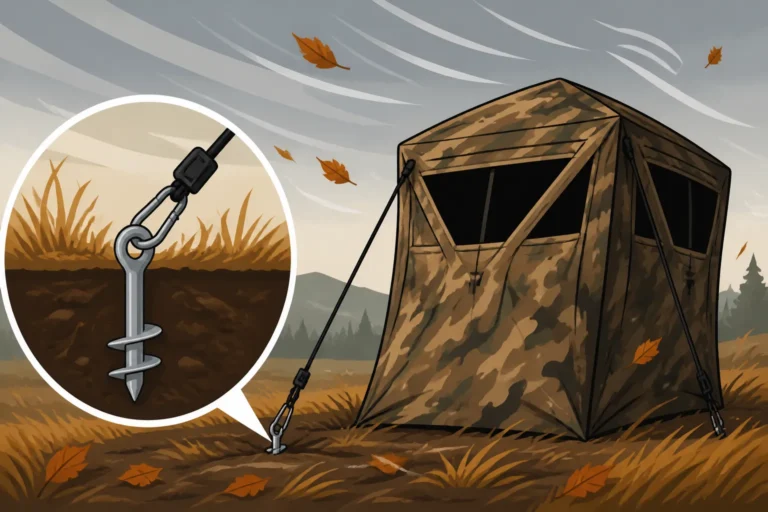
Ensure your blind is anchored securely, especially on exposed field edges where strong winds can turn it into a kite. Tie-down ropes and heavy-duty stakes are essential. Consider bringing a comfortable, quiet chair or stool that swivels, allowing you to easily adjust your position for observation and shooting. Also, pack snacks, water, and anything else you need to avoid leaving the blind, as every entry and exit increases the chance of spooking deer. The more comfortable and prepared you are, the more patient you can be, and patience is often the key to success on those wary field edge whitetails.
Disclaimer
This article is for general informational purposes only and does not constitute professional advice. Laws, prices and regulations vary by location and change over time. Consult a qualified professional for guidance on your specific situation.