Ground Blind Anchoring in Wind
There's nothing quite like settling into your ground blind before dawn, anticipating a crisp Wisconsin morning hunt. But all too often, a sudden gust of wind or an unexpected storm can turn that secure feeling into a nightmare, sending your carefully placed blind tumbling across a field or worse, right into your carefully scouted deer stand location. It's a frustration many of us have faced, and it can completely derail a hunt, not to mention potentially damage your equipment. This guide is all about giving you the peace of mind and practical know-how to anchor your ground blind against even the strongest Wisconsin winds, ensuring it stays exactly where you put it, season after season.
Why Your Ground Blind Needs a Rock-Solid Foundation Against Wisconsin Winds
We've all been there: you spend hours scouting, brushing in your ground blind, and feel confident it's perfectly positioned. Then, a surprise weather front rolls through, and your carefully prepared spot is either empty or, worse, littered with the tattered remains of your blind. It’s not just an inconvenience; it can be a costly blow to your hunting season.
The Cost of a Dislodged Blind
Imagine waking up on opening morning, full of anticipation, only to find your blind has become a wind-battered tumbleweed. The immediate cost is obvious: a ruined hunt. All that effort scouting a perfect pinch point or a key transition area, like Hunting a Funnel Between Two Swamps, is wasted. You're left scrambling, either trying to re-erect a damaged blind, find an alternative spot, or pack up and head home in frustration.
Beyond the immediate hunt, there are material costs. A ground blind caught in a significant wind event can suffer irreparable damage. Poles can snap, fabric can tear, and zippers can rip out. Replacing a quality blind isn't cheap, and it’s a cost that could have been avoided with proper anchoring. I've heard stories of blinds ending up hundreds of yards from their original spot, sometimes even out of sight, never to be recovered. That's not just a material loss, but a mental one too – nobody wants to leave litter in the woods.
Understanding Wisconsin's Weather Challenges
Wisconsin is beautiful, but it's no stranger to formidable weather. Our hunting seasons, from early archery through late muzzleloader, can throw everything at us: calm, crisp days, driving rain, heavy snow, and, yes, some seriously strong winds. These winds aren't just a gentle breeze; they can be sustained gusts ripping across open agricultural fields or funneling down Wind and Thermals in a Coulee with surprising force.
Consider setting up a blind for Hunting Wisconsin Farmland Deer. In wide-open areas, there's little to break the wind's assault. A blind placed on the edge of a standing cornfield, for instance, might be well-camouflaged but incredibly exposed once the crop is harvested. Even in more sheltered timber, strong frontal systems can create turbulent downdrafts that will test any poorly secured structure. These conditions highlight why simply pushing a few flimsy stakes into the ground often isn't enough. We need to think proactively about the kind of weather our blinds will face.
Protecting Your Investment and Your Hunt
Properly anchoring your ground blind isn't just about preventing it from blowing away; it's about protecting your investment in multiple ways. First, it extends the life of your blind. A blind that isn't constantly stressed by wind, rubbing against stakes, or getting tangled, will last longer. Second, it maintains your stealth. A flapping, rattling blind is a dead giveaway to any approaching deer. Imagine a trophy buck approaching your position only to be spooked by a ground blind struggling to stay put. This is a common pitfall when Using a Ground Blind on Wisconsin Public Land in exposed areas.
Furthermore, a well-anchored blind provides a stable, comfortable hunting platform. You don't want to be constantly adjusting a wobbly blind, or worrying about it collapsing around you. The peace of mind that comes from knowing your blind is secure allows you to focus on the hunt, the subtle movements in the woods, and the sounds of approaching game. It’s an ethical consideration too; leaving behind damaged gear in the wilderness because it wasn’t secured isn’t good stewardship.
Essential Anchoring Methods for Every Hunter
So, what are the best ways to keep your blind from becoming airborne? It really comes down to understanding the forces at play and applying the right tools for the job. You’ll want a combination of methods, often dictated by the terrain and how long your blind will be deployed.
The Basics: Stakes, Ropes, and Guy Lines
Most ground blinds come with a set of flimsy metal stakes and some rope or guy lines. While these are a starting point, they are often insufficient for serious Wisconsin winds. Think of them as the bare minimum, not the ultimate solution. The key is to upgrade these basics and use them correctly.
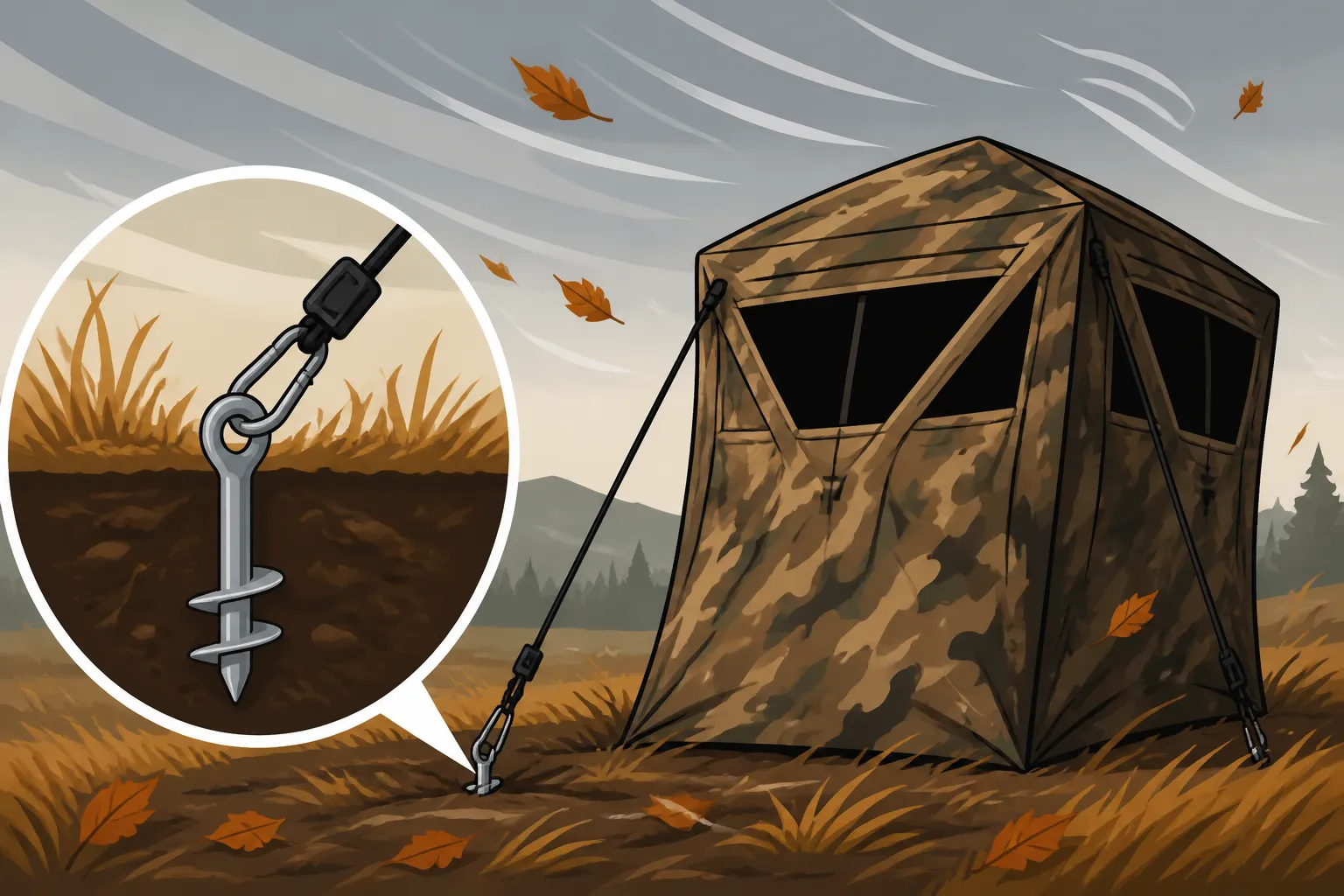
- Upgraded Stakes: Replace those skinny tent stakes with heavy-duty, screw-in ground anchors or robust rebar stakes. Screw-in anchors, often made of durable steel, twist deep into the soil, providing significantly more holding power than a straight push-in stake. Rebar stakes, if allowed and used safely, can also be driven deep for excellent grip. When placing stakes, don't drive them straight down. Angle them away from the blind, creating tension against the pull of the wind. This angle distributes the force more effectively and makes them much harder to pull out.
- Guy Lines: Use all the attachment points your blind provides. Many blinds have loops not just at the corners, but also along the sides and top. Running guy lines from these points, especially over the top of the blind like an inverted "V," can significantly reduce the sail effect of strong winds. Ensure your ropes are heavy-duty, UV-resistant, and tied with knots that won't slip, like a taut-line hitch, which allows for easy tension adjustment. Checking your setup after a week or two, or after any significant weather, is crucial, as ropes can stretch and stakes can loosen.
Heavy-Duty Solutions for Extreme Conditions
Sometimes, especially if you're leaving a blind out for an extended period or placing it in a particularly exposed spot, you need to bring out the big guns. These methods go beyond the basic stakes and provide true peace of mind.
- Concrete Blocks or Pavers: This is a classic for a reason. Concrete blocks, cinder blocks, or even heavy pavers can be placed inside the blind, especially in the corners, to add substantial weight. You can also run guy lines from your blind's frame to these blocks placed outside the blind. For example, if you're setting up for Hunting the Wisconsin Rut in November and plan to leave your blind out for weeks, four concrete blocks, one at each corner, can make a huge difference. Just be mindful of how you'll retrieve them at the end of the season.
- Sandbags: If you don't want to haul concrete, sandbags are an excellent alternative. You can buy empty burlap or heavy-duty synthetic sandbags and fill them on-site with dirt, sand, or rocks. Place them strategically around the interior perimeter of the blind, or even better, on the exterior, tied directly to the blind's frame. Sandbags offer flexibility and can conform to uneven ground. They're also easier to transport when empty.
- Rebar and PVC (More Permanent Setups): For truly semi-permanent setups, some hunters will drive long pieces of rebar deep into the ground at each corner, then slide sections of PVC pipe over the rebar, creating a sturdy sleeve. The blind's loops or frame can then be tied directly to these PVC posts. This method is incredibly secure but does require more effort and is best for private land or designated spots where you won't be moving the blind often. Always check local public land regulations on what kind of semi-permanent structures are allowed.
- Auger-Style Anchors: These are essentially large, heavy-duty versions of the screw-in stakes, often used for securing small sheds or dog tie-outs. They have a wide auger blade that twists deep into the earth, offering incredible resistance. You can attach strong ratchet straps or heavy ropes from your blind's frame directly to these anchors.
No matter which method you choose, remember that redundancy is your friend. Combining methods—like using heavy-duty stakes and interior sandbags—provides layers of protection against unexpected gusts.
Integrating Natural Elements for Added Security
Sometimes the best anchors are already in the woods around you. Using natural elements isn't just resourceful; it can be incredibly effective and blends seamlessly into the environment, which is especially important if you're Brushing In a Blind on a Field Edge.
- Trees and Logs: If your blind is near trees, use them! Run ropes or ratchet straps from your blind's frame directly to a sturdy tree trunk. You can also place heavy logs or large rocks inside the blind or on the exterior flaps to hold them down. In areas where trees are sparse, like some of the open areas discussed when considering Hunting Wisconsin Farmland Deer, this might not be an option, but in transition zones or wooded edges, it's a fantastic, free resource.
- Large Rocks or Boulders: Wisconsin's landscape offers plenty of natural ballast. If you find large, immovable rocks or boulders near your blind, use ropes or chains to secure your blind to them. Even smaller, heavy rocks can be placed inside the blind in mesh pockets or corners to add weight. Just make sure they don't impede your shooting lanes or create noise if they shift.
- Dirt and Sod: This method is often overlooked but can be highly effective for holding down the skirting of your blind. If your blind has an extended skirt or ground flaps, pile dirt, sod, or brush directly onto them. This not only anchors the blind but also seals out drafts and helps eliminate scent escape, turning your blind into a truly hidden and scent-controlled fortress. It also does wonders for concealment.
The key to using natural elements is to integrate them cleverly. Don't just toss a log on; think about how to tie your blind to the log or rock for maximum stability. Combining natural anchors with your manufactured stakes and ropes gives you the strongest, most resilient setup.
Here’s a quick comparison of common anchoring methods:
| Anchoring Method | Wind Resistance | Ease of Setup | Cost (Relative) | Best Use Case |
|---|---|---|---|---|
| Standard Tent Stakes | Low | High | Very Low | Emergency, very light wind, temporary setups |
| Heavy-Duty Screw-in Stakes | Medium-High | Medium | Medium | Most conditions, semi-permanent setups |
| Rebar Stakes | High | Medium | Low-Medium | Exposed areas, hard ground, long-term |
| Concrete Blocks / Pavers | High | Medium | Medium | Extreme wind, long-term, non-portable |
| Sandbags (filled) | Medium-High | Medium | Low-Medium | Flexible weight, can be filled on-site, moderate winds |
| Auger-Style Anchors | Very High | Medium | High | Extreme wind, very long-term, minimal visibility |
| Tying to Trees / Logs | High | Medium | Very Low | Wooded areas, natural concealment |
| Piling Dirt/Sod | Medium-High | Medium | Very Low | Sealing base, added concealment, moderate winds |
Strategic Placement and Ongoing Maintenance
Anchoring your ground blind isn't just a physical act; it's also a strategic decision that begins long before you even unpack your blind. Where you place it, and how you maintain it, are just as important as the anchors you use.
Scouting for Blind Placement and Wind Exposure
The best defense against a rogue wind is smart placement. Before you even think about pounding stakes, spend serious time scouting. Tools like GoHunt can be incredibly valuable here. Using its aerial photos and topographical maps, you can identify potential wind tunnels, exposed ridge points, or low-lying areas that might offer more shelter. A ridge point, for example, might offer great visibility, but a blind there will be completely exposed to prevailing winds. You can use insights from scouting tools to predict how wind will affect your chosen spot, or how deer might use terrain in conjunction with wind, as discussed in Reading Aerial Photos for Coulee Deer.
Look for natural windbreaks. A thick cedar swamp edge, a dense stand of pines, or even a robust hedgerow can significantly reduce wind pressure on your blind. If you're targeting specific areas like Scrape Lines Along a Logging Road or Late-Season Food Sources for Whitetails, consider how a slight shift in your blind's location could put you in a more sheltered spot without compromising your shot opportunity. Sometimes, a spot that's ten yards deeper into the timber or just over a slight rise makes all the difference in preventing your blind from becoming a kite. It’s also wise to consider the prevailing wind direction for different times of year and choose a location that often puts the wind in your favor, naturally protecting the blind's broad side.
Pre-Season Setup and In-Season Checks
One of the biggest mistakes hunters make is setting up their blind just before opening day. Ideally, your ground blind should be set up well in advance of the season, even several weeks prior. This allows local wildlife to become accustomed to its presence and for human scent to dissipate. More importantly for anchoring, it gives you time to really secure it properly, and to observe how it handles different weather conditions before the pressure of the hunt is on.
Once your blind is up, make regular checks. After every major storm, or even after a week of consistent winds, take the time to visit your blind. Check all your stakes, ropes, and any natural anchors. Have any stakes worked loose? Have ropes stretched? Are the sandbags still in place? Is the brushing holding up? It’s far better to reinforce an anchor point before a problem occurs than to discover your blind has vanished on the morning of a prime hunt. This diligence is especially critical on public land, where you might not be the only person around and a lost blind could become someone else’s problem. This also ties into the general principles of Scouting Wisconsin Public Land Before Season where you're not just looking for deer, but evaluating the environment.
Secure Ground Blind Management for the Long Haul
Think of your ground blind as an extension of your hunting strategy, not just a temporary shelter. Proper management goes beyond just securing it in the field. When the season is over, or if you're moving your blind, take the time to clean it, dry it thoroughly, and store it in a cool, dry place. This prevents mold and mildew and extends its life, meaning less wear and tear on the fabric and poles that are crucial for anchoring.
Developing a routine for anchoring is key. Every time you set up a blind, even for a short hunt, commit to using proper stakes and guy lines. It might take an extra 10-15 minutes, but that investment of time can save you hours of frustration and potentially hundreds of dollars in damaged gear. Consider carrying a small kit of essential anchoring gear – extra heavy-duty stakes, some sturdy rope, and maybe a small mallet – so you're always prepared. This ensures that whether you're setting up for a quick evening sit or leaving a blind out for the entire late archery season, it's always ready to face whatever Wisconsin weather throws at it.
Remember, a ground blind is only as good as its anchor. Invest the time and effort into securing it properly, and you’ll enjoy many more successful and comfortable hunts in the Wisconsin wilds.
Disclaimer
This article is for general informational purposes only and does not constitute professional advice. Laws, prices and regulations vary by location and change over time. Consult a qualified professional for guidance on your specific situation.