Boots for Wisconsin Swamps and Snow
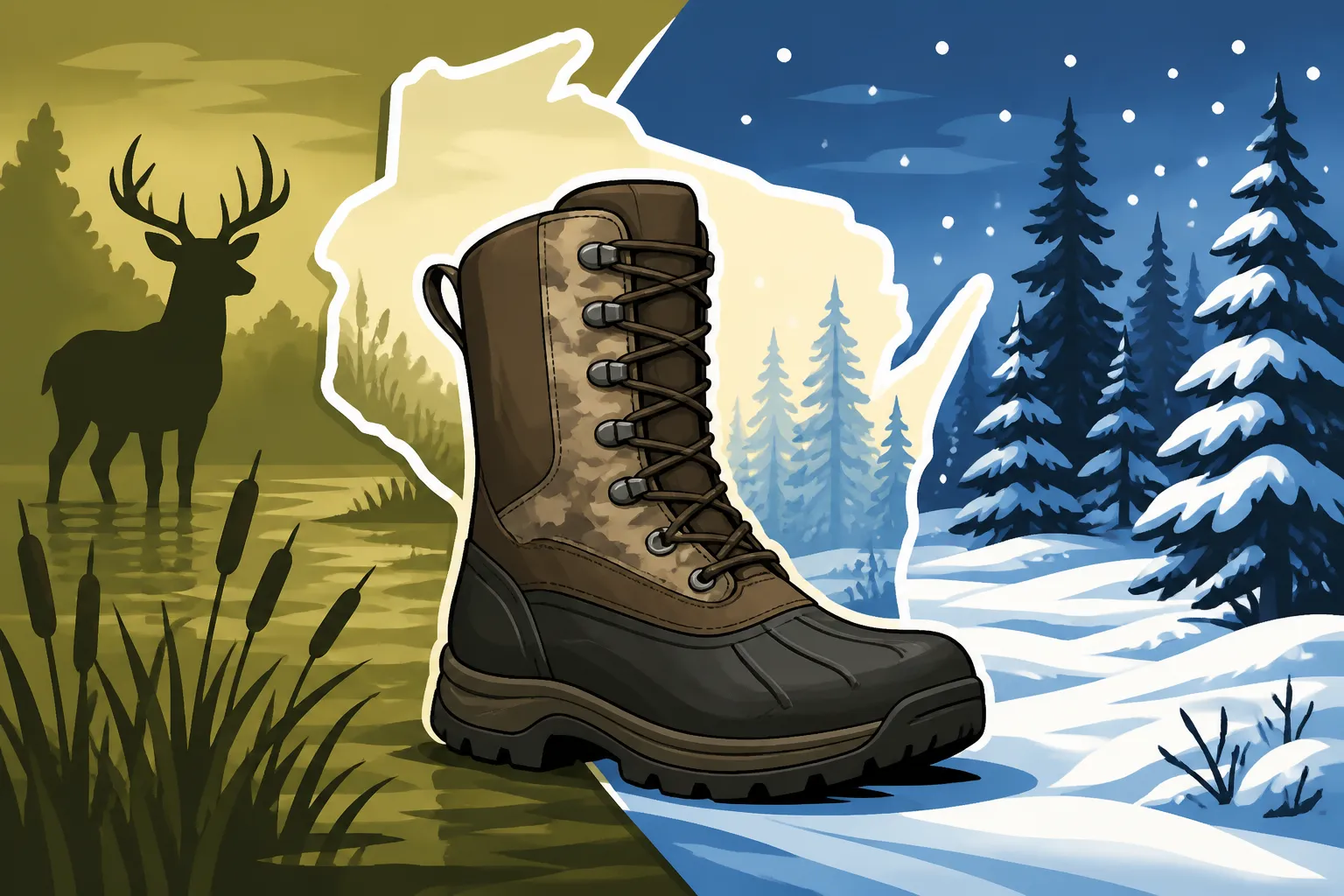
The struggle is real when you're trying to decide on the right footwear for a Wisconsin hunting season. One minute you're slogging through a mucky cedar swamp, the next you're post-holing through heavy December snow, or even worse, navigating a freezing rain-soaked deer drive. Choosing the wrong boots can ruin a hunt faster than a missed shot, leading to cold feet, blisters, and an overall miserable experience. This guide is all about helping you cut through the confusion and select the perfect boots to keep you warm, dry, and comfortable, no matter what Wisconsin throws your way.
Understanding Wisconsin's Diverse Footwear Challenges
Wisconsin's landscape is incredibly varied, and so are the conditions you'll face in the field. From the vast northern forests with their thick conifer bogs to the rolling agricultural fields and river bottoms of the south, a hunter's feet are constantly exposed to a spectrum of environmental demands. You can't just pick one type of boot and expect it to excel everywhere; understanding these nuances is key to making a smart choice.
The Boggy Reality of Wisconsin Swamps
Ah, the Wisconsin swamp. It's a place of mystery, thick cover, and often, big bucks. But it's also a place that will test your footwear to its absolute limits. Imagine creeping silently through a low-lying area, hoping to jump a deer in its bedding cover, only to have your foot sink ankle-deep, or even calf-deep, into cold, silty water. Suddenly, your "waterproof" leather boots are squelching, your socks are soaked, and the hunt's focus shifts from stealth to survival. Still-Hunting Wisconsin Cedar Swamps often means contending with these exact conditions. The ground here can be a deceptive mix of moss, decaying leaves, and standing water, sometimes with hidden stumps or roots just waiting to trip you up. The mud isn't just a nuisance; it's often a thick, clinging substance that can suck the boots right off your feet if they aren't properly secured or designed for extreme suction.
This isn't just about comfort; it's about safety. Cold, wet feet can quickly lead to hypothermia in chilly temperatures, and blisters from saturated socks can make every step agony. For those moments when you're Getting a Deer Out of a Wisconsin Swamp, you'll be profoundly grateful for boots that can handle the abuse without compromising your footing or leaving you with trench foot. It's a real frustration when your expensive "waterproof" boots fail you in the very conditions they were advertised to conquer, especially when you're miles from the truck.
Navigating Deep Snow and Frozen Terrain
Just when you think you've mastered the swamps, Wisconsin shifts gears into its formidable winter. Deep snow can be a beautiful blanket over the landscape, but for hunters, it presents a whole new set of challenges. Whether you're trying to navigate the heavy drifts of the Northern Forest Deer Density in Wisconsin or crossing open fields in search of late-season whitetails, boots designed for warmth and traction in icy conditions become paramount. Post-holing through several feet of snow, especially when breaking trail, requires boots that offer excellent ankle support and a high shaft to prevent snow from pouring in over the top.
The ground beneath that snow can be equally treacherous. Frozen ruts, slick ice patches, and hidden rocks are common, demanding outsoles with aggressive lug patterns for grip. Hunting Deer in Deep Northern Wisconsin Snow often involves long walks and prolonged exposure to sub-zero temperatures, meaning insulation is no longer just a comfort feature but a critical element for preventing frostbite. The cold can seep into your bones, and if your feet are the first to get chilled, the rest of your body quickly follows. Trying to stand still on a deer stand for hours in these conditions without adequate insulation can be brutal, making every minute feel like an eternity.
The Unexpected Mid-Season Thaw
And then there's the curveball: the mid-season thaw. Wisconsin weather is famously unpredictable, and it's not uncommon for a warm spell to hit in late October or early November, turning formerly frozen ground into a muddy mess, or melting snow into slushy puddles. This creates a challenging hybrid environment where you might start your hunt walking on frozen ground, only to find yourself wading through ankle-deep water by mid-day. This kind of volatility means your boots need to be versatile, capable of handling both the residual cold and the sudden influx of moisture.
Imagine setting out on an early November morning, expecting crisp air and solid ground, only for the sun to break through, quickly turning the forest floor into a sloppy mix of mud and meltwater. If your boots are purely insulated winter boots, they might be overkill and lack the proper waterproofing for the slush. If they're rubber boots, they might lack the warmth for those lingering chilly mornings. This "in-between" weather highlights the need for a thoughtful approach to footwear, often requiring a boot that strikes a balance or, ideally, having a couple of different options in your gear locker. It's a frustrating dance to master, but with the right gear, you can adapt to whatever Mother Nature decides to throw at you.
Key Features to Look For in Wisconsin Hunting Boots
When you're sifting through the countless options on the market, it's easy to get overwhelmed. Brands throw around a lot of technical jargon, but for Wisconsin hunters, a few core features rise above the rest. These are the non-negotiables that will make or break your hunting experience in our unique environment. Ignoring any of these could leave you cold, wet, or on your backside.
Uncompromising Waterproofing Technology
This is probably the single most critical feature for any boot destined for Wisconsin's diverse terrain. Whether it's morning dew, a sudden downpour, shallow stream crossings, or the aforementioned swamp slogging, your feet need to stay dry. A "water-resistant" boot simply won't cut it. You need a boot that is truly waterproof, meaning it can withstand prolonged exposure to moisture without letting a single drop seep through. Most reputable hunting boots achieve this through internal membranes, often made of materials like Gore-Tex, eVent, or various proprietary blends. These membranes have microscopic pores that are too small for water droplets to pass through but large enough for water vapor (sweat) to escape, allowing your feet to breathe while staying dry.
However, the membrane is only part of the story. The construction of the boot itself plays a huge role. Seams need to be sealed, gusseted tongues are essential to prevent water entry through the lacing area, and the bond between the upper and the sole must be watertight. Rubber Boots for Swamp Walking are often the gold standard here, as their seamless construction inherently offers superior waterproofing compared to stitched leather or synthetic uppers. Always check reviews, and if possible, physically inspect the boot for any potential weak points in its construction. A leaky boot isn't just uncomfortable; it's a safety hazard in cold conditions.
Insulation Levels for Varying Temperatures
Wisconsin's hunting seasons can span from early September's mild temperatures to late December's bitter cold, making insulation a complex choice. You don't want to over-insulate in early fall and have sweaty feet (which can lead to blisters and then cold feet), but you absolutely cannot under-insulate for a late-season sit. Insulation is typically measured in grams, with common ratings ranging from 200g up to 2000g or more. For early archery, you might opt for uninsulated or lightly insulated (200-400g) boots. As the seasons progress, and especially for Cold Weather Sitting Strategy or the muzzleloader season, you'll want significantly more.
A good rule of thumb for prolonged exposure in truly cold Wisconsin weather, like during the gun deer season in November or the late antlerless hunt, is at least 800g to 1200g of insulation, especially if you plan on sitting still. If you're particularly prone to cold feet, or if you're hunting in extreme northern conditions, 1600g to 2000g might be more appropriate. Insulated Boots for All-Day Sits need to strike a balance between bulk and warmth. Remember, too much insulation can make a boot clunky and reduce dexterity, while too little will leave your toes numb. Consider your activity level – a still-hunter or treestand sitter will need more insulation than someone actively tracking deer through the woods.
Traction and Stability on Tricky Ground
Walking across slick leaves, muddy hillsides, icy trails, or snow-covered rocks demands serious traction. The outsole of your hunting boot is your primary contact with the ground, and its design dictates your stability and grip. Look for aggressive lug patterns with deep, multi-directional treads. These deep lugs are designed to bite into soft earth, mud, and snow, providing purchase where shallower patterns would simply slip. The spacing of the lugs is also important; wider spacing helps shed mud and debris, preventing your boots from becoming smooth, slippery platforms.
Beyond the lug pattern, the rubber compound of the outsole matters. Softer rubber compounds tend to offer better grip on wet and icy surfaces but may wear down faster. Harder compounds are more durable but can be slicker. Many manufacturers use specialized rubber blends designed to provide a good balance. Additionally, good ankle support is crucial for stability, particularly when traversing uneven terrain like the Driftless Area Deer Hunting in Wisconsin or climbing in and out of treestands. A stiff midsole can also help prevent foot fatigue and provide protection against sharp rocks or roots. Feeling confident in your footing allows you to move more quietly and safely, ultimately making you a more effective hunter.
Boot Types for Specific Wisconsin Conditions
Given Wisconsin's unpredictable nature, it's rare that one boot can truly do it all perfectly. Most seasoned hunters find themselves with a small arsenal of footwear, each designed to excel in particular conditions. Understanding the strengths and weaknesses of each boot type will help you match your footwear to your specific hunt, whether you're chasing early-season turkeys or late-season deer.
Rubber Boots for Wet and Muddy Environments
When the going gets wet, the tough get rubber boots. These are the undisputed champions for navigating Wisconsin swamps and snow when the "swamp" part is the dominant factor. Their seamless construction, typically molded from vulcanized rubber or neoprene, makes them inherently waterproof up to their full height. This means no seams to leak, no stitching to fray, and no delicate membranes to puncture. They are ideal for sloshing through standing water, crossing shallow creeks, or slogging through thick, clinging mud. Many rubber boots also offer excellent scent control, as their non-porous material doesn't absorb odors as readily as fabric or leather, which can be a huge advantage when deer hunting.
Rubber boots come in various levels of insulation, from uninsulated models perfect for early season warmth to heavily insulated versions (1200g-2000g) suitable for late-season cold. Neoprene, a common component in many modern rubber boots, offers flexibility and additional warmth. The main downsides often include breathability, as rubber doesn't vent sweat as well as membrane-lined boots, potentially leading to clammy feet on long, active walks. They can also be a bit heavier and less supportive for extensive hiking on steep, rocky terrain compared to traditional hiking-style boots. However, for a sit in a flooded timber stand or a deer drive through a soggy bottomland, they are simply irreplaceable. When you're dealing with serious water, these are your best friends.
Insulated Leather or Synthetic Boots for Cold Hunts
For conditions where waterproofing is still important, but deep snow, cold temperatures, and rugged terrain are the primary concerns, insulated leather or synthetic boots often shine. These boots combine the best features of mountaineering or backpacking boots with added warmth and hunting-specific features. They typically feature a durable leather or synthetic upper (or a blend of both), a waterproof/breathable membrane, and varying levels of synthetic insulation. This construction provides excellent ankle support, crucial for navigating uneven or steep ground, and a stiffer sole that can better handle rocky or frozen terrain.
These boots are often lighter and more comfortable for long treks than rubber boots, making them a popular choice for still-hunting or covering a lot of ground in colder weather. When you're setting up a Treestand Setups in Wisconsin Hardwoods and need to climb, the snugger fit and better support of a lace-up boot can provide a lot more confidence. The breathability of the waterproof membrane also helps manage sweat, reducing the risk of cold feet once you stop moving. The trade-off is that while they are highly water-resistant, they might not be completely impervious to prolonged submersion in deep water like a seamless rubber boot. However, for most hunting scenarios involving snow, ice, and cold, they offer a fantastic blend of warmth, protection, and mobility.
Hybrid Boots for Versatile Performance
The hunting gear market, always innovating, has seen the rise of "hybrid" boots designed to bridge the gap between traditional rubber boots and more athletic hiking-style boots. These often feature a rubber lower portion for maximum waterproofing in slush and shallow water, combined with a lighter, more flexible, and often insulated upper made from synthetic materials or neoprene. The goal is to offer the best of both worlds: superior waterproofing where it's most needed (around the foot and ankle) and improved comfort, flexibility, and sometimes lighter weight in the upper.
These hybrid designs can be an excellent compromise for the unpredictable Wisconsin season, especially when you anticipate a mix of wet and cold conditions but don't want the full bulk or limited breathability of a purely rubber boot. They might be suitable for Hunting the Wisconsin Rut in November when you could encounter anything from a crisp, dry morning to a sudden sleet storm that melts into muddy trails. While they may not offer the extreme insulation of the heaviest rubber boots or the precise ankle support of a rigid backpacking boot, they provide a very respectable all-around performance. When reviewing options, platforms like GoHunt can be invaluable for comparing different hybrid models and reading real-world hunter feedback on their performance in varied conditions.
Materials Matter: Waterproofing and Insulation
The true magic behind a boot's performance in challenging Wisconsin conditions lies in its materials. It's not just about how the boot looks, but what it's made of, from the innermost lining to the outermost layer. Delving into the specifics of waterproofing membranes, insulation types, and outsole compounds helps clarify why some boots cost more, and why some truly outperform others in the field.
The Science Behind Waterproof Membranes
When a boot claims to be "waterproof," it's almost always thanks to an internal membrane. The most famous is Gore-Tex, but many brands use their own proprietary versions, often called things like "Dry-Plus," "HydroSeal," or similar. The genius of these membranes lies in their structure: they are typically a thin, porous layer laminated between the boot's outer material and its inner lining. The pores are incredibly tiny, so small that liquid water molecules (like raindrops or puddle water) cannot pass through. However, they are just large enough to allow water vapor molecules (from your sweat) to escape. This is the "breathable" part of "waterproof/breathable."
The effectiveness of these membranes isn't just about the membrane itself, but how it's integrated. All seams on the boot must be taped or sealed to prevent water from seeping through needle holes, which is a common failure point for boots. A high-quality membrane-lined boot will keep your feet dry from external moisture while helping to prevent that clammy, cold feeling that comes from trapped sweat. While highly effective, these membranes can sometimes be compromised by abrasion or punctures, so maintaining the boot's exterior integrity is important. For instance, Rain Gear for a Wisconsin Downpour is often made with similar technology, and you wouldn't expect it to last if it were constantly snagged and torn.
Understanding Insulation Ratings
Insulation in hunting boots typically comes in the form of synthetic fibers, most commonly Thinsulate or similar proprietary materials. These materials work by trapping air, which is a poor conductor of heat. The more air trapped, the warmer the insulation. This is why insulation is rated in grams per square meter (g). So, a boot with 1000g of insulation contains 1000 grams of insulation material per square meter, theoretically trapping more air and providing more warmth than a boot with 400g.
However, insulation ratings aren't a perfectly linear comparison across all brands or materials. Factors like the density of the insulation, how it's distributed within the boot, and the overall construction quality can influence real-world performance. A good guideline for Wisconsin's chillier hunts:
- 200-400g: Suitable for active hunting in cool fall conditions, or for early season when temperatures dip overnight.
- 600-800g: A versatile choice for moderate to cold weather, good for active hunting in winter or shorter sits in a treestand.
- 1000-1200g: Excellent for colder late-season hunts, especially if you'll be sitting for extended periods in single-digit temperatures. This is a popular sweet spot for many Wisconsin deer hunters.
- 1600g+: Reserved for extreme cold, prolonged static stands in bitter temperatures, or hunters who are particularly susceptible to cold feet. These boots tend to be bulkier but offer maximum warmth.
When considering Layering for a Wisconsin Deer Stand, remember that your boots are the foundation. Pairing adequately insulated boots with good quality wool socks (not cotton!) will significantly enhance your warmth and comfort.
Outsole Compounds and Lug Patterns
The outsole is where your boot meets the ground, and its design is paramount for traction and stability. You'll primarily encounter two aspects: the rubber compound and the lug pattern. The rubber compound dictates how sticky or grippy the sole is, especially on wet or icy surfaces. Softer compounds generally provide better grip but wear faster, while harder compounds are more durable but can be slicker on certain terrains. Many quality hunting boots use proprietary rubber blends optimized for cold-weather grip and durability.
The lug pattern refers to the shapes, depth, and spacing of the treads on the sole. For Wisconsin hunting, especially in swamps and snow, you want an aggressive pattern.
- Deep Lugs: Essential for biting into mud, soft earth, and snow. Shallow treads will quickly pack up with mud or snow and lose all effectiveness.
- Multi-Directional Lugs: Lugs that point in different directions offer grip during ascent, descent, and lateral movements, crucial for navigating uneven terrain.
- Wide Spacing: Lugs that are spaced further apart allow mud, snow, and debris to self-clear more effectively, preventing the sole from becoming clogged and losing traction.
- Heel Brake: A well-defined heel cup and sharp edge on the heel can be very helpful for braking on descents, especially on muddy or snowy slopes.
When evaluating boots, literally turn them over and look at the sole. Imagine walking through a Wisconsin cedar swamp or up a snow-covered Entry Routes on Steep Driftless Ground and consider if those lugs look like they could provide reliable grip. A good outsole can be the difference between a confident stride and a painful slip.
| Boot Type | Primary Use Case | Waterproofing Level | Insulation Range | Traction Capability | Pros | Cons |
|---|---|---|---|---|---|---|
| Rubber Boots | Swamps, muddy fields, wet conditions | Excellent (100%) | Uninsulated to 2000g+ | Good in mud/snow | Ultimate waterproof, scent control | Less breathable, can be heavy/clunky, less ankle support |
| Insulated Leather/Synthetic | Cold weather, varied terrain, snow | Very Good (Membrane) | 400g to 1600g | Excellent in varied | More breathable, better support, comfortable for hiking | Not fully submersible, seams can be failure points |
| Hybrid Boots | Mixed wet/cold, all-around use | High (Rubber lower) | 600g to 1200g | Good all-terrain | Balances waterproof/comfort, versatile | Not extreme in either category, can be a compromise |
Fit, Comfort, and Maintenance for Long-Term Performance
Even the most technologically advanced boot is worthless if it doesn't fit properly or isn't cared for. Comfort is paramount for long days in the woods, and proper maintenance will ensure your investment lasts for many seasons to come. Don't underestimate these often-overlooked aspects; they can make or break your hunting experience.
Achieving the Perfect Fit for All-Day Comfort
Finding the right fit is more art than science, but it's crucial. A boot that's too tight will restrict circulation, leading to cold feet and discomfort. A boot that's too loose will cause rubbing, leading to blisters, and compromise stability. You need enough room for your toes to wiggle, but your heel should remain relatively locked in place with minimal lift. Always try on boots with the kind of socks you'll actually wear hunting – typically a good quality wool or synthetic blend, possibly layered with a liner sock. For example, when you're preparing for a Cold Weather Sitting Strategy, you'll likely be wearing thicker socks than for an early September archery hunt.
Try on boots at the end of the day when your feet are slightly swollen. Walk around, go up and down stairs, and even try to simulate some of the movements you'd make in the woods. Pay attention to pressure points, pinching, or excessive movement. If possible, consider trying a half-size up if your feet are between sizes, especially if you plan on wearing thick winter socks. Remember that different brands and styles have different last shapes, so what fits well in one brand might not in another. Don't rush this process; your feet will thank you after miles of Hunting Wisconsin Coulees and Ridge Tops. Resources like GoHunt often provide detailed sizing charts and reviews that can help inform your decision, sometimes even noting if a boot tends to run small or large.
Proper Care and Storage to Extend Boot Life
Hunting boots are an investment, and like any good tool, they perform best and last longest with proper care. Neglecting your boots is a surefire way to shorten their lifespan and compromise their performance. First and foremost, always clean your boots after each hunt. Remove mud, dirt, and debris from the uppers and especially the outsoles. A stiff brush and water are usually sufficient. For leather boots, cleaning can be followed by a reconditioning treatment to keep the leather supple and prevent cracking.
For waterproofing, especially with membrane-lined boots, regular treatment is key. DWR (Durable Water Repellent) coatings on the exterior fabric or leather will wear off over time, causing water to "wet out" the outer layer, which can reduce breathability and make your feet feel colder. Reapply a spray-on or rub-on DWR treatment periodically. For rubber boots, simply cleaning them with mild soap and water is usually all that's needed. When storing boots, make sure they are completely dry, both inside and out. Stuffing them with newspaper can help absorb internal moisture. Store them in a cool, dry place away from direct sunlight or extreme heat, which can dry out and crack materials. This kind of attention ensures your boots are always ready for whatever next season's Wisconsin Gun Deer Season Structure throws at them.
Breaking In New Boots for a Pain-Free Season
One of the biggest mistakes a hunter can make is taking brand new boots straight into the woods for opening day. Most boots, especially those with leather components or stiffer soles, require a break-in period. This allows the materials to soften, conform to the shape of your foot, and work out any initial stiffness or pressure points. Trying to break them in on a strenuous hunt is a recipe for blisters, hot spots, and general misery.
Start by wearing your new boots around the house for short periods, then extend to longer walks around your neighborhood or local park. Gradually increase the distance and terrain difficulty. Pay close attention to any discomfort and address it early – sometimes a different lacing technique or sock combination can make a world of difference. For rubber boots, the break-in period is often shorter, but it's still wise to wear them for a few walks to ensure comfort and get a feel for their flexibility. Planning ahead and breaking in your boots before the season starts means you can focus on the hunt, not on your aching feet. You want your boots to feel like an extension of your body, not a torture device, especially when you're miles into public land trying to Find Ground Others Walk Past.
Disclaimer
This article is for general informational purposes only and does not constitute professional advice. Laws, prices and regulations vary by location and change over time. Consult a qualified professional for guidance on your specific situation.