Why Wisconsin Hares Turn White
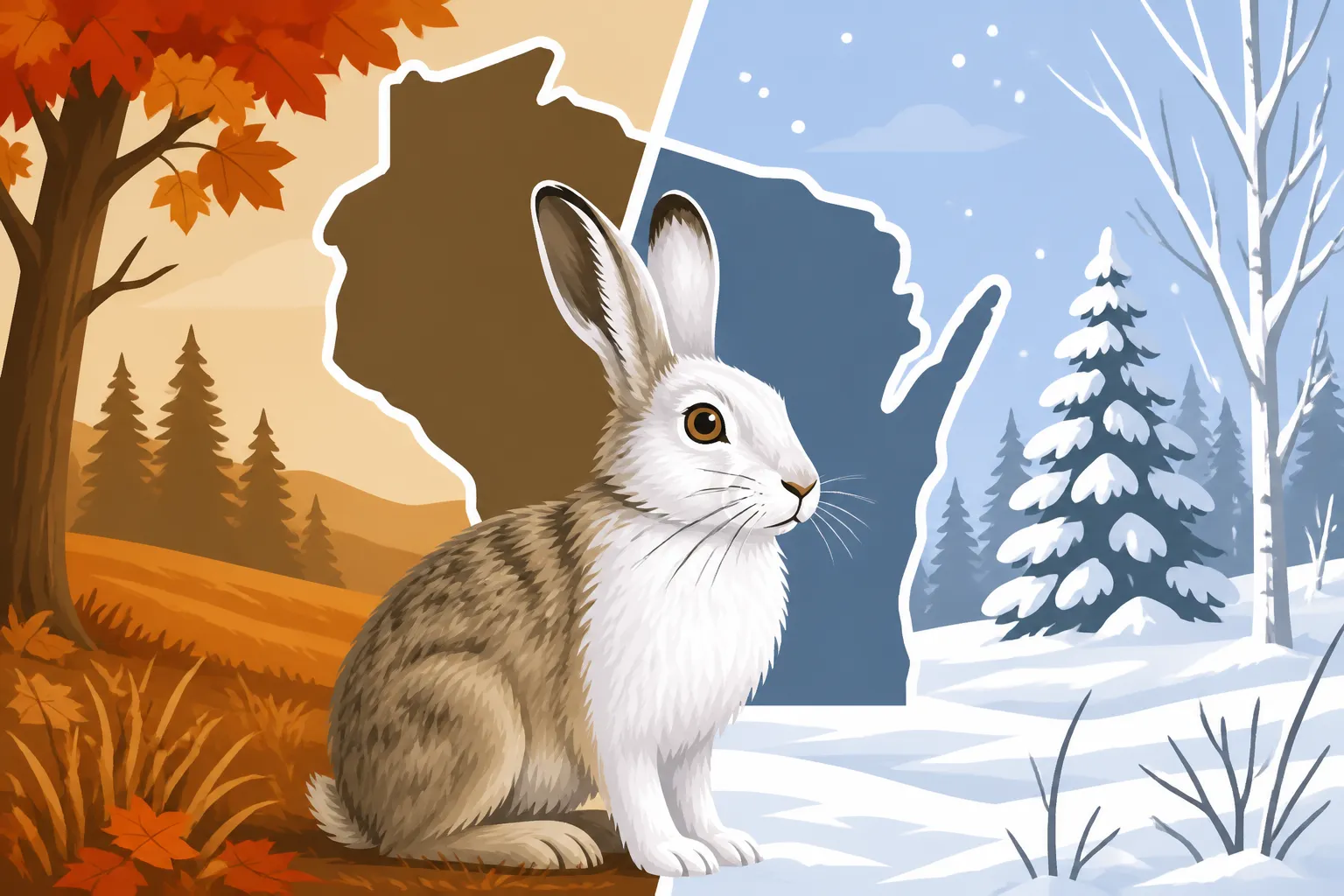
It's a sight that always catches your eye on a crisp fall or winter day in Wisconsin: that flash of white fur against a snowy backdrop, or sometimes, a patchy, almost ghostly figure caught between seasons. Many folks wonder about the magic behind it, how a critter that was brown and blended into the undergrowth all summer suddenly becomes as white as the snow itself. It’s not just a trick of the light; it’s a remarkable survival strategy, and this guide is going to peel back the layers on exactly why Wisconsin's snowshoe hares perform this impressive seasonal wardrobe change.
The Seasonal Camouflage Imperative
Imagine being a snowshoe hare. You're relatively small, tasty, and pretty much on the menu for a whole host of predators that roam the Wisconsin landscape. From the swift, cunning coyote that patrols the edges of clearings to the silent, watchful bobcat stalking through the thickets, and even the keen eyes of owls scanning from above at dusk, danger is constant. For a creature like the snowshoe hare, survival hinges almost entirely on its ability to remain unseen.
Evolutionary Drivers of Color Change
This isn't just a neat trick; it's a matter of life and death, honed over countless generations by the relentless pressure of natural selection. Those hares that were better camouflaged had a higher chance of escaping detection, living longer, and passing on their genes. This means that blending seamlessly with their environment is perhaps the most critical skill a snowshoe hare possesses.
Think about it: in the warmer months, our Wisconsin forests are a riot of browns, greens, and dappled sunlight. A hare with a mottled brown or grayish-brown coat melts into that background, becoming incredibly difficult to spot. But once the leaves fall and the snow begins to fly, that same brown coat would stick out like a sore thumb against a pristine white landscape. It would be an open invitation for any hungry predator. It's truly incredible how nature provides these solutions.
Our woodlands are full of predators, from the larger ones like the Wisconsin's Black Bear Population (especially younger bears learning to hunt) to smaller, more agile hunters. The snowshoe hare must evade them all. Their speed and agility are certainly assets, but they're often secondary to simply not being seen in the first place. This evolutionary push means that the hares have developed a finely tuned biological clock that tells them precisely when it's time to change their colors.
The Hormonal and Photoperiodic Trigger
So, what tells a hare it’s time to switch from brown to white? It’s not a sudden decision based on the first snowfall, though it often seems to align. The primary trigger for this remarkable transformation is actually the changing length of daylight, known as the photoperiod. As the days grow shorter in the fall, or longer in the spring, it signals to the hare's body that a seasonal shift is underway.
This change in photoperiod stimulates the hare's endocrine system, specifically influencing hormone production. A key player here is melatonin, a hormone well-known for regulating sleep cycles in many animals, including us. In snowshoe hares, the increasing or decreasing melatonin levels, driven by the amount of light perceived by their eyes, directly trigger the molting process and the growth of new fur.
It’s a gradual, internal mechanism, not an instantaneous one. This explains why you might see a snowshoe hare in late fall that's a patchwork of brown and white—it's right in the middle of its transformation. This process ensures that the hare begins its camouflage shift even before the first significant snow, anticipating the coming winter. The same hormonal cue, in reverse, prompts the return to their brown summer coat as spring days lengthen.
The Biological Mechanics of the Color Shift
It’s one thing to know why hares change color, but how they do it is equally fascinating. It's not a magical bleaching process or a quick dye job. Instead, it’s a sophisticated biological marvel involving a complete overhaul of their fur coat.
Molting and New Hair Growth
When a snowshoe hare changes its coat, it's not just fading or bleaching out its existing fur. The change is a full-blown molt, where the old, pigmented hairs are shed, and an entirely new set of hairs grows in to replace them. This happens twice a year: once in the fall for the winter coat, and again in the spring for the summer coat.
The process typically begins around October in Wisconsin as the days shorten. The hare's brown or grayish-brown summer fur starts to loosen and fall out. Simultaneously, new hairs begin to emerge from the follicles. For the winter coat, these new hairs are devoid of pigment, resulting in the brilliant white we associate with snowshoe hares in winter. The new winter coat isn't just a different color; it's also denser and often longer, providing enhanced insulation against the bitter Wisconsin cold, on top of the camouflage. This added warmth is crucial for Snowshoe Hare Numbers in Wisconsin to thrive through harsh winters.
This shedding and regrowth takes several weeks, which is why you’ll often spot hares that are halfway through their change, sporting a mix of brown and white patches. It’s an awkward phase, but a necessary one, showing the raw biological effort invested in their survival. For hunters pursuing Rabbit and Hare Hunting in Wisconsin, understanding this molt means knowing when the hares are most vulnerable or when their tracks will be most obvious against a full white backdrop.
Pigmentation or Lack Thereof
The "white" in a snowshoe hare's winter coat isn't actually a pigment like the brown in its summer fur. Instead, the white appearance is due to the absence of pigment and the unique structure of the hair shaft itself. During the winter molt, the new hairs grow without melanin, the natural pigment that gives color to skin, hair, and eyes.
These pigment-free hair shafts are often hollow, or contain numerous tiny air pockets within their structure. When light hits these hollow, unpigmented hairs, it's scattered and reflected in all directions, making the fur appear white. It's the same principle that makes snow look white, even though it's just frozen water. This ingenious trick of light reflection ensures maximum blending with snowy surroundings.
In contrast, their summer coat contains melanin, which absorbs certain wavelengths of light and reflects others, giving the fur its characteristic brown and grey tones. The transition is a stunning display of biological adaptation, showcasing how every detail, right down to the microscopic structure of a hair, contributes to the animal's chances of survival against Wisconsin's challenging environment and its array of predators.
Timing and Environmental Factors in Wisconsin
While the primary trigger for a hare's color change is the length of daylight, the exact timing and success of this camouflage can be significantly influenced by Wisconsin's dynamic weather patterns.
When the Change Begins and Ends
For snowshoe hares in Wisconsin, the seasonal change usually begins in the early to mid-fall, typically around October. You'll start to see those patchy individuals, a mix of brown and white, as the new winter coat begins to replace the summer one. By late November or early December, with consistent snow cover, most hares are fully transitioned to their pure white winter phase.
The reversal occurs in the spring, usually starting in March and extending into April. As the days lengthen and temperatures rise, triggering another hormonal shift, the white winter fur is shed, and the brown summer coat grows in. Again, this means there's a period where hares might be a mottled mix of colors, which can be a real challenge for them if the snow melts quickly or comes late.
This precise timing is generally well-calibrated to the historical average snow cover in Wisconsin. However, the unpredictability of recent winters, with delayed snowfalls or early thaws, can sometimes leave hares awkwardly mismatched with their surroundings. A hare that turns white in November only to find mild temperatures and bare ground is at a severe disadvantage, making them prime targets for predators.
Regional Variations and Climate Change Concerns
Wisconsin is a big state, and snow conditions can vary greatly from north to south. Hares in the deeper, more consistent snows of northern Wisconsin might start their change earlier and maintain their white coats longer than their counterparts in the southern parts of the state, where snow cover tends to be more intermittent. This regional variation, driven by local photoperiod and temperature nuances, speaks to the adaptability of these animals.
However, a growing concern for snowshoe hares, and many other species with finely tuned seasonal adaptations, is the impact of climate change. Warmer winters, delayed snow, and earlier thaws disrupt this delicate timing. If a hare is white and there’s no snow, it becomes a beacon for predators. Conversely, if snow arrives early and the hare hasn't fully turned white, it also stands out.
Hunters, land managers, and wildlife enthusiasts alike use tools to better understand and predict these environmental shifts. For instance, platforms like GoHunt can provide valuable mapping data that includes historical snow cover information and habitat types, helping to understand where and when hares might be most vulnerable. This kind of detailed environmental intelligence is becoming increasingly important for observing and conserving wildlife in a changing climate. Keeping an eye on snow forecasts and ground conditions isn't just for hunters anymore; it's a way to witness the real-time challenges these creatures face.
Implications for Survival and Hunting
The snowshoe hare's color change is a marvel of adaptation, but it also creates distinct advantages and disadvantages depending on how well nature's timing aligns with the hare's biological clock.
The Survival Edge (and Disadvantage)
The primary advantage of the snowshoe hare's seasonal color change is undeniable: superior camouflage. When their white coat perfectly matches a snow-covered landscape, they virtually disappear, giving them a critical edge against a wide array of predators. This ability to blend in is their first and best line of defense, often negating the need for frantic escapes.
However, this highly specialized adaptation comes with a significant disadvantage if the environmental cues don't match reality. Imagine a snowshoe hare in central Wisconsin that has fully transitioned to its brilliant white winter coat by early November, only for a prolonged warm spell to melt all the snow, leaving a landscape of bare brown earth and dead leaves. A white hare against a brown backdrop is incredibly conspicuous, turning its best survival strategy into a fatal flaw.
This vulnerability highlights the incredible precision required by natural selection. When the timing is right, the hare thrives. When it's off, even by a few weeks, individual hares can pay the ultimate price. These "mismatches" are becoming more frequent with variable winter weather patterns, posing a long-term challenge for snowshoe hare populations and the ecosystem that relies on them.
Hunting Considerations for Snowshoe Hares
For those of us who enjoy Rabbit and Hare Hunting in Wisconsin, understanding this color change is fundamental to a successful and ethical hunt. Hares are often incredibly difficult to spot when their camouflage is perfect, which makes for a challenging but rewarding experience.
Once the landscape is blanketed in consistent snow, and the hares are fully white, hunting can sometimes become a bit easier, paradoxically. While they blend into the snow, their tracks become highly visible, allowing hunters to follow fresh sign. This is particularly true if you're Running Beagles on Wisconsin Snowshoe Hares; the dogs will certainly track by scent, but knowing where to start based on visual sign can be a huge help. Hunters can then focus on dense cover where hares are likely to be bedded down. Scouting these areas, perhaps with a tool like GoHunt that shows various cover types and public land boundaries, becomes essential before the season starts or after fresh snow. This attention to detail is part of the deep satisfaction of traditional hunting, where observation and knowledge of the animal’s habits are key.
It's a stark reminder of the wild world's intricate dance, where survival for one means a challenge for another.
Here's a quick comparison of snowshoe hare characteristics by season:
| Feature | Summer (Brown/Grey) | Winter (White) |
|---|---|---|
| Coat Color | Mottled brown, grey, sometimes reddish undertones | Pure white (except for black ear tips) |
| Fur Density | Lighter, thinner, less insulating | Denser, thicker, highly insulating |
| Camouflage | Blends with bare ground, leaves, tree bark | Blends with snow-covered landscape |
| Primary Season | Late spring, summer, early fall | Late fall, winter, early spring |
| Hunting | More challenging visually, rely on movement | Tracks highly visible on snow, easier to spot |
| Predator Risk | Lower if camouflage is effective | Higher if snow cover is inconsistent |
Ultimately, the snowshoe hare's ability to turn white is a perfect example of how wildlife adapts to its environment. It’s a silent, natural wonder unfolding in our Wisconsin woods every year, a testament to the power of evolution and the beauty of the natural world around us. So next time you're out there, whether it's for some Cold Weather Sitting Strategy in your deer stand or just a quiet walk in the snow, keep an eye out for that ghost in the thicket.
Disclaimer
This article is for general informational purposes only and does not constitute professional advice. Laws, prices and regulations vary by location and change over time. Consult a qualified professional for guidance on your specific situation.