Snowshoe Hare Numbers in Wisconsin
For many Wisconsin hunters, the snowshoe hare is a fascinating, yet often elusive, quarry. Unlike the ubiquitous cottontail that can thrive in a farmer's brush pile, snowshoes prefer the dense, often swampy, conifer thickets of our northern forests. This preference makes them a specialized target, and it often leaves hunters wondering about their population health. If you've ever found yourself asking, "How are the snowshoe hare numbers in Wisconsin doing?" then you're in the right place. This guide will dive deep into the current status of these incredible animals, explore the factors that affect their populations, and help you understand where and how to find them.
Understanding Wisconsin's Snowshoe Hare Population Trends
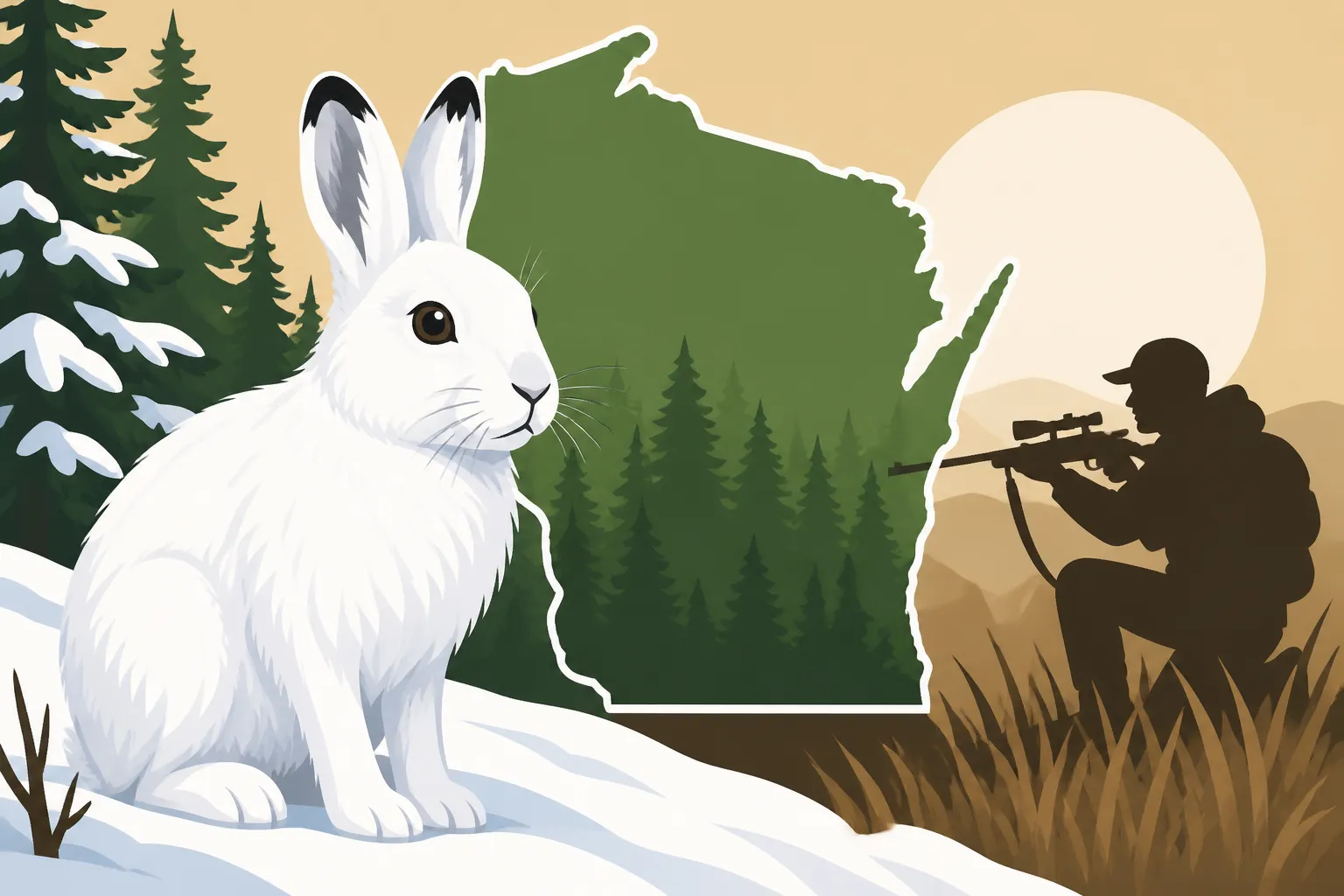
The snowshoe hare, with its remarkable seasonal coat change from brown to white, is a true creature of the deep woods in Wisconsin. They're not found everywhere, and their populations tend to fluctuate, sometimes quite dramatically, over cycles that can span several years. These aren't the kind of animals you expect to see hopping across a suburban lawn; they are wilderness dwellers, and their numbers reflect the health and extent of the specialized habitats they call home.
Historically, snowshoe hares have always been more prevalent in the northern tier of Wisconsin, particularly in areas dominated by extensive conifer forests, bogs, and swamps. This northern range is their stronghold, where the habitat is more consistent and the deep winter snows provide both cover and access to food. While you might occasionally find isolated pockets further south, especially in areas with significant cedar swamps or pine plantations, their core range remains above the tension zone where northern forests meet southern hardwoods.
What makes tracking snowshoe hare numbers a bit tricky is their cyclical nature. Much like ruffed grouse, these populations don't just stay stagnant year after year. They have natural boom-and-bust cycles, often influenced by a complex interplay of food availability, predation pressure, and weather patterns. One year you might stumble upon a seemingly endless supply of tracks, and the next, the woods feel eerily quiet. This natural fluctuation is a normal part of their ecology, but it can certainly make hunting them feel like a treasure hunt.
The Wisconsin Department of Natural Resources (DNR) monitors snowshoe hare populations through various means, including surveys that track small game harvest numbers and habitat assessments. While precise, real-time population counts for all small game can be challenging, these indicators provide a general sense of their health. What we tend to see is that robust populations are intrinsically tied to robust habitat. When their preferred habitat is abundant and healthy, their numbers generally reflect that.
The Role of Habitat in Hare Numbers
For snowshoe hares, habitat isn't just a place to live; it's a lifeline. They absolutely rely on dense cover to evade predators and find food. Think thick stands of spruce, balsam fir, or cedar swamps. These dense conifer patches provide critical thermal cover in winter, shielding them from harsh winds and heavy snow, and offer year-round protection from aerial predators like owls and ground predators like coyotes and bobcats.
Young, regenerating forests, particularly those with a lot of saplings and brushy undergrowth, are also incredibly important. These areas, often created by timber harvests or natural disturbances, provide abundant browse material for hares. They'll feed on twigs, bark, and buds of various shrubs and young trees. The thick growth also creates a dense network of escape routes and hiding spots, which are essential for survival.
The interconnectedness of these habitat types is key. A large expanse of mature, open timber, while beautiful, doesn't offer the necessary cover for snowshoes. They need those mosaic landscapes where dense thermal cover is interspersed with younger, food-rich areas. Fragmented habitats or areas where these specific forest types are declining can directly impact local hare populations.
Predation Pressure and Hare Cycles
Snowshoe hares are a fundamental part of the northern forest food chain. They are a primary food source for a wide array of predators, including bobcats, coyotes, foxes, raptors like great horned owls, and even martens and fishers. This heavy predation pressure is a significant factor in their population cycles. When hare numbers are high, predator populations often follow suit, as there's an abundance of food.
As predator numbers increase, they exert more pressure on the hares, which eventually leads to a decline in hare populations. This, in turn, causes a decrease in predator numbers due to less food. It's a classic predator-prey relationship that drives the cyclical nature of many wildlife populations. Understanding this dynamic helps explain why hare numbers can seem so variable from one year to the next.
For a species like the snowshoe hare, being able to hide effectively is paramount to survival. Their natural camouflage, especially the famous seasonal coat change, is their first line of defense. But even the best camouflage is limited if there isn't dense cover to blend into. A hare caught in a sparse, open forest is a much easier target than one nestled deep within a thick cedar swamp.
Factors Influencing Wisconsin's Snowshoe Hare Numbers
Several environmental and ecological factors continually shape the ups and downs of snowshoe hare populations in Wisconsin. These factors are often intertwined, creating a complex web of influences that determine how many hares are out there for hunters to pursue. It's rarely just one thing, but rather a combination of elements working together.
One of the most talked-about factors today is climate change and its impact on seasonal snow cover. Snowshoe hares are adapted to deep snows, which not only provide cover by allowing them to reach higher browse but also complete their camouflage. They turn white in anticipation of winter, a process triggered by day length. If snow arrives late or melts early, a bright white hare stands out like a beacon against brown earth or sparse snow, making them incredibly vulnerable to predators. Conversely, if snow stays late and they've already begun to change back to brown, they're equally exposed. This mismatch can lead to significant mortality events.
Another crucial factor is the health and availability of their preferred forest habitats. As mentioned, dense conifer stands and young, regenerating forests are non-negotiable for snowshoes. Logging practices, forest management, and even natural events like wildfires or disease outbreaks can alter these habitats. Sustainable forestry practices that create diverse age classes of timber and maintain thick understory can be beneficial, providing both food and cover. However, large-scale changes that reduce critical habitat can have lasting negative effects on hare populations.
Disease outbreaks can also play a role, though they are less commonly discussed for hares than for deer or other species. Hares, like many animals, can be susceptible to various pathogens, especially when populations are dense. While not typically a widespread, dramatic cause of decline, localized outbreaks could certainly impact specific hare communities.
Impact of Shifting Climate Patterns
The specific challenge posed by a changing climate for snowshoe hares is quite stark. Their survival strategy is heavily invested in their ability to blend in. Imagine a hare that has already made the physiological switch to its pristine white winter coat, only for a warm spell to arrive, melting away most of the snow. Suddenly, that hare, perfectly camouflaged for a white landscape, becomes a conspicuous target against the dark forest floor. This is not a hypothetical scenario; it's a growing reality in many parts of Wisconsin where winter weather patterns are becoming less predictable.
These periods of "camouflage mismatch" put immense stress on individual hares and can significantly increase predation rates. This isn't just about one or two days; extended periods without adequate snow cover during the winter months can decimate local hare populations. Furthermore, changes in snow depth and duration also affect their access to food. Deep, consistent snow allows hares to browse on twigs and buds that would otherwise be out of reach. Reduced snow cover limits this access and exposes them more readily.
Beyond direct predation due to poor camouflage, milder winters can also impact the overall health and reproductive success of hares. A shorter, less severe winter might seem beneficial at first glance, but if it disrupts their natural adaptations or the availability of specific food sources, it can have downstream effects on their ability to thrive and reproduce effectively in the spring.
The Influence of Human Activity and Forest Management
Human activity, primarily through logging and forest management practices, has a dual impact on snowshoe hare numbers. On one hand, clearcuts and other timber harvests that create early successional forests – essentially, young stands of trees and dense brush – are incredibly beneficial for hares. These areas provide the thick cover and abundant browse they need. Responsible forest management aims to create a mosaic of forest ages, which can be ideal for supporting a variety of wildlife, including hares.
On the other hand, certain land use changes can be detrimental. Conversion of forest land to agriculture or development, while less common in the core northern hare range, can permanently remove habitat. Additionally, management that favors only mature, open timber stands, or aggressive removal of underbrush, can reduce the critical dense cover hares require. It’s a delicate balance, and thoughtful forestry is key.
Hunters, too, contribute to understanding hare populations. Harvest numbers, collected by the DNR, offer valuable data points about the relative abundance of small game. While hares aren't pursued with the same intensity as deer or turkeys, consistent harvest reporting helps wildlife managers track trends and make informed decisions about habitat initiatives and season structures. The long history of Rabbit and Hare Hunting in Wisconsin provides a useful context for these ongoing efforts.
Locating and Hunting Snowshoe Hares in Wisconsin
Finding snowshoe hares requires a keen eye for their specific habitat preferences. They are creatures of dense cover, and you won't typically find them in open hardwoods or wide-open fields. If you're heading out to pursue these speedy sprites, knowing where to look is half the battle. This isn't a game of glassing open areas; it's about pushing through thick stuff where few other hunters want to go.
Their prime real estate in Wisconsin consists of conifer swamps, particularly those dominated by black spruce, tamarack, and northern white cedar. These areas offer unparalleled thermal cover and protection. You'll also find them in young, dense stands of regenerating aspen, birch, or mixed conifers following a timber harvest. Look for areas with a thick understory, where small trees and shrubs are growing so densely you can barely walk through them. This tangled mess is precisely where hares feel safest.
Topographic maps, aerial imagery, and modern hunting apps like GoHunt are invaluable tools for identifying potential hare habitat. You can easily scout from your armchair, looking for those tell-tale dark green patches that denote conifer cover, or the lighter green areas that signify young, regenerating forests. Pay close attention to the edges where different habitat types meet, as these transition zones often provide both food and cover, making them excellent travel corridors for hares. Using GoHunt to layer satellite imagery with public land boundaries can help you pinpoint accessible, high-potential areas.
When you're actually in the woods, look for sign. Fresh tracks in the snow are the most obvious indicator. Snowshoe hare tracks are distinctive: large, round, and often show four prints in a cluster (two large hind prints side-by-side, followed by two smaller front prints). You might also spot their small, round droppings, especially in areas where they've been browsing. Gnaw marks on young saplings or branches are another clue that hares are in the vicinity. Finding these signs is crucial, as the hares themselves are masters of concealment.
Identifying Prime Hare Habitat
To effectively hunt snowshoe hares, you first need to become a habitat expert. Think "thicket" – the thicker, the better. Prime snowshoe hare habitat often includes:
- Cedar Swamps: These are perhaps the most iconic hare strongholds. Northern white cedar provides year-round dense cover, and the hares love to browse on the cedars themselves, especially in winter. Learning to identify these areas on a map, often appearing as darker green, low-lying sections, is critical. You might consider specific tactics for Still-Hunting Wisconsin Cedar Swamps.
- Spruce and Fir Stands: Similar to cedar swamps, dense stands of spruce and balsam fir offer excellent cover. These often grow in damp or boggy areas but can also be found on slightly higher ground.
- Young Aspen or Mixed Conifer Regenerating Cuts: Timber cuts that are 5-15 years old can be absolute hare magnets. The dense growth of saplings, brush, and briars provides both abundant food and impenetrable cover. Look for these areas on recent aerial photos. This type of habitat is also excellent for Grouse Hunting Wisconsin Aspen Cover or Hunting Wisconsin Clearcuts and Aspen Cuts.
The key is looking for areas with very little visibility. If you can see more than 20-30 yards, it's probably too open for consistent hare numbers. They need that feeling of security that only super dense cover provides. Using a mapping app like GoHunt to zoom in on potential areas before you even leave the house will save you countless hours of unproductive walking. You can mark promising thickets and plan your approach routes directly on your phone, making your scouting much more efficient.
Hunting Tactics for Wisconsin Snowshoes
Once you've identified potential hare habitat, the next step is deciding how to hunt them. There are generally two main approaches: still-hunting (or jump-shooting) and hunting with hounds.
Still-Hunting/Jump-Shooting: This method involves slowly, quietly moving through dense cover, hoping to jump a hare from its hiding spot. It requires patience and a good eye. Hares often sit tight, relying on their camouflage, so you need to be very methodical. Pause frequently, scan ahead and around every tree or bush. Look for the outline of an ear, an eye, or a patch of white against the snow. When they burst out, they're incredibly fast, so quick reflexes are essential. A small gauge shotgun (like a 20-gauge or even a .410) with small shot (like 6s or 7.5s) is ideal for these close-range, fast-moving targets. This is often the preferred method for hunters without dogs.
Hunting with Hounds: For many, running beagles or other small game hounds for snowshoe hares is the classic and most effective way to hunt them. The dogs' keen noses can unravel a hare's trail through the thickest cover, eventually pushing it out into the open or into a tighter circle where a hunter can get a shot. This is an active and exciting way to hunt, with the baying of the hounds adding to the thrill. If you're interested in this method, researching Running Beagles on Wisconsin Snowshoe Hares would be a great next step.
Regardless of your chosen method, dressing appropriately for the weather and the terrain is crucial. You'll be pushing through dense, often wet or snowy cover, so durable, waterproof clothing and boots are a must. blaze orange or pink is always a good idea, even when not legally required, to ensure visibility to other hunters, especially if you're hunting with a partner or dogs.
Conservation and Future Outlook for Snowshoe Hares
The future of snowshoe hare numbers in Wisconsin is closely tied to our ability to maintain and manage their preferred habitats, and to adapt to the changing environmental conditions that directly impact their survival. While they might not be as charismatic as a whitetail or a bear, snowshoe hares play a vital ecological role as a key prey species. A healthy hare population indicates a healthy northern forest ecosystem.
Conservation efforts for snowshoe hares aren't always specific to the hare itself but are often integrated into broader forest management plans. Practices that promote diverse forest age classes, create and maintain dense shrubby understories, and protect conifer swamps are inherently beneficial for hares. These efforts often benefit other species as well, such as ruffed grouse, deer, and various furbearers that also rely on similar thick cover and food sources.
One of the biggest conservation challenges, as highlighted earlier, is the unpredictability of winter conditions. Wildlife managers and researchers are keenly aware of the "camouflage mismatch" problem. While we can't control the weather, understanding these impacts allows for more informed habitat management decisions, perhaps focusing on creating even denser cover where hares can better hide regardless of snow depth.
Hunters can also contribute to conservation simply by being responsible and reporting their harvests accurately. This data, combined with long-term monitoring, helps the DNR assess population health and make necessary adjustments to season structures if required. The relatively long and stable Wisconsin Small Game and Furbearer Seasons for hares usually reflect their capacity to withstand regulated hunting pressure, especially given their natural reproductive rates.
The Ecosystem Role of Snowshoe Hares
Snowshoe hares are a linchpin in the northern forest ecosystem, often referred to as a "keystone species" by ecologists due to their significant impact on other wildlife. They are a primary food source for a multitude of predators, directly influencing the populations of species like bobcats, coyotes, foxes, and various birds of prey. When hare numbers fluctuate, so too do the numbers of these predators, creating a ripple effect throughout the food web.
Consider the majestic Canada lynx, which occasionally makes appearances in Wisconsin. Lynx populations are famously tied to snowshoe hare cycles; a boom in hares often leads to a boom in lynx. While lynx are rare in Wisconsin, the principle holds true for our more common predators. A decline in hares can mean increased pressure on other prey species, or even a decrease in predator numbers if alternative food sources are scarce.
Beyond their role as prey, hares also impact forest regeneration through their browsing habits. While they can occasionally damage young trees, their feeding habits contribute to the natural cycling of nutrients and can influence the composition of the understory. They are an integral part of the intricate balance that defines a healthy northern Wisconsin forest.
| Habitat Type | Typical Hare Density | Cover Quality | Food Availability | Key Wisconsin Locations |
|---|---|---|---|---|
| Dense Cedar Swamps | High | Excellent | Good | Northern WI (e.g., Chequamegon-Nicolet National Forest) |
| Young Aspen/Birch Clearcuts | Medium to High | Excellent | Excellent | Northern WI (e.g., County Forests) |
| Spruce/Fir Thick Regenerative | Medium to High | Excellent | Good | Northern WI (e.g., Chequamegon-Nicolet National Forest) |
| Mixed Conifer Stands | Low to Medium | Fair to Good | Fair | Central and Northern WI |
| Open Mature Hardwoods | Very Low | Poor | Poor | Throughout WI (not preferred) |
Supporting Hare Habitat for Future Generations
Ensuring healthy snowshoe hare populations for the future means continuing to prioritize habitat management that creates and maintains the dense, complex cover they need. This includes:
- Promoting early successional forest: Encouraging responsible timber harvests that create young, brushy regrowth is crucial. This doesn't mean clearcutting everything, but rather a strategic approach that fosters a mosaic of forest ages.
- Protecting conifer wetlands: Safeguarding cedar swamps, spruce bogs, and tamarack fens from drainage or degradation is paramount. These areas are irreplaceable for hares.
- Considering climate impacts: While challenging, forest management can subtly adapt by favoring resilient tree species or managing for even denser cover in critical areas to mitigate the effects of camouflage mismatch.
Hunters, landowners, and outdoor enthusiasts all have a role to play. Supporting conservation organizations, participating in public land discussions, and understanding the ecological needs of species like the snowshoe hare helps ensure these iconic animals continue to thrive. The satisfaction of spotting a snowshoe hare, whether you're hunting them or just enjoying the winter woods, is a unique Wisconsin experience that we all want to preserve. Hunting Wisconsin's Northern Forest for Deer and other species often takes you right into prime hare country, highlighting the interconnectedness of our forest ecosystems.
Disclaimer
This article is for general informational purposes only and does not constitute professional advice. Laws, prices and regulations vary by location and change over time. Consult a qualified professional for guidance on your specific situation.