Rifle Calibers for Wisconsin Bear
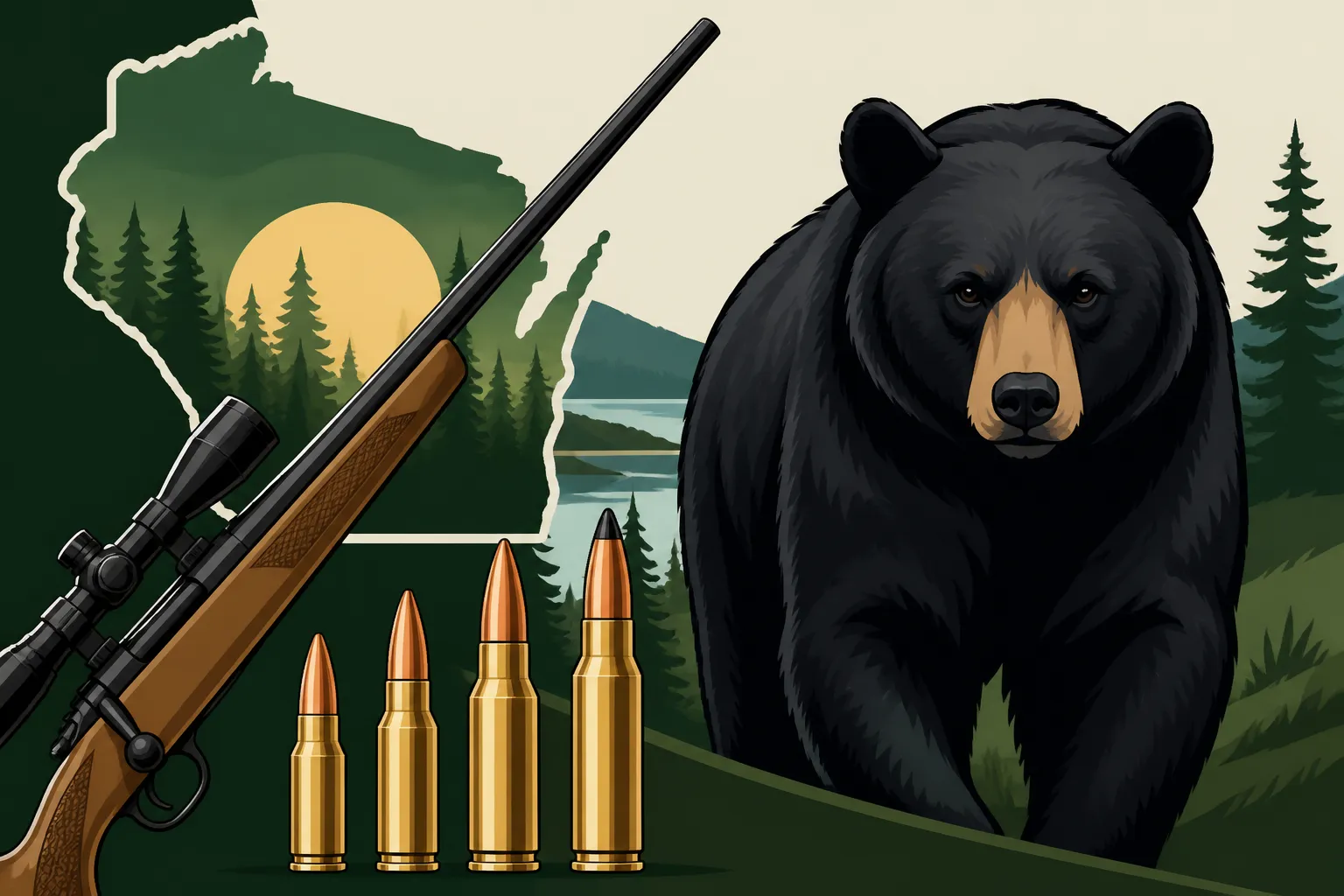
Ah, the pursuit of a Wisconsin black bear! It’s an adventure unlike any other in our state, steeped in tradition, challenge, and the raw beauty of our Northwoods. But when you finally draw that coveted tag or decide to pursue one, a question quickly rises to the forefront for many hunters: "What rifle caliber is truly appropriate for a Wisconsin bear?" It's a question that can spark a lively debate around any deer camp fire, and for good reason. Bears are tough, resilient animals, and choosing the right tool for an ethical, clean harvest is paramount. This guide will walk you through the options, dispel some myths, and help you feel confident in your rifle choice for chasing Wisconsin's black bears.
Understanding Wisconsin Bear Hunting Regulations and Ethics
Before we dive into the specific ballistics of various rifle calibers, it’s crucial to understand the framework within which we operate as bear hunters in Wisconsin. This isn't just about what's legal; it's about what's right and responsible.
Legalities of Rifle Hunting for Bear in Wisconsin
One of the great things about bear hunting in Wisconsin, unlike some other states or even deer hunting in certain zones here, is that the regulations are generally quite straightforward regarding rifle calibers. You won’t find a strict minimum caliber requirement for bear, nor will you encounter the "shotgun or straight-wall cartridge only" rules that apply to firearms hunting for deer in some parts of our state. This freedom means you have a wide array of choices, but with that freedom comes a greater responsibility to select a caliber and bullet combination that is genuinely up to the task.
Essentially, if it's a legal centerfire rifle for big game in Wisconsin, it's generally good to go for bear. This includes your typical deer rifles – the .30-06, .308, .270, and many more. However, just because a caliber is legal doesn't mean it's always the best or most ethical choice for a tough animal like a black bear. We're aiming for quick, humane kills, not just legal ones. Remember, safety always comes first, and knowing your firearm inside and out is crucial, especially in the thick cover where bears often roam.
Ethical Hunting: Minimizing Suffering and Ensuring Recovery
This is where the rubber meets the road. An ethical hunter's primary goal is to harvest an animal as quickly and painlessly as possible. For bears, this means a caliber and bullet that can deliver sufficient energy and penetration to reliably reach the vitals and incapacitate the animal swiftly. Black bears, while not necessarily "bulletproof," have a dense bone structure, particularly around the shoulders, and can carry a lot of fat and muscle, especially in the fall before hibernation. They are also incredibly tough and determined animals that can cover a surprising amount of ground, even with a mortal wound, making recovery difficult.
Think about it: you've put in years accumulating preference points, dedicated countless hours to Baiting Bears in Wisconsin or spent days scouting vast tracts of forest for sign. The last thing you want is a wounded bear that disappears into the dense undergrowth, leaving you with an agonizing, often fruitless, track. Your choice of rifle caliber and bullet should reflect this commitment to a clean kill and a successful recovery. It’s about being prepared for the animal’s resilience, even when everything goes perfectly. Every time you pull the trigger, you're making a promise to that animal, and to yourself, to do everything in your power for a swift and humane end.
Popular Rifle Calibers and Their Suitability for Wisconsin Bear
When considering rifle calibers for Wisconsin bear, hunters often gravitate toward cartridges that have proven their worth on other large game, particularly deer. However, bears present a slightly different challenge. Let's break down some of the most popular choices and their effectiveness.
Common Choices: Tried-and-True Calibers
Many of our beloved deer hunting calibers do pull double duty for black bear, and for good reason. They are often readily available, hunters are familiar with their rifles, and they are certainly capable when paired with the right bullet.
-
The .30-06 Springfield: Ah, the grand old '06. This caliber has probably taken more North American big game than any other, and it's a fantastic choice for Wisconsin bear. With bullet weights typically ranging from 150 to 200 grains, and especially when loaded with a premium 180-grain bullet, it delivers excellent penetration and energy. Whether you're making a close-range shot over a bait pile or need to reach out a bit further while Hunting Bear Without Bait or Dogs, the .30-06 has the power and versatility. It's a solid performer that provides a good balance of power and manageable recoil for most hunters.
-
The .308 Winchester: This is essentially the younger, more compact brother to the .30-06, offering very similar ballistics with slightly less powder. The .308 is incredibly popular for its accuracy, manageable recoil, and efficiency. Like the .30-06, it shines with 165-180 grain premium bullets, providing ample energy and penetration for black bear. It's a superb choice for still-hunting through dense timber where shots might be shorter and quick follow-ups are a possibility. Many hunters find rifles chambered in .308 to be lighter and handier, which can be a real plus when traversing the rugged terrain of our bear country. For a lot of folks, it’s already their trusted deer rifle, like those looking at Rifle Setups for Wisconsin Deer, making the transition to bear simple.
-
The .270 Winchester: The .270 is a very capable deer cartridge, known for its flat trajectory. While it can certainly take black bear, especially with heavier, premium 150-grain bullets, it's generally considered to be on the lighter side compared to the .30-calibers. It demands precise Shot Placement on a Black Bear and a bullet designed for deep penetration rather than rapid expansion. If the .270 is your chosen rifle, focus on bullet construction. Don't skimp on quality; a good bonded or monolithic bullet will make all the difference in ensuring adequate penetration on a bear.
Stepping Up: Larger Calibers for Added Confidence
For those who want a bit more punch, or who specifically buy a rifle for bear hunting, stepping up in caliber can provide an added measure of confidence, particularly if you anticipate tough quartering shots or just prefer a more definitive thud at impact.
-
The .300 Winchester Magnum: Now we’re talking serious power. The .300 Win Mag takes the performance of the .30-06 and amplifies it significantly, especially at longer ranges. Using 180 to 200-grain bullets, it delivers a massive amount of energy, making it a highly effective bear stopper. While perhaps overkill for a typical bait stand shot at 30 yards, its increased kinetic energy provides a larger margin of error on less-than-perfect shots and ensures very deep penetration. The trade-off is increased recoil, which requires practice and a solid shooting foundation to manage effectively. If you're comfortable with it, the .300 Win Mag is an outstanding choice.
-
The .338 Winchester Magnum: For many, this is the quintessential North American "bear gun." The .338 Win Mag pushes heavier bullets, typically 200-250 grains, with authority. This translates to immense knockdown power and bone-crushing penetration. If you’re hunting in areas with larger bears, or simply want the absolute confidence that comes with a heavier projectile, the .338 Win Mag delivers. Again, recoil is significant, but a well-placed shot from this caliber is almost universally devastating to a black bear.
-
The .35 Whelen: This venerable wildcat cartridge (now factory-loaded by several manufacturers) is a .30-06 case necked up to .35 caliber. It offers a powerful, heavy-hitting option without the magnum recoil. Firing 200-250 grain bullets at moderate velocities, it’s an excellent choice for timber hunting where shots are usually under 200 yards. The large diameter, heavy bullet creates a significant wound channel and penetrates deeply, making it a superb choice for black bears. It's a favorite among those who appreciate classic power without the "magnum" designation.
Modern Options and Ballistics
The firearms industry is always innovating, and new calibers periodically enter the market. Some of these can be viable options for Wisconsin bear hunters, especially those looking for specialized performance or reduced recoil.
-
6.5 Creedmoor: This darling of the shooting world is celebrated for its accuracy and mild recoil, making it popular for Wisconsin deer. While it’s certainly capable of taking deer, for bear, it falls into the same category as the .270 Winchester: marginal, requiring absolute precision and premium, heavy-for-caliber bullets (like 140-150 grains) designed for deep penetration. It lacks the raw energy and bullet mass of the .30-calibers and up, making it less ideal unless you are an expert marksman committed to perfect shot placement on every encounter. It’s certainly not my first recommendation for a bear-specific rifle, but if it's all you have and you're confident, know its limitations.
-
Straight-Wall Cartridges (.350 Legend, .450 Bushmaster): While designed primarily for areas with straight-wall cartridge restrictions for deer, these calibers are legal for bear in Wisconsin. The .350 Legend is generally a bit light for bear, similar to the 6.5 Creedmoor, but the .450 Bushmaster is a different beast. Firing heavy, large-diameter bullets, the .450 Bushmaster delivers tremendous energy at closer ranges (under 200 yards), creating a very wide wound channel. It’s a powerful option for bait hunting or still-hunting in thick cover where shots are likely to be close. Recoil is stout, but it’s undeniably effective. It offers a unique blend of "brush gun" performance with modern rifle accuracy.
| Caliber | Common Bullet Weights (Grains) | Typical Bear Hunting Range (Yards) | Recoil Level | Notes |
|---|---|---|---|---|
| .270 Winchester | 130-150 | 50-250 | Moderate | Requires premium, heavy-for-caliber bullets; precise shot placement. |
| .308 Winchester | 150-180 | 50-250 | Moderate | Excellent all-around; versatile with premium bullets. |
| .30-06 Springfield | 150-200 | 50-300 | Moderate | Classic choice, powerful, widely available. |
| .300 Win Mag | 180-200 | 75-300+ | Heavy | High energy, great for longer shots, requires practice. |
| .35 Whelen | 200-250 | 50-200 | Moderate-Heavy | Excellent short-to-mid range power, deep penetration. |
| .338 Win Mag | 200-250 | 75-300+ | Heavy | Top-tier bear caliber, immense power and penetration. |
| .450 Bushmaster | 250-300 | 50-175 | Heavy | Excellent short-range stopping power, large wound channel. |
Factors Beyond Caliber: Bullet Choice, Shot Placement, and Tracking
While choosing the right caliber is a crucial step, it's really only part of the equation for a successful and ethical bear hunt. The bullet you load, where you aim, and what you do after the shot are equally, if not more, important.
The Critical Role of Bullet Construction
This might be the single most overlooked aspect of rifle hunting for bears. A well-constructed bullet in a slightly "lighter" caliber will almost always outperform a poorly constructed bullet in a "heavier" caliber. Why? Because bears are tough, muscular animals with dense bone structures, especially around the shoulders. A bullet needs to retain its weight, penetrate deeply, and disrupt vital organs.
Think about it: many standard deer hunting bullets are designed for rapid expansion on a thin-skinned whitetail. They might expand too quickly and stop short on a bear's thick hide, layers of fat, and heavy shoulder bone. For bear, you want premium bullets designed for controlled expansion and high weight retention. Look for bonded core bullets, monolithic copper bullets, or heavy-for-caliber partitioned bullets. Brands like Federal Terminal Ascent, Nosler AccuBond or Partition, Barnes TSX/TTSX, Hornady Interbond or CX, and Swift A-Frame are excellent examples. These bullets are engineered to drive deep, punching through bone and tissue to reach the vitals, ensuring maximum energy transfer where it counts. Don't skimp on ammunition; this is not the place to save a few dollars.
Precision Shot Placement: The Heart and Lungs
No matter how powerful your rifle or how well-constructed your bullet, a poorly placed shot is still a poor shot. Bears have a slightly different anatomy than deer. Their vitals (heart and lungs) are tucked a bit further forward and lower in their chest cavity, somewhat protected by their heavy shoulder bones and dense muscle.
The ideal shot for a broadside bear is directly behind the shoulder, aiming for the middle of the chest, slightly forward. This placement targets the heart and lungs, which are the most critical organs for a quick kill. A quartering-away shot can also be effective, aiming to angle the bullet into the far shoulder, ensuring it passes through the vitals. Avoid quartering-to shots if possible, as they present a challenging angle to reach the vitals and risk hitting only non-vital tissue or heavily boned areas. Knowing Shot Placement on a Black Bear is paramount. Spend time studying bear anatomy diagrams, and visualize the shot placement when you're in the field. Practice your shooting from various positions you might encounter while hunting, not just from a bench rest.
The Importance of a Diligent Track
Bears are incredibly resilient animals. Even with a perfectly placed shot from a powerful rifle, they can often travel a significant distance before succumbing. This makes diligent tracking an absolutely critical component of bear hunting.
After the shot, resist the urge to immediately rush in. Give the bear time – at least 30 minutes to an hour, sometimes longer depending on the shot placement and caliber. This allows the animal to bleed out and stiffen, making recovery safer and often easier. Mark your shot location clearly. Then, begin your track slowly and meticulously, looking for blood, broken branches, disturbed leaves, and tracks. Bears leave distinct sign, but in dense Wisconsin woods, it can be tough. If darkness approaches, consider backing out and returning in the morning with more trackers, if temperatures permit and no rain is expected to wash away the sign. Knowing Handling a Bear After the Shot is about respect and responsibility. Many seasoned hunters use a GPS device, like those found on a GoHunt app, to mark blood trails and the last known location, which can be invaluable in a vast forest. Your commitment to recovery after the shot is the ultimate measure of your ethical hunting practice.
Specific Recommendations and Considerations for Different Hunting Styles
The best rifle caliber for you can also depend on your specific hunting style and the environment you'll be in. Wisconsin offers various approaches to bear hunting, and each can influence your gear choices.
Caliber Considerations for Bait Hunting
Bear hunting over bait is a popular method in Wisconsin, and for good reason—it’s often how hunters finally get that hard-earned opportunity. When hunting over bait, shots are typically close-range, often within 20 to 50 yards. This means long-range ballistics are less of a concern, and raw stopping power and deep penetration become the priorities.
For bait hunting, almost any of the .30-caliber options (.308, .30-06, .300 Win Mag) with premium bullets are more than adequate. Even a .270 with a heavy bonded bullet can be effective. This is also where larger, slower calibers like the .35 Whelen or the .450 Bushmaster truly shine. Their heavy, large-diameter bullets deliver a devastating punch at close range, creating a significant wound channel and ensuring deep penetration even through heavy bone. Since you often have time to compose yourself and make a precise shot, confidence in your rifle and bullet is key. A short, handy rifle is also a plus in a treestand or ground blind. Many hunters specifically set up their bait sites to facilitate a clean shot, as detailed in Baiting Bears in Wisconsin.
Still-Hunting and Spot-and-Stalk Scenarios
Hunting Bear Without Bait or Dogs requires a different mindset and often presents different shot opportunities. When still-hunting or spot-and-stalking through the dense northern Wisconsin woods, shots can be anywhere from a few yards to potentially over 100 yards, though long shots are rare in such thick cover. You might encounter a bear unexpectedly, requiring a quick, decisive shot.
For this style of hunting, versatility is a valuable trait in your rifle. A caliber that offers a good balance of power, manageable recoil, and decent accuracy across a range of distances is ideal. The .308 Winchester and .30-06 Springfield are truly excellent choices here. They are powerful enough for bear, their rifles are often lighter and easier to carry for miles, and they can handle shots from up close to modest distances. The .300 Win Mag is also a strong contender if you're comfortable with the recoil and can shoot it accurately under pressure. The ability to carry your rifle comfortably all day, quickly shoulder it, and make an accurate shot are all crucial factors when you're actively pursuing a bear on its home turf. Using a reliable mapping app, like GoHunt, can also help you understand the terrain and plan your stalk more effectively.
Choosing a Rifle that Fits You
Ultimately, the most important factor in choosing a rifle caliber for Wisconsin bear is your proficiency and confidence with that particular firearm. A hunter who can consistently place a premium 150-grain .270 bullet into a bear’s vitals will be far more successful and ethical than one who flinches from the recoil of a .338 Win Mag and places a shot poorly.
- Recoil Management: Be honest with yourself about recoil. Magnum calibers deliver significant kick, and if you’re not comfortable with it, you won’t shoot your best. Practice is key. If you're going with a heavy-hitting caliber, make sure you spend enough time at the range to become truly proficient with it.
- Rifle Weight and Ergonomics: Consider how the rifle feels in your hands. Is it comfortable to carry for long distances? Does it come to your shoulder naturally? These things matter, especially if you’re Running Bear Hounds in Northern Wisconsin or still-hunting.
- Confidence: Your confidence in your rifle, your caliber, and your shooting ability is paramount. If you trust your equipment and your skill, you're much more likely to make an ethical shot when the moment of truth arrives.
The Wisconsin black bear is a magnificent animal, and the hunt for one is a privilege. By choosing an appropriate rifle caliber, selecting premium bullets, focusing on precise shot placement, and committing to diligent tracking, you honor the animal and uphold the highest standards of ethical hunting.
Disclaimer
This article is for general informational purposes only and does not constitute professional advice. Laws, prices and regulations vary by location and change over time. Consult a qualified professional for guidance on your specific situation.