Waterfowl Gear for Wisconsin Marsh and River
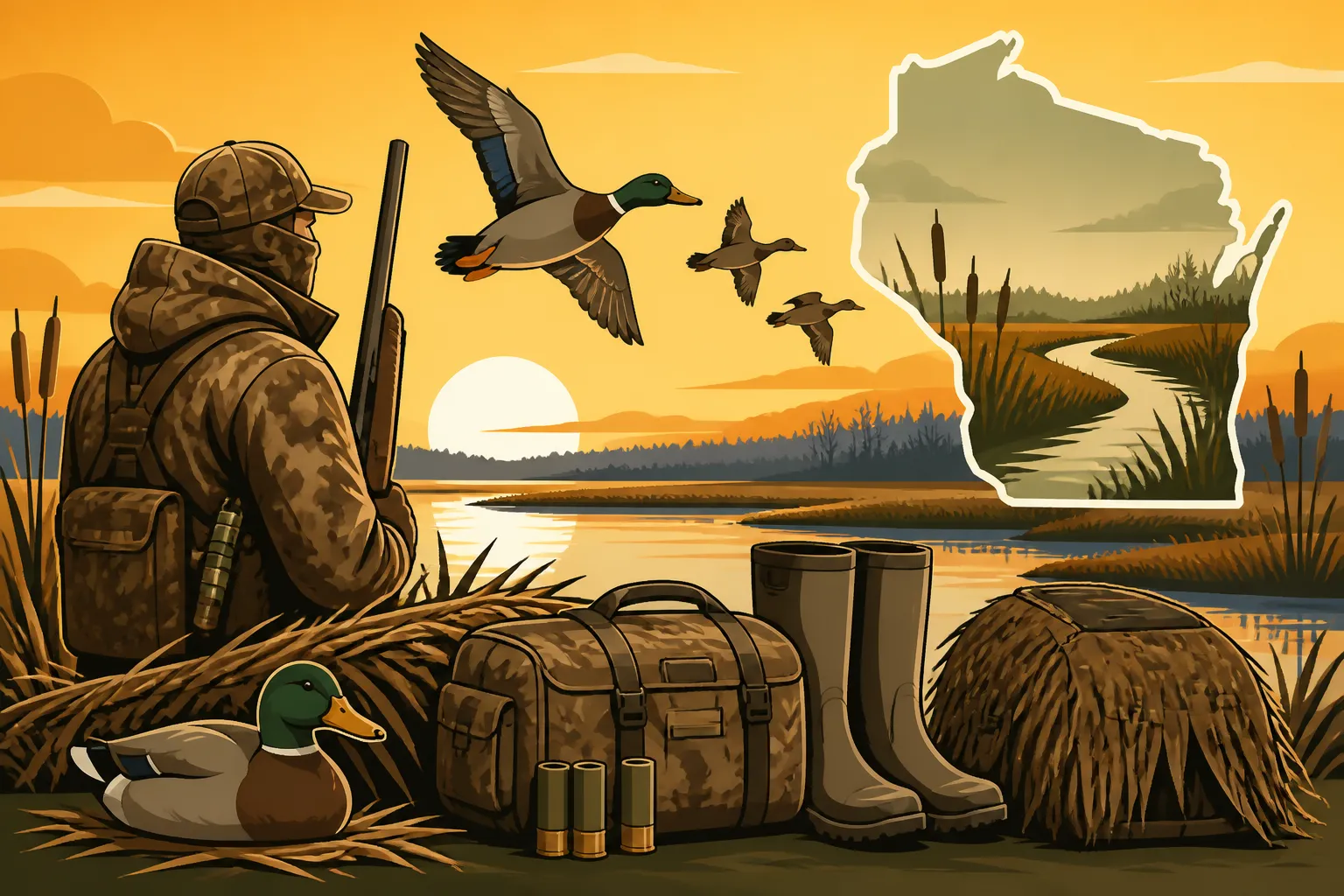
There’s nothing quite like the crack of dawn over a mist-shrouded Wisconsin marsh, the distant gabble of geese, or the whistling wings of ducks cupping into your decoys. It’s an experience that truly gets into your blood. But if you’ve ever tried to hunt waterfowl in our beautiful state without the right gear, you know the frustration – a bone-chilling wind cuts right through your layers, your decoys get tangled in the muck, or you can’t get your boat through the thick reeds. This comprehensive guide is here to ensure you’re not just surviving, but thriving, out there, covering everything from the clothing that keeps you warm to the tools that get you to the birds.
Understanding Wisconsin's Waterfowl Environments
Wisconsin is a waterfowl hunter's paradise, offering an incredible diversity of habitats from expansive cattail marshes to winding river systems and vast open water. But each of these environments presents its own unique set of challenges and demands specific gear choices to ensure your comfort, safety, and success. Ignoring these nuances can lead to a miserable day in the blind, or worse, a dangerous situation.
Marsh Dynamics: Cattails, Shallow Water, Mud
When you think of Wisconsin waterfowl, many envision a classic marsh hunt, surrounded by towering cattails and reeds, in water that can range from ankle-deep to chest-deep. These environments are fantastic for dabbling ducks like mallards and teal, as well as geese, but they are notorious for their tricky terrain. The bottom is often soft, silty, and unforgiving mud that can suck the boots right off your feet. You might be wading through dense vegetation for hundreds of yards to reach your spot, pushing through tangled cover that resists every step. This demanding environment requires gear that is not only waterproof and durable but also designed for silent movement and easy maneuverability.
Moreover, marsh depths can be deceptive. A spot that was knee-deep in early September might be an unexpected waist-deep plunge after a heavy rain or early snowmelt. And let's not forget the sheer amount of gear you often need to haul through these areas – decoys, guns, calls, blind bags – all of which feel exponentially heavier with every step through the thick mud. Your boots and waders become your most critical piece of equipment here, dictating how far and how comfortably you can pursue birds. Consideration for how you’ll transport your setup through dense cover is paramount.
River Systems: Current, Depths, Backwaters
Wisconsin's river systems, from the mighty Mississippi to countless smaller tributaries, offer an entirely different waterfowl hunting experience. Here, you're contending with currents, varying depths, and often much colder, faster-moving water. River hunting often targets diver ducks like canvasbacks and bluebills, which prefer larger, deeper bodies of water, but can also be excellent for mallards and geese in sheltered backwaters and oxbows. The challenges include anchoring your boat securely against the current, managing decoy spreads that don't get swept downstream, and navigating potential hazards like submerged logs or changing sandbars.
Access points on rivers can also be tricky, sometimes requiring long boat rides or launches from less-than-ideal spots. The water temperature is often significantly colder than marsh water, especially in late season, increasing the risk of hypothermia if you take an accidental dip. This means your flotation and cold-weather gear need to be top-notch. Hunting on a major river like the Mississippi, for instance, means dealing with commercial barge traffic, recreational boaters, and the ever-present powerful current, demanding a higher level of vigilance and boat handling skills. Your choice of watercraft, from jon boats to larger river rigs, will be dictated by the size and temperament of the river you plan to hunt. Hunting Mississippi River Backwaters offers more insight into these specific challenges.
Weather Woes: Cold, Wind, Rain, Snow
No matter where you hunt waterfowl in Wisconsin, you are at the mercy of Mother Nature. Our state is renowned for its rapidly changing and often extreme weather conditions, especially during the fall and early winter waterfowl seasons. A crisp September morning can quickly turn into a frigid, driving rain, or a beautiful sunny day can be overtaken by a sudden blizzard. The wind is a constant companion for waterfowl hunters, sometimes a blessing for bird movement, other times a brutal enemy that amplifies the cold and whips waves into a frenzy.
Dealing with these elements requires a strategic approach to clothing and gear. You need layers that can be added or shed to adapt to fluctuating temperatures, outerwear that is genuinely waterproof and windproof, and insulation that retains warmth even when wet. Think about sitting still in a blind for hours on end, exposed to the elements – every piece of your gear needs to pull its weight. Hands and feet are particularly vulnerable to the cold, and losing feeling in them can quickly end a hunt or even become dangerous. This makes thoughtful selection of gloves, hats, and insulated boots just as critical as your primary outer layers.
Essential Clothing and Layering for Wisconsin Waterfowl
When you're out chasing ducks and geese in Wisconsin, your clothing isn't just about looking the part; it's about survival, comfort, and ultimately, success. Our weather can be fickle, often starting bitterly cold before the sun crests the horizon, then warming up slightly, only to have a cold front or rain shower sweep through. Layering is not a suggestion; it's a fundamental strategy for any serious waterfowl hunter in this state.
Waders: Chest vs. Hip, Material Choices
Waders are arguably the single most important piece of clothing for a Wisconsin waterfowl hunter. Without them, you're either stuck on the bank or soaking wet and miserable. The choice between chest waders and hip waders largely depends on the specific environments you frequent. For most marsh and river hunting in Wisconsin, chest waders are the undisputed champion. They offer superior protection against deeper water, splashes from boat movement, and provide an extra layer of warmth around your core. Hip waders might suffice for very shallow field edges or small creeks, but for true wetland hunting, you’ll quickly regret not having the extra coverage.
When it comes to material, neoprene and breathable waders are the two main contenders. Neoprene waders are fantastic for warmth, especially in colder temperatures, acting like a wetsuit to insulate you even if water gets inside. They are durable but can be bulky and hot during warmer early season hunts. Breathable waders, often made from Gore-Tex or similar membranes, are lighter, more flexible, and excellent for active hunting or warmer weather, allowing perspiration to escape while keeping external water out. Many breathable waders feature a separate boot built in, or you can pair them with wading boots. For colder weather, you’ll want to layer heavily underneath breathable waders, or opt for insulated breathable models. Think about the bulk too; trudging through thick cattails with heavy, stiff waders can be exhausting.
Base and Mid-Layers: Moisture-Wicking and Insulation
Beneath your waders and outer jacket, your base and mid-layers are silently doing the heavy lifting of keeping you warm and dry. The golden rule here is avoid cotton. Cotton absorbs moisture and holds it against your skin, rapidly chilling you once you stop moving or if you start to sweat. Instead, opt for synthetic moisture-wicking materials or merino wool for your base layer. These materials pull sweat away from your body, allowing it to evaporate, thus regulating your temperature more effectively.
Your mid-layers provide the critical insulation. Fleece, down, or synthetic puff jackets are excellent choices. Again, look for materials that retain warmth even when damp, as dampness is almost inevitable during a waterfowl hunt. A common setup might include a lightweight merino wool base layer, followed by a mid-weight fleece or synthetic insulated jacket and pants. The beauty of layering is its adaptability; if you're hiking into a distant blind and working up a sweat, you can shed a layer. Once you're set up and sitting still, you can pile them back on to conserve warmth. Layering for a Wisconsin Deer Stand offers similar principles that apply well to waterfowl, focusing on retaining body heat in static hunting situations.
Outerwear: Wind, Water, and Camouflage
Your outermost layers are your shield against Wisconsin's brutal weather. A high-quality waterfowl jacket and pants or bibs are non-negotiable. They must be genuinely waterproof, not just water-resistant, to stand up to driving rain, sleet, or constant spray from a boat. Look for taped seams and waterproof zippers. Equally important is wind resistance. A biting wind can cut through even the warmest insulation, so a windproof outer shell is crucial for maintaining core temperature.
Camouflage patterns are also a key consideration. While general camo patterns work, specific waterfowl patterns are designed to blend into marsh grass, cattails, and open water environments. Having options is wise; a layout blind pattern for field hunting geese will be different from a cattail pattern for marsh ducks. Brands like Sitka Gear and Drake Waterfowl offer excellent technical outerwear designed specifically for these conditions. Remember that while sitting in a blind, you're relatively static, so the focus is on maximum protection and warmth without sacrificing necessary range of motion for swinging a shotgun. Don't forget a warm, windproof hat and gloves. Cold hands are often the first thing to send a hunter packing, so invest in quality insulated gloves, perhaps with a waterproof membrane, and consider a pair of thin liner gloves for dexterity when handling calls or reloading.
Decoys and Spreads: Attracting Birds in Diverse Habitats
Decoys are the visual magnet that brings birds into range, and knowing how to choose and deploy them effectively is an art form. The types of decoys you use, their numbers, and their arrangement will vary significantly depending on whether you're hunting a shallow marsh or a deeper river system.
Marsh Spreads: Dabblers, Motion Decoys, Shallower Water
For marsh hunting, the focus is often on dabbling ducks like mallards, pintails, and wood ducks, along with Canada geese. Your decoy spread should primarily consist of these species, mimicking a natural feeding and resting area. Mallard decoys are a staple, often making up the bulk of a marsh spread. You'll want a mix of drakes and hens, with some in feeding postures (heads down) to suggest safety and contentment. The number of decoys can vary greatly, from a dozen for a small, intimate setup to several dozen for larger marshes, especially for geese. Decoy Placement for Pressured Birds offers tips on making your spread more enticing.
Motion decoys have become indispensable in marsh hunting. Spinner wing decoys, such as Mojo Ducks, create the illusion of landing birds, drawing attention from a distance. Jerk rigs, which allow you to manually create ripples and movement with a string, add crucial realism to an otherwise static spread. Consider adding confidence decoys like coots or even a few goose decoys to enhance the sense of a safe haven. When deploying, think about creating an open "landing zone" directly in front of your blind, with the bulk of your decoys positioned upwind of it. This forces birds to fly into the wind to land, putting them right where you want them. In shallow water, weighted keels are often sufficient, but for softer bottoms, longer lines and heavier weights might be necessary to keep your decoys from drifting into the muck.
River Spreads: Divers, Current-Friendly, Deeper Water
River hunting often involves different species and different challenges. Diver ducks like canvasbacks, redheads, and bluebills are common targets on larger rivers and open water bodies. These birds are often less wary than dabblers but require a spread that can handle current and deeper water. Diver decoys typically have weighted keels or a ring-keel design to sit lower and more stably in the water. You'll often need longer decoy lines and heavier weights (2-4 ounces) to ensure they stay put in moving water or against strong winds.
River spreads for divers are often larger, sometimes numbering 50 to 100 decoys or more, arranged in long "strings" or "J-hooks" that extend out into the main current. This creates a highly visible mass that mimics a raft of resting ducks. The open end of the J or the pocket in the strings is where you want the birds to land, again, usually upwind of your position. For hunting geese on rivers, especially on sandbars or adjacent fields, large full-body goose decoys are highly effective, often deployed in family groups. Shell decoys and silhouettes can also add bulk without excessive weight. When hunting rivers, always consider the current direction and speed, and set your anchors accordingly. Ensure you have a method for retrieving any decoys that might break loose and float downstream. Decoy Spreads for Wisconsin Divers delves deeper into these specific tactics.
Decoy Bags and Transport: Protecting Your Investment
Decoys are an investment, and protecting them while making them easy to transport is key. Decoy bags are essential for keeping your spread organized and preventing paint from chipping. Slotted decoy bags offer individual compartments for each decoy, which is excellent for protection but can be slower to deploy and retrieve. Large mesh bags allow you to dump multiple decoys in at once, making for faster setup and takedown, but offer less protection. For full-body goose decoys, dedicated bags or even large plastic bins are common.
Transporting decoys is where the true effort often lies, especially in marsh situations. Decoy sleds are incredibly useful for pulling large numbers of decoys over snow, ice, or through shallow water and mud. They protect your decoys and save your back. For river hunting, a sturdy boat is your primary transport. Always consider the weight and bulk of your decoy spread when planning your hunt and choose transport methods that match the terrain and distance. A good rule of thumb is to organize your decoys by species and type (e.g., all mallards in one bag, all diver blocks in another) to make deployment and retrieval more efficient.
Boats and Transportation: Accessing Remote Waterfowl Hotspots
Reaching those honey holes in Wisconsin's vast wetlands and winding rivers often requires a reliable means of transportation. Whether it's a silent paddle through a cattail maze or a powerful outboard across open water, your choice of boat and how you use it can make or break your hunt.
Marsh Boats and Canoes: Stealth and Stability
For penetrating dense cattail marshes and navigating shallow, vegetated waterways, specialized marsh boats or canoes are invaluable. Marsh boats, often referred to as sneak boats or layout boats, are typically low-profile, wide, and incredibly stable. They are designed to glide over shallow water and vegetation, allowing you to access areas that larger, deeper-draft boats simply can't reach. Their low profile also helps immensely with concealment, acting as a natural blind once brushed in. Many are made from lightweight, durable plastics or aluminum, making them relatively easy to drag or portage over short distances.
Canoes, particularly wide and stable models, also serve as excellent marsh craft. They are quiet, maneuverable, and can carry a surprising amount of gear, though balance is always a consideration, especially when loaded with decoys and a dog. Paddle power ensures stealth, which is crucial when trying not to spook birds that are already in the marsh. When choosing a marsh boat or canoe, consider its capacity, stability in choppy water (if you'll cross open stretches), and ease of brushing in for camouflage. Remember that a stable platform is critical for safely handling firearms and retrieving birds in potentially unstable conditions.
Layout Blinds and Pit Blinds: Concealment on Open Water
Hunting open water or field edges for ducks and geese often necessitates specialized blinds that offer superior concealment without sacrificing visibility or shooting lanes. Layout blinds are incredibly popular for field hunting geese and ducks, particularly in cut corn or stubble fields. These low-profile blinds allow you to lie flat, nearly invisible against the ground, until birds are overhead. They are typically portable, foldable, and feature stubble straps to weave in local vegetation for ultimate camouflage. Brands like Avery, Higdon, and Rig'Em Right make excellent layout blinds that are comfortable for long sits. Layout Blinds for Wisconsin Cut Corn covers this topic in more detail.
For open water or shorelines that offer a bit more cover, pit blinds or permanent blinds might be an option on private land. Pit blinds are dug into the ground, providing ultimate concealment and warmth, though they require significant effort to install. Portable A-frame blinds or pop-up blinds are also used, offering quick setup and decent concealment when effectively brushed in. When using any blind, always consider your entry and exit routes to avoid spooking birds, and ensure your camouflage blends seamlessly with the surrounding environment.
Retrieval Tools: Push Poles, Dog Ladders
Once the shot is fired and a bird falls, retrieving it safely and efficiently is paramount. A good retrieval strategy minimizes lost birds and keeps you out of potentially dangerous situations. For marsh hunting, a sturdy push pole is an absolute must-have. Made from aluminum, fiberglass, or even carbon fiber, a push pole allows you to silently propel your boat through shallow water and thick vegetation without relying on an outboard or paddles that can get tangled. It's also invaluable for pushing off mud, negotiating obstacles, and even checking water depth.
If you hunt with a dog, a dog ladder or ramp is an excellent addition, especially for larger boats. These attach to the side of your boat and provide an easy way for your retriever to get back into the boat after making a retrieve, saving both your back and your dog's energy. Even without a dog, a long-handled retriever net can be useful for scooping up downed birds that are just out of arm's reach. Always carry a spare paddle or oar, even if you have an outboard, as mechanical failures happen, and you'll be glad to have a backup way to get back to shore.
Firearms and Ammunition: Making the Shot Count
The choice of shotgun and ammunition is a critical component of successful waterfowl hunting. Wisconsin law, habitat, and the species you pursue all influence these decisions, emphasizing effective and ethical harvesting of birds.
Shotgun Selection: Gauge, Action, and Choke
When it comes to waterfowl, the 12-gauge shotgun reigns supreme, offering the versatility and payload capacity needed for a wide range of birds and shooting distances. While 20-gauge shotguns are popular for smaller hunters or those seeking less recoil, the 12-gauge with its ability to handle heavier loads of nontoxic shot makes it the go-to for most. In terms of action, semi-automatics are favored by many for their fast follow-up shots and reduced recoil, allowing for quick doubles or triples on a flock. Pump-action shotguns are rugged, reliable, and more affordable, though they require manual cycling between shots. Over/under or side-by-side shotguns are less common for waterfowl but can be used, offering the advantage of two different choke constrictions.
Choke selection is crucial for patterning your shot and ensuring effective kills. For waterfowl, a Modified or Improved Cylinder choke is often preferred for close-range decoying birds in marshes, providing a wider, more forgiving pattern. For pass shooting or longer shots on geese over open water, a Full or Improved Modified choke might be more appropriate to maintain a dense pattern at extended ranges. It's common for hunters to switch chokes depending on the day's conditions or the specific birds they are targeting. Always ensure your choke is rated for steel or other nontoxic shot, as lead shot can damage certain chokes.
Nontoxic Shot: Legal Requirements and Performance
This is non-negotiable in Wisconsin: federal law requires the use of nontoxic shot for all waterfowl hunting. This means no lead shot is allowed when hunting ducks, geese, coots, or any other migratory birds. The most common nontoxic options are steel, bismuth, and tungsten-alloy loads. Steel shot is the most affordable and widely available, but it's lighter than lead, meaning you often need to go up a shot size or two (e.g., #2 steel instead of #4 lead) to achieve comparable knockdown power. Steel also patterns tighter than lead, which is why a more open choke is often recommended. Where Nontoxic Shot Is Required in Wisconsin highlights this important regulation.
Bismuth shot is a denser, softer alternative to steel, performing more similarly to lead. It's excellent for older shotguns not rated for steel and provides superior energy transfer compared to steel of the same size. Tungsten-alloy loads, such as those from Federal Premium or Kent Cartridge, are the densest and most effective nontoxic options, offering exceptional range and knockdown power. However, they are also significantly more expensive. Your choice of nontoxic shot will depend on your budget, your shotgun, and the specific birds you're targeting. For example, larger steel shot like BB or #1 is often preferred for geese, while #2 or #3 steel is common for ducks.
Patterning Your Shotgun: Consistency is Key
Simply buying a box of shells and heading afield is a recipe for frustration and possibly wounded birds. Patterning your shotgun is perhaps the most overlooked yet critical step in preparing for waterfowl season. This involves shooting your chosen ammunition and choke combination at large paper targets at realistic hunting distances (e.g., 20, 30, 40 yards) to see how your shot spreads. You're looking for a consistent, dense pattern with no large gaps that a bird could fly through.
The goal is to determine the optimal choke and shot size for your specific gun and hunting style. You might find that your shotgun patterns #3 steel perfectly with a Modified choke at 30 yards, but opens up too much at 40 yards, or is too tight at 20. Patterning helps you understand your maximum effective range, which is crucial for ethical shooting. Keep notes on different load and choke combinations. This practice range session allows you to make informed decisions and builds confidence in your equipment, ensuring that when the moment of truth arrives, you're ready to make a clean, ethical shot. Don't be afraid to try several brands and shot sizes, as every shotgun can be finicky.
Calling and Communication: Bringing Birds in Close
The soulful sound of a perfectly executed duck call or the resonant honk of a goose call is more than just noise; it’s a language that speaks directly to the birds, drawing them into your spread and creating those memorable close-range opportunities. Mastering calling, along with other communication tools, elevates a waterfowl hunt from simply waiting to actively engaging the birds.
Duck Calls: Types and Techniques
Duck calling is a nuanced art, requiring practice and a keen ear for what the birds are saying. The most common duck calls are those designed for mallards, replicating their various vocalizations. There are two main types: single-reed and double-reed calls. Single-reed calls are often louder and offer a wider range of tones, making them excellent for reaching birds at a distance or for more experienced callers who can control their air pressure and technique. Double-reed calls are generally easier to learn, more forgiving of air control, and produce a raspy, realistic duck sound, making them a great choice for beginners.
Beyond mallard calls, specialized calls for wood ducks, pintails (whistles), or teal (smaller whistles) can be highly effective, especially when these species are abundant. Basic calling techniques include the greeting call (a series of quacks to get attention), the comeback call (more insistent quacks to draw closer birds), the feeding chuckle (soft, contented sounds to signal safety), and the lonesome hen call (a long, drawn-out series of quacks to sound like a lost hen). Practice regularly, listen to real ducks, and don’t be afraid to experiment. Remember that less is often more, especially with birds that are already committed to your spread.
Goose Calls: Short Reeds and Honkers
Goose calling offers a different set of challenges and rewards. For Canada geese, the most popular calls are short-reed calls, which are highly versatile and can produce a wide range of vocalizations from deep honks to high-pitched clucks and murmurs. Like duck calls, short-reed goose calls require practice to master the air control needed for realistic sounds. Some calls are designed more for "open water" honkers, while others excel at the quieter, more intricate sounds of "field" geese. Long flute calls, sometimes called "honkers," are also used, typically producing a deeper, more resonant honk, often favored for long-range calling.
Learning to differentiate between the various goose sounds – the greeting honk, the cluck, the moan, the double cluck, and the ground murmur – will significantly improve your success. Geese are highly social, and a convincing conversation from your blind can be incredibly enticing. Just like with ducks, pay attention to the birds' responses. If they're turning away, adjust your calling. If they're locked up and coming in, often a soft murmur or just silence is the best call of all. Having a quality lanyard to keep your calls organized and readily accessible is a small but important piece of gear.
Whistles and Locator Calls: Versatility in the Blind
Beyond traditional duck and goose calls, a few other communication tools can add versatility to your setup. Duck whistles are excellent for replicating the calls of pintails, wigeon, and even the "drake mallard" whistle, which can be a confidence booster for incoming birds. They are generally easy to use and can add another layer of realism to your spread.
Locator calls, such as an owl hooter or a coyote howl, are less about directly attracting waterfowl and more about getting a response from roosting or distant birds. Using an owl hooter at dawn can sometimes provoke a "wake-up" honk from geese, revealing their position. While not always effective, it's another tool in the arsenal. The key to all calling is confidence, practice, and knowing when to call and, perhaps more importantly, when to stay silent. Observing the birds' reactions is your best teacher.
Optics and Electronics: Enhancing Your Situational Awareness
In waterfowl hunting, especially across vast marshes or open river expanses, seeing is believing. Optics and electronics aren't just gadgets; they're vital tools for scouting, navigating, and identifying birds, giving you a distinct advantage and enhancing safety.
Binoculars: Identifying Distant Birds
A good pair of binoculars is an often-underestimated piece of waterfowl gear. While you might think you only need to see birds when they're in range, binoculars are invaluable for spotting distant flocks, identifying species, and observing their flight patterns before they ever come near your decoys. This allows you to adjust your strategy – perhaps change calls, add a specific type of decoy, or simply prepare for their arrival. For waterfowl, a 8×42 or 10×42 binocular is usually ideal, offering a good balance of magnification, field of view, and light-gathering capability for low-light conditions. Binocular Choice for Wisconsin Whitetails discusses general binocular selection, with principles applicable here.
Look for binoculars that are waterproof and fog-proof, as they will undoubtedly be exposed to moisture and temperature changes. Rubber armor is also a plus for durability and grip in wet conditions. Even when birds are working your spread, a quick glance through your binos can confirm species or determine if there's a prized "canvasback" in the flock you're eyeing. They're also useful for scouting new areas, glassing distant shorelines for concentrations of birds, or even watching how other hunters are setting up their spreads.
GPS and Mapping: Navigating Wetlands Safely
Navigating Wisconsin's extensive wetlands and river systems, especially in low light or fog, can be incredibly disorienting. A reliable GPS unit or a smartphone with a robust hunting app like GoHunt is an absolute game-changer. These tools allow you to mark your boat launch, your blind location, and any hazards like submerged stumps or shallow sandbars. This is particularly crucial when moving in the pre-dawn darkness or trying to find your way back in thick fog or after sunset.
Hunting apps on your phone, like GoHunt, often come with detailed aerial photography, topographic maps, and public land boundaries, which are indispensable for scouting new areas and understanding the lay of the land. You can drop pins for potential blind locations, observe historical water lines, and plan your entry and exit routes meticulously. Always remember to download maps for offline use, as cell service can be spotty or nonexistent in remote marsh areas. And carry a portable power bank to keep your phone charged, as GPS usage can quickly drain your battery. This investment in navigation tools isn't just about efficiency; it's a critical safety measure, preventing you from getting lost in vast, featureless environments.
Headlamps and Lighting: Early Mornings and Late Nights
Waterfowl hunting invariably starts and ends in the dark. A reliable headlamp is an absolute necessity for setting out decoys, loading your boat, walking to your blind, or tracking a downed bird after shooting hours. Look for a headlamp with multiple brightness settings and, crucially, a red light option. Red light preserves your night vision and is less likely to spook wary birds than a bright white beam. Many modern headlamps are rechargeable and waterproof, which are excellent features for the wet waterfowl environment.
Beyond a headlamp, a small, submersible flashlight can be useful for tasks around the boat or blind. Some hunters even carry a spotlight on their boat for emergency navigation or to locate distant birds when scouting from the water. Always carry spare batteries or ensure your rechargeable devices are fully charged before heading out. Losing your primary light source in the dark, especially in a marsh or river, can quickly turn a minor inconvenience into a major problem.
Safety and Comfort Gear: Staying Safe and Enjoying the Hunt
While the thrill of the hunt is paramount, ensuring your safety and maximizing your comfort are equally important. Wisconsin's waterfowl environments can be unforgiving, and proper planning with safety and comfort gear can prevent a miserable outing or even save a life.
First Aid and Emergency Preparedness
Accidents happen, even to the most careful hunters. Being prepared with a comprehensive first aid kit is non-negotiable. Your kit should be waterproof and contain essentials for common hunting injuries: bandages, antiseptic wipes, pain relievers, blister treatment, trauma dressings, and any personal medications you might need. Consider adding a tourniquet and know how to use it. Beyond physical injuries, carrying a signaling device like a whistle, an air horn, or even an orange flag can be critical in an emergency. First Aid Kits for Remote Northwoods Ground offers more detailed recommendations.
Always let someone know your hunting plans – where you're going, when you expect to be back, and who you're with. This "float plan" or "hunt plan" is a vital safety measure. A fully charged cell phone (with a power bank, as mentioned earlier) is a good backup, but don't rely solely on it in areas with poor service. Consider a personal locator beacon (PLB) or satellite messenger device for truly remote areas where traditional communication is impossible. These devices can send an SOS signal with your exact location to rescue services.
Floating Gear and PFDs
Waterfowl hunting almost always involves water, which means a very real risk of falling in, especially when climbing in and out of boats or wading in deep areas. Wearing a personal flotation device (PFD), or life jacket, is paramount, especially when boating on large rivers or open lakes. Many modern PFDs are designed specifically for hunters, featuring camouflaged patterns and slim profiles that don't hinder shooting or movement. Inflatable PFDs are particularly popular as they offer minimal bulk and only inflate when needed.
Even if you're primarily wading, consider the water temperature. Cold water robs your body heat rapidly, making even a short dip dangerous. Dressing in layers that insulate even when wet (like wool or synthetics) is important, but a PFD will keep you afloat and increase your chances of survival if you become immersed. It’s also wise to have a throw-bag or a length of rope in your boat for retrieving a person or gear that has gone overboard. Hypothermia is a serious risk in Wisconsin, and taking precautions against it is part of being a responsible waterfowl hunter.
Thermos and Snacks: Sustaining Through the Cold
Long hours in the cold, often before dawn, can quickly drain your energy and make you feel miserable. A hot thermos filled with coffee, tea, or soup can be a morale booster and a vital source of warmth. It also helps prevent dehydration, which can be just as insidious in cold weather as in warm. Pack calorie-dense, easy-to-eat snacks that won't freeze solid. Energy bars, nuts, dried fruit, jerky, or even a sandwich wrapped in foil are good options.
The simple act of having a warm drink and a snack can make a huge difference in your endurance and enjoyment of the hunt. It helps you stay alert and focused, especially during those long lulls between flights of birds. Don't underestimate the physical toll that cold and inactivity can take on your body. Proper nutrition and hydration are essential for maintaining your core temperature and overall well-being, allowing you to maximize your time in the field, even on the coldest Wisconsin mornings. Cold Weather Sitting Strategy offers similar advice for staying warm during static hunts.
Disclaimer
This article is for general informational purposes only and does not constitute professional advice. Laws, prices and regulations vary by location and change over time. Consult a qualified professional for guidance on your specific situation.