Ruffed Grouse and Woodcock in Wisconsin
There's nothing quite like the heart-stopping flush of a ruffed grouse or the unpredictable zig-zag flight of a woodcock against the backdrop of a crisp Wisconsin autumn day. But let's be honest, finding these elusive upland birds can sometimes feel like chasing ghosts through the woods. The dense cover, the quick flushes, and the sheer challenge of it all can be incredibly frustrating, yet it's precisely what makes the pursuit so addictive. This comprehensive guide is here to walk you through everything you need to know, from understanding their habitats and behaviors to effective hunting strategies and essential gear, ensuring your next trip into Wisconsin's coverts is both productive and deeply rewarding.
Understanding Ruffed Grouse in Wisconsin
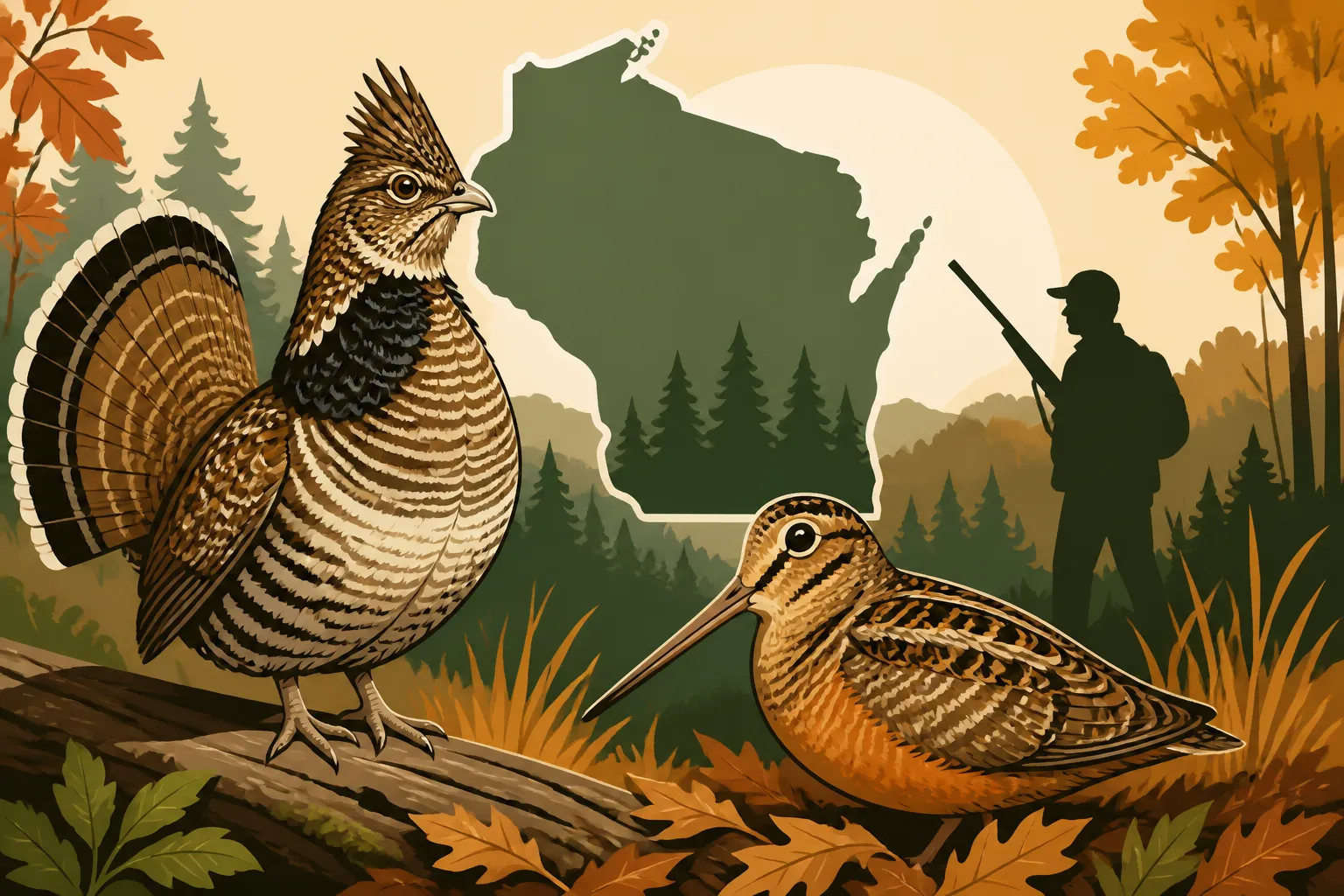
Ruffed grouse, often affectionately called "thunder chickens" for their explosive flush, are a quintessential Wisconsin upland bird. Their pursuit is steeped in tradition, and for good reason: they represent the wildness of our state's forests.
Wisconsin's Ruffed Grouse Population and Cycles
The ruffed grouse population in Wisconsin, like in many parts of their range, is known for its cyclical nature. This isn't a simple up-and-down trend; it's a fascinating, roughly 10-year cycle driven by a complex interplay of habitat quality, weather patterns, and predator populations. One year, you might feel like grouse are behind every second tree, drumming loudly and flushing frequently. A few years later, you might walk the same coverts for miles and hardly see a feather. This fluctuation can be tough for hunters to predict, leading to seasons where success seems effortless and others where it feels like a monumental struggle. Understanding these cycles, often monitored through drumming surveys by the Wisconsin DNR, is key to managing expectations and appreciating the birds when numbers are high. You can often find information on where Wisconsin sits in the Wisconsin Ruffed Grouse Numbers Today cycle by checking the DNR's annual reports or speaking with local foresters.
When the population is on an upward swing, hunting can be incredibly rewarding. Birds are more numerous, leading to more flushes and better opportunities. Conversely, during the low points of the cycle, hunters need to work harder, focus on prime habitat, and often cover more ground to find birds. It’s a real test of persistence and woodcraft. Despite these natural fluctuations, Wisconsin remains a stronghold for ruffed grouse, thanks to dedicated habitat management efforts.
Preferred Grouse Habitat: The Aspen Connection
If there's one word to associate with prime ruffed grouse habitat in Wisconsin, it's "aspen." These fast-growing, relatively short-lived trees create the dense, multi-layered forest structure that grouse absolutely thrive in. Young aspen stands, roughly 10-25 years old, are particularly critical. At this stage, they provide a thick canopy for overhead protection from raptors, dense understory for escape cover from ground predators, and abundant browse for food, especially catkins in winter.
Beyond aspen, grouse also utilize mixed hardwood stands, particularly those with a good component of oaks, birches, and conifers like pines and spruces. They love areas where different habitat types meet, creating "edge" environments. Think about where an old logging road borders a regenerating clearcut, or where a dense conifer swamp transitions into a younger hardwood stand. These edges provide a buffet of food sources, from berries and buds to insects, and crucial cover for roosting and escape. When you're looking for Grouse Hunting Wisconsin Aspen Cover, pay close attention to the age and density of the stands, as well as the presence of these crucial edges and openings. Even small pockets of ideal cover can hold birds.
The Elusive Nature of the Thunder Chicken
There's a reason they call them "thunder chickens" – it's often the sound of their explosive flush, rather than a visual sighting, that announces their presence. Grouse are masters of camouflage, blending seamlessly into the dappled light of the forest floor. They're also incredibly adept at holding tight, often allowing a hunter or dog to walk right past before bursting into flight. This can be infuriating, especially when you've walked for miles without a flush.
Their elusive nature means that a successful grouse hunt often relies on acute senses, both yours and your dog's, and an understanding of their behavior. They tend to stick to the densest cover, using it for protection. During mid-day, they might be found dusting in a sunny spot on an old logging trail or feeding quietly in a thicket. In the early morning and late afternoon, they're often more active, feeding on buds, berries, or insects. The challenge is anticipating their movements and being ready for that sudden, heart-stopping eruption of wings. It's a game of stealth, patience, and quick reflexes, making every bird flushed feel like a hard-earned victory.
Woodcock: The Timberdoodle's Wisconsin Story
While often overshadowed by the ruffed grouse, the American woodcock, affectionately known as the "timberdoodle," offers a unique and equally rewarding challenge for Wisconsin upland hunters. These migratory birds are a joy to pursue, with their distinctive flight and preferred habitats.
Wisconsin's Role in the Woodcock Migration
Wisconsin plays a significant role as both a breeding ground and a migratory stopover for American woodcock. Unlike grouse, which are year-round residents, woodcock are migratory birds, spending their winters in the southern U.S. and migrating north to breed. As spring arrives, they return to Wisconsin's wetlands and young forests to perform their elaborate sky-dance courtship rituals.
Come autumn, as the days shorten and the first frosts arrive, woodcock begin their southward journey. This migration is often referred to as the "woodcock flight" or "timberdoodle flight." The timing of this flight is crucial for hunters, as it dictates when and where concentrations of birds can be found. The main flight typically occurs from late September through October, with peak numbers often coinciding with significant cold fronts pushing birds down from further north. Understanding When Woodcock Migrate Through Wisconsin is paramount for planning your hunts, as fresh waves of birds can make a previously quiet covert suddenly burst with activity. They move through in waves, so a patch of cover that was empty one day might be full of birds the next.
Ideal Woodcock Habitat: Alders and Wet Woods
While grouse prefer aspen, woodcock are creatures of moist, young, successional forests. Their ideal habitat consists of dense, regenerating stands of alder, willow, and dogwood, particularly those found along stream bottoms, marsh edges, and other poorly drained areas. They use their long, sensitive bills to probe the soft, moist soil for earthworms, their primary food source.
Look for areas with dense overhead cover, but open ground beneath for easy foraging. Old logging roads or overgrown fields adjacent to these wet thickets are also prime spots, especially early in the season or after a morning rain when the ground is soft. These wet, tangled areas can be tough to navigate, but they're where the timberdoodles hang out. You'll often find Woodcock Hunting Wisconsin Alder Runs to be a challenging but rewarding experience, as these birds hold incredibly tight, almost begging for a dog to sniff them out. The key is finding that perfect mix of moist soil and dense, young woody cover.
Reading the Signs of Woodcock Presence
Unlike grouse, which often leave visible droppings or dusting spots, woodcock signs are a bit more subtle but unmistakable once you know what to look for. Their primary indicator is "splashes" – distinctive white, chalky droppings about the size of a dime, often splattered on leaves or small branches. These splashes are a sure sign that woodcock are present and actively feeding in an area.
Another sign to look for are their "borings" – small, round holes in the soft ground, about the size of a pencil, left by their long bills as they probe for worms. These are often found in clusters, indicating a good feeding spot. You might also find their distinctive "roosting areas" in slightly more open, but still brushy, cover at dawn and dusk. Learning to identify these signs can save you a lot of walking and help you focus your efforts on productive cover. A good bird dog will also quickly pick up on woodcock scent, which is very distinct from grouse. Combining visual scouting for splashes and borings with a dog's keen nose is the ultimate strategy.
Prime Hunting Seasons and Regulations
Navigating the nuances of hunting seasons and regulations can sometimes feel like a puzzle, but understanding the dates, bag limits, and licensing requirements for grouse and woodcock in Wisconsin is crucial for a legal and successful hunt.
Ruffed Grouse Season Dates and Bag Limits
Wisconsin's ruffed grouse season is generally quite generous, offering a long stretch of opportunity for hunters. Typically, the season opens in mid-September and runs through the end of December or early January in the northern and central zones. In the southern zone, the season might be slightly shorter, often closing a bit earlier. This extended season allows hunters to experience grouse hunting across various conditions, from the vibrant colors of early autumn to the stark beauty of a snowy late season.
The daily bag limit for ruffed grouse in Wisconsin is usually five birds per day, with a possession limit of ten birds. It's always a good idea to double-check the current Wisconsin DNR hunting regulations pamphlet or their website each year, as dates and limits can occasionally shift. For example, some years, depending on population assessments or specific management goals, minor adjustments might be made. This long season is a real gift for grouse hunters, allowing plenty of time to explore different coverts and adapt to changing conditions throughout the fall.
| Zone | Season Start | Season End | Daily Bag Limit | Possession Limit |
|---|---|---|---|---|
| Northern/Central | Mid-September | Early January | 5 | 10 |
| Southern | Mid-September | Early December | 5 | 10 |
Always confirm current season dates and bag limits with the official Wisconsin DNR regulations.
Woodcock Season Timing and Migratory Considerations
The woodcock season in Wisconsin typically opens around the same time as ruffed grouse, in mid-September. However, given their migratory nature, the effective hunting period is often more concentrated. While the season technically runs into early November, the bulk of the hunting opportunity for resident and migratory birds usually falls within a few weeks in October.
Hunters often target the "flight" birds that are moving through the state. As mentioned earlier, this usually kicks off with the first significant cold fronts of autumn, pushing birds down from Canada and northern Wisconsin. A good run of weather with consistent north winds can bring a fresh influx of birds, making a previously quiet covert suddenly productive. The daily bag limit for woodcock in Wisconsin is generally three birds per day, with a possession limit of nine. Again, verifying these details in the current regulations is essential. Missing the peak of the Timing the Wisconsin Woodcock Flight can mean the difference between seeing dozens of birds and only finding a few stragglers.
Essential Licenses and Stamps for Upland Birds
To legally hunt ruffed grouse and woodcock in Wisconsin, you'll need a few key pieces of paperwork. First and foremost, a valid Wisconsin small game license is required. For residents, this is part of the overall hunting license system. Non-residents will need to purchase a non-resident small game license.
In addition to your small game license, if you plan to hunt woodcock (or any migratory birds like ducks or geese), you'll also need a Harvest Information Program (HIP) certification. This is a federal requirement that helps the U.S. Fish and Wildlife Service gather data on migratory bird harvests. It's usually a quick, free registration you can complete when purchasing your license through the Go Wild system. While not required for grouse, it's a good idea to get it if there's any chance you'll encounter woodcock. Finally, though not required for grouse or woodcock, if you're venturing into areas where pheasants are present, you'd also need a Wisconsin pheasant stamp. Make sure all your licenses and certifications are up-to-date before heading into the field to avoid any unexpected issues. Many hunters use digital versions of their licenses on their phones, but carrying a physical copy or having a screenshot available is always a smart backup in areas with no cell service.
Scouting for Success: Finding Productive Cover
The old adage "you can't shoot a bird if you don't find it" holds especially true for ruffed grouse and woodcock. Effective scouting, both before and during the season, is the bedrock of successful upland hunting.
Decoding Maps and Aerial Imagery for Upland Birds
In today's digital age, mapping applications have revolutionized how we scout. Tools like GoHunt (or other popular mapping apps like onX Hunt, BaseMap, etc.) allow you to virtually explore vast tracts of land from your couch. For grouse, look for large blocks of public land, particularly county forests or state forests, that show significant acreage of aspen clearcuts. These will appear as distinct patches of lighter green or even bluish tones on satellite imagery, indicating young, regenerating growth. Look for edges where these young stands meet older timber, conifer swamps, or even agricultural fields. Logging roads and ATV trails can provide access points, but the best grouse cover often lies a bit deeper.
For woodcock, shift your focus to lower, wetter areas. Use topographical maps to identify drainages, creek bottoms, and areas with dense, dark green canopy that signify alders, willows, or similar wet-loving vegetation. Look for stands adjacent to open fields or marshland, where woodcock might feed or water. Pay attention to contour lines that indicate slight depressions where moisture would gather. The ability to layer different map types, from satellite to topo, can reveal hidden gems. With GoHunt, for example, you can often see different timber types and ownership boundaries, helping you identify promising areas and confirm public access before you even step foot in the woods.
Boots-on-the-Ground Scouting for Grouse and Woodcock
While digital maps are an incredible starting point, nothing beats putting boots on the ground. Before the season, or during the early season, walk the areas you've identified on your maps. Look for actual signs of birds. For grouse, this means checking for dusting bowls, discarded feathers, or even "grouse drums" (the faint sound of a drumming male, particularly in spring). In fall, focus on food sources like stands of wild grapes, hawthorns, or hazelnut bushes that provide crucial sustenance.
For woodcock, scouting is all about finding those "splashes" and "borings" we discussed earlier. Carefully walk through the alder runs and wet thickets, keeping an eye on the ground and low-lying vegetation. The presence of these signs is a huge indicator of active woodcock use. Pay attention to the density of the cover, the moisture content of the soil, and the general layout of the area. Even if you don't flush a bird during scouting, finding fresh sign tells you that the birds are using that area, increasing your odds when the season opens. This hands-on reconnaissance is invaluable for understanding the terrain and finding the subtle clues that digital maps can't always reveal.
Timing Your Scouting Efforts for Best Results
The ideal time for scouting can vary depending on what you're looking for. Spring is excellent for identifying grouse drumming logs and listening for their mating calls, giving you an idea of where breeding birds are located. It's also a great time to evaluate aspen regeneration without dense foliage obscuring your view. However, mosquito and tick pressure can be intense.
Summer scouting, particularly in late August and early September, allows you to assess food sources like berries and evaluate how thick the cover has grown. You'll get a real sense of what it will be like to hunt those areas. For woodcock, late September into October is when you'll want to focus your "sign" scouting efforts, as this coincides with the arrival of migratory birds. If you're using a dog, taking them along for a summer or early fall walk, even if it's just for exercise, can help them get familiar with the cover and terrain. The more time you spend in the woods, the better you'll understand the landscape and where the birds might be. Just remember to be mindful of disturbing birds too close to the season opener.
Effective Hunting Tactics and Strategies
Once you've found promising cover, the real work begins. Ruffed grouse and woodcock require different approaches, but both demand patience, quick reflexes, and an understanding of how these birds behave under pressure.
Still-Hunting: The Art of Slow Movement
Still-hunting is perhaps the most challenging, yet deeply rewarding, method for pursuing upland birds without a dog. It's about moving through the cover so slowly and deliberately that you detect the bird before it flushes, or at least are ready when it does. This means taking a few steps, pausing, and scanning every nook and cranny. Look for subtle movements, a patch of feathers, or the tell-tale shape of a bird tucked into a thicket.
When still-hunting grouse, focus on dense cover, especially aspen stands and conifer edges. Move into the wind if possible, as it helps carry your scent away and can make the grouse hold tighter. Pay attention to how the light hits the cover, as this can make birds easier or harder to spot. For woodcock, still-hunting means weaving through alder bottoms and listening for the faint rustle of leaves or the splash of a bird taking flight. The key is to be constantly ready, shotgun mounted to your shoulder, eyes scanning, and ears listening. This methodical approach might not yield as many flushes as hunting with a dog, but each bird you bag will be a testament to your woodsmanship. This method is often employed when Still-Hunting Wisconsin Cedar Swamps for deer, but can be just as effective for birds in similar dense habitats.
Hunting with Dogs: A Partnership in the Coverts
For many, upland bird hunting is synonymous with hunting over a well-trained dog. Pointers, setters, and flushers each bring their own advantages to the field. Pointers and setters excel at locating birds and holding them on point, allowing the hunter to move in for a planned flush and shot. This can significantly increase your shot opportunities and reduce the amount of ground you need to cover. Flushers, like springer spaniels or Labrador retrievers, work closer to the hunter, systematically covering ground and forcing birds into flight.
A good bird dog isn't just a bird finder; they're a partner. They extend your senses, using their superior nose to locate birds that you would undoubtedly walk past. They also help retrieve downed birds from thick cover, preventing lost game. Training is key, ensuring the dog understands commands, stays within range, and retrieves promptly. Remember to equip your dog with proper protective gear, like a blaze orange vest, especially in dense cover where visibility can be low. Hunting with a dog adds an incredibly rich dimension to the experience, transforming a solitary pursuit into a dynamic partnership.
Driving Coverts and Working Edges
Another effective tactic, especially for grouse and particularly on public land with established logging roads or trails, is to "drive" coverts. This often involves two or more hunters. One or two hunters act as "blockers" or "posters," positioning themselves quietly at the anticipated escape routes or downwind edges of a patch of cover. The remaining hunters, the "drivers," then slowly and systematically walk through the cover, pushing birds towards the blockers. This can be very effective in dense, isolated patches of grouse habitat.
Working edges is also crucial. Both grouse and woodcock love transition zones. When walking, always try to keep one eye on the edge where a thicket meets more open timber, or where an aspen stand gives way to a conifer swamp. These are high-traffic areas for birds, offering both food and escape routes. By moving along these edges, you increase your chances of intercepting a bird moving between cover types or flushing one that's holding tight right on the boundary. Remember to move slowly and be ready for a flush at any moment, as birds can burst out from unexpected angles.
Essential Gear for Wisconsin Upland Hunters
While the pursuit of grouse and woodcock doesn't require a mountain of specialized equipment, having the right gear can significantly enhance your comfort, safety, and success in Wisconsin's often demanding coverts.
Shotguns and Chokes for Fast-Flushing Birds
Choosing the right shotgun is a personal preference, but for ruffed grouse and woodcock, lighter, fast-handling shotguns are generally favored. The classic choices are 12-gauge or 20-gauge shotguns, with many hunters opting for the lighter recoil and easier swing of a 20-gauge in thick cover. Over-and-under, side-by-side, or semi-automatic configurations all have their proponents. The key is a gun that comes to the shoulder quickly and points instinctively. When considering a Best Shotgun Gauge for Wisconsin Grouse, remember that rapid follow-up shots in dense woods are more common than long-range passes.
Choke selection is also critical. Since most shots on grouse and woodcock are relatively close-range in dense cover, open chokes like improved cylinder or skeet are popular. These chokes provide a wider, more forgiving pattern at close distances, increasing your chances of connecting with a fast-flushing bird. Many hunters use an improved cylinder in the first barrel (or the bottom barrel of an O/U) and a modified choke in the second, offering versatility for both close and slightly longer shots. For ammunition, Shot Size for Grouse and Woodcock typically ranges from 7.5 to 9, with 7.5 being a good all-around choice for both birds. Carrying a few different chokes and knowing how to change them can adapt your Upland Guns for Aspen and Alder to different situations.
Clothing and Footwear for Tough Cover
Wisconsin's upland cover can be brutal on clothing and feet. Expect to encounter thorns, briars, thick brush, and often wet, marshy ground. Durable, thorn-resistant brush pants or chaps are practically a necessity to protect your legs. Look for materials like heavy-duty canvas, ripstop nylon, or even waxed cotton. Layering is essential for your upper body, allowing you to adapt to changing temperatures throughout the day. A good moisture-wicking base layer, an insulating mid-layer, and a waterproof/windproof outer shell will keep you comfortable. And, of course, blaze orange or blaze pink is required during gun deer season and highly recommended for visibility at all times, even during archery-only grouse season.
Footwear is arguably the most important piece of gear. You'll be doing a lot of walking, often on uneven, wet, and muddy terrain. Waterproof, ankle-supporting boots are non-negotiable. Many hunters prefer rubber boots for their complete waterproofing in soggy woodcock cover or leather boots treated with waterproofing for grouse. Ensure they are comfortable and well broken-in to prevent blisters. When picking Boots for Walking Wisconsin Aspen Cuts, prioritize comfort and durability over anything else. A good pair of boots can make or break your day.
Navigation and Safety Gear
Getting turned around in thick Wisconsin cover can happen faster than you think, even for experienced hunters. A reliable GPS unit or a smartphone with a dedicated hunting app (like GoHunt) is essential for navigation. Download offline maps before you go, as cell service is often spotty or non-existent in prime hunting areas. Carry a compass as a backup, and know how to use it. A whistle is also a valuable safety tool, especially if you're hunting with a partner or a dog, allowing you to signal your location.
Beyond navigation, a basic first-aid kit is crucial for treating minor cuts, scrapes, or blisters. A small headlamp or flashlight is also a smart addition, even if you plan to be out before dark; plans can change, and you don't want to be caught in the woods after sunset without light. Always let someone know where you're going and when you expect to be back. These seemingly small items can make a huge difference in your safety and peace of mind when venturing deep into the Wisconsin wilds.
Conservation and Habitat Management
For any true outdoors person, hunting isn't just about the harvest; it's deeply intertwined with the responsibility of conservation. Understanding and supporting habitat management efforts is vital for the future of Wisconsin's ruffed grouse and woodcock populations.
The Importance of Aspen Management for Grouse
As discussed, ruffed grouse are intrinsically linked to aspen habitat. However, aspen is a pioneer species, meaning it thrives after disturbances like logging or fire, and then eventually gives way to more shade-tolerant hardwood species. Without active management, much of Wisconsin's grouse habitat would mature and become less suitable. This is why planned timber harvests, particularly clearcuts of mature aspen stands, are so critical. These clearcuts regenerate into the dense, young aspen growth that grouse need.
The Wisconsin DNR, in partnership with organizations like the Ruffed Grouse Society (RGS), actively promotes and implements aspen regeneration projects on public and private lands. These efforts involve strategically timing harvests to create a mosaic of different-aged aspen stands, providing a continuous supply of optimal grouse cover across the landscape. Hunters play a crucial role by advocating for these management practices and by supporting organizations that fund and execute them. When you see a recent clearcut, remember that while it might look barren at first, it's a future grouse factory in the making. Understanding How Old a Cut Should Be for Grouse can help you scout for the most productive areas.
Protecting Woodcock Breeding and Migration Habitat
Woodcock conservation focuses on different, yet equally important, habitat considerations. Their reliance on moist, young, dense, early-successional forests means that protecting and managing these specific wetland-adjacent habitats is paramount. Degradation or loss of these areas, through development, drainage, or natural succession into older, drier forests, directly impacts woodcock populations.
Conservation efforts often involve maintaining early-successional scrub-shrub habitat along stream corridors and in low-lying areas. This can include targeted cutting or prescribed burns to prevent mature timber from dominating. Protecting wetlands and ensuring good water quality are also critical, as healthy earthworm populations are the lifeblood of woodcock. Organizations like the American Woodcock Society (AWS) and the Ruffed Grouse Society work to conserve these specific habitat types, often through education and land acquisition or easement programs. Hunters contribute by purchasing state and federal waterfowl stamps (if hunting other migratory birds) and by joining and supporting these conservation groups, ensuring that prime Woodcock Hunting Wisconsin Alder Runs will remain for generations to come.
Hunter's Role in Upland Bird Conservation
Hunters are, and always have been, the frontline of conservation. Our passion for these birds directly translates into funding and support for their habitats. Every hunting license and stamp purchased contributes directly to wildlife management and habitat restoration efforts through the Pittman-Robertson Act. Beyond financial contributions, active participation is vital.
This can mean volunteering for habitat improvement projects on public lands, advocating for sound forest management policies with local and state officials, or simply being an ethical and responsible hunter. Respecting bag limits, practicing good sportsmanship, and helping to collect data through surveys (like the HIP survey for migratory birds) all contribute to healthy, sustainable populations. By understanding the biology of grouse and woodcock and the specific habitat needs, hunters become better stewards of the land, ensuring that the thrill of a thunderous flush or a zigzagging timberdoodle remains a cherished Wisconsin tradition.
Common Challenges and How to Overcome Them
Upland bird hunting in Wisconsin is rarely easy. It's a sport that tests your patience, physical endurance, and mental fortitude. But understanding the common hurdles can help you prepare and increase your chances of success.
Dealing with Thick Cover and Limited Visibility
Wisconsin's prime grouse and woodcock cover is often incredibly dense. We're talking about thick stands of young aspen, tangled alder thickets, and gnarly briar patches where visibility can be limited to just a few yards. This presents a double challenge: it's hard to see the birds when they flush, and it's physically demanding to move through.
To overcome this, slow down your pace significantly. Many hunters move too fast, flushing birds out of range or without enough time to react. Learn to identify shooting lanes – those brief windows of opportunity through the branches. When a bird flushes, focus on its flight path and pick a spot in the air where you think it will be, rather than trying to track its erratic movement through the trees. Practice quick mounting of your shotgun. Additionally, consider using a shorter-barreled shotgun, which is easier to swing in tight quarters. Physical conditioning is also key; the better shape you're in, the more ground you can comfortably cover and the more alert you'll remain. Embrace the thick stuff; that's where the birds live, and that's where the opportunities arise.
Hunting Pressure and Finding Untouched Spots
Just like deer hunting, upland bird hunting spots, especially on easily accessible public land, can experience significant hunting pressure. If you're consistently walking through areas that feel "bird-less," it might be because other hunters have already pushed the birds out or harvested them. This can be incredibly frustrating after putting in effort to find what you thought was prime habitat.
The key to finding untouched spots is often to go where others won't. This means walking deeper into public land, away from roads and main trails. Look for smaller, isolated pockets of good cover that might be overlooked. Study your maps to find areas that require a bit more effort to reach – perhaps a long hike through less-desirable timber to get to a remote aspen stand, or slogging through a particularly mucky area to reach a hidden alder bottom. Early mornings, especially on weekdays, can also provide less pressured hunting. The GoHunt app (or similar) can help you identify public land that might be further from common access points, giving you a chance to explore more remote and potentially unpressured areas.
Weather's Impact on Upland Bird Behavior
Weather plays a huge role in upland bird behavior, and understanding its influence can help you adjust your tactics.
On warm, sunny days, especially early in the season, grouse might be found in cooler, denser pockets of cover, or dusting themselves on sunny trails. Woodcock, in contrast, prefer moist ground, so a dry spell can make them harder to find as they concentrate in the wettest available spots.
Cold fronts are often associated with increased woodcock migration. A sudden drop in temperature can signal a new wave of birds moving through. For grouse, very cold weather can make them seek out dense conifer cover for thermal protection.
Wind can be a major factor for both species. High winds make it incredibly difficult to hear flushes and can make birds "skittish," flushing wilder and flying further. On windy days, try to hunt on the leeward side of hills or in sheltered valleys where birds might seek refuge. Rain can also impact hunting; light rain can make birds hold tighter, but heavy downpours will send them seeking shelter and make hunting miserable for you. Being flexible and adapting your hunting strategy to the day's weather conditions is a hallmark of an experienced upland hunter.
Disclaimer
Please be aware that hunting regulations, season dates, and bag limits can change. It is the hunter's sole responsibility to consult the most current Wisconsin Department of Natural Resources (DNR) regulations pamphlet and website before participating in any hunting activity. This guide is for informational purposes only and does not supersede official DNR regulations. Always prioritize safety, follow ethical hunting practices, and respect wildlife and the environment.