Arrow Weight for Short Shots
Choosing the right arrow weight for bowhunting, especially when you're anticipating those classic, close-range timber shots here in Wisconsin, can feel like a real puzzle. Many hunters get caught up in the "speed kills" mentality, only to find themselves frustrated by poor penetration or lost animals when a shot isn't perfectly clean. This guide is all about helping you understand why a slightly heavier arrow might be your best friend for those short, critical shots and how to dial in your setup for maximum effectiveness.
The Critical Role of Arrow Weight for Close-Range Wisconsin Shots
Bowhunting in Wisconsin often means navigating dense woods, thick stands of pines, and brushy edges where shot distances are measured in yards, not dozens of yards. You're not often slinging arrows across wide-open fields; you're often finding yourself tucked into a thicket, perched in a treestand overlooking a small clearing, or hunkered down in a ground blind along a deer trail. In these scenarios, the physics of your arrow's flight and impact become incredibly important, and raw speed often takes a backseat to sheer driving force.
Why Momentum Matters More Than Raw Speed in Thick Cover
When an arrow hits a target, what really drives it through—especially if it encounters resistance like hide, muscle, or bone—is its momentum. Momentum is essentially a measure of how much "oomph" an object has, calculated by multiplying its mass by its velocity. Kinetic energy, which is often touted in archery marketing, accounts for speed much more heavily (velocity squared!), but momentum is arguably more crucial for penetration, particularly at shorter distances where speed hasn't had a chance to decay significantly.
Imagine a heavy bowling ball and a light tennis ball rolling at the same speed. The bowling ball has far more momentum, and if they both hit a barrier, the bowling ball is going to push through with much greater force. The same principle applies to arrows. A heavier arrow, even if it's traveling a little slower, carries more momentum than a lighter, faster arrow. This means it's better equipped to power through tough hide, dense muscle, and even bone, which is a common occurrence on a deer in a tight spot. For example, if you're hunting the heavy timber of the Hunting the Wisconsin Northern Forest for Deer, where big-bodied bucks often absorb a lot of impact, that extra momentum can be the difference between a pass-through and a partial penetration.
Addressing the Challenges of Obstacles and Quartering Angles
Bowhunting isn't always picture-perfect broadside shots in a pristine field. In Wisconsin, you're constantly dealing with the realities of the forest: small branches, saplings, and deer that are rarely standing perfectly still. A shot at a deer that's slightly quartering away, or even quartering towards you, means your arrow has to navigate more layers of tissue, potentially hit ribs at an angle, or even push through a shoulder blade.
A heavier arrow, due to its increased mass and momentum, is inherently more stable and less prone to deflection. While you should always aim to avoid hitting any obstructions, the reality is that sometimes a stray twig or a small branch can be unseen in the excitement of the moment. A lighter, faster arrow might be easily deflected by such an obstacle, sending it off course or significantly reducing its penetration. A heavier arrow, while not immune to deflection, has a better chance of maintaining its trajectory and pushing through minor interference. This enhanced stability and driving force also prove invaluable on those less-than-ideal quartering shots, giving you a better chance at a clean pass-through and a quicker, more ethical harvest. Setting up your Treestand Setups in Wisconsin Hardwoods with these considerations in mind can make all the difference when that moment of truth arrives.
Balancing Arrow Mass with Broadhead Choice and Bow Performance
Achieving the perfect setup for short shots isn't just about picking a heavy arrow off the shelf; it's about creating synergy between your arrow, your broadhead, and your bow. Each component plays a vital role in delivering maximum penetration and ethical performance.
Pairing Arrow Weight with Fixed-Blade Broadheads for Maximum Penetration
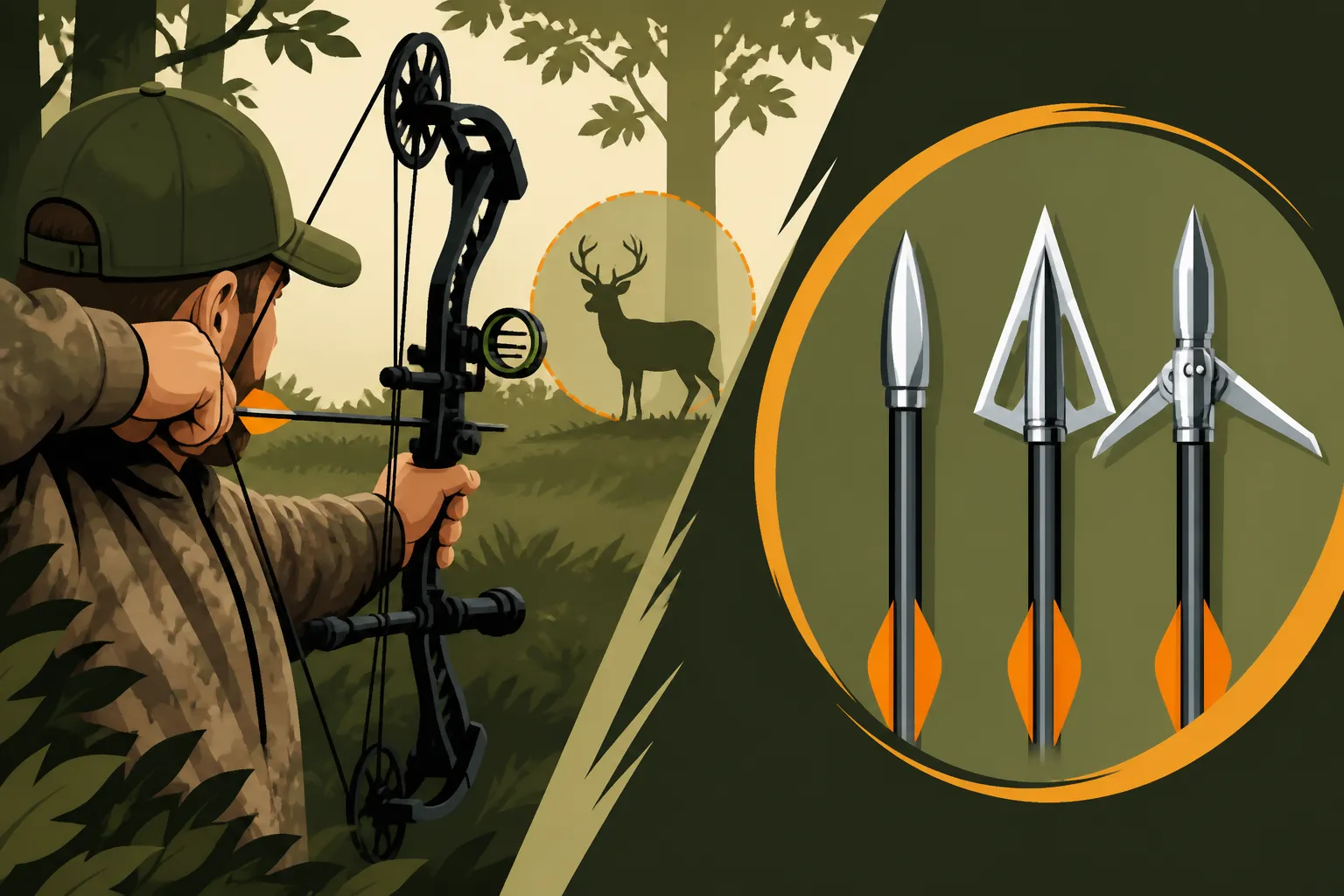
When it comes to putting a deer down quickly and ethically, penetration is paramount. This is where the marriage of a heavier arrow and a well-designed fixed-blade broadhead truly shines. Fixed-blade broadheads are known for their robust construction and unchanging cutting diameter, meaning they initiate a wound channel instantly upon impact and continue cutting without any moving parts to potentially fail or deflect.
With a heavier arrow providing the raw driving force, fixed-blade broadheads can slice through tough hide, muscle, and even bone with impressive efficiency. Imagine a common scenario: a buck steps out, slightly quartering away, and your arrow hits a rib. A heavy arrow driving a sharp fixed-blade broadhead has a far greater chance of breaking through that rib and continuing its path into the vitals than a lighter arrow with a less robust broadhead. This combination excels at delivering deep penetration and, critically, often results in a pass-through. A pass-through creates two holes for a blood trail, making recovery significantly easier in the dense cover we often hunt here in Wisconsin. Understanding the differences between Fixed Versus Mechanical Broadheads is a crucial step in optimizing your setup for penetration.
Tuning Your Bow for Optimal Performance with Heavier Projectiles
Even the heaviest, most perfectly matched arrow and broadhead combination won't perform if your bow isn't properly tuned. Tuning your bow means ensuring that your arrow flies perfectly straight out of the bow, without any unwanted wobble or fishtailing. This is critical for accuracy, especially when broadheads are involved, as they exaggerate any imperfections in arrow flight.
When you switch to a heavier arrow, especially if you're adding weight with heavier inserts or broadheads, your bow's tuning might need adjustment. This could involve small tweaks to your arrow rest, cam timing, or even limb synchronization. While heavier arrows are sometimes more forgiving of minor tuning issues due to their increased mass stabilizing flight, a perfectly tuned bow will unlock their full potential. Furthermore, consider your arrow's Front of Center (FOC) balance. FOC refers to how far forward the balance point of your arrow is. A higher FOC (often achieved by adding weight to the front of the arrow) can dramatically improve arrow stability in flight and, more importantly for penetration, help the arrow "steer" through impact more effectively. Many hunters rely on resources like GoHunt to find detailed guides and calculations for optimizing FOC and ensuring their bows are perfectly tuned for their chosen arrow weight, which is essential when you consider your Bow Draw Weight for Wisconsin Whitetails.
Practical Considerations and Testing Your Hunting Setup
Knowing the theory is one thing, but putting it into practice for your specific Wisconsin hunting scenarios is what truly matters. It's about finding the right balance for your bow, your shooting style, and the conditions you expect to face.
Recommended Grain Weights and Component Selection for Wisconsin Bowhunters
When we talk about arrow weight, we're discussing the total arrow weight, including the shaft, fletching, nock, insert, and broadhead. For bowhunting Wisconsin whitetails at close range, many experienced hunters find a total arrow weight in the 450-550 grain range to be an excellent sweet spot. This range offers a significant boost in momentum and penetration compared to lighter arrows (e.g., 350-400 grains) while still maintaining a manageable trajectory for typical timber shots out to 30-40 yards. Some hunters, particularly those prioritizing extreme penetration for very large deer or difficult angles, will even push into the 600+ grain range.
Component selection is key to achieving your desired weight. Consider using micro-diameter or small-diameter carbon shafts, which offer reduced wind drift and improved penetration due to less surface area. Pairing these with heavy brass or stainless steel inserts (50-100+ grains) and a broadhead weighing 125-150 grains (or even more) can quickly get you into that desirable heavier arrow range. The goal is to build an arrow that feels good coming out of your bow, flies true, and delivers maximum impact energy. Online tools, like those you might find on GoHunt, can assist you in calculating various arrow component weights and their impact on your overall setup. Remember, whether you're using a vertical bow or considering a Crossbow Versus Vertical Bow in Wisconsin, the principles of arrow weight for penetration remain consistent.
Rigorous Practice and Real-World Scenario Shooting
The absolute best way to determine if your arrow weight is right for you is through extensive, realistic practice. It's not enough to simply shoot bullseyes at 20 yards in your backyard. You need to shoot your actual hunting setup—meaning your bow, your hunting broadheads (or practice versions that fly identically), and your chosen arrow weight—in conditions that mimic your hunting environment.
This means practicing from your treestand, shooting at various angles (including steep downward angles), or from inside your ground blind. Try shooting with your hunting clothes on, especially heavier layers you'd wear during the colder Hunting Wisconsin's Rut in November. Simulate the quick, sometimes awkward shots you might get on a deer moving through a funnel. Are your Bow Sights for Timber Shots properly aligned for the trajectory of your heavier arrow? Get intimately familiar with how your arrow drops at different distances, even if those distances are short. A deer might appear at 10 yards one moment and then bound to 25 yards the next. Knowing your pin gaps for those specific distances is crucial. The more confidence you have in your setup through realistic practice, the better you'll perform when that trophy buck steps into range in a tight spot in a Hunting a Funnel Between Two Swamps.
Understanding Trajectory and Sighting for Slower, Heavier Arrows
One of the most common concerns about switching to a heavier arrow is the perceived "rainbow" trajectory and the fear that it will make accurate shooting more difficult. It's true that a heavier arrow will travel slower and therefore drop more over a given distance compared to a lighter, faster arrow. However, for the typical close-range shots (15-30 yards) that are common in dense Wisconsin cover, this difference in trajectory is often much less dramatic than imagined and easily manageable with proper sighting.
At distances within 30-40 yards, the actual drop difference between a very fast, light arrow and a slightly slower, heavier arrow might only be a few inches. With proper sight pin calibration, you can easily account for this. The key is to know your exact pin settings for 20, 30, and perhaps 40 yards, and to practice enough that these distances become second nature. Don't let the fear of a "slower" arrow deter you; the slight trade-off in speed is more than compensated by the gains in momentum, stability, and penetration, which are far more critical for ethical kills in close-quarters hunting. The vast majority of shots taken during the Wisconsin Archery and Crossbow Seasons are well within these manageable distances.
Debunking Speed Myths and Maximizing Ethical Harvests
The bowhunting industry, like many others, sometimes gets caught up in marketing hyperbole. "Faster is better" is a common refrain, but for close-range hunting where conditions are often challenging, speed can be a deceptive metric.
The False Promise of Extreme Speed for Short-Range Kills
It's easy to get drawn into the allure of an arrow flying at blistering speeds, promising flat trajectories and instant kills. However, focusing solely on speed, especially at the expense of arrow mass and momentum, can be a major disservice to your hunting effectiveness, particularly in Wisconsin's varied terrain. While a faster arrow might reach the target a fraction of a second quicker, this negligible time difference rarely impacts a deer's reaction time enough to make a practical difference in close-range scenarios.
What does make a practical difference is what happens when that arrow hits. An ultra-light, ultra-fast arrow, while impressive on paper, often lacks the momentum to consistently achieve deep penetration or a pass-through when it encounters bone or takes a slightly less-than-perfect path. The energy is there, but without enough mass to transfer it effectively through the animal, it can stop short. This can lead to longer, more challenging blood trails, increased stress on the animal, and a higher risk of losing your game. For hunters trying to manage hunting areas where Hunting Without Bait in a Banned County often means deer move through thicker cover, emphasizing momentum over raw speed is a sound strategy.
Ensuring Confident Shots and Effective Recovery
Ultimately, successful and ethical bowhunting boils down to confidence in your equipment and your ability to make a precise, lethal shot. By choosing an arrow weight optimized for close-range penetration, you're investing in a setup that provides a greater margin of error. If your shot isn't absolutely perfect, or if you encounter an unseen obstruction, that heavier, more stable arrow has a better chance of pushing through and delivering a fatal blow.
This confidence translates into a more relaxed and effective hunter in the stand. You know your arrow is built to perform, even if conditions aren't ideal. And when it comes to recovery, a pass-through shot, more likely with a heavier arrow, means two holes in the animal for a much better blood trail. This dramatically increases your odds of recovering your deer quickly and ethically, even in the thickest Wisconsin swamps or darkest timber after sundown. Whether you're using advice from seasoned hunters on GoHunt or your own years of experience, prioritizing an ethical harvest through effective arrow performance is always the goal.
| Feature | Lighter Arrow (e.g., 350-400 grains) | Heavier Arrow (e.g., 450-550 grains) |
|---|---|---|
| Speed | Faster, flatter trajectory | Slower, slightly more arching trajectory |
| Kinetic Energy | Higher initial KE (due to velocity squared) | Lower initial KE (due to less velocity) |
| Momentum | Lower | Higher |
| Penetration | Good on perfect broadside shots, less forgiving on bone/angles | Excellent, excels on bone/angles, higher pass-through odds |
| Stability | More prone to deflection/wind drift | More stable, less prone to deflection/wind drift |
| Noise | Can be louder (less mass to absorb string energy) | Generally quieter |
| Trajectory (20-40 yds) | Very flat | Manageable drop, easily compensated with practice |
| Best for | Open country, long shots, maximizing range | Dense cover, close shots, maximizing penetration/ethical kill |
Ultimately, the best arrow weight for those crucial short shots in Wisconsin's diverse hunting landscapes is the one that gives you the most confidence in delivering a powerful, penetrating impact. It's about building a balanced system where your bow, broadhead, and arrow work together to maximize momentum, ensure stable flight, and achieve the deep penetration necessary for an ethical harvest, even when a shot isn't textbook perfect. Don't be afraid to experiment, practice rigorously, and find the setup that makes you feel most prepared for whatever the Wisconsin woods throw your way.
Disclaimer
This article is for general informational purposes only and does not constitute professional advice. Laws, prices and regulations vary by location and change over time. Consult a qualified professional for guidance on your specific situation.