When Wisconsin Allows Crow Hunting
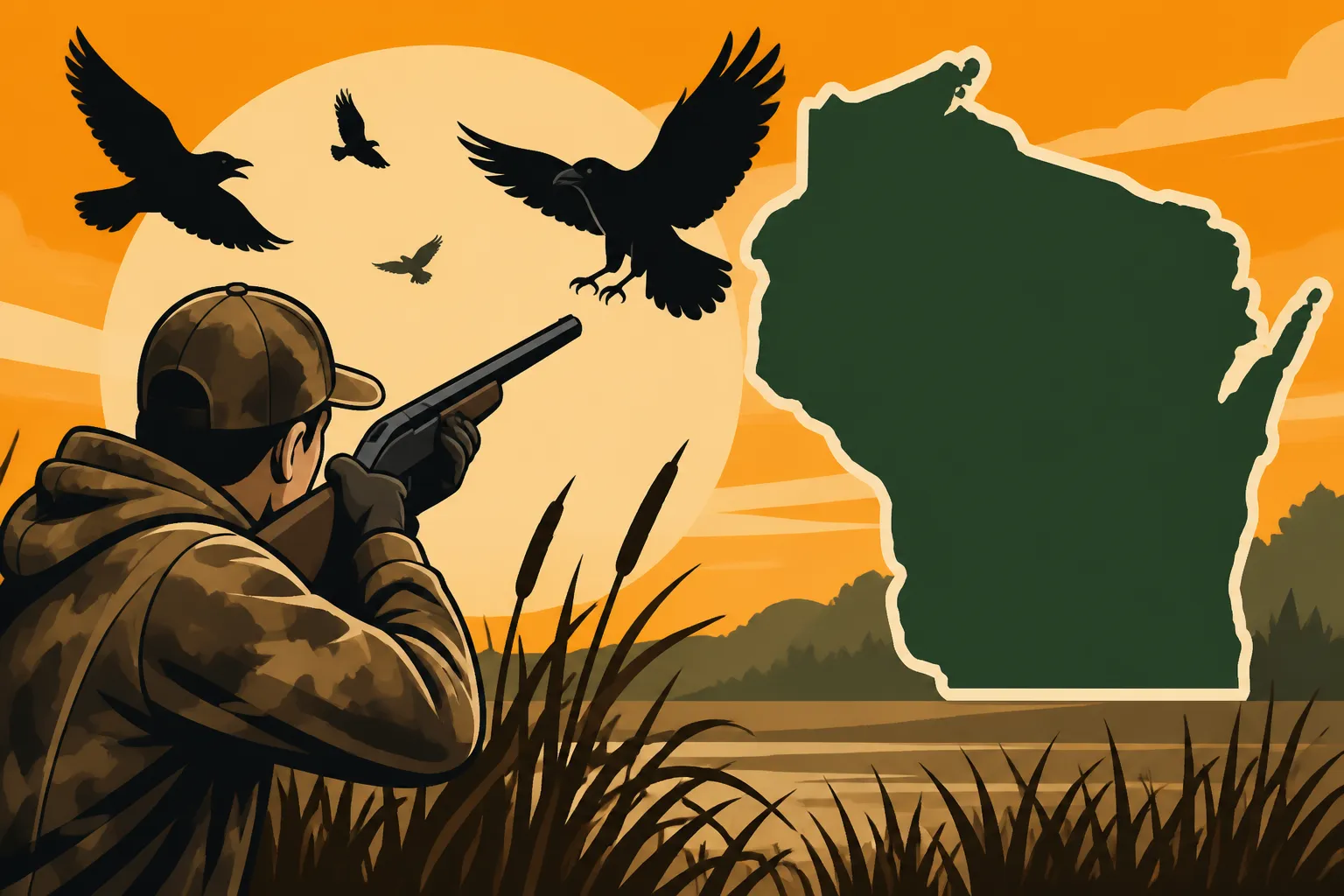
You’re probably used to hearing about the big game seasons here in Wisconsin – deer, bear, maybe turkeys or waterfowl if you're into that. But for many hunters, the regulations around less conventional quarry, like crows, often feel shrouded in mystery. It can be frustrating to want to expand your hunting horizons only to find confusing or vague information on seasons and methods. This guide is dedicated to pulling back that curtain, giving you all the clear, actionable details you need to confidently head out for a crow hunt in the Badger State.
Understanding Wisconsin's Crow Hunting Seasons
Crow hunting might not be as widely discussed as other pursuits, but it offers a unique challenge and a fantastic way to extend your time in the field. Unlike many other game species, crows are often considered a nuisance in agricultural areas, and their hunting seasons reflect this status with fewer restrictions. However, that doesn't mean there aren't specific windows of opportunity and rules you need to be aware of.
The Specific Dates for Crow Hunting
Wisconsin sets up its crow hunting periods a little differently than for other game birds. Instead of one continuous stretch, we typically have two distinct seasons each year, designed to provide opportunities while also managing potential conflicts. These periods usually fall into a winter/early spring window and then a summer/early fall window. For instance, you might see a season running from late January through mid-March, and then another from mid-July to mid-September.
These two periods are strategic. The late winter/early spring season often aligns with crows congregating in large roosts, especially after the snow falls, making them somewhat predictable. This can be a prime time for hunters who enjoy scouting and breaking up these larger groups. On the flip side, the mid-summer to early-fall season often coincides with crows feeding heavily on agricultural crops, presenting different hunting scenarios. Always double-check the current year's Wisconsin Department of Natural Resources (DNR) regulations, as these specific dates can shift slightly from one year to the next. It’s a good practice to consult the official DNR website or pick up a physical copy of the small game regulations each year to ensure you have the most up-to-date information. Understanding the full scope of hunting opportunities, including these, is part of being a well-rounded hunter, much like keeping up with the larger calendar of Wisconsin Small Game and Furbearer Seasons.
Legal Shooting Hours and Bag Limits
Here's where crow hunting really stands apart from many other game species in Wisconsin. For nearly all other game birds and animals, you'll find strict daily bag and possession limits. Not so with crows. In Wisconsin, there is no daily bag limit and no possession limit for crows. That's right – if you have a great day and call in dozens, you are legally allowed to harvest them all. This generous allowance highlights their management status, often seen as a species that can impact agriculture.
When it comes to shooting hours, crows fall under the general rule for most hunting in Wisconsin: from 30 minutes before sunrise until sunset. This provides a substantial window of opportunity, covering the periods when crows are most active – moving from roosts to feeding areas in the morning, and returning in the evening. There's no need for special dawn or dusk tables; simply ensure you are within that half-hour before sunrise to sunset timeframe. This consistency in shooting hours makes planning a hunt straightforward, and it’s the same standard used for many other types of hunting. For detailed information on Wisconsin Legal Shooting Hours across all species, it's always worth a quick look at the DNR regulations. It’s just one less thing to worry about when planning your trip.
Licenses, Calls, and Gear for Wisconsin Crow Hunters
While crow hunting often feels more informal than a highly regulated deer season, it still requires the right permits and equipment to ensure a legal and successful outing. Knowing what you need upfront can save you a lot of hassle and let you focus on the hunt itself.
What Licenses You'll Need
To legally hunt crows in Wisconsin, you'll need to possess a valid small game license. This is generally the baseline requirement for pursuing any small game species, furbearers, or unclassified game birds. The good news is that securing this license is incredibly straightforward thanks to the Wisconsin Go Wild system. You can purchase your license online, at a DNR service center, or through any authorized license agent across the state. The Go Wild platform simplifies the process, allowing you to manage all your hunting and fishing licenses in one convenient place.
For those just starting out or junior hunters, it’s also important to remember hunter safety requirements. If you were born on or after January 1, 1973, you generally need to have a hunter education certification to purchase a hunting license in Wisconsin. However, the state does offer a Mentored Hunting Program, which allows individuals to hunt under the direct supervision of a licensed mentor without first completing hunter education. This is a fantastic way for newcomers to experience hunting firsthand. More details can be found on this crucial topic by visiting resources like Wisconsin Hunter Safety and Mentored Hunting. Don't forget, having your license physically with you or on your phone via the Go Wild app is essential when afield. This convenience is one of the many benefits of the modern The Wisconsin Go Wild Licence System.
Permitted Calls and Decoy Strategies
One of the most exciting aspects of crow hunting is the liberal rules surrounding calling and decoys. Unlike many other species where electronic calls are restricted or outright banned, Wisconsin allows the use of electronic calls for crow hunting. This is a game-changer, as it allows you to project realistic crow sounds – distress calls, aggregation calls, even fighting sounds – with impressive volume and realism, often drawing in birds from a considerable distance. Learning to vary your calling sequences, starting with softer calls and escalating in intensity, can be incredibly effective.
Beyond electronic calls, traditional mouth calls can also be used, either alone or in conjunction with an e-caller to add a personal touch. When it comes to decoys, they are not only legal but highly recommended. Crow decoys, whether full-bodied or silhouette, add a visual element that can convince wary birds to commit to your setup. Placing them strategically in open areas, perhaps with a "sentinel" crow on a higher perch, can enhance realism. Some hunters even incorporate owl or hawk decoys to simulate a predator-prey interaction, which can often provoke an aggressive response from crows. To scout potential hunting areas where these calls and decoys might shine, tools like the GoHunt app can be invaluable for identifying open fields, woodlots, and potential roosting sites.
Essential Gear for a Successful Crow Hunt
While crow hunting might not require the specialized equipment of, say, Bear Hunting With Bait and Dogs in Wisconsin, having the right gear is still crucial for success. Your primary weapon will most likely be a shotgun. A 12-gauge or 20-gauge shotgun loaded with standard field loads (like 7.5 or 8 shot) is usually more than sufficient. Crows aren't particularly tough, but they can be fast-moving targets, so a quick-handling shotgun is beneficial. Bring plenty of shells; crow hunts can be high-volume affairs!
Concealment is paramount. Crows have incredibly keen eyesight and are notoriously wary. Full camouflage, including face masks and gloves, is essential. Think head-to-toe concealment to break up your outline completely. A good ground blind, whether a portable pop-up or one constructed from natural materials, will provide excellent cover. Lastly, and perhaps most importantly given the rapid-fire nature of crow hunting, always wear appropriate hearing and eye protection. You’ll be doing a lot of shooting, and protecting your senses is non-negotiable.
Where and How to Hunt Crows in Wisconsin
Finding crows might seem easy enough – they're everywhere, right? But finding them in numbers, with good access, and in a way that allows for effective hunting, takes a bit more strategy. Their intelligence means you can't just walk up on them like some other game.
Locating Prime Crow Hunting Spots
Crows are highly adaptable and can be found across much of Wisconsin. However, you'll generally find the highest concentrations around agricultural areas, especially during the summer and early fall when crops like corn and soybeans provide abundant food. They'll also frequent large woodlots, particularly those with mature trees, which serve as communal roosting sites in the cooler months. Creek bottoms, river corridors, and areas with mixed woodlands and open fields are also excellent places to start.
Scouting is key. Before your hunt, drive around likely areas at dawn and dusk. Listen for their distinctive caws and watch their flight patterns. Crows often fly in predictable lines between roosts and feeding areas. Pay attention to any large gatherings, as these indicate either a feeding frenzy or a communal roost. For public land access, tools like the Wisconsin DNR's Public Access Lands Maps or the Wisconsin Hunt Wild App can be incredibly helpful. These resources allow you to overlay public land boundaries with satellite imagery, helping you pinpoint potential hotspots away from private property. For hunting on private land, especially around crop fields, always remember to ask for permission from landowners well in advance. A friendly conversation can often open up prime hunting opportunities. You can use apps like GoHunt to identify property boundaries and landowner information to help you in this process.
Tactical Approaches to Crow Hunting
Once you've identified a promising location, the setup is crucial. You need to be completely concealed, as mentioned before, and have clear shooting lanes. Position your blind or natural cover so you have a good view of where you expect the crows to approach. Setting up along a flight path or near a suspected feeding area often works best. When using decoys, place them in an open spot where they're highly visible, usually within 20-30 yards of your blind.
Your calling strategy should be dynamic. Start with softer calls, like a lone crow caw, to get their attention. If you see birds responding, escalate to more aggressive calls, such as a crow distress call, which often draws them in seeking to mob a perceived predator or investigate a fellow crow in trouble. Be prepared for fast-paced action. Crows will often circle overhead, assessing the situation. Take your shots quickly when they commit, but always prioritize ethical, clean kills. This style of hunting demands rapid target acquisition and good wingshooting skills. Unlike the slow, deliberate waits of a deer hunter, or the focused effort of Hunting Mississippi River Backwaters for ducks, crow hunting is often about quick reactions and sustained engagement.
Dealing with Hunting Pressure and Ethics
Crows are intelligent creatures, and they learn quickly. If you repeatedly hunt the same spot using the same tactics, they will become "call shy" and wary. It’s important to move locations frequently and vary your calling sequences to keep them guessing. A good strategy is to have several spots scouted and rotate through them, allowing areas to cool off. This minimizes Hunting Pressure on Wisconsin Public Land for crows and ensures long-term success.
Ethical considerations are just as important in crow hunting as they are for any other species. Always strive for clean, humane kills. While there's no bag limit, this doesn't mean you should be wasteful. If you’re not planning to utilize the birds, consider how many you truly need to harvest to satisfy your hunting experience or to assist a landowner with nuisance control. Be mindful of your surroundings, especially if hunting near populated areas or livestock, and always retrieve any downed birds. It’s part of responsible hunting to leave no trace and ensure proper management of all harvested game. After all, respecting the land and its creatures is the cornerstone of our hunting heritage.
Crow Hunting Season Overview
To help you keep track of the key details for crow hunting in Wisconsin, here's a quick summary of the main points we've covered. Always remember to check the current year's DNR regulations for precise dates.
| Category | Details |
|---|---|
| Season Dates | Two distinct periods annually. Typically: 1. Winter/Early Spring: Roughly late January through mid-March (e.g., last Saturday in Jan to ~March 15th). 2. Summer/Early Fall: Roughly mid-July through mid-September (e.g., ~July 15th to ~Sept 15th). Always verify exact dates with the current Wisconsin DNR Small Game Regulations. |
| Shooting Hours | 30 minutes before sunrise to sunset, consistent with most other hunting in Wisconsin. |
| Bag Limit | No daily bag limit; no possession limit. Hunters may harvest any number of crows. This is unique compared to most other game species. You can find more details on this difference when looking at Wisconsin Small Game Seasons and Bag Limits. |
| License Required | A valid Wisconsin Small Game License is required. Hunter education certification (or participation in the Mentored Hunting Program) is also required for individuals born after January 1, 1973. |
| Electronic Calls | Legal for crow hunting. Electronic calls are a highly effective tool for attracting crows, unlike their restriction for many other game species. Consider pairing them with mouth calls for added realism. |
| Decoys | Legal and highly recommended. Using crow decoys, sometimes combined with predator decoys (like owls or hawks), can significantly increase the chances of drawing wary crows within shooting range. |
| Concealment | Essential. Crows have excellent eyesight. Full camouflage, including face and hands, along with a blind (natural or manufactured), is crucial for success. |
| Best Locations | Agricultural fields (especially corn/soybean), large woodlots (for roosts), mixed woodlands, river bottoms, and areas with concentrated food sources. |
| Ethical Hunting | Practice clean, humane kills. Rotate hunting spots to avoid creating call-shy birds. Respect private property and always retrieve harvested game. |
Disclaimer
Please note that hunting regulations, seasons, and licensing requirements can change. While this guide provides comprehensive and current information, it is always the hunter's responsibility to consult the latest official Wisconsin Department of Natural Resources (DNR) regulations before heading afield. This content is for informational purposes only and does not supersede official state regulations.