Hunting an Early Wisconsin Turkey Period
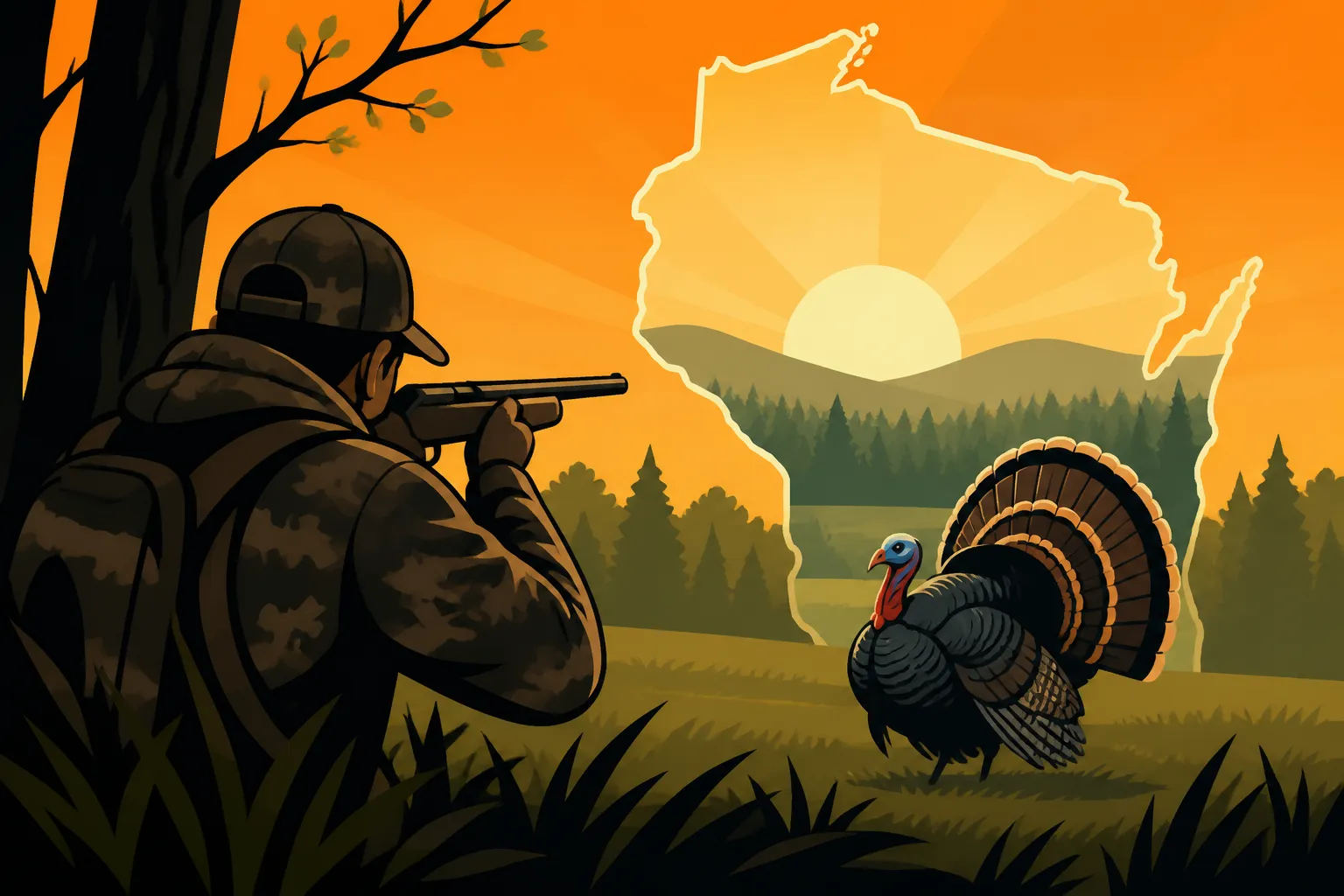
The crisp, often frosty mornings of Wisconsin's early turkey season hold a special kind of magic, but let's be honest, they can also deliver a healthy dose of frustration. You've waited all winter for that first booming gobble, only to find bare woods, chilly air, and birds that seem to have clammed up tighter than a drum. This guide is here to demystify those challenging early periods, help you understand how gobblers react to these conditions, and equip you with the strategies to find success when other hunters are still wondering where all the turkeys went.
Understanding Early Season Turkey Behavior
Hunting an early Wisconsin turkey period often means dealing with significantly different conditions than later in the spring. The landscape is bare, the weather can be volatile, and turkeys haven't settled into their full breeding patterns yet. Understanding these nuances is crucial for developing an effective strategy.
The Impact of Weather on Gobblers
One of the biggest factors in the early season is the weather. Unlike the warm, green days of May, April in Wisconsin can still feel a lot like late winter. We're talking about overnight lows well below freezing, morning frosts, and daytime highs that struggle to break 50 degrees Fahrenheit. These colder temperatures have a direct impact on turkey behavior.
For starters, chilly mornings can make gobblers less vocal right off the roost. While a hot tom might gobble his head off every few minutes in peak breeding, an early-season bird might only let out a couple of tentative calls. Their metabolism is still adjusting, and their focus might be more on finding accessible food sources to fuel up after a cold night rather than immediately seeking hens. Expect birds to hang tighter on the roost longer, waiting for the sun to warm things up a bit before flying down. A wise hunter knows that patience is a virtue in these conditions; rushing in too aggressively can spook birds that are still figuring out their morning routine. You might even find them staying on the roost until well after legal shooting hours, especially if the morning is particularly damp or windy.
Roosting Patterns and Morning Routine
In the early periods, turkeys are often still very reliant on established roosting sites. With the trees largely bare, these birds have less cover, making them more vulnerable to predators, both winged and ground-based. This means they'll often choose taller, more robust trees, like large oaks or pines, offering good visibility and sturdy branches. Knowing where Wisconsin gobblers roost can give you a significant advantage.
When a gobbler flies down from the roost, his first move is usually to gather his harem or seek out hens. However, in the early season, hen-flocking behavior might still be strong. Instead of breaking off with one or two hens, a gobbler might have several hens with him right from the start. This makes him incredibly difficult to call in, as he's already surrounded by real hens. He has no reason to come to your calls. Your best bet is to try to intercept him between his roost and his preferred strutting or feeding area. This means you need to be set up well before first light, silent, and ready to observe. Pay close attention to the direction they fly down and the general area they head towards. Often, birds will fly down and stage in a nearby open field edge or a slight rise where they can survey their surroundings before committing to a full day of activity.
Food Sources in Early Spring
With winter just barely behind us, natural food sources are scarce. The lush green growth that turkeys devour later in the season simply isn't present yet. This forces birds to rely on different staples, and knowing what they're after can help you pinpoint their locations.
Early-season turkeys will often gravitate towards areas that offer residual food from the previous fall, such as acorns from oak groves, or early greens that brave the cold. South-facing slopes, which get more sunlight and melt snow faster, are often the first places to see new growth, making them prime feeding locations. Agricultural fields, especially those with leftover grain from a corn or soybean harvest, can be absolute magnets for turkeys. Farmers' fields, particularly those with standing corn or picked fields, can draw birds from miles around. Turkeys will scratch diligently through the stubble, seeking out any remaining kernels or early sprouts. If you're hunting in farm country, scouting these fields meticulously is paramount. Even if a field looks bare, turkeys have an uncanny ability to find sustenance. Identifying these vital early-season feeding grounds is key to figuring out their daily movements.
Early Period Scouting and Strategy
Effective early-season turkey hunting in Wisconsin isn't just about calling; it's heavily dependent on intelligent scouting and strategic setup. You're trying to outwit a creature that is on high alert due to the sparse cover and unpredictable weather.
Pre-Season Reconnaissance
Before the season even opens, putting boots on the ground is your best friend. With no leaves on the trees, visibility is at its peak, allowing you to see further into the woods and identify key terrain features that would be hidden later on. Look for old scratch marks in leaf litter, dusting bowls, and especially droppings, which indicate recent turkey activity. Pay close attention to ridge lines, creek bottoms, and logging roads, as these often serve as natural travel corridors.
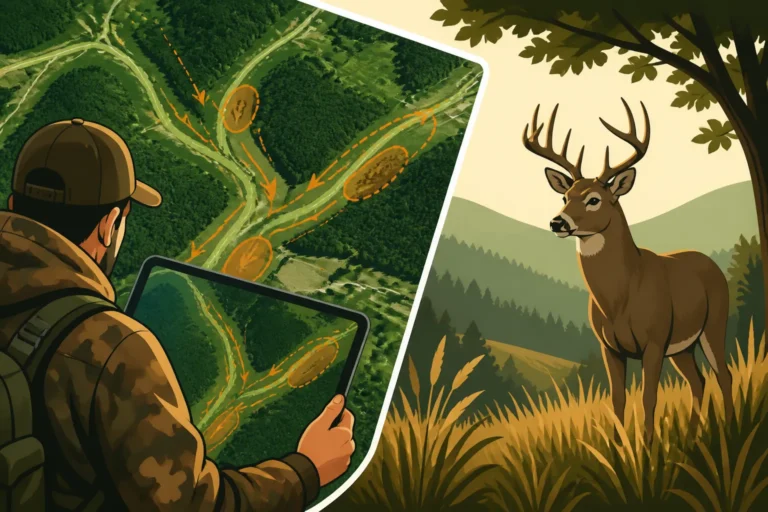
Use tools like the Wisconsin Hunt Wild App or other mapping software like GoHunt to analyze aerial photos. Look for changes in timber type, open fields, clear-cuts, and water sources. These details, combined with what you observe on the ground, will start to paint a picture of how turkeys use the land. Pinpoint potential roost sites – those tall, isolated trees near water or on a ridge line – and try to locate where birds might fly down. This pre-season intel is invaluable, especially when you consider that turkeys in an early period are less likely to respond to aggressive calling and more likely to stick to predictable patterns. This detailed scouting is far more effective than just hoping to hear a gobble on opening morning.
Locating Key Areas
Once you've done your initial reconnaissance, the next step is to pinpoint specific key areas. These include strut zones, primary feeding locations, and travel routes connecting the two. Strut zones in early spring might be less defined than later in the season, often being open areas near fields, logging landings, or even slight rises in the timber. These are places where gobblers feel safe to display for hens.
Consider the layout of the land. If you're in the rolling hills of the Driftless Area Deer Hunting in Wisconsin, turkeys might use creek bottoms as travel lanes and ridge tops as strutting or feeding areas. In the thick Hunting the Wisconsin Northern Forest for Deer, finding subtle openings or old logging roads becomes critical. Turkeys, like deer, are creatures of habit, especially when conditions are tough. Their daily routine from roost to food to strutting area will often be consistent. Identifying these routes allows you to set up ambushes rather than relying solely on calling them to you. This "interception" strategy is often the most successful way to punch a tag during a quiet, early period.
Setting Up for Success
With bare trees, concealment is at a premium. This means your setup needs to be even more meticulous than usual. Forget trying to hide behind a few sparse saplings; you need a solid backdrop that breaks up your silhouette. Think big oak trees, a dense clump of pines, or even a fallen log. Remember the advice on Setting Up Against a Big Oak – a wide trunk or a cluster of evergreens can make all the difference.
Your approach to your setup location needs to be as quiet and undetected as possible. This means moving in well before first light, using the cover of darkness to your advantage. Try to anticipate where a gobbler might fly down and strut, and position yourself accordingly. If you're too close to the roost, you risk bumping birds. Too far, and your soft calls might not be heard. Aim for a distance of 100-150 yards from known roost trees, positioned between the roost and their likely morning travel route or feeding area. This allows you to hear them on the roost and gives you time to react to their fly-down. Since turkeys are quiet this time of year, using a tool like the GoHunt app for detailed topographical maps can help you plan your approach without busting birds.
Calling Tactics for Quiet Birds
One of the biggest frustrations in an early Wisconsin turkey period is that the birds just don't gobble much. This can be incredibly disheartening, making you feel like there are no birds around. But don't give up hope! It just means you need to adjust your calling strategy. Learning When Wisconsin Gobblers Go Quiet is a critical step in becoming a more successful turkey hunter.
Soft Calls and Patient Waiting
Aggressive, loud calling can often be counterproductive in the early season. Turkeys haven't hit the peak of their breeding cycle yet, and gobblers might still be with hens. A loud, demanding series of yelps might simply alert them to your presence without enticing them to move. Instead, focus on soft, subtle calls. Think light tree yelps, clucks, and purrs right off the roost. These are reassuring sounds, not challenging ones.
Try a few soft calls, then listen. Wait. Sometimes, the silence after your call is the hardest part, but it's essential. Turkeys are listening for the hen to come to them. Give them plenty of time to respond, or better yet, to just show up. A good rule of thumb is to wait 15-20 minutes after a call series before trying again or moving. It's a game of patience, and the early season often rewards those who can sit still and simply observe. Think about using a quiet slate or box call – mastering Box Calls Versus Mouth Calls can give you an edge, as slate calls can often produce softer, more natural sounds that are perfect for these wary birds.
Decoy Strategies for Early Season
Decoys can be a powerful tool, but in the early season, less is often more. A full spread of strutting gobblers and multiple hens can sometimes intimidate or alert real birds, especially if they are already with a group of hens. Instead, consider a single hen decoy, or perhaps a jake and a hen.
The key is placement and realism. Position your decoys where they are visible but not right on top of you, allowing the gobbler to approach them naturally. Make sure they are quartering towards you, so an approaching gobbler presents a broadside shot. Ensure your Decoy Placement for Pressured Birds is subtle and strategic. Remember that visual cues are incredibly important when auditory responses are minimal. A lone hen calmly feeding can often be more enticing to a wary gobbler than an aggressive tom. If you're on public land, where birds might be more accustomed to seeing hunters, going with no decoys at all and relying on pure ambush might even be the best approach.
Adapting to Mid-Morning Lulls
It's common for early-season turkey activity to die down after the initial fly-down period. Once birds are on the ground and have found their initial hens or feeding spots, they can go quiet for hours. This "mid-morning lull" is when many hunters pack up, thinking the hunt is over. But it doesn't have to be!
This is where adapting your strategy comes in. Instead of just sitting still and calling, consider slowly still-hunting through known travel corridors or along field edges. If you heard distant gobblers earlier, try to move silently in their general direction, stopping frequently to call softly and listen. You can use a locator call like an owl hoot or a crow call to try and elicit a shock gobble without directly calling at the bird. Mastering Locator Calls for Wisconsin Gobblers can help you pinpoint silent birds. Another tactic is to set up near a food source you've identified through scouting and simply wait. Turkeys will eventually need to feed, and if you're patient, they might just walk into your setup. The midday hours in the early season can sometimes be productive, especially as the sun warms things up, making birds more active. This is also when lone gobblers, having been rebuffed by groups of hens, might start cruising for any receptive hen call they can find.
Gear Considerations for Cold, Early Hunts
Wisconsin's early turkey periods can throw a mix of weather at you, from bright, sunny days to sleeting rain and even late-season snow. Having the right gear isn't just about comfort; it's about staying focused and safe. You'll want to review your full Turkey Gear for a Wisconsin Spring before heading out.
Layering for Unpredictable Weather
The key to comfort in early spring is layering. Mornings can be frigid, but by midday, the sun can sometimes bring temperatures into the 50s or 60s. Start with a good moisture-wicking base layer to manage sweat. Add an insulating mid-layer, like a fleece jacket or a down vest. Your outer layer should be windproof and water-resistant, protecting you from rain, sleet, or a chilly breeze. Brands like Sitka Gear or First Lite offer excellent layering systems designed for active hunting in variable conditions.
Don't forget your extremities. A warm hat, gloves, and quality insulated boots are essential. Sitting still for long periods in a cold, damp wood lot can quickly lead to discomfort. If your feet get cold, your entire hunt can be miserable. Look for boots with good insulation and waterproof membranes, especially if you'll be navigating dewy fields or crossing small creeks. Staying warm and dry allows you to stay out longer and remain more focused on the hunt.
Shotguns and Chokes for the Woods
Your shotgun setup might need a slight adjustment for early season. With less foliage, shots might present themselves at slightly longer distances, but generally, early-season birds can still be quite wary. A good all-around choice is a 12-gauge, but don't underestimate the effectiveness of a 20-gauge, especially if you prioritize maneuverability in the woods. Choosing your Turkey Shotgun Gauge Choice often comes down to personal preference and recoil management.
When it comes to chokes, a full or extra-full choke is standard for turkey hunting, delivering a dense pattern at range. However, for those closer, surprise encounters that can happen when still-hunting, ensure your pattern is still effective at 20-30 yards without blowing holes in the pattern. It’s always a good idea to pattern your gun with your chosen load before the season to understand its performance at various distances. Many hunters use specialized turkey loads with tungsten-heavy shot, which can extend effective range and density. Discussing Turkey Chokes and Patterning is a great way to fine-tune your setup. Make sure your shotgun is sighted in and that you're comfortable with its swing, especially if you're using a red dot sight or an optic.
Essential Accessories
Beyond the basics, a few accessories can make a big difference. A comfortable vest with a built-in seat cushion is a game-changer for long waits on damp ground. A good set of pruning shears can quietly clear shooting lanes at your setup without making a lot of noise. Carry plenty of water and some snacks, as early morning hunts can stretch well into the afternoon.
A reliable headlamp is crucial for navigating in the dark before sunrise and after sunset, especially if you're Tracking a Deer in Wisconsin Snow or a downed turkey. Don't forget bug spray, even in early spring, as ticks can already be active. Finally, always carry a small first-aid kit, a compass, or a GPS device (like the GoHunt app on your phone) as a backup to your physical map. Being prepared for anything Wisconsin's early season throws at you will make your hunt safer and more enjoyable.
| Strategy Component | Early Season Approach | Why It Works | Common Mistakes to Avoid |
|---|---|---|---|
| Calling Volume | Soft, subtle clucks, purrs, and quiet yelps. Use locator calls (owl/crow) sparingly to pinpoint silent birds. | Mimics non-aggressive hen sounds; less likely to alert wary birds or challenge gobblers already with hens. | Overly aggressive or loud calling; challenging a gobbler that isn't ready to commit. |
| Decoy Setup | Single hen or jake/hen combination. Position decoys quartering towards you, visible but not too close. | Less intimidating for wary birds; offers a realistic visual when gobblers are quiet; provides a natural shot angle. | Large, aggressive decoy spreads; placing decoys too close to your position; using a full strutting gobbler when birds are pressured. |
| Movement & Patience | Move slowly and silently to identified feeding or strutting areas. Sit for longer periods, waiting 15-20 minutes between call series. | Intercepts birds on predictable travel routes; allows cautious gobblers time to commit to your calls or simply appear. | Rushing in too close to roosts; frequent, noisy repositioning; giving up too early on a quiet setup. |
| Scouting Focus | Pre-season reconnaissance: identify roosts, bare fields with residual grain, south-facing slopes, and travel corridors. Use aerial maps. | Pinpoints limited food sources and predictable daily patterns when natural cover is sparse and birds are less vocal. | Relying solely on hearing gobblers to locate birds; ignoring sign on the ground for unproven areas. |
| Concealment | Utilize large, solid backdrops (big oaks, pine thickets, rock formations). Ensure your silhouette is completely broken up. | Bare trees offer little natural cover; good concealment prevents birds from spotting you easily. | Setting up against sparse cover or in areas where your silhouette is clearly visible; not having clear shooting lanes from your position. |
Disclaimer
Hunting is an inherently dangerous activity. Always prioritize safety, understand and follow all Wisconsin Department of Natural Resources regulations, and ensure you have proper training and licensing. This guide is for informational purposes only and does not supersede official hunting regulations or safety guidelines.