Tracking a Deer in Wisconsin Snow
That heart-sinking moment when you make a good shot, but the deer doesn't drop in sight, and then you're faced with patchy snow or a fresh snowfall that seems to swallow every sign. It's a common frustration here in Wisconsin, especially when the weather changes on a dime. This guide is all about giving you the tools and mindset to confidently track a wounded deer through our unpredictable winter landscapes, ensuring you recover your hard-earned harvest.
Understanding the Nuances of Snow and Tracks
Tracking a deer in the snow isn't just about following footprints; it's about becoming a detective, reading every subtle clue the environment presents. The type of snow, its depth, and its age all play a massive role in how well you can follow a trail. It's a skill that develops with experience, but knowing what to look for can drastically improve your chances.
Different Snow Conditions and Their Impact
Not all snow is created equal when it comes to tracking. Dry, powdery snow, often seen after a cold front, can make tracks appear incredibly clear and defined, but it can also blow away or fill in quickly with wind. Heavy, wet snow, on the other hand, might offer less definition but holds a track's impression longer and can make blood sign really stand out. Then there are the dreaded crusts – frozen layers on top of softer snow. A deer breaking through a crust often leaves very clear, almost perfectly outlined tracks, but if it just skims the surface, the signs can be fleeting.
Imagine a situation where you've just shot a deer, and a light, dry snow starts to fall. You need to act relatively quickly, as those fine powder tracks can vanish with a slight breeze. Conversely, after a wet snowfall, you might have a bit more time, but the tracks themselves might be less distinct, demanding closer inspection for subtle details like toe splay or drag marks. Understanding these conditions helps you gauge how fast and how meticulously you need to track. It also helps manage expectations; sometimes, a pristine trail simply isn't in the cards.
Reading the Story the Tracks Tell
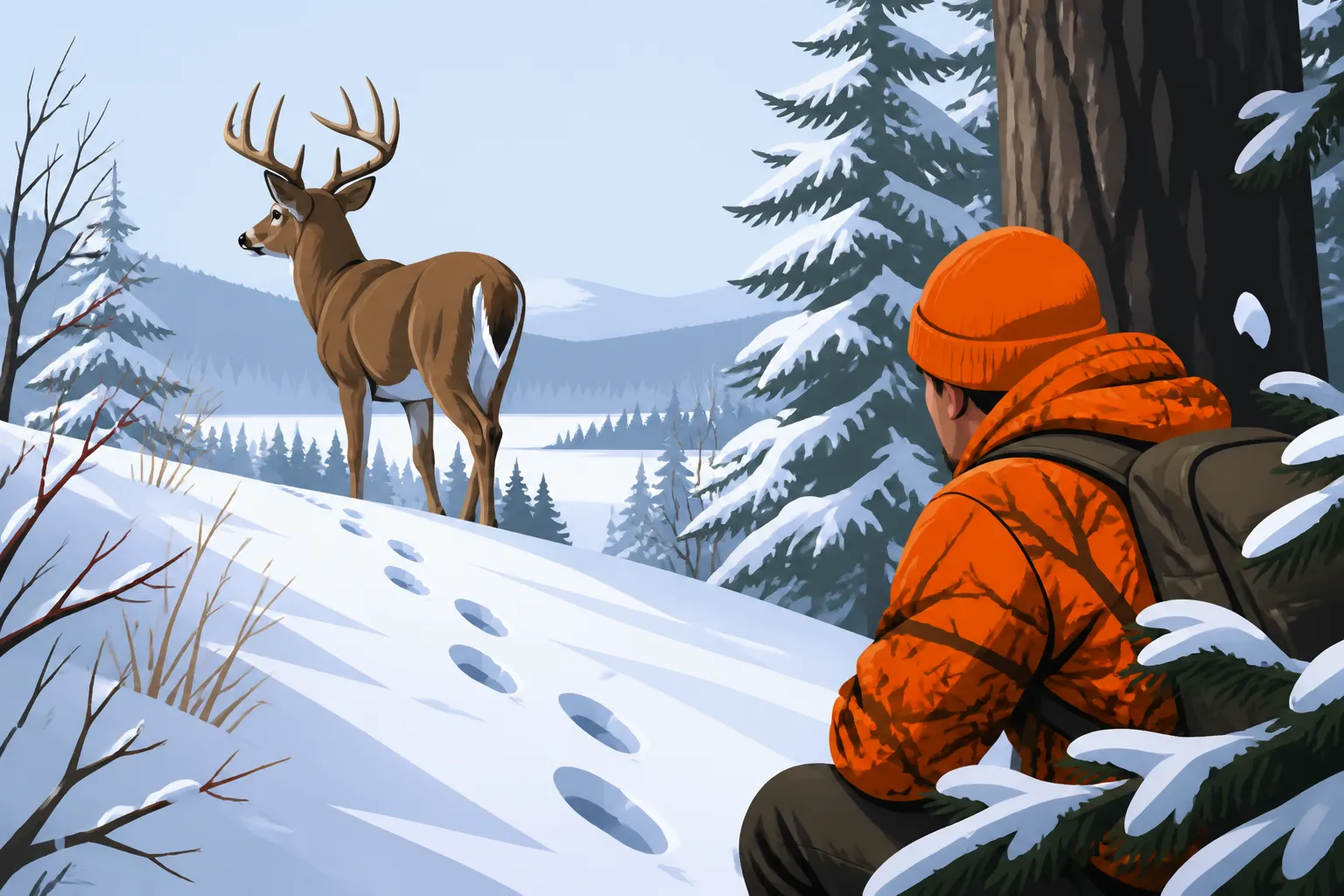
A track is more than just a hoof print. It's a snapshot of the deer's movement, health, and speed. A healthy, unwounded deer typically moves with a consistent stride, placing its hind feet close to or even directly into the impressions made by its front feet. Its tracks will be clean and purposeful. When a deer is wounded, especially severely, its gait often changes dramatically. You might see a "splay" where the hooves spread wider, or a "drag" where a leg or even its belly scrapes the snow, leaving a continuous line between prints.
Look for inconsistencies. Does one track appear deeper or more labored than the others? Is there a noticeable limp or uneven stride length? A deer that is stumbling might leave tracks that zig-zag slightly, or show prints where it dug in harder to regain balance. Sometimes, you'll see where a deer has pushed off with a front leg, creating a deeper divot, a sign of trying to propel itself forward despite injury. These small details, when combined with blood sign, paint a clearer picture of the deer's condition and how far it might travel.
Deciphering Blood Sign in the Snow
Snow is a fantastic canvas for blood, but even then, it's not always straightforward. The color, volume, and consistency of the blood can tell you a lot about where the deer was hit, and therefore, its chances of recovery and how quickly you need to pursue it.
Color, Consistency, and Volume Clues
Bright red, frothy blood often indicates a lung hit, which is typically a fatal shot that will result in a relatively short trail. This blood is oxygenated and mixes with air from the lungs as the deer breathes. Dark red blood, on the other hand, can suggest a liver or muscle hit. While still potentially fatal, these trails can be much longer and require more patience. Green or brownish matter mixed with blood could indicate a gut shot, which is often a very long and challenging trail, often requiring you to back out for several hours to allow the deer to bed down and expire.
It's not just the color, but the volume. A steady, consistent trickle or larger splashes of blood are always good signs, indicating a significant wound. Sparse, pin-prick drops that disappear quickly can be frustrating and mean a superficial wound, or perhaps the deer is clotting up. Keep an eye out for blood on brush, small trees, or even hanging icicles if the conditions are right. Sometimes, a deer will rub against objects to try and clean a wound, leaving tell-tale streaks. These larger, more obvious smears can be crucial when the ground-level blood sign is sparse.
When Blood Sign Becomes Sparse
This is where many hunters lose the trail and their confidence. When the blood sign diminishes or disappears entirely, don't panic. First, mark your last known blood sign clearly with flagging tape. Then, expand your search outward in ever-widening circles from that last mark. Deer, especially if they are not mortally wounded, often follow paths of least resistance, like old logging roads, game trails, or fence lines. Consider the topography. If you're in the Driftless Area Deer Hunting in Wisconsin, a deer shot on a ridge might try to make it down into a coulee bottom for cover.
Use the tracks as your primary guide here. Even without blood, an injured deer's tracks will often show that altered gait – the splay, the drag, the uneven stride. Pay attention to how the deer is navigating obstacles. Is it jumping over fallen logs or walking around them? An injured deer will typically choose the path that requires the least exertion. Sometimes, if the snow cover is minimal, you'll need to look for disturbed leaves, broken twigs, or even overturned rocks or moss. Every tiny disturbance could be your next clue. When utilizing your mapping app, like GoHunt, mark the last visible blood sign and consider potential bedding areas based on cover and wind direction. This digital marking can be a lifesaver when you're searching in a wide area.
Mastering the Art of Following the Trail
Once you've located a trail with promising sign, the real work begins. It's a delicate balance of moving slow enough to not miss anything, but fast enough to cover ground before the conditions change or the deer travels too far. Patience and a methodical approach are your best friends.
Slow and Steady Wins the Race
The absolute worst thing you can do when tracking is to rush. Move slowly, deliberately. Each time you find a sign – a track, a blood drop, a disturbed patch of snow – stop, look up, and identify the next likely sign before taking another step. This allows you to mentally "connect the dots" and anticipate where the deer might go next. If you charge ahead, you risk trampling vital evidence and losing the trail completely.
Bring a tracking partner if possible. One person can focus on the immediate trail, while the other can scan ahead for larger signs or potential bedding areas. This teamwork can significantly increase your efficiency and reduce the chances of getting lost or missing a crucial turn. When you are still-hunting after a Wisconsin snow, you're looking for deer, but when tracking, you're focused on every single detail of the trail.
Marking the Trail and Looking Ahead
Always carry plenty of brightly colored flagging tape. Every time you find definitive blood or a clear track, tie a piece of tape to a branch above or beside it. This creates a breadcrumb trail that allows you to easily back-track if you lose the sign, or if you need to take a break and return later. It also helps your tracking partners understand the direction of travel. When using an app like GoHunt or the Wisconsin Hunt Wild App, drop waypoints at each significant sign. This complements your physical flagging and provides a precise digital record of the deer's path, invaluable for reviewing later or for coordinating with others.
As you follow the trail, remember to periodically lift your head and scan ahead. What kind of cover is the deer heading towards? A thick cedar swamp, a patch of pines, or a dense clearcut? Deer often seek thick cover to bed down when wounded. By anticipating their likely movements, you can sometimes cut off a bend in the trail or predict where they might pause. Also, keep an eye out for other deer. Sometimes, a wounded deer will join up with a group, making its individual tracks harder to discern.
Dealing with Multiple Deer Tracks
This is a common headache, especially during the rut or in areas with high deer density. When your wounded deer's trail merges with others, it can feel like trying to find a needle in a haystack. The key here is to stick to the distinctive characteristics of your wounded deer's tracks. Is there still a subtle splay? A slight drag? A deeper impression on one side?
Carefully follow each potential track away from the merge point until you can either verify it as your deer by finding blood, or rule it out because it shows no signs of injury. If you have multiple trackers, assign one person to each new trail segment. It’s slow, tedious work, but it’s often the only way. This is where those consistent flagging markers become even more crucial; they prevent you from getting disoriented or accidentally re-tracking the same unwounded deer multiple times.
Essential Gear and Safety Considerations
Tracking in Wisconsin snow, especially in late season, can expose you to challenging conditions. Being prepared with the right gear and knowledge of safety protocols is paramount for a successful and safe recovery.
The Right Tools for the Job
Your tracking kit should be robust. Beyond your firearm or bow, here's what you need:
- Plenty of Flagging Tape: As mentioned, this is your lifeline. Don't skimp.
- Good Quality Headlamp: Even if you start tracking in daylight, you might end up blood trailing after dark in Wisconsin. A bright, reliable headlamp with fresh batteries (and spares!) is non-negotiable.
- Navigation Tools: A GPS unit or a reliable mapping app on your phone (like GoHunt) is essential, especially on unfamiliar public land. Mark your vehicle, your starting point, and every significant sign. You can't rely solely on flagging tape, especially if heavy snow or wind occurs.
- Warm, Waterproof Clothing and Boots: You'll be moving slowly, stopping frequently, and potentially kneeling in the snow. Proper layering for a Wisconsin deer stand is crucial, as is warm, waterproof footwear.
- Knife and Game Bags: Once you find the deer, you'll need to field dress a deer in cold weather. Game bags are excellent for keeping meat clean, especially if you need to quarter the animal to get it out.
- First Aid Kit: Accidents happen, especially when navigating uneven, snow-covered terrain.
- Water and Snacks: Tracking can take hours, even a full day. Stay hydrated and fueled.
| Gear Item | Primary Use | Why It's Crucial in Snow Tracking |
|---|---|---|
| Flagging Tape | Marking the trail and last known sign | Prevents losing the trail, helps reorient, aids other trackers |
| Headlamp | Illumination after dark | Essential for safety and visibility during prolonged tracking |
| GPS/Mapping App | Navigation, marking waypoints | Precise location, trail documentation, planning extraction |
| Waterproof Boots | Keeping feet dry and warm | Prevents frostbite and discomfort during long, slow walks |
| Warm Layers | Regulating body temperature | Protects against hypothermia during stops and slow movement |
| Knife | Field dressing, cutting flagging | Necessary for post-recovery processing |
| Water/Snacks | Sustenance | Maintains energy and focus during strenuous activity |
| First Aid Kit | Addressing minor injuries | Ensures safety in remote areas |
Safety First When Tracking
Always let someone know where you're going and when you expect to return. This is especially important if you're venturing deep into large public areas like the Chequamegon-Nicolet National Forest. Even if you're tracking with a partner, inform someone else.
Be aware of your surroundings and other hunters. During the gun season, ensure you are wearing sufficient blaze orange or pink, even if you are just tracking. Know your legal shooting hours in Wisconsin. Don't attempt risky maneuvers to retrieve a deer, especially if it's in open water or on thin ice. It's never worth risking your life for an animal. If you anticipate having to recover a deer from a coulee bottom, or getting a deer out of a Wisconsin swamp, plan your extraction route carefully and consider the effort involved.
When to Back Out and When to Call for Help
Sometimes, despite your best efforts, the trail goes cold, or the situation becomes too difficult or dangerous to handle alone. Knowing when to retreat and when to seek assistance is a sign of a responsible hunter.
Giving the Deer Time (If Necessary)
If you suspect a gut shot or a muscle wound, it's often best to back out for at least 6-8 hours, or even overnight if the temperatures are cold enough to prevent spoilage. Pushing a deer with a gut shot will only make it run further, making recovery much harder. Mark the last sign, quietly leave the area, and return later. The deer will likely have bedded down and expired. This can be agonizing, especially when you just want to find your deer, but it’s often the most effective strategy. If it's warm out, this decision becomes much tougher, as spoilage can set in quickly.
Another reason to back out is if the weather takes a turn for the worse – a heavy snow starts to fall, or rain begins to wash away all sign. In these cases, it might be better to regroup, come back with fresh eyes, or wait for better conditions if the deer is likely expired.
Engaging Local Resources
Don't be afraid to ask for help. If the trail is completely lost, or if you're facing treacherous terrain, consider reaching out to local resources. Many communities have experienced trackers with dogs who specialize in difficult recoveries. These services can be invaluable, especially if you're running out of time or daylight. The Wisconsin DNR also has resources and guidance for hunters, and if you report a lost animal, they may be able to offer advice or assistance.
It’s a tough decision, but understanding when you've done all you can and when to bring in reinforcements can turn a potentially lost animal into a recovered one. Remember, the goal is always ethical recovery, not just the thrill of the chase.
Tracking a deer in Wisconsin snow is an experience every hunter will face. By understanding the snow, meticulously reading every sign, preparing with the right gear, and knowing when to be patient or ask for help, you'll significantly increase your chances of a successful and ethical recovery. It's a challenging aspect of hunting, but also one of the most rewarding when you finally lay hands on your deer after a long trail.
Disclaimer
The information provided in this guide is for informational purposes only and is not a substitute for official regulations. Hunters are responsible for knowing and adhering to all current Wisconsin Department of Natural Resources (DNR) hunting regulations, laws, and safety guidelines. Conditions and rules can change, so always consult the most recent Wisconsin hunting regulations before heading afield.