Muzzleloader Tactics in December Cold
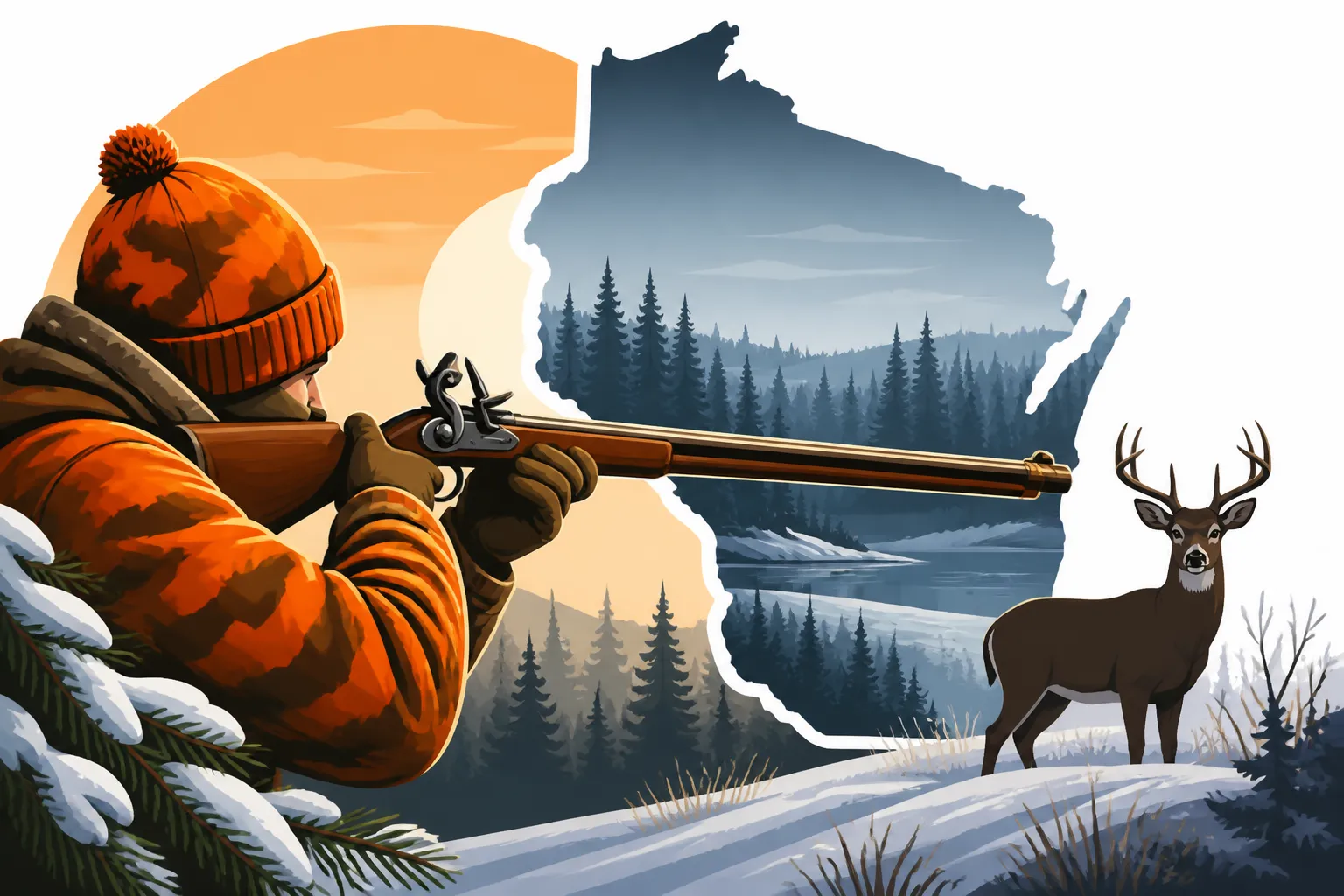
There's a unique, almost solitary satisfaction to hunting Wisconsin's December muzzleloader season, but let's be honest, it's not for the faint of heart. The cold bites harder, the deer are warier after months of pressure, and every single detail, from keeping your powder dry to simply staying warm, feels magnified. If you've ever shivered on a stand, watched your breath fog your scope, or cursed a hangfire when a mature buck strolled by, you know the frustration. This guide is all about equipping you with the knowledge and tactics to overcome those challenges and punch your tag when the late-season elements are stacked against you.
Preparing Your Muzzleloader for December Cold
When temperatures plummet and the Wisconsin landscape transforms into a winter wonderland, your muzzleloader setup needs to be absolutely dialed in. This isn't just about accuracy; it's about reliability when everything else is conspiring against you. A misfire in December can be the most heartbreaking moment of your hunting season.
Keeping Your Powder Dry and Reliable
The single most critical aspect of muzzleloader hunting in cold, wet December conditions is ensuring your powder charge stays absolutely dry. Moisture is the enemy of black powder and its substitutes. Imagine seeing the buck of a lifetime step out, you squeeze the trigger, and all you hear is a weak click instead of a resounding boom. It's happened to the best of us, and it's soul-crushing.
Start with pre-measured charges. Modern hunters often use speed loaders or plastic tubes to hold individual powder charges. Load these tubes in a dry, warm environment and seal them tightly. Even better, consider a small, waterproof container to hold these loaded tubes within your pack. When it's time to load in the field, avoid exposing your powder to open air for longer than necessary. If snow is falling or it's particularly damp, an umbrella or even your hat held over the muzzle can offer a crucial bit of protection while you're pouring the charge.
Many seasoned Wisconsin muzzleloader hunters swear by waterproofing their primers as well. A small dab of nail polish or even melted candle wax over the percussion cap or the primer itself can create a waterproof seal. While this adds an extra step to your loading process, it can be the difference between a successful shot and a lost opportunity. Remember, a dry powder charge and a hot, reliable spark are non-negotiable for consistent performance in the frigid air. You can learn more about how to ensure your firearm functions properly in the article, "Keeping a Muzzleloader Dry in Wet Snow".
Optics and Sights in Freezing Temperatures
December's often overcast skies and short daylight hours mean low-light conditions are common, compounded by the glare off snow. Your optics need to perform without fail. The biggest culprit is fogging, which can render an expensive scope utterly useless in seconds. Going from a warm cabin to a freezing stand, or even just your breath hitting the cold glass, can cause instant fog.
To combat this, try to let your scope acclimate to the outdoor temperature for a while before hunting. Store your rifle in a cold area, like a garage, if possible, rather than bringing it into a warm house just before heading out. When on stand, keep lens caps on until the last possible moment. Consider anti-fog treatments for your lenses; while not foolproof, they can certainly help. If your scope does fog up, resist the urge to wipe it, as this can scratch the lens or smear ice. Often, the fog will dissipate as the temperature equalizes, but time is usually not on your side when a deer appears.
For those who prefer open sights, they eliminate the fogging issue but can be difficult to pick up in low light or against a snowy background. Fiber optic sights can be a godsend in these conditions, gathering what little ambient light is available to give you a clear, bright aiming point. Whether using a scope or open sights, practice aiming in conditions that mimic December hunting – low light, gloved hands, and while bundled up – to ensure you're confident when the moment of truth arrives.
Cold Weather Ammunition and Loading Considerations
The type of ammunition you choose and how you handle it in the cold can impact your accuracy and loading ease. Saboted bullets, which use a plastic sleeve to engage the rifling, are very popular for their accuracy, but in extreme cold, that plastic can become brittle. While it's generally not a huge issue, it's something to be aware of. Conical bullets, which are solid lead and engage the rifling directly, might be a more robust option in truly brutal temperatures, though they may not offer the same ballistic performance as modern sabots.
Powder choice also matters. While granular black powder works, many modern muzzleloader hunters opt for Hodgdon Triple Seven or IMR White Hots, which burn cleaner and are less susceptible to moisture. Whichever powder you choose, remember that consistency is key. Using pre-measured charges ensures you're not fumbling with a powder measure in the cold with gloved hands, risking spillage or an inaccurate charge.
Loading in sub-freezing temperatures with stiff, cold fingers is a challenge. Carry a dedicated loading rod that's comfortable to grip. Some hunters even attach a small T-handle or extension to their ramrod for better leverage. When seating the bullet, ensure it's firmly seated against the powder charge. A gap between the bullet and powder can be incredibly dangerous and lead to a catastrophic failure of the firearm. Practice the full loading sequence at home, preferably with cold hands, so it becomes second nature when you're out in the elements. This attention to detail is crucial for "Muzzleloader Deer Hunting in Wisconsin" in December.
Muzzleloader Cold Weather Prep Checklist Action Why It Matters
: Pre-Season Muzzleloader Maintenance Clean bore, lubricate action, check scope mounts, verify trigger pull. Ensures proper function, accuracy, and safe operation.
Powder Protection Pre-measure charges into sealed waterproof tubes; use waterproof primers/caps. Prevents moisture contamination leading to misfires or hangfires.
Optics Care Apply anti-fog treatment; keep lens caps on; allow scope to acclimate to cold. Maintains clear vision in humid or freezing conditions.
Ammunition Selection Test sabots/conicals in cold; verify powder type for low temps. Ensures bullet integrity and consistent burn in winter.
Loading Rod Enhancement Add T-handle or extension to ramrod; practice loading with cold hands. Improves grip and leverage for loading in challenging conditions.
Field Cleaning Kit Small kit with patches, solvent, and brush for quick action/bore wipes. Addresses potential fouling that can cause issues in extended hunts.
Battery Check (if applicable) Ensure scope batteries (if illuminated reticle) are fresh and suitable for cold. Prevents loss of illumination when you need it most.
Locating Late-Season Whitetails in the Snow
By December, deer behavior has changed significantly. They're no longer thinking about breeding; instead, their priorities have shifted squarely to survival. Finding them means understanding these shifts, and that understanding is key to a successful muzzleloader hunt.
Food, Cover, and Thermal Protection
Late-season deer are all about energy conservation and finding sanctuary from the harsh Wisconsin winter. This means their primary focus revolves around three critical elements: readily available food sources, dense thermal cover, and areas that offer protection from the prevailing winds. Forget about cruising timber edges hoping to bump into a rut-crazed buck; those days are long gone.
Food sources become extremely specific. Standing cornfields, if still available, are absolute magnets. The corn provides vital carbohydrates, and the stalks offer decent cover. Other prime spots include pockets of brassicas planted as late-season food plots, or even hidden patches of oak trees that still hold acorns, though these are often depleted by December. Browse, like regenerating aspen or dogwood, can also be crucial, especially in northern Wisconsin where agricultural fields are scarce. Bucks will travel significant distances for a reliable meal, particularly during the coldest snaps, so identifying these caloric hotspots is paramount. You really need to think about "Late-Season Food Sources for Whitetails" if you want to find deer consistently.
Thermal cover is equally important. Think dense conifer stands—cedar swamps, pine plantations, or thick spruce thickets. These areas block the wind and trap what little warmth the sun provides, creating microclimates where deer can escape the biting cold. South-facing slopes that catch the most sun throughout the day also provide crucial thermal benefits and will often hold beds. Look for transition zones where these dense covers meet food sources. Deer will minimize travel, often bedding incredibly close to where they eat. This means your approach and exit routes must be meticulously planned to avoid spooking deer out of their safe havens.
Reading the Snow for Sign
One of the greatest advantages of December hunting, particularly for muzzleloader hunters who might be still-hunting or stalking, is the snow. Fresh snow is an open book, revealing the recent movements of every creature in the woods, especially deer. It can be your best friend if you know how to read it.
Look for fresh tracks. Are they crisp, with sharp edges, indicating recent passage? Or are they rounded and partially filled with snow, suggesting older activity? Pay attention to the size and depth of the tracks. Large, deep tracks might indicate a heavy-bodied buck, especially if accompanied by signs of dragging hooves, suggesting a tired or injured animal. Follow these tracks slowly and deliberately, always watching ahead, using the terrain to your advantage. A lone set of fresh tracks, especially if it leads into thick cover or towards a prime food source, is often worth investigating carefully.
Beyond tracks, snow will show you exactly where deer have been feeding or bedding. Patches of scraped-away snow exposing browse, or divots where deer have dug for fallen mast, indicate feeding areas. Beds in the snow, especially if still warm to the touch or surrounded by fresh droppings, tell you where deer are resting and can indicate prime bedding cover. If you find a series of fresh beds, it means deer are using that spot regularly, and it might be an excellent place to set up for an ambush, especially if the wind is right. Understanding these patterns is critical, and a resource like "Reading a Ridge Point for Deer Movement" can offer insights even in snowy conditions.
Scouting with Technology and Boots on the Ground
Combining modern technology with traditional boots-on-the-ground scouting is the most effective way to locate late-season whitetails. Before you even leave the warmth of your home, utilize mapping applications like GoHunt or OnX to analyze potential areas. Look for standing corn, known food plots, or dense conifer stands. Pay close attention to topographical features like south-facing slopes, ridge points, and pinch points between different cover types. These features will funnel deer movement in predictable ways, especially when they're seeking thermal cover.
Once you have identified potential hotspots on your digital maps, it's time to hit the woods. Your physical scouting in December is focused on confirming what the maps tell you and finding the freshest sign. Don't be afraid to walk quietly into those dense thickets or along the edges of standing corn. Look for tracks, rubs, and fresh droppings. If you're seeing consistent fresh sign, you're in the right area. This is also where you'll figure out your best approach and exit routes to minimize disturbance.
Remember, deer are extremely sensitive to pressure this late in the season. Keep your scouting trips quick and efficient, especially in areas you plan to hunt. The goal is to gather information without alerting deer to your presence. Sometimes, using a spotting scope from a distance, or even just driving roads adjacent to potential cover, can reveal hidden food sources or bedding areas without disturbing the area. When hunting without bait, as is often the case in counties with baiting bans, finding these natural food and cover sources is paramount, a topic covered in depth in "What Replaced Bait Piles for Wisconsin Hunters".
Strategies for Muzzleloader Hunts in Bitter Cold
Once you've found where the deer are, the real challenge begins: putting yourself in a position for a shot while battling the elements. December muzzleloader hunting is as much about mental toughness and physical endurance as it is about hunting skill.
Stand Placement and Entry/Exit Routes
Successful late-season stand placement for muzzleloader hunting hinges on minimizing disturbance and ambushing deer near their thermal cover and food sources. Deer at this time are typically moving between these two areas, often in low light conditions. Setting up directly between a known bedding area and a preferred food source is a classic late-season tactic. However, your approach and exit routes are critical.
Always hunt with the wind in mind. Your scent will carry much further in cold, still air. Plan routes that keep your scent away from bedding areas on your way in and from feeding areas on your way out. Consider stands that offer cover for your approach, like thick brush lines or ditches, rather than walking in open fields. If possible, use topographical features such as a creek bottom or a logging road that winds through cover to mask your movement.
For your stand itself, a well-brushed-in ground blind can offer invaluable protection from the cold and wind, allowing you to sit longer and more comfortably. If you prefer a treestand, choose one that allows for quiet entry and exit, and be sure to position it where you have clear shooting lanes to both the food and cover, anticipating where the deer will likely appear. Remember that shooting light is short, so maximizing your time in a comfortable, scent-controlled setup is essential. This is directly related to effective "Cold Weather Sitting Strategy".
Staying Warm and Maintaining Focus
This is where many late-season hunts fail. You can't hunt effectively if you're shivering uncontrollably. Staying warm means layering strategically, not just piling on bulky clothes. Start with good base layers that wick moisture away from your skin. Add insulating mid-layers like fleece or wool, and top it off with a windproof, waterproof outer shell. Wool is a fantastic choice for cold weather due to its natural warmth retention, even when damp.
Don't forget your extremities. Warm hands and feet are crucial for comfort and safety. Invest in high-quality insulated boots, perhaps even oversized to allow for extra socks and toe warmers. Hand warmers in a muff or insulated gloves are also a must. For an all-day sit, consider a portable heater for a ground blind or a heated vest, but always be mindful of safety. Hydration is also important, so bring a thermos of hot coffee, tea, or broth.
Beyond the physical warmth, mental focus is key. The cold can make you antsy, tempted to fidget or get down early. Combat this by bringing a book, listening to an audiobook (with one earbud out for safety), or simply practicing mindfulness, soaking in the quiet solitude of the winter woods. The moments a deer appears are often fleeting, and you need to be ready and focused to capitalize. Hunters who persevere through the chill often find success in these quiet, challenging conditions, much like those who are "Hunting Wisconsin's Late Archery Season".
Making the Shot Count
When that deer finally steps out, often in low light and at shorter ranges typical of muzzleloader hunting, your preparation truly pays off. Cold hands can affect trigger control, so ensure your gloves allow for good dexterity or use a hand muff to keep your trigger finger warm and nimble. Your muzzleloader's effective range in December timber might be significantly shorter than what you've practiced on the range in fairer weather.
Aim for a clean, ethical shot. In colder weather, deer can sometimes be tougher to track, especially if blood trails are sparse or quickly covered by snow. A well-placed shot is always important, but even more so now. If you're using a scope, ensure it's free of fog and adjusted for the conditions. For open sights, practice acquiring your target quickly and accurately. Take a deep breath, control your nerves, and focus on steadying your aim. When you're using a muzzleloader, you typically only get one shot, so make it count.
Even after a good hit, watch the deer's reaction closely and listen for sounds of a crash. Mark the spot where the deer was standing and its last direction of travel. These details will be invaluable if you need to track.
Tracking and Recovery in Snow
Successfully taking a deer with a muzzleloader in December is only half the battle. Retrieving that deer, particularly in snow and cold, presents its own set of challenges and demands a methodical approach.
Initial Reaction and Waiting Period
After the shot, your immediate reaction is crucial. Resist the urge to rush in. Instead, observe the deer's reaction. Did it mule kick? Hunch up? Run off hard? Did you hear a crash? Mark the exact spot where the deer was standing when you shot, and its direction of travel. Pick out a specific tree or landmark. This initial observation provides critical clues for a successful recovery.
Then, wait. This is often the hardest part, especially when you're cold and excited. For a deer shot with a muzzleloader, particularly if you suspect a marginal hit, a waiting period is even more important than during archery season. The extreme cold can cause wounds to clot faster, potentially leading to less blood trail initially. However, it can also slow down a deer, making it bed sooner. For a suspected good hit, 30 minutes to an hour might suffice. For a questionable shot, give it at least 2-4 hours, or even wait until morning if the shot was late in the day and conditions allow. Retrieving a deer in the dark, especially in a blizzard, is a terrible idea. This patience often means the difference between finding your deer and losing it.
Following a Blood Trail in Snow
Snow can be both a blessing and a curse for blood trailing. A fresh, heavy blood trail on pristine white snow is like a red carpet. However, light snow, intermittent flurries, or a meager trail can make it incredibly difficult. Start slowly and deliberately at the last known location of the deer. Look for any sign: specks of blood, disturbed snow, hair, or even tracks showing a limp.
If the blood trail is sparse, widen your search pattern. Look for anything that indicates the deer's path: a broken twig, a disturbed clump of grass, or an overturned rock. Pay close attention to the tracks. Are they consistently deep, or does one side appear to be dragging? A good rule of thumb is to have one person on the blood trail and another a few yards ahead, scanning for the next drop, while a third person (if available) watches for the deer itself. The GoHunt app can be a great tool for marking blood spots and the last known direction, helping you keep track of your progress. Remember, deer will often seek the path of least resistance or thick cover when injured, so anticipate these movements. You can delve deeper into this specific skill with the "Tracking a Deer in Wisconsin Snow" guide.
Gear for Cold Weather Recovery
Retrieving a deer in December often means negotiating deep snow, slick ice, and frigid temperatures. Having the right gear can make a difficult task much easier and safer. A good headlamp or powerful flashlight is essential, even if you plan to recover during daylight hours, as it can quickly get dark in dense timber or if your tracking takes longer than expected.
A deer sled or game cart is invaluable for moving a deer, especially in snowy or rugged terrain. Trying to drag a heavy deer through deep snow by hand is exhausting and can lead to injury. A quality sled makes the job significantly easier. For navigating through thick brush or over frozen ground, a sturdy pair of work gloves will protect your hands, and extra layers of warm clothing, especially a dry hat and gloves, are crucial. You'll be expending a lot of energy, so having easily accessible water or a thermos of hot beverage can help prevent dehydration and keep your core temperature up.
Finally, consider a field dressing kit that includes a sharp knife, a bone saw, and game bags. In extremely cold conditions, it's easier to field dress a deer quickly. If you're far from your vehicle or plan to bone out the deer to lighten the load, having game bags to protect the meat is essential. Having the right "Sleds and Drags for Snow Country" and knowing how to do "Field Dressing a Deer in Cold Weather" will save you a lot of grief. Don't forget, comfortable, waterproof boots are non-negotiable for the entire process, as outlined in "Boots for Wisconsin Swamps and Snow".
Disclaimer
Always consult the Wisconsin Department of Natural Resources (DNR) regulations for the most current and specific hunting laws, seasons, and licensing requirements before heading into the field. This guide is for informational purposes only and does not supersede official DNR guidelines.