Sleds and Drags for Snow Country
The moment you pull the trigger, or release the arrow, a new chapter of your hunt begins. And when that chapter lands you a deer deep in Wisconsin's snow-covered woods, the challenge of getting your prize out can quickly turn triumph into tribulation. Too many hunters underestimate the sheer physical toll of dragging a deer through drifts and over frozen terrain. This comprehensive guide will walk you through everything you need to know about using sleds and drags to make game recovery in snowy Wisconsin not just possible, but manageable, preserving your energy and your venison.
Why Sleds and Drags are Essential in Wisconsin Snow
Winter hunting in Wisconsin is a truly magical experience, with silent, snow-laden forests and crisp, clean air. But that beautiful blanket of white, while making tracking a deer in Wisconsin snow much easier, also presents a formidable obstacle when it comes to extraction. The friction of a deer's hide against the snow, especially heavy, wet snow, can feel like you're dragging a boulder. That's where a good sled or drag becomes an absolute game-changer, turning an exhausting chore into a much more efficient process.
The Challenges of Snow Recovery
Imagine this: you've successfully tagged a beautiful buck deep in a cedar swamp after Still-Hunting After a Wisconsin Snow. The snow is knee-deep, and the temperature is hovering around zero. Without a proper tool, attempting to drag that deer by its antlers or legs is an exercise in futility. The deer's body acts like a plow, collecting snow, and every small rise or hidden log becomes a monumental hurdle. You'll quickly find yourself drenched in sweat, exhausted, and potentially risking injury, especially if you're hunting alone. The friction created by the deer's fur against the snow is incredible, and it saps your strength with every single step.
Beyond the sheer physical exertion, there's the risk of getting lost or disoriented when you're focusing solely on the drag. When your energy is spent and your muscles are screaming, it's easy to make mistakes. This is particularly true if you're trying to recover a deer after dark, which can be necessary if you had a long Blood Trailing After Dark in Wisconsin effort. A sled or drag mitigates these problems by significantly reducing the friction, allowing you to move the animal more smoothly and with less strain, keeping you more alert and aware of your surroundings.
The Strain on Your Body
Dragging a deer, especially a large Wisconsin whitetail, through deep snow can put immense strain on your back, shoulders, and knees. It's not uncommon for hunters to suffer pulled muscles, strains, or even more serious injuries by overexerting themselves during game recovery. The cold temperatures combined with heavy sweating can also lead to hypothermia if you're not careful with your Cold Weather Sitting Strategy and layering. A solid sled or drag helps distribute the weight and reduce the direct friction, allowing you to use more efficient muscle groups and maintain a more natural posture while moving.
Think about the long-term impact too. Many veteran hunters will tell you stories of back problems that started with a tough deer drag. Investing in a quality sled or drag is an investment in your own physical well-being and your longevity as a hunter. It means you can focus on the satisfaction of the hunt and the quality of your venison, rather than dreading the recovery process. Even if you're hunting with a partner, a good drag system makes Deer Drives With Three or Four Hunters or any group recovery far less taxing and much safer for everyone involved.
Protecting Your Harvest
Beyond your own physical well-being, using a sled or drag helps protect the integrity of your harvested animal. Dragging a deer directly on the snow, especially over rough ground, can cause damage to the hide, potentially compromising the cape if you plan to mount it. More importantly, it can introduce dirt, snow, and debris into the body cavity, particularly if you've already field dressed the animal. This contamination can affect the quality of your meat.
A game sled, with its smooth, durable surface, keeps the deer elevated from direct contact with the ground, reducing hide damage and keeping the carcass cleaner. This is especially crucial if you're recovering a deer from a wet area like a swamp or Getting a Deer Out of a Wisconsin Swamp. A clean, protected carcass means less work during butchering and higher quality venison for your table. When you've put in all the effort to Field Dressing a Deer in Cold Weather carefully, you want to ensure the journey back to camp doesn't undo that hard work.
Types of Sleds and Drags for Different Scenarios
The world of game recovery tools offers more than just a simple piece of plastic. From basic budget-friendly options to specialized designs, understanding the different types of sleds and drags available can help you choose the best tool for your typical hunting conditions in Wisconsin's diverse landscapes.
Basic Plastic Sleds
The most common and often most affordable option is the basic plastic utility sled. These are essentially large, shallow plastic tubs with a rope attached to the front. They are typically made from durable, high-density polyethylene (HDPE) which remains flexible even in cold temperatures, preventing cracking. You've probably seen these being used for hauling firewood, ice fishing gear, or even kids down a snowy hill.
For deer recovery, these work remarkably well in most Wisconsin snow conditions. Their wide, smooth bottom glides easily over snow and even bare ground if it's not too rough. They come in various sizes, with larger ones easily accommodating a mature buck. The main advantages are their low cost, versatility, and ease of cleaning. You can often find them at hardware stores or sporting goods retailers. However, they can be bulky to carry into the woods, especially if you're walking a long distance to your stand. Some hunters will strap them to the back of a larger pack like those from GoHunt, or simply carry them by hand. They might also lack specific features like side walls to keep the deer contained on very uneven terrain.
Specialized Deer Drags and Game Sleds
Moving up from the basic utility sled, you'll find specialized deer drags and game sleds designed specifically for hauling big game. These often feature more robust construction, contoured shapes to navigate obstacles, and sometimes even a reinforced front lip to prevent digging into the snow. Some are more like heavy-duty tarps or fabric drags, reinforced with durable materials like Cordura, that conform to the shape of the deer and offer a lighter, more packable solution.
One popular type is a rigid plastic sled with a deeper profile and built-in tie-down points or straps. These are excellent for keeping the deer securely contained, preventing it from sliding off the sled when going over bumps or down hills, which is especially helpful if you're trying to Recovering a Deer From a Coulee Bottom. Brands like Shappell and Jet Sled offer various models in this category. Another innovation is the foldable or roll-up drag, often made of a heavy-duty fabric or flexible plastic, which can be easily packed into a backpack until needed. These are fantastic for public land hunters who might have a long walk to their hunting spot, where every ounce and bit of bulk matters. Companies like Travois offer game carts that convert into flexible sleds, giving hunters options for different seasons.
DIY Solutions and Improvised Methods
Sometimes, despite all your planning, you might find yourself without a dedicated sled or drag when you need one most. In these situations, knowing a few DIY solutions or improvised methods can save your hunt. The simplest improvisation is a sturdy tarp or a heavy-duty contractor bag. Lay the deer on the tarp, fold the tarp over, and use rope or even zip ties to cinch it around the deer. Then, simply pull the tarp from one end. This works surprisingly well to reduce friction, though it won't offer the same rigidity or protection as a dedicated sled.
Another common improvisation involves using a spare piece of plywood or even an old plastic toboggan if you happen to be near a cabin or camp. The key is to create a smooth, low-friction surface. For very short drags, or if you're trying to Dragging a Deer Up a Coulee Wall, you can sometimes use a sturdy blanket or even your heavy winter coat as a makeshift drag mat. While these aren't ideal long-term solutions, they can get you out of a pinch. Always remember to prioritize safety and avoid overexertion, even with these improvised methods.
Here's a quick comparison of common sled and drag types:
| Type of Sled/Drag | Material | Advantages | Disadvantages | Ideal Use Case |
|---|---|---|---|---|
| Basic Utility Sled | HDPE Plastic | Affordable, durable, versatile, low friction | Bulky to carry, minimal containment | General snow country, accessible areas, short drags |
| Rigid Game Sled | HDPE Plastic | Excellent containment, reduced hide damage, sturdy | Can be heavy and bulky, higher cost | Uneven terrain, long drags, protecting trophy animals |
| Flexible Game Drag | Heavy-duty fabric/flexible plastic | Lightweight, packable, conforms to terrain | Less rigid protection, can collect snow on top | Backcountry hunting, long walks, varied terrain |
| DIY/Improvised | Tarp, plywood, contractor bag | Readily available, emergency solution | Less efficient, can be flimsy, limited protection | Unexpected kills, short distances, last resort |
Maximizing Efficiency with Sleds and Drags
Having the right sled or drag is only half the battle; knowing how to use it effectively can make all the difference in a grueling game recovery. From how you load the deer to how you navigate the terrain, a few strategic considerations can significantly reduce your effort and make the task much smoother.
Proper Loading Techniques
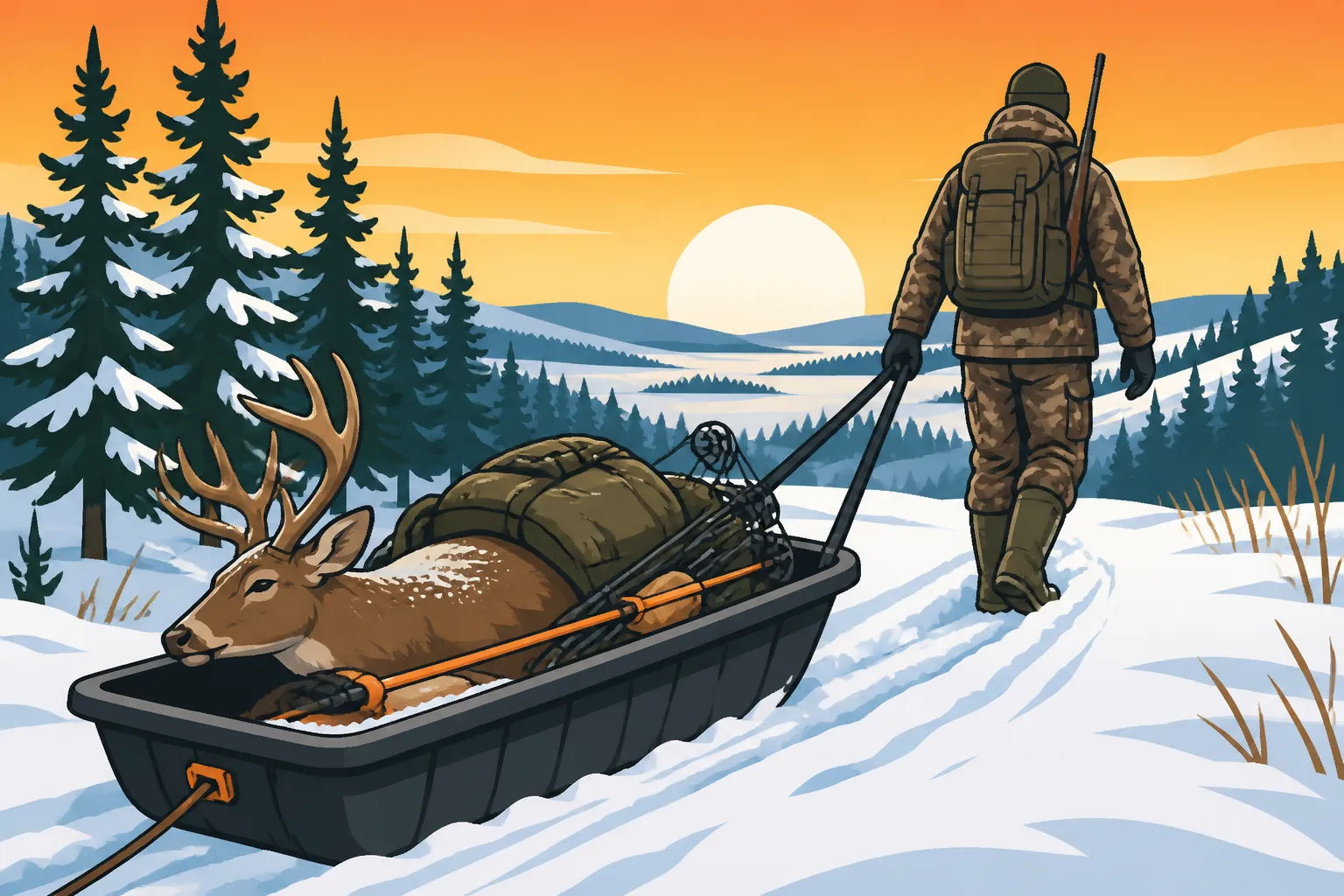
The way you position your deer on the sled is crucial. For optimal performance, you want to distribute the weight as evenly as possible. Typically, placing the deer head-first with its body stretched out on the sled is the most effective. This allows the sled's nose to cut through the snow more efficiently. If you try to drag it hind-first, the wider, heavier rear of the deer can act as a brake, making it harder to pull. Ensure the legs are tucked in or tied down to prevent them from snagging on obstacles or dragging in the snow beside the sled. Using bungee cords or straps (some specialized sleds have these built-in) to secure the deer to the sled can prevent it from shifting, especially on uneven ground or when going downhill.
When dealing with a very large animal, like a particularly heavy northern Wisconsin buck, you might need to experiment with the orientation to find what works best with your specific sled and the snow conditions. Sometimes, if the snow is very deep and soft, putting the deer on its back with legs up can create a slightly narrower profile, allowing the sled to cut through with less resistance. Always aim to keep the center of gravity as low as possible to prevent tipping.
Utilizing Terrain
Wisconsin's diverse terrain, from the rolling hills of the Driftless Area to the flat, often swampy northern forests, demands different approaches. When Hunting the Wisconsin Northern Forest for Deer, you might encounter thick underbrush, numerous downed logs, and varying snow depths. Here, a narrow-profile sled that can snake through tight spots without getting hung up is beneficial. When moving through thick woods, try to identify the path of least resistance – look for natural deer trails, logging paths, or clearings that offer a smoother passage. Going around a dense thicket, even if it adds a few extra yards, is often less exhausting than trying to plow through it.
In the Driftless Area, where you might be Entry Routes on Steep Driftless Ground and trying to Dragging a Deer Up a Coulee Wall, utilizing gravity is key. If you're going downhill, letting the sled slide ahead of you while maintaining control with the rope can save a tremendous amount of effort. However, going uphill requires brute force. Here, a sturdy rope or even a harness can distribute the pull across your core, rather than just your arms. Consider zigzagging up steep slopes rather than attempting a straight climb; this reduces the incline and makes the pull more manageable. The GoHunt app can be invaluable for identifying flatter contours or easier paths for extraction.
Teamwork and Communication
While solo hunting is a rewarding experience, having a partner or two can make game recovery exponentially easier. With two people, one can pull from the front while the other pushes from the rear or helps guide the sled around obstacles. This shared effort significantly reduces the strain on any single individual. If you're hunting with a larger group, say during Wisconsin's Nine-Day Gun Deer Season, rotating who's on the drag can keep everyone fresher.
Effective communication is paramount, especially when navigating difficult terrain or when one person can't see the other. Simple commands like "lift," "left," "right," or "stop" can prevent snags, injuries, and frustrations. Before you even start the drag, discuss the intended route, identify any potential hazards, and agree on a pace. If you're recovering a deer after dark, clear communication becomes even more critical due to reduced visibility. Even with the best gear, like those reliable deer sleds, teamwork is the most powerful tool for efficient game recovery.
Maintenance and Storage for Longevity
A good game sled or drag can be a significant investment, both in terms of cost and the time it saves you. To ensure your recovery tools last for many seasons of Wisconsin hunting, proper care and storage are essential. Neglecting your gear can lead to premature wear, making your next recovery even more challenging.
Cleaning and Inspection
After every use, especially when you've been Hunting Deer in Deep Northern Wisconsin Snow or in muddy conditions, your sled or drag will likely be covered in blood, hair, mud, and snow. Cleaning it promptly is vital. For plastic sleds, a simple rinse with a hose and a scrub brush, perhaps with a mild soap, is usually sufficient. Make sure to get into any crevices or tie-down points where debris might accumulate. Blood can attract pests, so a thorough cleaning helps keep your gear sanitary and extends its life. For fabric drags, follow the manufacturer's cleaning instructions, which often involve spot cleaning or a gentle hose-down. Ensure all ropes, straps, and harnesses are also cleaned of blood and grime.
While cleaning, take the opportunity to inspect your equipment for any signs of wear or damage. Look for cracks in plastic sleds, frayed ropes or straps, or tears in fabric drags. Early detection of small issues can prevent them from becoming major problems during your next recovery. A small crack in a plastic sled, for instance, can quickly grow larger under the stress of a heavy deer. Checking the integrity of all attachment points is also important; a snapped rope when you're miles back in the woods is a frustrating and avoidable scenario.
Repairing Damage
Finding damage during your inspection doesn't necessarily mean your sled or drag is destined for the landfill. Many minor issues can be repaired, extending the life of your equipment. For small cracks in plastic sleds, a plastic welding kit or even heavy-duty waterproof tape can often provide a temporary or even semi-permanent fix. For larger cracks, specialized plastic repair kits might be needed. Always test any repair under lighter load conditions before relying on it for a full deer drag.
Frayed ropes can often be trimmed and re-sealed with a lighter to prevent further unraveling. If a rope is severely damaged, it's best to replace it entirely with a strong, weather-resistant rope like paracord or nylon. Tears in fabric drags can sometimes be patched with heavy-duty repair patches or by sewing them with a strong, waxed thread. The key is to address these issues proactively. Don't wait until you're halfway through Hunting the Wisconsin Rut in November and your drag system fails when you need it most. Keeping a small repair kit with essential items like duct tape, extra rope, and zip ties in your hunting pack can also be a lifesaver for field repairs.
Off-Season Storage
Once the Wisconsin hunting seasons are over, and your sled or drag is clean and repaired, proper storage is crucial. Plastic sleds should be stored in a cool, dry place away from direct sunlight. UV rays can degrade plastic over time, making it brittle and prone to cracking. Hanging them from a garage ceiling or leaning them against a wall in a shed works well. Avoid storing heavy items on top of plastic sleds, as this can cause warping or stress cracks.
Fabric drags should be thoroughly dried to prevent mold and mildew growth, then folded or rolled neatly and stored in a dry, rodent-free environment. Ropes and harnesses should be coiled neatly and hung or stored in a container to prevent tangling and to keep them accessible. Taking these few extra steps in maintenance and storage will ensure your sleds and drags are ready to go When Wisconsin's Archery Season Opens again or when that first significant snowfall hits the woods.
Alternatives and Considerations Beyond Sleds/Drags
While sleds and drags are excellent for snow country, Wisconsin hunting presents various conditions, and sometimes, a different approach to game recovery might be more suitable. Understanding your options and when to employ them can save you a lot of grief and energy.
Deer Carts (When Applicable)
For those times when the ground isn't covered in snow – perhaps during the early archery season, or late in the fall before significant snowfall – a deer cart can be a far superior option to a drag. These two-wheeled carts are designed to carry the full weight of a deer, making it much easier to move over uneven ground, through fields, or along logging roads. They come in various designs, from simple folding frames to more robust, all-terrain models with larger wheels.
Deer carts excel where sleds struggle: on dry ground, through sparse brush, or over rocky terrain. The large wheels allow you to navigate obstacles with relative ease, and your effort is primarily in pushing or pulling the cart, not battling friction. This can be a huge benefit for Hunting Wisconsin Farmland Deer where you might have long stretches of field to cross, or when Hunting the Pre-Rut in Late October before the snow flies. However, carts are almost useless in deep snow or very muddy, soft conditions where the wheels would simply sink and bind. Some innovative products, like those found through GoHunt, even combine a cart and sled functionality, offering a versatile tool for varied conditions.
Backpacking/Boneless Carry
For hunters who venture deep into remote public land, or in situations where a heavy drag or cart is simply impractical, the "gutless method" or boneless carry becomes an invaluable skill. This involves field dressing the deer, then deboning the meat into game bags, which are then packed out in a sturdy frame backpack. While it requires more time in the field and the ability to process an animal effectively, it breaks the weight down into manageable loads. This method is particularly popular for those who Hunting the Wisconsin Northern Forest for Deer far from any access roads, or if you've harvested a deer in an extremely difficult-to-access spot like the bottom of a steep coulee.
This approach saves your back from dragging a heavy carcass, but it means you're making multiple trips or carrying a very heavy pack. It also demands a high-quality backpack designed for heavy loads and a good set of game bags to keep the meat clean and cool. Knowing how to do this quickly and efficiently is a skill that takes practice, but it's one that can truly expand your hunting opportunities in tough terrain. This method, along with a good GPS unit or a reliable app on your phone, ensures you can get your deer out no matter how remote your success.
Professional Retrieval Services
In rare circumstances, or for hunters who face significant physical limitations, professional game retrieval services are an option. While not common in every part of Wisconsin, some outfitters or local individuals with ATVs, UTVs, or even horses offer services to extract game for a fee. This is often a last resort, but it can be a lifesaver if you've harvested a large animal in an inaccessible area and cannot physically get it out yourself, especially if you're dealing with a Wisconsin's Black Bear Population kill.
Before considering such a service, check local regulations and ensure any service you engage operates legally and ethically. While paying someone to haul out your deer might seem unconventional to some, it's a practical solution that ensures the meat doesn't go to waste and respects the animal. This kind of service can particularly make sense when hunting on challenging terrain or in thick cover where getting a full-sized deer out without heavy machinery is nearly impossible.
Disclaimer
This article is for general informational purposes only and does not constitute professional advice. Laws, prices and regulations vary by location and change over time. Consult a qualified professional for guidance on your specific situation.